
Search
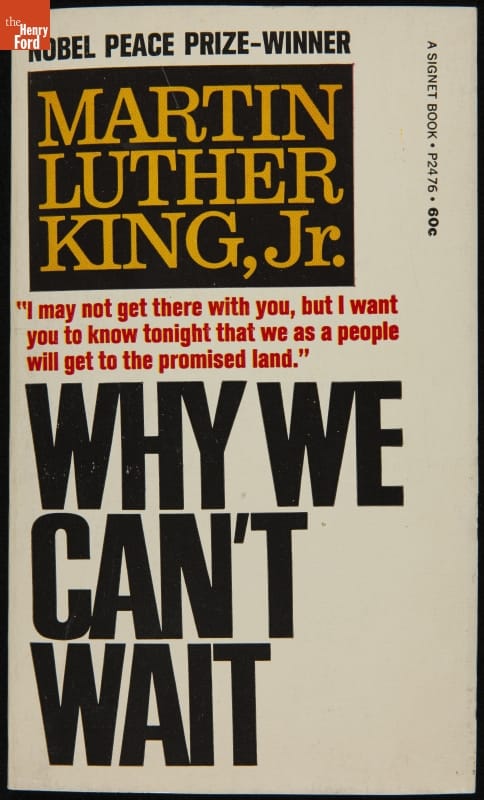
- "Why We Can't Wait," 1964 -
- 1964
- Collections - Artifact
"Why We Can't Wait," 1964
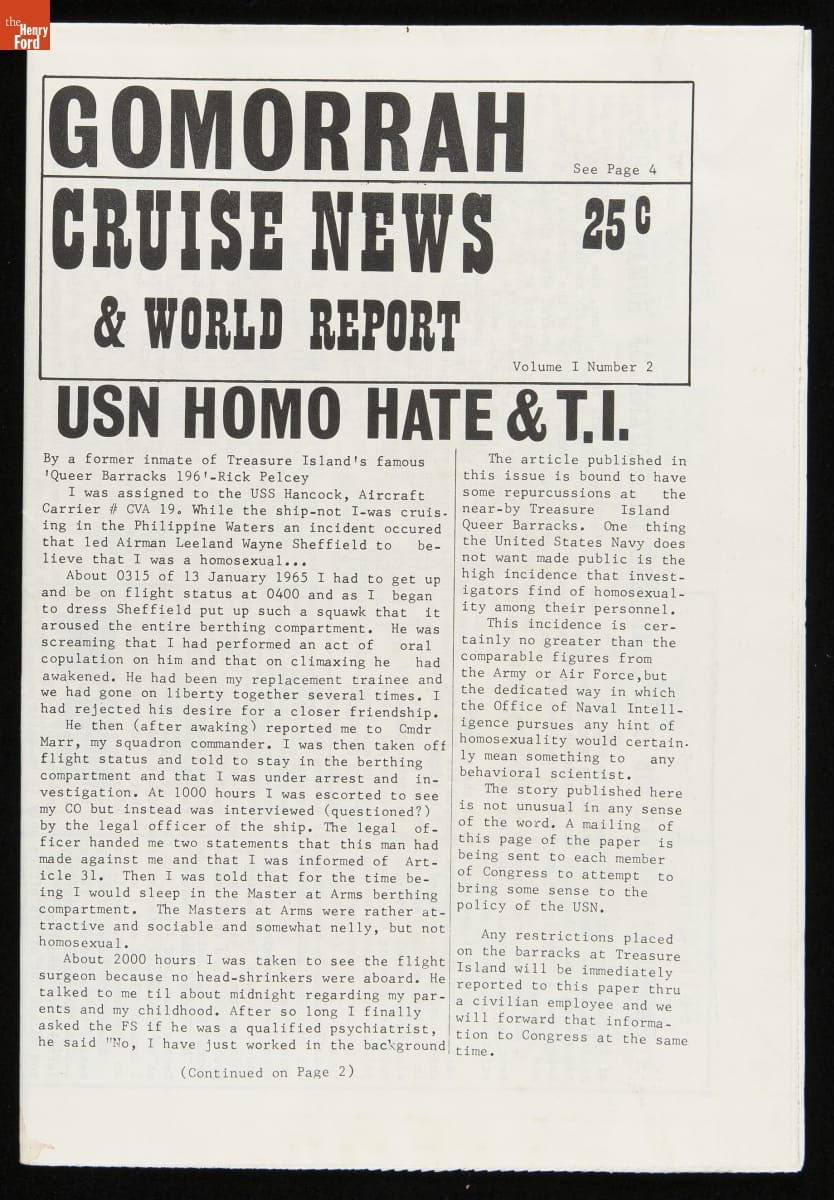
- Cruise News & World Report, Volume I, Number 2, circa 1965 - LGBTQ+ newspapers became more available beginning in the 1950s as organizations added print media to their activist tool kit. These newspapers were a regionally focused way to rally the LGBTQ+ community, share information, and fight discrimination. Many of these newspapers came to rely on gay bars as a location for disbursement as they were among the only private gay spaces in many cities.
- circa 1965
- Collections - Artifact
Cruise News & World Report, Volume I, Number 2, circa 1965
LGBTQ+ newspapers became more available beginning in the 1950s as organizations added print media to their activist tool kit. These newspapers were a regionally focused way to rally the LGBTQ+ community, share information, and fight discrimination. Many of these newspapers came to rely on gay bars as a location for disbursement as they were among the only private gay spaces in many cities.
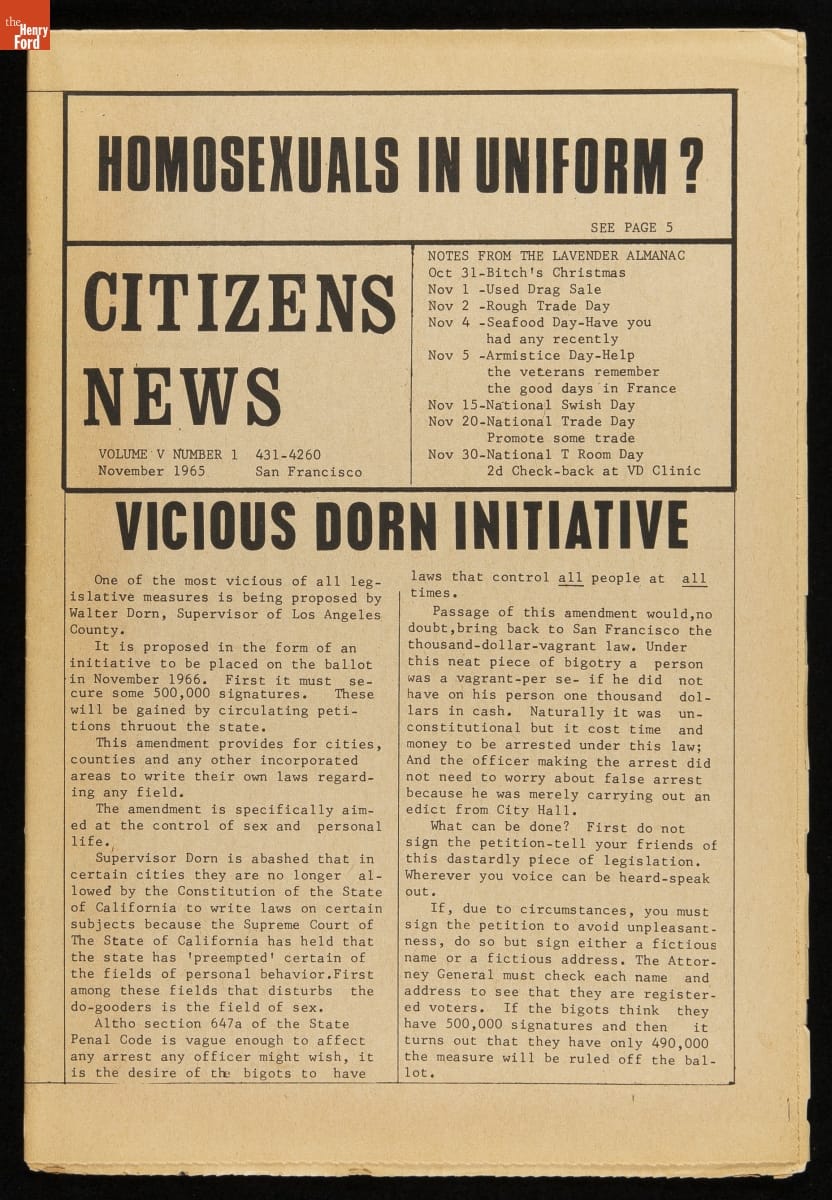
- Citizens News, Volume V, Number 1, November 1965 - LGBTQ+ newspapers became more available beginning in the 1950s as organizations added print media to their activist tool kit. These newspapers were a regionally focused way to rally the LGBTQ+ community, share information, and fight discrimination. Many of these newspapers came to rely on gay bars as a location for disbursement as they were among the only private gay spaces in many cities.
- November 01, 1965
- Collections - Artifact
Citizens News, Volume V, Number 1, November 1965
LGBTQ+ newspapers became more available beginning in the 1950s as organizations added print media to their activist tool kit. These newspapers were a regionally focused way to rally the LGBTQ+ community, share information, and fight discrimination. Many of these newspapers came to rely on gay bars as a location for disbursement as they were among the only private gay spaces in many cities.
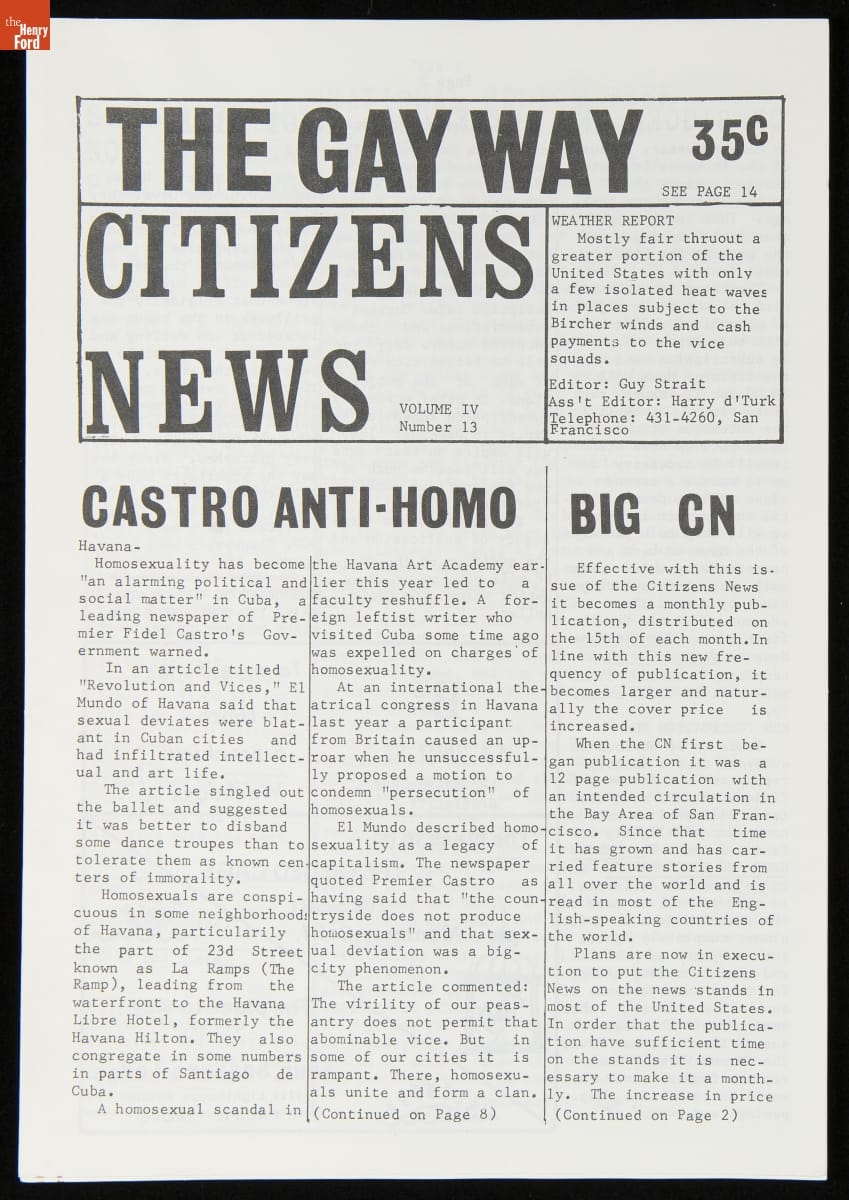
- Citizens News, Volume IV, Number13, 1964-1965 - LGBTQ+ newspapers became more available beginning in the 1950s as organizations added print media to their activist tool kit. These newspapers were a regionally focused way to rally the LGBTQ+ community, share information, and fight discrimination. Many of these newspapers came to rely on gay bars as a location for disbursement as they were among the only private gay spaces in many cities.
- 1964-1965
- Collections - Artifact
Citizens News, Volume IV, Number13, 1964-1965
LGBTQ+ newspapers became more available beginning in the 1950s as organizations added print media to their activist tool kit. These newspapers were a regionally focused way to rally the LGBTQ+ community, share information, and fight discrimination. Many of these newspapers came to rely on gay bars as a location for disbursement as they were among the only private gay spaces in many cities.
- Citizens News, Volume IV, Number 12, 1964-1965 - LGBTQ+ newspapers became more available beginning in the 1950s as organizations added print media to their activist tool kit. These newspapers were a regionally focused way to rally the LGBTQ+ community, share information, and fight discrimination. Many of these newspapers came to rely on gay bars as a location for disbursement as they were among the only private gay spaces in many cities.
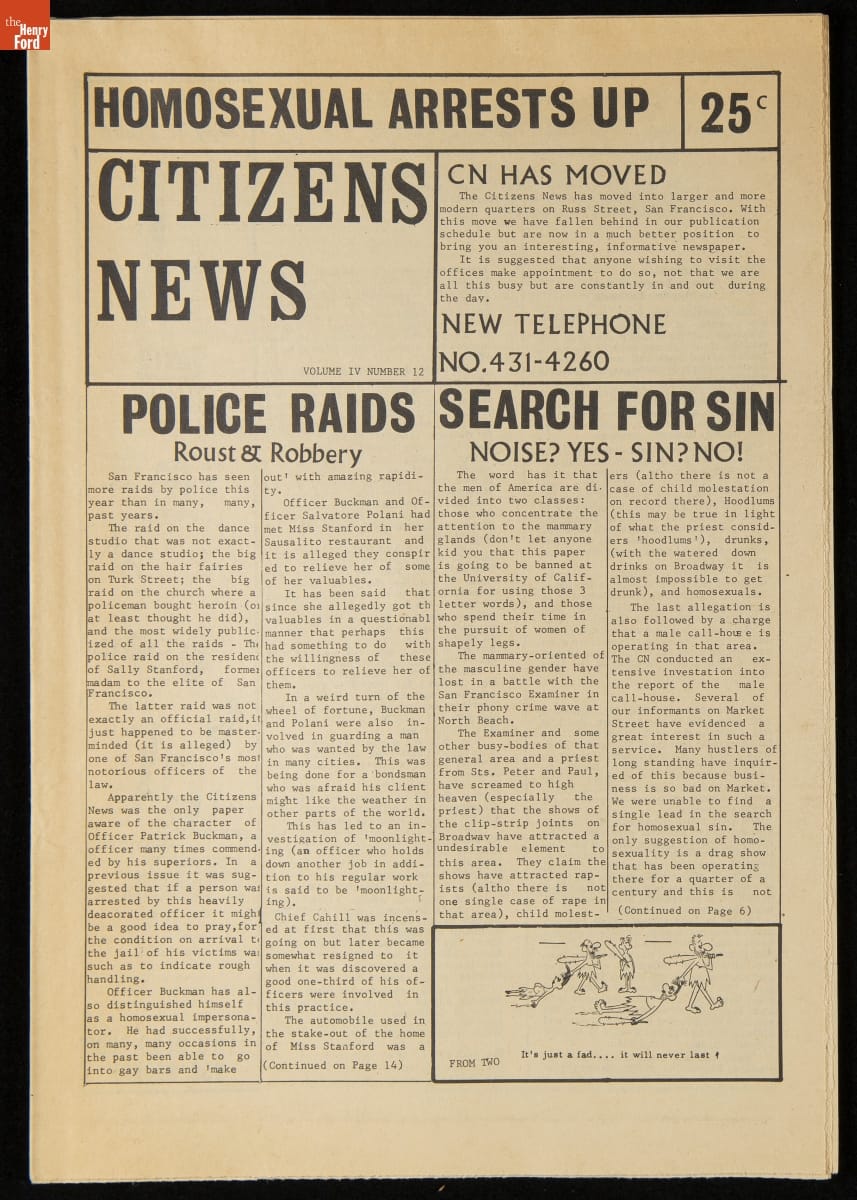
- 1964-1965
- Collections - Artifact
Citizens News, Volume IV, Number 12, 1964-1965
LGBTQ+ newspapers became more available beginning in the 1950s as organizations added print media to their activist tool kit. These newspapers were a regionally focused way to rally the LGBTQ+ community, share information, and fight discrimination. Many of these newspapers came to rely on gay bars as a location for disbursement as they were among the only private gay spaces in many cities.
- "CORE-Lator" Magazine, No. 86, February 1961 - The Congress of Racial Equality (CORE), founded in 1942, pioneered nonviolent civil rights activism. Members organized and participated in many sit-ins, freedom rides and other nonviolent actions during the Civil Rights era. This newsletter from 1961 pictures Jim Farmer, one of the founders of CORE, and informs readers about the continuing struggle to desegregate lunch counters throughout the country.
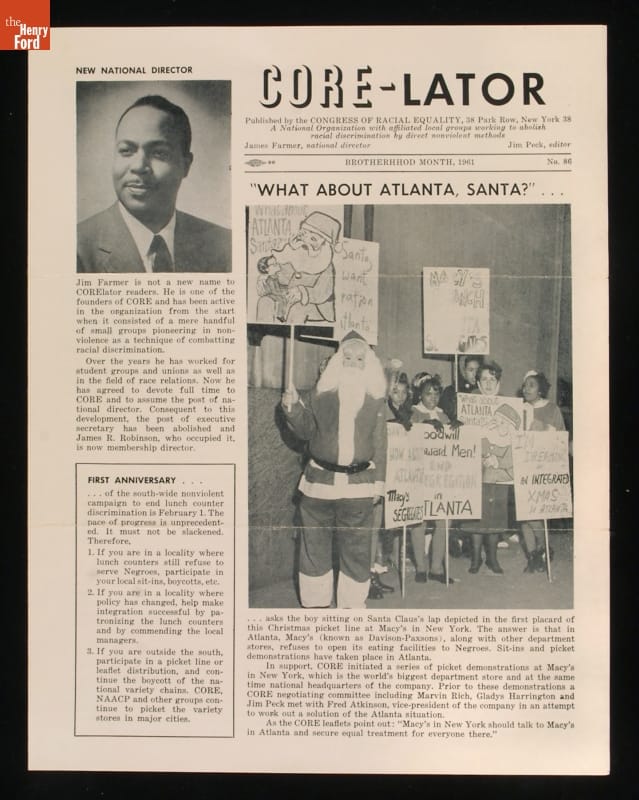
- February 01, 1961
- Collections - Artifact
"CORE-Lator" Magazine, No. 86, February 1961
The Congress of Racial Equality (CORE), founded in 1942, pioneered nonviolent civil rights activism. Members organized and participated in many sit-ins, freedom rides and other nonviolent actions during the Civil Rights era. This newsletter from 1961 pictures Jim Farmer, one of the founders of CORE, and informs readers about the continuing struggle to desegregate lunch counters throughout the country.
- Magazine, "Labor Defender; Special Scottsboro - Convention Issue," October 1932 - In 1931, nine black youths were unjustly accused of raping two white women in Alabama. White juries quickly convicted and sentenced eight of the defendants to death. The cover of this 1932 issue of the Labor Defender, a publication of the International Labor Defense, contains a plea for public support from the mother of two of the "Scottsboro Boys."
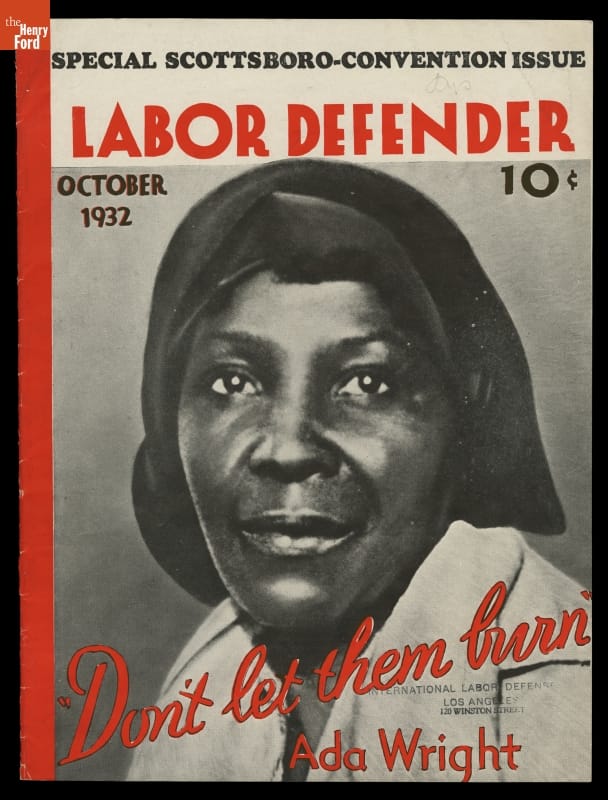
- October 01, 1932
- Collections - Artifact
Magazine, "Labor Defender; Special Scottsboro - Convention Issue," October 1932
In 1931, nine black youths were unjustly accused of raping two white women in Alabama. White juries quickly convicted and sentenced eight of the defendants to death. The cover of this 1932 issue of the Labor Defender, a publication of the International Labor Defense, contains a plea for public support from the mother of two of the "Scottsboro Boys."
- Handbill for a Rally in Support of the Scottsboro Boys, Pilgrim Baptist Church, Chicago, Illinois, November 17, 1933 - In 1931, nine black youths were unjustly accused of raping two white women in Alabama. White juries quickly convicted and sentenced eight of the defendants to death. The International Labor Defense, the legal arm of the Communist Party of the United States, issued this handbill to rally public support to combat this injustice and to free the "Scottsboro Boys."
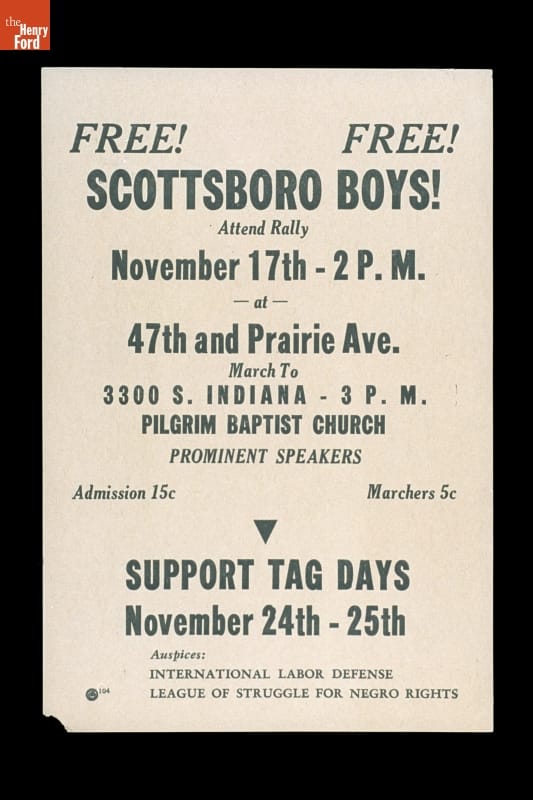
- November 17, 1933
- Collections - Artifact
Handbill for a Rally in Support of the Scottsboro Boys, Pilgrim Baptist Church, Chicago, Illinois, November 17, 1933
In 1931, nine black youths were unjustly accused of raping two white women in Alabama. White juries quickly convicted and sentenced eight of the defendants to death. The International Labor Defense, the legal arm of the Communist Party of the United States, issued this handbill to rally public support to combat this injustice and to free the "Scottsboro Boys."
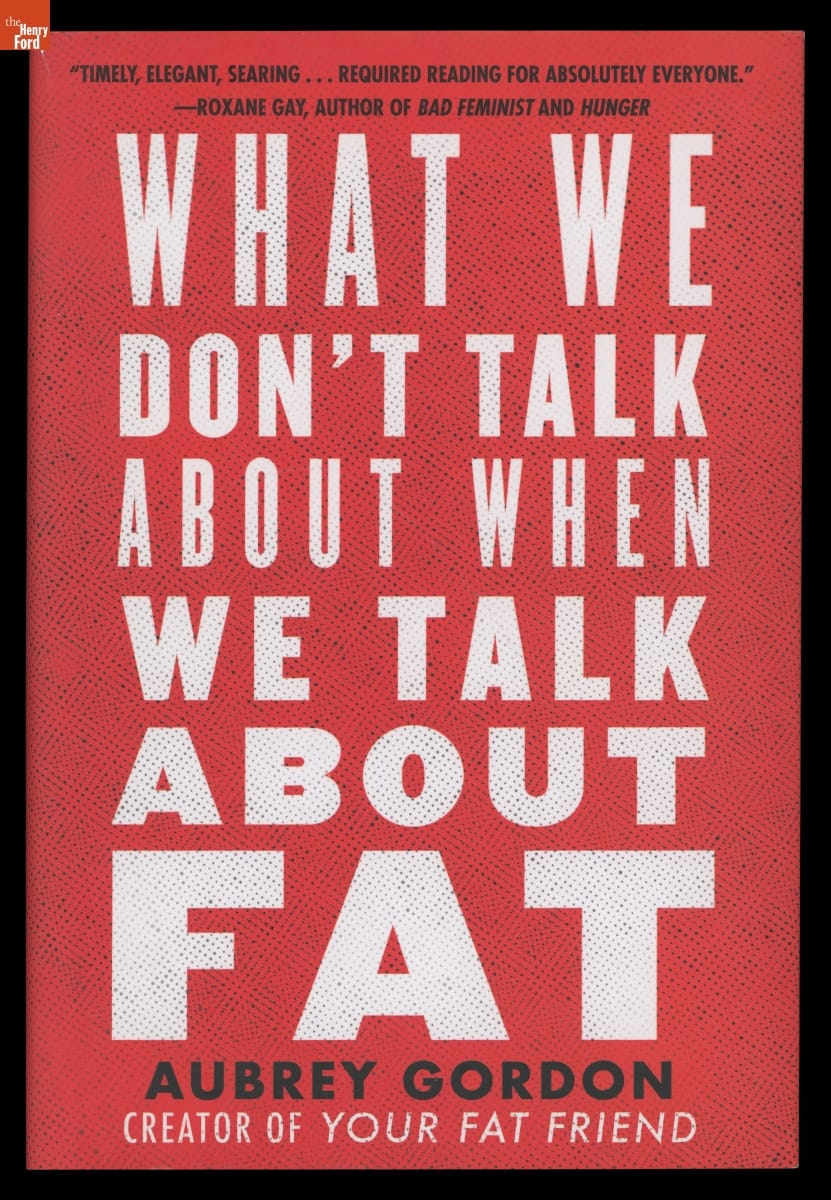
- "What We Don't Talk About When We Talk About Fat," 2020 - Aubrey Gordon (born 1983), also known as “Your Fat Friend,” is an author, podcaster, and activist, focusing on fatness, fat acceptance, and anti-fat bias. Her first book, <em>What We Don't Talk About When We Talk About Fat</em>, was published in 2020. It analyzes the anti-fat bias (or “fatphobia”) embedded in American culture, and how it affects the lives of fat people.
- 2020
- Collections - Artifact
"What We Don't Talk About When We Talk About Fat," 2020
Aubrey Gordon (born 1983), also known as “Your Fat Friend,” is an author, podcaster, and activist, focusing on fatness, fat acceptance, and anti-fat bias. Her first book, What We Don't Talk About When We Talk About Fat, was published in 2020. It analyzes the anti-fat bias (or “fatphobia”) embedded in American culture, and how it affects the lives of fat people.
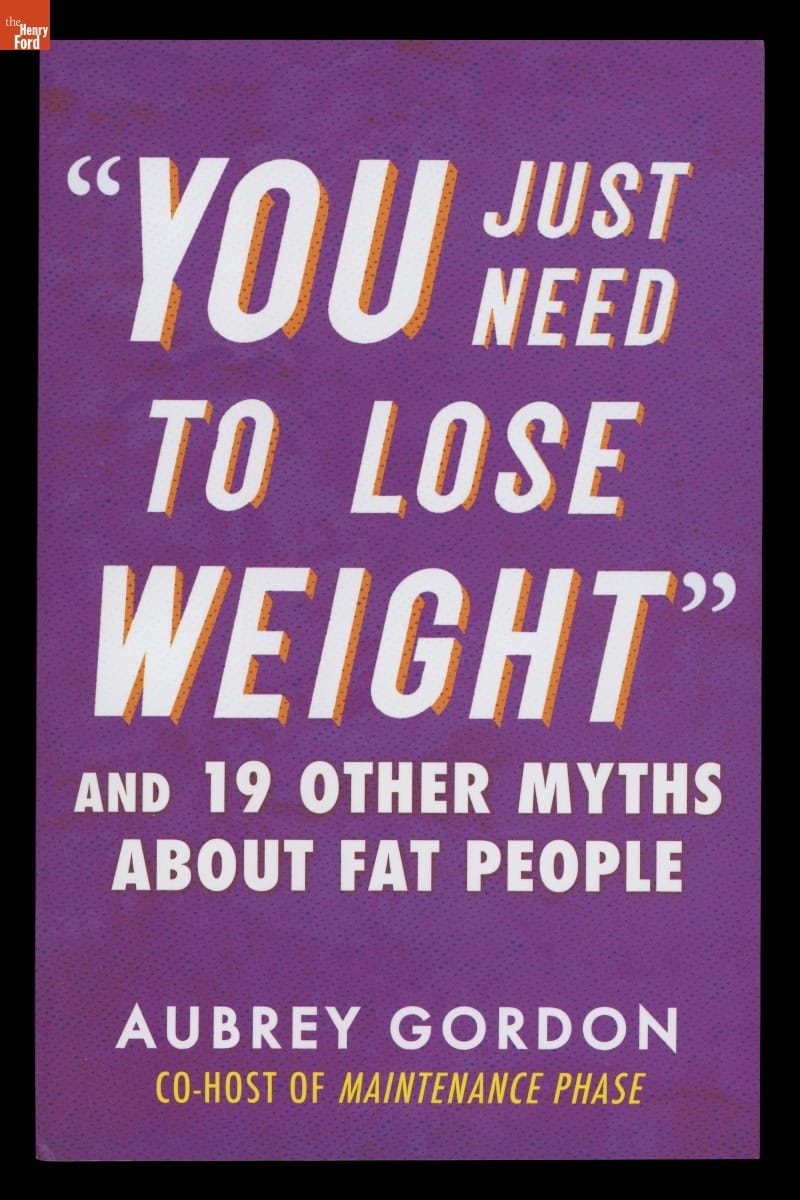
- "You Just Need to Lose Weight: And 19 Other Myths About Fat People," 2023 - Aubrey Gordon (born 1983), also known as “Your Fat Friend,” is an author, podcaster, and activist, focusing on fatness, fat acceptance, and anti-fat bias. She published her second book, <em> You Just Need to Lose Weight</em>, in 2024. It examines myths regarding body weight, and addresses them with scientific and historical research.
- 2023
- Collections - Artifact
"You Just Need to Lose Weight: And 19 Other Myths About Fat People," 2023
Aubrey Gordon (born 1983), also known as “Your Fat Friend,” is an author, podcaster, and activist, focusing on fatness, fat acceptance, and anti-fat bias. She published her second book, You Just Need to Lose Weight, in 2024. It examines myths regarding body weight, and addresses them with scientific and historical research.