
Search
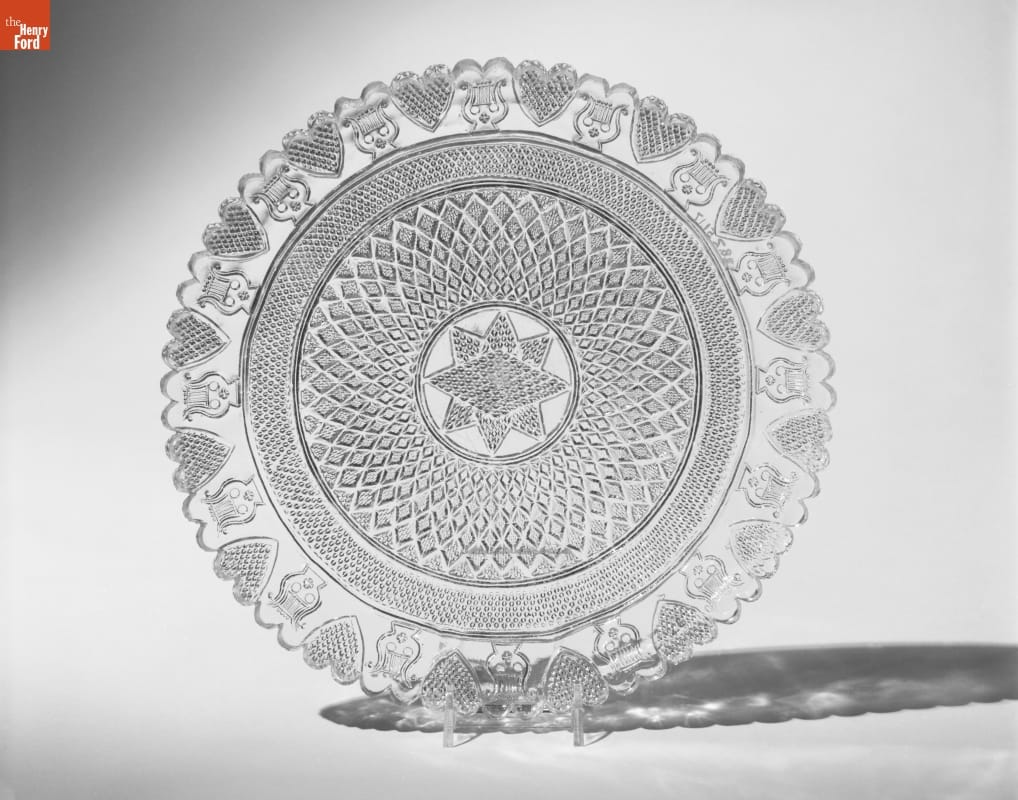
- Dish, 1825-1845 - Mechanically pressed glass was an innovation in glass history, making decorative, "patterned" glass available to a broad audience. One of the earliest types of pressed glass, dating to the 1830s is known as "Lacy Glass". Complex stippled patterns were developed to help hide technical defects caused by early presses, when the glass gather was cut off and dropped into a mold.
- 1825-1845
- Collections - Artifact
Dish, 1825-1845
Mechanically pressed glass was an innovation in glass history, making decorative, "patterned" glass available to a broad audience. One of the earliest types of pressed glass, dating to the 1830s is known as "Lacy Glass". Complex stippled patterns were developed to help hide technical defects caused by early presses, when the glass gather was cut off and dropped into a mold.
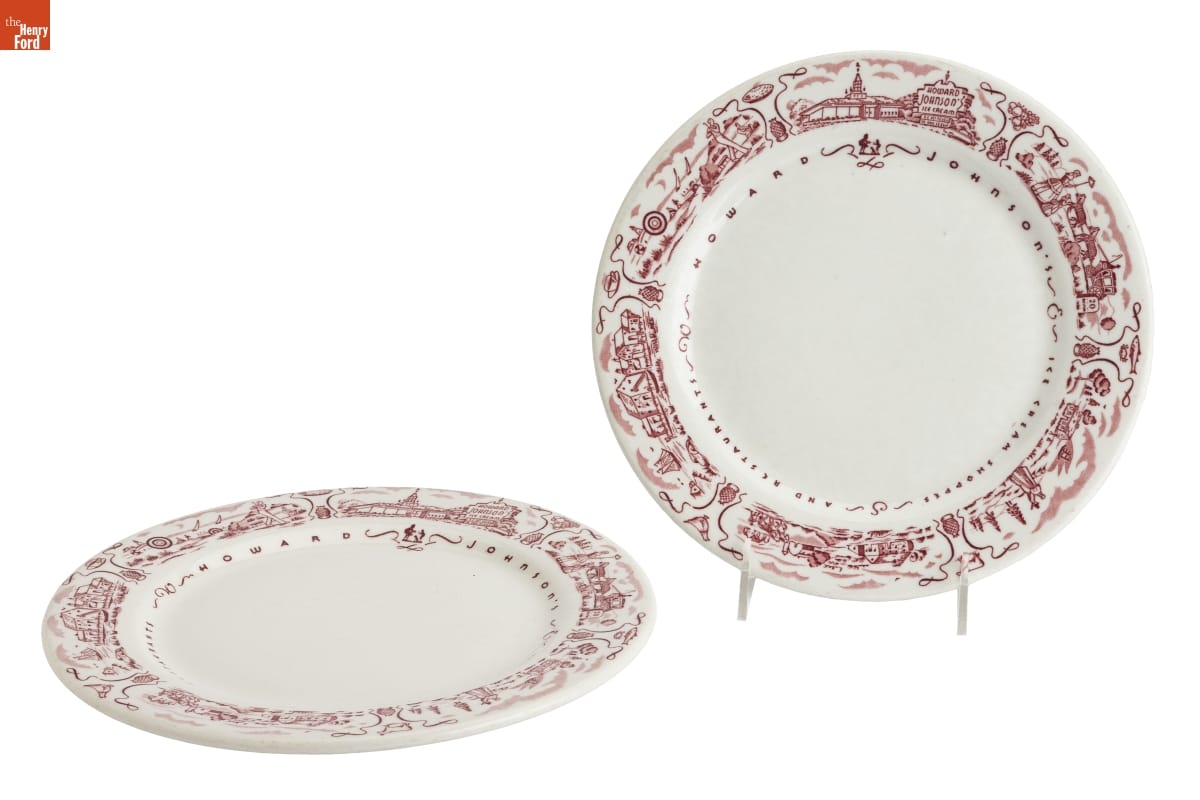
- Howard Johnson's Plates, 1951-1954 - In the 1920s, Howard Deering Johnson began selling ice cream from food stands around Boston, Massachusetts. Johnson later expanded his business to full-service restaurants. He franchised these orange-roofed establishments across America, locating them along highways to cater to the traveling public. This plate celebrates America's growth with idyllic scenes on the rim, including one of a Howard Johnson's restaurant.
- 1951-1954
- Collections - Artifact
Howard Johnson's Plates, 1951-1954
In the 1920s, Howard Deering Johnson began selling ice cream from food stands around Boston, Massachusetts. Johnson later expanded his business to full-service restaurants. He franchised these orange-roofed establishments across America, locating them along highways to cater to the traveling public. This plate celebrates America's growth with idyllic scenes on the rim, including one of a Howard Johnson's restaurant.
- Corning Sidekick Dish, 1977-1983 -
- 1977-1983
- Collections - Artifact
Corning Sidekick Dish, 1977-1983
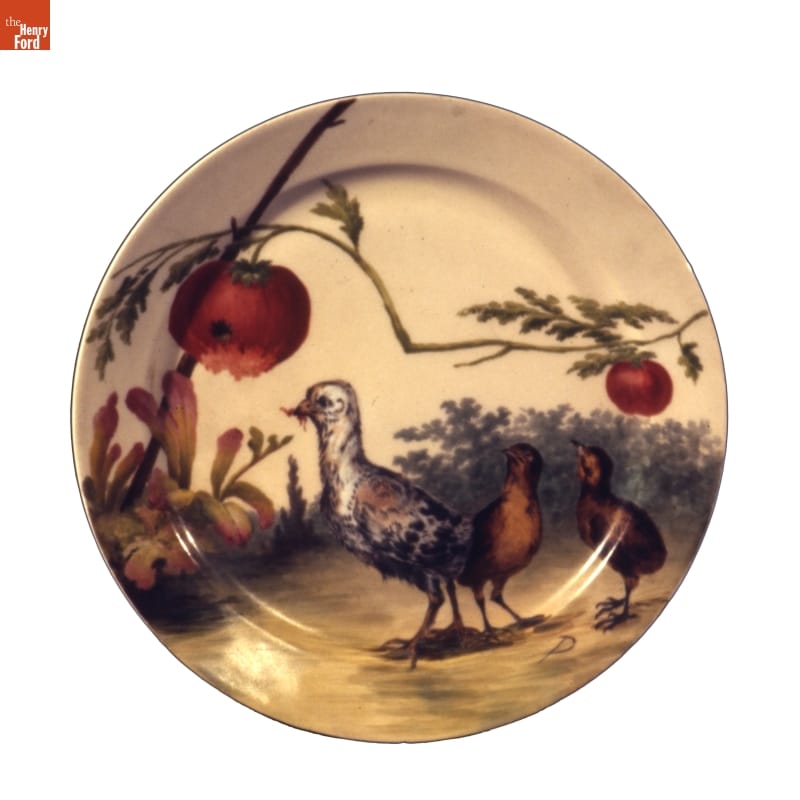
- Plate, circa 1880 - Ever since the White House became the President's official home, dinnerware for state occasions was purchased in great quantities. Usually, the china was the choice of the President or his wife. The next administration sometimes added to the set or in many cases, disposed of the remnants and ordered new. This plate came from the service used by President Rutherford B. Hayes.
- circa 1880
- Collections - Artifact
Plate, circa 1880
Ever since the White House became the President's official home, dinnerware for state occasions was purchased in great quantities. Usually, the china was the choice of the President or his wife. The next administration sometimes added to the set or in many cases, disposed of the remnants and ordered new. This plate came from the service used by President Rutherford B. Hayes.
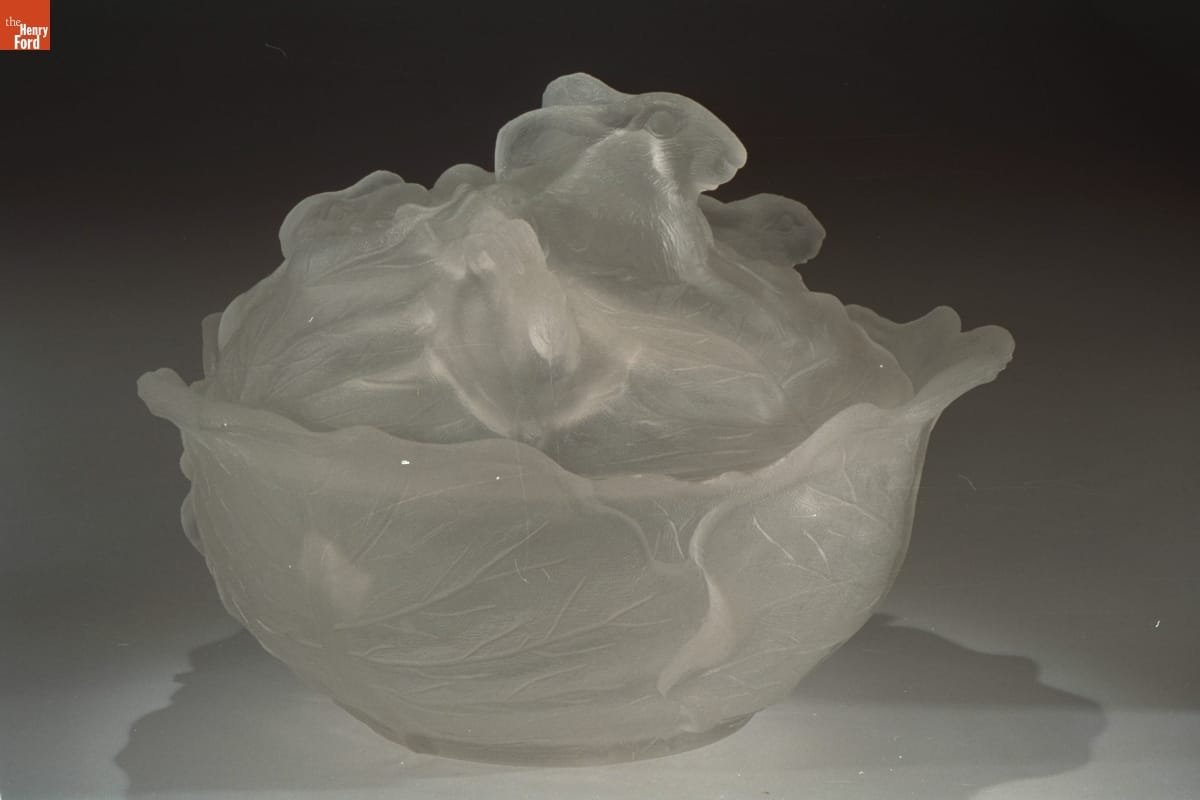
- Covered Dish, 1894-1903 - Nineteenth-century American glassmakers experimented with new methods to create products for a growing consumer market. In the 1820s, pressing glass into metal molds by machine was perfected, and by the mid-1800s, manufacturers were creating a variety of inexpensive pressed glass housewares. America's middle-class consumers could now decorate their homes with attractive glass bowls, creamers, dishes, plates, vases, and other tableware.
- 1880-1900
- Collections - Artifact
Covered Dish, 1894-1903
Nineteenth-century American glassmakers experimented with new methods to create products for a growing consumer market. In the 1820s, pressing glass into metal molds by machine was perfected, and by the mid-1800s, manufacturers were creating a variety of inexpensive pressed glass housewares. America's middle-class consumers could now decorate their homes with attractive glass bowls, creamers, dishes, plates, vases, and other tableware.
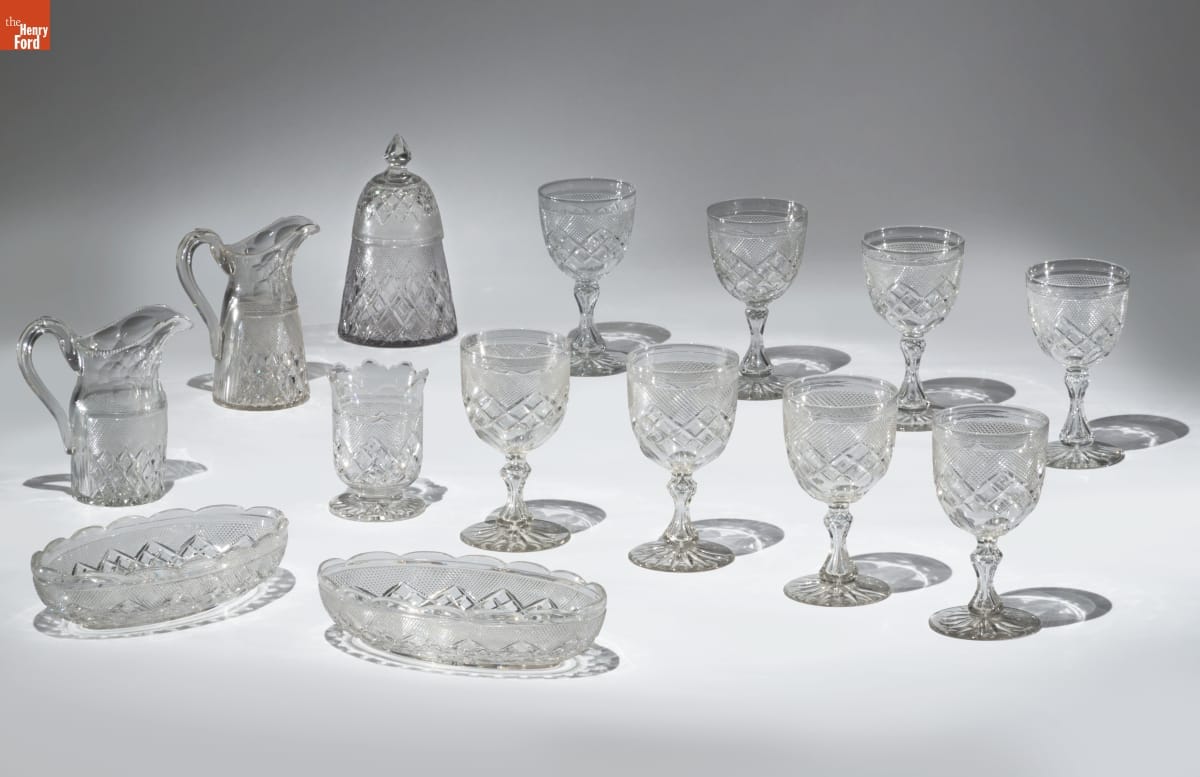
- Cut Glass Tableware, 1855-1870 -
- 1855-1870
- Collections - Artifact
Cut Glass Tableware, 1855-1870
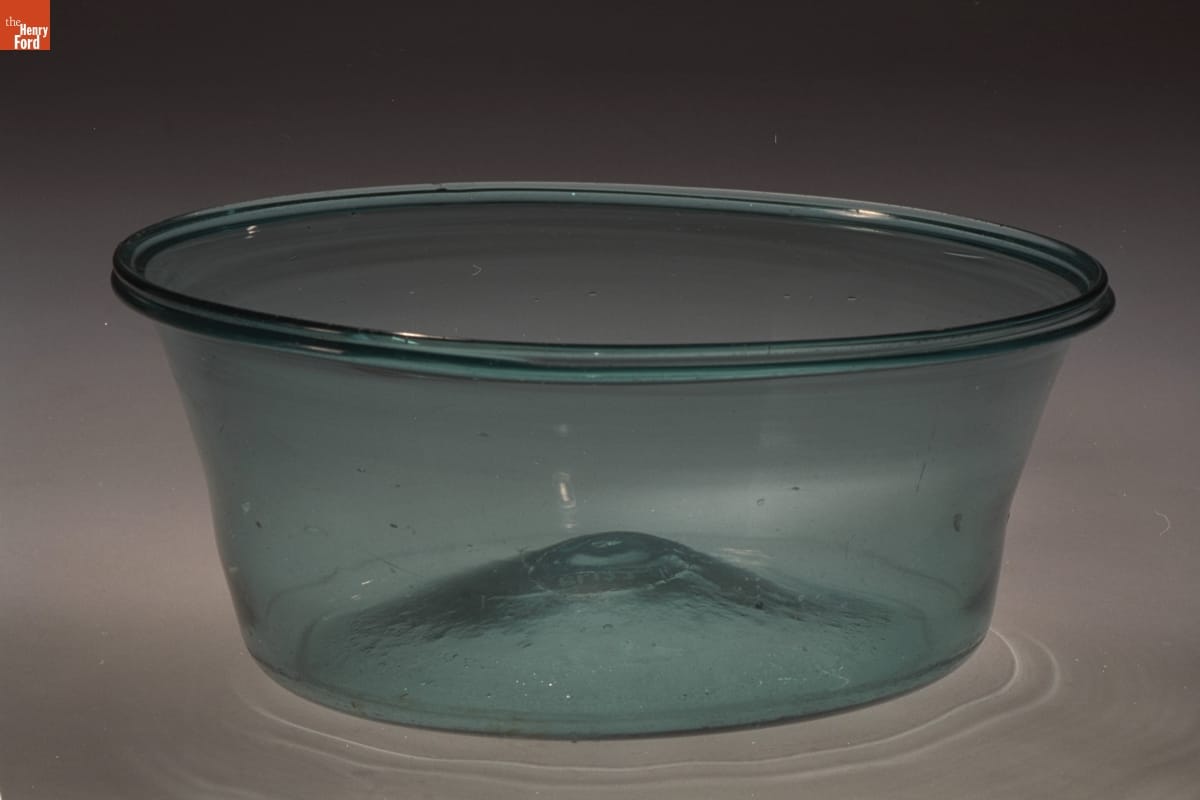
- Bowl, 1857-1867 - American glass factories made a variety of glass products for the early-nineteenth-century consumer. Glassblowers turned out bottles, flasks, tableware and other household items. Earlier products were affordable only to the well-to-do. But by the second quarter of the 19th century, a growing number of manufacturers made reasonably priced blown-glass items available to the expanding middle class.
- 1857-1867
- Collections - Artifact
Bowl, 1857-1867
American glass factories made a variety of glass products for the early-nineteenth-century consumer. Glassblowers turned out bottles, flasks, tableware and other household items. Earlier products were affordable only to the well-to-do. But by the second quarter of the 19th century, a growing number of manufacturers made reasonably priced blown-glass items available to the expanding middle class.
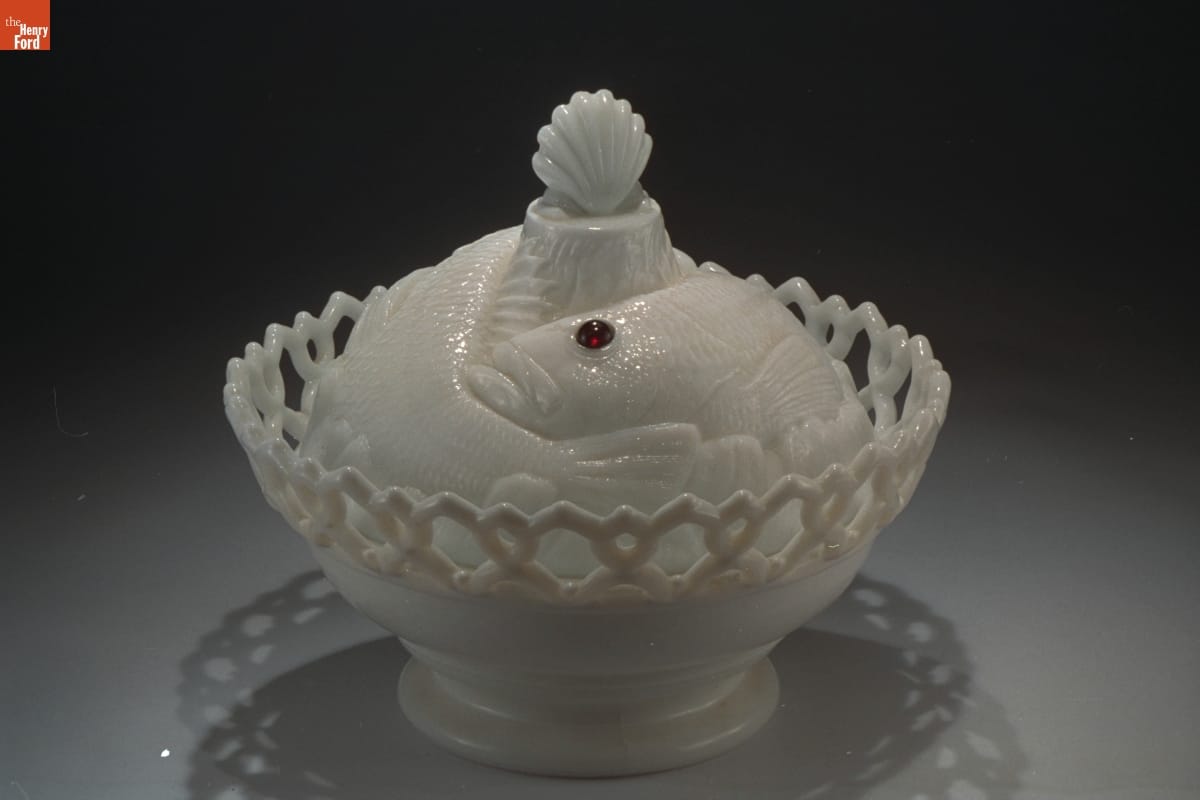
- Covered Dish, 1889-1893 - Nineteenth-century American glassmakers experimented with new methods to create products for a growing consumer market. In the 1820s, pressing glass into metal molds by machine was perfected, and by the mid-1800s, manufacturers were creating a variety of inexpensive pressed glass housewares. America's middle-class consumers could now decorate their homes with attractive glass bowls, creamers, dishes, plates, vases, and other tableware.
- 1889-1893
- Collections - Artifact
Covered Dish, 1889-1893
Nineteenth-century American glassmakers experimented with new methods to create products for a growing consumer market. In the 1820s, pressing glass into metal molds by machine was perfected, and by the mid-1800s, manufacturers were creating a variety of inexpensive pressed glass housewares. America's middle-class consumers could now decorate their homes with attractive glass bowls, creamers, dishes, plates, vases, and other tableware.
- Dish, 1835-1850 - Mechanically pressed glass was an innovation in glass history, making decorative, "patterned" glass available to a broad audience. One of the earliest types of pressed glass, dating to the 1830s is known as "Lacy Glass". Complex stippled patterns were developed to help hide technical defects caused by early presses, when the glass gather was cut off and dropped into a mold.
- 1835-1850
- Collections - Artifact
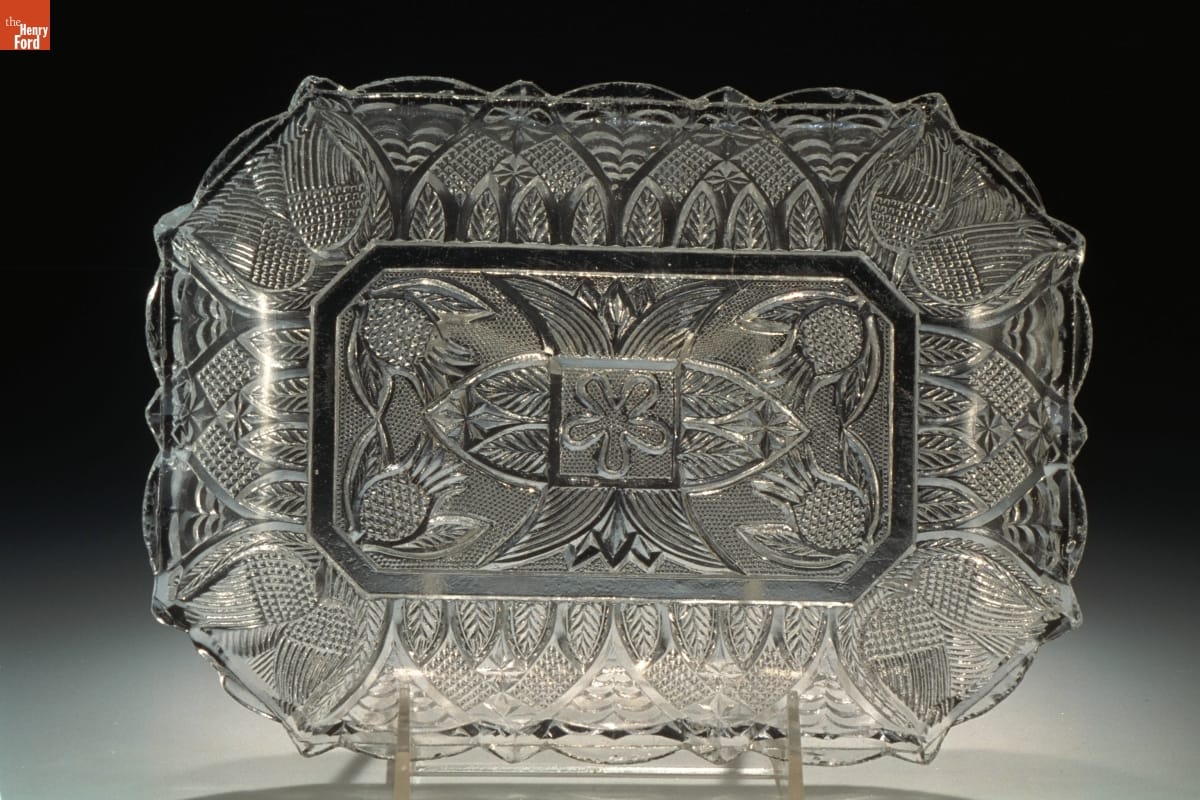
Dish, 1835-1850
Mechanically pressed glass was an innovation in glass history, making decorative, "patterned" glass available to a broad audience. One of the earliest types of pressed glass, dating to the 1830s is known as "Lacy Glass". Complex stippled patterns were developed to help hide technical defects caused by early presses, when the glass gather was cut off and dropped into a mold.
- Dish, 1825-1845 - Mechanically pressed glass was an innovation in glass history, making decorative, "patterned" glass available to a broad audience. One of the earliest types of pressed glass, dating to the 1830s is known as "Lacy Glass". Complex stippled patterns were developed to help hide technical defects caused by early presses, when the glass gather was cut off and dropped into a mold.
- 1825-1845
- Collections - Artifact
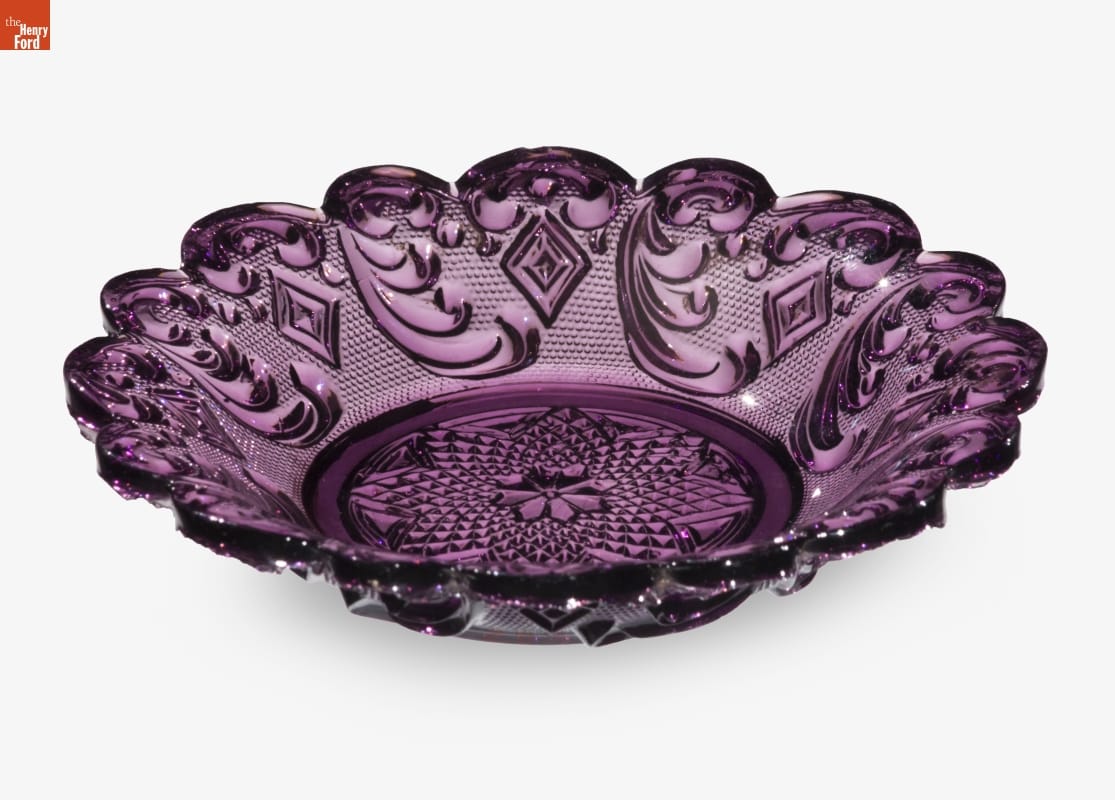
Dish, 1825-1845
Mechanically pressed glass was an innovation in glass history, making decorative, "patterned" glass available to a broad audience. One of the earliest types of pressed glass, dating to the 1830s is known as "Lacy Glass". Complex stippled patterns were developed to help hide technical defects caused by early presses, when the glass gather was cut off and dropped into a mold.