
Search
- Ford Employee Sylvester Rypkowski with Service Dog "Blackie," Being Photographed for ID Badge, October 1942 - Henry Ford believed in providing equal employment opportunities to people with disabilities -- a practice he began in the early years of his company. During World War II, Ford employed thousands of workers with disabilities. In October 1942, Ford Motor Company photographed Sylvester Rypkowski and his service dog, Blackie, as they became members of the Rouge plant's workforce.
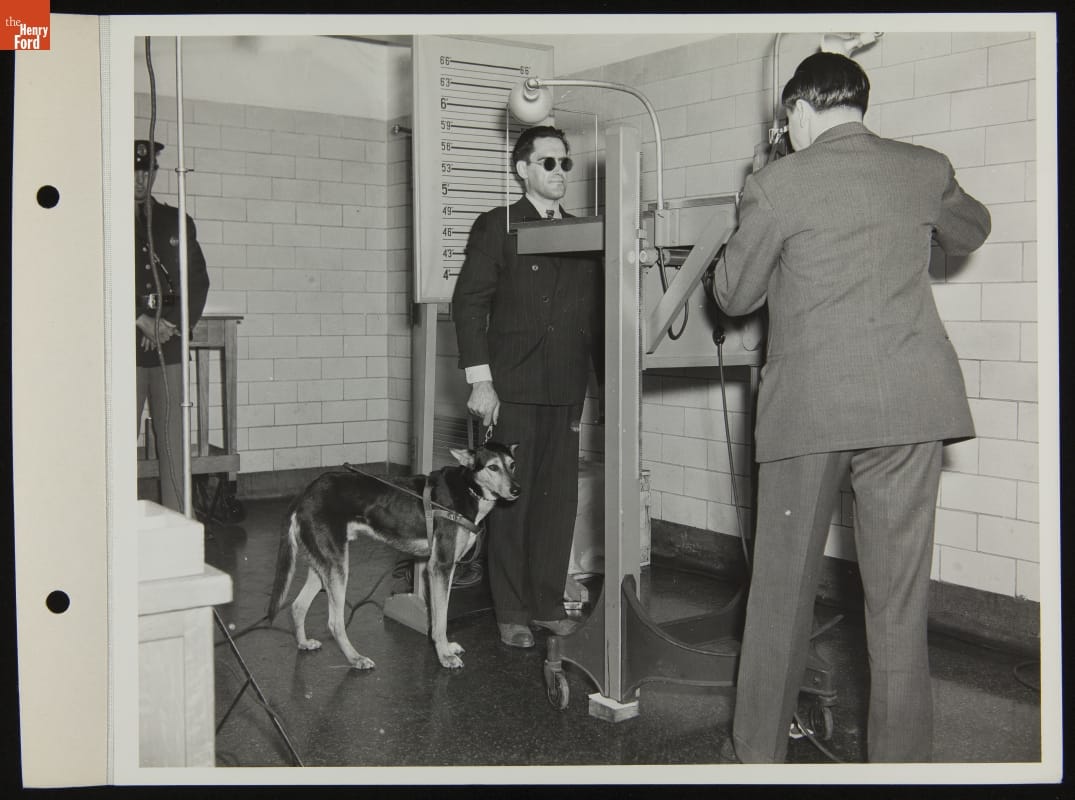
- October 05, 1942
- Collections - Artifact
Ford Employee Sylvester Rypkowski with Service Dog "Blackie," Being Photographed for ID Badge, October 1942
Henry Ford believed in providing equal employment opportunities to people with disabilities -- a practice he began in the early years of his company. During World War II, Ford employed thousands of workers with disabilities. In October 1942, Ford Motor Company photographed Sylvester Rypkowski and his service dog, Blackie, as they became members of the Rouge plant's workforce.
- Letter from Henry A. Colgate, The Seeing Eye Guide Dog School, to Edsel and Eleanor Ford, December 15, 1941 -
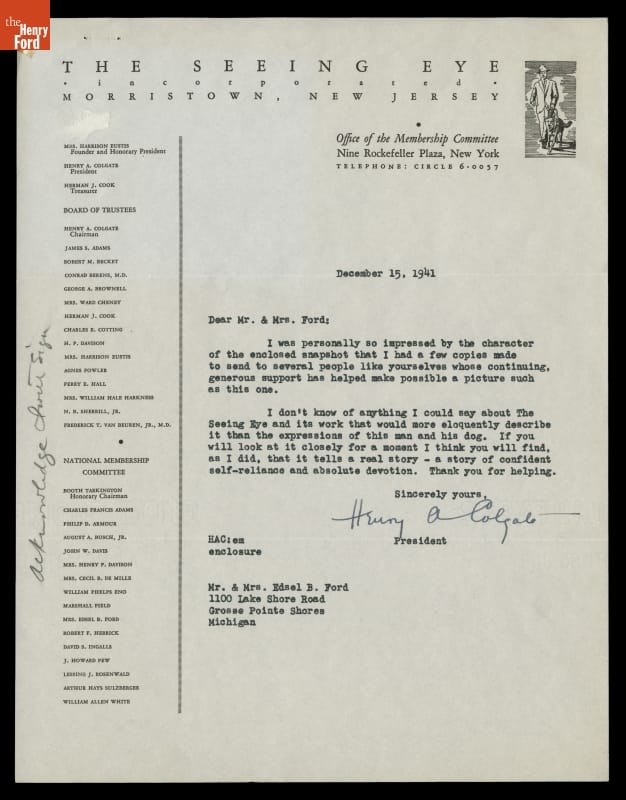
- December 15, 1941
- Collections - Artifact
Letter from Henry A. Colgate, The Seeing Eye Guide Dog School, to Edsel and Eleanor Ford, December 15, 1941
- Ford Employee Sylvester Rypkowski Filling Out Paperwork, October 1942 - Henry Ford believed in providing equal employment opportunities to people with disabilities -- a practice he began in the early years of his company. During World War II, Ford employed thousands of workers with disabilities. In October 1942, Ford Motor Company photographed Sylvester Rypkowski and his service dog, Blackie, as they became members of the Rouge plant's workforce.
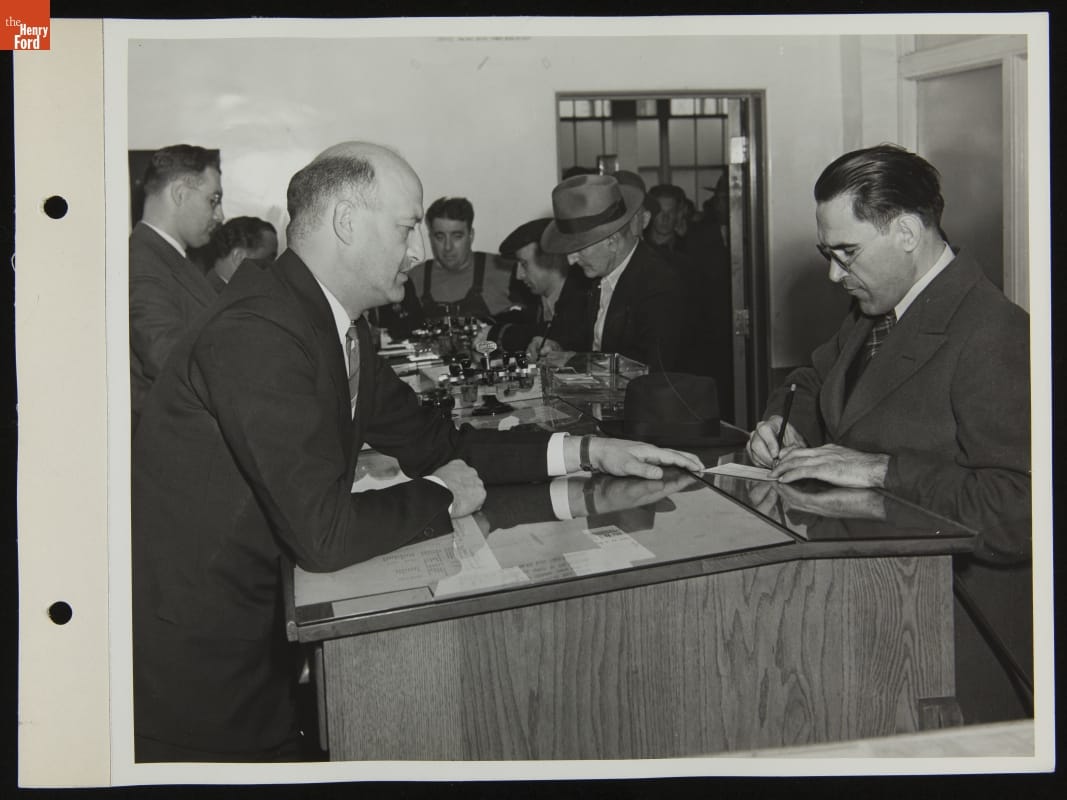
- October 05, 1942
- Collections - Artifact
Ford Employee Sylvester Rypkowski Filling Out Paperwork, October 1942
Henry Ford believed in providing equal employment opportunities to people with disabilities -- a practice he began in the early years of his company. During World War II, Ford employed thousands of workers with disabilities. In October 1942, Ford Motor Company photographed Sylvester Rypkowski and his service dog, Blackie, as they became members of the Rouge plant's workforce.
- Ford Employee Sylvester Rypkowski with His Service Dog "Blackie," October 1942 - Henry Ford believed in providing equal employment opportunities to people with disabilities -- a practice he began in the early years of his company. During World War II, Ford employed thousands of workers with disabilities. In October 1942, Ford Motor Company photographed Sylvester Rypkowski and his service dog, Blackie, as they became members of the Rouge plant's workforce.
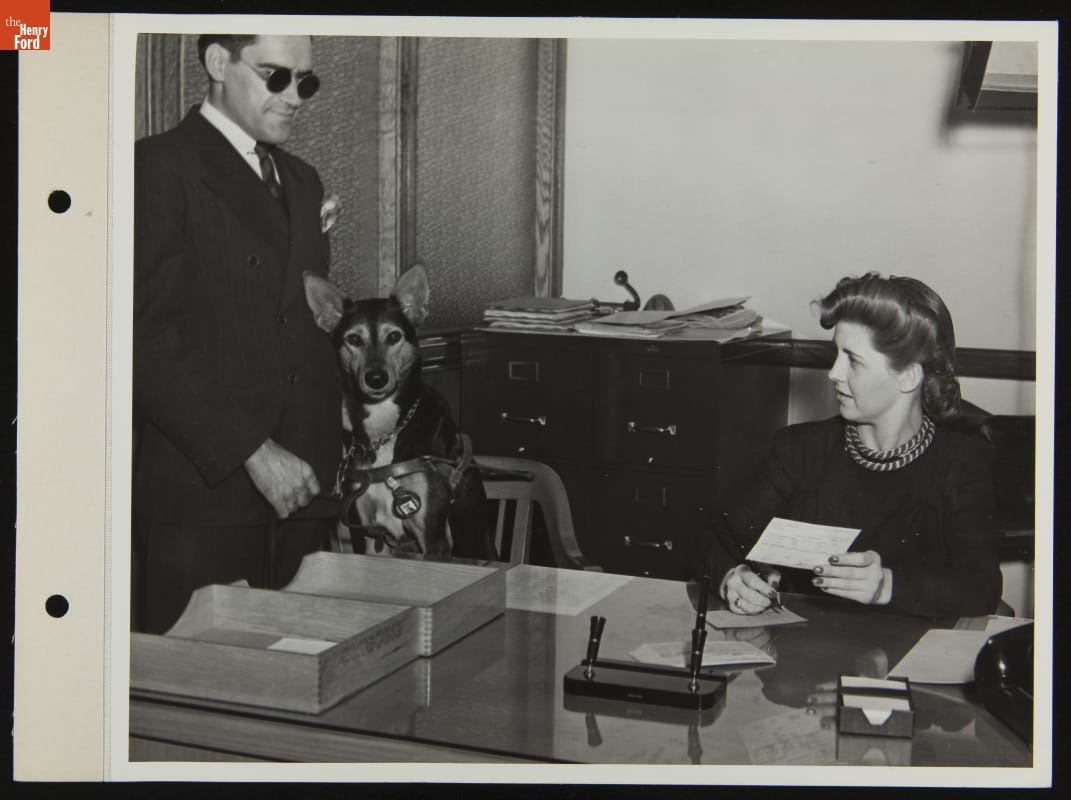
- October 05, 1942
- Collections - Artifact
Ford Employee Sylvester Rypkowski with His Service Dog "Blackie," October 1942
Henry Ford believed in providing equal employment opportunities to people with disabilities -- a practice he began in the early years of his company. During World War II, Ford employed thousands of workers with disabilities. In October 1942, Ford Motor Company photographed Sylvester Rypkowski and his service dog, Blackie, as they became members of the Rouge plant's workforce.
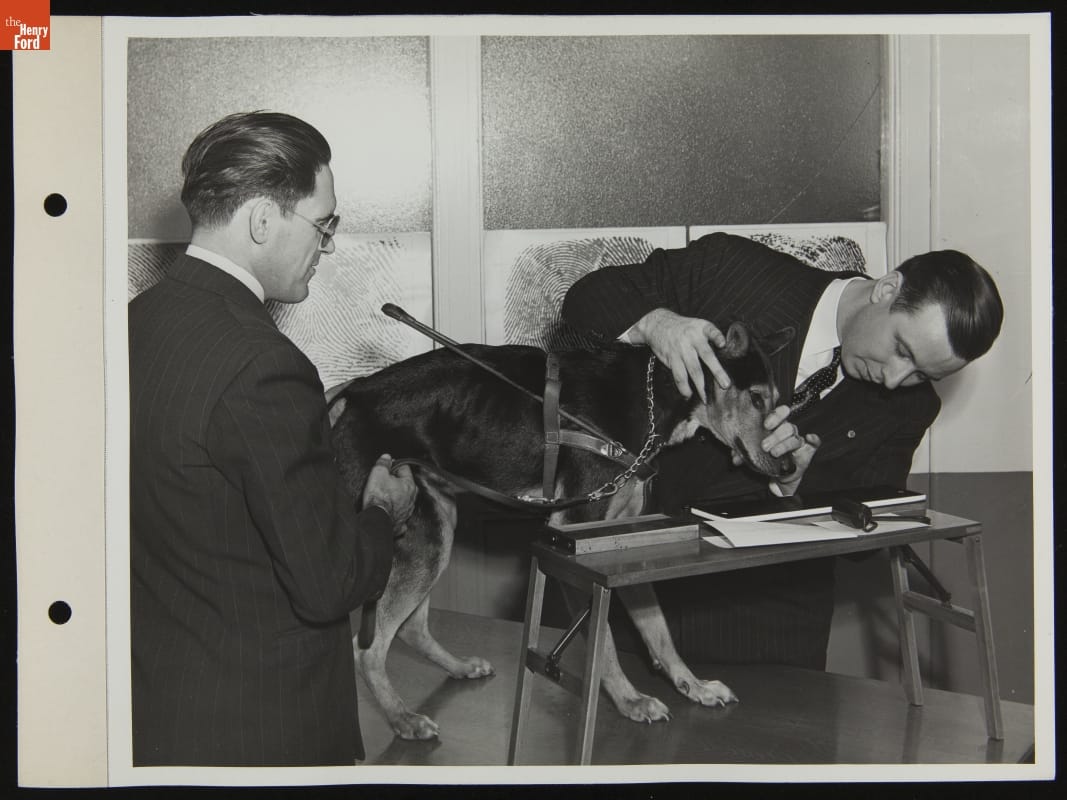
- Ford Employee's Service Dog Being "Noseprinted" for Identification, October 1942 - Blackie was a leader or service dog that helped blind employee Sylvester Rypkowski travel to and from his job at the Ford Rouge factory during World War II. The dog, like his human coworkers, was finger (or "paw") printed and received a photo identification badge -- standard for war workers. Local and regional newspapers ran articles about Blackie and his role in wartime production.
- October 05, 1942
- Collections - Artifact
Ford Employee's Service Dog Being "Noseprinted" for Identification, October 1942
Blackie was a leader or service dog that helped blind employee Sylvester Rypkowski travel to and from his job at the Ford Rouge factory during World War II. The dog, like his human coworkers, was finger (or "paw") printed and received a photo identification badge -- standard for war workers. Local and regional newspapers ran articles about Blackie and his role in wartime production.
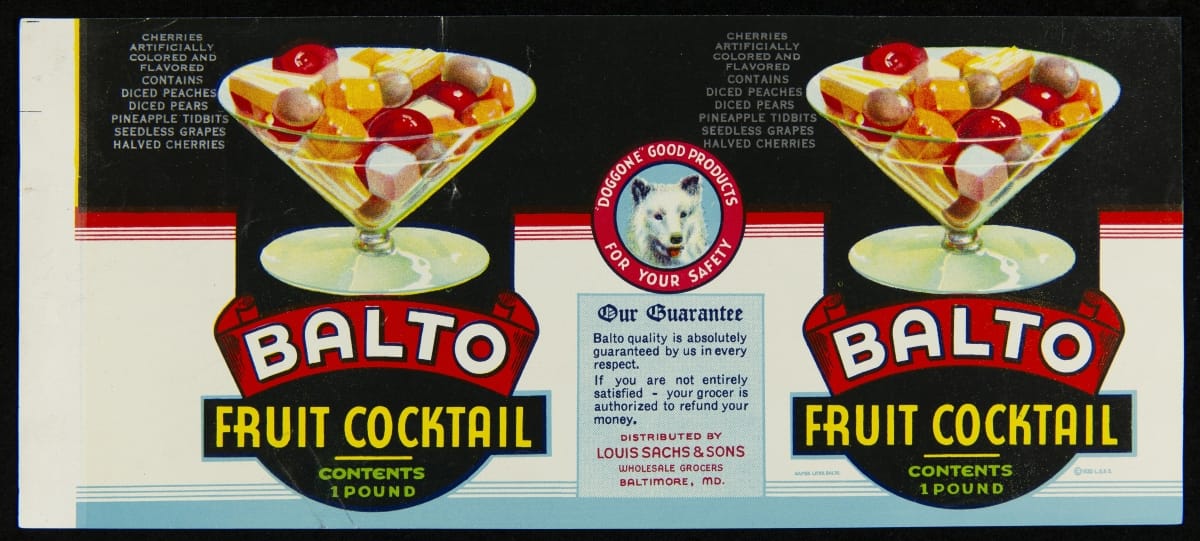
- Can Label, "Balto Brand Fruit Cocktail," 1935 - Manufacturers of similar products sought ways to make their company's goods stand out on store shelves. Attractive labels, like this design for Balto Brand Fruit Cocktails, helped catch the attention of potential customers - hopefully encouraging them to purchase the company's product rather than that of a competitor.
- 1935
- Collections - Artifact
Can Label, "Balto Brand Fruit Cocktail," 1935
Manufacturers of similar products sought ways to make their company's goods stand out on store shelves. Attractive labels, like this design for Balto Brand Fruit Cocktails, helped catch the attention of potential customers - hopefully encouraging them to purchase the company's product rather than that of a competitor.
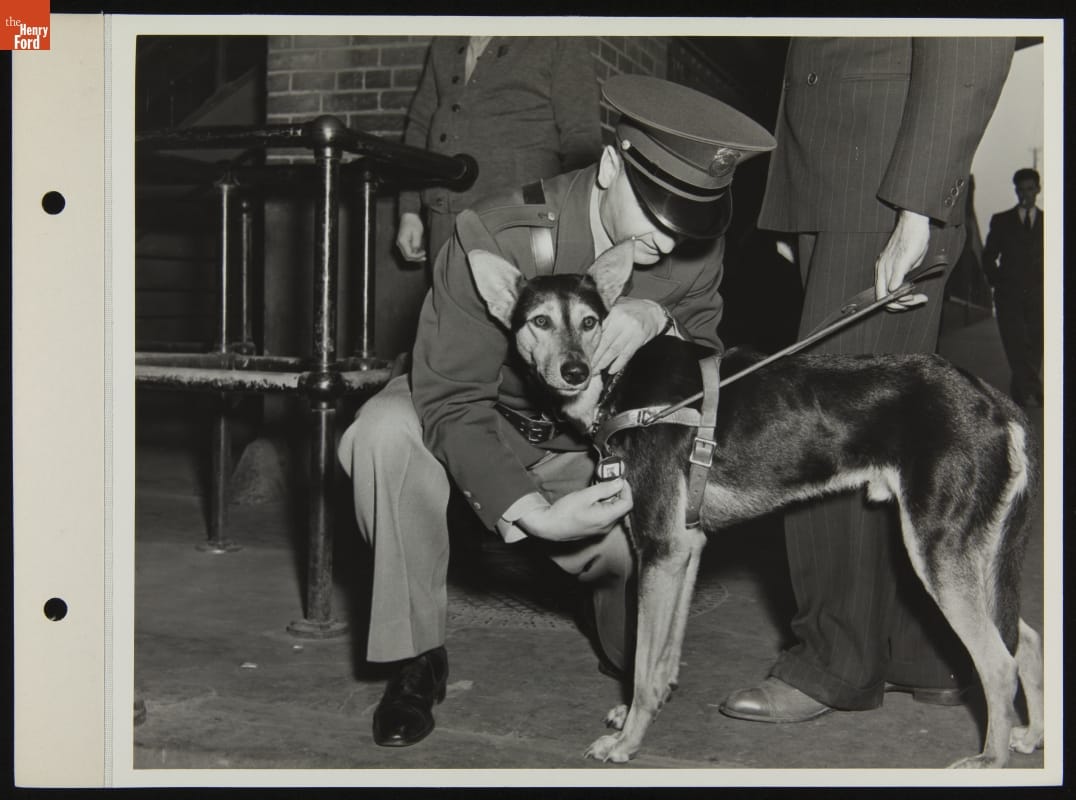
- Checking ID Badge of Ford Employee's Service Dog "Blackie," October 1942 - Blackie was a leader or service dog that helped blind employee Sylvester Rypkowski travel to and from his job at the Ford Rouge factory during World War II. The dog, like his human coworkers, was finger (or "paw") printed and received a photo identification badge -- standard for war workers. Local and regional newspapers ran articles about Blackie and his role in wartime production.
- October 05, 1942
- Collections - Artifact
Checking ID Badge of Ford Employee's Service Dog "Blackie," October 1942
Blackie was a leader or service dog that helped blind employee Sylvester Rypkowski travel to and from his job at the Ford Rouge factory during World War II. The dog, like his human coworkers, was finger (or "paw") printed and received a photo identification badge -- standard for war workers. Local and regional newspapers ran articles about Blackie and his role in wartime production.
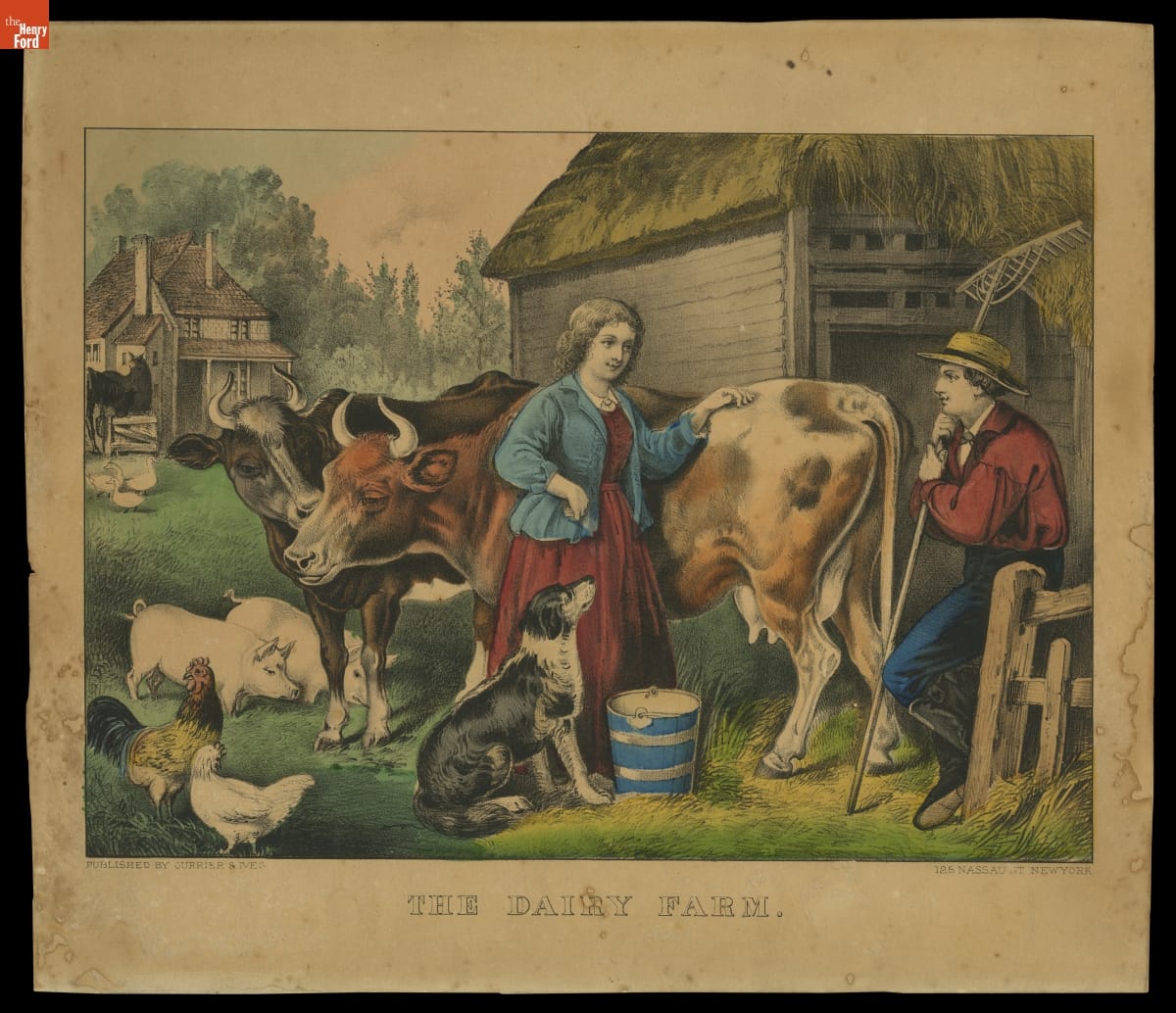
- Lithograph, "The Dairy Farm," circa 1874 -
- circa 1874
- Collections - Artifact
Lithograph, "The Dairy Farm," circa 1874
- Letter from Richard Trotter to Edsel Ford, Offering to Sell Drawings, March 20, 1924 -
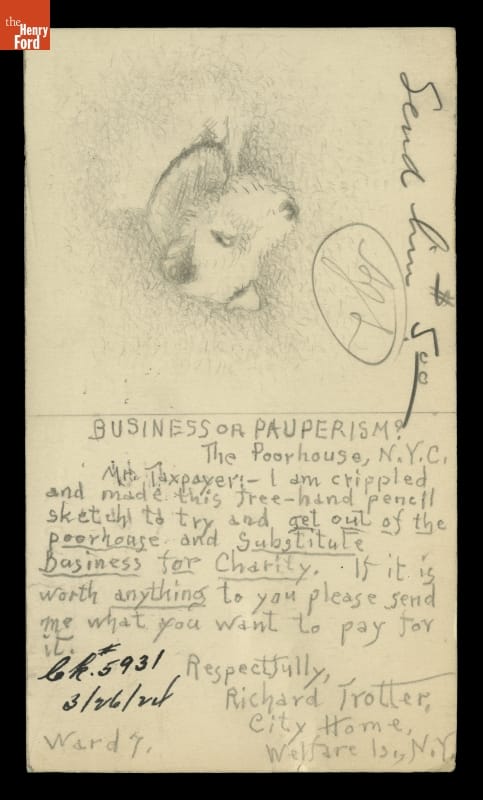
- March 20, 1924
- Collections - Artifact
Letter from Richard Trotter to Edsel Ford, Offering to Sell Drawings, March 20, 1924
- Letter from Richard Trotter to Edsel Ford, Offering to Sell Drawings, December 18, 1924 -
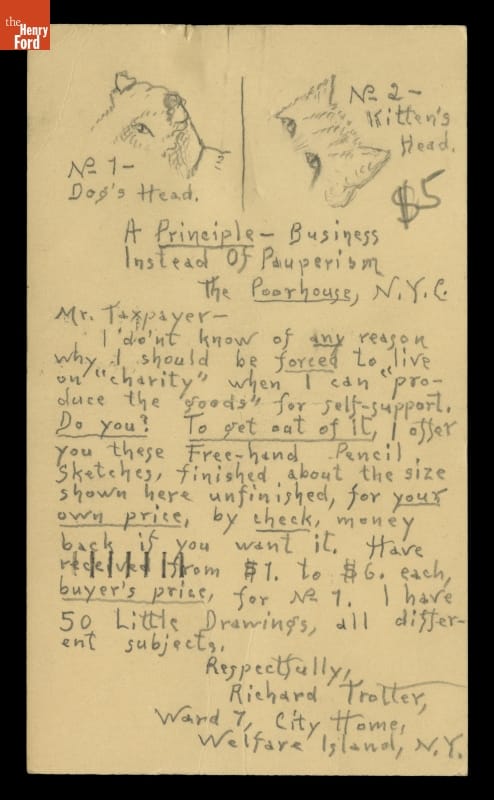
- December 18, 1924
- Collections - Artifact
Letter from Richard Trotter to Edsel Ford, Offering to Sell Drawings, December 18, 1924