
Search
- Trade Card for Ayer's Sarsaparilla, circa 1885 - In the last third of the nineteenth century, an unprecedented variety of consumer goods and services flooded the American market. Advertisers, armed with new methods of color printing, bombarded potential customers with trade cards. Americans enjoyed and often saved the vibrant little advertisements found in product packages or distributed by local merchants. Many survive as historical records of commercialism in the United States.
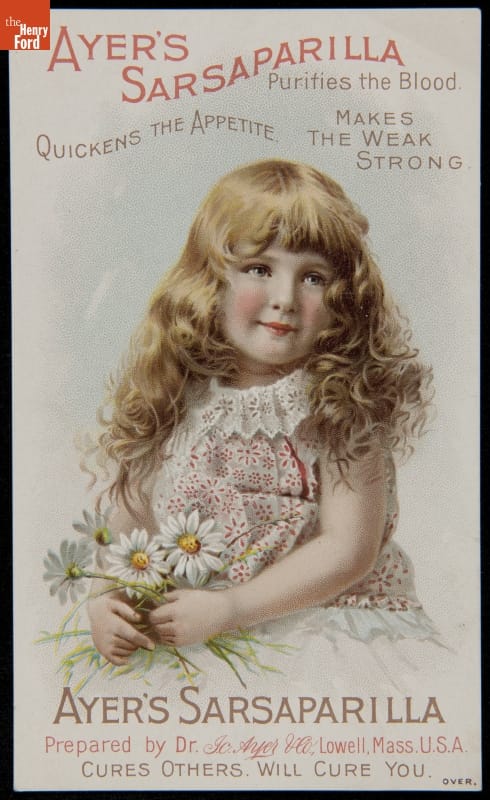
- circa 1885
- Collections - Artifact
Trade Card for Ayer's Sarsaparilla, circa 1885
In the last third of the nineteenth century, an unprecedented variety of consumer goods and services flooded the American market. Advertisers, armed with new methods of color printing, bombarded potential customers with trade cards. Americans enjoyed and often saved the vibrant little advertisements found in product packages or distributed by local merchants. Many survive as historical records of commercialism in the United States.
- Trade Card for Ayer's Sugar Coated Pills, "The Little Favorites," 1880-1900 - James C. Ayer (1818-1878), a purveyor of patent medicines in the 19th century, claimed his treatments could cure colds, coughs, and other ailments, purify the blood, and invigorate the hair. Ayer--and later his company--successfully marketed his products by printing thousands of trade cards, almanacs, and newspaper and magazine ads. Ayer's company continued production well into the 20th century.
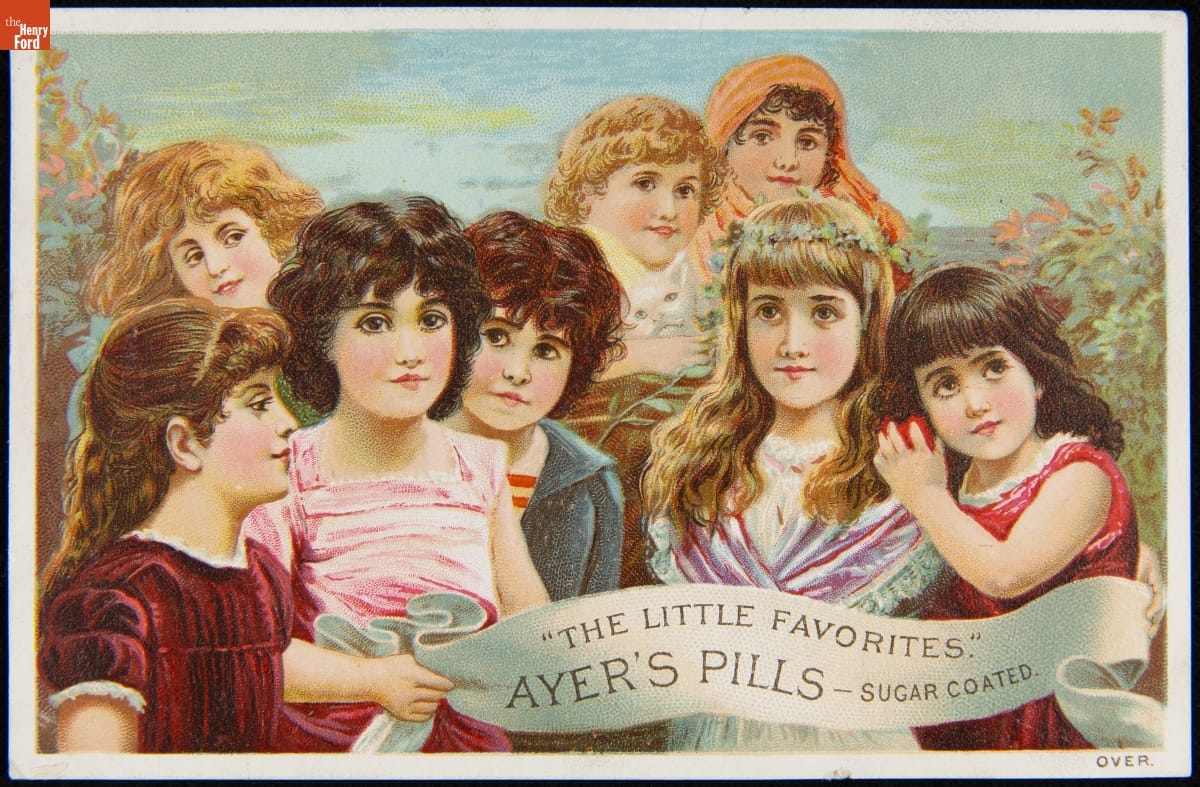
- 1880-1900
- Collections - Artifact
Trade Card for Ayer's Sugar Coated Pills, "The Little Favorites," 1880-1900
James C. Ayer (1818-1878), a purveyor of patent medicines in the 19th century, claimed his treatments could cure colds, coughs, and other ailments, purify the blood, and invigorate the hair. Ayer--and later his company--successfully marketed his products by printing thousands of trade cards, almanacs, and newspaper and magazine ads. Ayer's company continued production well into the 20th century.
- Trade Card for Ayer's Products, Weather and Medicine Signals for Daily Reference, 1886 - These weather signal flags are in the company of a dancing troupe of anthropomorphic Ayer's cherry cough syrup bottles. The flags signal "cold wave coming," "storm approaching," and temperature changes as patterns that are similar to the common cold and flu. The reverse tells us that our body, like the weather, can be read by its warning systems.
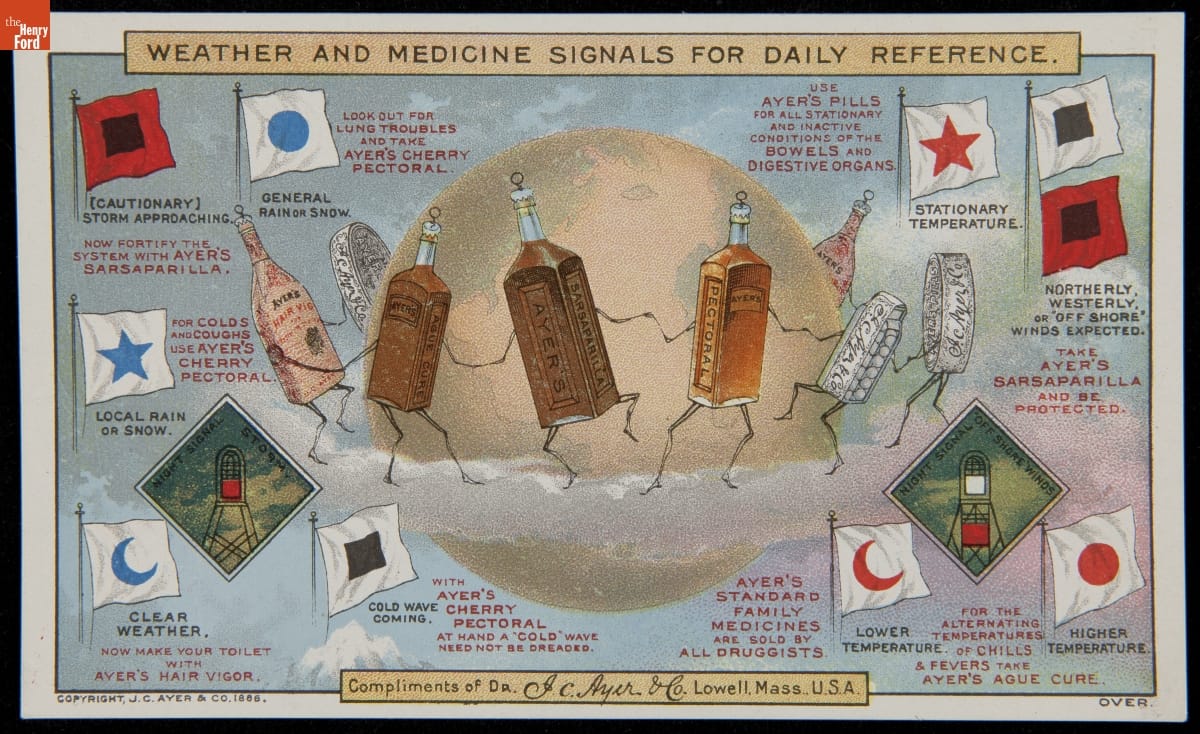
- 1886
- Collections - Artifact
Trade Card for Ayer's Products, Weather and Medicine Signals for Daily Reference, 1886
These weather signal flags are in the company of a dancing troupe of anthropomorphic Ayer's cherry cough syrup bottles. The flags signal "cold wave coming," "storm approaching," and temperature changes as patterns that are similar to the common cold and flu. The reverse tells us that our body, like the weather, can be read by its warning systems.
- Trade Card for Ayer's Products, Weather and Medicine Signals for Daily Reference, 1886 - James C. Ayer (1818-1878), a purveyor of patent medicines in the 19th century, claimed his treatments could cure colds, coughs, and other ailments, purify the blood, and invigorate the hair. Ayer--and later his company--successfully marketed his products by printing thousands of trade cards, almanacs, and newspaper and magazine ads. Ayer's company continued production well into the 20th century.
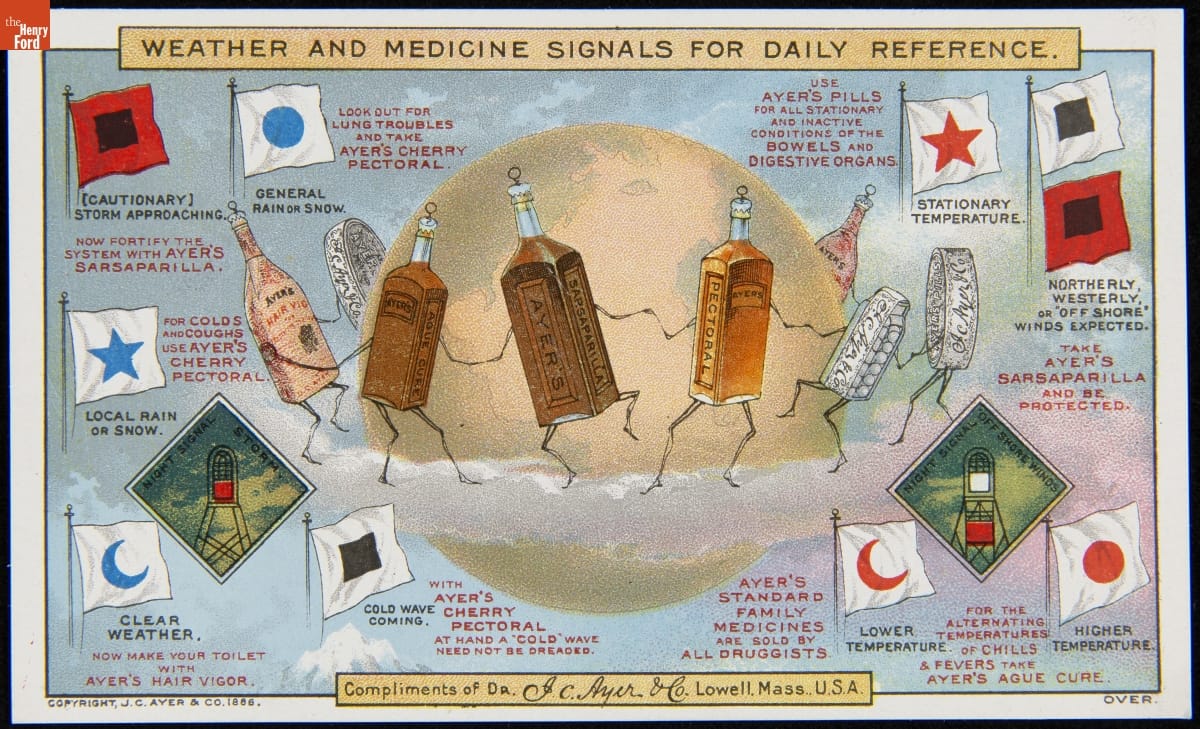
- 1886
- Collections - Artifact
Trade Card for Ayer's Products, Weather and Medicine Signals for Daily Reference, 1886
James C. Ayer (1818-1878), a purveyor of patent medicines in the 19th century, claimed his treatments could cure colds, coughs, and other ailments, purify the blood, and invigorate the hair. Ayer--and later his company--successfully marketed his products by printing thousands of trade cards, almanacs, and newspaper and magazine ads. Ayer's company continued production well into the 20th century.
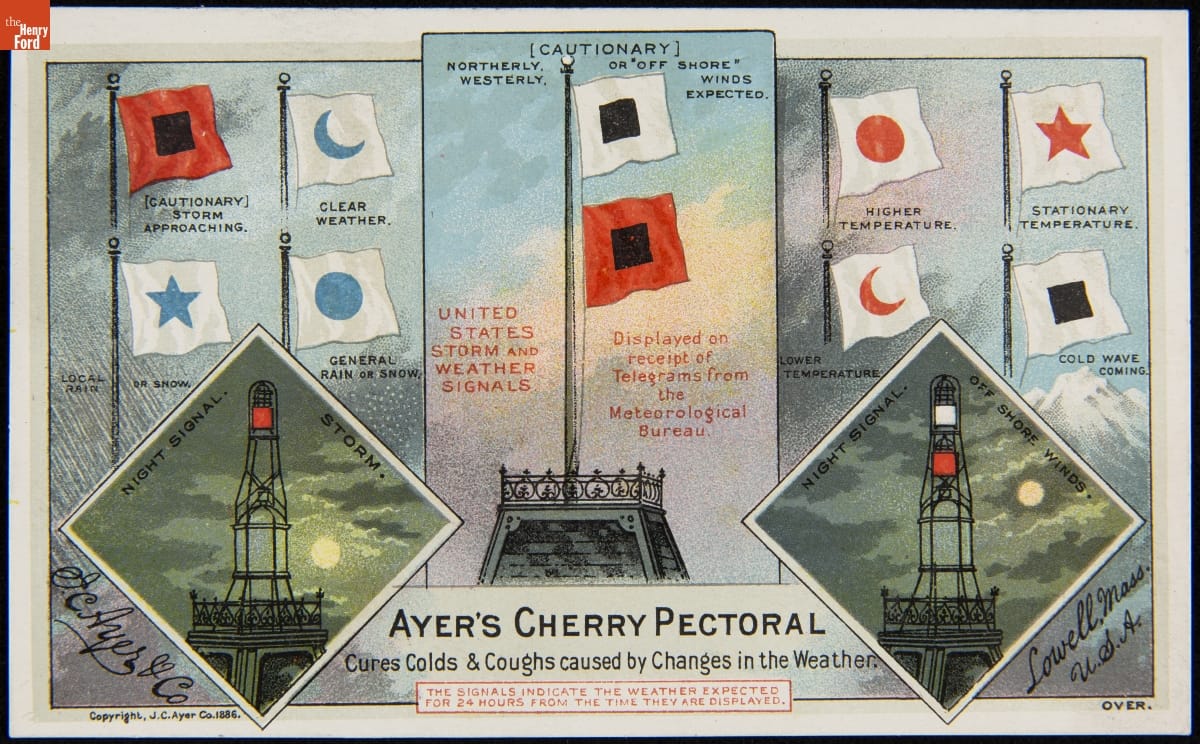
- Trade Card for Ayer's Cherry Pectoral, "Cures Colds & Coughs Caused by Changes in the Weather," 1886 - James C. Ayer (1818-1878), a purveyor of patent medicines in the 19th century, claimed his treatments could cure colds, coughs, and other ailments, purify the blood, and invigorate the hair. Ayer--and later his company--successfully marketed his products by printing thousands of trade cards, almanacs, and newspaper and magazine ads. Ayer's company continued production well into the 20th century.
- 1886
- Collections - Artifact
Trade Card for Ayer's Cherry Pectoral, "Cures Colds & Coughs Caused by Changes in the Weather," 1886
James C. Ayer (1818-1878), a purveyor of patent medicines in the 19th century, claimed his treatments could cure colds, coughs, and other ailments, purify the blood, and invigorate the hair. Ayer--and later his company--successfully marketed his products by printing thousands of trade cards, almanacs, and newspaper and magazine ads. Ayer's company continued production well into the 20th century.
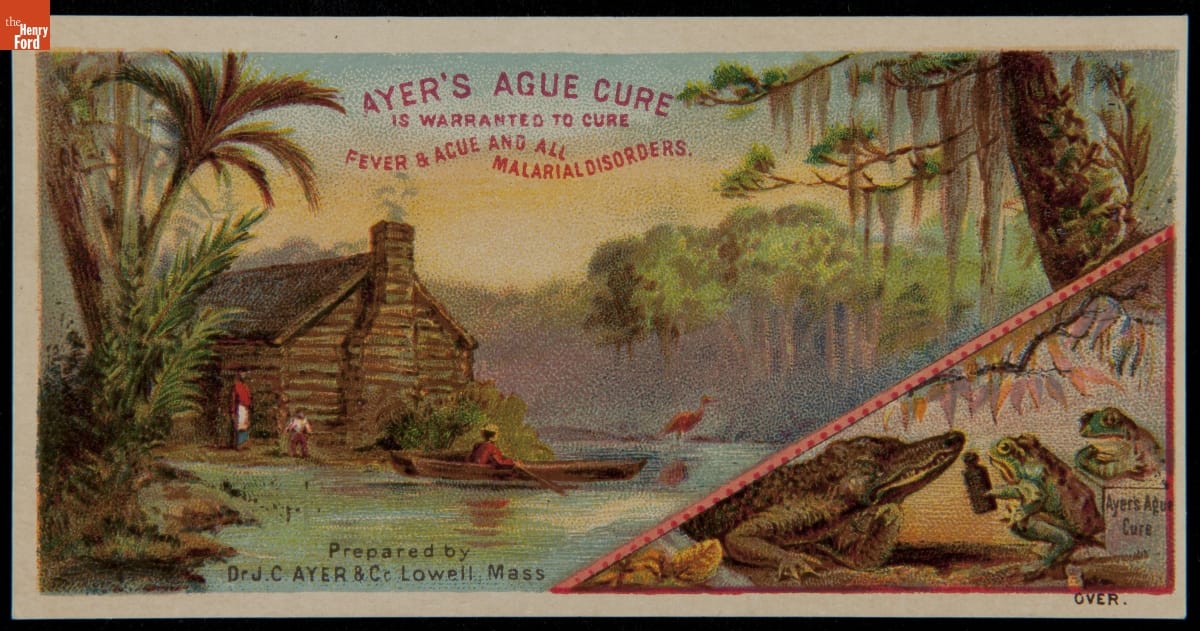
- Trade Card for Ayer's Ague Cure, 1880-1900 - In the last third of the nineteenth century, an unprecedented variety of consumer goods and services flooded the American market. Advertisers, armed with new methods of color printing, bombarded potential customers with trade cards. Americans enjoyed and often saved the vibrant little advertisements found in product packages or distributed by local merchants. Many survive as historical records of commercialism in the United States.
- 1880-1900
- Collections - Artifact
Trade Card for Ayer's Ague Cure, 1880-1900
In the last third of the nineteenth century, an unprecedented variety of consumer goods and services flooded the American market. Advertisers, armed with new methods of color printing, bombarded potential customers with trade cards. Americans enjoyed and often saved the vibrant little advertisements found in product packages or distributed by local merchants. Many survive as historical records of commercialism in the United States.
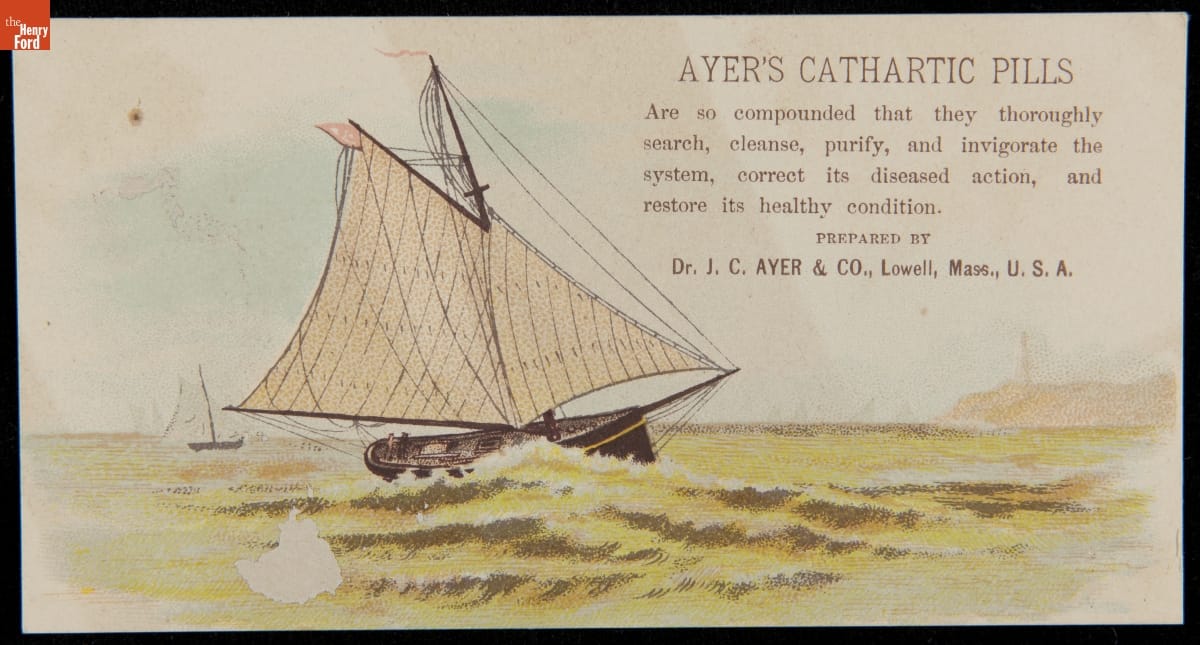
- Trade Card for Ayer's Cathartic Pills, 1880-1900 - In the last third of the nineteenth century, an unprecedented variety of consumer goods and services flooded the American market. Advertisers, armed with new methods of color printing, bombarded potential customers with trade cards. Americans enjoyed and often saved the vibrant little advertisements found in product packages or distributed by local merchants. Many survive as historical records of commercialism in the United States.
- 1880-1900
- Collections - Artifact
Trade Card for Ayer's Cathartic Pills, 1880-1900
In the last third of the nineteenth century, an unprecedented variety of consumer goods and services flooded the American market. Advertisers, armed with new methods of color printing, bombarded potential customers with trade cards. Americans enjoyed and often saved the vibrant little advertisements found in product packages or distributed by local merchants. Many survive as historical records of commercialism in the United States.
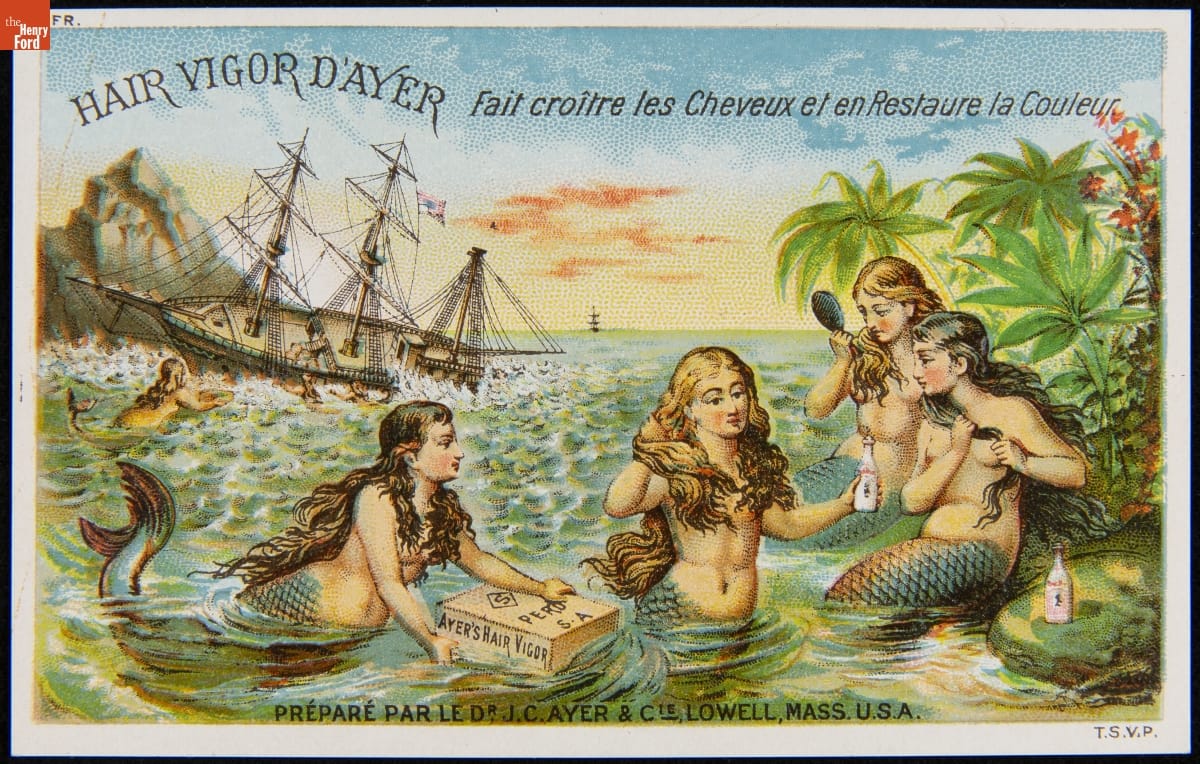
- Trade Card for Ayer's Hair Vigor, 1880-1900 - James C. Ayer (1818-1878), a purveyor of patent medicines in the 19th century, claimed his treatments could cure colds, coughs, and other ailments, purify the blood, and invigorate the hair. Ayer--and later his company--successfully marketed his products by printing thousands of trade cards, almanacs, and newspaper and magazine ads. Ayer's company continued production well into the 20th century.
- 1880-1900
- Collections - Artifact
Trade Card for Ayer's Hair Vigor, 1880-1900
James C. Ayer (1818-1878), a purveyor of patent medicines in the 19th century, claimed his treatments could cure colds, coughs, and other ailments, purify the blood, and invigorate the hair. Ayer--and later his company--successfully marketed his products by printing thousands of trade cards, almanacs, and newspaper and magazine ads. Ayer's company continued production well into the 20th century.
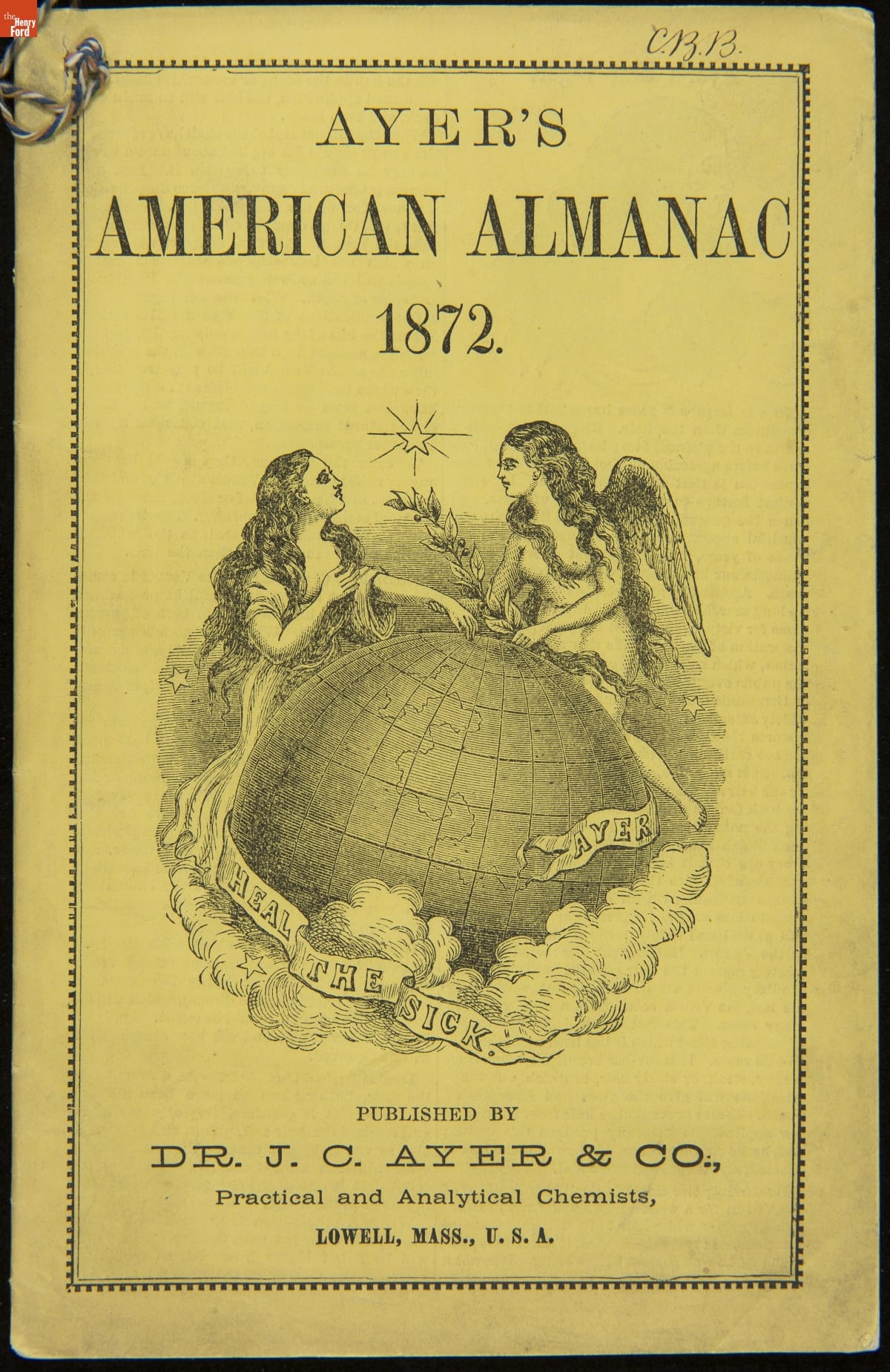
- Ayer's American Almanac, 1872 - Almanacs contained practical information about the coming year. Readers normally found a calendar, weather predictions, tide schedules, and information related to astronomical events, agriculture, health, politics and other matters. Interspersed were jokes and witty sayings. Beginning in the late 1800s, James Cook Ayer, a keen advertiser and successful patent medicine dealer, published almanacs to entice the public to buy his line of products.
- 1872
- Collections - Artifact
Ayer's American Almanac, 1872
Almanacs contained practical information about the coming year. Readers normally found a calendar, weather predictions, tide schedules, and information related to astronomical events, agriculture, health, politics and other matters. Interspersed were jokes and witty sayings. Beginning in the late 1800s, James Cook Ayer, a keen advertiser and successful patent medicine dealer, published almanacs to entice the public to buy his line of products.
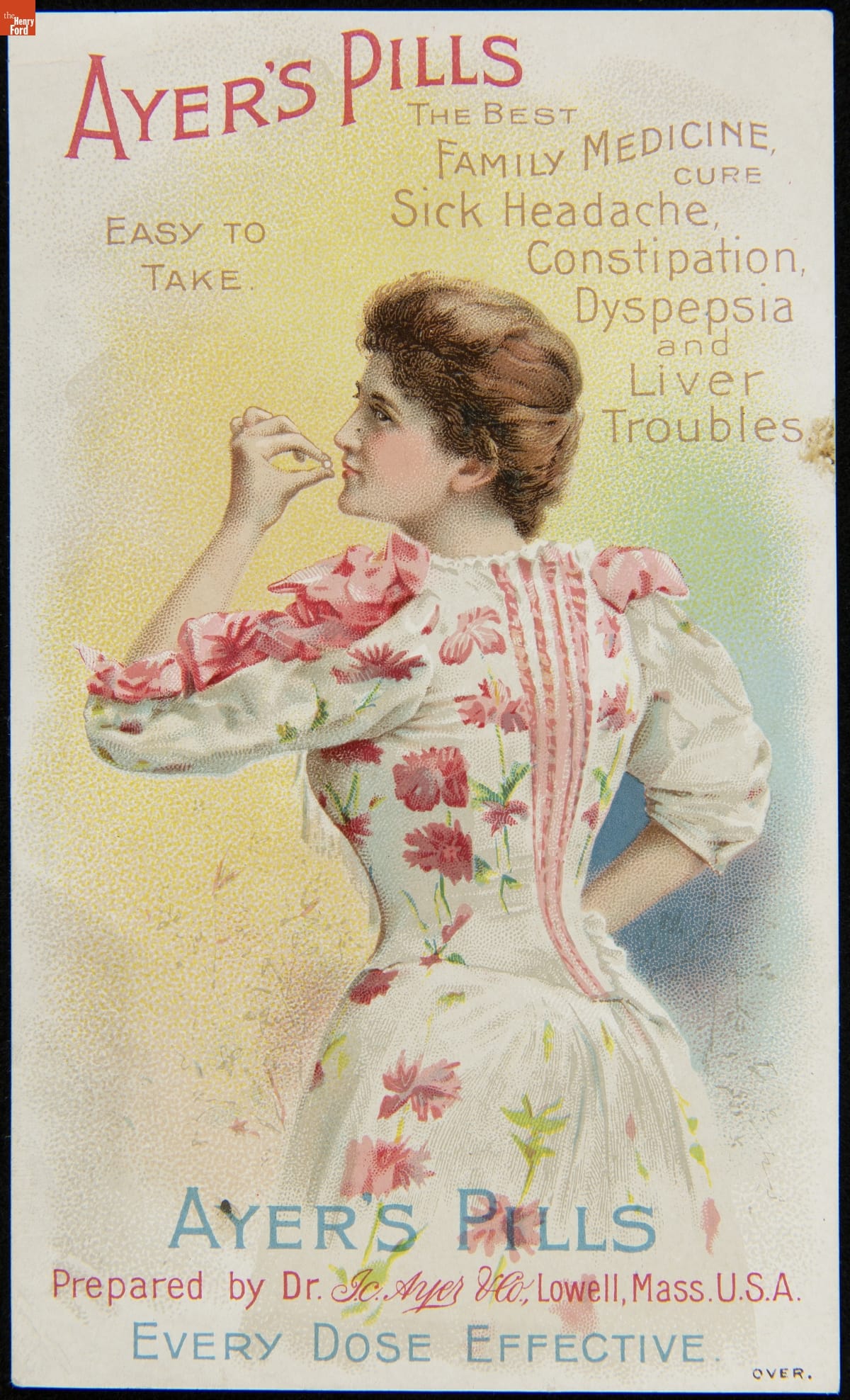
- Trade Card for Ayer's Pills, "The Best Family Medicine," circa 1885 - James C. Ayer (1818-1878), a purveyor of patent medicines in the 19th century, claimed his treatments could cure colds, coughs, and other ailments, purify the blood, and invigorate the hair. Ayer--and later his company--successfully marketed his products by printing thousands of trade cards, almanacs, and newspaper and magazine ads. Ayer's company continued production well into the 20th century.
- circa 1885
- Collections - Artifact
Trade Card for Ayer's Pills, "The Best Family Medicine," circa 1885
James C. Ayer (1818-1878), a purveyor of patent medicines in the 19th century, claimed his treatments could cure colds, coughs, and other ailments, purify the blood, and invigorate the hair. Ayer--and later his company--successfully marketed his products by printing thousands of trade cards, almanacs, and newspaper and magazine ads. Ayer's company continued production well into the 20th century.