
Search
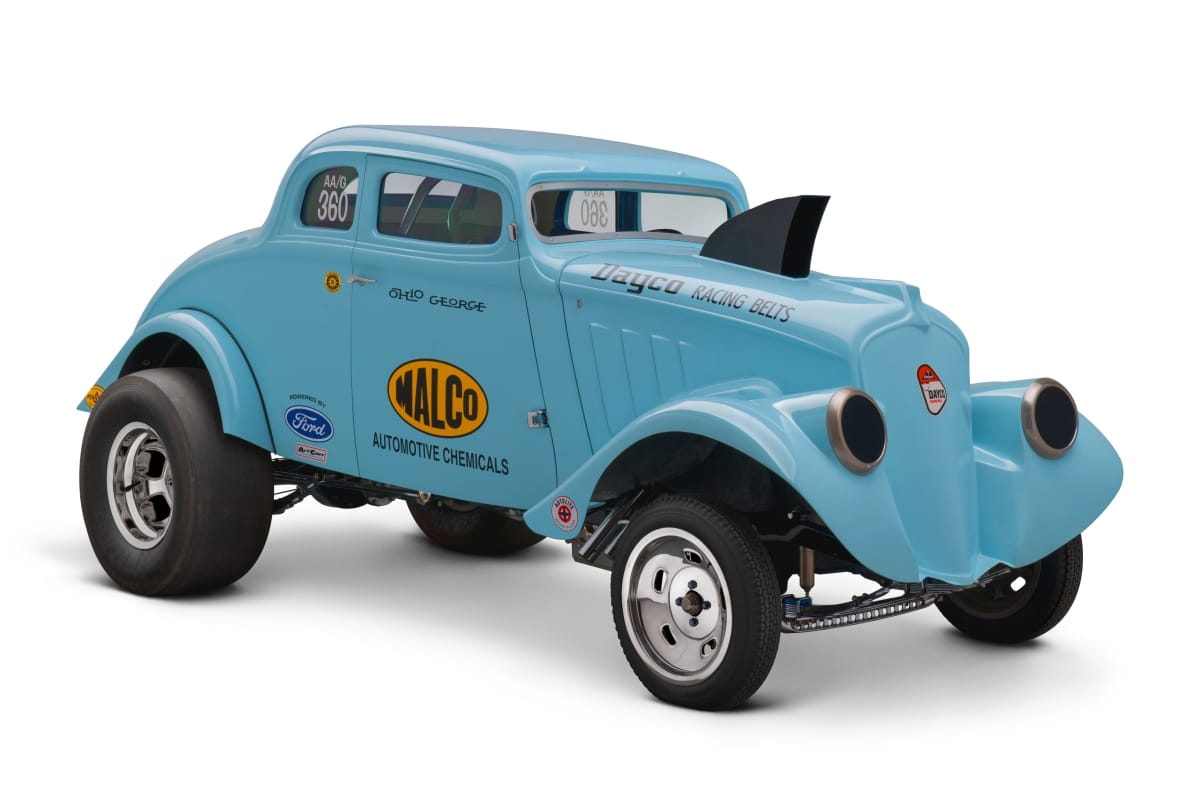
- 1933 Willys Drag Racer - When machinist George Montgomery started racing in 1953, all drag racers were amateurs with "real jobs" supporting their hobby. This car helped change all that. Montgomery bought an old Willys in 1958 and built a dragster so successful that promoters started paying him to run at drag strips nationwide. In 1966, Montgomery became one of drag racing's first full-time professional drivers.
- 1933
- Collections - Artifact
1933 Willys Drag Racer
When machinist George Montgomery started racing in 1953, all drag racers were amateurs with "real jobs" supporting their hobby. This car helped change all that. Montgomery bought an old Willys in 1958 and built a dragster so successful that promoters started paying him to run at drag strips nationwide. In 1966, Montgomery became one of drag racing's first full-time professional drivers.
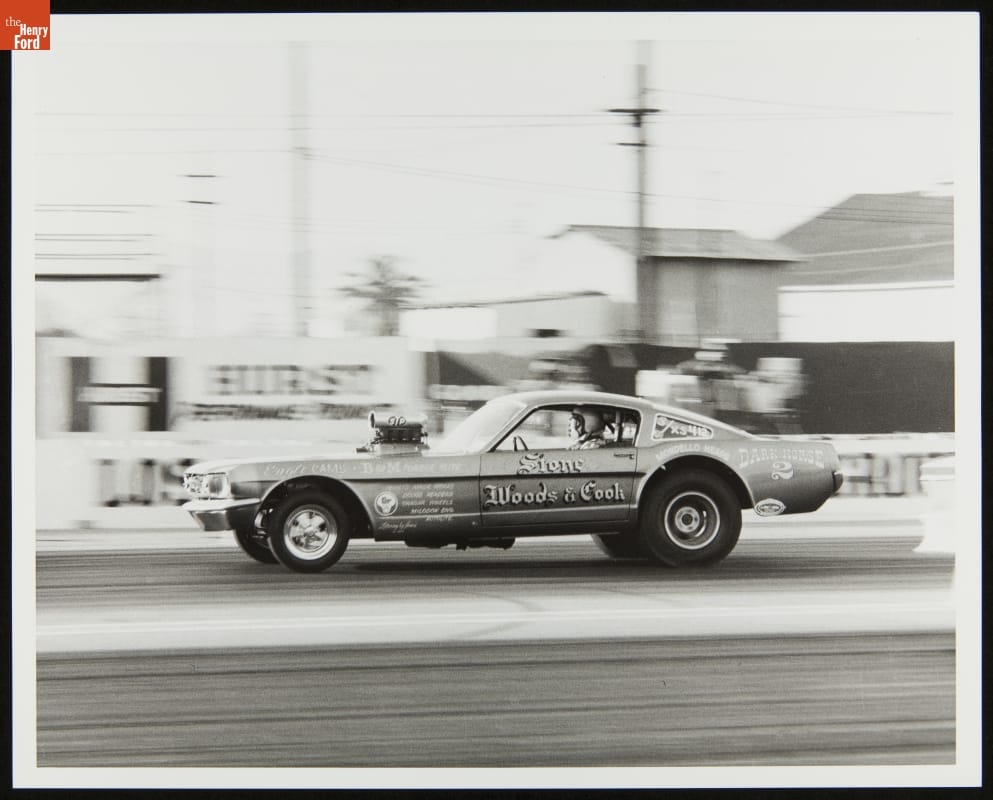
- NHRA Winter Nationals, 1967 - The Winternationals, held each February at Auto Club Raceway in Pomona, California, kick off NHRA's drag racing season. The 1967 contest's class winners included Gordon Collett in Top Gas and Connie Kalitta in Top Fuel. It was the first of "Bounty Hunter" Kalitta's ten NHRA national event Top Fuel titles.
- February 07, 1967
- Collections - Artifact
NHRA Winter Nationals, 1967
The Winternationals, held each February at Auto Club Raceway in Pomona, California, kick off NHRA's drag racing season. The 1967 contest's class winners included Gordon Collett in Top Gas and Connie Kalitta in Top Fuel. It was the first of "Bounty Hunter" Kalitta's ten NHRA national event Top Fuel titles.
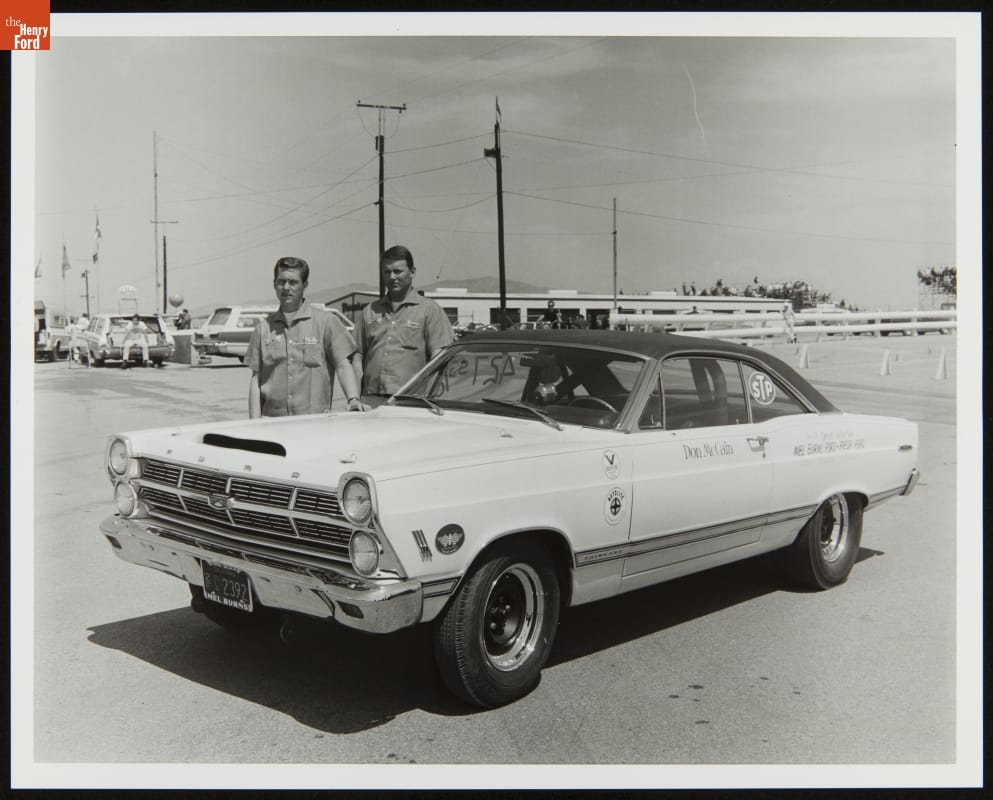
- Riverside Drag Races, 1967--Item 6 - From 1961 through 1969, <EM>Hot Rod</EM> magazine hosted an annual drag racing championship at Riverside International Raceway in Riverside, California. The first year's prizes totaled $37,000 -- much higher than the usual NHRA sums at the time. Each year, the three-day event drew top drivers in all classes. Top Fuel driver Mike Snively won the championship in 1967.
- April 12, 1967
- Collections - Artifact
Riverside Drag Races, 1967--Item 6
From 1961 through 1969, Hot Rod magazine hosted an annual drag racing championship at Riverside International Raceway in Riverside, California. The first year's prizes totaled $37,000 -- much higher than the usual NHRA sums at the time. Each year, the three-day event drew top drivers in all classes. Top Fuel driver Mike Snively won the championship in 1967.
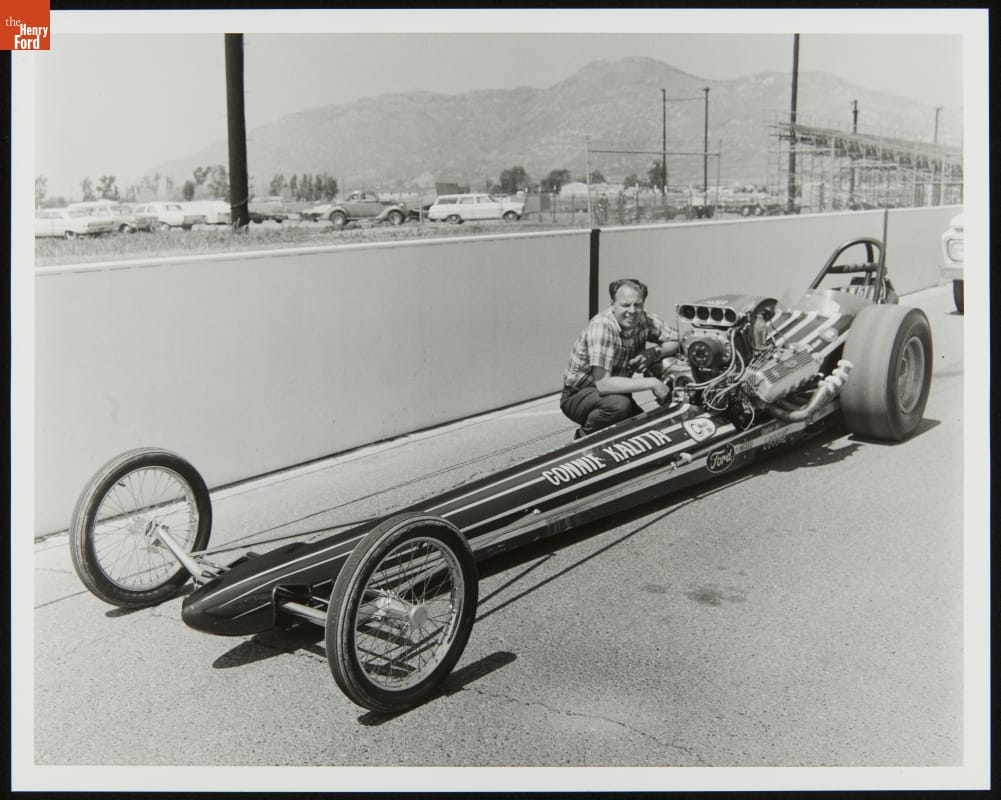
- Riverside Drag Races, 1967--Item 7 - From 1961 through 1969, <EM>Hot Rod</EM> magazine hosted an annual drag racing championship at Riverside International Raceway in Riverside, California. The first year's prizes totaled $37,000 -- much higher than the usual NHRA sums at the time. Each year, the three-day event drew top drivers in all classes. Top Fuel driver Mike Snively won the championship in 1967.
- April 12, 1967
- Collections - Artifact
Riverside Drag Races, 1967--Item 7
From 1961 through 1969, Hot Rod magazine hosted an annual drag racing championship at Riverside International Raceway in Riverside, California. The first year's prizes totaled $37,000 -- much higher than the usual NHRA sums at the time. Each year, the three-day event drew top drivers in all classes. Top Fuel driver Mike Snively won the championship in 1967.
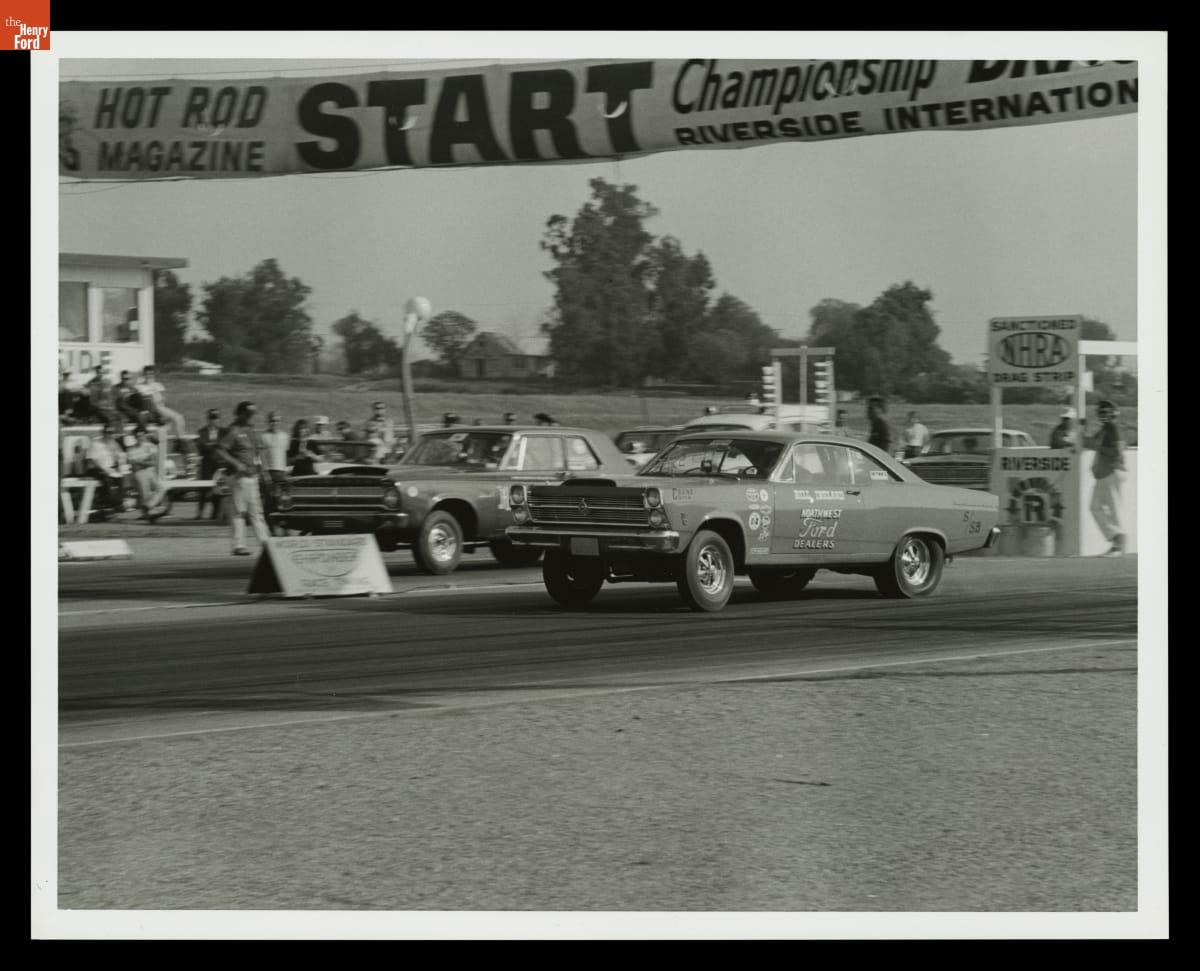
- Riverside Drag Races, 1967--Item 5 - From 1961 through 1969, <EM>Hot Rod</EM> magazine hosted an annual drag racing championship at Riverside International Raceway in Riverside, California. The first year's prizes totaled $37,000 -- much higher than the usual NHRA sums at the time. Each year, the three-day event drew top drivers in all classes. Top Fuel driver Mike Snively won the championship in 1967.
- April 12, 1967
- Collections - Artifact
Riverside Drag Races, 1967--Item 5
From 1961 through 1969, Hot Rod magazine hosted an annual drag racing championship at Riverside International Raceway in Riverside, California. The first year's prizes totaled $37,000 -- much higher than the usual NHRA sums at the time. Each year, the three-day event drew top drivers in all classes. Top Fuel driver Mike Snively won the championship in 1967.
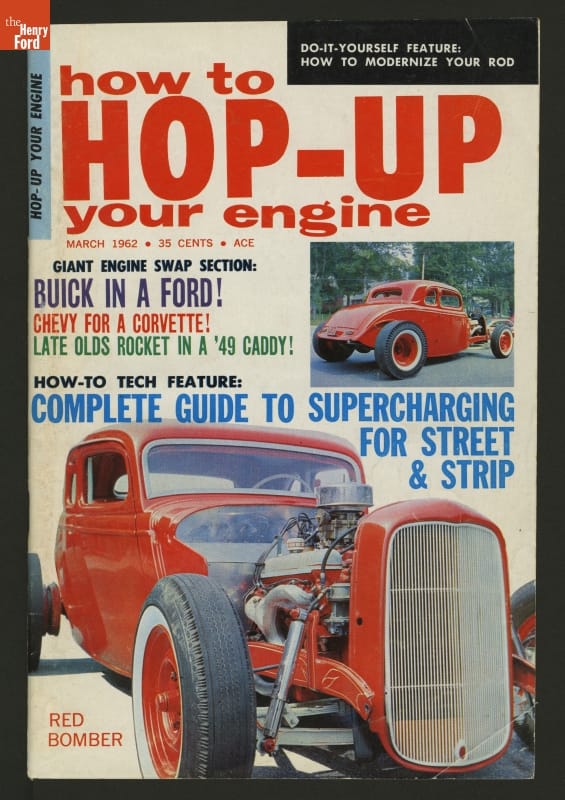
- "How to Hop-Up Your Engine" Magazine, March 1962 - Specialty magazines, like this March 1962 issue of <EM>How to Hop Up Your Engine</EM>, helped rodders follow trends, understand technology and learn new techniques.
- March 01, 1962
- Collections - Artifact
"How to Hop-Up Your Engine" Magazine, March 1962
Specialty magazines, like this March 1962 issue of How to Hop Up Your Engine, helped rodders follow trends, understand technology and learn new techniques.
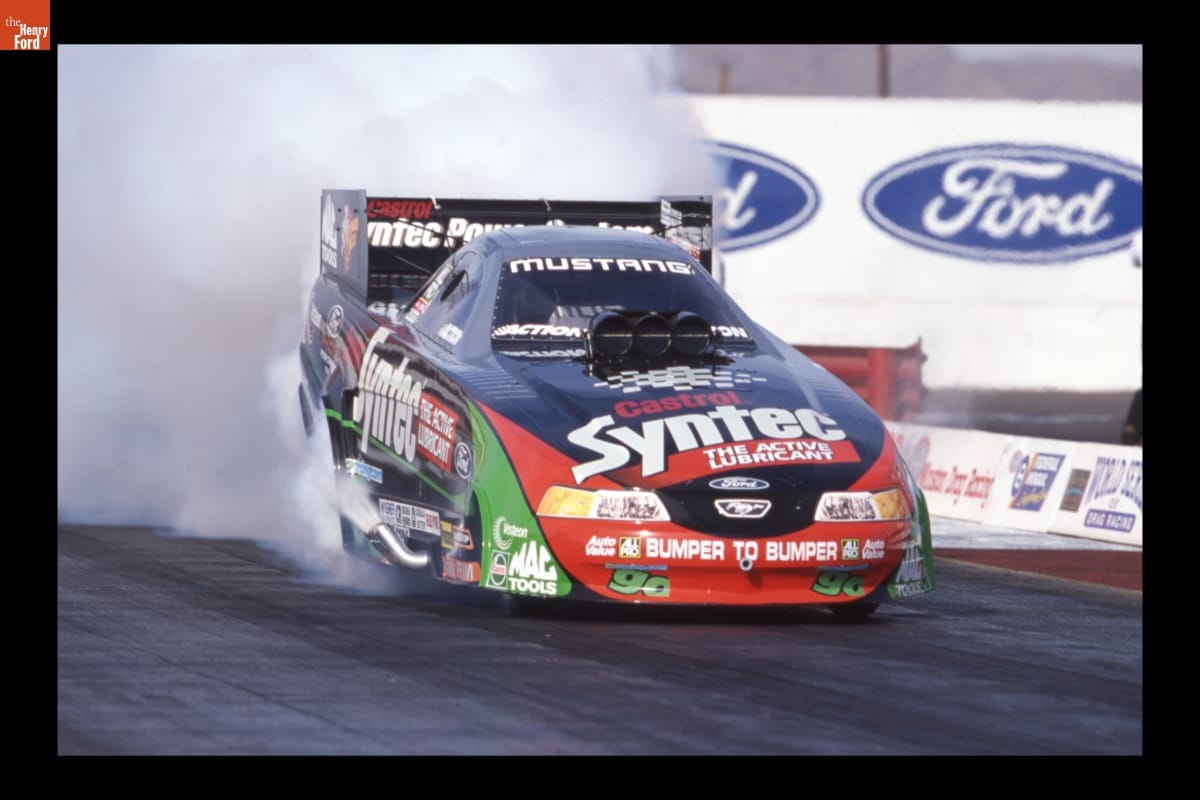
- Ford Mustang Funny Car at NHRA Pre-Season Test Session, January 2000 - This Ford Mustang funny car was photographed while making a pre-season test run in January 2000. NHRA drag racing competitions feature more than 200 classes, but Funny Car is among the most popular. Funny cars use special supercharged engines that burn nitromethane fuel, but their bodies resemble regular production cars.
- January 01, 2000
- Collections - Artifact
Ford Mustang Funny Car at NHRA Pre-Season Test Session, January 2000
This Ford Mustang funny car was photographed while making a pre-season test run in January 2000. NHRA drag racing competitions feature more than 200 classes, but Funny Car is among the most popular. Funny cars use special supercharged engines that burn nitromethane fuel, but their bodies resemble regular production cars.
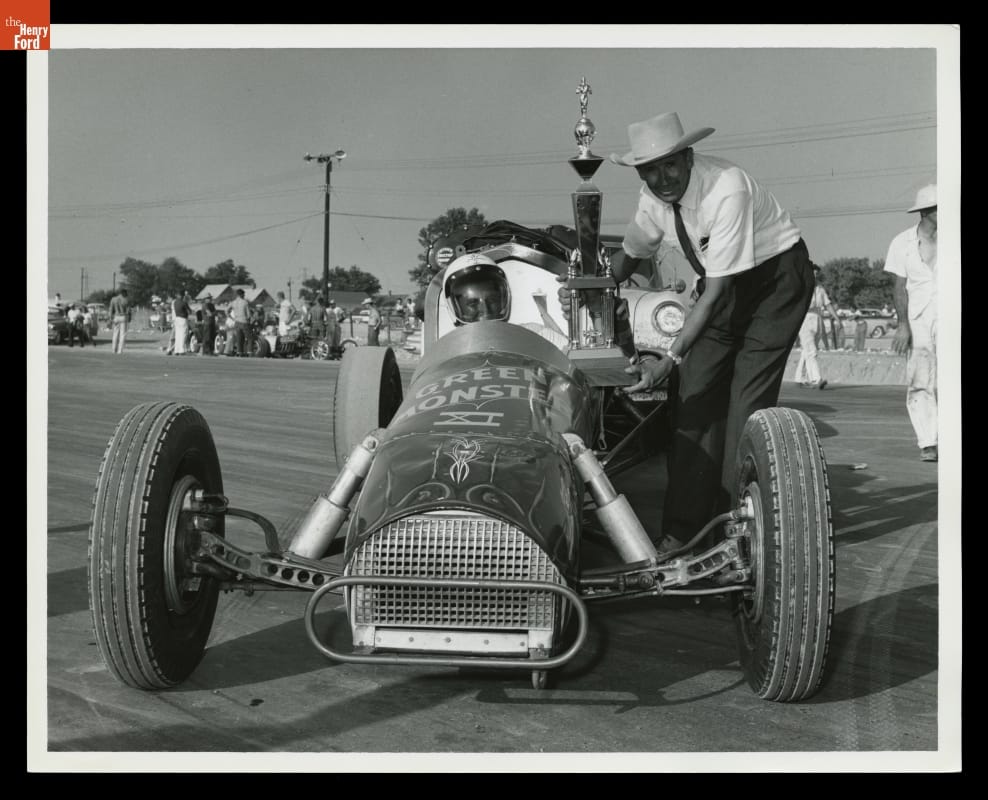
- Art Arfons and Wally Parks with the Trophy for Top Speed, NHRA Nationals, Detroit Dragway, 1959 - Wally Parks organized some of the first hot rod shows, served as the first editor of <EM>Hot Rod</EM> magazine, and in 1951 founded the National Hot Rod Association. Illegal street racers gave hot rodding a bad reputation, but Parks's NHRA legitimized drag racing with competition rules, safety regulations, and off-street drag strips. Parks turned hot rod races into family entertainment.
- 1959
- Collections - Artifact
Art Arfons and Wally Parks with the Trophy for Top Speed, NHRA Nationals, Detroit Dragway, 1959
Wally Parks organized some of the first hot rod shows, served as the first editor of Hot Rod magazine, and in 1951 founded the National Hot Rod Association. Illegal street racers gave hot rodding a bad reputation, but Parks's NHRA legitimized drag racing with competition rules, safety regulations, and off-street drag strips. Parks turned hot rod races into family entertainment.
- Leather Pants, circa 1968 - Amateur racers Barry Egen and Wayne Snyder of Monroe, Michigan, competed with their custom-built motorcycle at nearby Milan Dragway in the late 1960s. The bike, named "Revolution," was powered by a 350-cubic-centimeter, straight-twin Honda engine and posted race times in the low 12-second range. Egen wore this protective pair of leather pants when racing.
- circa 1968
- Collections - Artifact
Leather Pants, circa 1968
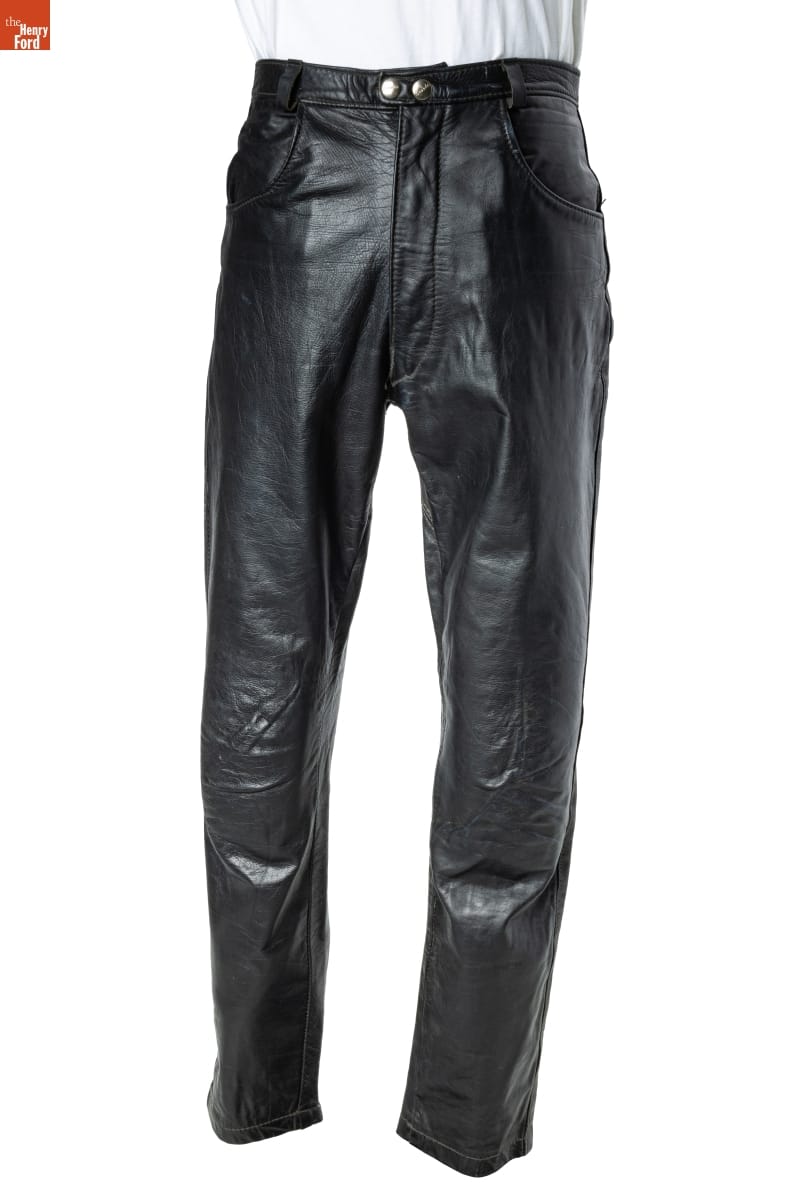
Amateur racers Barry Egen and Wayne Snyder of Monroe, Michigan, competed with their custom-built motorcycle at nearby Milan Dragway in the late 1960s. The bike, named "Revolution," was powered by a 350-cubic-centimeter, straight-twin Honda engine and posted race times in the low 12-second range. Egen wore this protective pair of leather pants when racing.
- Leather Boots, circa 1968 - Amateur racers Barry Egen and Wayne Snyder of Monroe, Michigan, competed with their custom-built motorcycle at nearby Milan Dragway in the late 1960s. The bike, named "Revolution," was powered by a 350-cubic-centimeter, straight-twin Honda engine and posted race times in the low 12-second range. Egen wore these protective leather boots when racing.
- circa 1968
- Collections - Artifact
Leather Boots, circa 1968
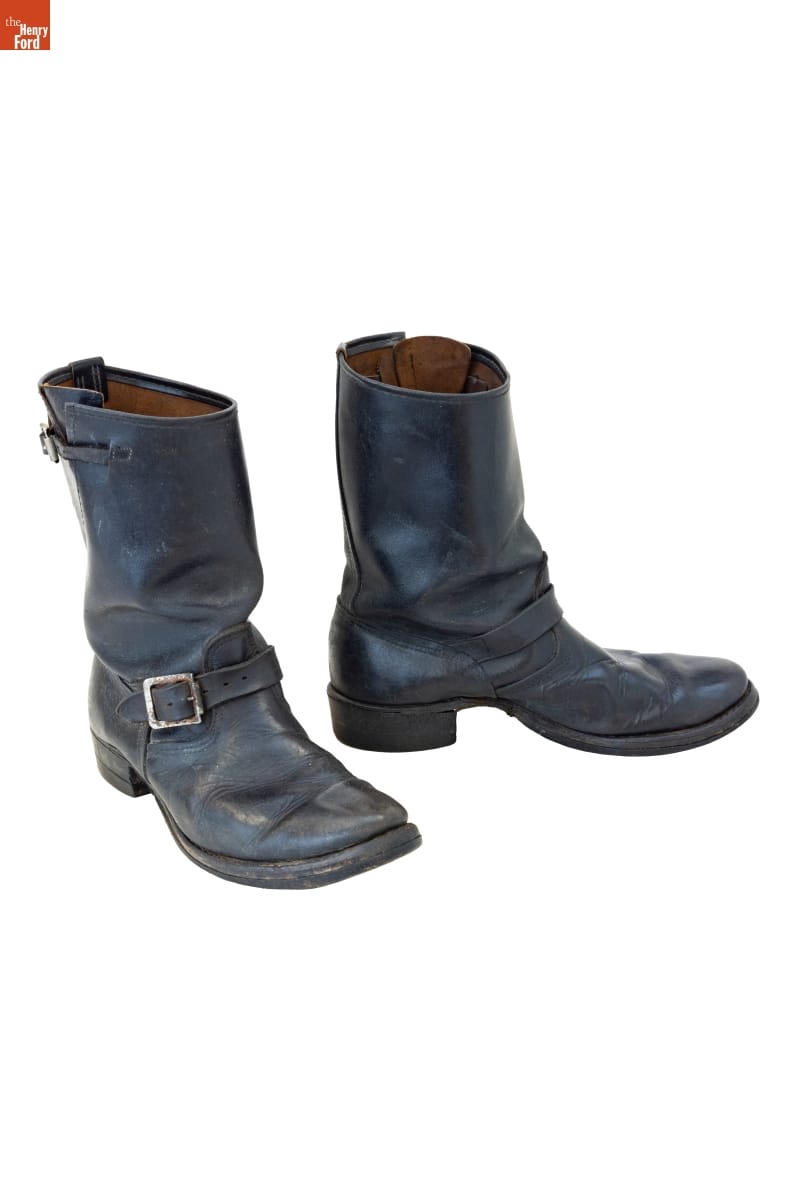
Amateur racers Barry Egen and Wayne Snyder of Monroe, Michigan, competed with their custom-built motorcycle at nearby Milan Dragway in the late 1960s. The bike, named "Revolution," was powered by a 350-cubic-centimeter, straight-twin Honda engine and posted race times in the low 12-second range. Egen wore these protective leather boots when racing.