
Search
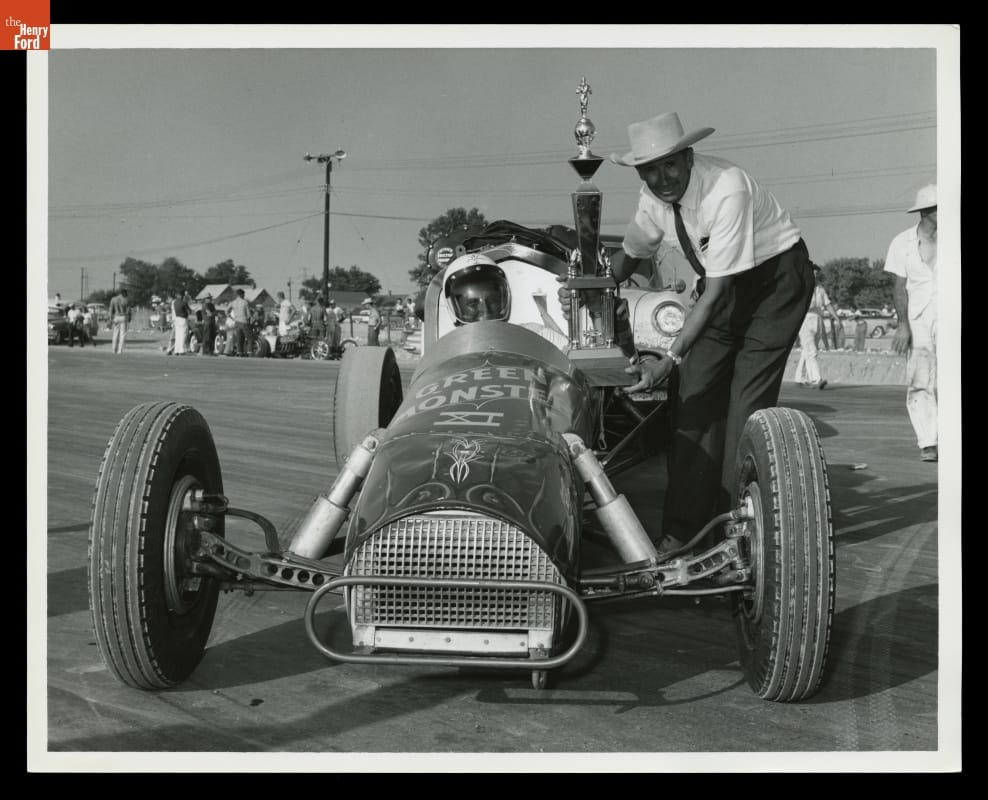
- Art Arfons and Wally Parks with the Trophy for Top Speed, NHRA Nationals, Detroit Dragway, 1959 - Wally Parks organized some of the first hot rod shows, served as the first editor of <EM>Hot Rod</EM> magazine, and in 1951 founded the National Hot Rod Association. Illegal street racers gave hot rodding a bad reputation, but Parks's NHRA legitimized drag racing with competition rules, safety regulations, and off-street drag strips. Parks turned hot rod races into family entertainment.
- 1959
- Collections - Artifact
Art Arfons and Wally Parks with the Trophy for Top Speed, NHRA Nationals, Detroit Dragway, 1959
Wally Parks organized some of the first hot rod shows, served as the first editor of Hot Rod magazine, and in 1951 founded the National Hot Rod Association. Illegal street racers gave hot rodding a bad reputation, but Parks's NHRA legitimized drag racing with competition rules, safety regulations, and off-street drag strips. Parks turned hot rod races into family entertainment.
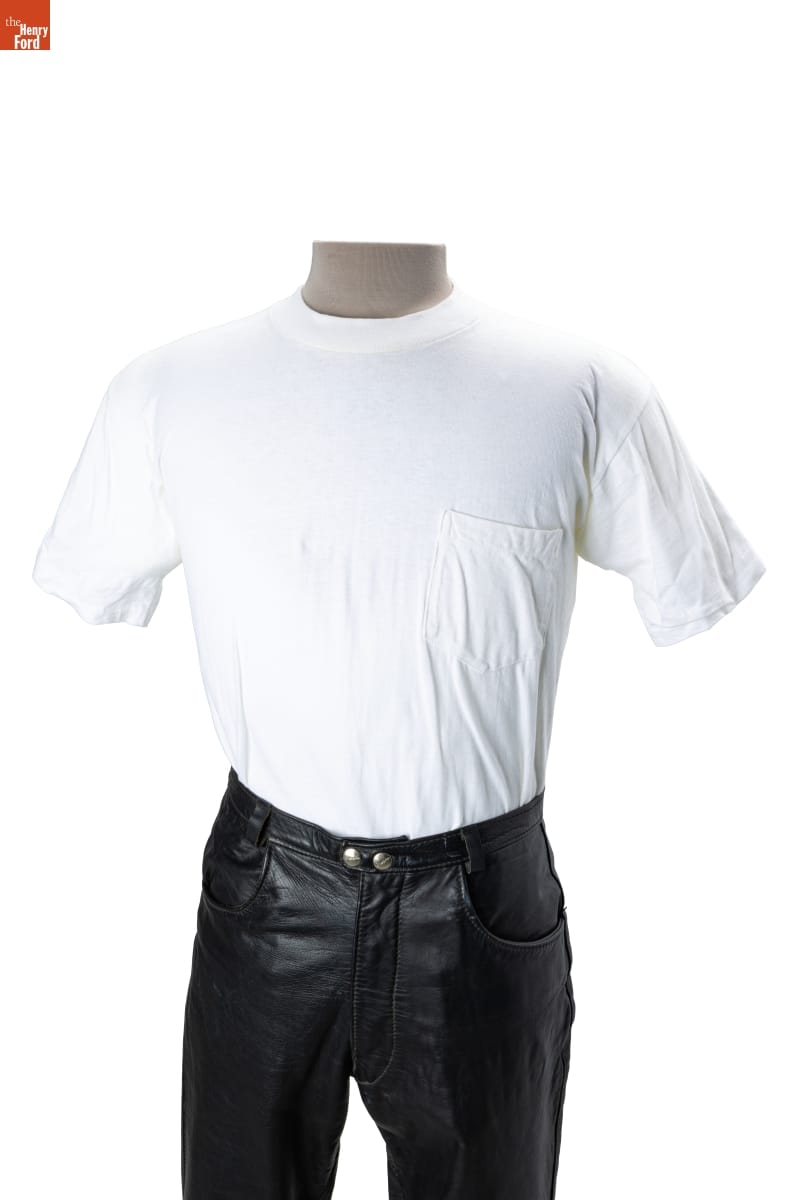
- "Milan Dragway" T-Shirt, circa 1968 - Amateur competitors Barry Egen and Wayne Snyder of Monroe, Michigan, raced their custom-built motorcycle "Revolution" in the late 1960s. It was powered by a 350-cubic-centimeter, straight-twin Honda engine and posted race times in the low 12-second range. This T-shirt was a souvenir of Milan Dragway, where Egen and Snyder competed. The track, about 16 miles northwest of Monroe, opened in 1964.
- circa 1968
- Collections - Artifact
"Milan Dragway" T-Shirt, circa 1968
Amateur competitors Barry Egen and Wayne Snyder of Monroe, Michigan, raced their custom-built motorcycle "Revolution" in the late 1960s. It was powered by a 350-cubic-centimeter, straight-twin Honda engine and posted race times in the low 12-second range. This T-shirt was a souvenir of Milan Dragway, where Egen and Snyder competed. The track, about 16 miles northwest of Monroe, opened in 1964.
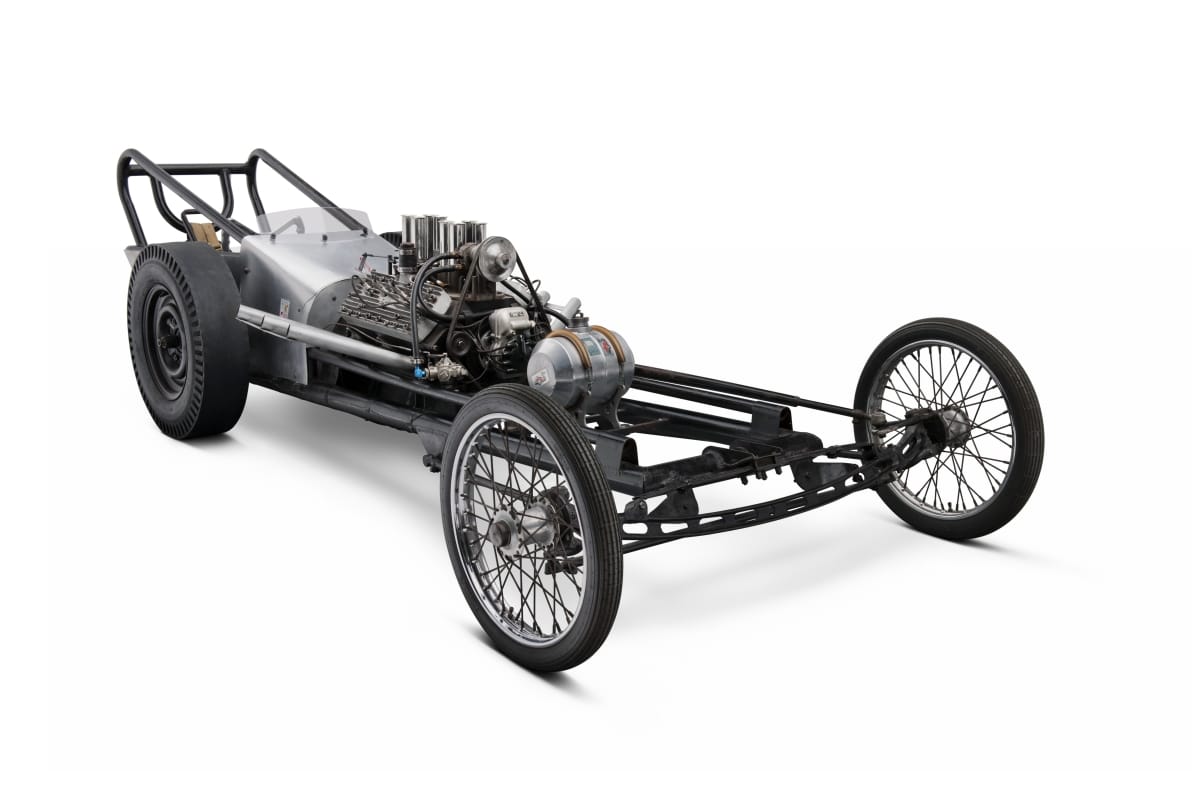
- 1960 Buck & Thompson Slingshot Dragster - Sam Buck and Bob Thompson built this car in 1960. They bought the chassis as a kit, and the 1948 Ford engine was highly modified with special cylinder heads, crank, pistons, magneto, camshaft, and fuel injectors. In this style of dragster, popular from the mid-1950s through the early 1970s, the driver sat behind the rear wheels "like a rock in a slingshot."
- 1960
- Collections - Artifact
1960 Buck & Thompson Slingshot Dragster
Sam Buck and Bob Thompson built this car in 1960. They bought the chassis as a kit, and the 1948 Ford engine was highly modified with special cylinder heads, crank, pistons, magneto, camshaft, and fuel injectors. In this style of dragster, popular from the mid-1950s through the early 1970s, the driver sat behind the rear wheels "like a rock in a slingshot."
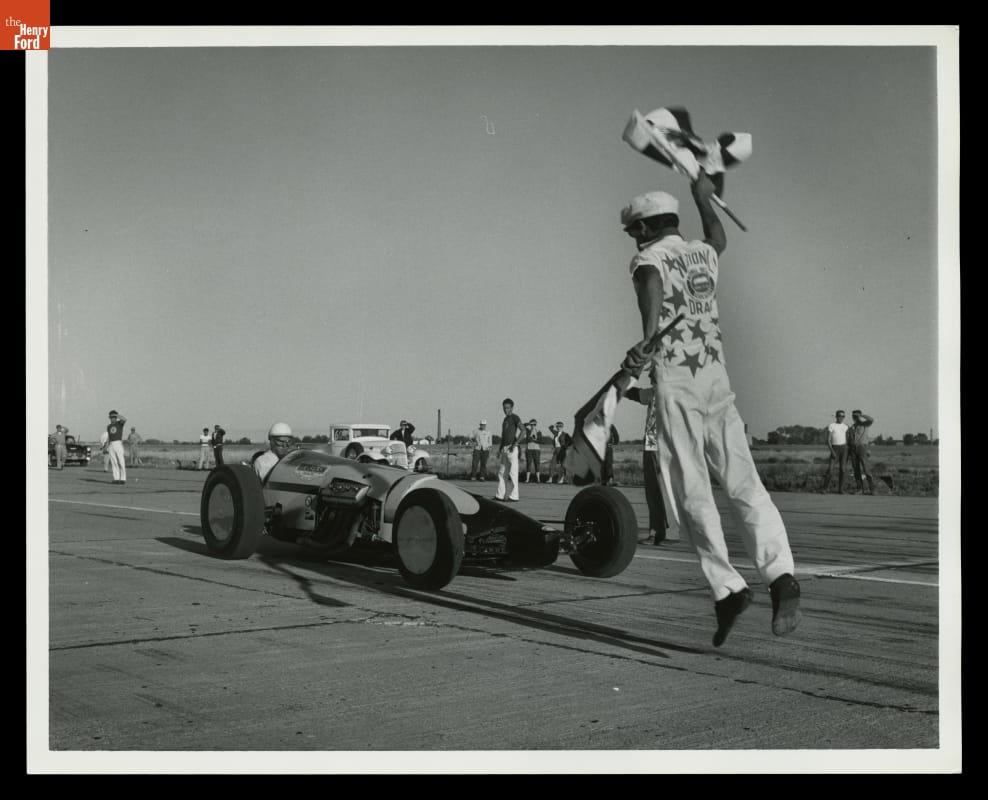
- Official Start of First NHRA Drag Racing Meet, Great Bend, Kansas, 1955 - The National Hot Rod Association, established in 1951 to govern drag racing, held its first national championship meet in 1955. The event took place on an airport runway in Great Bend, Kansas. Drag races run like tournaments. Two cars at a time face off, the winner advances, and the loser is eliminated. The last remaining driver earns the grand prize.
- 1955
- Collections - Artifact
Official Start of First NHRA Drag Racing Meet, Great Bend, Kansas, 1955
The National Hot Rod Association, established in 1951 to govern drag racing, held its first national championship meet in 1955. The event took place on an airport runway in Great Bend, Kansas. Drag races run like tournaments. Two cars at a time face off, the winner advances, and the loser is eliminated. The last remaining driver earns the grand prize.
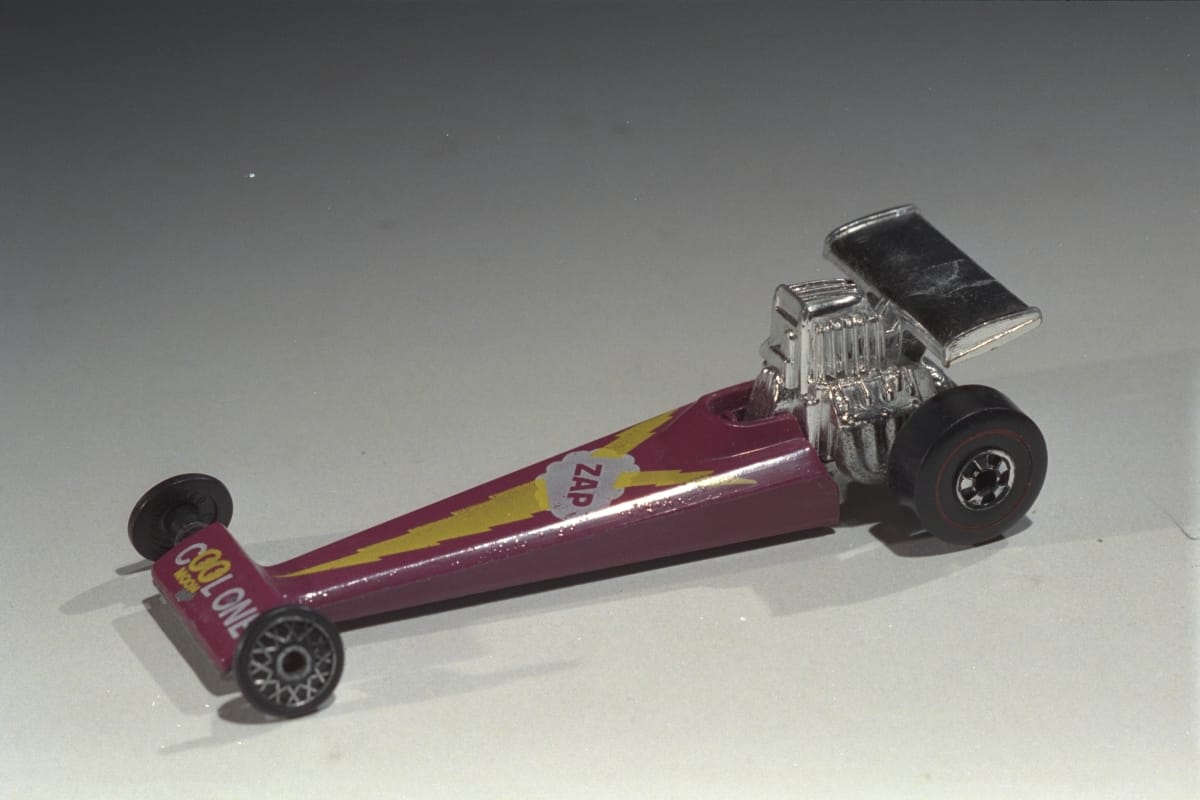
- Hot Wheels Dragster, 1975-1980 - Mattel introduced its Hot Wheels line of diecast cars in 1968. Race cars were a source of design inspiration for these toys from the start. This Hot Wheels car was based on a drag racer from NHRA's Top Fuel competition class. "Top Fuel" refers to the special nitromethane fuel used by these dragsters.
- 1975-1980
- Collections - Artifact
Hot Wheels Dragster, 1975-1980
Mattel introduced its Hot Wheels line of diecast cars in 1968. Race cars were a source of design inspiration for these toys from the start. This Hot Wheels car was based on a drag racer from NHRA's Top Fuel competition class. "Top Fuel" refers to the special nitromethane fuel used by these dragsters.
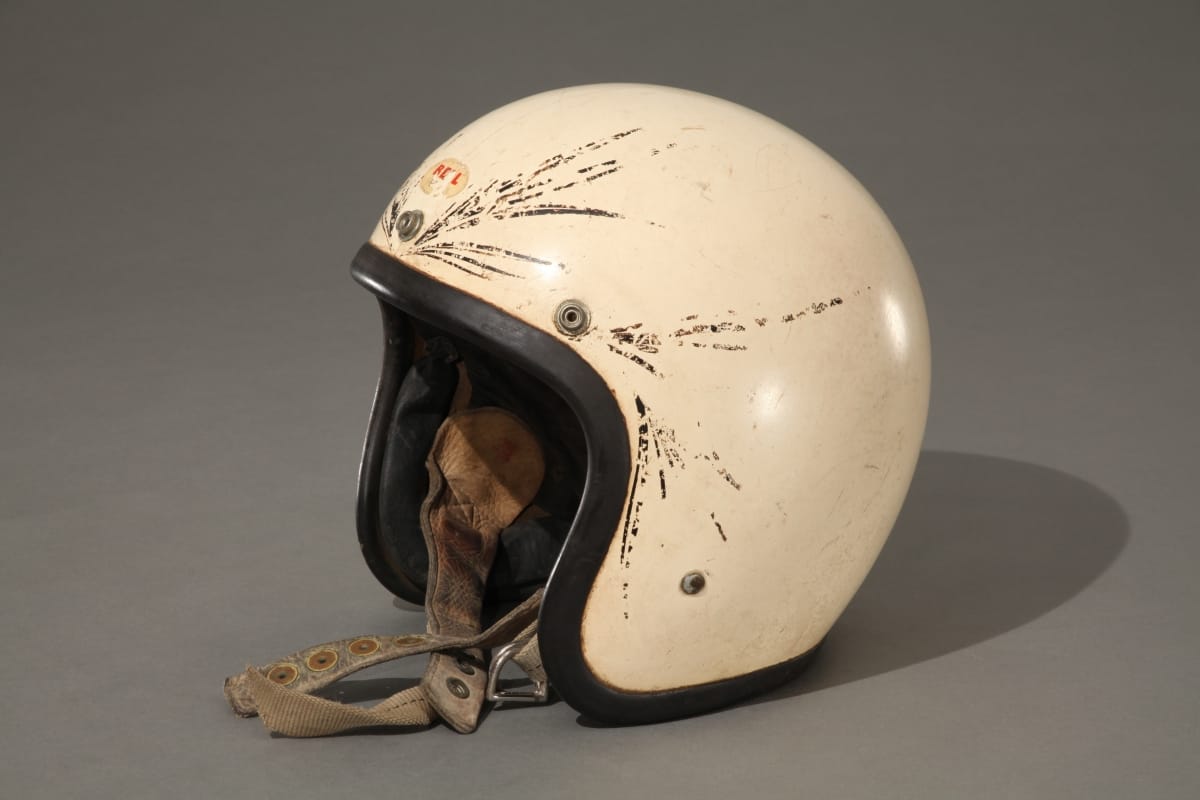
- Crash Helmet Worn by Drag Racers Bob Thompson and Sam Buck, circa 1960 - Sam Buck and/or Bob Thompson wore this helmet in the Slingshot Dragster they raced in the early 1960s. Their Bell 500-TX helmet was top of the line at the time, used by professional drivers in stock cars and Indy cars. But its open-face design and relatively thin interior padding would make it unacceptable in any form of organized motorsport today.
- circa 1960
- Collections - Artifact
Crash Helmet Worn by Drag Racers Bob Thompson and Sam Buck, circa 1960
Sam Buck and/or Bob Thompson wore this helmet in the Slingshot Dragster they raced in the early 1960s. Their Bell 500-TX helmet was top of the line at the time, used by professional drivers in stock cars and Indy cars. But its open-face design and relatively thin interior padding would make it unacceptable in any form of organized motorsport today.
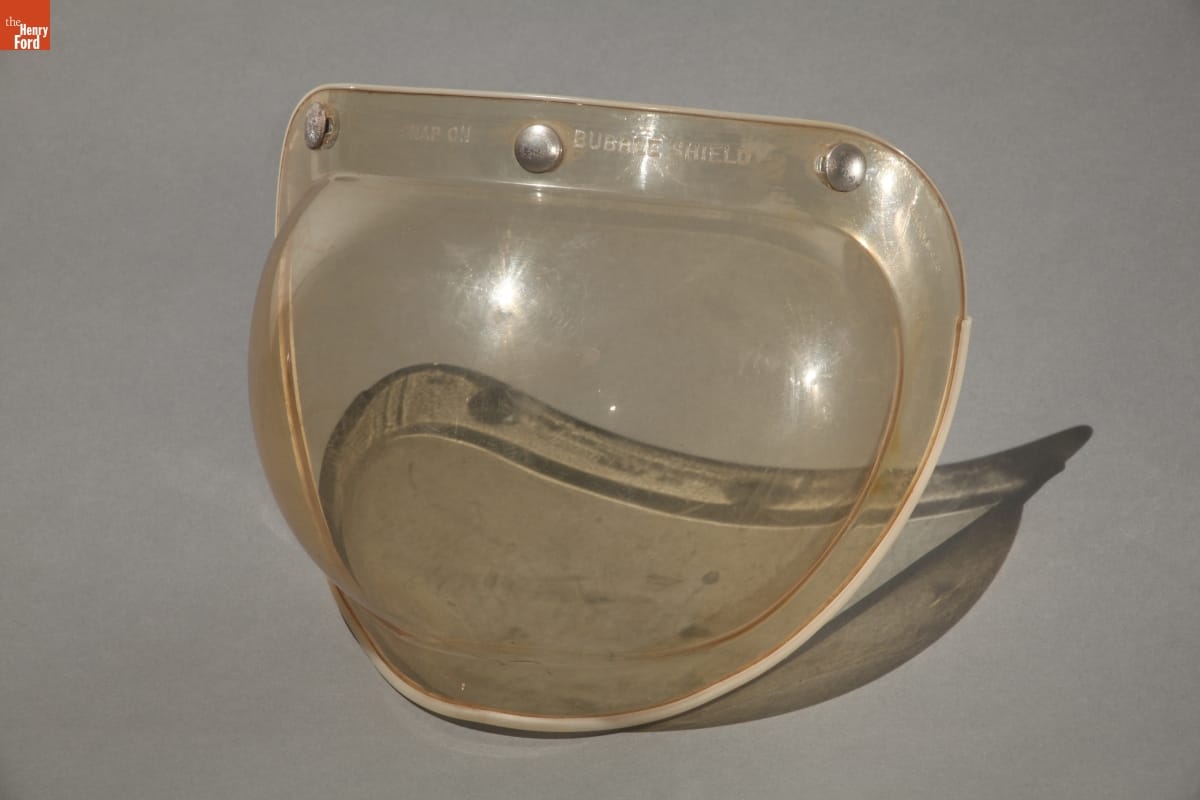
- Visor Worn by Drag Racers Bob Thompson and Sam Buck, circa 1960 - The face shield illustrates the state of driver safety in drag racing during the early 1960s. The plastic face shield protected drivers from wind and debris, but would have provided only marginal protection in the event of an engine explosion.
- circa 1960
- Collections - Artifact
Visor Worn by Drag Racers Bob Thompson and Sam Buck, circa 1960
The face shield illustrates the state of driver safety in drag racing during the early 1960s. The plastic face shield protected drivers from wind and debris, but would have provided only marginal protection in the event of an engine explosion.
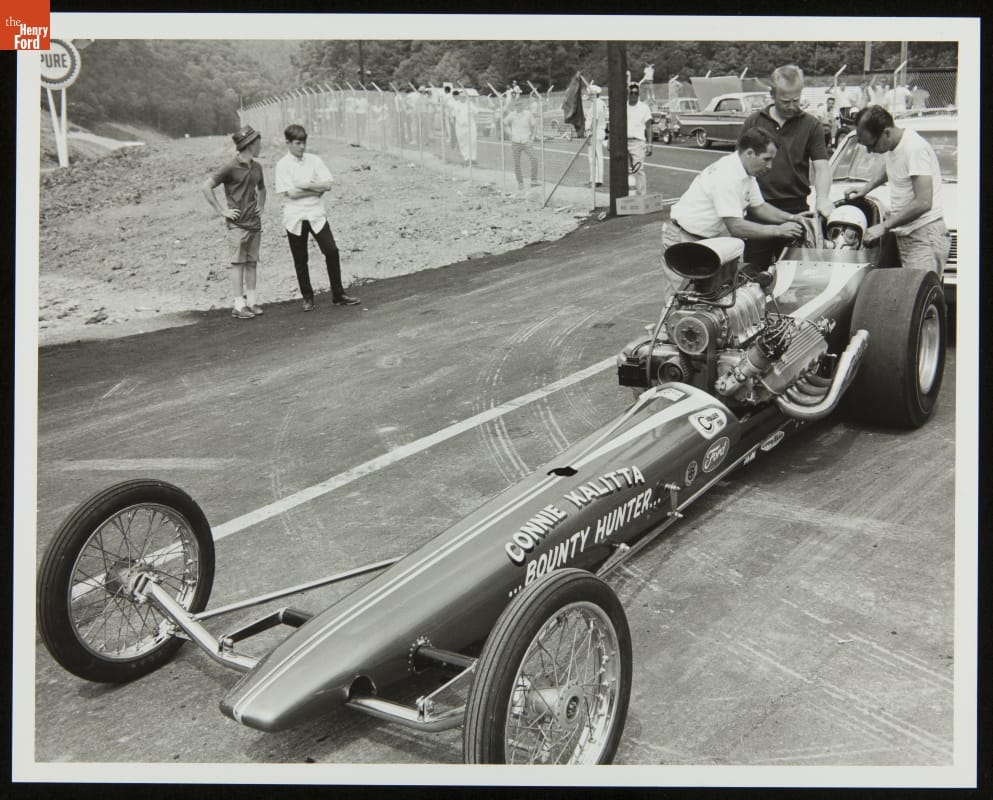
- Connie Kalitta in Ford Dragster "Bounty Hunter" at NHRA Spring Nationals at Bristol Dragway, June 1965 - Michigan native Connie Kalitta started drag racing in the 1950s and, within a decade, he ranked among the sport's best. He kept a "most wanted" list of drivers he intended to beat, and then crossed off their names when he did so. The habit earned Kalitta the nickname "Bounty Hunter." He won ten NHRA national events between 1967 and 1994.
- 03 June 1965 - 08 June 1965
- Collections - Artifact
Connie Kalitta in Ford Dragster "Bounty Hunter" at NHRA Spring Nationals at Bristol Dragway, June 1965
Michigan native Connie Kalitta started drag racing in the 1950s and, within a decade, he ranked among the sport's best. He kept a "most wanted" list of drivers he intended to beat, and then crossed off their names when he did so. The habit earned Kalitta the nickname "Bounty Hunter." He won ten NHRA national events between 1967 and 1994.
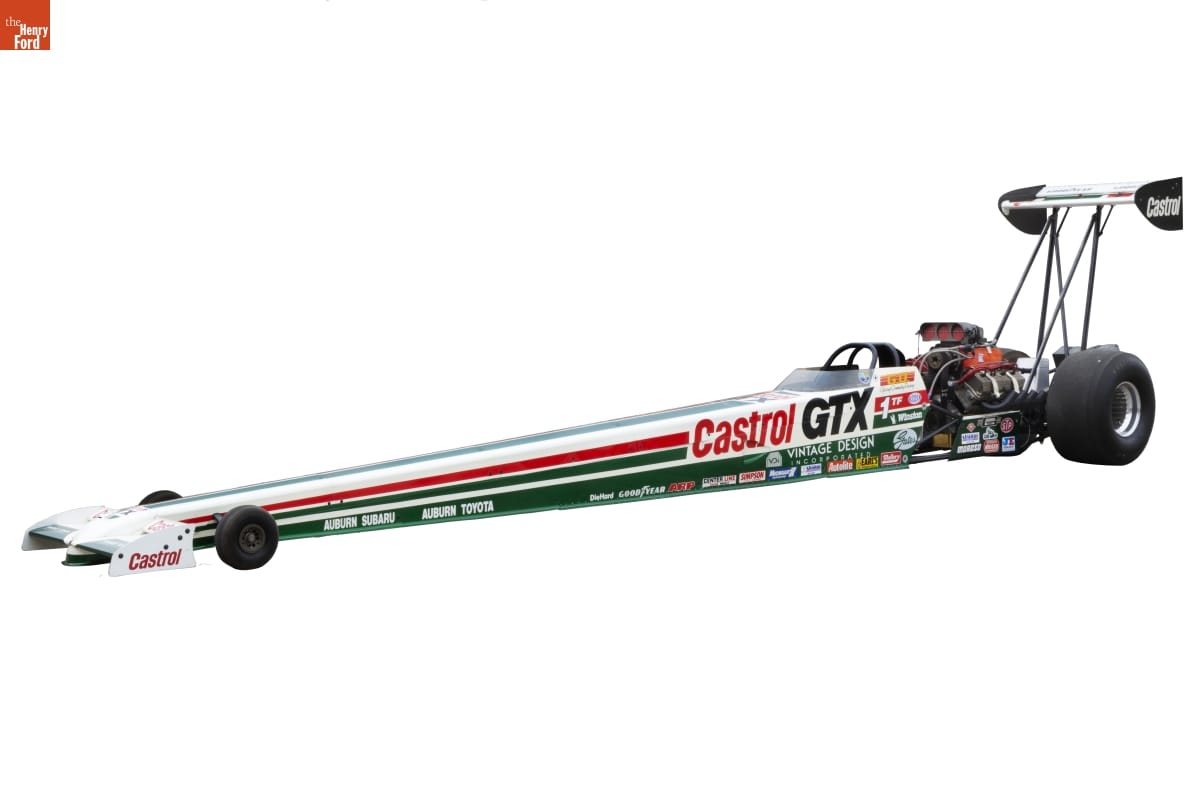
- National Hot Rod Association Top Fuel Competition Drag Racing Car, Driven by Gary Ormsby in the 1989 and 1990 NHRA Seasons, 1989 - Top Fuel dragsters are the fastest cars approved for NHRA drag racing. Their nitromethane fuel requires less oxygen during combustion, so their engines produce more horsepower than with gasoline. Gary Ormsby drove this car to an NHRA Top Fuel championship in 1989. He used it again in 1990 -- racing at speeds near 300 miles per hour.
- 1989
- Collections - Artifact
National Hot Rod Association Top Fuel Competition Drag Racing Car, Driven by Gary Ormsby in the 1989 and 1990 NHRA Seasons, 1989
Top Fuel dragsters are the fastest cars approved for NHRA drag racing. Their nitromethane fuel requires less oxygen during combustion, so their engines produce more horsepower than with gasoline. Gary Ormsby drove this car to an NHRA Top Fuel championship in 1989. He used it again in 1990 -- racing at speeds near 300 miles per hour.
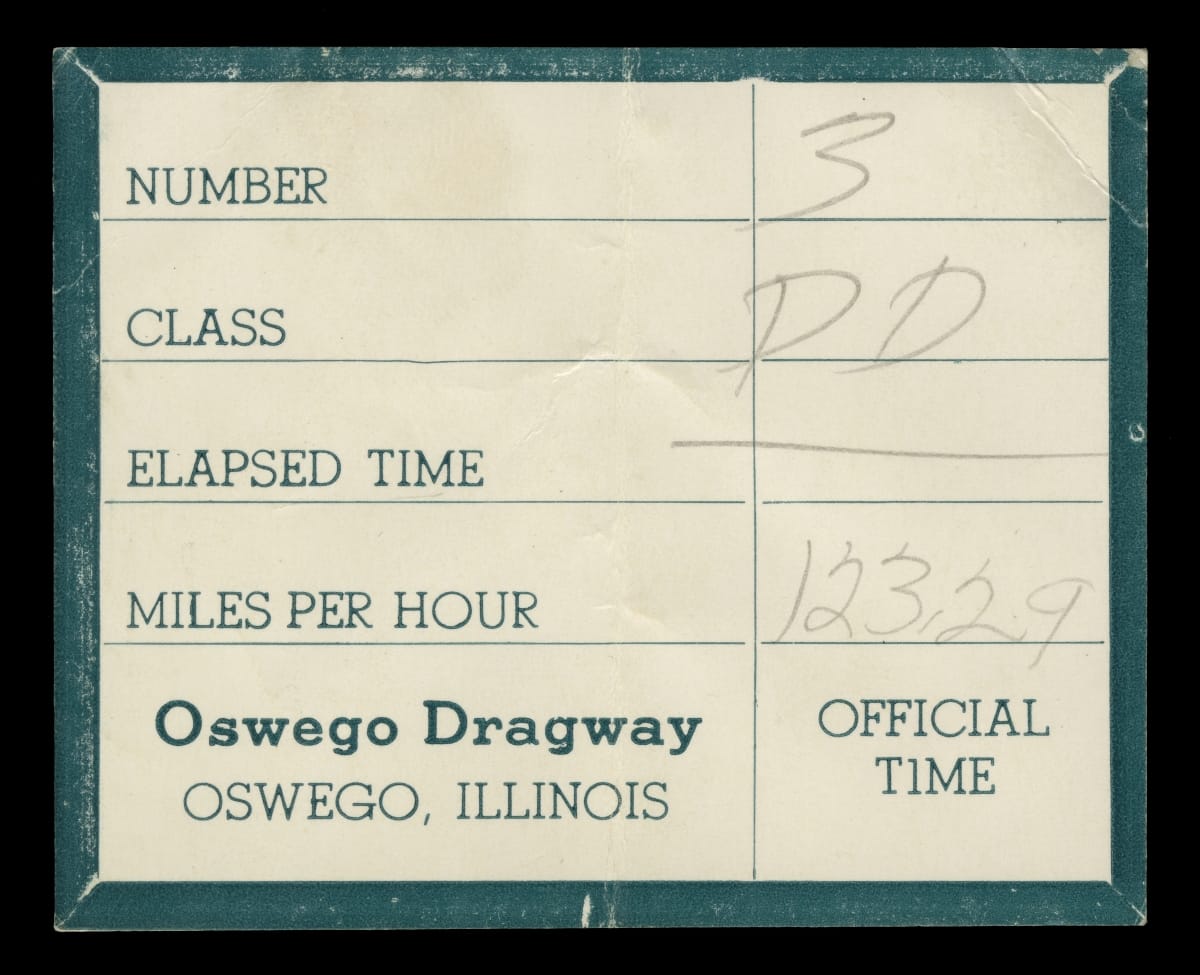
- Timing Slip From Oswego Dragway, Used with Slingshot Dragster, 1963 - Drag racing is racing in its simplest form. From a standing start, two cars race to the finish line one-quarter mile away. After the run, competitors receive a timing slip recording their top speed. Sam Buck and Bob Thompson received this slip at Oswego Dragway, near Chicago, in 1963. It verifies a top speed of 123.29 miles per hour.
- 1963
- Collections - Artifact
Timing Slip From Oswego Dragway, Used with Slingshot Dragster, 1963
Drag racing is racing in its simplest form. From a standing start, two cars race to the finish line one-quarter mile away. After the run, competitors receive a timing slip recording their top speed. Sam Buck and Bob Thompson received this slip at Oswego Dragway, near Chicago, in 1963. It verifies a top speed of 123.29 miles per hour.