
Search
- Swatches, "Crosses," Designed by Alexander Girard for Herman Miller, 1957 - Early modernist design was starkly minimal, but mid-century modern designer Alexander Girard's work challenged and expanded the movement. Girard humanized modernism through his colorful and whimsical textile, furniture, graphic, and interior designs. As the Director of Design in Herman Miller's Textile Division from 1952 until 1973, Girard designed over 300 textiles, often using bold color combinations and abstract patterns.
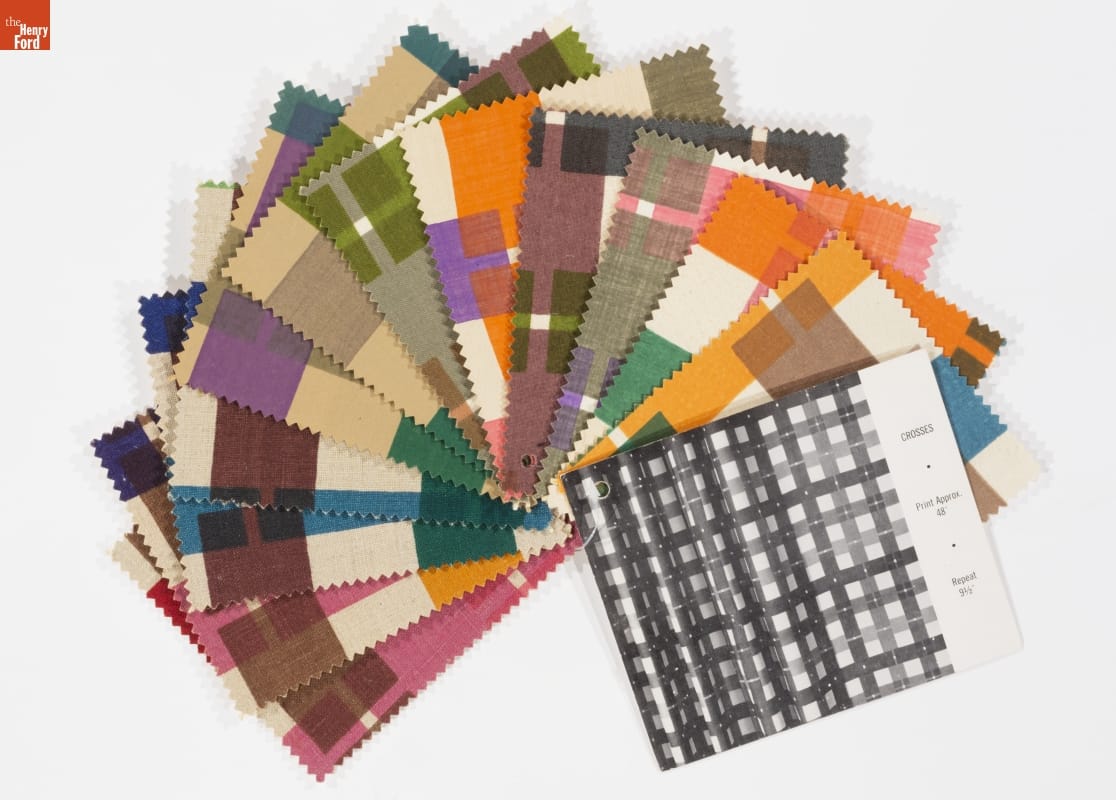
- 1957
- Collections - Artifact
Swatches, "Crosses," Designed by Alexander Girard for Herman Miller, 1957
Early modernist design was starkly minimal, but mid-century modern designer Alexander Girard's work challenged and expanded the movement. Girard humanized modernism through his colorful and whimsical textile, furniture, graphic, and interior designs. As the Director of Design in Herman Miller's Textile Division from 1952 until 1973, Girard designed over 300 textiles, often using bold color combinations and abstract patterns.
- Swatches, "Trispot," Designed by Alexander Girard for Herman Miller, 1956 - Early modernist design was starkly minimal, but mid-century modern designer Alexander Girard's work challenged and expanded the movement. Girard humanized modernism through his colorful and whimsical textile, furniture, graphic, and interior designs. As the Director of Design in Herman Miller's Textile Division from 1952 until 1973, Girard designed over 300 textiles, often using bold color combinations and abstract patterns.
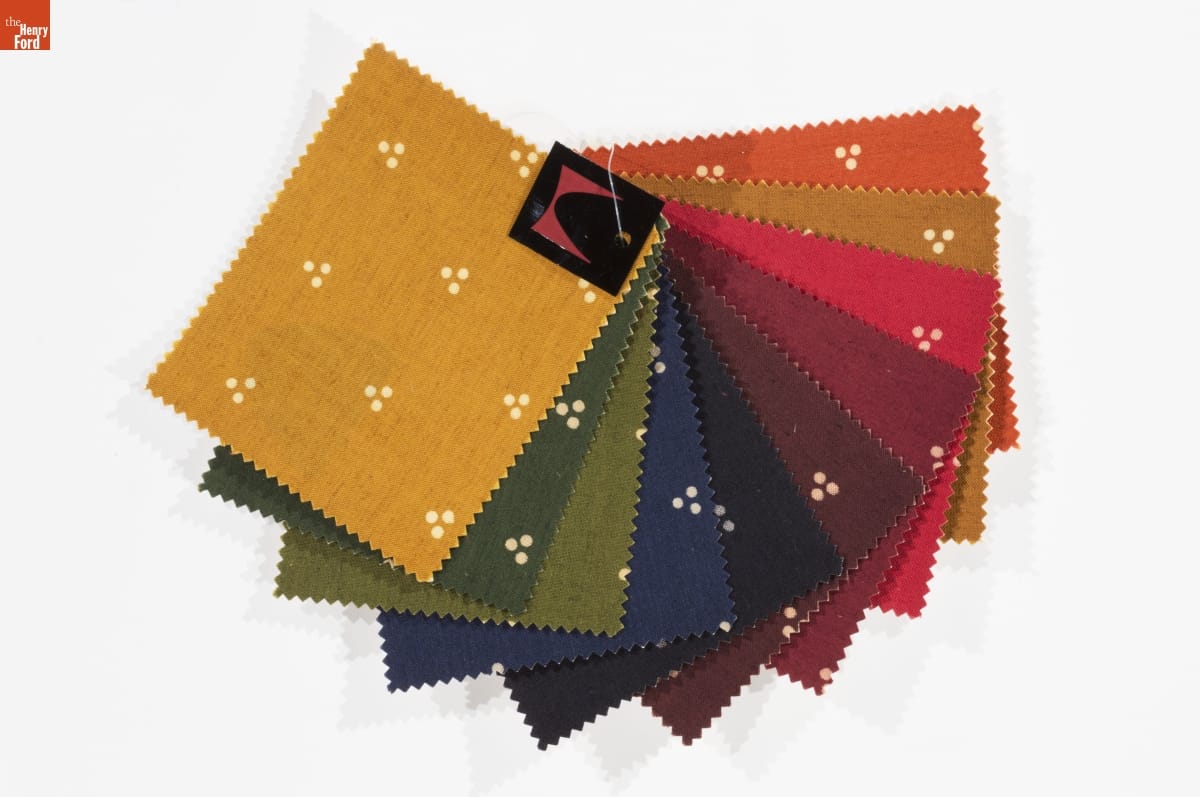
- 1956
- Collections - Artifact
Swatches, "Trispot," Designed by Alexander Girard for Herman Miller, 1956
Early modernist design was starkly minimal, but mid-century modern designer Alexander Girard's work challenged and expanded the movement. Girard humanized modernism through his colorful and whimsical textile, furniture, graphic, and interior designs. As the Director of Design in Herman Miller's Textile Division from 1952 until 1973, Girard designed over 300 textiles, often using bold color combinations and abstract patterns.
- "Alyssa Leaf" Drapery Rod Set, 2002 - Starting in the early 1980s--and already established as an internationally recognized architect--Michael Graves began to pursue a parallel career as a product designer. Over the following three and a half decades he and his collaborators designed everything from humble household goods to limited edition luxury items for clients as diverse as Steuben, Alessi, Target, J. C. Penney, and Disney.
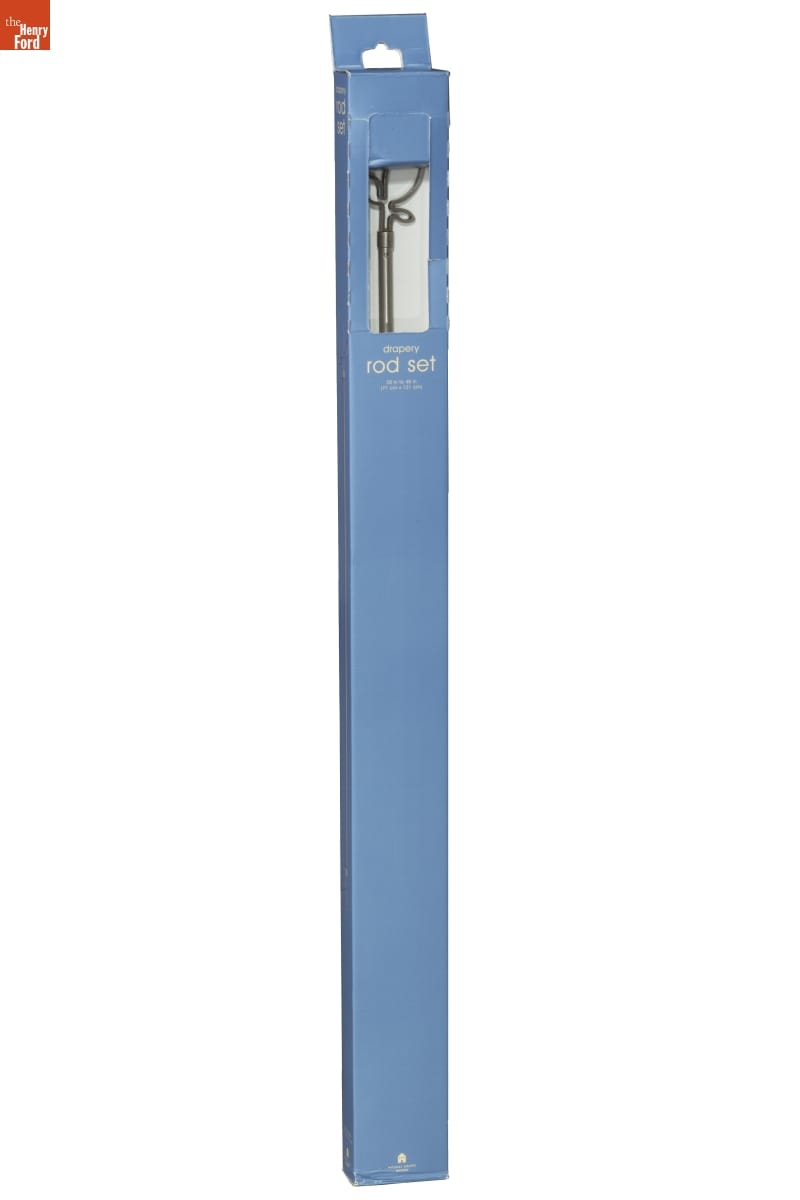
- 2002
- Collections - Artifact
"Alyssa Leaf" Drapery Rod Set, 2002
Starting in the early 1980s--and already established as an internationally recognized architect--Michael Graves began to pursue a parallel career as a product designer. Over the following three and a half decades he and his collaborators designed everything from humble household goods to limited edition luxury items for clients as diverse as Steuben, Alessi, Target, J. C. Penney, and Disney.
- "Wire Cage" Drapery Rod Set, 2002 - Starting in the early 1980s--and already established as an internationally recognized architect--Michael Graves began to pursue a parallel career as a product designer. Over the following three and a half decades he and his collaborators designed everything from humble household goods to limited edition luxury items for clients as diverse as Steuben, Alessi, Target, J. C. Penney, and Disney.
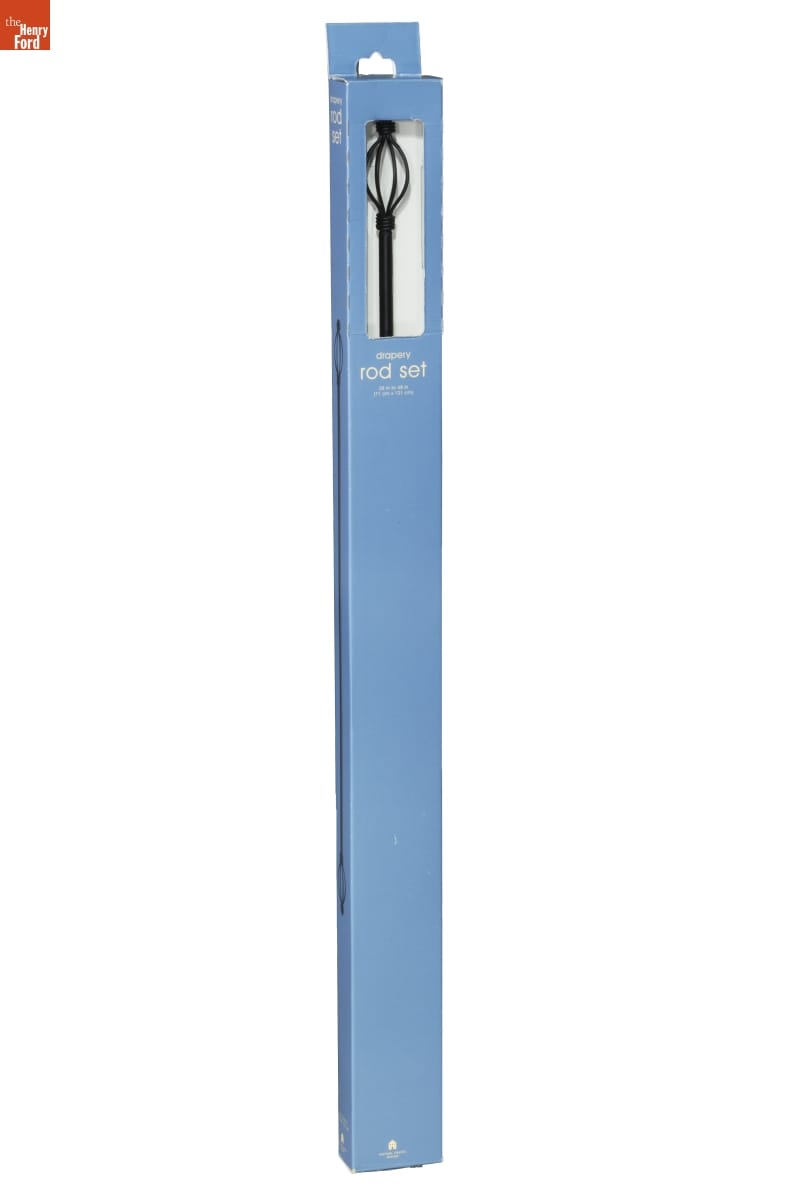
- 2002
- Collections - Artifact
"Wire Cage" Drapery Rod Set, 2002
Starting in the early 1980s--and already established as an internationally recognized architect--Michael Graves began to pursue a parallel career as a product designer. Over the following three and a half decades he and his collaborators designed everything from humble household goods to limited edition luxury items for clients as diverse as Steuben, Alessi, Target, J. C. Penney, and Disney.
- Bandbox, circa 1830 - In the early 1800s, Americans used bandboxes to store clothing, accessories, and other small items. Bandboxes were handy containers in the home or when traveling by stage, boat, or rail. Manufacturers covered these inexpensive pasteboard or wooden boxes with colorful papers. This bandbox's paper consists of roses, drapery and vase-shaped pillars.
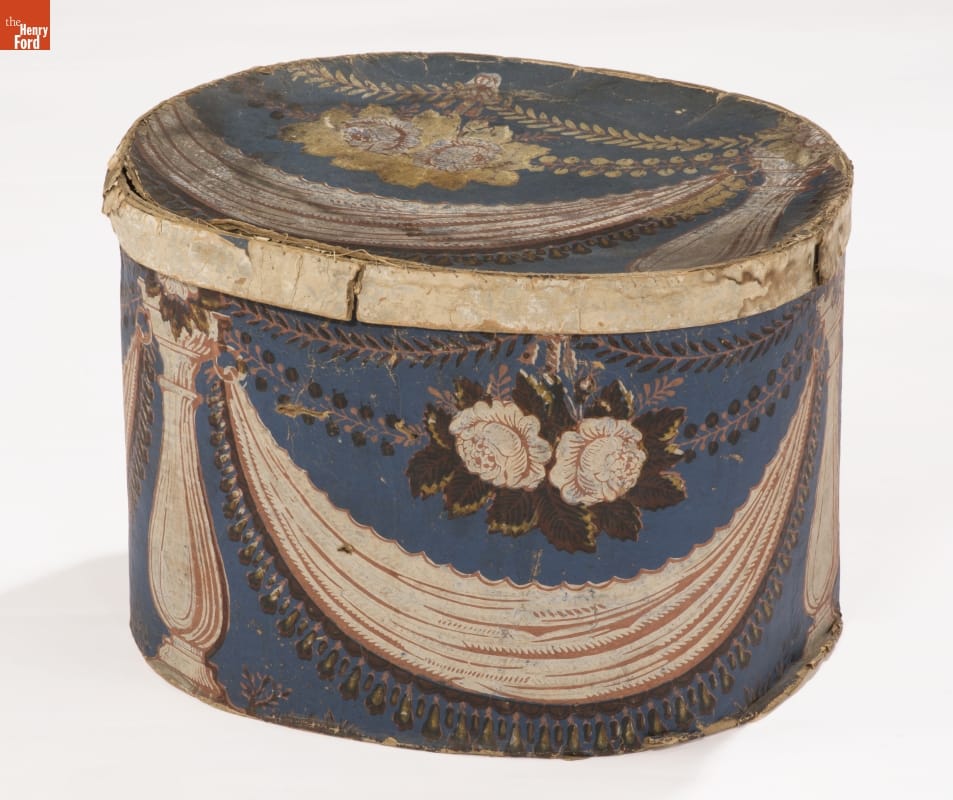
- circa 1830
- Collections - Artifact
Bandbox, circa 1830
In the early 1800s, Americans used bandboxes to store clothing, accessories, and other small items. Bandboxes were handy containers in the home or when traveling by stage, boat, or rail. Manufacturers covered these inexpensive pasteboard or wooden boxes with colorful papers. This bandbox's paper consists of roses, drapery and vase-shaped pillars.
- Invoice for Stage and Auditorium Drapes and Curtains for Henry Ford Museum Theater, October 1931 -
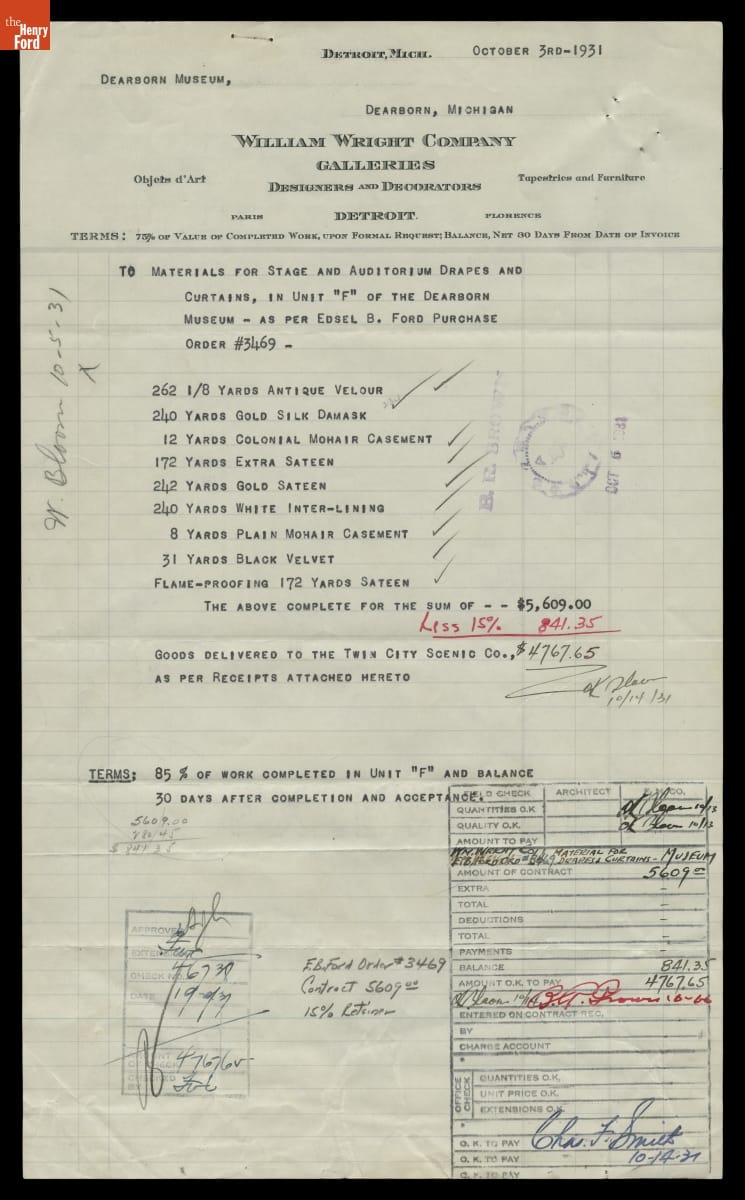
- October 03, 1931
- Collections - Artifact
Invoice for Stage and Auditorium Drapes and Curtains for Henry Ford Museum Theater, October 1931
- Bandbox, 1835-1839 - In the early 1800s, Americans used bandboxes to store clothing, accessories, and other small items. Bandboxes were handy containers in the home or when traveling by stage, boat, or rail. Manufacturers covered these inexpensive pasteboard or wooden boxes with colorful papers. This bandbox's paper consists of a swag with flowers and birds. The paper on the lid depicts a house and mill scene.
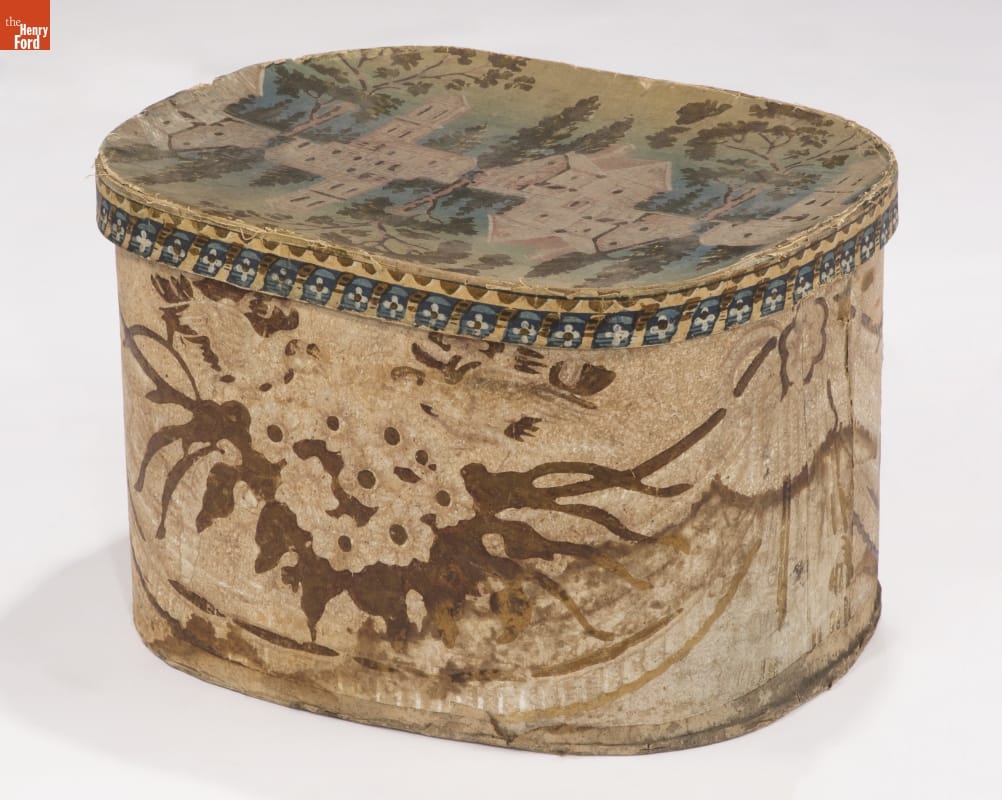
- 1835-1839
- Collections - Artifact
Bandbox, 1835-1839
In the early 1800s, Americans used bandboxes to store clothing, accessories, and other small items. Bandboxes were handy containers in the home or when traveling by stage, boat, or rail. Manufacturers covered these inexpensive pasteboard or wooden boxes with colorful papers. This bandbox's paper consists of a swag with flowers and birds. The paper on the lid depicts a house and mill scene.
- Swedish Weaving, Draperies, 1890-1915 - In 1890, Jenny Young Chandler, 25 years old and recently widowed, began working for the <EM>New York Herald</EM>. As a photojournalist and feature writer, Chandler captured life in Brooklyn, New York, and vicinity. She also documented collections of private individuals and museums -- some of which were featured in magazine articles for collectors. By 1922, the time of her death, she had produced over 800 glass plate negatives.
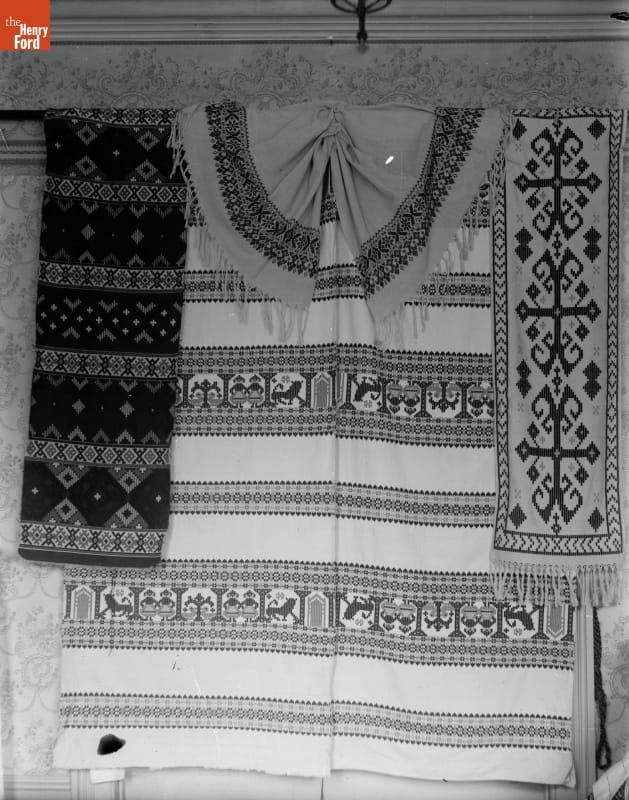
- 1890-1915
- Collections - Artifact
Swedish Weaving, Draperies, 1890-1915
In 1890, Jenny Young Chandler, 25 years old and recently widowed, began working for the New York Herald. As a photojournalist and feature writer, Chandler captured life in Brooklyn, New York, and vicinity. She also documented collections of private individuals and museums -- some of which were featured in magazine articles for collectors. By 1922, the time of her death, she had produced over 800 glass plate negatives.
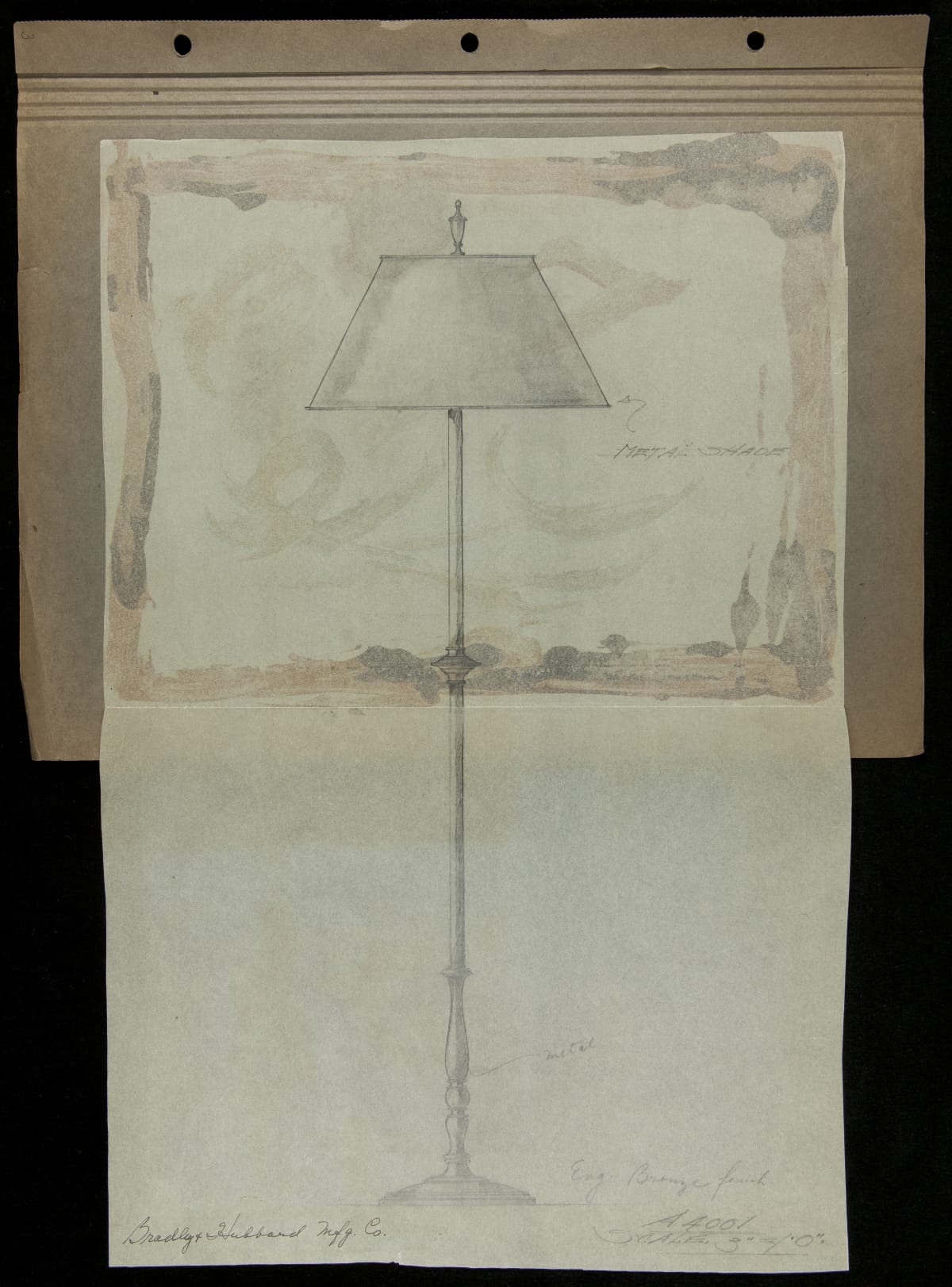
- Scrapbook Documenting the Furnishing of Dearborn Inn, Dearborn, Michigan, 1931 - Edsel and Henry Ford conceived the Dearborn Inn as their vision of a "real New England Inn" -- a first class hotel hosting travelers transiting through the adjacent Ford Airport. It is noted as one of the first airport hotels. This loose-leaf scrapbook meticulously records the original furnishings through photographs, documents, blueprints and material samples.
- 1931
- Collections - Artifact
Scrapbook Documenting the Furnishing of Dearborn Inn, Dearborn, Michigan, 1931
Edsel and Henry Ford conceived the Dearborn Inn as their vision of a "real New England Inn" -- a first class hotel hosting travelers transiting through the adjacent Ford Airport. It is noted as one of the first airport hotels. This loose-leaf scrapbook meticulously records the original furnishings through photographs, documents, blueprints and material samples.
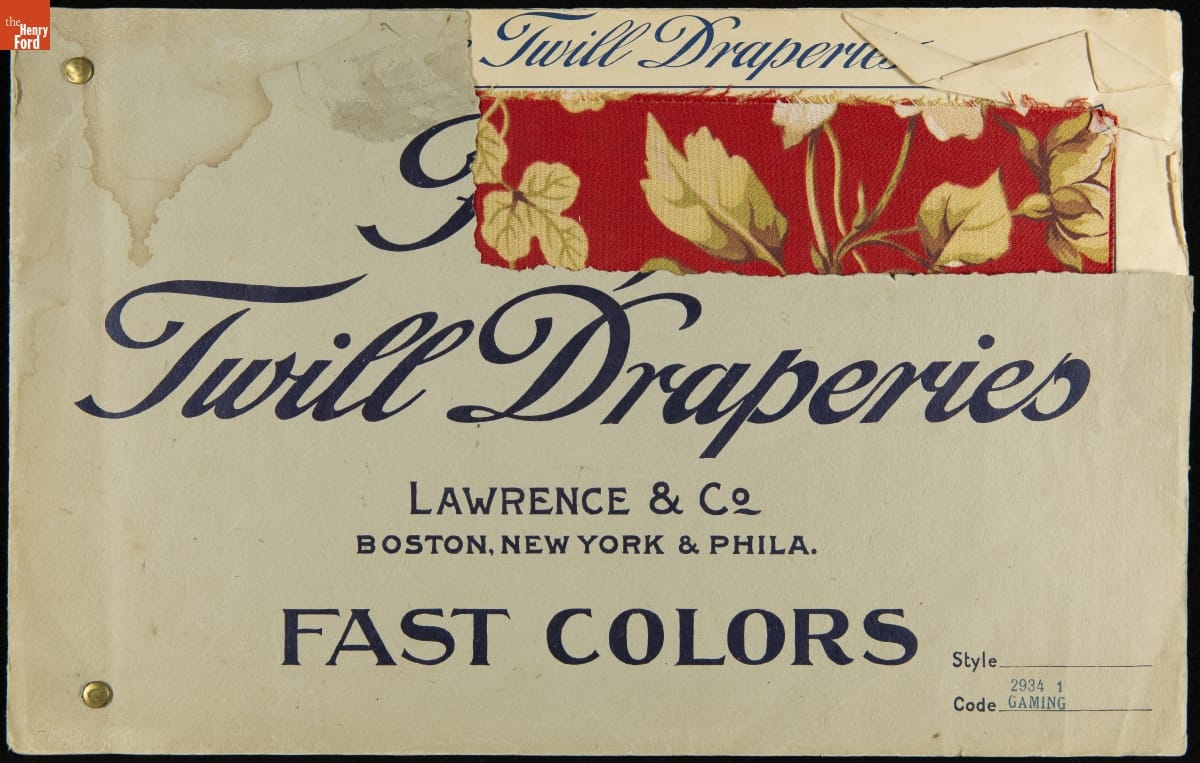
- Lawrence & Co., Pacific Twill Draperies, "29341 Gaming," circa 1965 -
- circa 1965
- Collections - Artifact
Lawrence & Co., Pacific Twill Draperies, "29341 Gaming," circa 1965