
Search
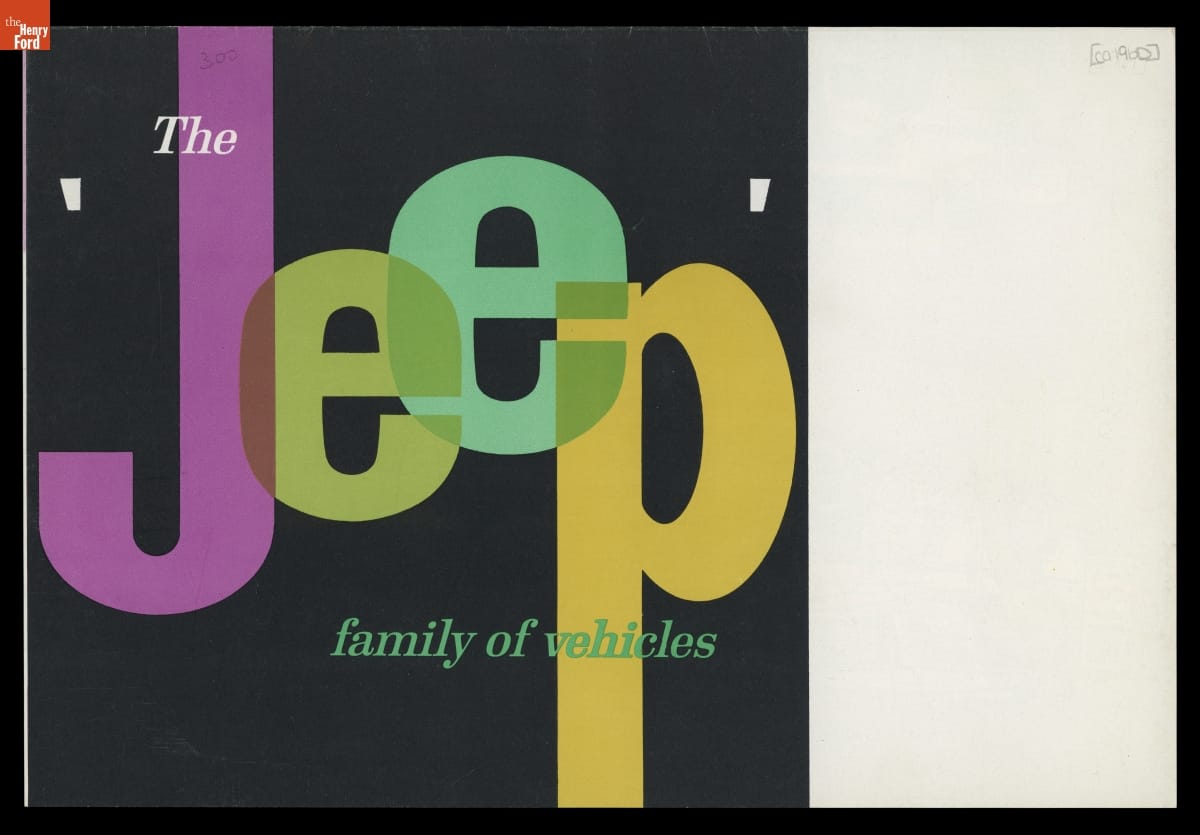
- "The Jeep Family of Vehicles," 1961 - Kaiser Motors purchased Willys-Overland, including its successful Jeep brand, in 1953. Kaiser ended passenger car production to focus on Jeep runabout, truck, and van models. Under Kaiser's ownership, Jeep introduced important models like the CJ-5, the Wagoneer and luxury Super Wagoneer, the Gladiator pickup, and the Jeepster and Jeepster Commando. American Motors purchased Kaiser Jeep in 1970.
- 1961
- Collections - Artifact
"The Jeep Family of Vehicles," 1961
Kaiser Motors purchased Willys-Overland, including its successful Jeep brand, in 1953. Kaiser ended passenger car production to focus on Jeep runabout, truck, and van models. Under Kaiser's ownership, Jeep introduced important models like the CJ-5, the Wagoneer and luxury Super Wagoneer, the Gladiator pickup, and the Jeepster and Jeepster Commando. American Motors purchased Kaiser Jeep in 1970.
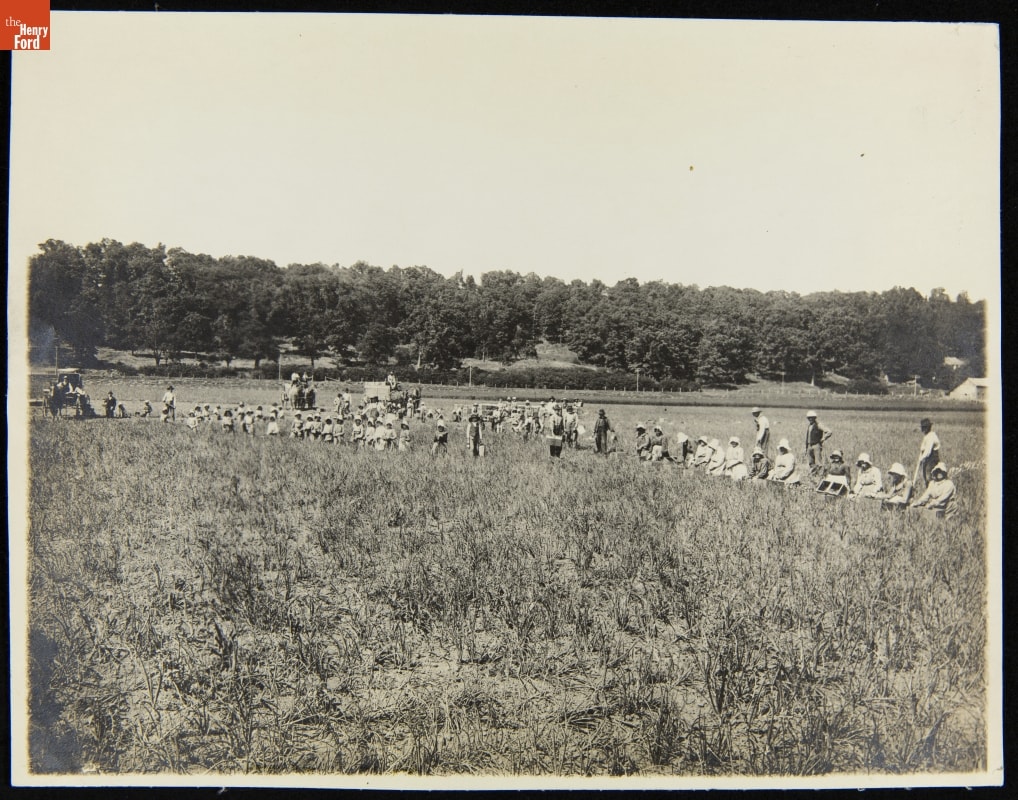
- Workers in an Onion Field, H. J. Heinz Company, circa 1910 - Entrepreneur H.J. Heinz recognized that producing the highest quality products began with where the ingredients were grown and how they were harvested. He took great care in managing every aspect of the process to ensure the best ingredients for his line of pickled foods, preserves, and condiments. This photograph shows workers spread out across one of Heinz's many onion fields.
- circa 1910
- Collections - Artifact
Workers in an Onion Field, H. J. Heinz Company, circa 1910
Entrepreneur H.J. Heinz recognized that producing the highest quality products began with where the ingredients were grown and how they were harvested. He took great care in managing every aspect of the process to ensure the best ingredients for his line of pickled foods, preserves, and condiments. This photograph shows workers spread out across one of Heinz's many onion fields.
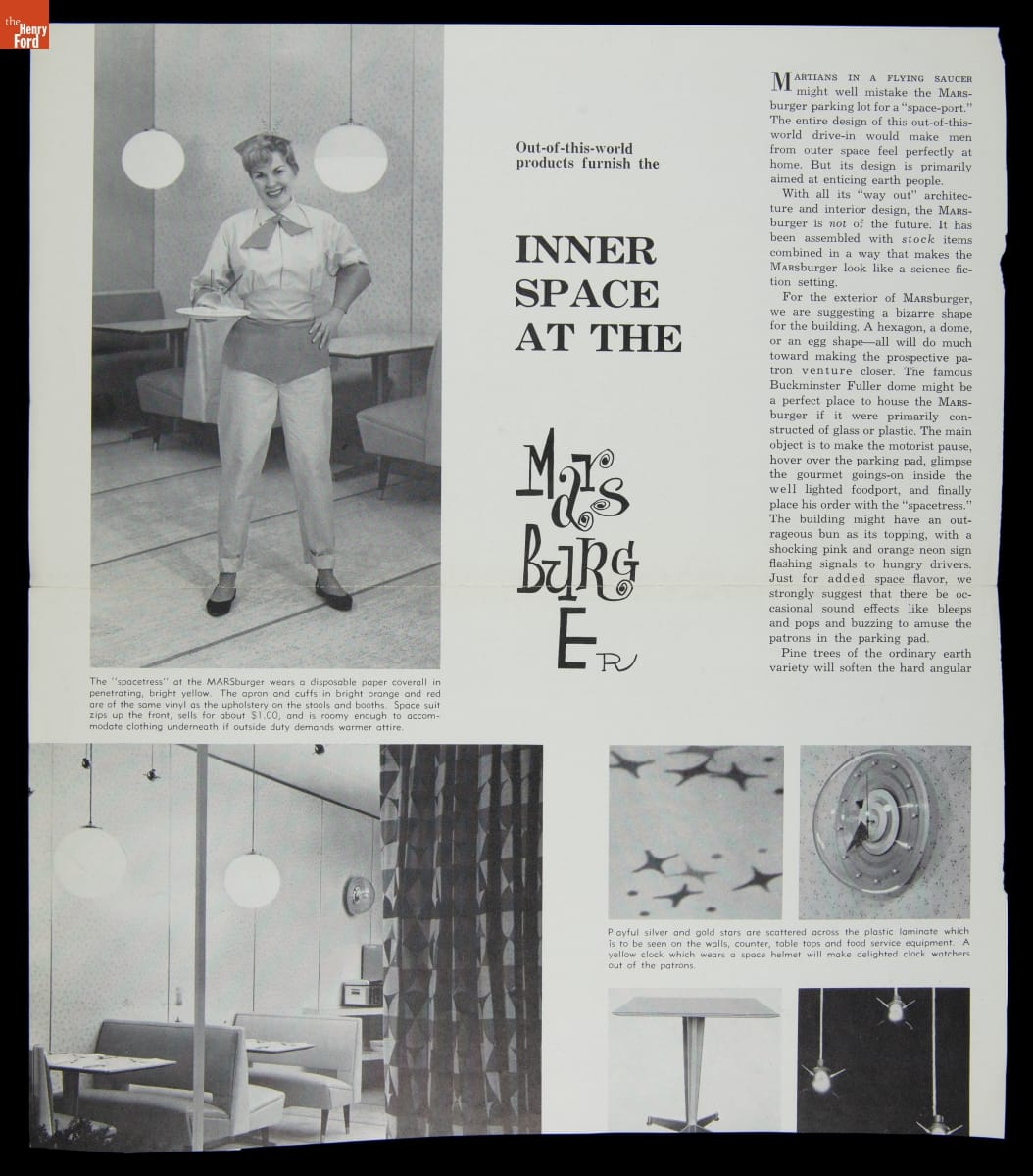
- "Out-of-this-world Products Furnish the Inner Space at the Marsburger" -
- Collections - Artifact
"Out-of-this-world Products Furnish the Inner Space at the Marsburger"
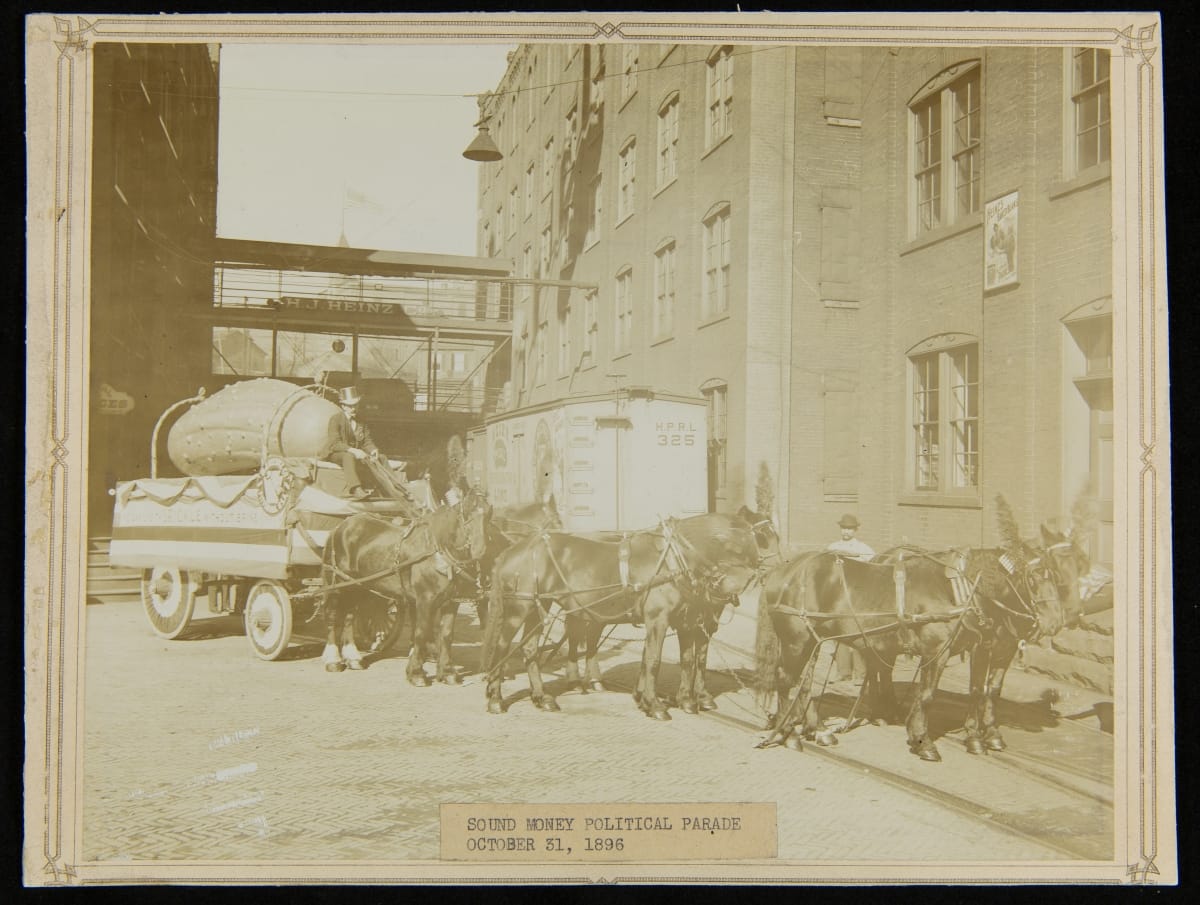
- Heinz Float for the Sound Money Political Parade in Pittsburgh, Pennsylvania, October 31, 1896 - During the 1896 election campaign, "Sound Money" political parades were held in San Francisco and New York City in support of presidential candidate William McKinley. The H.J. Heinz Company participated in the parade held in New York with this float featuring a giant pickle. McKinley would go on to defeat candidate William Jennings Bryan to become President.
- October 31, 1896
- Collections - Artifact
Heinz Float for the Sound Money Political Parade in Pittsburgh, Pennsylvania, October 31, 1896
During the 1896 election campaign, "Sound Money" political parades were held in San Francisco and New York City in support of presidential candidate William McKinley. The H.J. Heinz Company participated in the parade held in New York with this float featuring a giant pickle. McKinley would go on to defeat candidate William Jennings Bryan to become President.
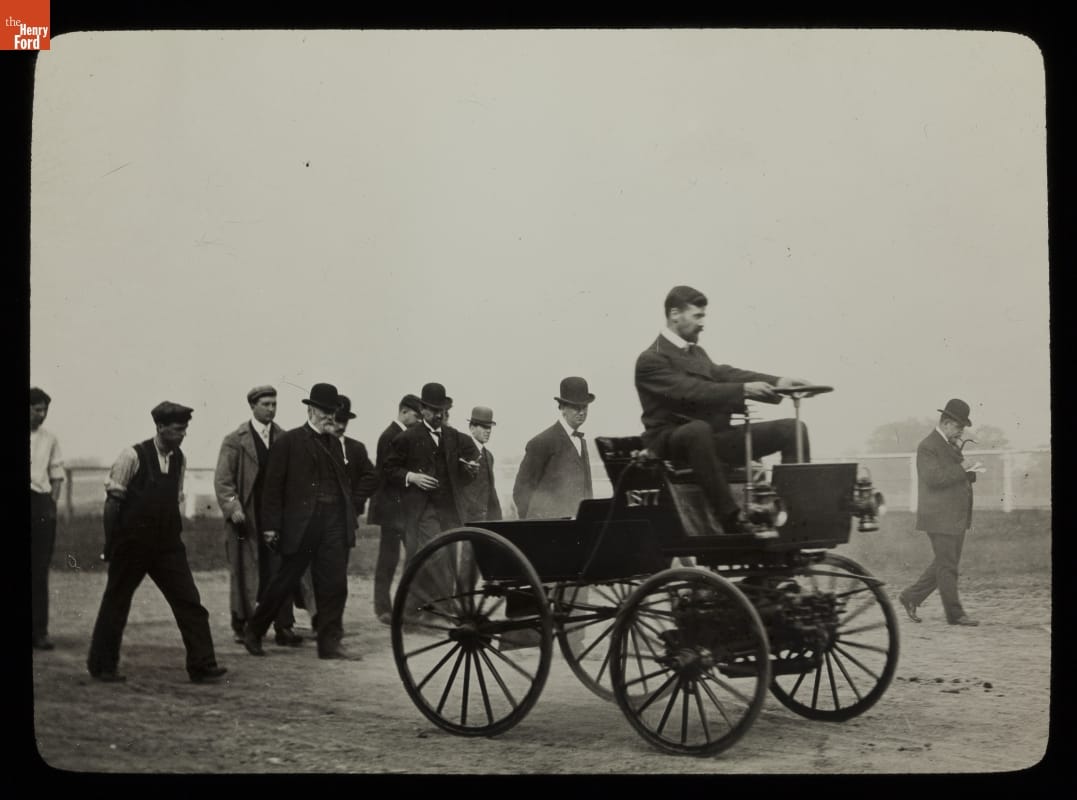
- Driving the Selden Motor Buggy during the Selden Patent Suit - George Selden conceived -- but didn't build -- a self-propelled gasoline-powered vehicle in 1877 and patented the idea in 1895. The Association of Licensed Automobile Manufacturers enforced Selden's patent, but Henry Ford fought ALAM in court. This car was completed for Selden in 1907 as evidence for the legal battle. Ford ultimately won, freeing himself and other automakers from paying royalties to ALAM.
- 1907-1911
- Collections - Artifact
Driving the Selden Motor Buggy during the Selden Patent Suit
George Selden conceived -- but didn't build -- a self-propelled gasoline-powered vehicle in 1877 and patented the idea in 1895. The Association of Licensed Automobile Manufacturers enforced Selden's patent, but Henry Ford fought ALAM in court. This car was completed for Selden in 1907 as evidence for the legal battle. Ford ultimately won, freeing himself and other automakers from paying royalties to ALAM.
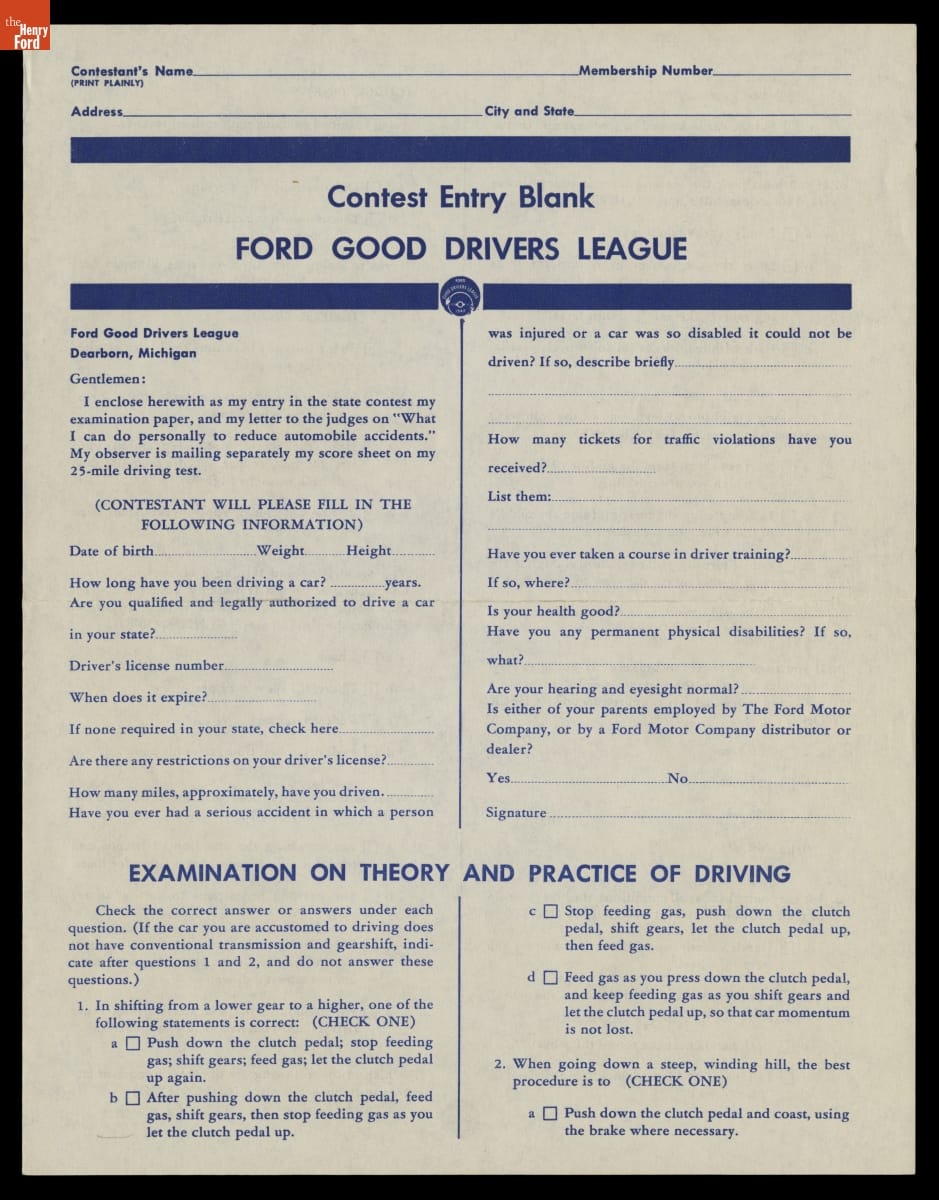
- Ford Good Drivers League Contest Entry Blank, April 1940 - Ford Motor Company created the Good Drivers League in 1940. Headed by Edsel Ford, the League promoted safe driving habits among high school students. The League initially invited boys to compete in state and national championships--girls would join in 1941. Contestants wrote essays and participated in driving tests. National champions won trophies and scholarships. America's entry into World War II ended the program.
- April 01, 1940
- Collections - Artifact
Ford Good Drivers League Contest Entry Blank, April 1940
Ford Motor Company created the Good Drivers League in 1940. Headed by Edsel Ford, the League promoted safe driving habits among high school students. The League initially invited boys to compete in state and national championships--girls would join in 1941. Contestants wrote essays and participated in driving tests. National champions won trophies and scholarships. America's entry into World War II ended the program.
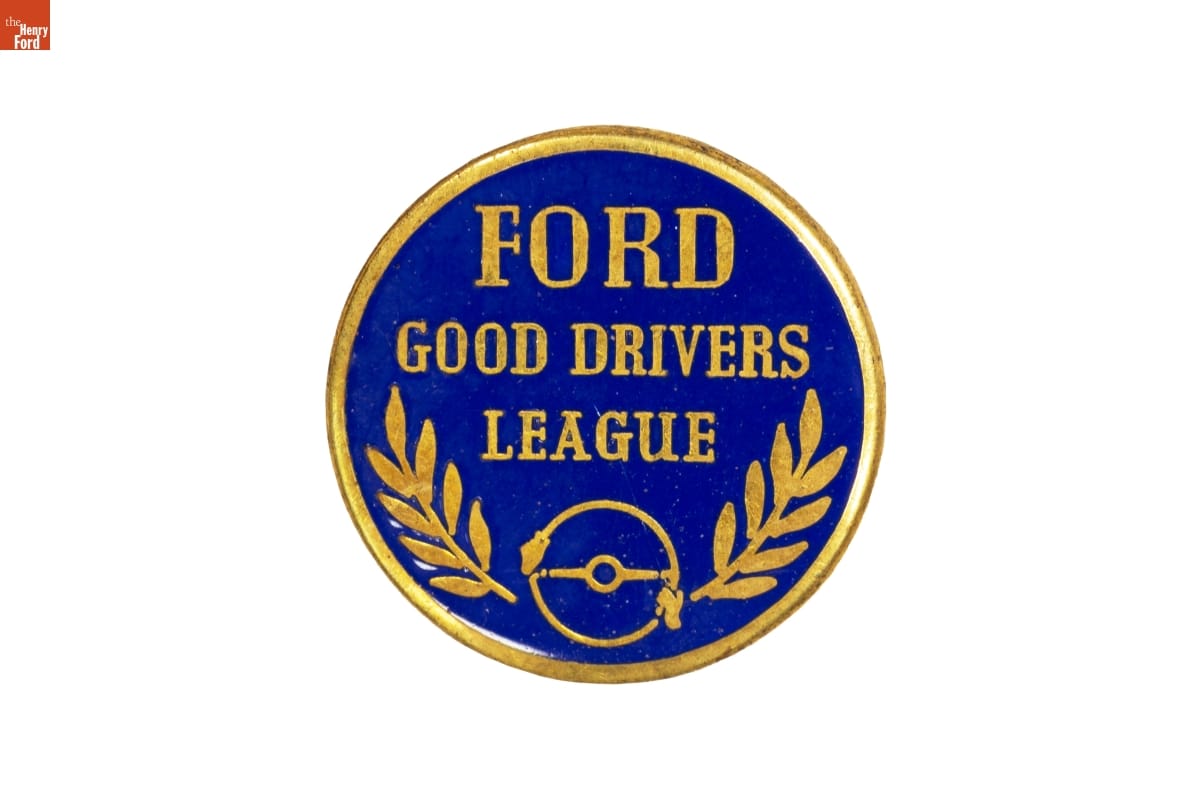
- "Ford Good Drivers League" Pin, 1940-1942 - Ford Motor Company created the Good Drivers League in 1940. Headed by Edsel Ford, the League promoted safe driving habits among high school students. The League initially invited boys to compete in state and national championships--girls would join in 1941. Contestants wrote essays and participated in driving tests. National champions won trophies and scholarships. America's entry into World War II ended the program.
- 1940-1942
- Collections - Artifact
"Ford Good Drivers League" Pin, 1940-1942
Ford Motor Company created the Good Drivers League in 1940. Headed by Edsel Ford, the League promoted safe driving habits among high school students. The League initially invited boys to compete in state and national championships--girls would join in 1941. Contestants wrote essays and participated in driving tests. National champions won trophies and scholarships. America's entry into World War II ended the program.
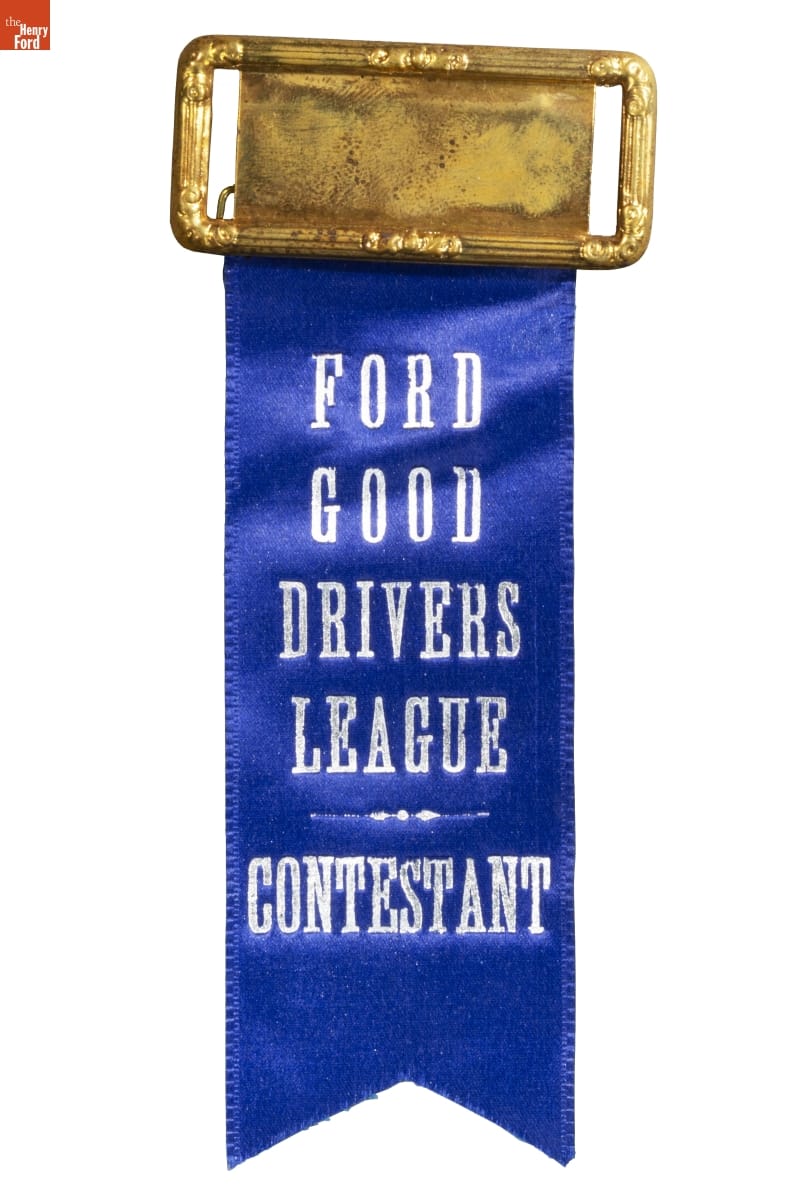
- Ford Good Drivers League "Contestant" Badge, 1940-1942 - Ford Motor Company created the Good Drivers League in 1940. Headed by Edsel Ford, the League promoted safe driving habits among high school students. The League initially invited boys to compete in state and national championships--girls would join in 1941. Contestants wrote essays and participated in driving tests. National champions won trophies and scholarships. America's entry into World War II ended the program.
- 1940-1942
- Collections - Artifact
Ford Good Drivers League "Contestant" Badge, 1940-1942
Ford Motor Company created the Good Drivers League in 1940. Headed by Edsel Ford, the League promoted safe driving habits among high school students. The League initially invited boys to compete in state and national championships--girls would join in 1941. Contestants wrote essays and participated in driving tests. National champions won trophies and scholarships. America's entry into World War II ended the program.
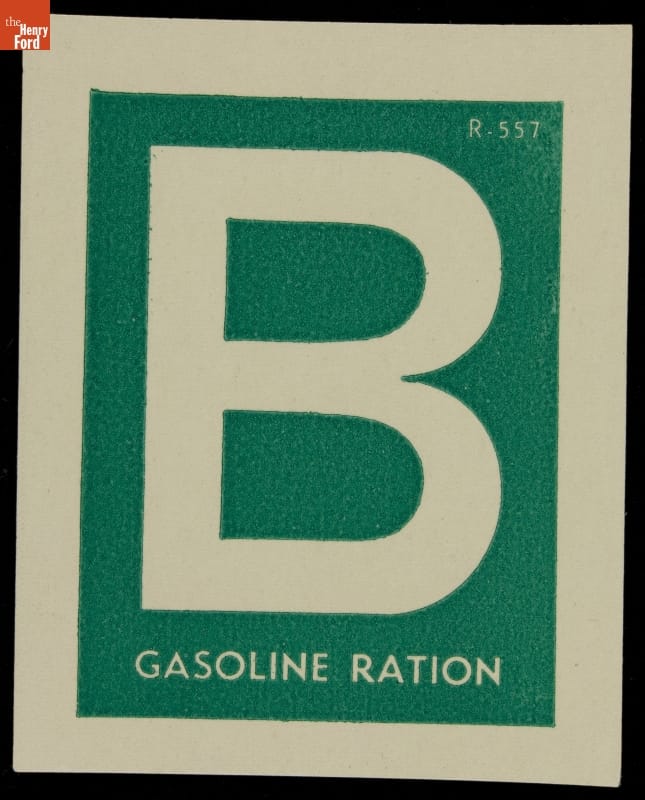
- World War II Gasoline Rationing Sticker, Series "B," 1941-1945 - The amount of gasoline you received during World War II depended on whether your job was essential to the war effort. Drivers received a windshield sticker and ration coupons for gasoline. Essential war workers received "B" stickers, like this one, allowing them up to eight gallons of gasoline a week.
- 1941-1945
- Collections - Artifact
World War II Gasoline Rationing Sticker, Series "B," 1941-1945
The amount of gasoline you received during World War II depended on whether your job was essential to the war effort. Drivers received a windshield sticker and ration coupons for gasoline. Essential war workers received "B" stickers, like this one, allowing them up to eight gallons of gasoline a week.
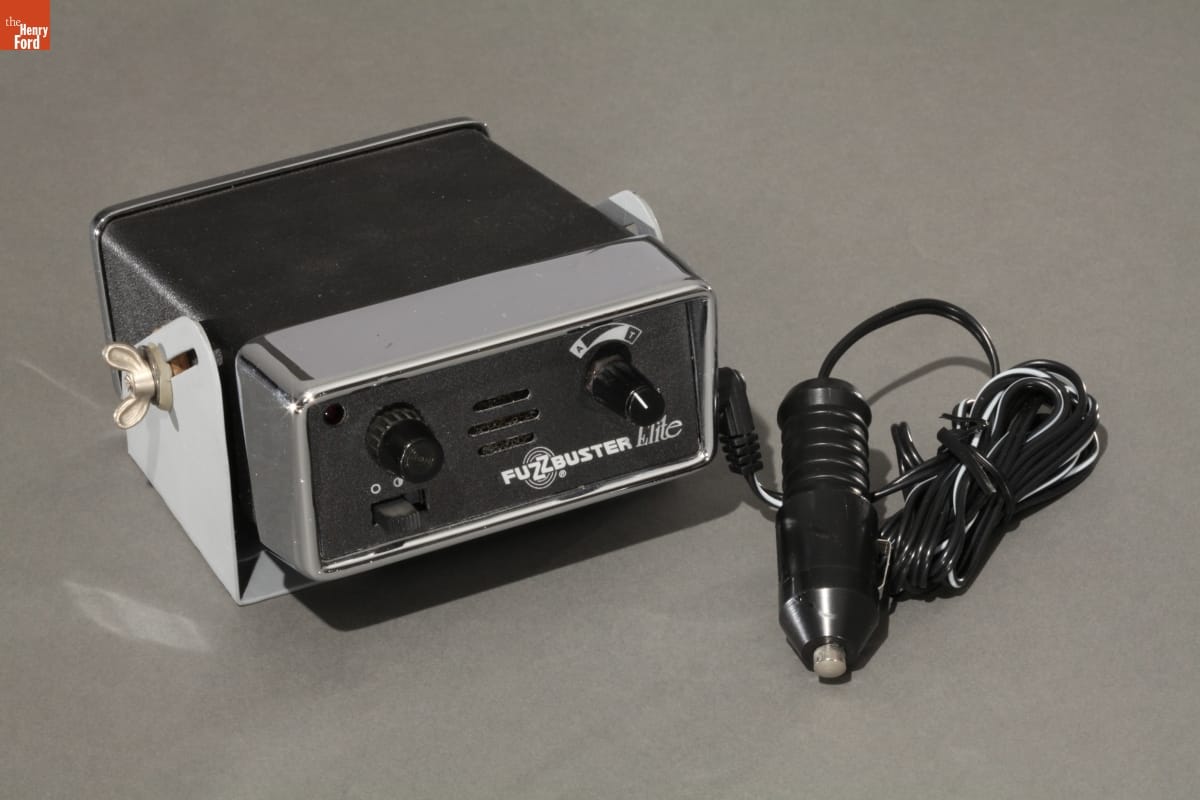
- Fuzzbuster Elite Radar Detector, 1979-1980 - This Fuzzbuster Elite helped motorists detect police radar as they sped down America's highways. The original Fuzzbuster had been around since the late 1960s and its name has become synonymous for police radar detectors. Radar detectors caught on when the 1970s energy crisis led to a nationwide 55-mph speed limit to reduce gasoline consumption.
- 1979-1980
- Collections - Artifact
Fuzzbuster Elite Radar Detector, 1979-1980
This Fuzzbuster Elite helped motorists detect police radar as they sped down America's highways. The original Fuzzbuster had been around since the late 1960s and its name has become synonymous for police radar detectors. Radar detectors caught on when the 1970s energy crisis led to a nationwide 55-mph speed limit to reduce gasoline consumption.