
Search
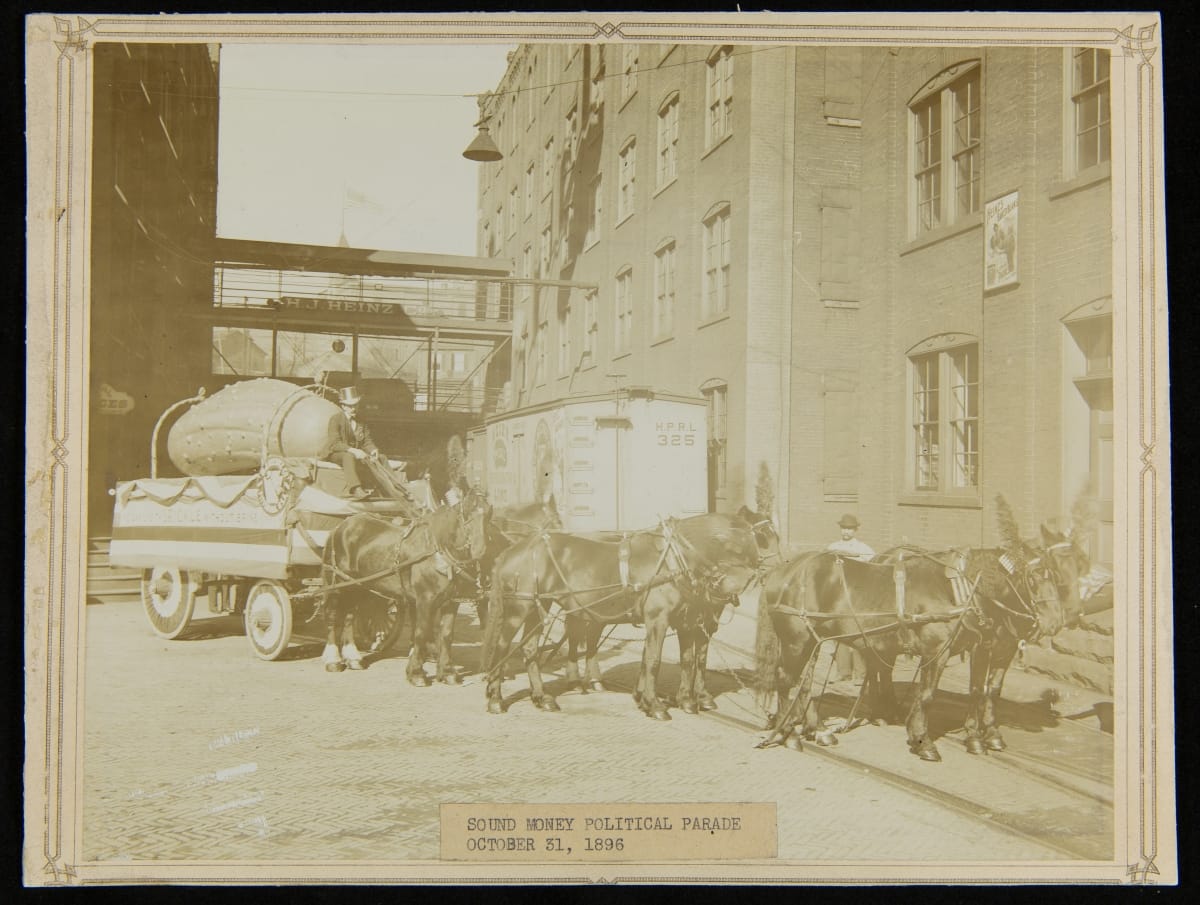
- Heinz Float for the Sound Money Political Parade in Pittsburgh, Pennsylvania, October 31, 1896 - During the 1896 election campaign, "Sound Money" political parades were held in San Francisco and New York City in support of presidential candidate William McKinley. The H.J. Heinz Company participated in the parade held in New York with this float featuring a giant pickle. McKinley would go on to defeat candidate William Jennings Bryan to become President.
- October 31, 1896
- Collections - Artifact
Heinz Float for the Sound Money Political Parade in Pittsburgh, Pennsylvania, October 31, 1896
During the 1896 election campaign, "Sound Money" political parades were held in San Francisco and New York City in support of presidential candidate William McKinley. The H.J. Heinz Company participated in the parade held in New York with this float featuring a giant pickle. McKinley would go on to defeat candidate William Jennings Bryan to become President.
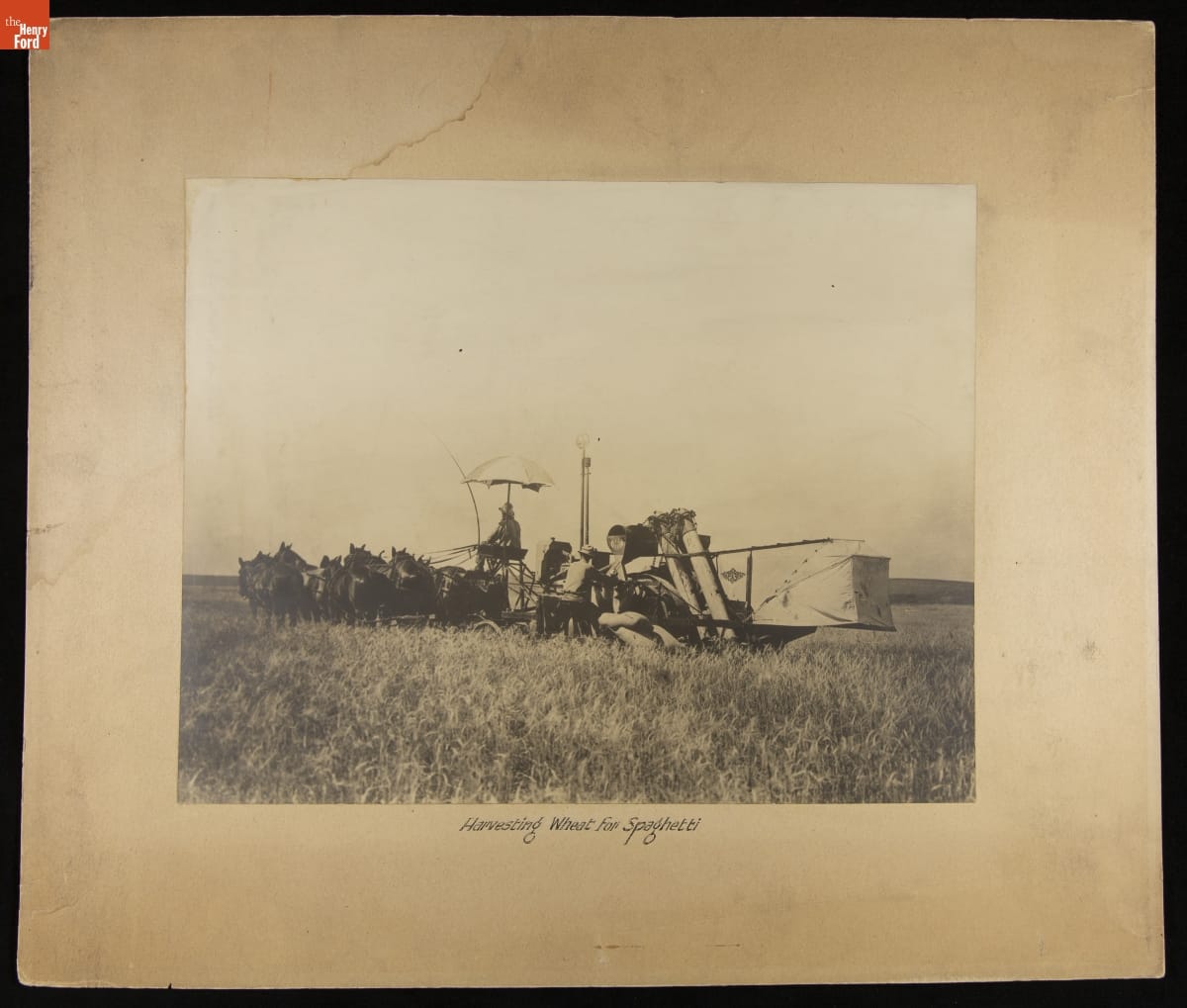
- Harvesting Wheat for Spaghetti, H. J. Heinz Company, 1930-1940 - Entrepreneur H.J. Heinz recognized that producing the highest quality products began with where the ingredients were grown and how they were harvested. The H.J. Heinz Company took great care in managing every aspect of the process to ensure the best ingredients were used in its products. In this photograph, workers are harvesting wheat for the company's heat-and-serve spaghetti products.
- 1930-1940
- Collections - Artifact
Harvesting Wheat for Spaghetti, H. J. Heinz Company, 1930-1940
Entrepreneur H.J. Heinz recognized that producing the highest quality products began with where the ingredients were grown and how they were harvested. The H.J. Heinz Company took great care in managing every aspect of the process to ensure the best ingredients were used in its products. In this photograph, workers are harvesting wheat for the company's heat-and-serve spaghetti products.
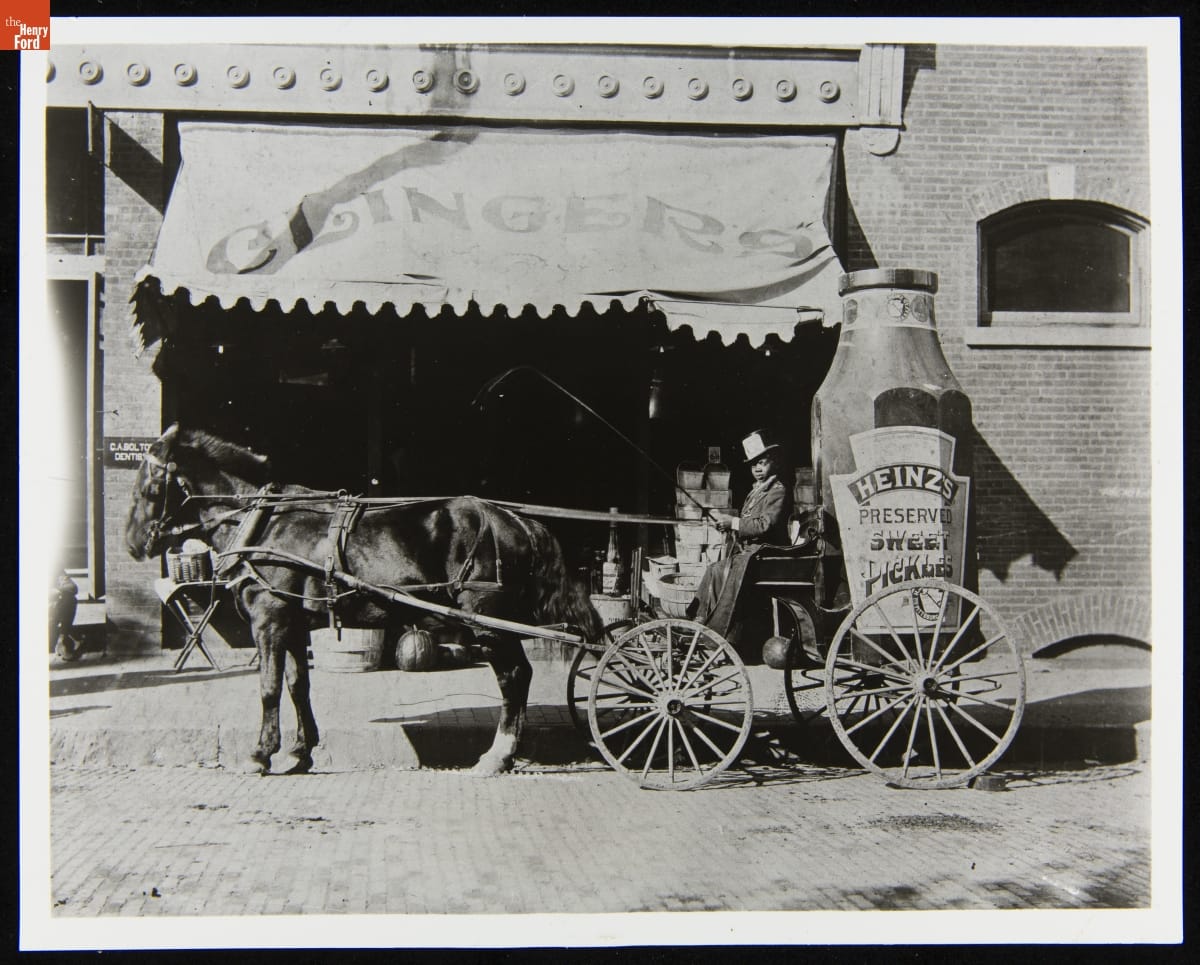
- Heinz's Preserved Sweet Pickles Advertising Figure in Horse-Drawn Wagon, 1890 - H.J. Heinz rarely missed an opportunity to promote his products. Innovative and eye-catching advertisements, along with the high-quality products he produced, contributed to Heinz becoming a household name. This photograph features one of his marketing tactics -- a larger-than-life display bottle promoting his preserved sweet pickles.
- 1890
- Collections - Artifact
Heinz's Preserved Sweet Pickles Advertising Figure in Horse-Drawn Wagon, 1890
H.J. Heinz rarely missed an opportunity to promote his products. Innovative and eye-catching advertisements, along with the high-quality products he produced, contributed to Heinz becoming a household name. This photograph features one of his marketing tactics -- a larger-than-life display bottle promoting his preserved sweet pickles.
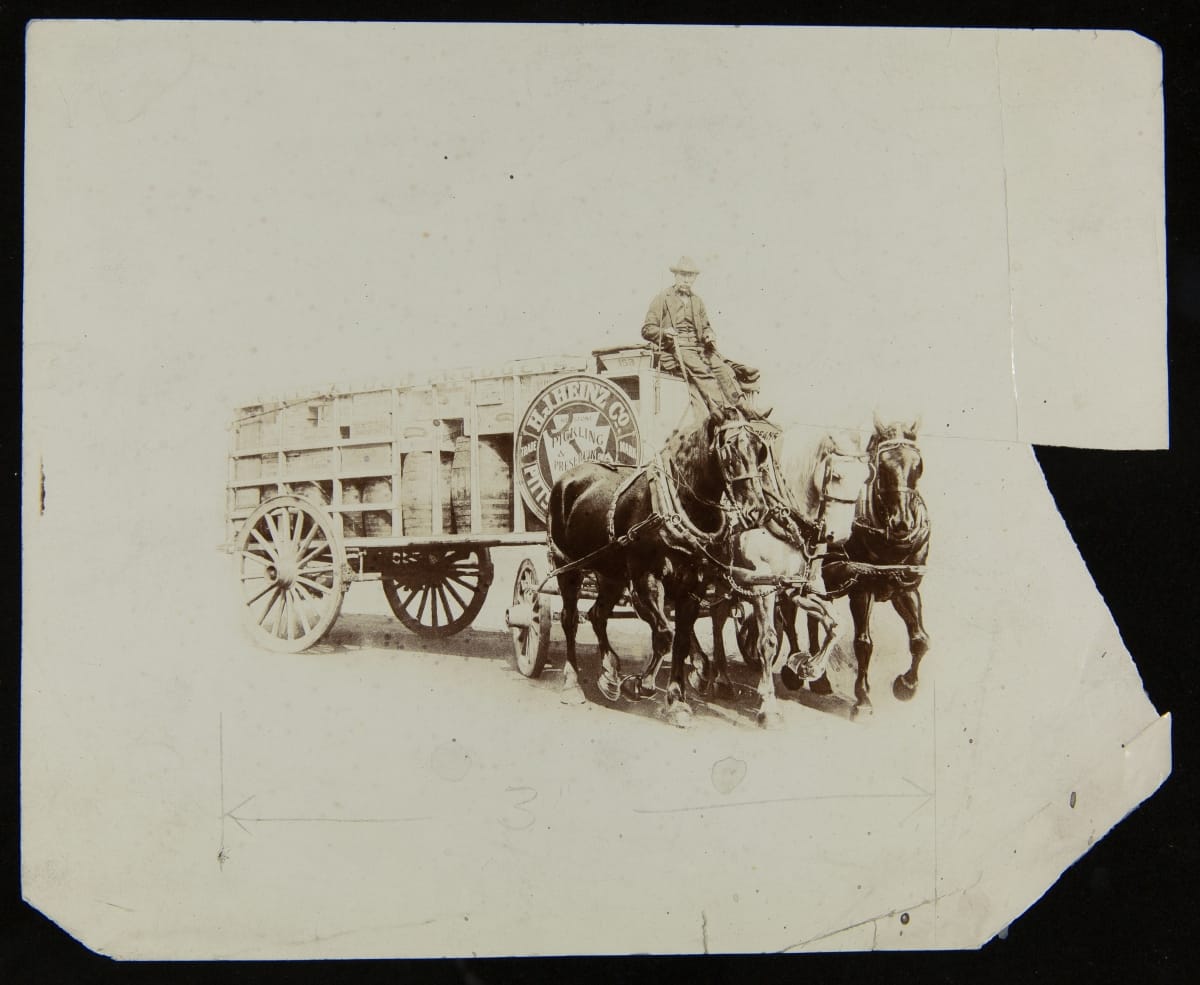
- Heinz Blue Ribbon Team with "57 Varieties" Wagon, H. J. Heinz Company - Before the 1920s, the H.J. Heinz Company transported their goods by rail and horse-drawn wagons. Heinz's horse teams consisted of all-black horses except for its "Blue Ribbon Team"--a three-horse hitch with two black horses and a gray horse in the middle. This photograph used for advertisements and publications shows the Blue Ribbon Team.
- 1910-1913
- Collections - Artifact
Heinz Blue Ribbon Team with "57 Varieties" Wagon, H. J. Heinz Company
Before the 1920s, the H.J. Heinz Company transported their goods by rail and horse-drawn wagons. Heinz's horse teams consisted of all-black horses except for its "Blue Ribbon Team"--a three-horse hitch with two black horses and a gray horse in the middle. This photograph used for advertisements and publications shows the Blue Ribbon Team.
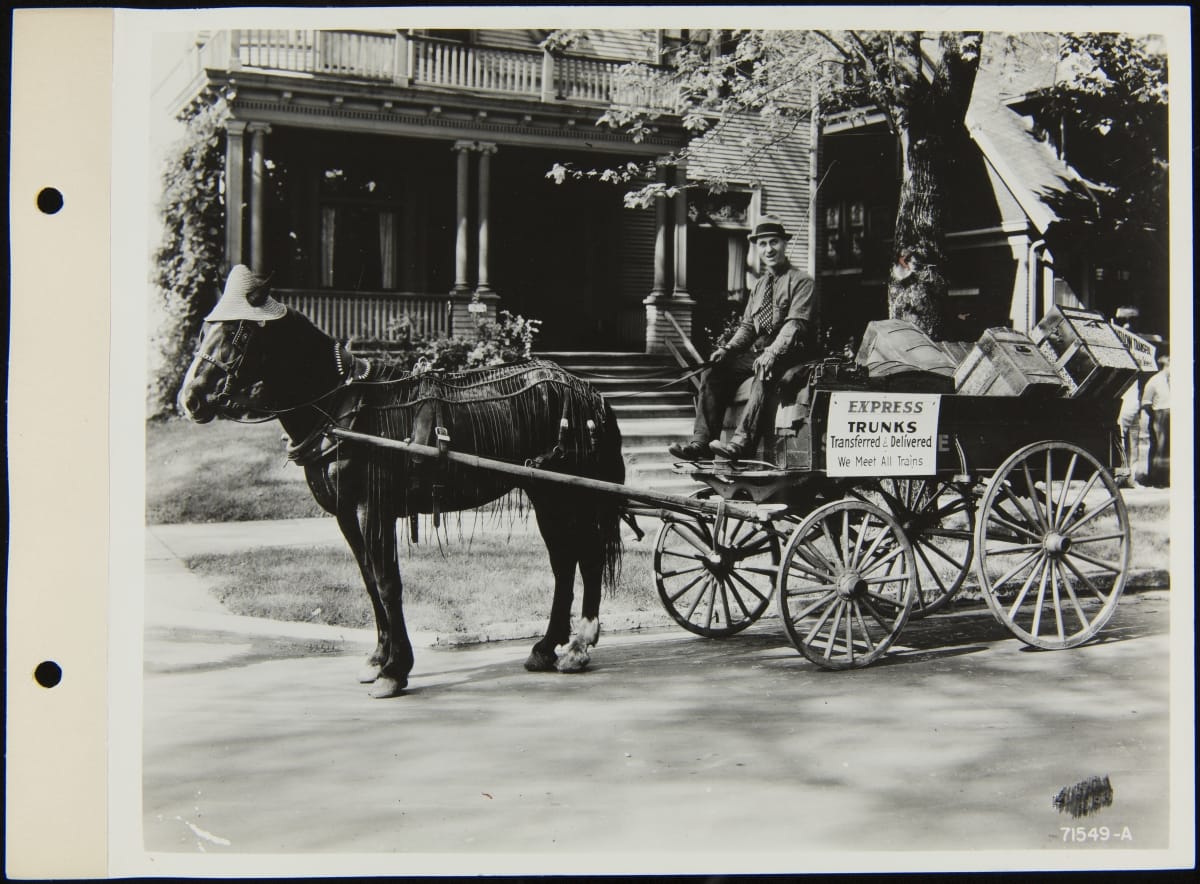
- Horse-Drawn Delivery Wagon, "Express Trunks Transferred & Delivered, We Meet All Trains," 1939 - Horse-drawn delivery wagons remained in use well into the 20th century -- particularly in smaller towns and rural areas. Horses were well suited to the frequent stops and starts of delivery service -- and the horse often knew the delivery route just as well as the driver. This wagon delivered railroad express shipments and passenger luggage.
- March 06, 1939
- Collections - Artifact
Horse-Drawn Delivery Wagon, "Express Trunks Transferred & Delivered, We Meet All Trains," 1939
Horse-drawn delivery wagons remained in use well into the 20th century -- particularly in smaller towns and rural areas. Horses were well suited to the frequent stops and starts of delivery service -- and the horse often knew the delivery route just as well as the driver. This wagon delivered railroad express shipments and passenger luggage.
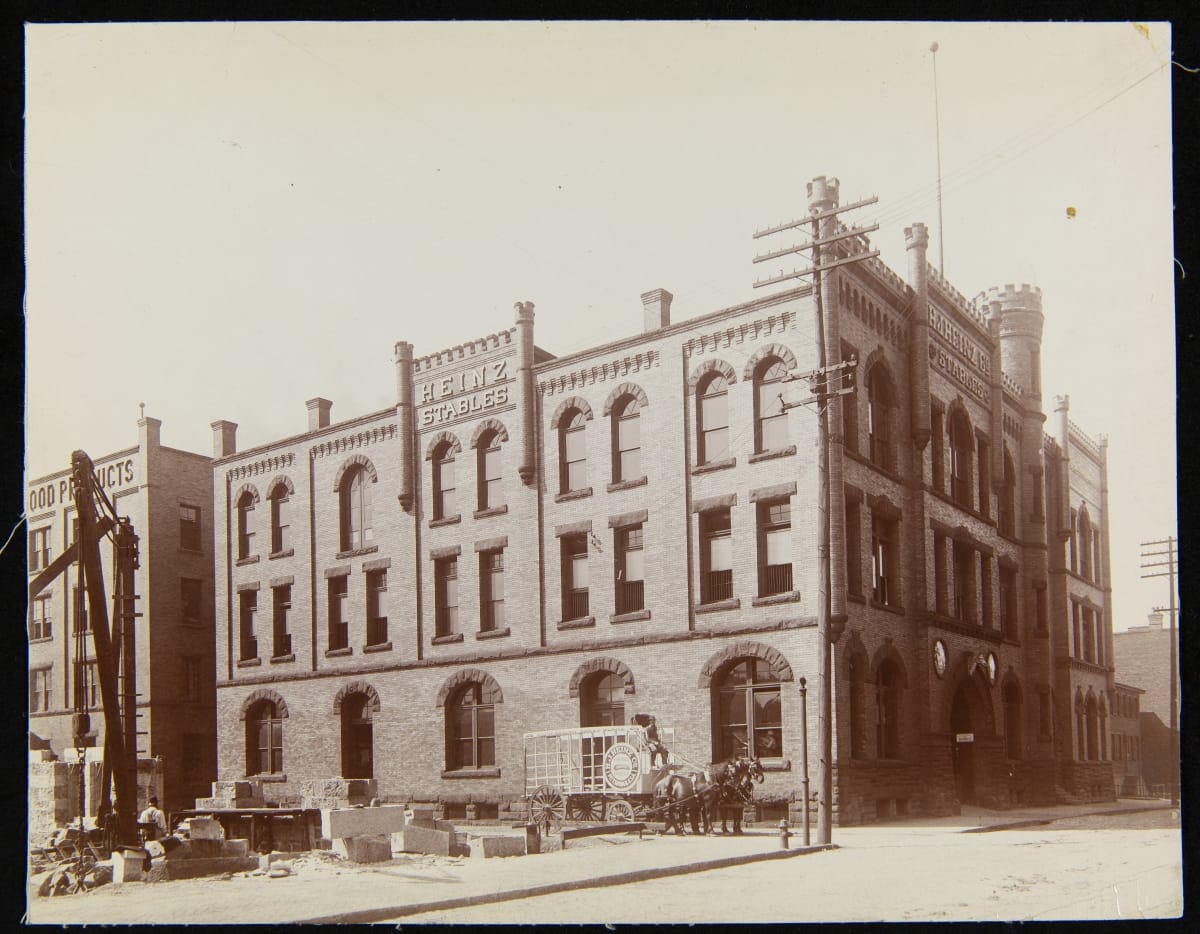
- Constructing H. J. Heinz Company Stables, Pittsburgh, Pennsylvania, circa 1900 - Before the 1920s, the H.J. Heinz Company transported its goods by rail and by horse-drawn wagon. Its factory in Pittsburgh, Pennsylvania, had top-of-the-line stables (seen here), sometimes referred to as "equine palaces," where horses received the best feed and care.
- circa 1900
- Collections - Artifact
Constructing H. J. Heinz Company Stables, Pittsburgh, Pennsylvania, circa 1900
Before the 1920s, the H.J. Heinz Company transported its goods by rail and by horse-drawn wagon. Its factory in Pittsburgh, Pennsylvania, had top-of-the-line stables (seen here), sometimes referred to as "equine palaces," where horses received the best feed and care.
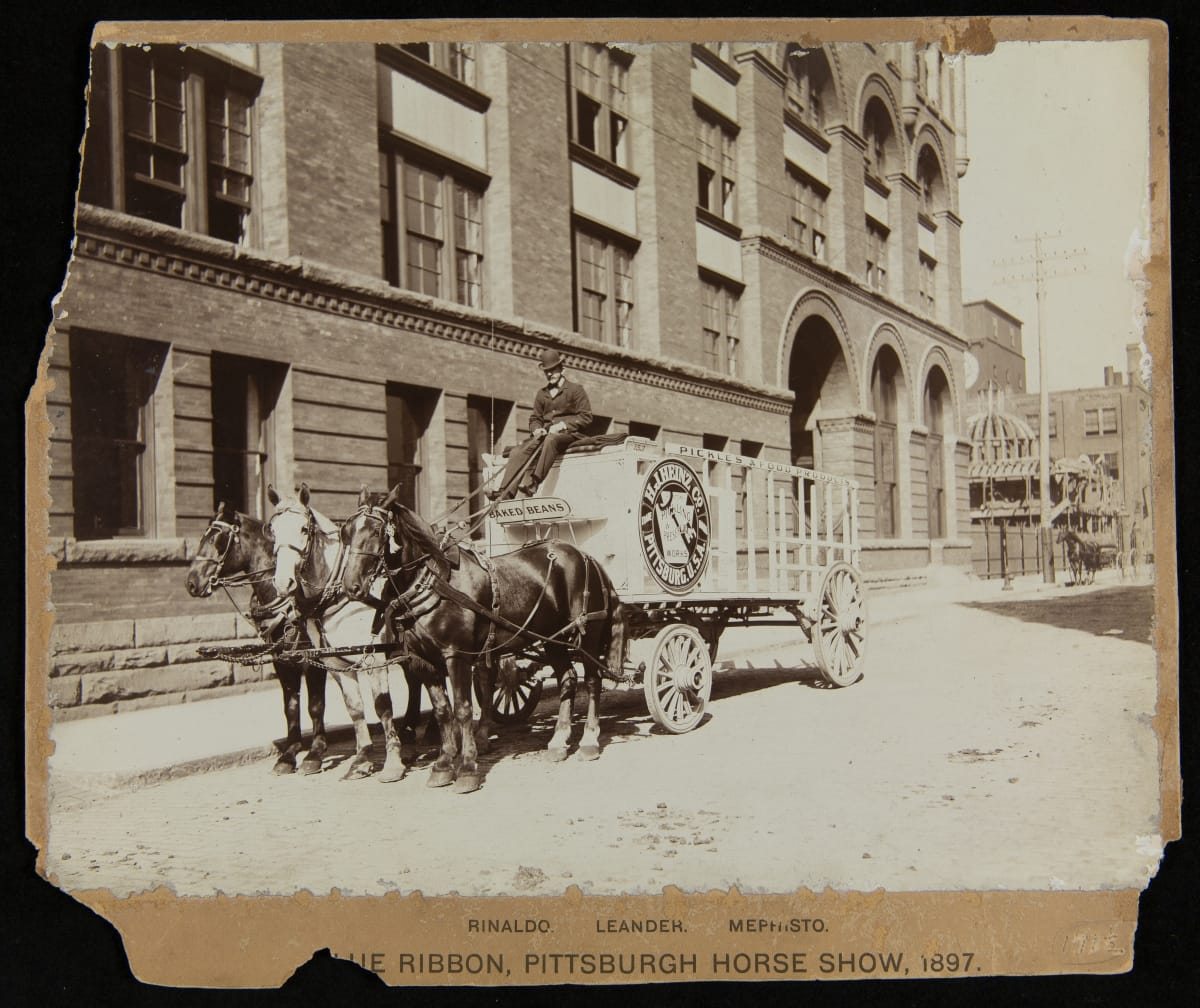
- Heinz Blue Ribbon Team at Pittsburgh Horse Show, Pittsburgh, Pennsylvania, 1897 - Before the 1920s, the H.J. Heinz Company transported their goods by rail and by horse-drawn wagons. Heinz's horse teams consisted of all-black horses with the exception of the "Blue Ribbon Team" -- a three-teamed wagon drawn by two black horses with a gray horse in the middle. This photograph from 1897 shows the Blue Ribbon Team at a horse show.
- 1897
- Collections - Artifact
Heinz Blue Ribbon Team at Pittsburgh Horse Show, Pittsburgh, Pennsylvania, 1897
Before the 1920s, the H.J. Heinz Company transported their goods by rail and by horse-drawn wagons. Heinz's horse teams consisted of all-black horses with the exception of the "Blue Ribbon Team" -- a three-teamed wagon drawn by two black horses with a gray horse in the middle. This photograph from 1897 shows the Blue Ribbon Team at a horse show.
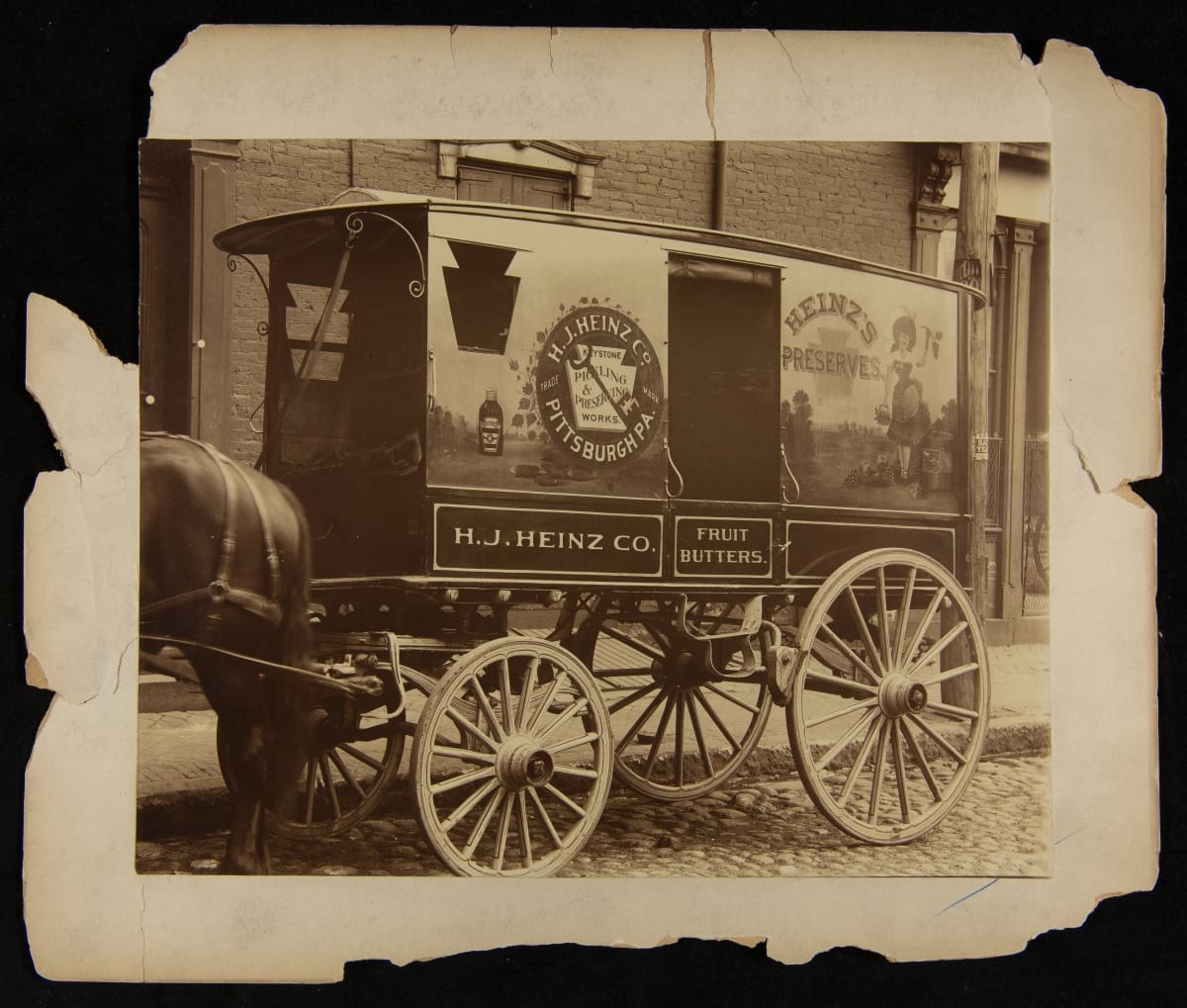
- Wagon Painted with H. J. Heinz Company Advertising, circa 1895 - Henry J. Heinz rarely missed an opportunity to raise customer awareness for his line of packaged foods. His promotional schemes were innovative and often flamboyant. This brightly painted wagon, used for deliveries or sales calls, featured the keystone shape that consumers came to associate with Heinz. Paired with a handsome team of Heinz draft horses, this commercial vehicle doubled as a remarkable moving advertisement.
- circa 1895
- Collections - Artifact
Wagon Painted with H. J. Heinz Company Advertising, circa 1895
Henry J. Heinz rarely missed an opportunity to raise customer awareness for his line of packaged foods. His promotional schemes were innovative and often flamboyant. This brightly painted wagon, used for deliveries or sales calls, featured the keystone shape that consumers came to associate with Heinz. Paired with a handsome team of Heinz draft horses, this commercial vehicle doubled as a remarkable moving advertisement.
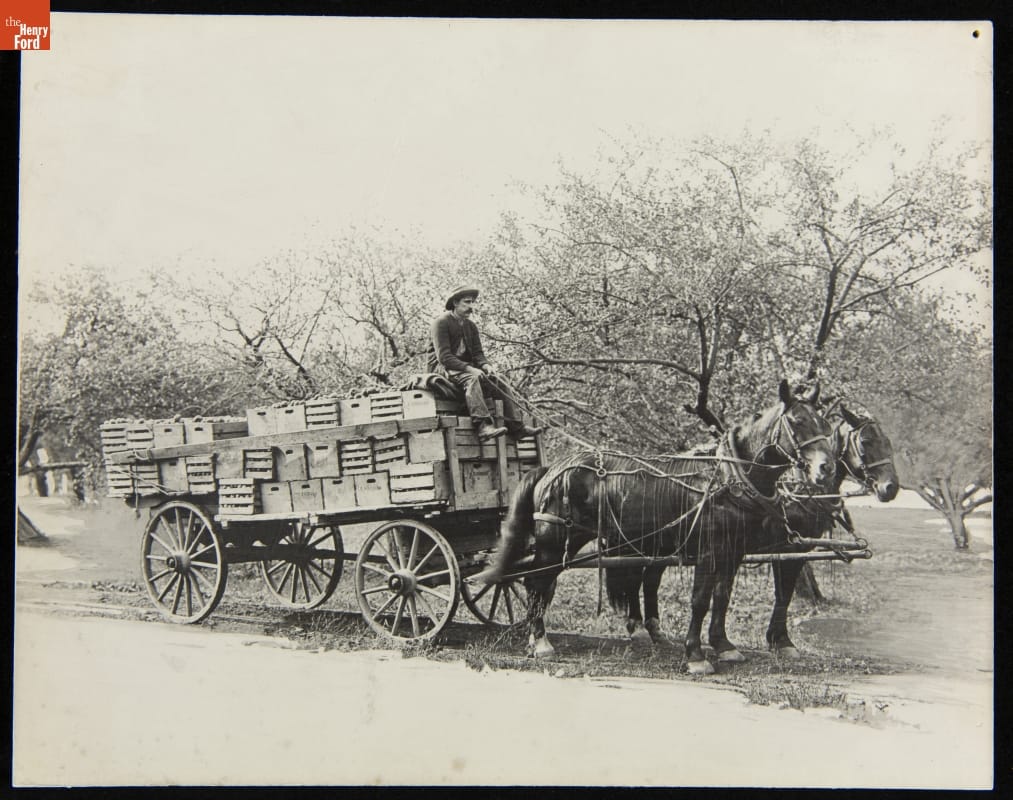
- Horse-Drawn Wagon Transport of Harvested Apples, H. J. Heinz Company, circa 1905 - The H.J. Heinz Company utilized horse-drawn wagons to transport harvested crops from the orchards and fields to the nearby processing factories. In this photograph, a horse-drawn wagon carries apples to be processed in the main plant in Pittsburgh, Pennsylvania.
- circa 1905
- Collections - Artifact
Horse-Drawn Wagon Transport of Harvested Apples, H. J. Heinz Company, circa 1905
The H.J. Heinz Company utilized horse-drawn wagons to transport harvested crops from the orchards and fields to the nearby processing factories. In this photograph, a horse-drawn wagon carries apples to be processed in the main plant in Pittsburgh, Pennsylvania.
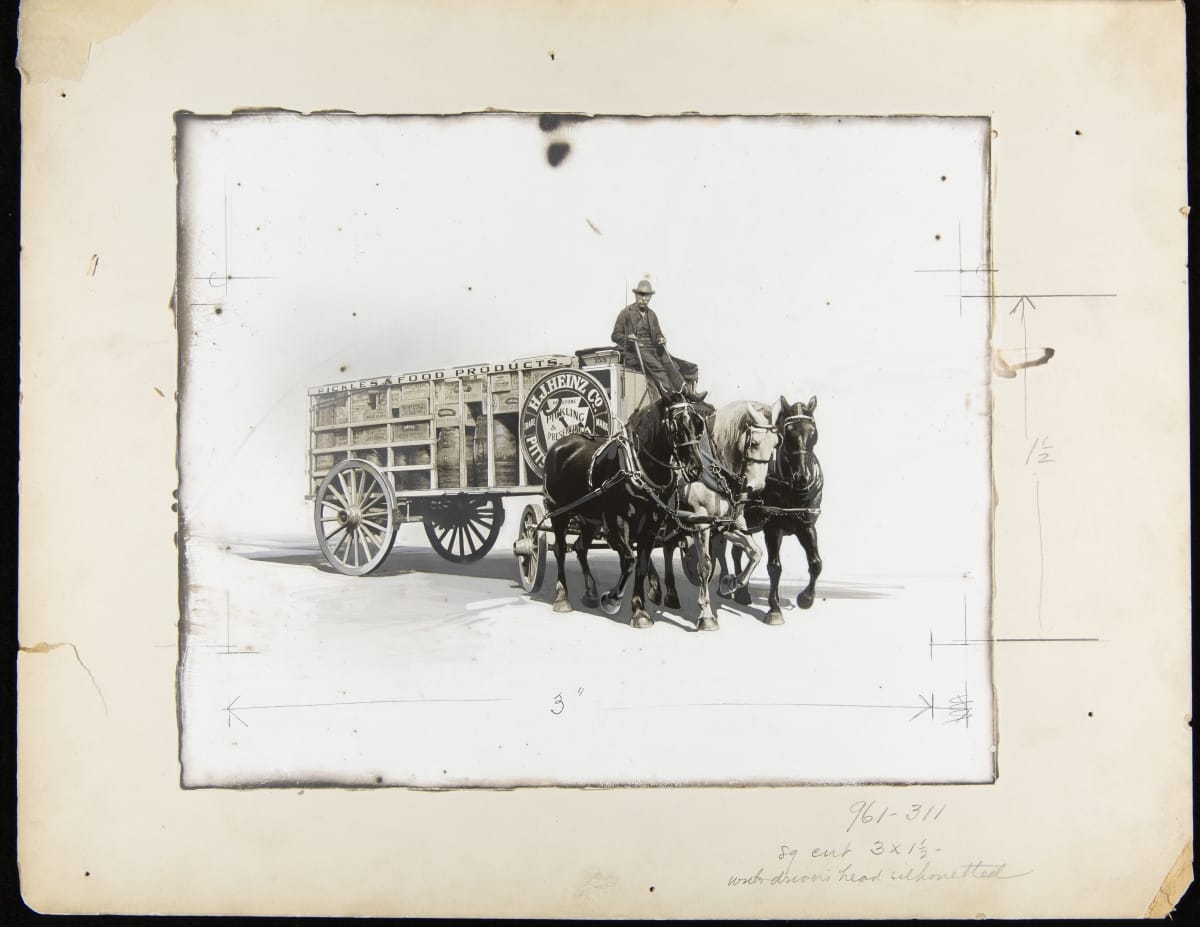
- Process Photograph, H. J. Heinz Company, Blue Ribbon Team with 57 Varieties Cart, 1913 - Before the 1920s, the H.J. Heinz Company transported their goods by rail and horse-drawn wagons. Heinz's horse teams consisted of all-black horses except for its "Blue Ribbon Team"--a three-horse hitch with two black horses and a gray horse in the middle. This photograph used for advertisements and publications shows the Blue Ribbon Team.
- 02 November 1913-03 December 1913
- Collections - Artifact
Process Photograph, H. J. Heinz Company, Blue Ribbon Team with 57 Varieties Cart, 1913
Before the 1920s, the H.J. Heinz Company transported their goods by rail and horse-drawn wagons. Heinz's horse teams consisted of all-black horses except for its "Blue Ribbon Team"--a three-horse hitch with two black horses and a gray horse in the middle. This photograph used for advertisements and publications shows the Blue Ribbon Team.