
Search
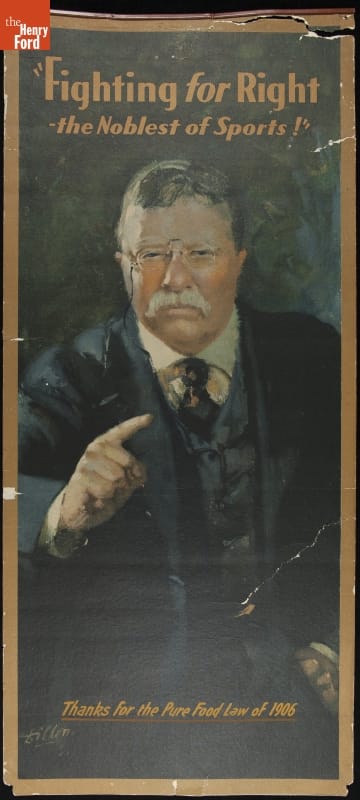
- Advertising Poster, "Fighting for Right - the Noblest of Sports! Thanks for the Pure Food Law of 1906" - At a time when many in the manufactured food industry used adulterants (inferior substitutes or additives) and false advertising, H.J. Heinz prided himself on his "Strictly Pure" products. He became an advocate for the Pure Food & Drug Act of 1906 -- the first of several Congress-enacted consumer protection laws -- and was instrumental in lobbying to President Roosevelt (seen here) to get the law passed.
- 1906
- Collections - Artifact
Advertising Poster, "Fighting for Right - the Noblest of Sports! Thanks for the Pure Food Law of 1906"
At a time when many in the manufactured food industry used adulterants (inferior substitutes or additives) and false advertising, H.J. Heinz prided himself on his "Strictly Pure" products. He became an advocate for the Pure Food & Drug Act of 1906 -- the first of several Congress-enacted consumer protection laws -- and was instrumental in lobbying to President Roosevelt (seen here) to get the law passed.
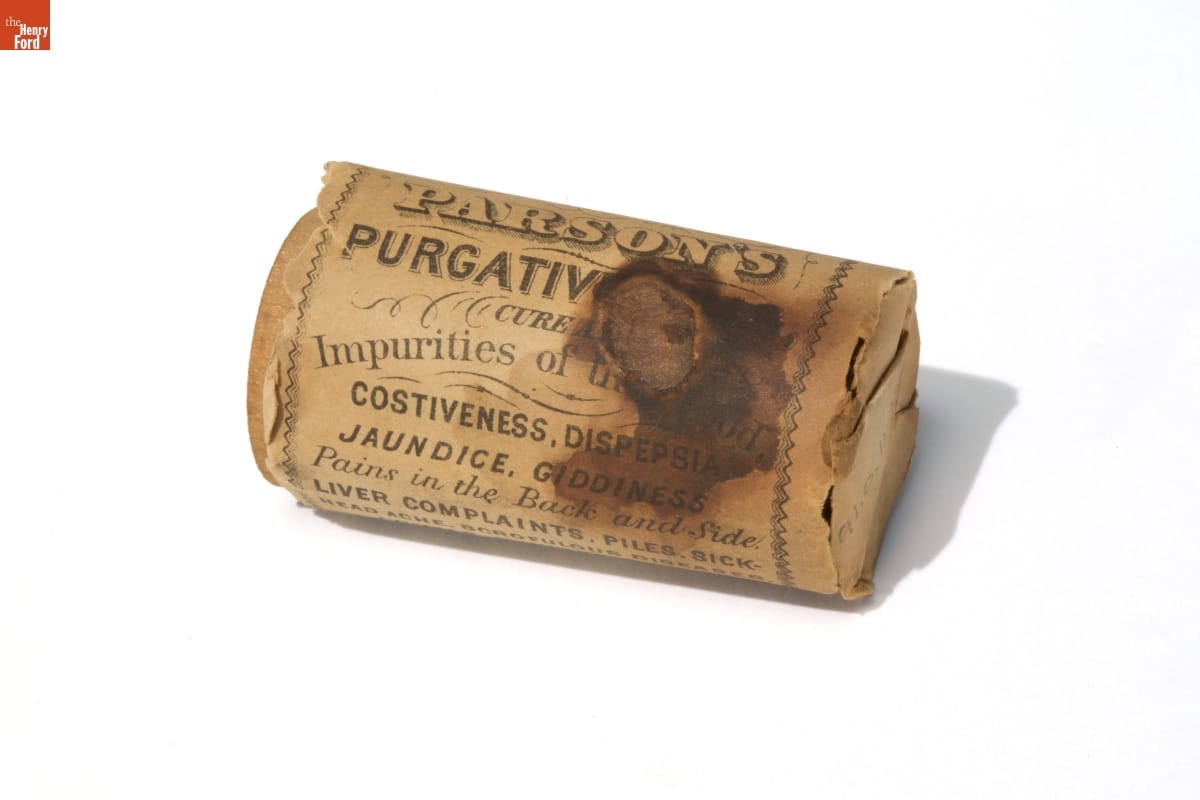
- Parson's Purgative Pills, 1870-1890 - Nineteenth-century entrepreneurs promised cures with patent medicines. Some of these concoctions, however, contained harmful ingredients or ingredients used in unsafe quantities -- the industry was unregulated and manufacturers were secretive about their recipes. Beginning with the Pure Food and Drug Act of 1906, national legislation increasingly prohibited misleading health claims and required manufacturers to list their product's contents.
- 1870-1890
- Collections - Artifact
Parson's Purgative Pills, 1870-1890
Nineteenth-century entrepreneurs promised cures with patent medicines. Some of these concoctions, however, contained harmful ingredients or ingredients used in unsafe quantities -- the industry was unregulated and manufacturers were secretive about their recipes. Beginning with the Pure Food and Drug Act of 1906, national legislation increasingly prohibited misleading health claims and required manufacturers to list their product's contents.
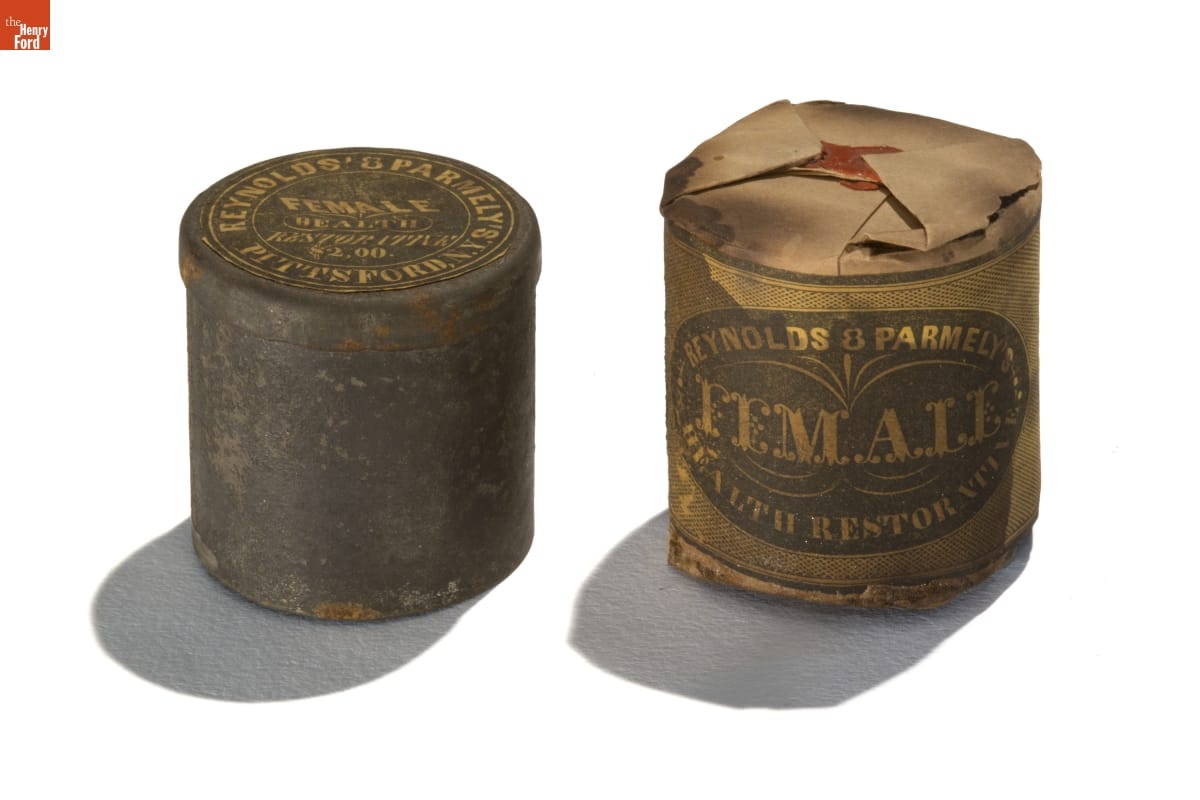
- Reynold's & Parmely's Female Health Restorative, 1839-1870 - Nineteenth-century entrepreneurs promised cures with patent medicines. Some of these concoctions, however, contained harmful ingredients or ingredients used in unsafe quantities -- the industry was unregulated and manufacturers were secretive about their recipes. Beginning with the Pure Food and Drug Act of 1906, national legislation increasingly prohibited misleading health claims and required manufacturers to list their product's contents.
- 1839-1870
- Collections - Artifact
Reynold's & Parmely's Female Health Restorative, 1839-1870
Nineteenth-century entrepreneurs promised cures with patent medicines. Some of these concoctions, however, contained harmful ingredients or ingredients used in unsafe quantities -- the industry was unregulated and manufacturers were secretive about their recipes. Beginning with the Pure Food and Drug Act of 1906, national legislation increasingly prohibited misleading health claims and required manufacturers to list their product's contents.
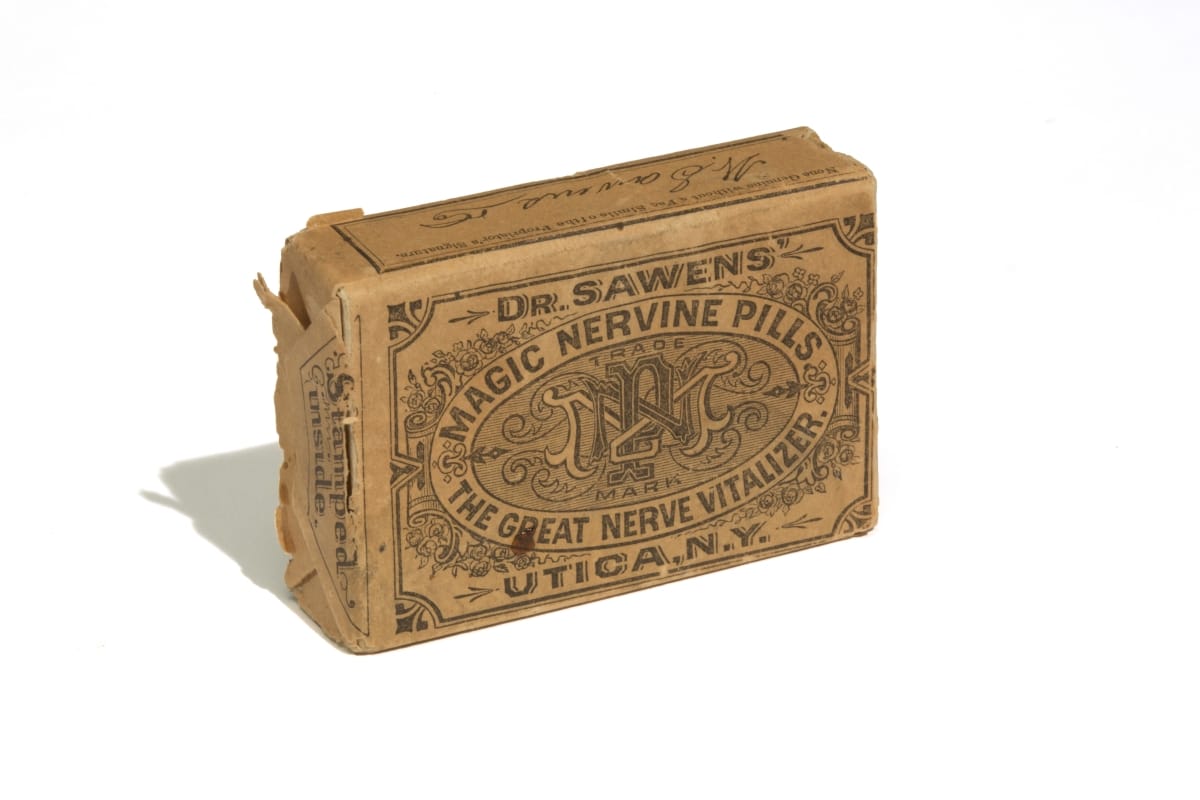
- Dr. Sawens Magic Nervine Pills, 1868-1883 - Nineteenth-century entrepreneurs promised cures with patent medicines. Some of these concoctions, however, contained harmful ingredients or ingredients used in unsafe quantities -- the industry was unregulated and manufacturers were secretive about their recipes. Beginning with the Pure Food and Drug Act of 1906, national legislation increasingly prohibited misleading health claims and required manufacturers to list their product's contents.
- 1868-1883
- Collections - Artifact
Dr. Sawens Magic Nervine Pills, 1868-1883
Nineteenth-century entrepreneurs promised cures with patent medicines. Some of these concoctions, however, contained harmful ingredients or ingredients used in unsafe quantities -- the industry was unregulated and manufacturers were secretive about their recipes. Beginning with the Pure Food and Drug Act of 1906, national legislation increasingly prohibited misleading health claims and required manufacturers to list their product's contents.
- Triopeptine Tablets, 1906-1918 - Nineteenth-century entrepreneurs promised cures with patent medicines. Some of these concoctions, however, contained harmful ingredients or ingredients used in unsafe quantities -- the industry was unregulated and manufacturers were secretive about their recipes. Beginning with the Pure Food and Drug Act of 1906, national legislation increasingly prohibited misleading health claims and required manufacturers to list their product's contents.
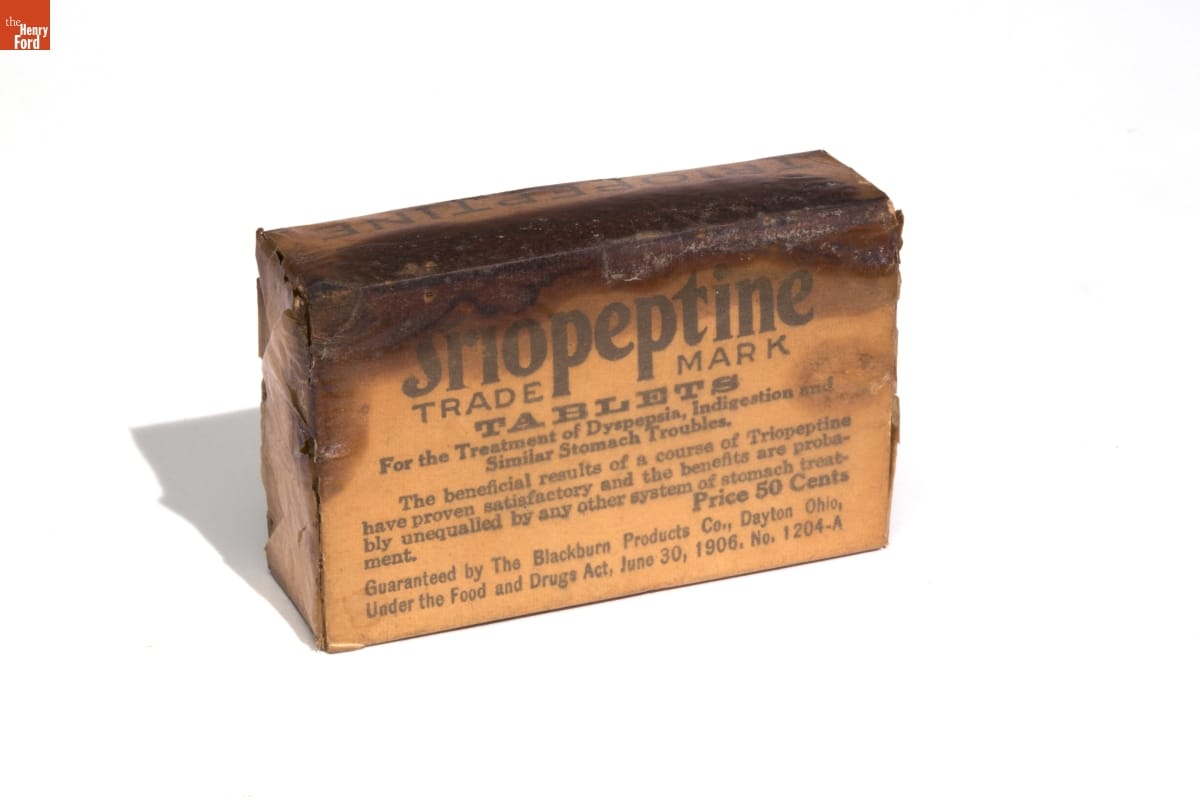
- 1906-1918
- Collections - Artifact
Triopeptine Tablets, 1906-1918
Nineteenth-century entrepreneurs promised cures with patent medicines. Some of these concoctions, however, contained harmful ingredients or ingredients used in unsafe quantities -- the industry was unregulated and manufacturers were secretive about their recipes. Beginning with the Pure Food and Drug Act of 1906, national legislation increasingly prohibited misleading health claims and required manufacturers to list their product's contents.
- Veterinary Pharmaceutical Kit, 1910-1920 - Veterinarians carried medicines and drugs in kits like this as they traveled to care for animals. This case, emblazoned with the name of Parke, Davis and Company, a large pharmaceutical firm that manufactured high-quality drugs, contained medicines they might need to do their work. Dr. F. Eugene Eads, who once headed the veterinary department at Parke-Davis, owned this case.

- 1910-1920
- Collections - Artifact
Veterinary Pharmaceutical Kit, 1910-1920
Veterinarians carried medicines and drugs in kits like this as they traveled to care for animals. This case, emblazoned with the name of Parke, Davis and Company, a large pharmaceutical firm that manufactured high-quality drugs, contained medicines they might need to do their work. Dr. F. Eugene Eads, who once headed the veterinary department at Parke-Davis, owned this case.
- Letter from P. C. Knox to President Theodore Roosevelt about Howard Heinz and the Pure Food and Drug Act, May 28, 1907 - The H.J. Heinz Company had humble beginnings in 1869 and has since become one of the most recognized names in the food industry today. This artifact, from the H.J. Heinz Company Collection, is one from The Henry Ford's sizeable collection of material dedicated to telling the company's history of innovative business practices and marketing techniques.
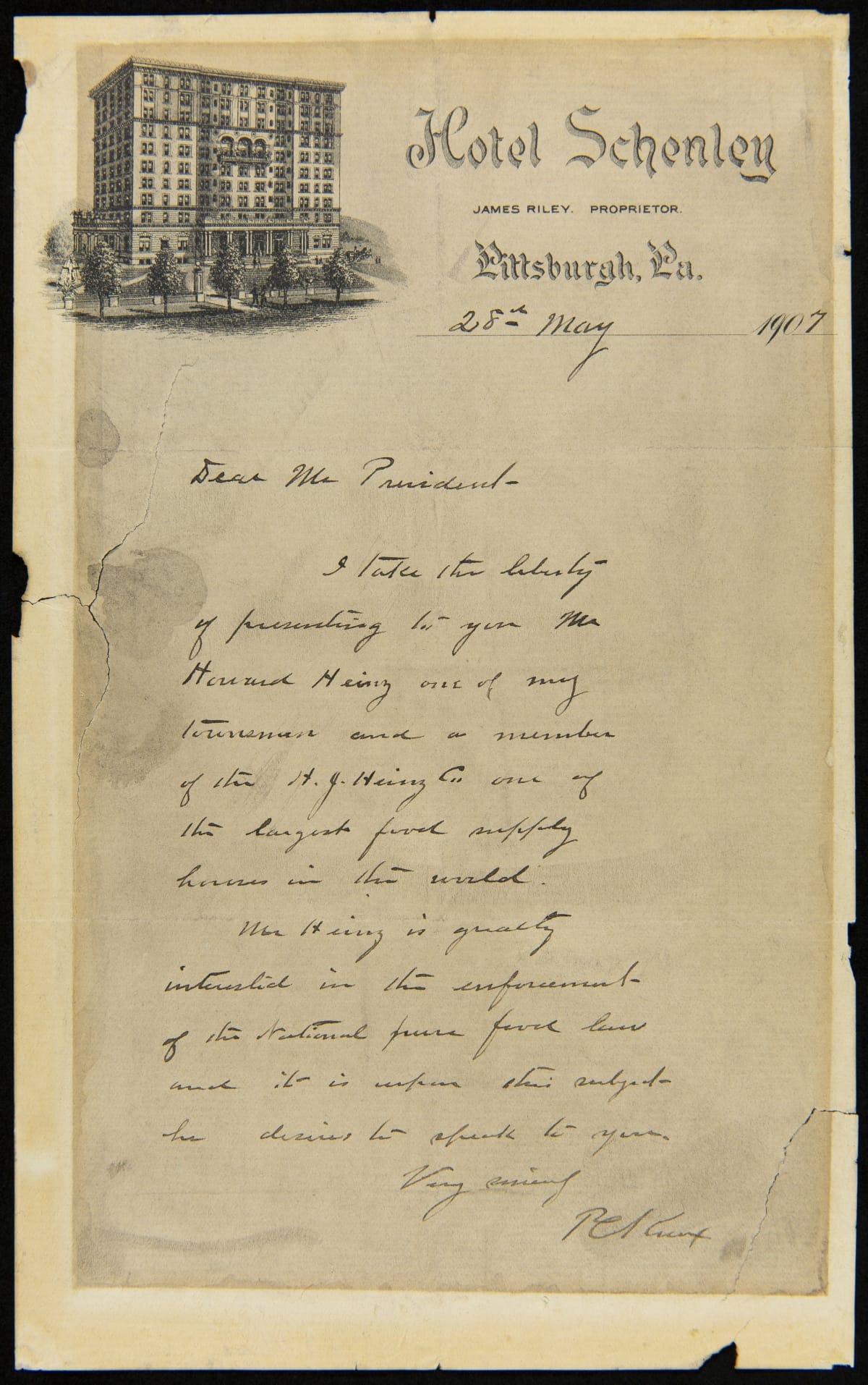
- May 28, 1907
- Collections - Artifact
Letter from P. C. Knox to President Theodore Roosevelt about Howard Heinz and the Pure Food and Drug Act, May 28, 1907
The H.J. Heinz Company had humble beginnings in 1869 and has since become one of the most recognized names in the food industry today. This artifact, from the H.J. Heinz Company Collection, is one from The Henry Ford's sizeable collection of material dedicated to telling the company's history of innovative business practices and marketing techniques.
- Doctor Ingoldsby's Piles Specific, 1846 - Nineteenth-century entrepreneurs promised cures with patent medicines. Some of these concoctions, however, contained harmful ingredients or ingredients used in unsafe quantities -- the industry was unregulated and manufacturers were secretive about their recipes. Beginning with the Pure Food and Drug Act of 1906, national legislation increasingly prohibited misleading health claims and required manufacturers to list their product's contents.
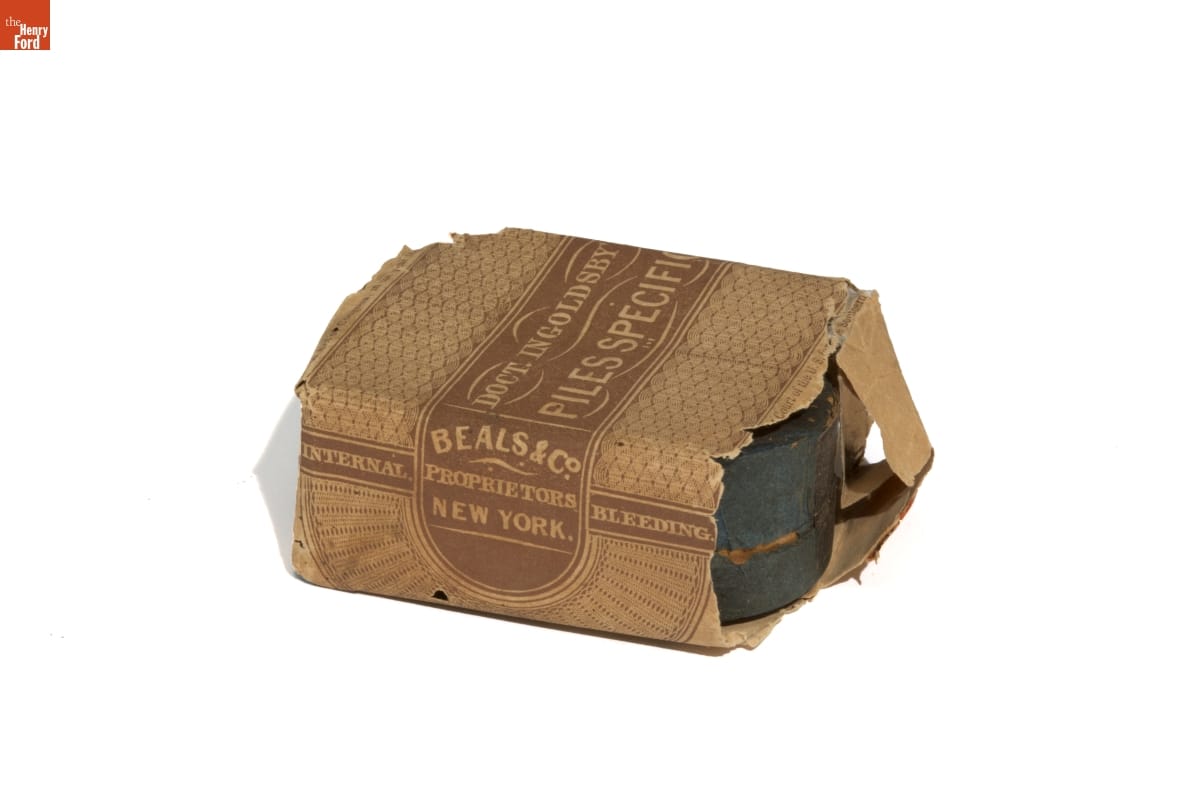
- 1846
- Collections - Artifact
Doctor Ingoldsby's Piles Specific, 1846
Nineteenth-century entrepreneurs promised cures with patent medicines. Some of these concoctions, however, contained harmful ingredients or ingredients used in unsafe quantities -- the industry was unregulated and manufacturers were secretive about their recipes. Beginning with the Pure Food and Drug Act of 1906, national legislation increasingly prohibited misleading health claims and required manufacturers to list their product's contents.
- Medication Dispensing Envelopes, circa 1960 -
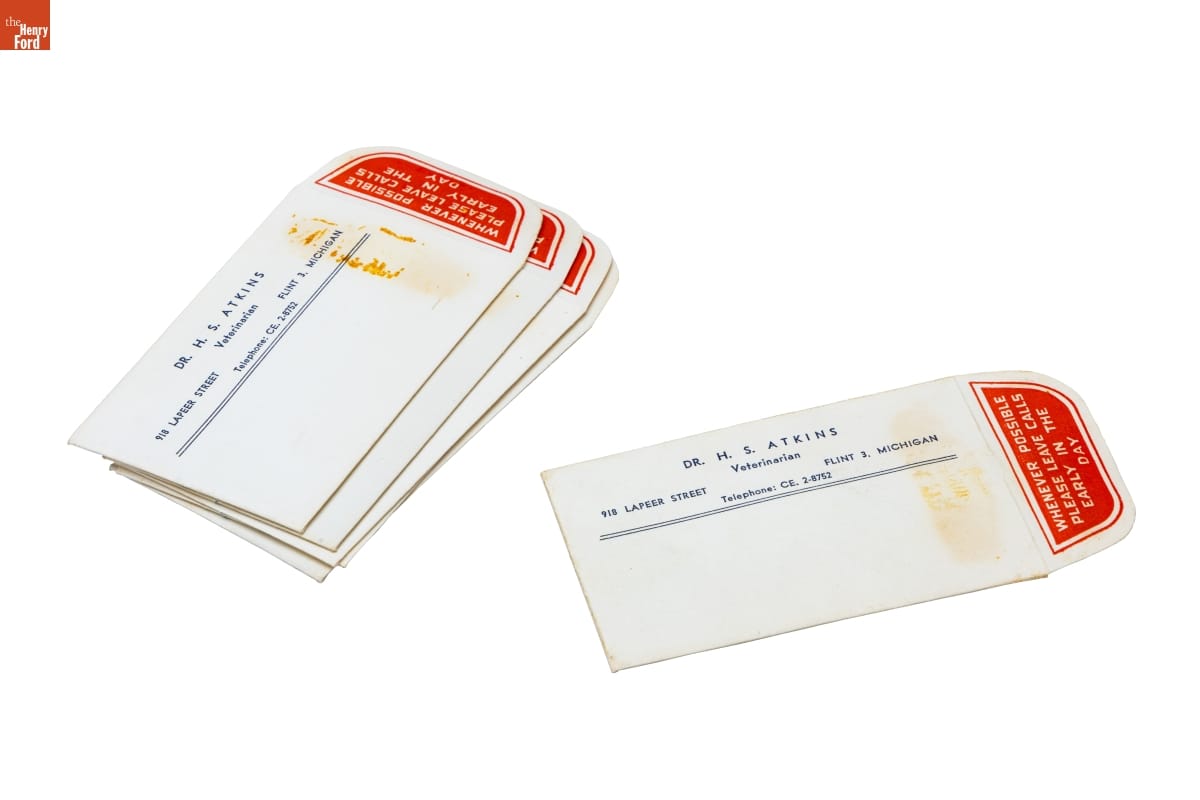
- circa 1960
- Collections - Artifact
Medication Dispensing Envelopes, circa 1960
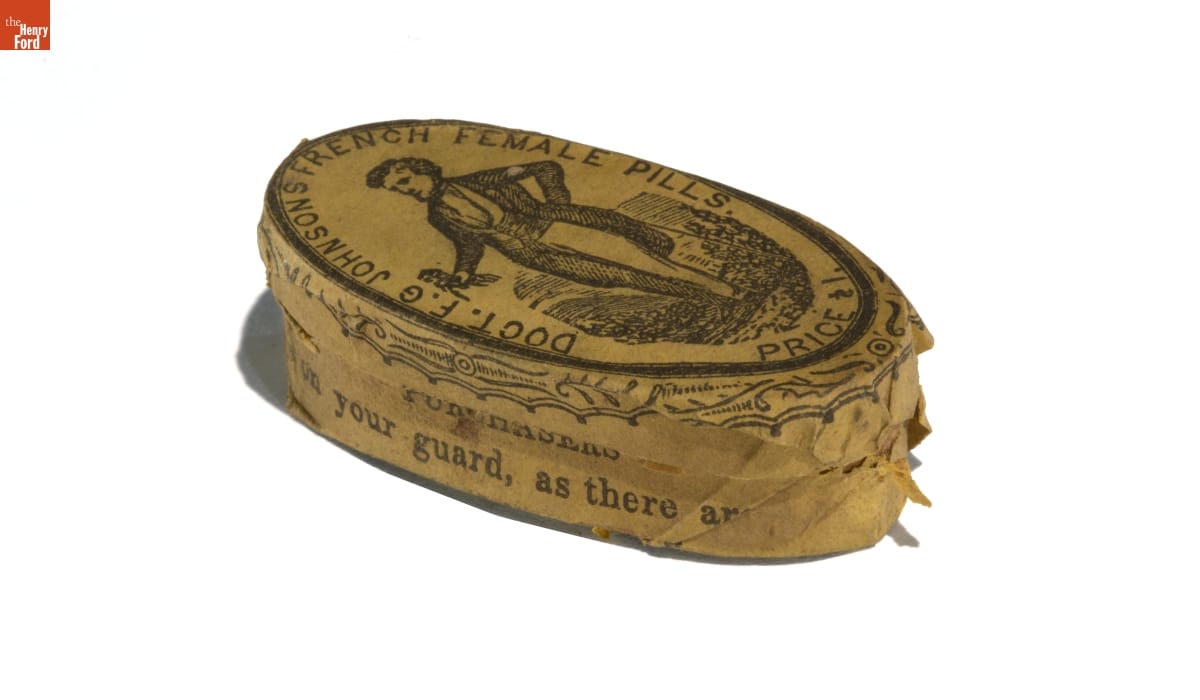
- Dr. F. G. Johnson's French Female Pills, 1840-1860 - Nineteenth-century entrepreneurs promised cures with patent medicines. Some of these concoctions, however, contained harmful ingredients or ingredients used in unsafe quantities -- the industry was unregulated and manufacturers were secretive about their recipes. Beginning with the Pure Food and Drug Act of 1906, national legislation increasingly prohibited misleading health claims and required manufacturers to list their product's contents.
- 1840-1860
- Collections - Artifact
Dr. F. G. Johnson's French Female Pills, 1840-1860
Nineteenth-century entrepreneurs promised cures with patent medicines. Some of these concoctions, however, contained harmful ingredients or ingredients used in unsafe quantities -- the industry was unregulated and manufacturers were secretive about their recipes. Beginning with the Pure Food and Drug Act of 1906, national legislation increasingly prohibited misleading health claims and required manufacturers to list their product's contents.