
Search
- Trade Card for Lee's Drug Store, Detroit, Michigan, circa 1885 - Trade cards were advertisements found in product packages or distributed by local merchants. This card advertises textbooks and other school supplies at Lee's Drug Store. Textbooks were not provided by schools, even in large cities like Detroit. Books were passed down as students advanced and students often shared books. Note that these prices are in cents, not dollars.
- circa 1885
- Collections - Artifact
Trade Card for Lee's Drug Store, Detroit, Michigan, circa 1885
Trade cards were advertisements found in product packages or distributed by local merchants. This card advertises textbooks and other school supplies at Lee's Drug Store. Textbooks were not provided by schools, even in large cities like Detroit. Books were passed down as students advanced and students often shared books. Note that these prices are in cents, not dollars.
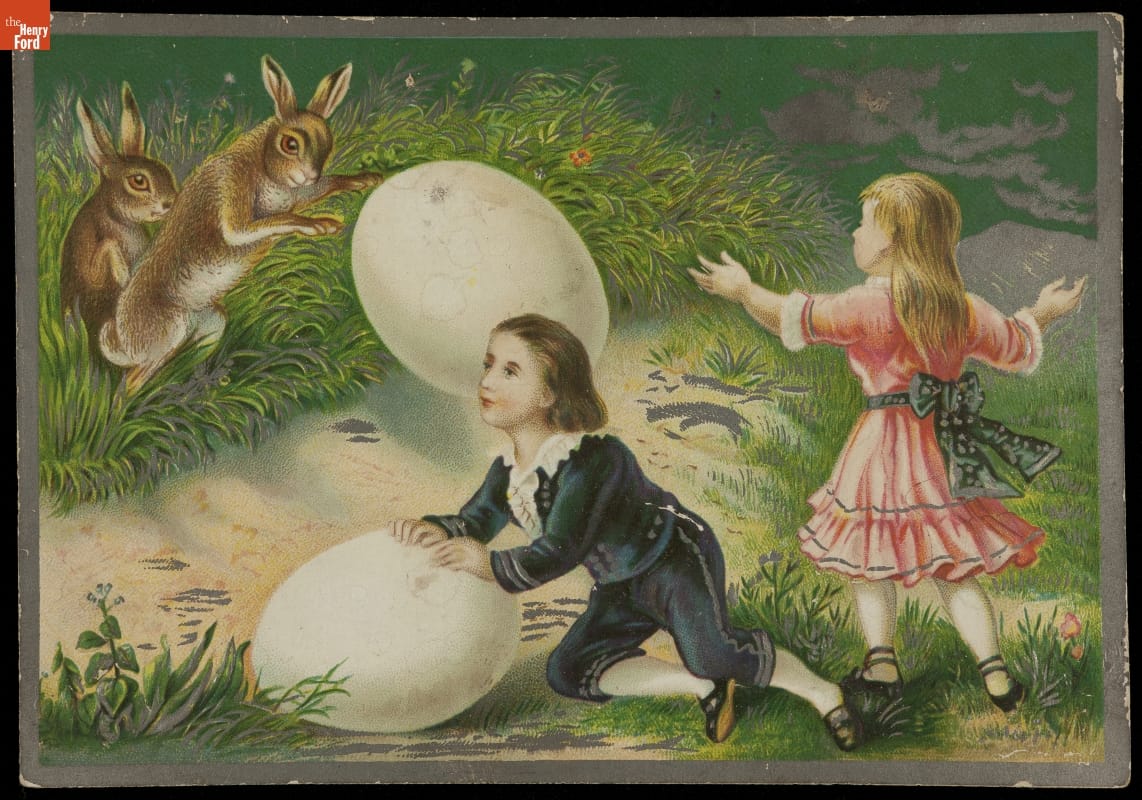
- Trade Card for Lee's Drug Store, Detroit, Michigan, 1870-1900 - Business establishments during the 1870s to 1890s readily embraced illustrations of popular holidays to market their goods and services. Taking advantage of new color printing methods, companies placed these small trade cards in their product packages or sent them to local merchants to distribute. For advertising during the spring, they used images symbolic of the season, such as flowers, eggs, children, birds, and rabbits.
- 1870-1900
- Collections - Artifact
Trade Card for Lee's Drug Store, Detroit, Michigan, 1870-1900
Business establishments during the 1870s to 1890s readily embraced illustrations of popular holidays to market their goods and services. Taking advantage of new color printing methods, companies placed these small trade cards in their product packages or sent them to local merchants to distribute. For advertising during the spring, they used images symbolic of the season, such as flowers, eggs, children, birds, and rabbits.
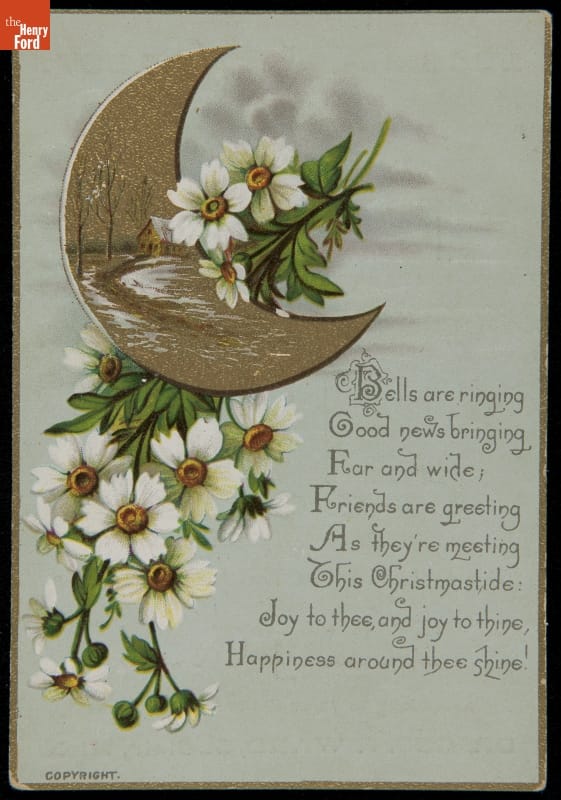
- Trade Card for Dr. Geo. J. Ward, circa 1886 "Christmas Time Goods" - In the last third of the nineteenth century, an unprecedented variety of consumer goods and services flooded the American market. Advertisers, armed with new methods of color printing, bombarded potential customers with trade cards. Americans enjoyed and often saved the vibrant little advertisements found in product packages or distributed by local merchants. Many survive as historical records of commercialism in the United States.
- circa 1886
- Collections - Artifact
Trade Card for Dr. Geo. J. Ward, circa 1886 "Christmas Time Goods"
In the last third of the nineteenth century, an unprecedented variety of consumer goods and services flooded the American market. Advertisers, armed with new methods of color printing, bombarded potential customers with trade cards. Americans enjoyed and often saved the vibrant little advertisements found in product packages or distributed by local merchants. Many survive as historical records of commercialism in the United States.
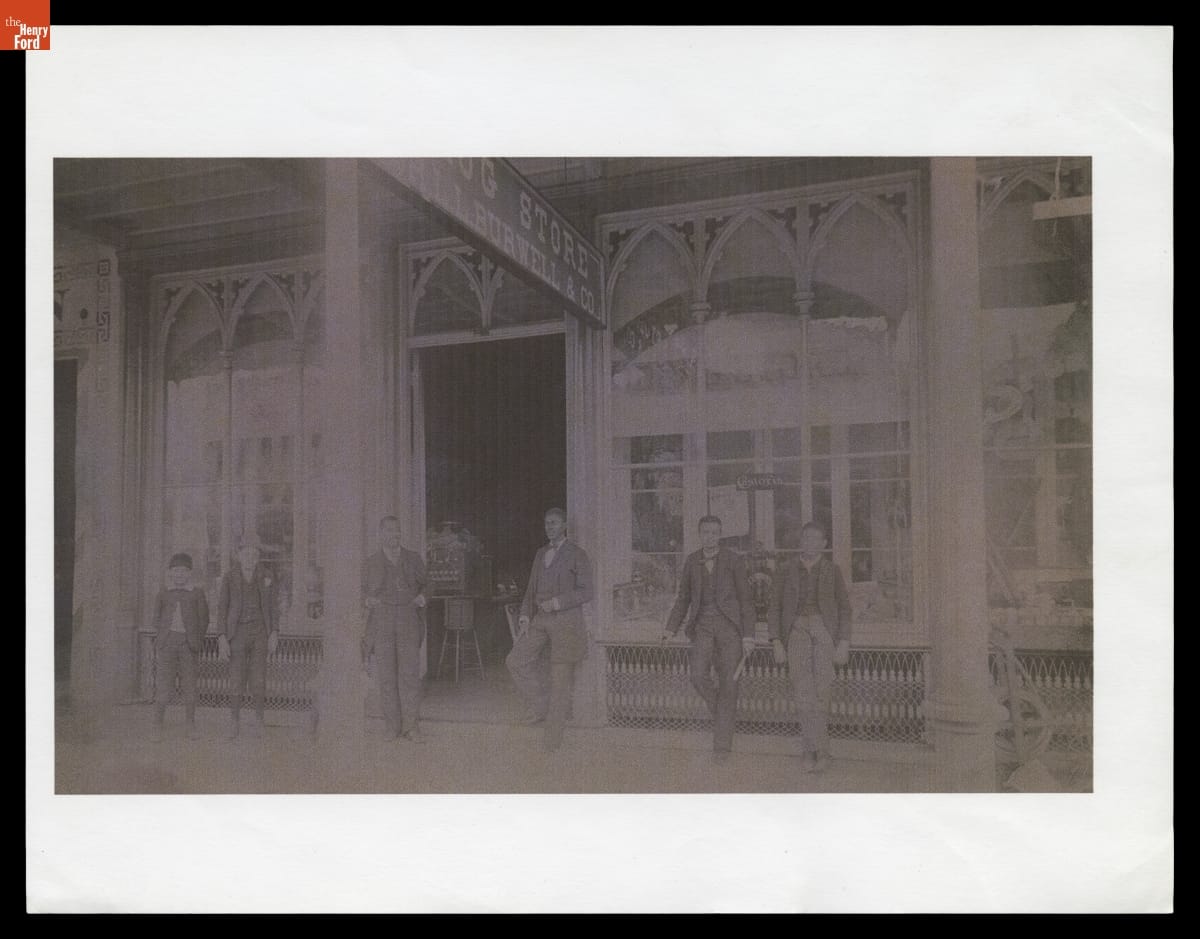
- Burwell & Co. Drug Store, Selma, Alabama -
- Collections - Artifact
Burwell & Co. Drug Store, Selma, Alabama
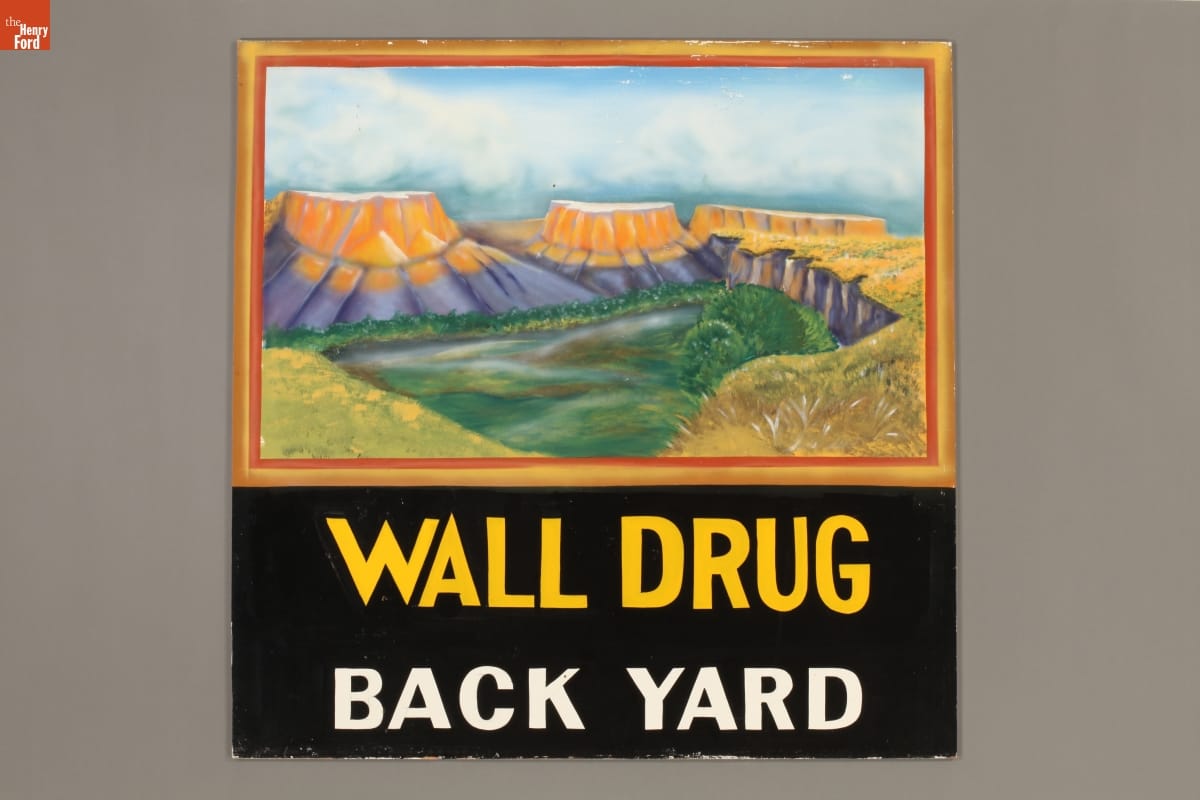
- Wall Drug Sign, 1960-1980 - Sometimes the array of motorists' services that evolved along the roadside evolved into tourist attractions. Such was the case with Wall Drug, purchased by Ted and Dorothy Hustead in 1931. The "Wall Drug Back Yard" features the free ice-water well that made the place famous, along with a gallery of wonders and a variety of photo ops.
- 1960-1980
- Collections - Artifact
Wall Drug Sign, 1960-1980
Sometimes the array of motorists' services that evolved along the roadside evolved into tourist attractions. Such was the case with Wall Drug, purchased by Ted and Dorothy Hustead in 1931. The "Wall Drug Back Yard" features the free ice-water well that made the place famous, along with a gallery of wonders and a variety of photo ops.
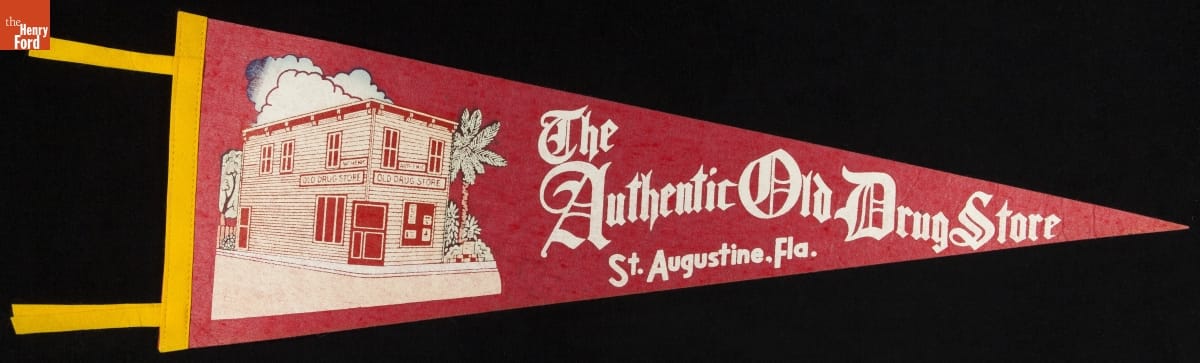
- Pennant, "The Authentic Old Drugstore, St. Augustine, Fla.," 1940-1965 - Tourists purchase simple, inexpensive souvenirs as proof of their travels. These mementos transport vacationers back to the places they visited and the things they did. In the mid-20th century, felt pennants were trendy. Tourists to St. Augustine, Florida, the oldest continuously occupied European settlement in the continental United States, could remember their stay with a pennant like this.
- 1940-1965
- Collections - Artifact
Pennant, "The Authentic Old Drugstore, St. Augustine, Fla.," 1940-1965
Tourists purchase simple, inexpensive souvenirs as proof of their travels. These mementos transport vacationers back to the places they visited and the things they did. In the mid-20th century, felt pennants were trendy. Tourists to St. Augustine, Florida, the oldest continuously occupied European settlement in the continental United States, could remember their stay with a pennant like this.
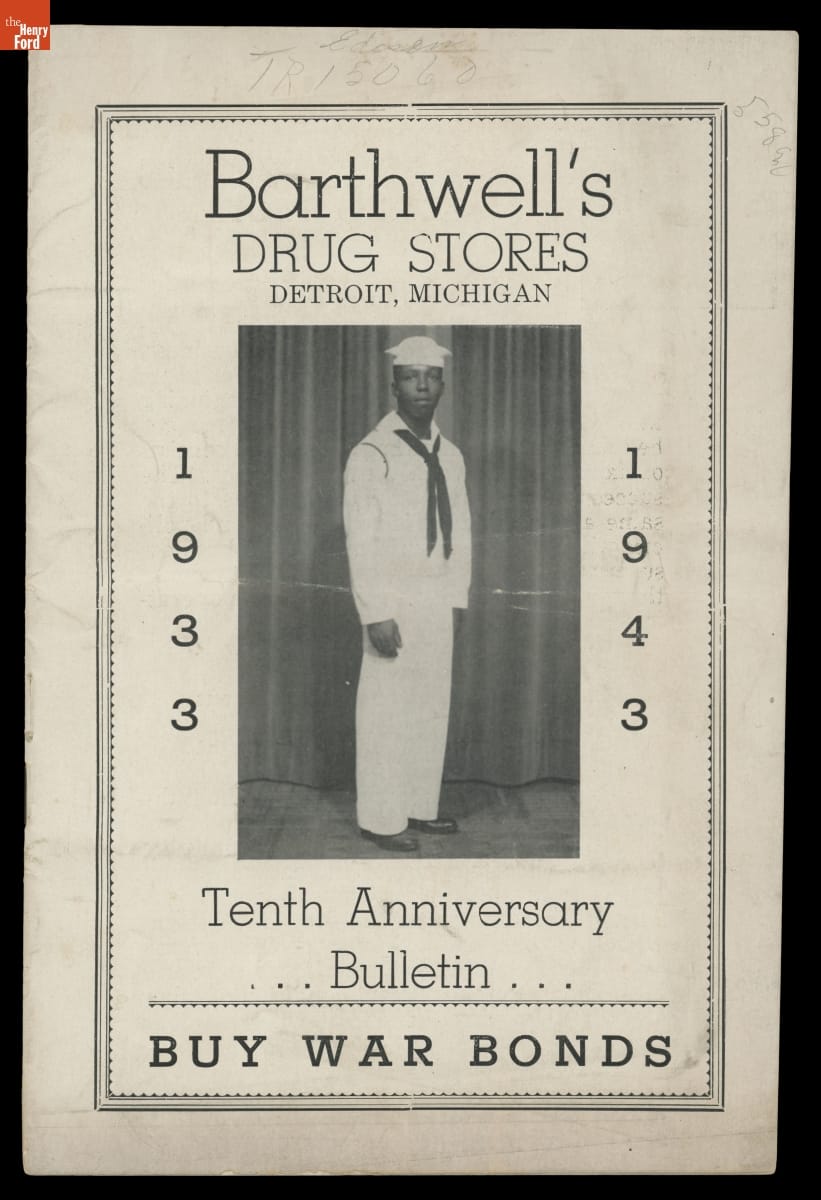
- Trade Catalog, "Barthwell's Drug Stores Tenth Anniversary Bulletin," 1943 -
- 1933-1943
- Collections - Artifact
Trade Catalog, "Barthwell's Drug Stores Tenth Anniversary Bulletin," 1943
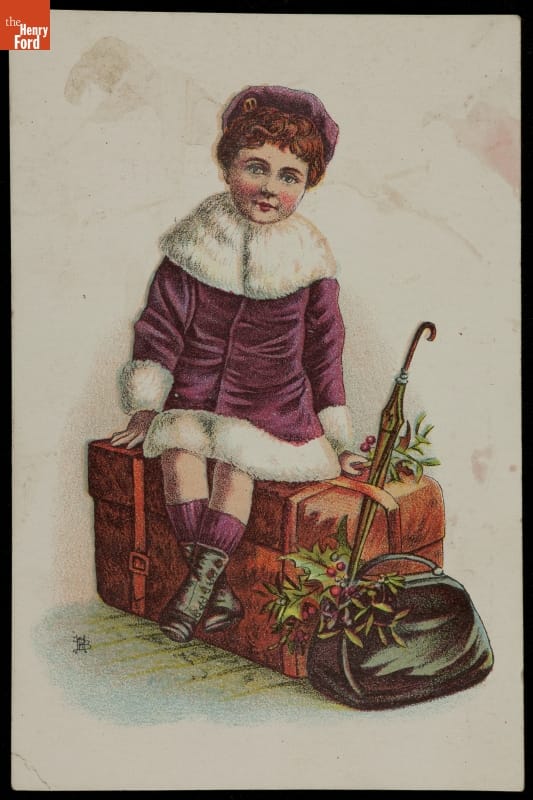
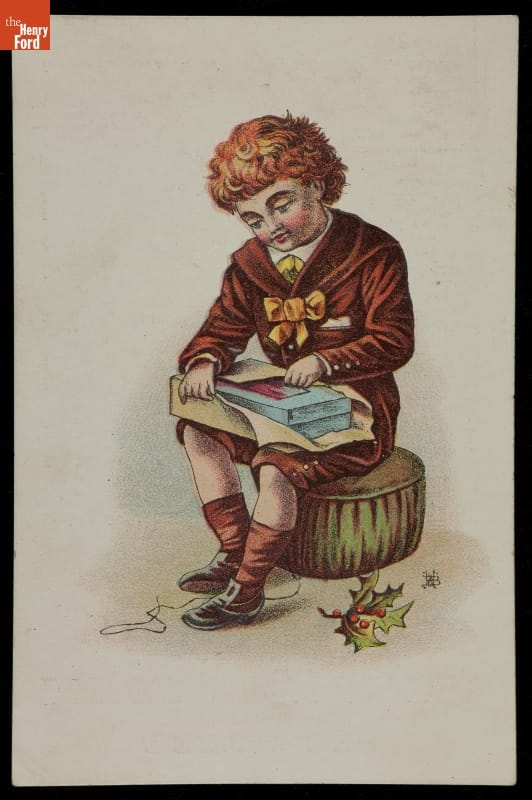
- Trade Card for Lee's Drug Store, Detroit, Michigan, circa 1885 - In the last third of the nineteenth century, an unprecedented variety of consumer goods and services flooded the American market. Advertisers, armed with new methods of color printing, bombarded potential customers with trade cards. Americans enjoyed and often saved the vibrant little advertisements found in product packages or distributed by local merchants. Many survive as historical records of commercialism in the United States.
- circa 1885
- Collections - Artifact
Trade Card for Lee's Drug Store, Detroit, Michigan, circa 1885
In the last third of the nineteenth century, an unprecedented variety of consumer goods and services flooded the American market. Advertisers, armed with new methods of color printing, bombarded potential customers with trade cards. Americans enjoyed and often saved the vibrant little advertisements found in product packages or distributed by local merchants. Many survive as historical records of commercialism in the United States.
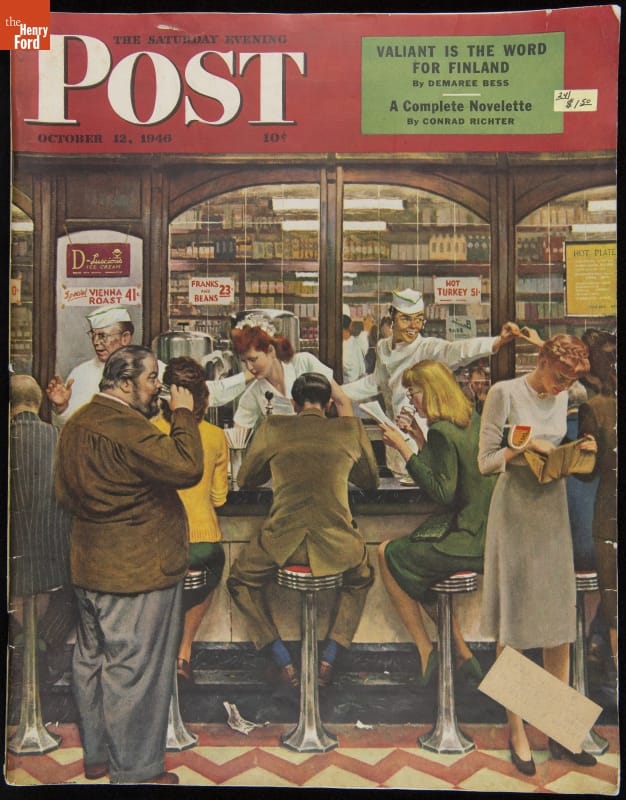
- "The Saturday Evening Post," October 12, 1946 - <em>The Saturday Evening Post</em>, first published in 1821 as a four-page weekly newspaper, became one of America's most popular weekly publications by the mid-1900s. The magazine contained news, commentaries, fiction, and general interest articles. But its most distinctive feature was its front cover illustrations by artists such as George Hughes, John Falter, J.C. Leyendecker, and Norman Rockwell.
- October 12, 1946
- Collections - Artifact
"The Saturday Evening Post," October 12, 1946
The Saturday Evening Post, first published in 1821 as a four-page weekly newspaper, became one of America's most popular weekly publications by the mid-1900s. The magazine contained news, commentaries, fiction, and general interest articles. But its most distinctive feature was its front cover illustrations by artists such as George Hughes, John Falter, J.C. Leyendecker, and Norman Rockwell.
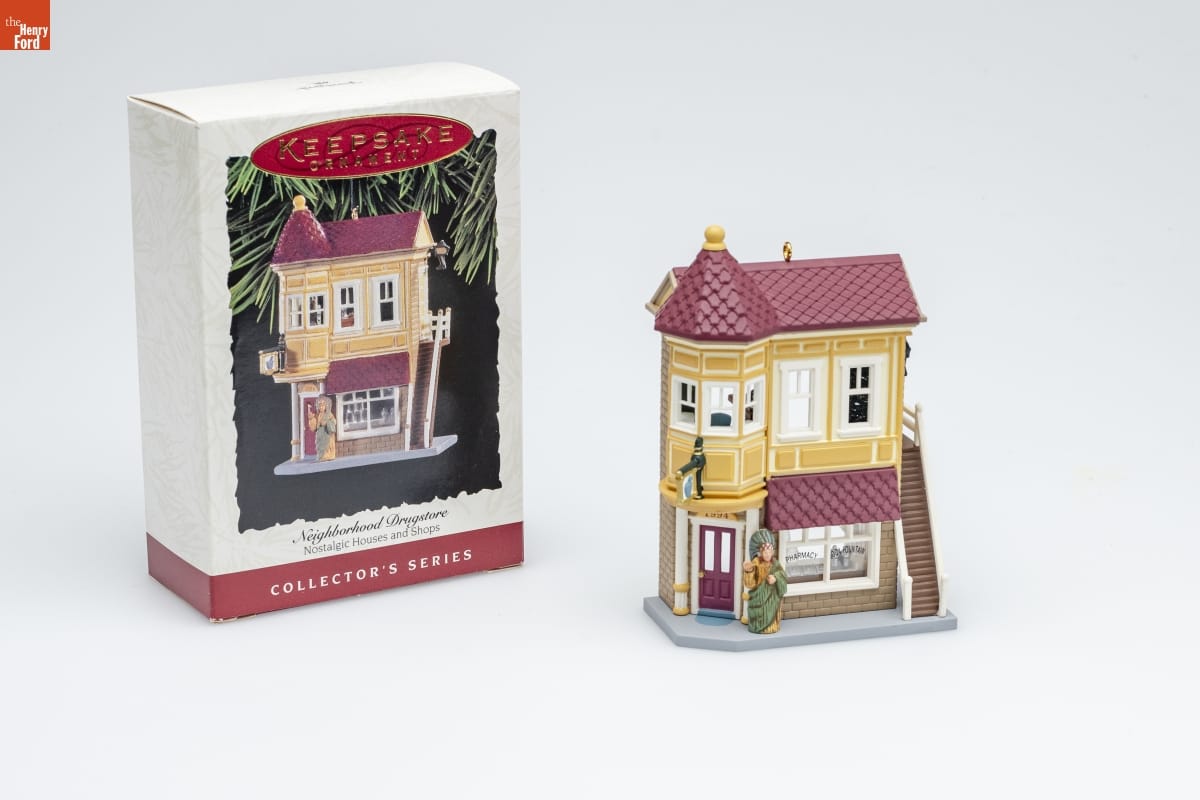
- Hallmark "Nostalgic Houses and Shops Series: Neighborhood Drugstore" Christmas Ornament, 1994 - Hallmark's "Nostalgic Houses and Shops" ornament series reflects a centuries-old Christmas tradition of placing small buildings under the tree to create tiny "villages." It began in 1984 and is one of Hallmark's longest-running series. Hung on the tree, these ornaments--depicting homes, stores, and other buildings--evoke small-town American life in days gone by.
- 1994
- Collections - Artifact
Hallmark "Nostalgic Houses and Shops Series: Neighborhood Drugstore" Christmas Ornament, 1994
Hallmark's "Nostalgic Houses and Shops" ornament series reflects a centuries-old Christmas tradition of placing small buildings under the tree to create tiny "villages." It began in 1984 and is one of Hallmark's longest-running series. Hung on the tree, these ornaments--depicting homes, stores, and other buildings--evoke small-town American life in days gone by.