
Search
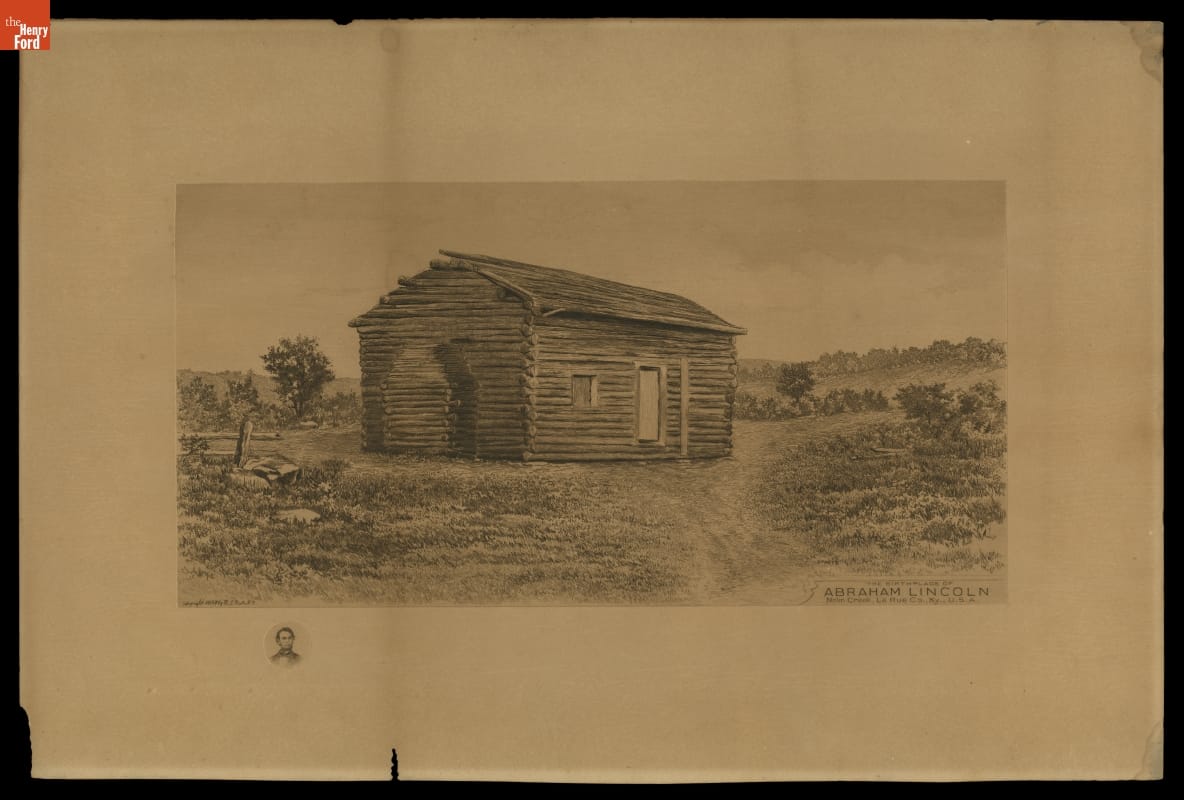
- Engraving, Abraham Lincoln Birthplace, 1897 -
- 1897
- Collections - Artifact
Engraving, Abraham Lincoln Birthplace, 1897
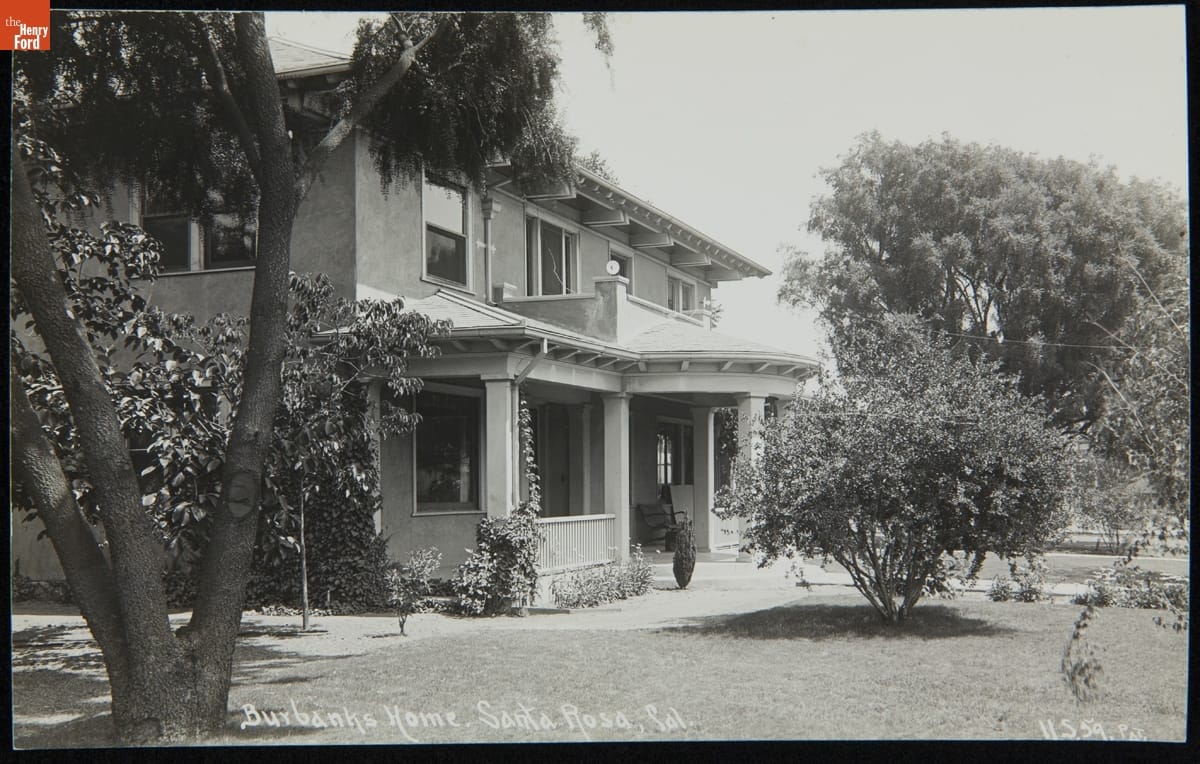
- Luther Burbank Home, Santa Rosa, California, 1928-1940 - Luther Burbank moved into his new and spacious 12-room home in December 1906, just months after the San Francisco earthquake. The Mission and Colonial Revival design suited popular tastes at the times, while the furnishings ensured Burbank's comfort. His private den opened onto the balcony above the porch which offered a breath of air and a view of staff at work in his experimental gardens.
- 1928-1940
- Collections - Artifact
Luther Burbank Home, Santa Rosa, California, 1928-1940
Luther Burbank moved into his new and spacious 12-room home in December 1906, just months after the San Francisco earthquake. The Mission and Colonial Revival design suited popular tastes at the times, while the furnishings ensured Burbank's comfort. His private den opened onto the balcony above the porch which offered a breath of air and a view of staff at work in his experimental gardens.
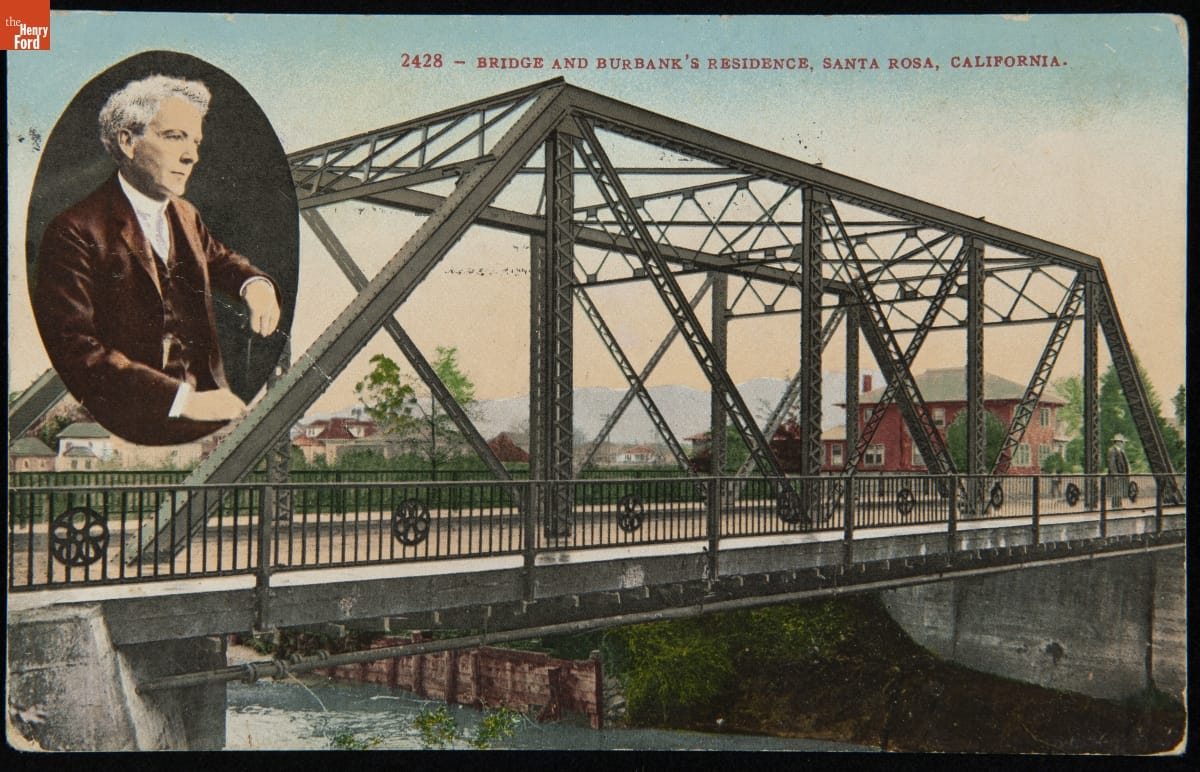
- Bridge and Burbank's Residence, Santa Rosa, California, 1913 - The reconstruction of Santa Rosa, California, after the 1906 earthquake, privileged automobiles over railways. This steel-truss bridge afforded easier pedestrian and automobile access to Luther Burbank's experimental gardens. Burbank's new home, completed by December 1906, is visible through the trusses. During the 1960s, urban renewal and flood control projects destroyed Burbank's 1906 home and buried Santa Rosa Creek.
- October 17, 1913
- Collections - Artifact
Bridge and Burbank's Residence, Santa Rosa, California, 1913
The reconstruction of Santa Rosa, California, after the 1906 earthquake, privileged automobiles over railways. This steel-truss bridge afforded easier pedestrian and automobile access to Luther Burbank's experimental gardens. Burbank's new home, completed by December 1906, is visible through the trusses. During the 1960s, urban renewal and flood control projects destroyed Burbank's 1906 home and buried Santa Rosa Creek.
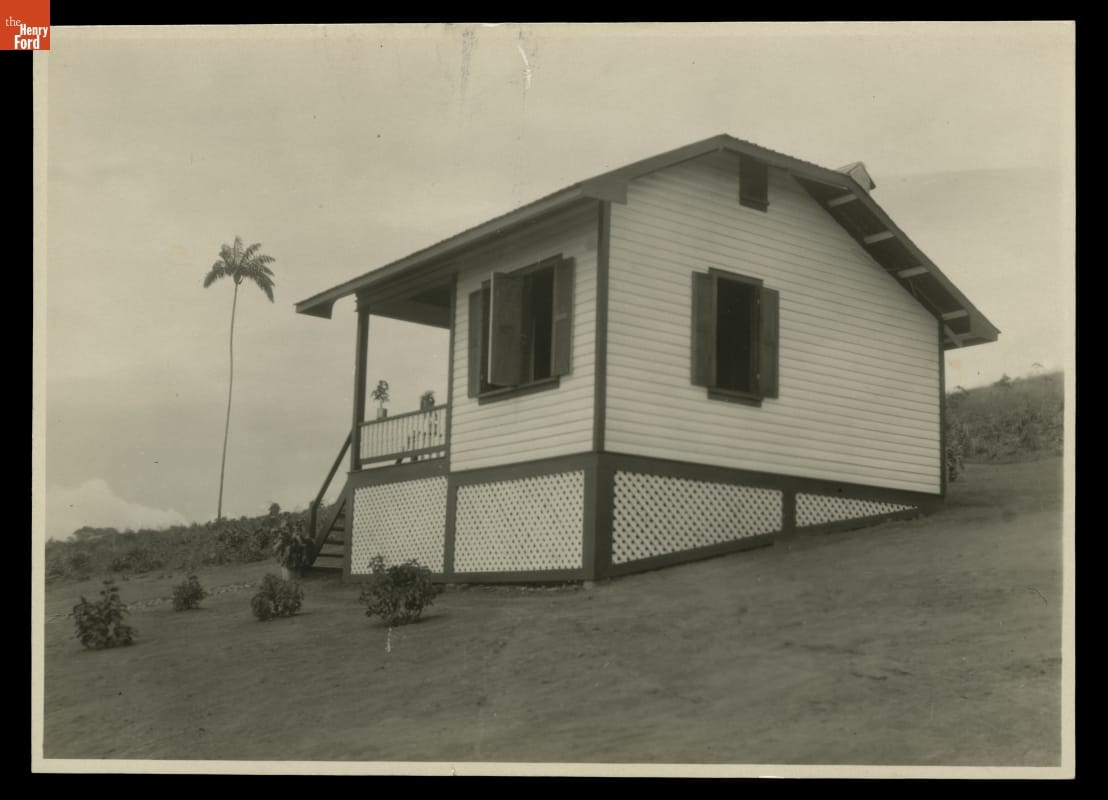
- Employee Housing, Fordlandia, Brazil, June 1932 - In 1928, Ford Motor Company established Fordlandia, a 2.5 million-acre rubber plantation and industrial town, in the Amazon Rainforest. Native workers rioted two years later against imposed American work rules and behavioral restrictions. To alleviate tensions, Ford began building new housing and other amenities. The building designs, however, were patterned after management's Midwestern American aesthetics -- inappropriate for Brazil's tropical climate.
- June 20, 1932
- Collections - Artifact
Employee Housing, Fordlandia, Brazil, June 1932
In 1928, Ford Motor Company established Fordlandia, a 2.5 million-acre rubber plantation and industrial town, in the Amazon Rainforest. Native workers rioted two years later against imposed American work rules and behavioral restrictions. To alleviate tensions, Ford began building new housing and other amenities. The building designs, however, were patterned after management's Midwestern American aesthetics -- inappropriate for Brazil's tropical climate.
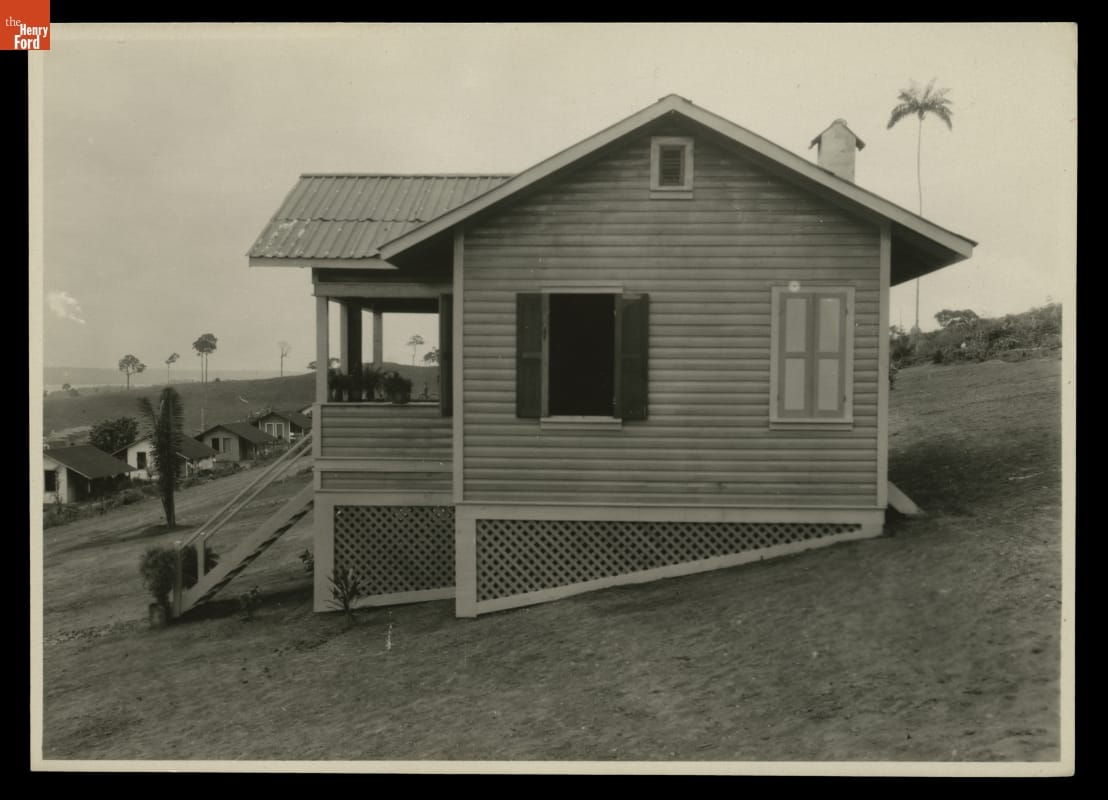
- Employee Housing, Fordlandia, Brazil, June 1932 - In 1928, Ford Motor Company established Fordlandia, a 2.5 million-acre rubber plantation and industrial town, in the Amazon Rainforest. Native workers rioted two years later against imposed American work rules and behavioral restrictions. To alleviate tensions, Ford began building new housing and other amenities. The building designs, however, were patterned after management's Midwestern American aesthetics -- inappropriate for Brazil's tropical climate.
- June 20, 1932
- Collections - Artifact
Employee Housing, Fordlandia, Brazil, June 1932
In 1928, Ford Motor Company established Fordlandia, a 2.5 million-acre rubber plantation and industrial town, in the Amazon Rainforest. Native workers rioted two years later against imposed American work rules and behavioral restrictions. To alleviate tensions, Ford began building new housing and other amenities. The building designs, however, were patterned after management's Midwestern American aesthetics -- inappropriate for Brazil's tropical climate.
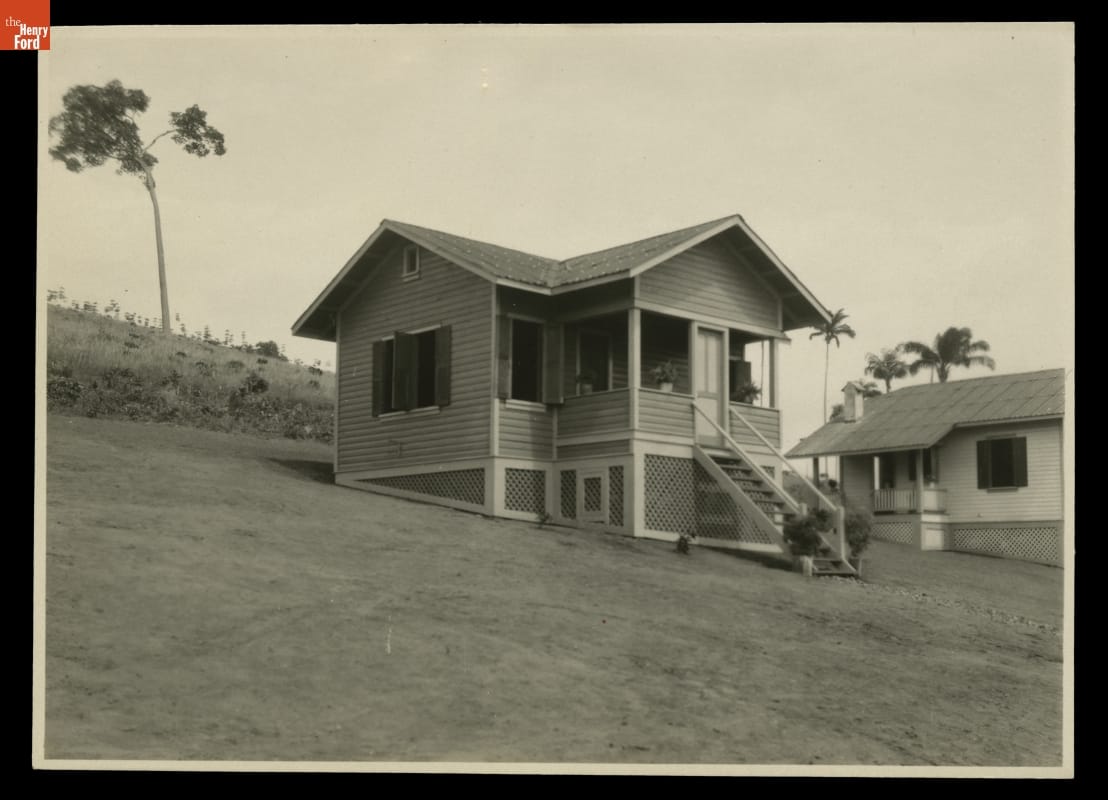
- Employee Housing, Fordlandia, Brazil, June 1932 - In 1928, Ford Motor Company established Fordlandia, a 2.5 million-acre rubber plantation and industrial town, in the Amazon Rainforest. Native workers rioted two years later against imposed American work rules and behavioral restrictions. To alleviate tensions, Ford began building new housing and other amenities. The building designs, however, were patterned after management's Midwestern American aesthetics -- inappropriate for Brazil's tropical climate.
- June 20, 1932
- Collections - Artifact
Employee Housing, Fordlandia, Brazil, June 1932
In 1928, Ford Motor Company established Fordlandia, a 2.5 million-acre rubber plantation and industrial town, in the Amazon Rainforest. Native workers rioted two years later against imposed American work rules and behavioral restrictions. To alleviate tensions, Ford began building new housing and other amenities. The building designs, however, were patterned after management's Midwestern American aesthetics -- inappropriate for Brazil's tropical climate.
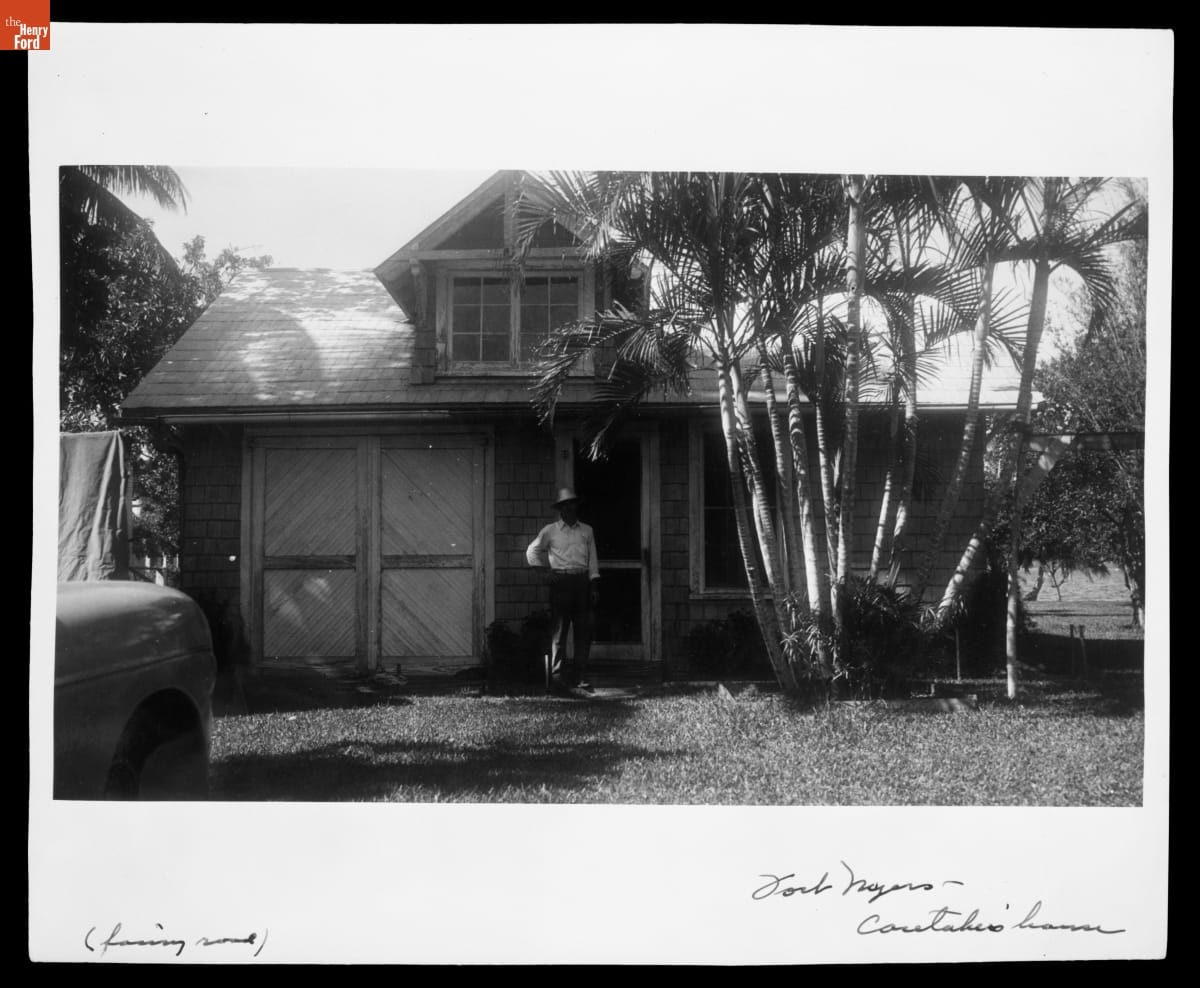
- Caretaker's House at "The Mangoes," Winter Estate of Henry Ford in Fort Myers, Florida, January 1945 - In 1916, Henry and Clara Ford purchased "The Mangoes," a winter home in Fort Myers, Florida, located next to the wintertime retreat of Thomas and Mina Edison. This image shows the caretaker's house on the grounds. The Fords rarely visited "The Mangoes" after Mr. Edison's death in 1931, and they sold the estate in 1945.
- January 01, 1945
- Collections - Artifact
Caretaker's House at "The Mangoes," Winter Estate of Henry Ford in Fort Myers, Florida, January 1945
In 1916, Henry and Clara Ford purchased "The Mangoes," a winter home in Fort Myers, Florida, located next to the wintertime retreat of Thomas and Mina Edison. This image shows the caretaker's house on the grounds. The Fords rarely visited "The Mangoes" after Mr. Edison's death in 1931, and they sold the estate in 1945.
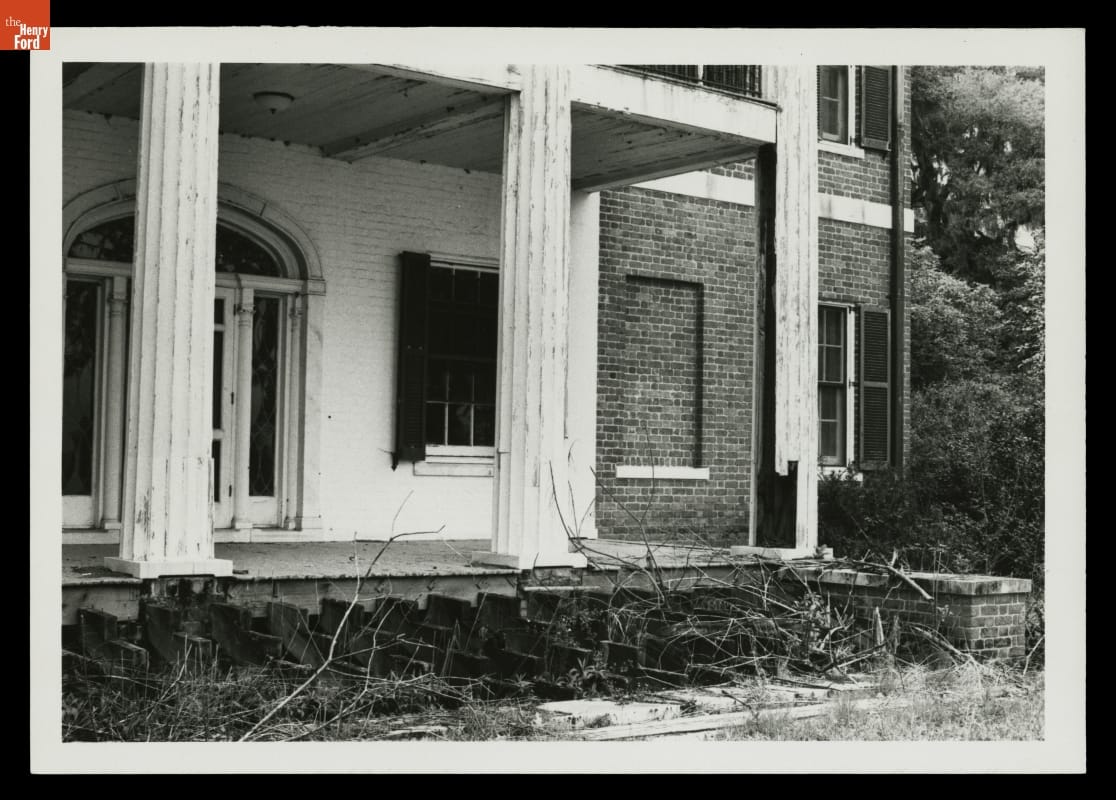
- Clara and Henry Ford's Former Winter Home in Georgia, Richmond Hill Plantation, Photographed in 1972 - Clara and Henry Ford built a winter home about 20 miles southwest of Savannah, Georgia, in 1936-1937. Thirty-five years later, long after the Fords had passed away, their former Richmond Hill estate was in disrepair. The home and grounds were purchased by a developer in 1981, restored, and transformed into a private club community.
- 1972
- Collections - Artifact
Clara and Henry Ford's Former Winter Home in Georgia, Richmond Hill Plantation, Photographed in 1972
Clara and Henry Ford built a winter home about 20 miles southwest of Savannah, Georgia, in 1936-1937. Thirty-five years later, long after the Fords had passed away, their former Richmond Hill estate was in disrepair. The home and grounds were purchased by a developer in 1981, restored, and transformed into a private club community.
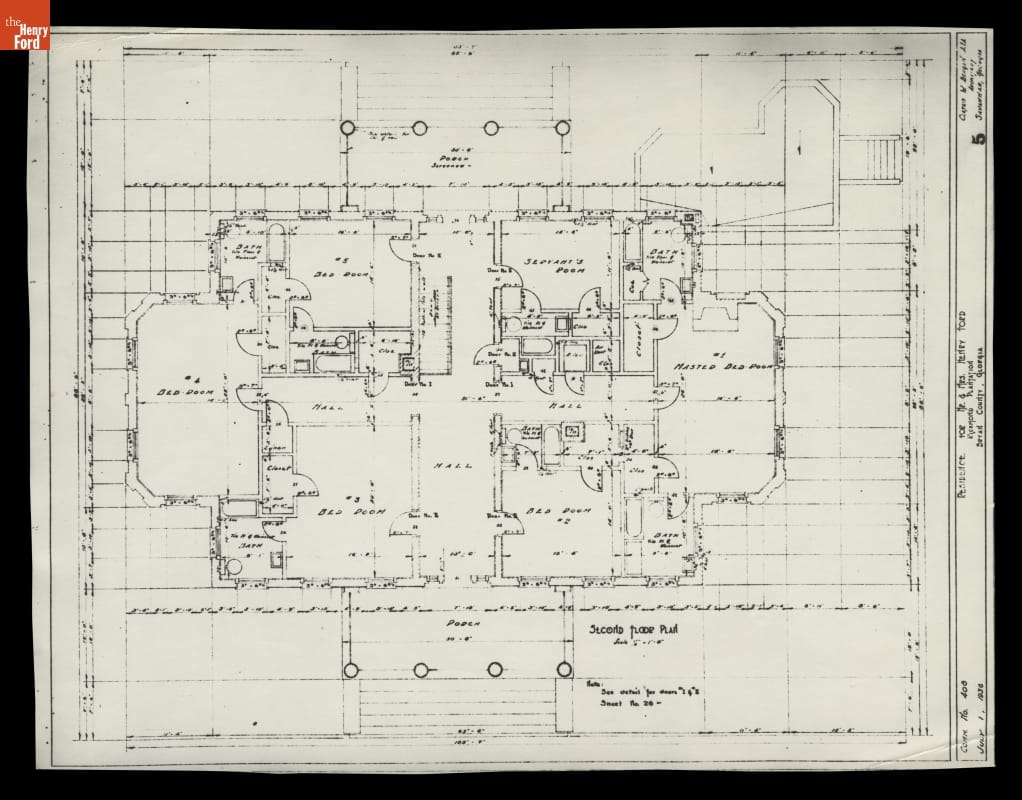
- Second Floor Plan, Residence for Mr. & Mrs. Henry Ford, Richmond Plantation, Bryan County, Georgia, July 1, 1936 - Henry Ford purchased vast amounts of land around present-day Richmond Hill, Georgia, beginning in the 1920s. Here, Ford dabbled in agricultural experimentation. He also became interested in the civic improvement of the area -- building schools, churches and community centers. In the late 1930s, Henry and Clara built a large home as a winter residence.
- July 01, 1936
- Collections - Artifact
Second Floor Plan, Residence for Mr. & Mrs. Henry Ford, Richmond Plantation, Bryan County, Georgia, July 1, 1936
Henry Ford purchased vast amounts of land around present-day Richmond Hill, Georgia, beginning in the 1920s. Here, Ford dabbled in agricultural experimentation. He also became interested in the civic improvement of the area -- building schools, churches and community centers. In the late 1930s, Henry and Clara built a large home as a winter residence.
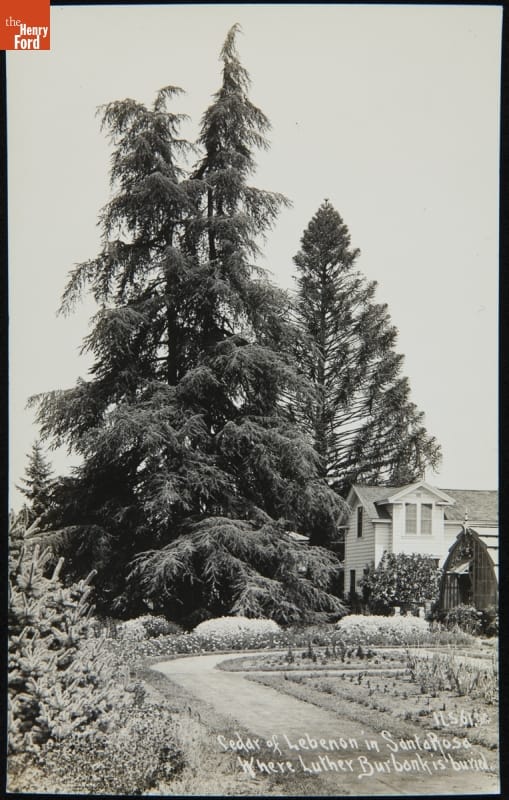
- Cedar of Lebanon in Santa Rosa, California Where Luther Burbank is Buried, 1928-1940 - Luther Burbank (1849-1926), an American horticulturalist and author, gained a reputation for selective breeding that yielded more than 800 new fruits, vegetables, flowers, and other plants. In 1875, Burbank followed family from Massachusetts to Santa Rosa, California, attracted by a longer growing season. By 1881, Burbank's modest success with raising and selling plants allowed him to purchase the home depicted here.
- 1928-1940
- Collections - Artifact
Cedar of Lebanon in Santa Rosa, California Where Luther Burbank is Buried, 1928-1940
Luther Burbank (1849-1926), an American horticulturalist and author, gained a reputation for selective breeding that yielded more than 800 new fruits, vegetables, flowers, and other plants. In 1875, Burbank followed family from Massachusetts to Santa Rosa, California, attracted by a longer growing season. By 1881, Burbank's modest success with raising and selling plants allowed him to purchase the home depicted here.