
Search
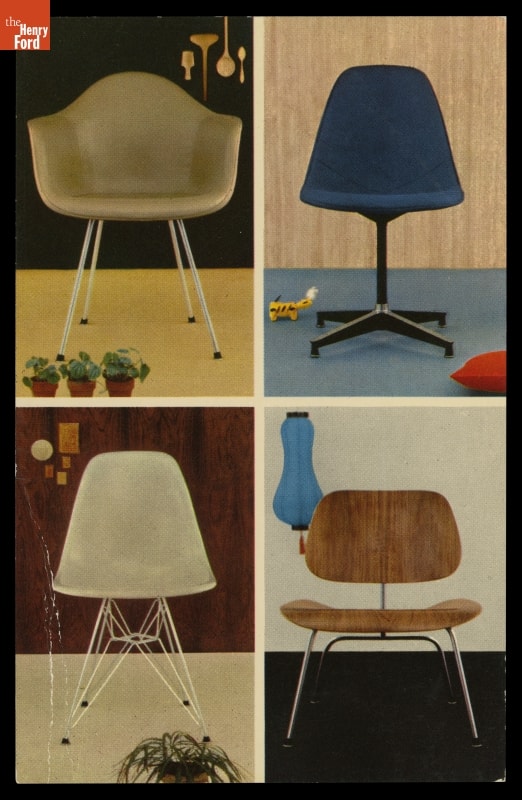
- "Chairs Designed by Charles Eames Executed by Herman Miller," 1954 -
- 1954
- Collections - Artifact
"Chairs Designed by Charles Eames Executed by Herman Miller," 1954
- Prototype Eames Fiberglass Chair in Henry Ford Museum, 2009 -

- November 06, 2009
- Collections - Artifact
Prototype Eames Fiberglass Chair in Henry Ford Museum, 2009
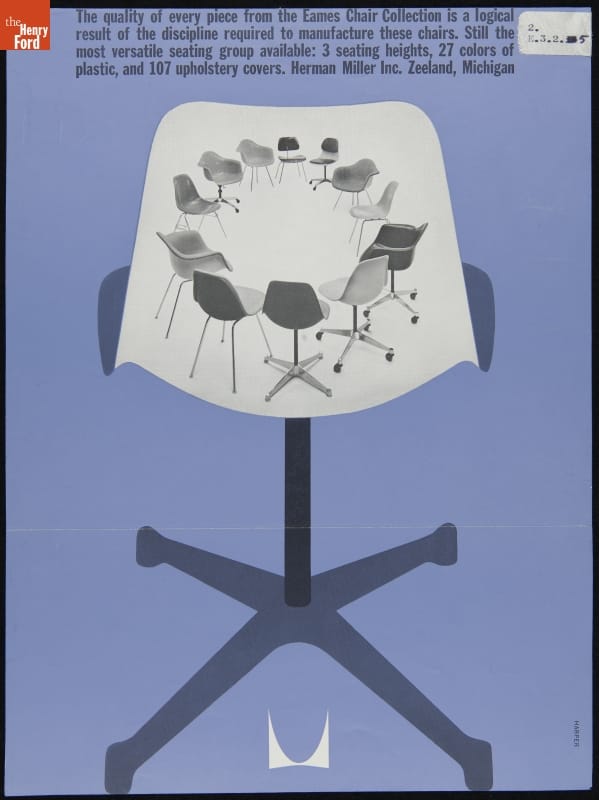
- Herman Miller Advertisement, 1961, "The Quality of Every Piece From the Eames Chair Collection..." -
- 1961-1962
- Collections - Artifact
Herman Miller Advertisement, 1961, "The Quality of Every Piece From the Eames Chair Collection..."
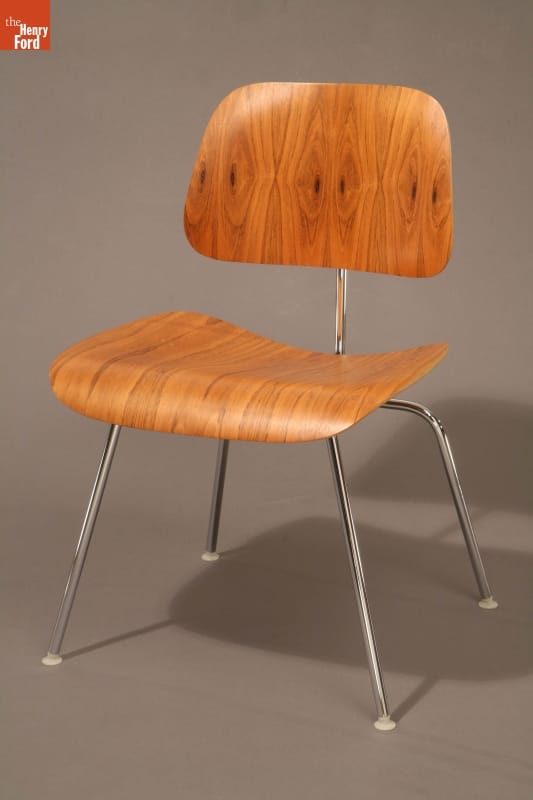
- Eames Molded Dining Chair, circa 1950 - Charles and Ray Eames designed this chair in the mid-1940s. Intent on creating practical, durable, and affordable seating, they turned to basic materials such as plywood and steel rod. Its simplicity and strength suggest a pure engineering solution, but its grace and delicate appearance give it a sculptural presence. It also happens to be incredibly comfortable.
- circa 1950
- Collections - Artifact
Eames Molded Dining Chair, circa 1950
Charles and Ray Eames designed this chair in the mid-1940s. Intent on creating practical, durable, and affordable seating, they turned to basic materials such as plywood and steel rod. Its simplicity and strength suggest a pure engineering solution, but its grace and delicate appearance give it a sculptural presence. It also happens to be incredibly comfortable.
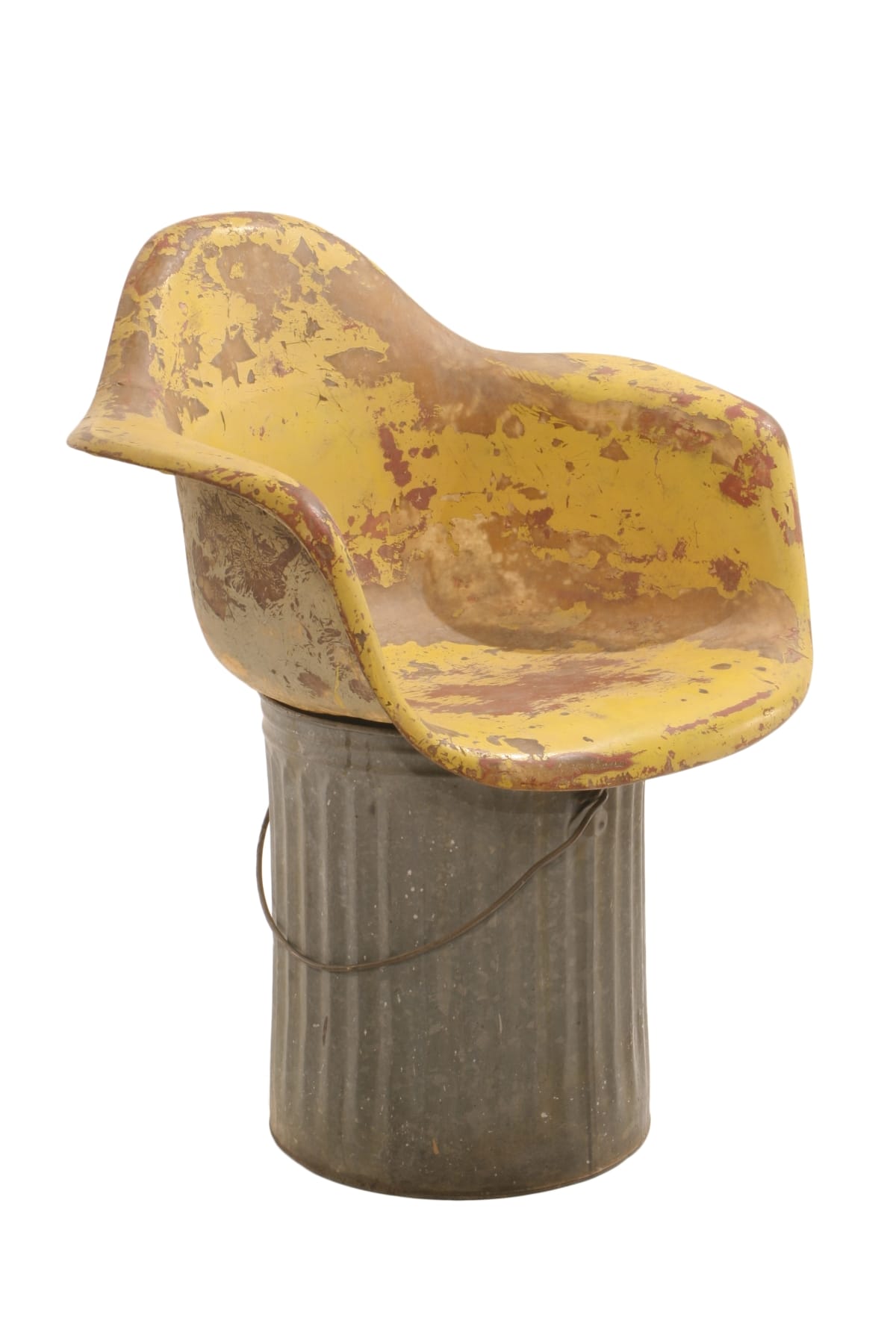
- Prototype Eames Fiberglass Chair, circa 1949 - Charles and Ray Eames wanted to design affordable high-quality furniture. To this end, Charles brought a mock-up of a chair to John Wills, a boat builder and fiberglass fabricator, who created two identical prototypes. Charles took one: it became the basis for what would become a modern design icon. This is the other: it lingered in Will's workshop, used over four decades as a utility stool.
- circa 1949
- Collections - Artifact
Prototype Eames Fiberglass Chair, circa 1949
Charles and Ray Eames wanted to design affordable high-quality furniture. To this end, Charles brought a mock-up of a chair to John Wills, a boat builder and fiberglass fabricator, who created two identical prototypes. Charles took one: it became the basis for what would become a modern design icon. This is the other: it lingered in Will's workshop, used over four decades as a utility stool.
- Herman Miller Advertisement, 1957, "This is the Table That's Never Reserved" -
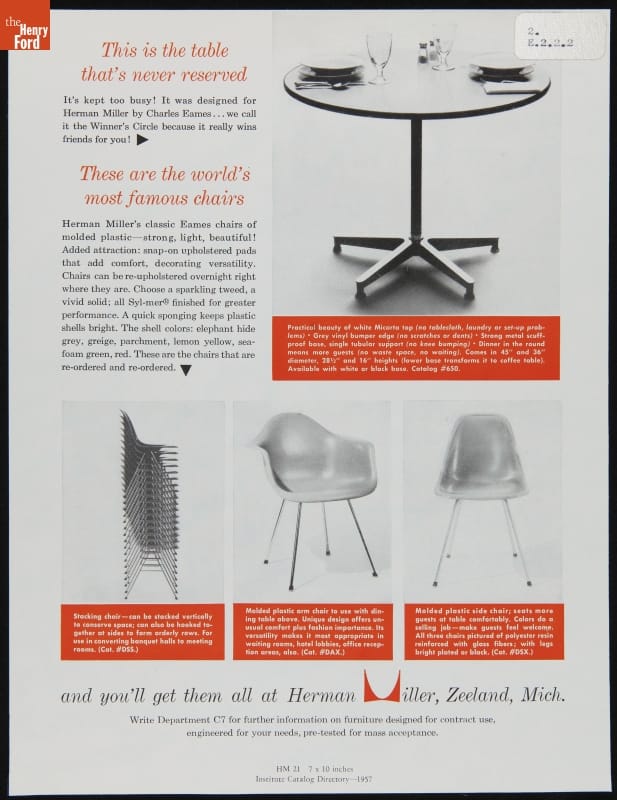
- 1957
- Collections - Artifact
Herman Miller Advertisement, 1957, "This is the Table That's Never Reserved"
- Eames Molded Plywood Chair, 1946-1949 -
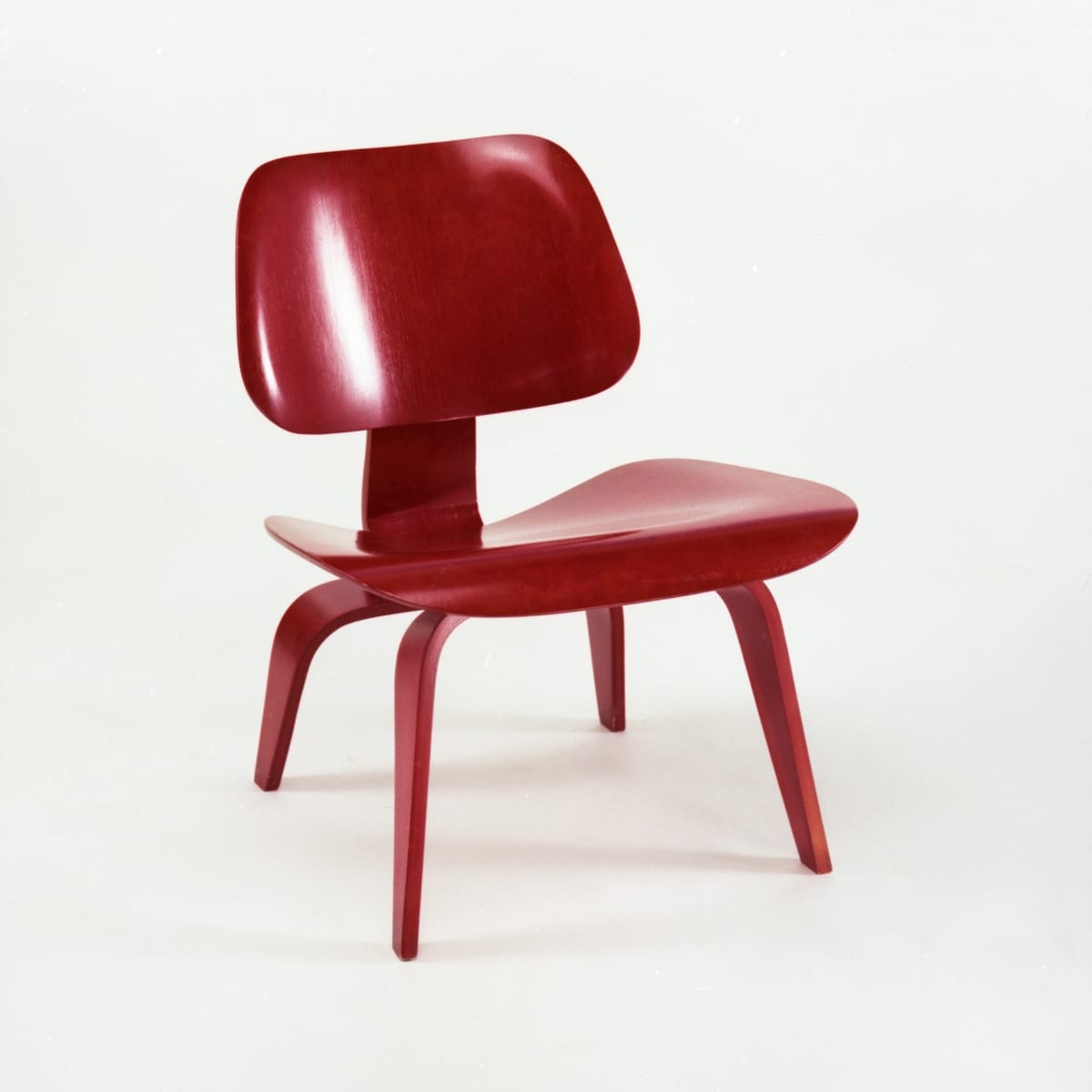
- 1946-1949
- Collections - Artifact
Eames Molded Plywood Chair, 1946-1949
- Trade Card for Herman Miller, Eames Lounge Chair, 1965-1970 - In the last third of the nineteenth century, American consumers could choose from an unprecedented variety of goods and services. Seeking to distinguish certain products and businesses from the competition, advertisers began to print and distribute trade cards. Though the popularity of these cards diminished after 1900, some companies employed the informative, often vibrant little advertisements well into the twentieth century.
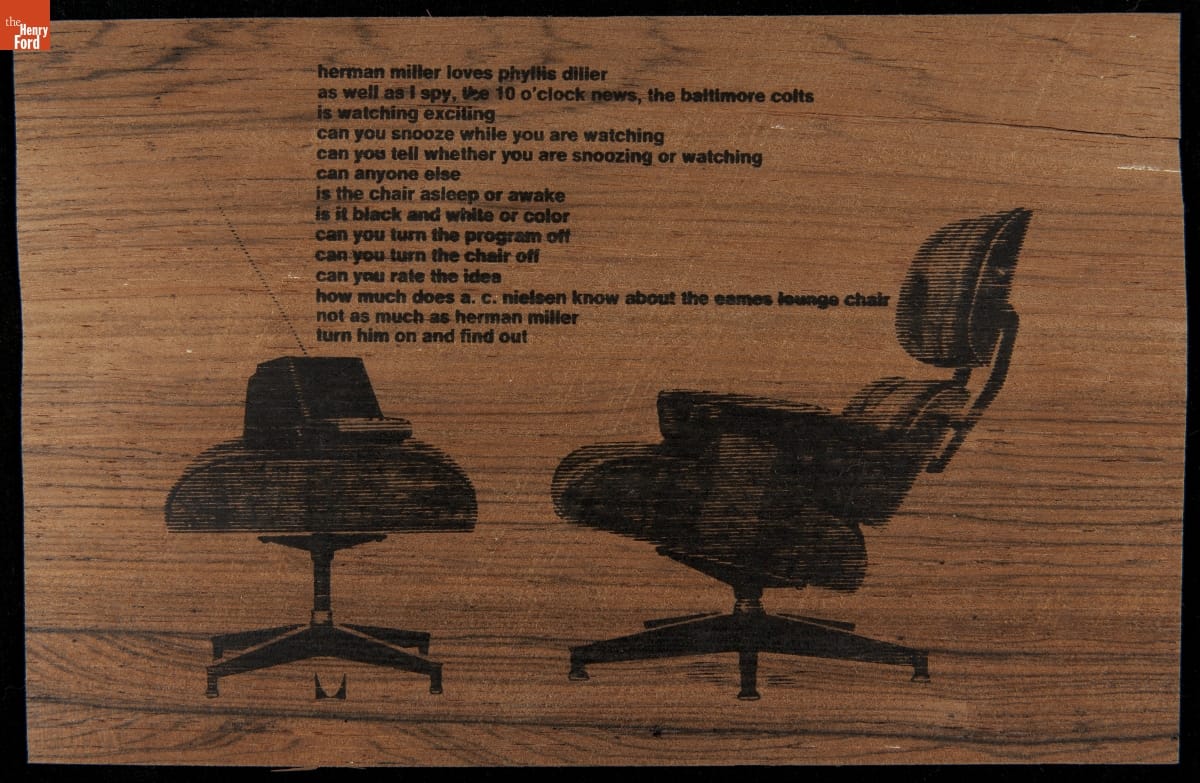
- 1965-1970
- Collections - Artifact
Trade Card for Herman Miller, Eames Lounge Chair, 1965-1970
In the last third of the nineteenth century, American consumers could choose from an unprecedented variety of goods and services. Seeking to distinguish certain products and businesses from the competition, advertisers began to print and distribute trade cards. Though the popularity of these cards diminished after 1900, some companies employed the informative, often vibrant little advertisements well into the twentieth century.
- Sales Brochure, 1954, "Chairs Designed by Charles Eames for the Herman Miller Furniture Company" -
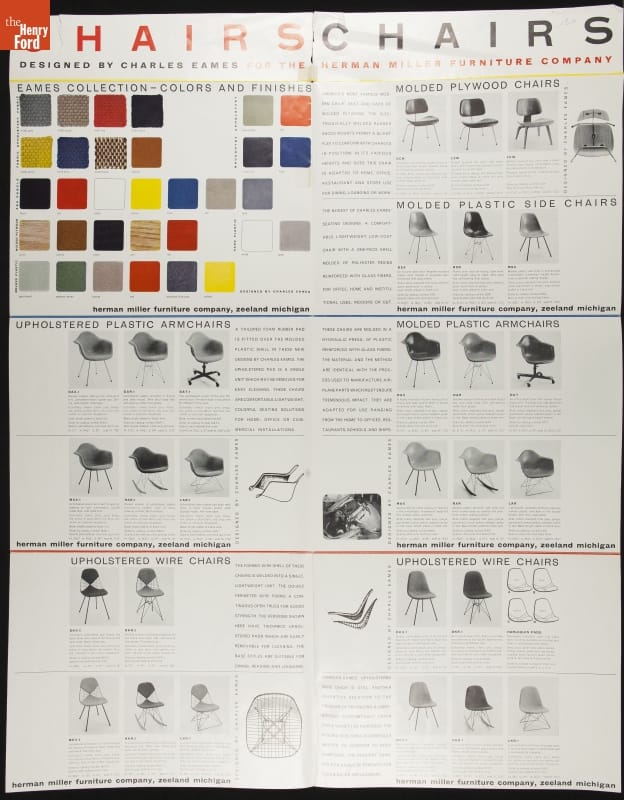
- March 01, 1954
- Collections - Artifact
Sales Brochure, 1954, "Chairs Designed by Charles Eames for the Herman Miller Furniture Company"
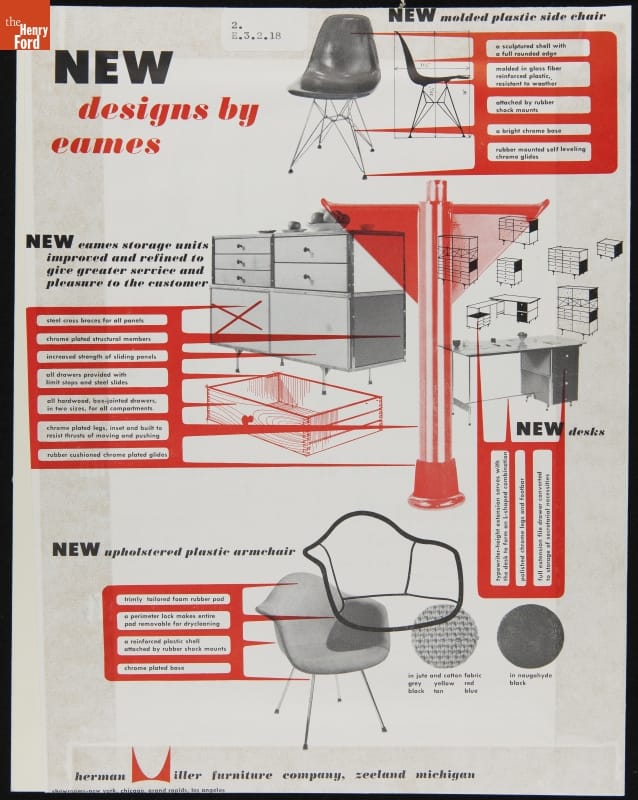
- Herman Miller Advertisement, "New Designs by Eames," circa 1953 -
- circa 1953
- Collections - Artifact
Herman Miller Advertisement, "New Designs by Eames," circa 1953