
Search
- Jazz Bowl, circa 1931 - 24-year-old-artist Vilktor Schreckengost designed a punch bowl in 1930 depicting New Year's Eve festivities in New York City as a celebration of the Jazz Age. He was commissioned by Eleanor Roosevelt who was so pleased with it that she ordered two more copies. Three versions were produced; this is the third version, intended for mass-production, dubbed "The Poor Man's Jazz Bowl".
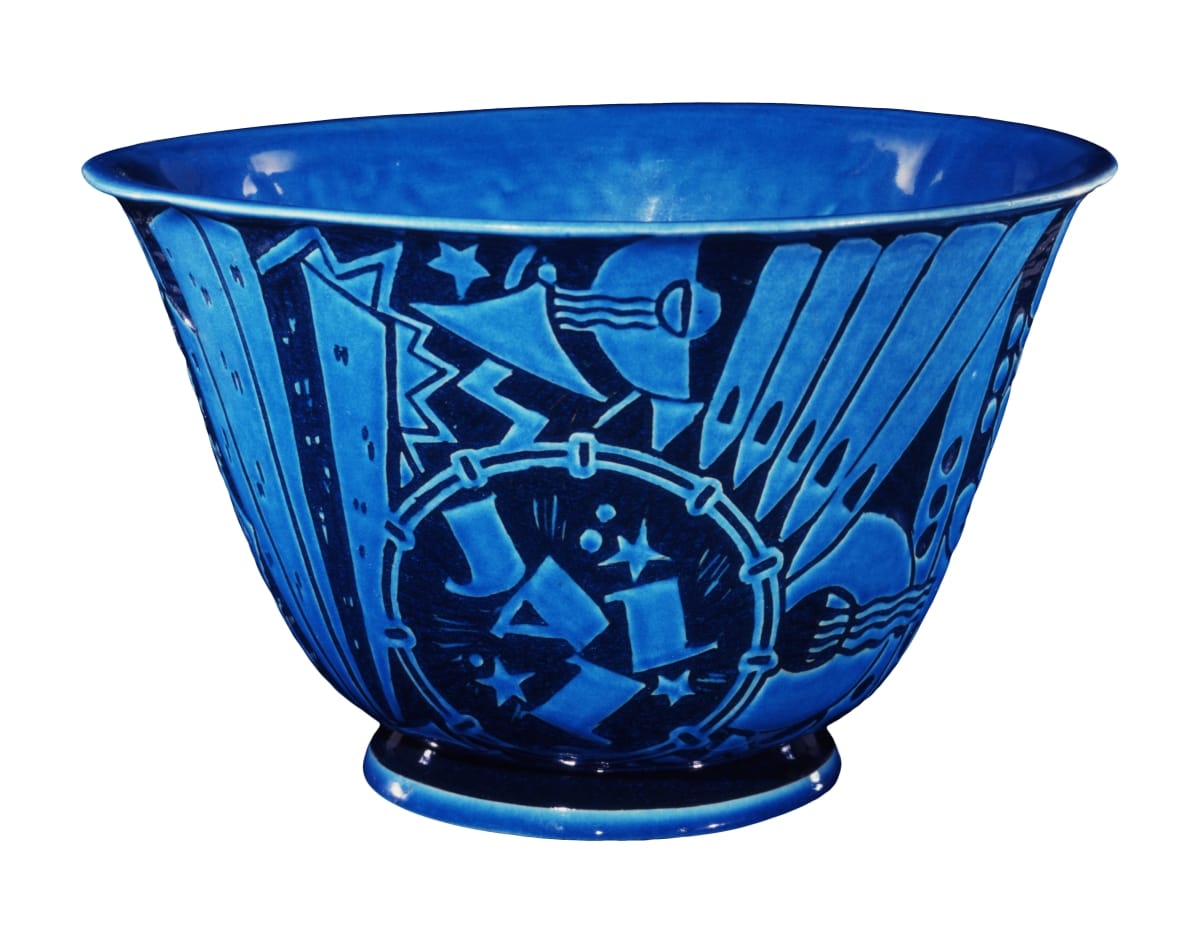
- circa 1931
- Collections - Artifact
Jazz Bowl, circa 1931
24-year-old-artist Vilktor Schreckengost designed a punch bowl in 1930 depicting New Year's Eve festivities in New York City as a celebration of the Jazz Age. He was commissioned by Eleanor Roosevelt who was so pleased with it that she ordered two more copies. Three versions were produced; this is the third version, intended for mass-production, dubbed "The Poor Man's Jazz Bowl".
- Trade Card for Abram French & Co. Pottery, circa 1885 - In the last third of the nineteenth century, an unprecedented variety of consumer goods and services flooded the American market. Advertisers, armed with new methods of color printing, bombarded potential customers with trade cards. Americans enjoyed and often saved the vibrant little advertisements found in product packages or distributed by local merchants. Many survive as historical records of commercialism in the United States.
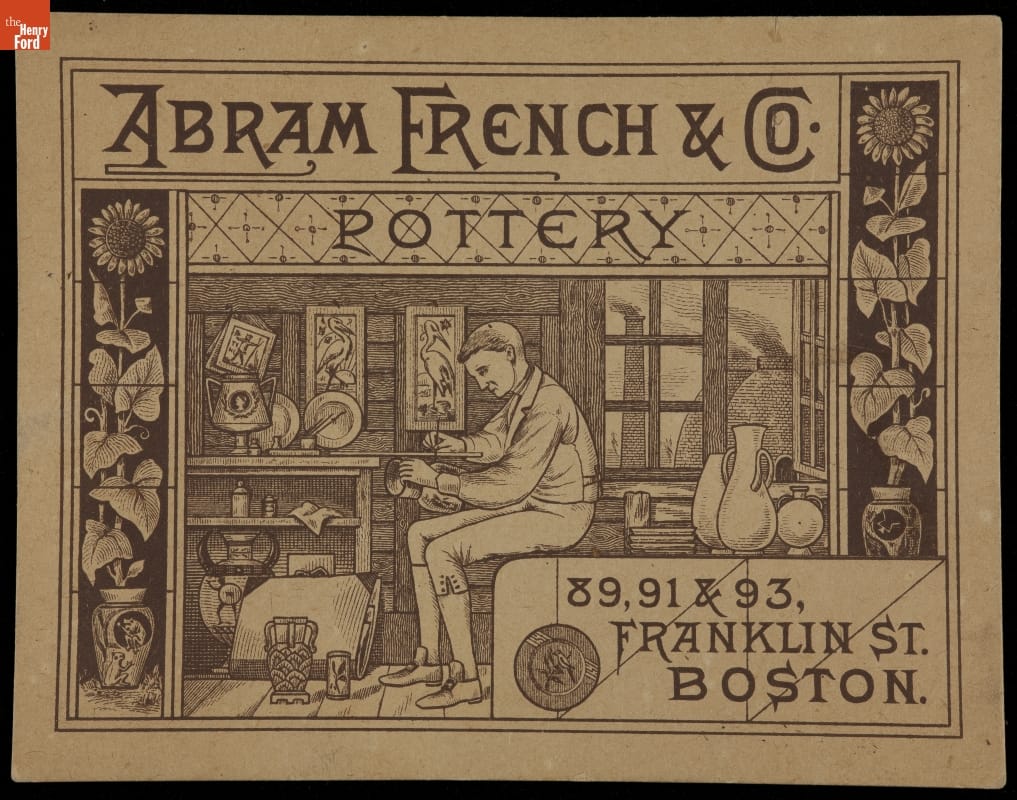
- circa 1885
- Collections - Artifact
Trade Card for Abram French & Co. Pottery, circa 1885
In the last third of the nineteenth century, an unprecedented variety of consumer goods and services flooded the American market. Advertisers, armed with new methods of color printing, bombarded potential customers with trade cards. Americans enjoyed and often saved the vibrant little advertisements found in product packages or distributed by local merchants. Many survive as historical records of commercialism in the United States.
- Mixing Bowl, 1930-1950 -
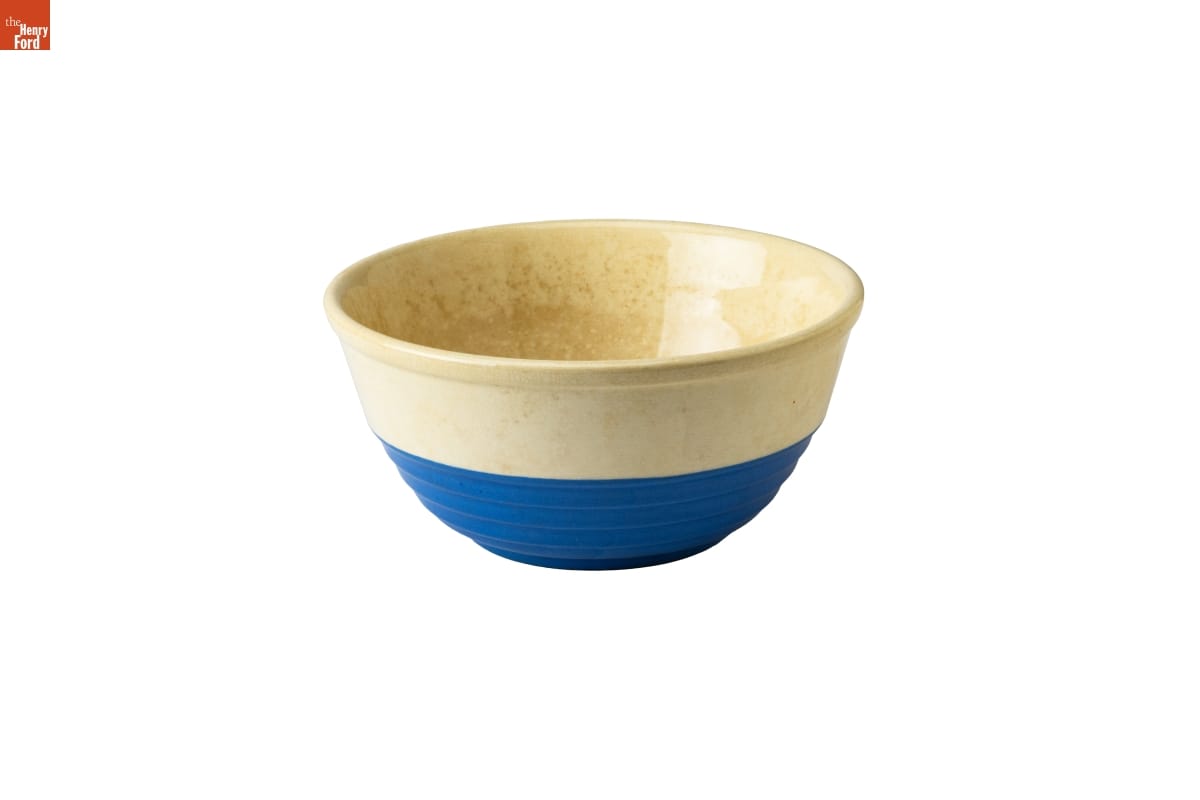
- 1930-1950
- Collections - Artifact
Mixing Bowl, 1930-1950
- Chamber Pot, 1840-1880 -
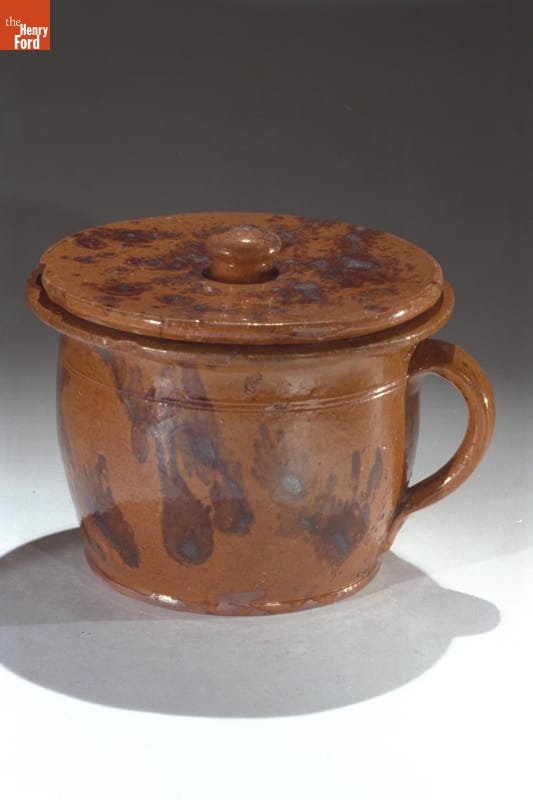
- 1840-1880
- Collections - Artifact
Chamber Pot, 1840-1880
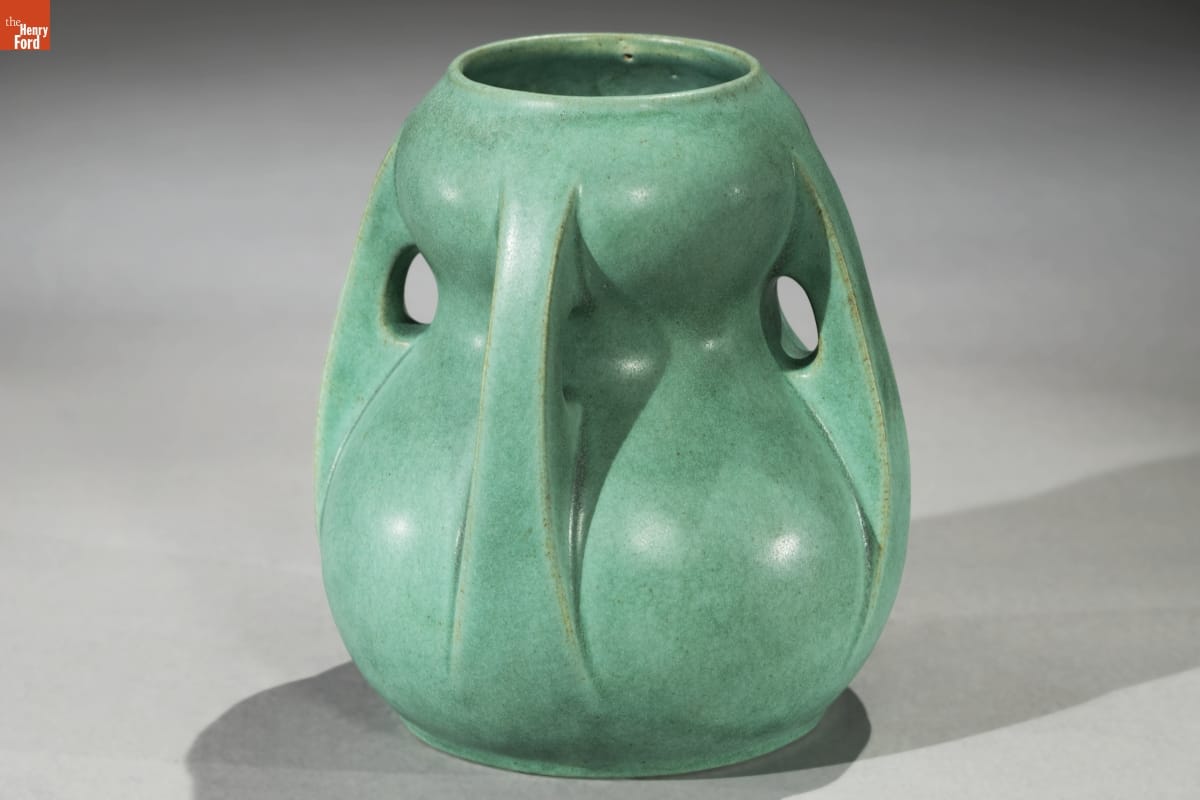
- Vase, 1905-1920 - Teco Pottery was a major provider of mid-price-level decorative ceramics for the home in the first two decades of the twentieth century. Because many of the shapes were based on architectural forms, Teco was the preferred line of ceramics of the Prairie School architects, including Louis Sullivan and Frank Lloyd Wright, who designed a piece for the firm.
- 1905-1920
- Collections - Artifact
Vase, 1905-1920
Teco Pottery was a major provider of mid-price-level decorative ceramics for the home in the first two decades of the twentieth century. Because many of the shapes were based on architectural forms, Teco was the preferred line of ceramics of the Prairie School architects, including Louis Sullivan and Frank Lloyd Wright, who designed a piece for the firm.
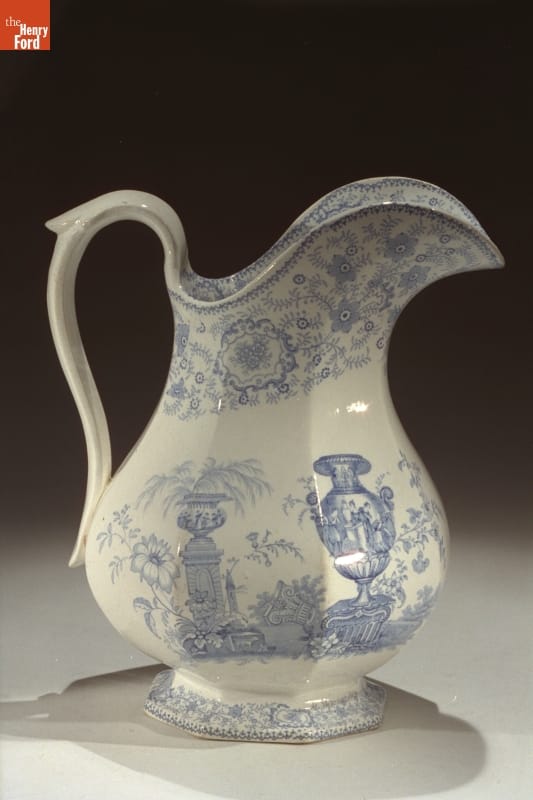
- Pitcher, 1839-1846 -
- 1839-1846
- Collections - Artifact
Pitcher, 1839-1846
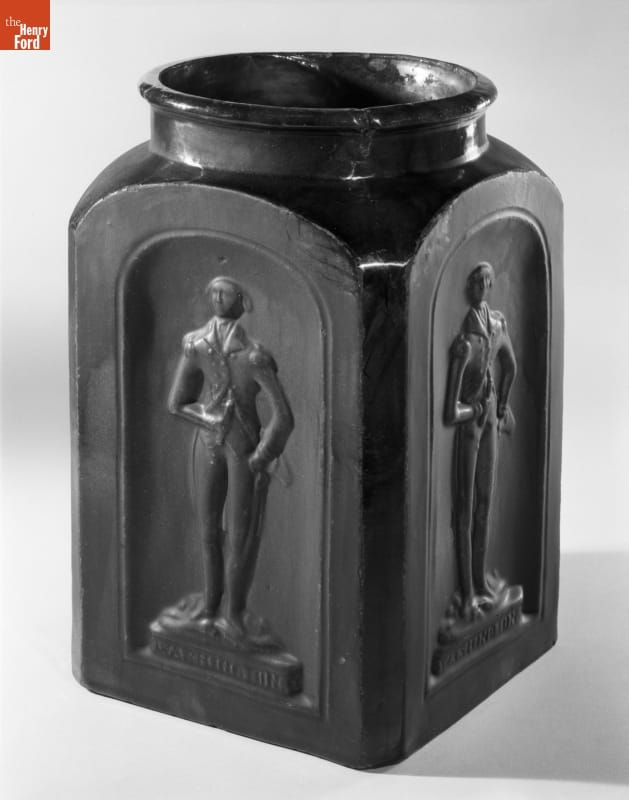
- Earthenware Jar with George Washington Reliefs, circa 1870 - George Washington (1732-1799) had been a revered celebrity in life. In death, he became an enduring symbol of the American struggle for liberty and a reminder of what one person can achieve. This jar, made nearly a century after he died, depicts Washington in military uniform, commemorating his leadership during the Revolutionary War.
- circa 1870
- Collections - Artifact
Earthenware Jar with George Washington Reliefs, circa 1870
George Washington (1732-1799) had been a revered celebrity in life. In death, he became an enduring symbol of the American struggle for liberty and a reminder of what one person can achieve. This jar, made nearly a century after he died, depicts Washington in military uniform, commemorating his leadership during the Revolutionary War.
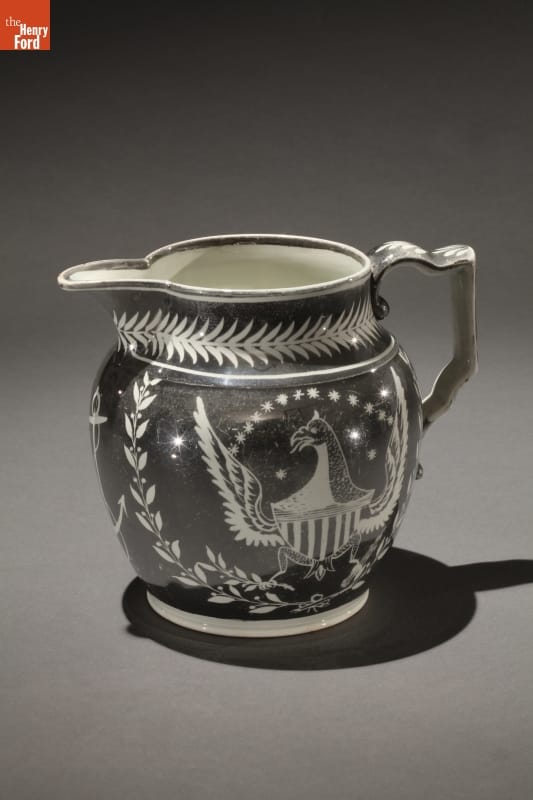
- Pitcher, 1800-1815 - Despite political tensions leading up to the War of 1812, English manufacturers continued to create export goods for the American market. This lusterware pitcher employs popular American symbols - an anchor, sailboats, and an eagle - and "classical" garland. To early nineteenth-century Americans, this combination signified the rebirth of democracy and representative government in their young republic.
- 1800-1815
- Collections - Artifact
Pitcher, 1800-1815
Despite political tensions leading up to the War of 1812, English manufacturers continued to create export goods for the American market. This lusterware pitcher employs popular American symbols - an anchor, sailboats, and an eagle - and "classical" garland. To early nineteenth-century Americans, this combination signified the rebirth of democracy and representative government in their young republic.
- Pitcher, 1835-1855 -
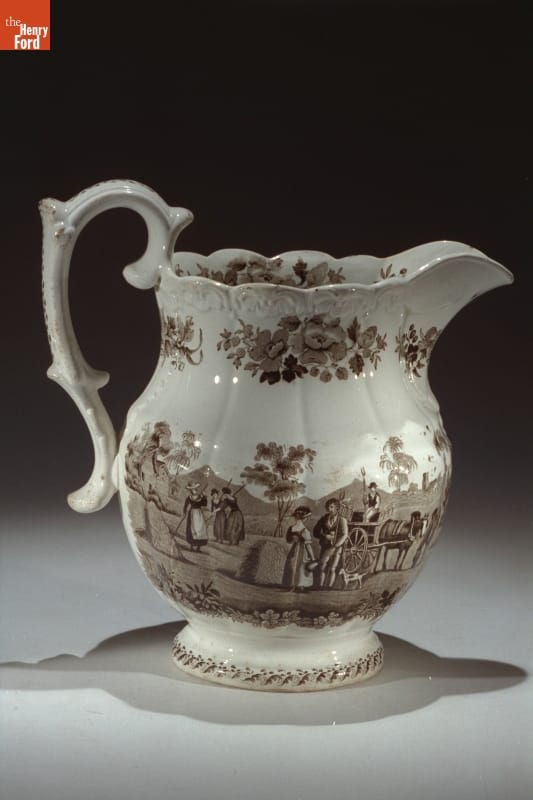
- 1835-1855
- Collections - Artifact
Pitcher, 1835-1855
- Lion Figurine, 1810-1830 -
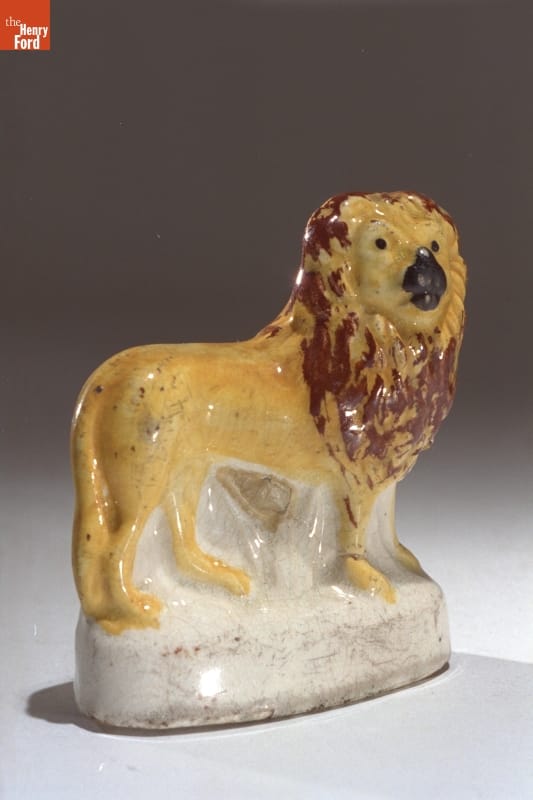
- 1810-1830
- Collections - Artifact
Lion Figurine, 1810-1830