
Search
- Alphabet Blocks, 1873-1880 -
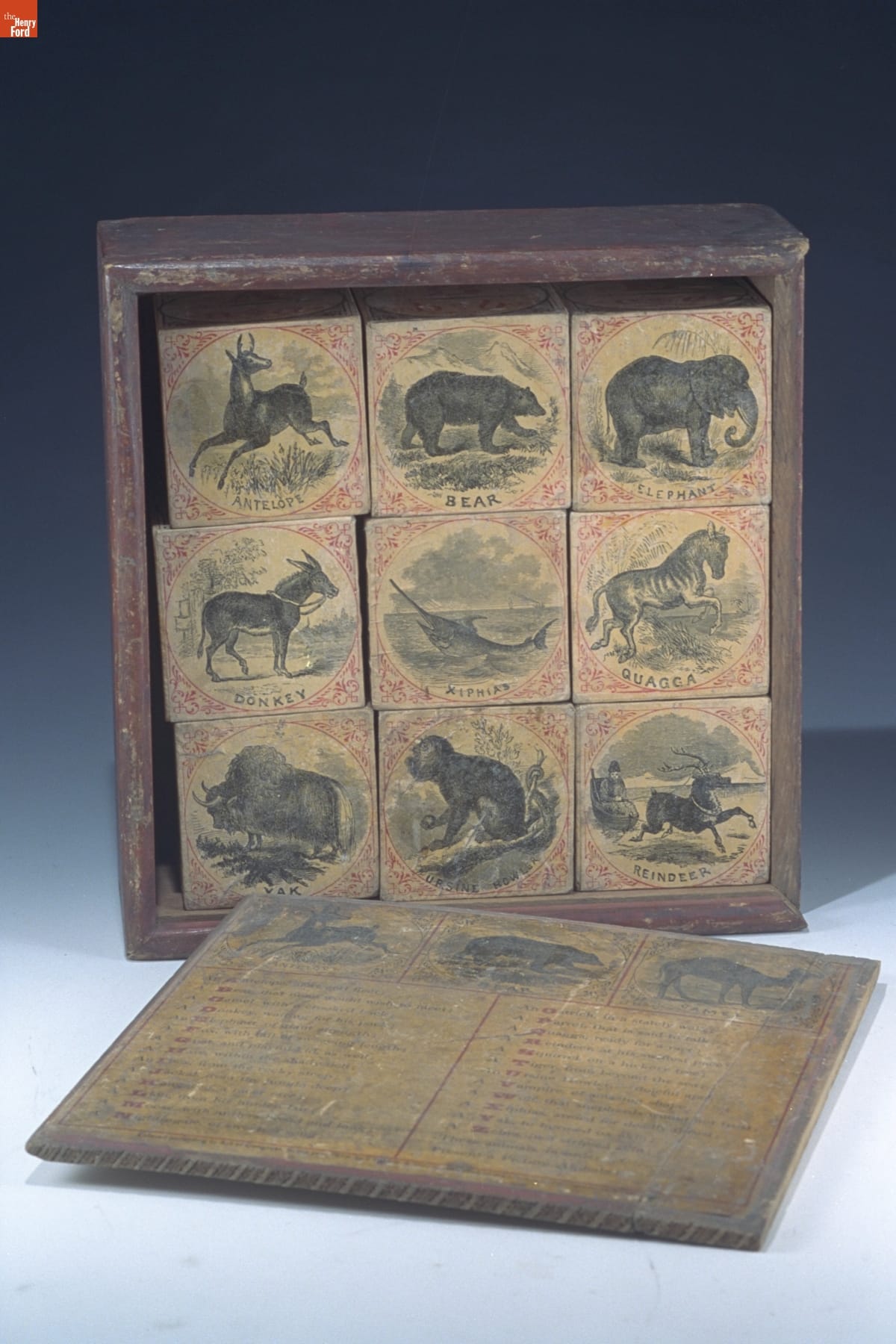
- 1873-1880
- Collections - Artifact
Alphabet Blocks, 1873-1880
- Toy Printing Press, Used by James Greenhoe, 1939-1946 -
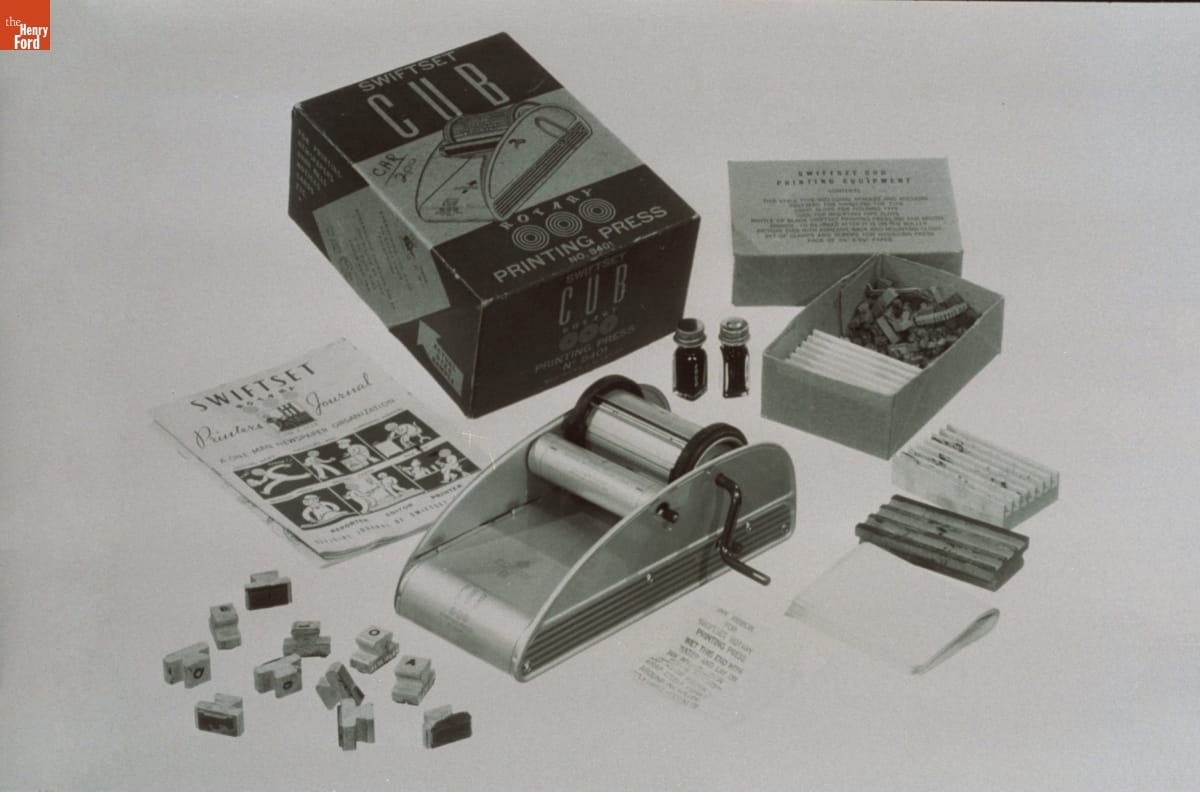
- 1939-1946
- Collections - Artifact
Toy Printing Press, Used by James Greenhoe, 1939-1946
- Empress Desk Set, circa 1965 -
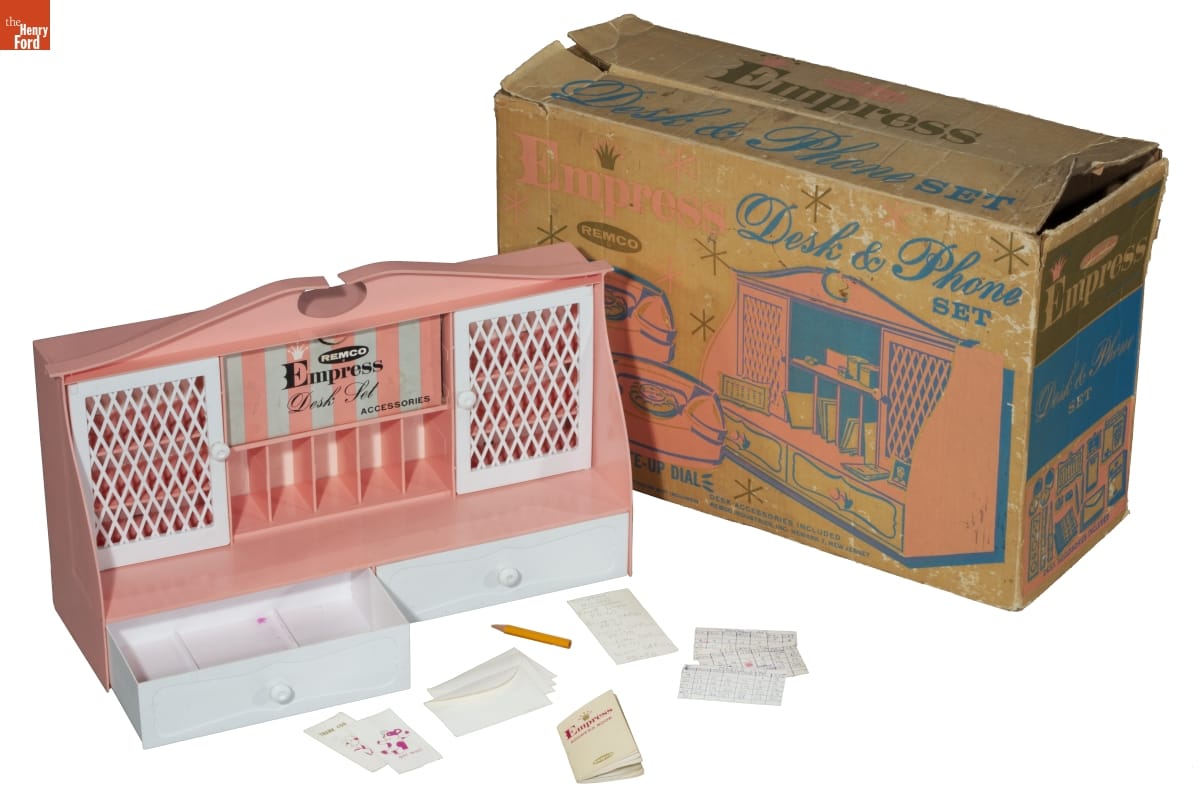
- circa 1965
- Collections - Artifact
Empress Desk Set, circa 1965
- Spelling Board, 1890-1910 -
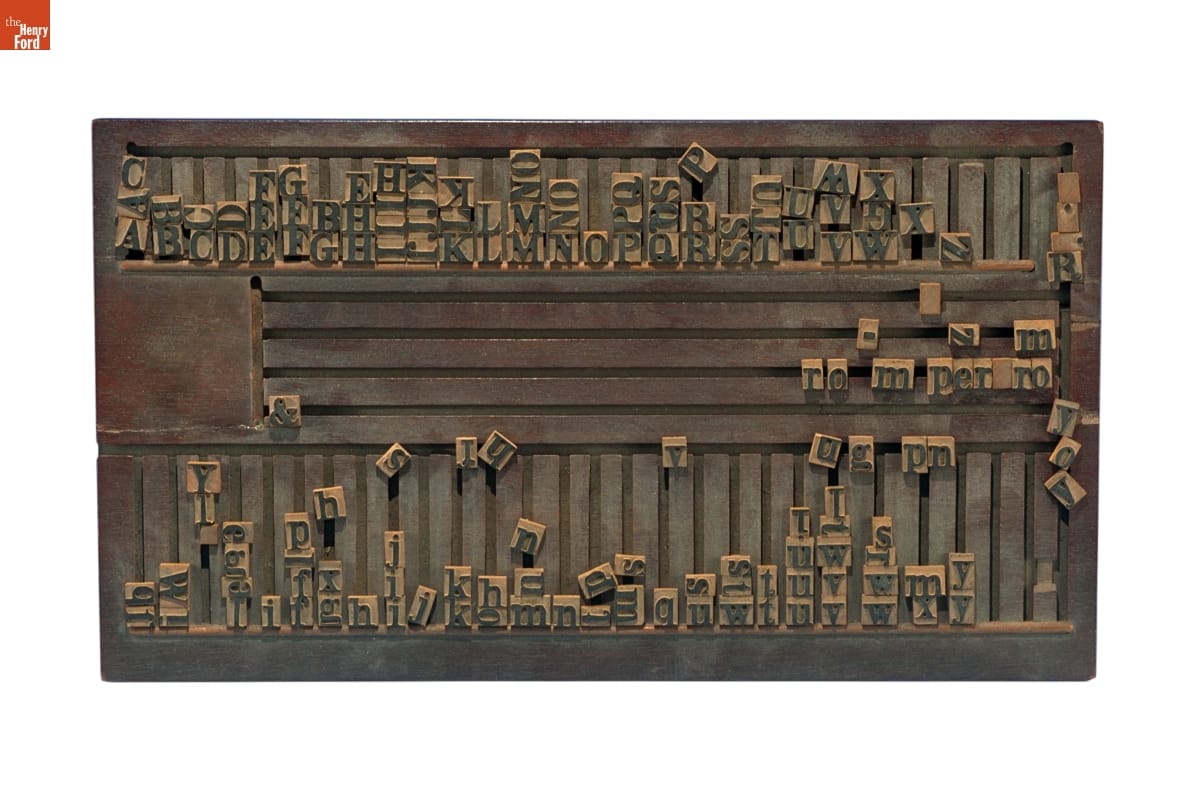
- 1890-1910
- Collections - Artifact
Spelling Board, 1890-1910
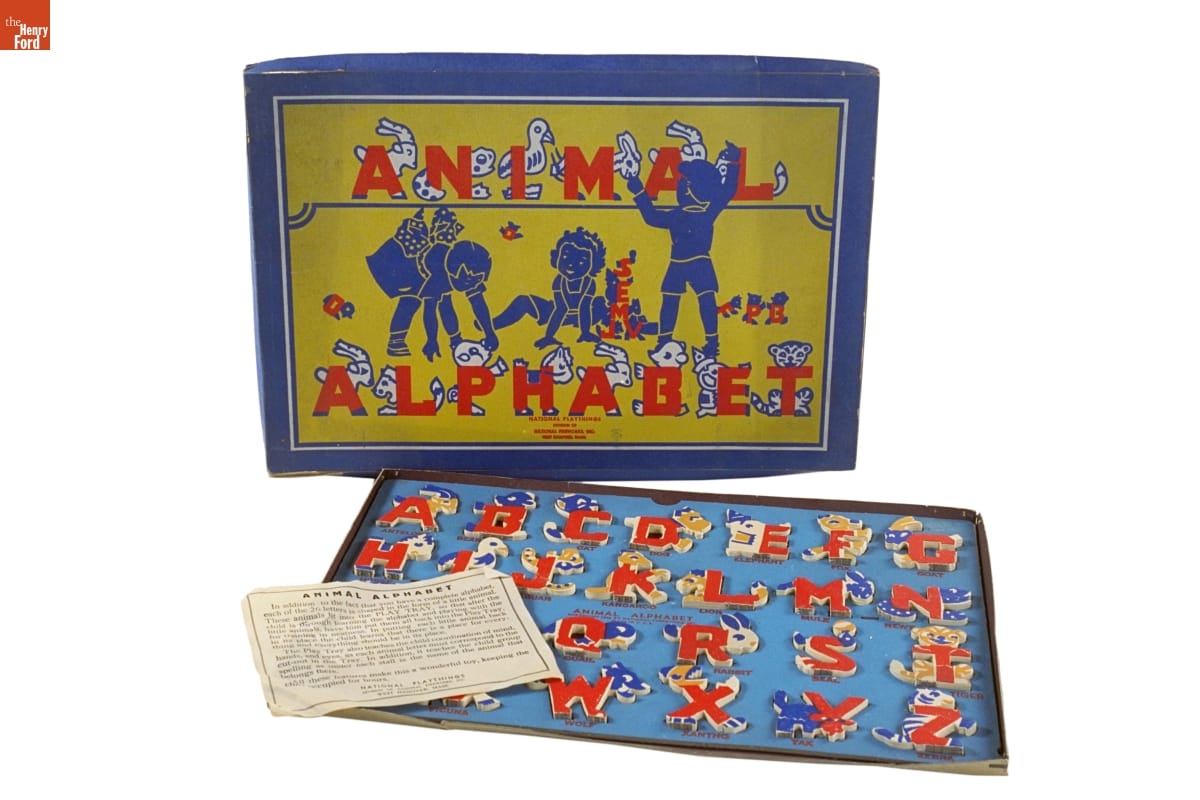
- Animal Alphabet Puzzle, 1940-1950 - This puzzle built for small hands helped develop motor skills while teaching the alphabet. Children could rely on visual cues to complete the puzzle. Cutouts match the shape of the pieces, which depict animals that correspond with words printed on the board, from "antelope" to "zebra."
- 1940-1950
- Collections - Artifact
Animal Alphabet Puzzle, 1940-1950
This puzzle built for small hands helped develop motor skills while teaching the alphabet. Children could rely on visual cues to complete the puzzle. Cutouts match the shape of the pieces, which depict animals that correspond with words printed on the board, from "antelope" to "zebra."
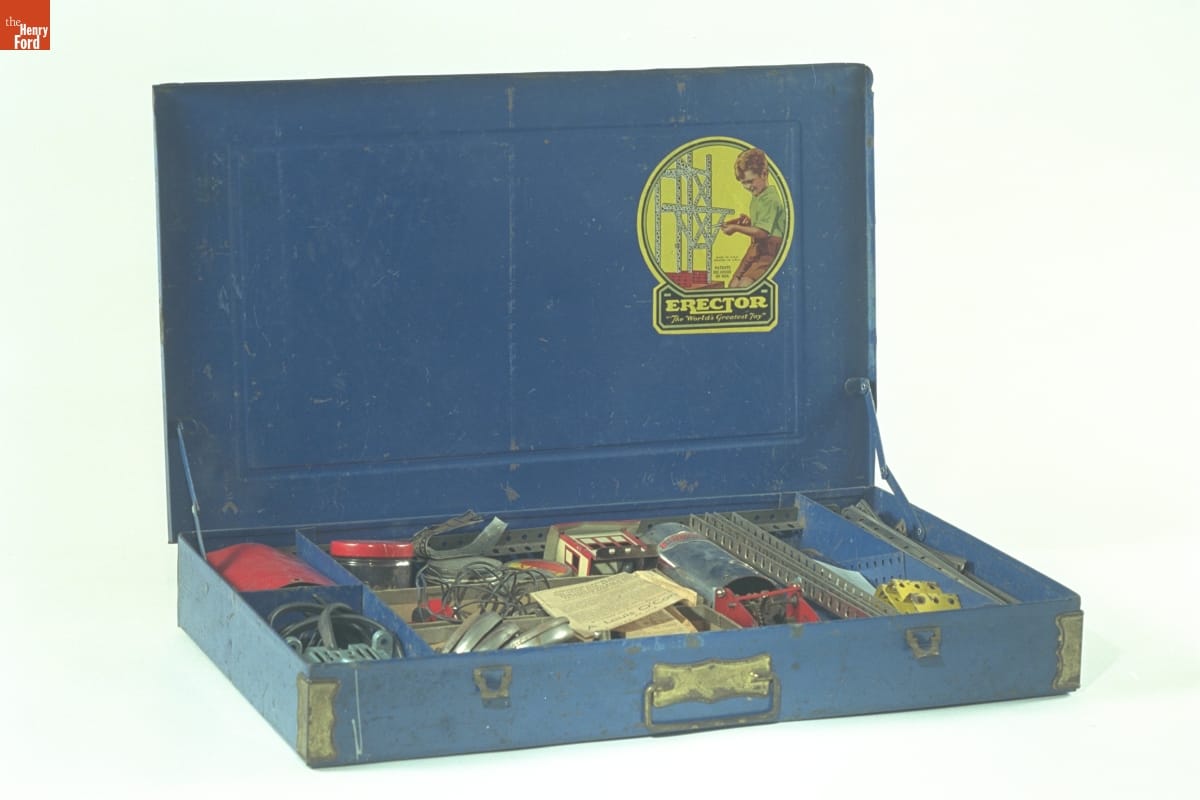
- Erector Set, circa 1940 - A.C. Gilbert introduced Erector Sets in 1913, inspired by watching workers erect an electrical system along the railroad line between New Haven and New York City. Gilbert manufactured Erector Sets for fifty years, offering a range of sets each season, in several different sizes. This set, which retailed for about $10.00, contained an electric motor, gear box, electromagnet, and small steel building.
- circa 1940
- Collections - Artifact
Erector Set, circa 1940
A.C. Gilbert introduced Erector Sets in 1913, inspired by watching workers erect an electrical system along the railroad line between New Haven and New York City. Gilbert manufactured Erector Sets for fifty years, offering a range of sets each season, in several different sizes. This set, which retailed for about $10.00, contained an electric motor, gear box, electromagnet, and small steel building.
- "The Visible Man" Assembly Kit, 1959 -
- 1959
- Collections - Artifact
"The Visible Man" Assembly Kit, 1959
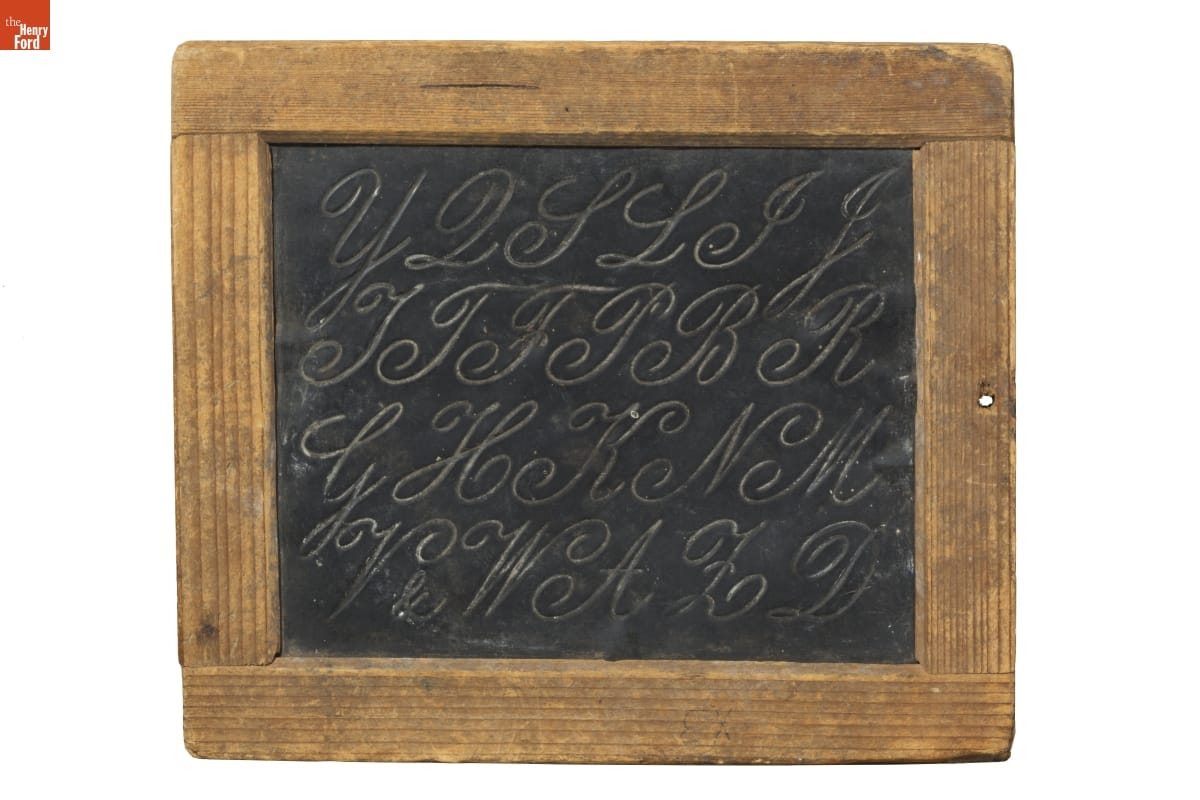
- Writing Slate - In the nineteenth century, schoolchildren's access to paper was limited. Slates were used to practice handwriting and arithmetic without wasting precious paper. After a teacher's approval, the students were allowed to copy their best slate work into a paper copybook, as a record of accomplishment. Students also memorized concepts, rules and even long literary passages, thus conserving paper.
- Collections - Artifact
Writing Slate
In the nineteenth century, schoolchildren's access to paper was limited. Slates were used to practice handwriting and arithmetic without wasting precious paper. After a teacher's approval, the students were allowed to copy their best slate work into a paper copybook, as a record of accomplishment. Students also memorized concepts, rules and even long literary passages, thus conserving paper.
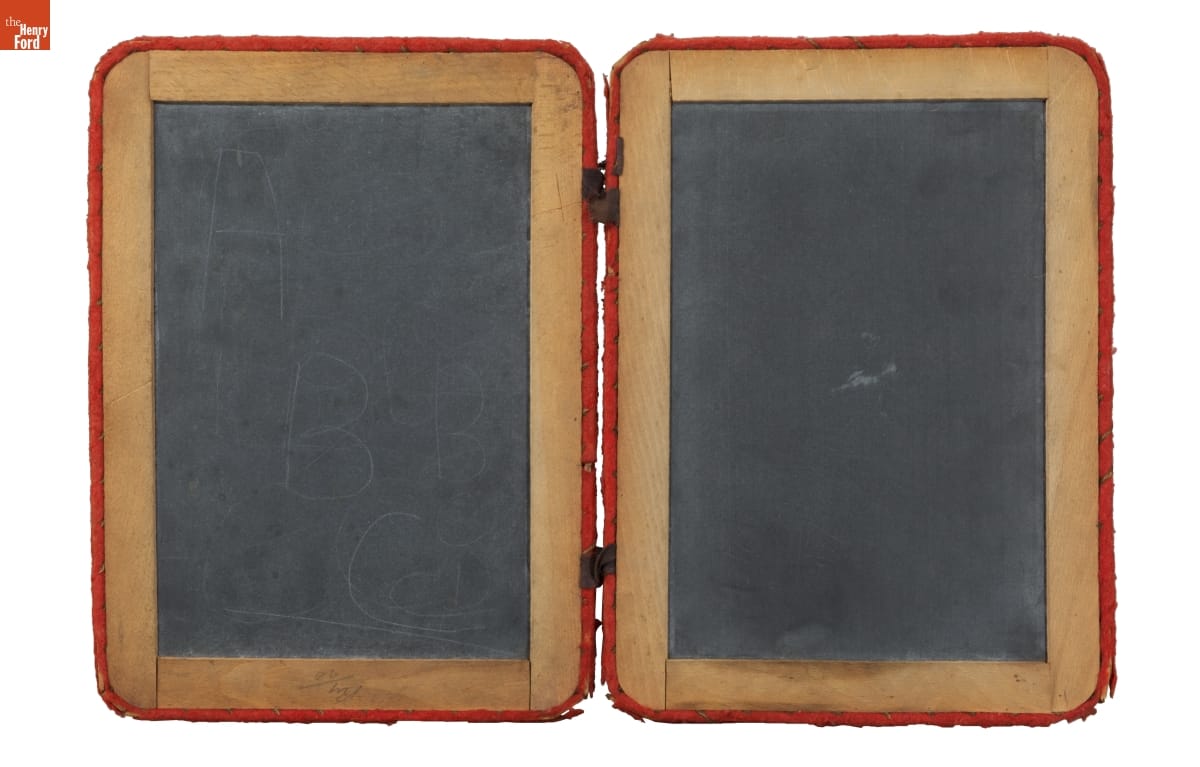
- Double Slate - In the nineteenth century, schoolchildren's access to paper was limited. Slates were used to practice handwriting and arithmetic without wasting precious paper. After a teacher's approval, the students were allowed to copy their best slate work into a paper copybook, as a record of accomplishment. Students also memorized concepts, rules and even long literary passages, thus conserving paper.
- Collections - Artifact
Double Slate
In the nineteenth century, schoolchildren's access to paper was limited. Slates were used to practice handwriting and arithmetic without wasting precious paper. After a teacher's approval, the students were allowed to copy their best slate work into a paper copybook, as a record of accomplishment. Students also memorized concepts, rules and even long literary passages, thus conserving paper.
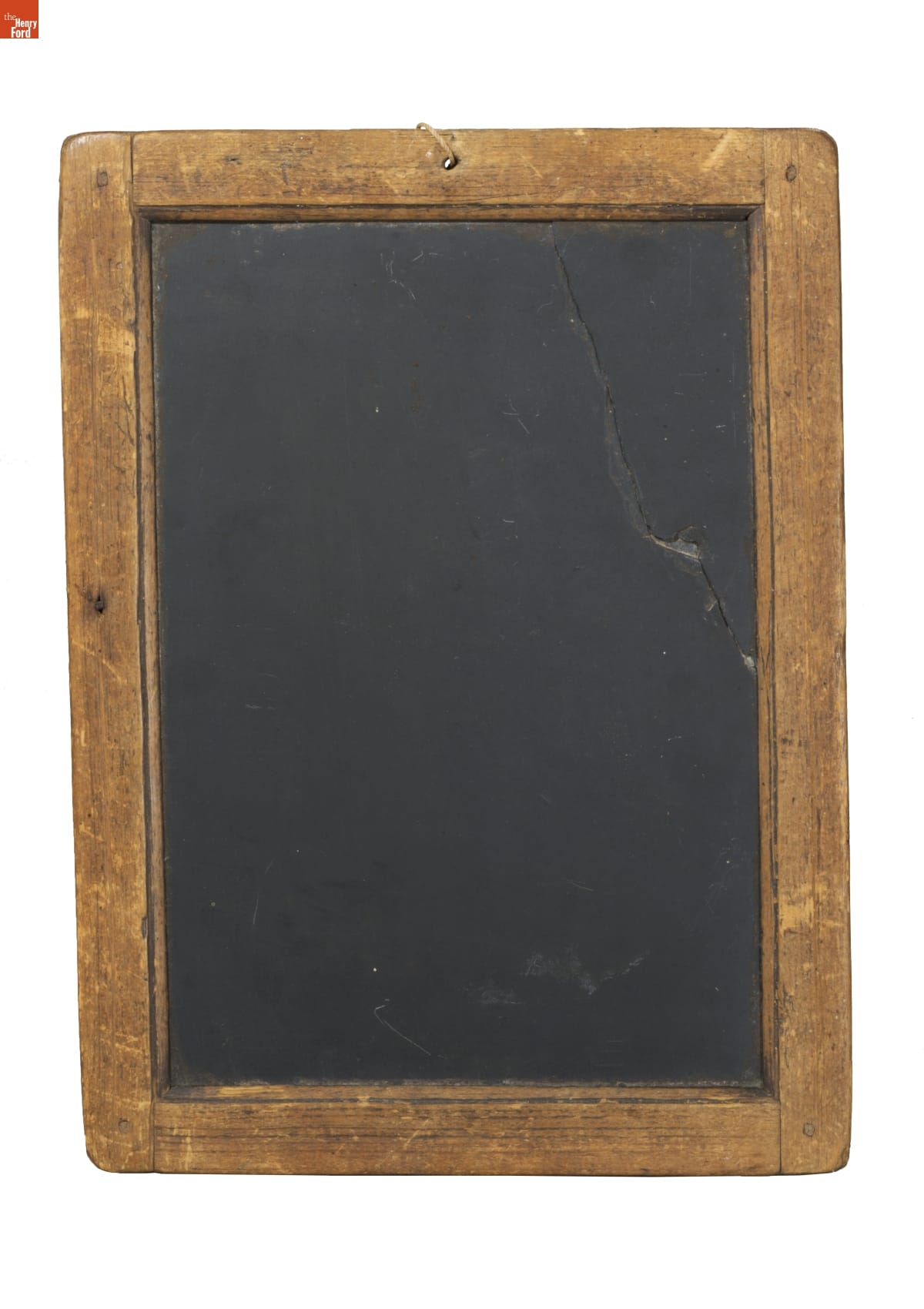
- Writing Slate - In the nineteenth century, schoolchildren's access to paper was limited. Slates were used to practice handwriting and arithmetic without wasting precious paper. After a teacher's approval, the students were allowed to copy their best slate work into a paper copybook, as a record of accomplishment. Students also memorized concepts, rules and even long literary passages, thus conserving paper.
- Collections - Artifact
Writing Slate
In the nineteenth century, schoolchildren's access to paper was limited. Slates were used to practice handwriting and arithmetic without wasting precious paper. After a teacher's approval, the students were allowed to copy their best slate work into a paper copybook, as a record of accomplishment. Students also memorized concepts, rules and even long literary passages, thus conserving paper.