
Search
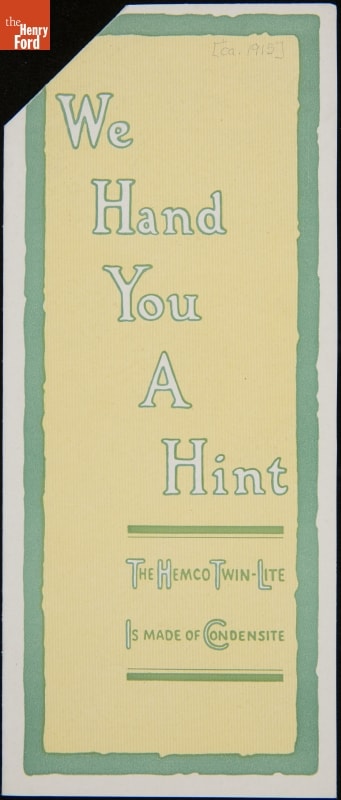
- We Hand You a Hint: The Hemco Twin-Lite is Made of Condensite, circa 1915 - Chemically synthetic plastics were developed in the early 1900s to replace shellac and hard rubber -- naturally derived substances increasingly in demand for various industrial applications. The Condensite Company of America formed in 1910 to sell a new material first developed at Thomas Edison's West Orange laboratory for phonograph records. Durable and nonconductive, Condensite was well suited for electrical products.
- circa 1915
- Collections - Artifact
We Hand You a Hint: The Hemco Twin-Lite is Made of Condensite, circa 1915
Chemically synthetic plastics were developed in the early 1900s to replace shellac and hard rubber -- naturally derived substances increasingly in demand for various industrial applications. The Condensite Company of America formed in 1910 to sell a new material first developed at Thomas Edison's West Orange laboratory for phonograph records. Durable and nonconductive, Condensite was well suited for electrical products.
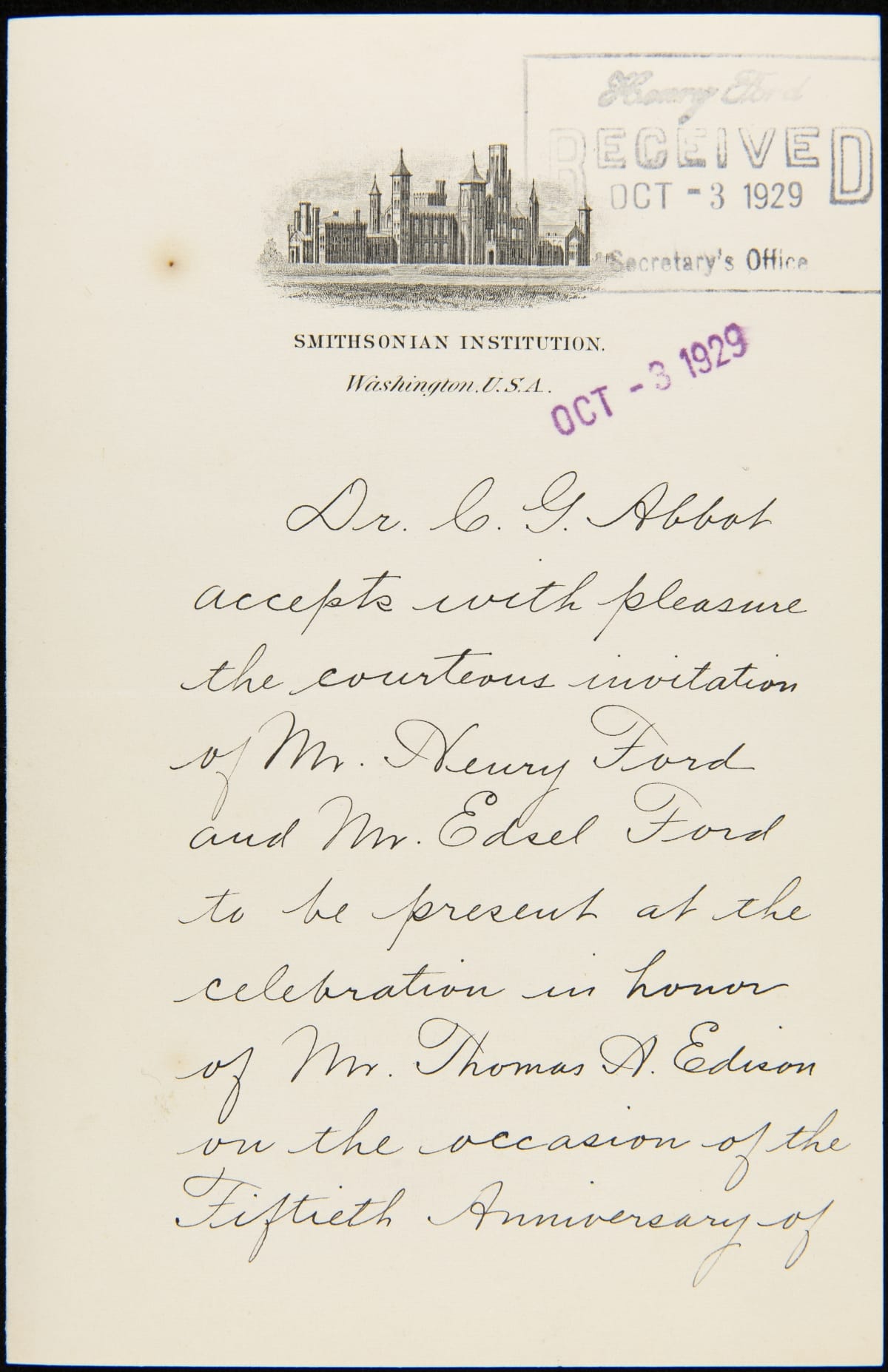
- Letter from Charles Greely (C.G.) Abbot to Henry Ford and Edsel Ford regarding Invitation to Light's Golden Jubilee, October 1, 1929 - On October 21, 1929, Henry Ford hosted an event, Light's Golden Jubilee, which celebrated the 50th anniversary of Thomas Edison's invention of the incandescent lamp. The event also served as the official dedication of The Edison Institute, Ford's museum complex named in honor of his friend. Among the invited guests was Secretary of the Smithsonian Dr. C.G. Abbott, who accepted the Ford's courteous invitation.
- October 21, 1929
- Collections - Artifact
Letter from Charles Greely (C.G.) Abbot to Henry Ford and Edsel Ford regarding Invitation to Light's Golden Jubilee, October 1, 1929
On October 21, 1929, Henry Ford hosted an event, Light's Golden Jubilee, which celebrated the 50th anniversary of Thomas Edison's invention of the incandescent lamp. The event also served as the official dedication of The Edison Institute, Ford's museum complex named in honor of his friend. Among the invited guests was Secretary of the Smithsonian Dr. C.G. Abbott, who accepted the Ford's courteous invitation.
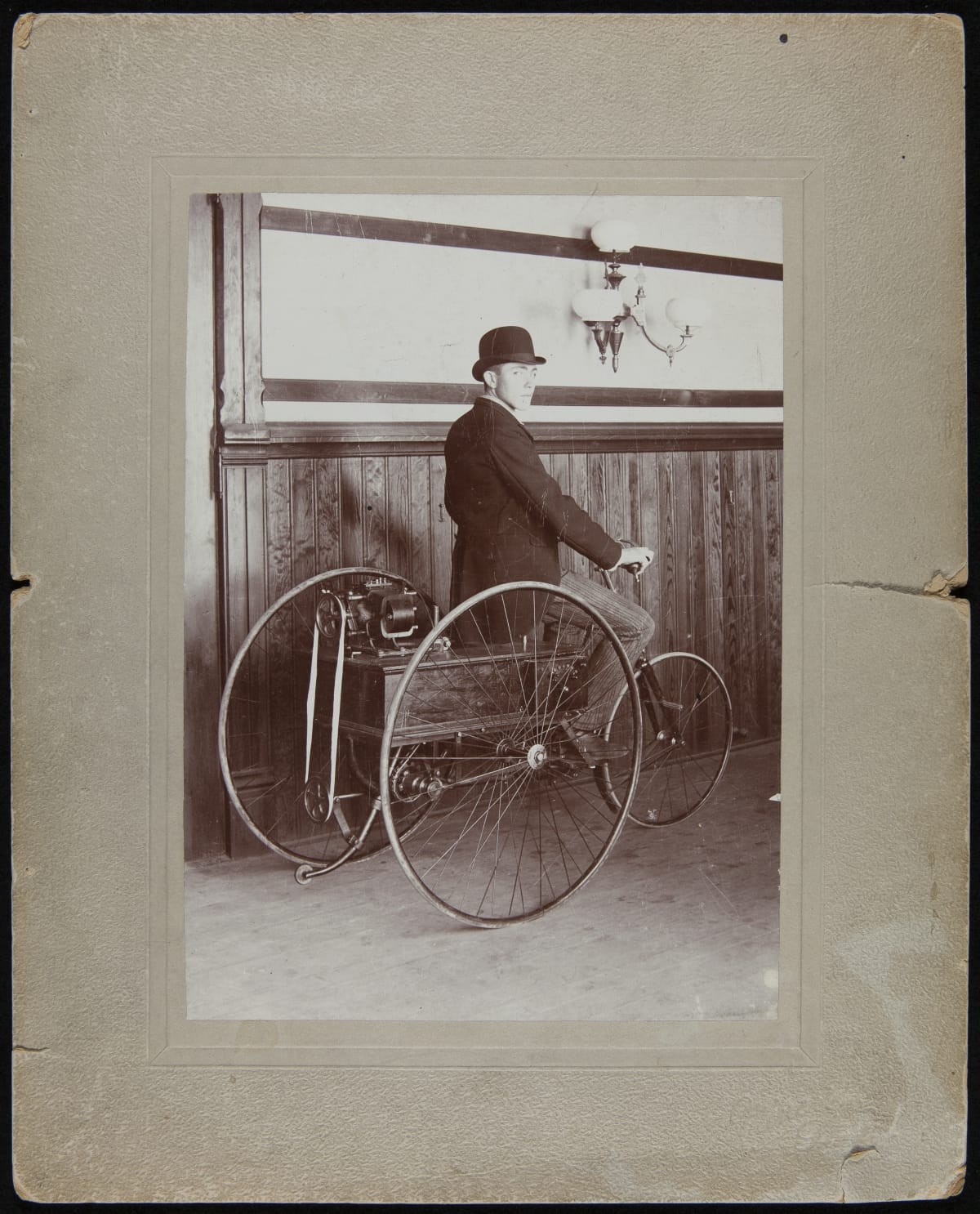
- M. M. M. Slattery's Electric Tricycle, circa 1910 - Marmaduke Slattery, chief electrician at the Fort Wayne Jenney Electric Light Company, had this electric tricycle built in 1889. Slattery powered his tricycle with storage batteries--probably of his own design--which reportedly could run for nine hours. Slattery died in 1892 but the vehicle must have remained in the Indiana city--this image was taken around 1910 by a Fort Wayne photographer.
- circa 1910
- Collections - Artifact
M. M. M. Slattery's Electric Tricycle, circa 1910
Marmaduke Slattery, chief electrician at the Fort Wayne Jenney Electric Light Company, had this electric tricycle built in 1889. Slattery powered his tricycle with storage batteries--probably of his own design--which reportedly could run for nine hours. Slattery died in 1892 but the vehicle must have remained in the Indiana city--this image was taken around 1910 by a Fort Wayne photographer.
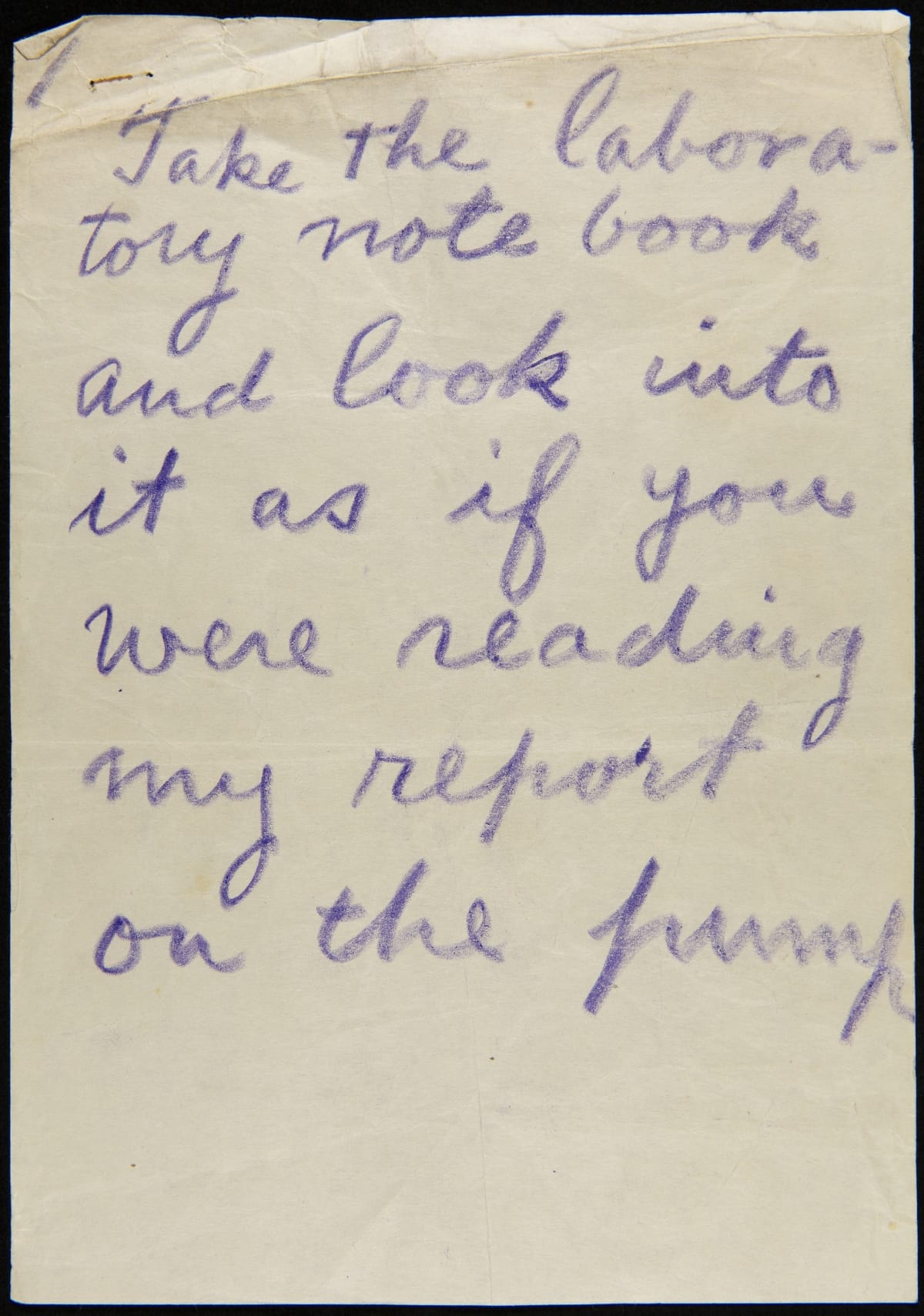
- Francis Jehl's Notes to Thomas Edison for the Incandescent Lamp Lighting during Light's Golden Jubilee, 1929 - To celebrate the 50th anniversary of the incandescent electric lamp, Henry Ford hosted the Light's Golden Jubilee event in Dearborn, Michigan. During the festivities, Thomas Edison and former assistant Francis Jehl re-enacted the 1879 test of Edison's first successful light bulb in Greenfield Village's detailed reproduction of his Menlo Park Laboratory. Jehl provided the elderly inventor with handwritten notes to help guide Edison through the re-enactment.
- October 21, 1929
- Collections - Artifact
Francis Jehl's Notes to Thomas Edison for the Incandescent Lamp Lighting during Light's Golden Jubilee, 1929
To celebrate the 50th anniversary of the incandescent electric lamp, Henry Ford hosted the Light's Golden Jubilee event in Dearborn, Michigan. During the festivities, Thomas Edison and former assistant Francis Jehl re-enacted the 1879 test of Edison's first successful light bulb in Greenfield Village's detailed reproduction of his Menlo Park Laboratory. Jehl provided the elderly inventor with handwritten notes to help guide Edison through the re-enactment.
- Cover of The Daily Graphic Newspaper for January 3, 1880, "Edison and His Electric Light" -
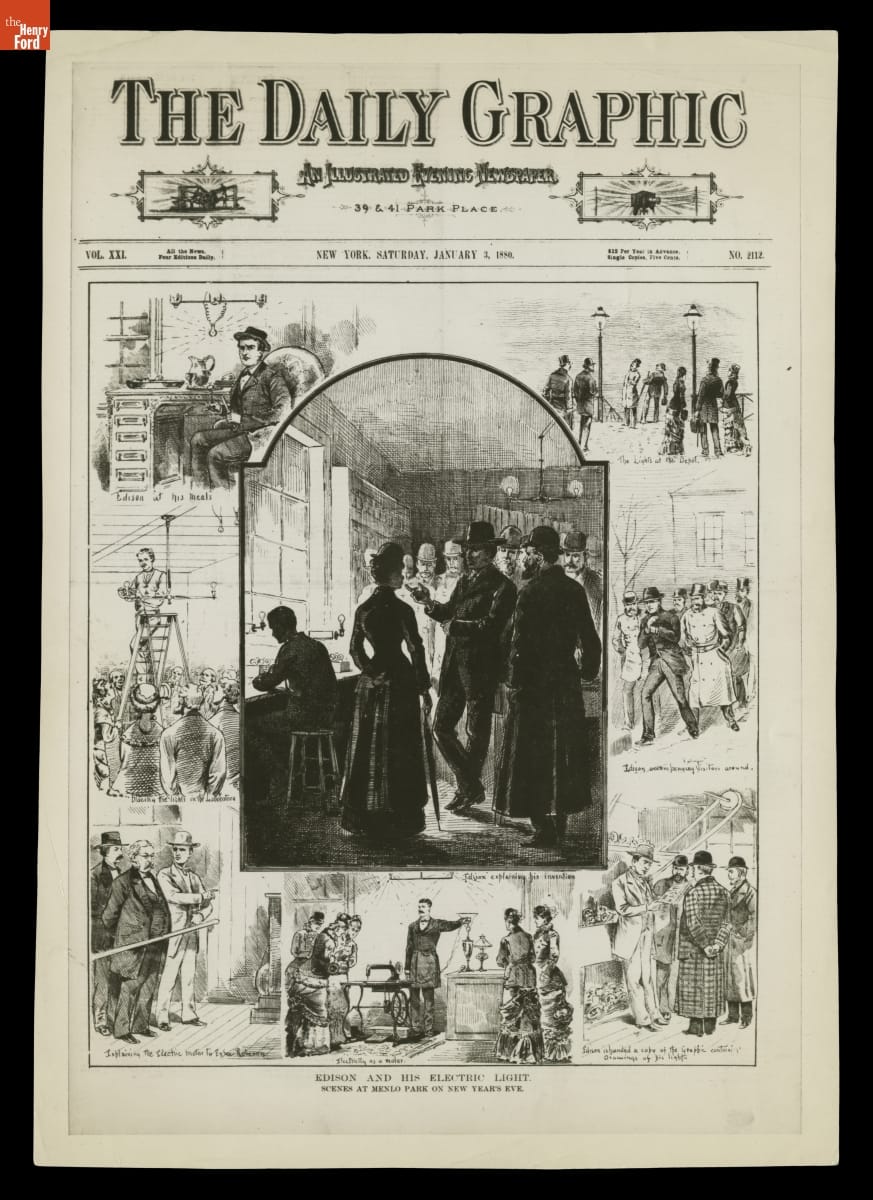
- December 31, 1879
- Collections - Artifact
Cover of The Daily Graphic Newspaper for January 3, 1880, "Edison and His Electric Light"
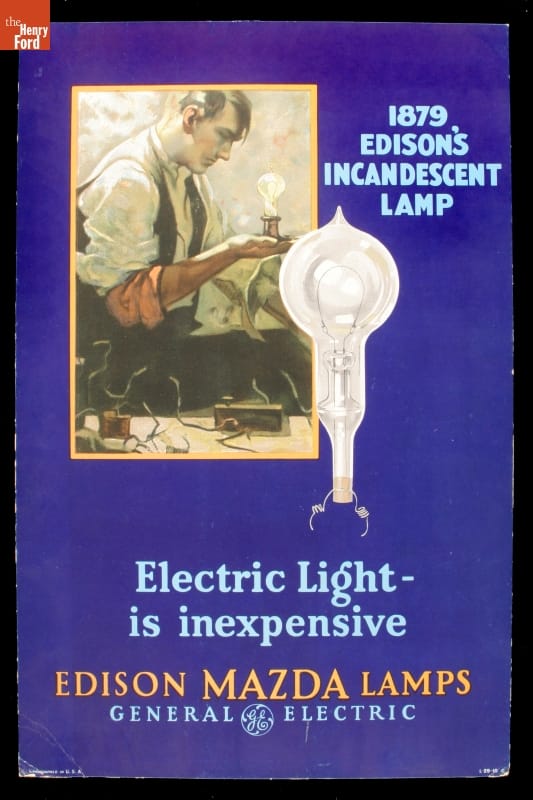
- Advertising Poster for Edison Mazda Lamps, "Electric Light is Inexpensive," circa 1925 - General Electric promoted its bright, long-lasting Edison Mazda light bulb through an advertising campaign featuring illustrations by artists including Maxfield Parrish and Norman Rockwell. Advertisements depicting the history and power of light ran in popular magazines like <em>The Saturday Evening Post</em> and <em>Ladies' Home Journal</em>. The images were also reproduced for point-of-purchase materials and posters like this one.
- circa 1925
- Collections - Artifact
Advertising Poster for Edison Mazda Lamps, "Electric Light is Inexpensive," circa 1925
General Electric promoted its bright, long-lasting Edison Mazda light bulb through an advertising campaign featuring illustrations by artists including Maxfield Parrish and Norman Rockwell. Advertisements depicting the history and power of light ran in popular magazines like The Saturday Evening Post and Ladies' Home Journal. The images were also reproduced for point-of-purchase materials and posters like this one.
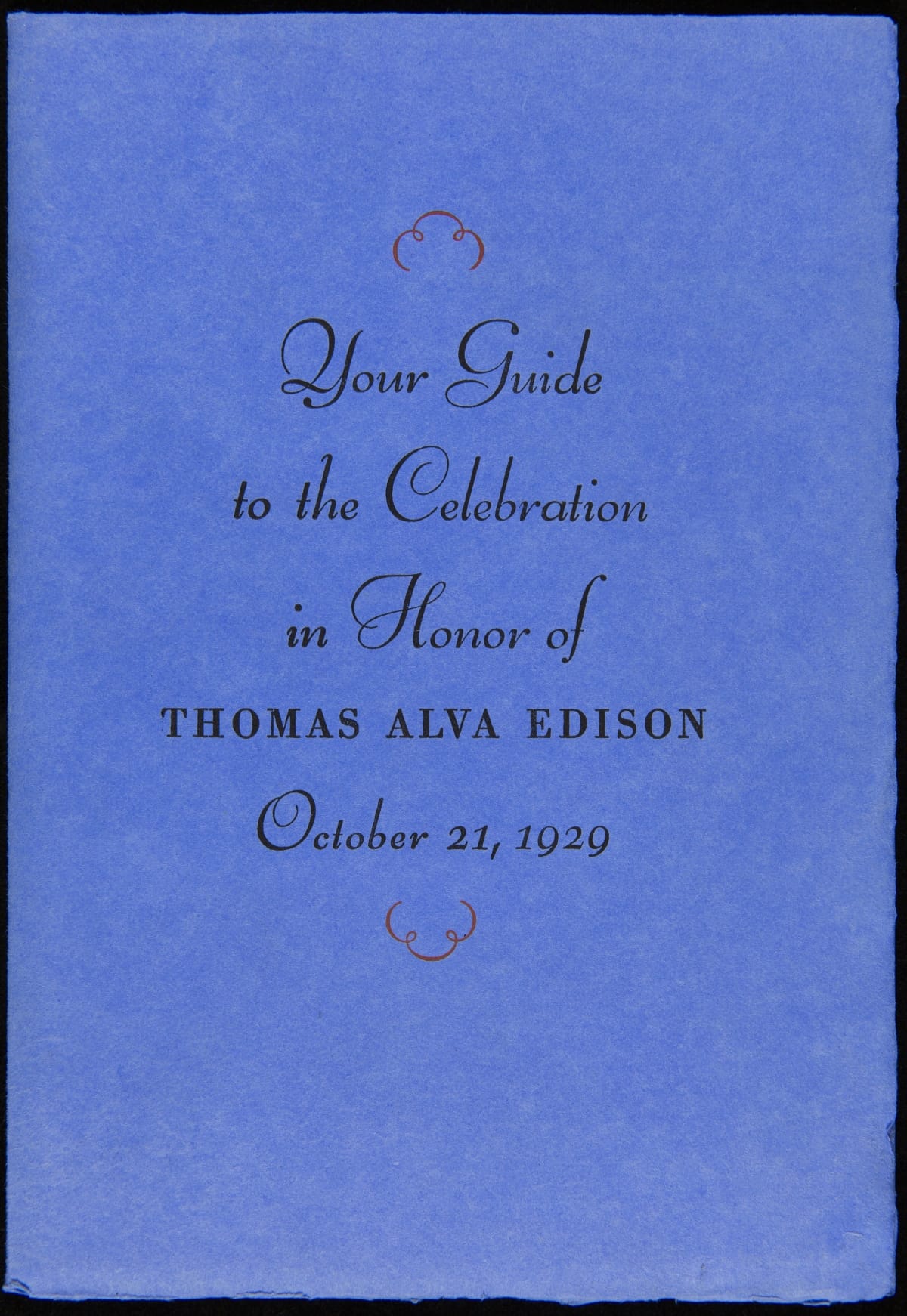
- Your Guide to the Celebration in Honor of Thomas Alva Edison, October 21, 1929 - On October 21, 1929, Henry Ford hosted an event, Light's Golden Jubilee, which celebrated the 50th anniversary of Thomas Edison's invention of a practical incandescent lamp. The event also served as the official dedication of The Edison Institute, Ford's museum complex named in honor of his friend. This detailed guide provided guests with instructions on logistics and a description of the events to be enjoyed during the day-long celebration.
- October 21, 1929
- Collections - Artifact
Your Guide to the Celebration in Honor of Thomas Alva Edison, October 21, 1929
On October 21, 1929, Henry Ford hosted an event, Light's Golden Jubilee, which celebrated the 50th anniversary of Thomas Edison's invention of a practical incandescent lamp. The event also served as the official dedication of The Edison Institute, Ford's museum complex named in honor of his friend. This detailed guide provided guests with instructions on logistics and a description of the events to be enjoyed during the day-long celebration.
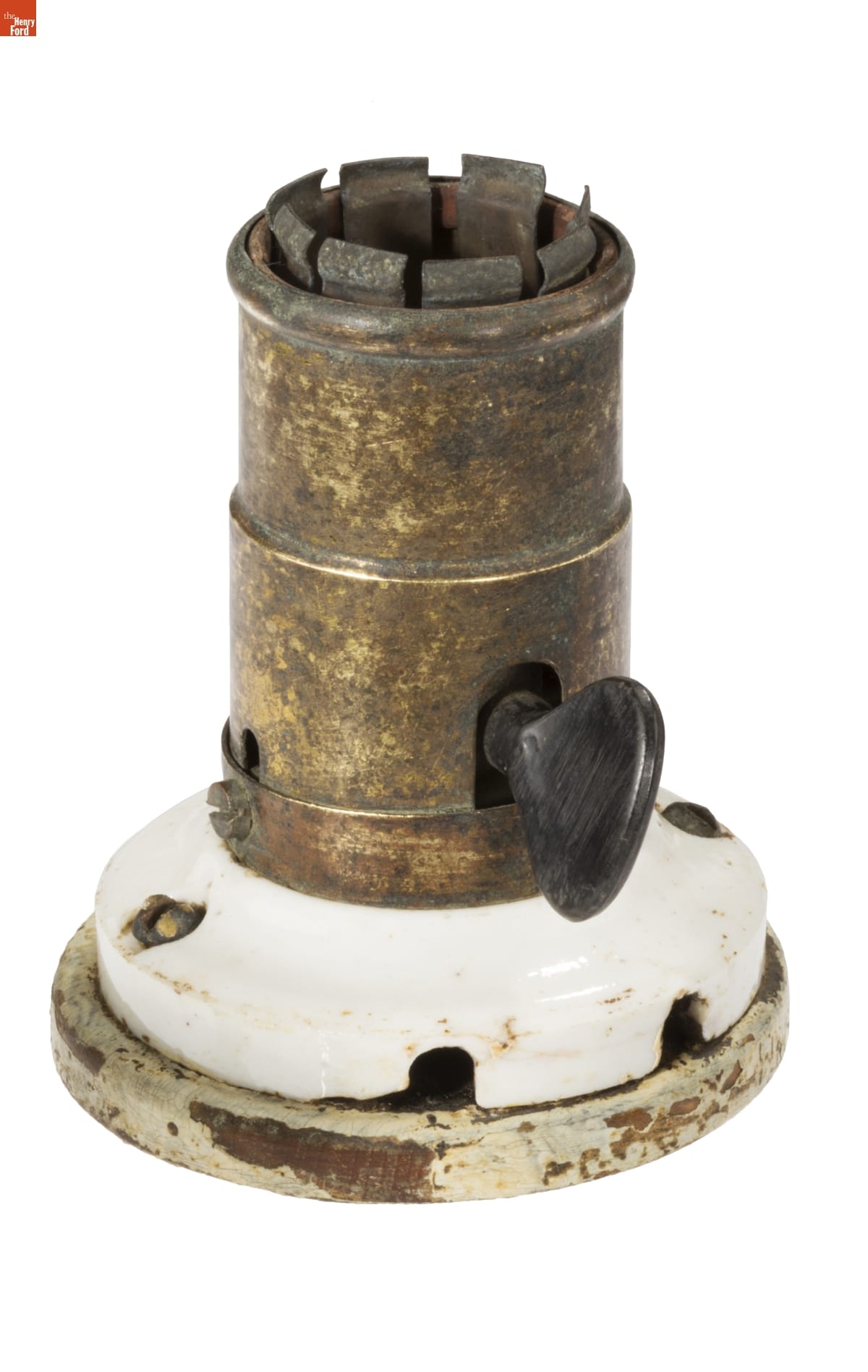
- Key Socket - A light socket provides a secure connection between an incandescent electric lamp and the electrical circuit. In the late 19th century, companies created lamp bulb bases with unique styles and sizes which would only fit sockets that they made. By 1910 the Edison screw-type base had become so popular it was virtually an industry standard, and consumers no longer had to buy lamps and sockets from the same manufacturer.
- Collections - Artifact
Key Socket
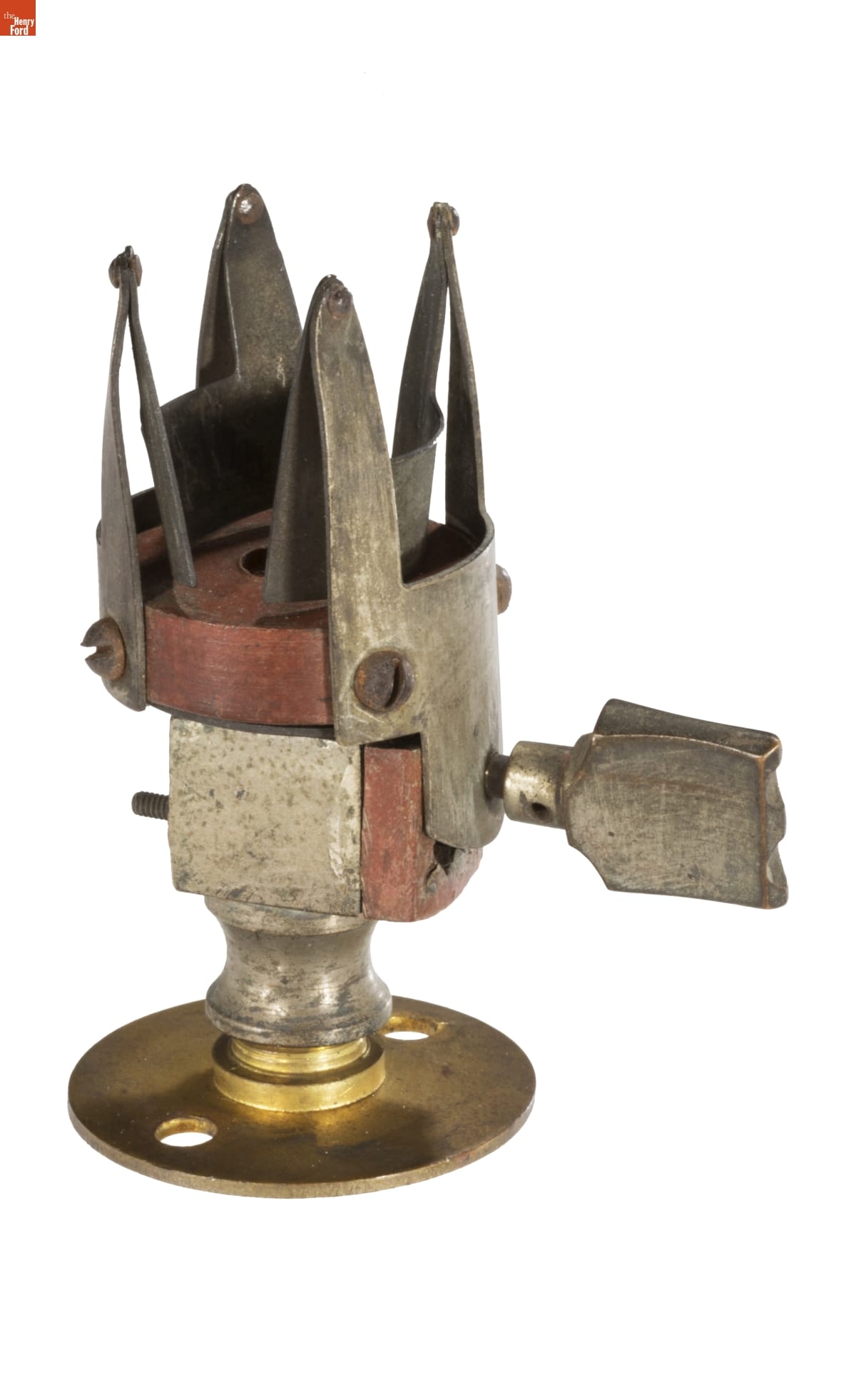
A light socket provides a secure connection between an incandescent electric lamp and the electrical circuit. In the late 19th century, companies created lamp bulb bases with unique styles and sizes which would only fit sockets that they made. By 1910 the Edison screw-type base had become so popular it was virtually an industry standard, and consumers no longer had to buy lamps and sockets from the same manufacturer.
- Key Socket - A light socket provides a secure connection between an incandescent electric lamp and the electrical circuit. In the late 19th century, companies created lamp bulb bases with unique styles and sizes which would only fit sockets that they made. By 1910 the Edison screw-type base had become so popular it was virtually an industry standard, and consumers no longer had to buy lamps and sockets from the same manufacturer.
- Collections - Artifact
Key Socket
A light socket provides a secure connection between an incandescent electric lamp and the electrical circuit. In the late 19th century, companies created lamp bulb bases with unique styles and sizes which would only fit sockets that they made. By 1910 the Edison screw-type base had become so popular it was virtually an industry standard, and consumers no longer had to buy lamps and sockets from the same manufacturer.
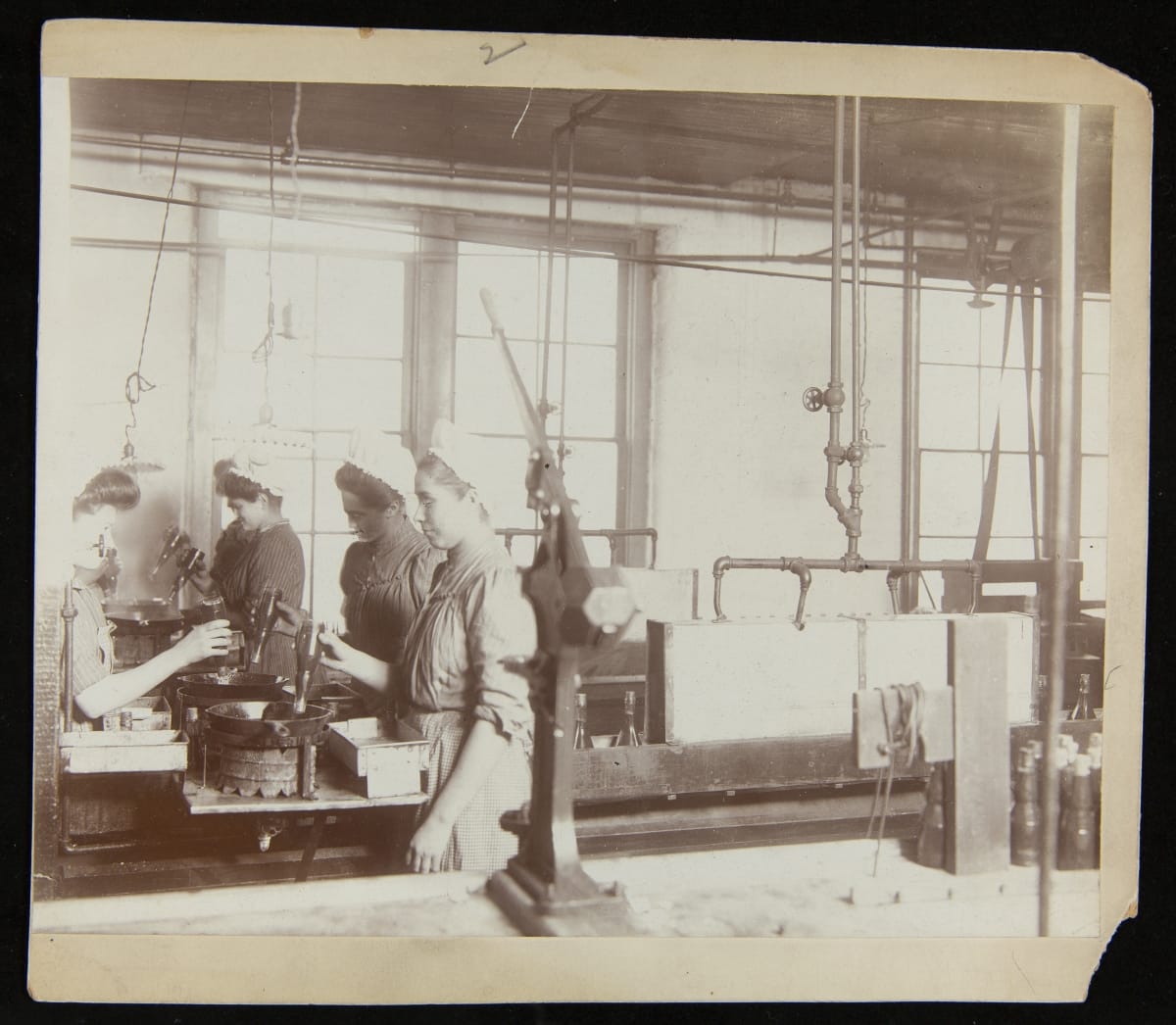
- Employees in the Ketchup Department, H. J. Heinz Company, Pittsburgh, Pennsylvania, circa 1910 - Before complete mechanization of the manufacturing process, many tasks at the Heinz factory were done by hand. The H. J. Heinz Company documented the many departments of the manufacturing process through photographs. This photograph shows employees working in the Ketchup Department.
- circa 1910
- Collections - Artifact
Employees in the Ketchup Department, H. J. Heinz Company, Pittsburgh, Pennsylvania, circa 1910
Before complete mechanization of the manufacturing process, many tasks at the Heinz factory were done by hand. The H. J. Heinz Company documented the many departments of the manufacturing process through photographs. This photograph shows employees working in the Ketchup Department.