
Search
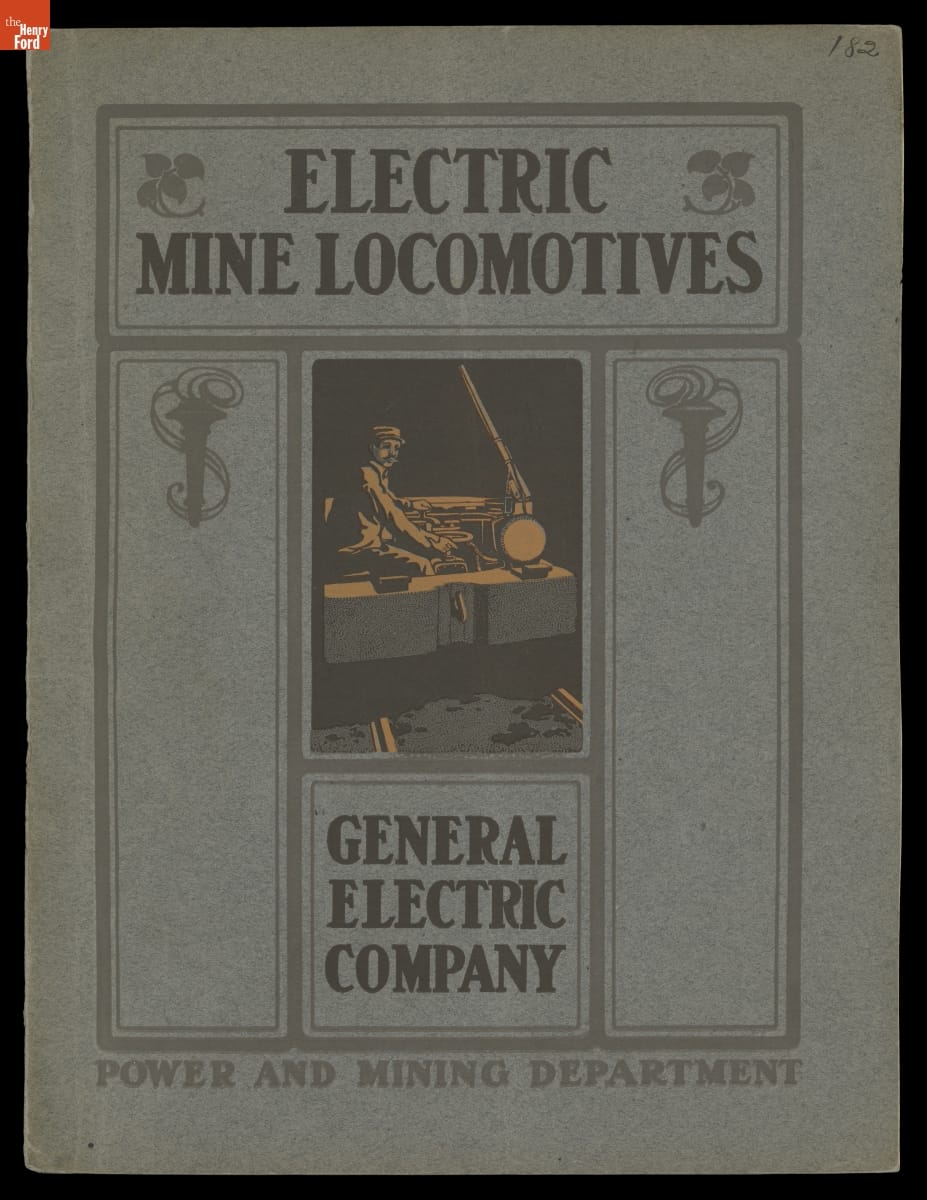
- General Electric Company Catalog, "Electric Mine Locomotives," 1904 - At the turn of the 20th century, General Electric manufactured several models of electric locomotives for use in underground mines -- where smoke and soot from steam locomotives was dangerous and impractical. These small mine locomotives collected electricity from overhead lines or third rails that ran alongside the track. GE also built larger electric locomotives for use with conventional railcars aboveground.
- 1904
- Collections - Artifact
General Electric Company Catalog, "Electric Mine Locomotives," 1904
At the turn of the 20th century, General Electric manufactured several models of electric locomotives for use in underground mines -- where smoke and soot from steam locomotives was dangerous and impractical. These small mine locomotives collected electricity from overhead lines or third rails that ran alongside the track. GE also built larger electric locomotives for use with conventional railcars aboveground.
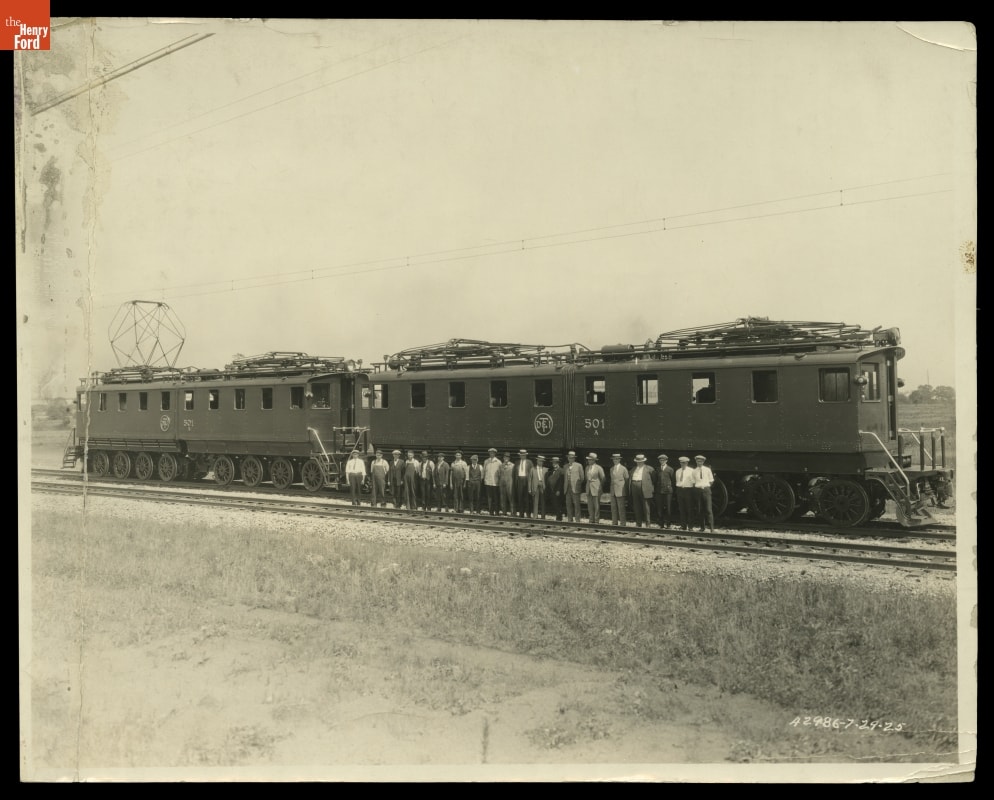
- Detroit, Toledo & Ironton Railroad Employees with Electric Locomotives, July 1925 - Under Henry Ford's ownership, the Detroit, Toledo & Ironton Railroad built a 15-mile branch from its mainline at Flat Rock, Michigan, to the Ford Rouge plant in Dearborn. Electricity generated at the Rouge powered the line via overhead wires. Ford's Highland Park plant built two electric locomotives for the DT&I in 1925-1926. Together, the two locomotives produced around 3,800 horsepower.
- July 29, 1925
- Collections - Artifact
Detroit, Toledo & Ironton Railroad Employees with Electric Locomotives, July 1925
Under Henry Ford's ownership, the Detroit, Toledo & Ironton Railroad built a 15-mile branch from its mainline at Flat Rock, Michigan, to the Ford Rouge plant in Dearborn. Electricity generated at the Rouge powered the line via overhead wires. Ford's Highland Park plant built two electric locomotives for the DT&I in 1925-1926. Together, the two locomotives produced around 3,800 horsepower.
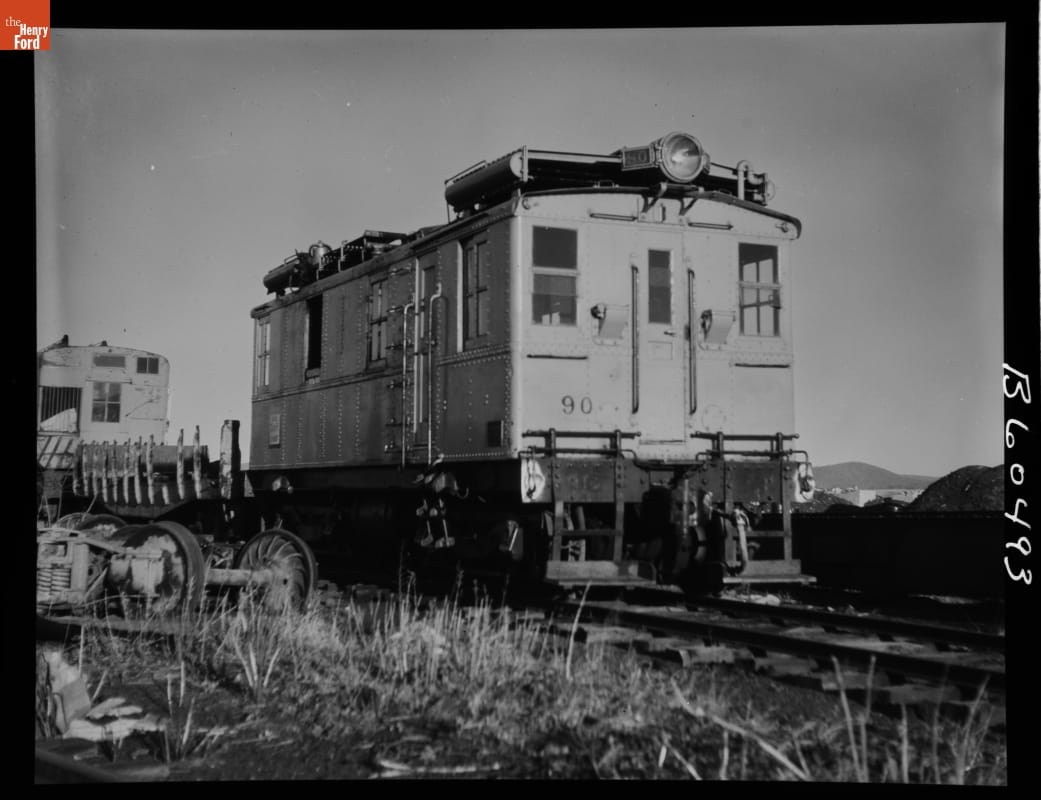
- Ingersoll-Rand's Diesel-Electric Locomotive #90, Phillipsburg, New Jersey, March 1970 - Ingersoll-Rand, in collaboration with General Electric and American Locomotive Company, built diesel-electric locomotive #90 in 1926. Ingersoll-Rand used the locomotive in the railyard at its Phillipsburg, New Jersey, plant for some 40 years. Diesel-electric power proved more efficient and cost-effective than steam. Donated to The Henry Ford in 1970, the locomotive received a cosmetic restoration in 1983.
- March 01, 1970
- Collections - Artifact
Ingersoll-Rand's Diesel-Electric Locomotive #90, Phillipsburg, New Jersey, March 1970
Ingersoll-Rand, in collaboration with General Electric and American Locomotive Company, built diesel-electric locomotive #90 in 1926. Ingersoll-Rand used the locomotive in the railyard at its Phillipsburg, New Jersey, plant for some 40 years. Diesel-electric power proved more efficient and cost-effective than steam. Donated to The Henry Ford in 1970, the locomotive received a cosmetic restoration in 1983.
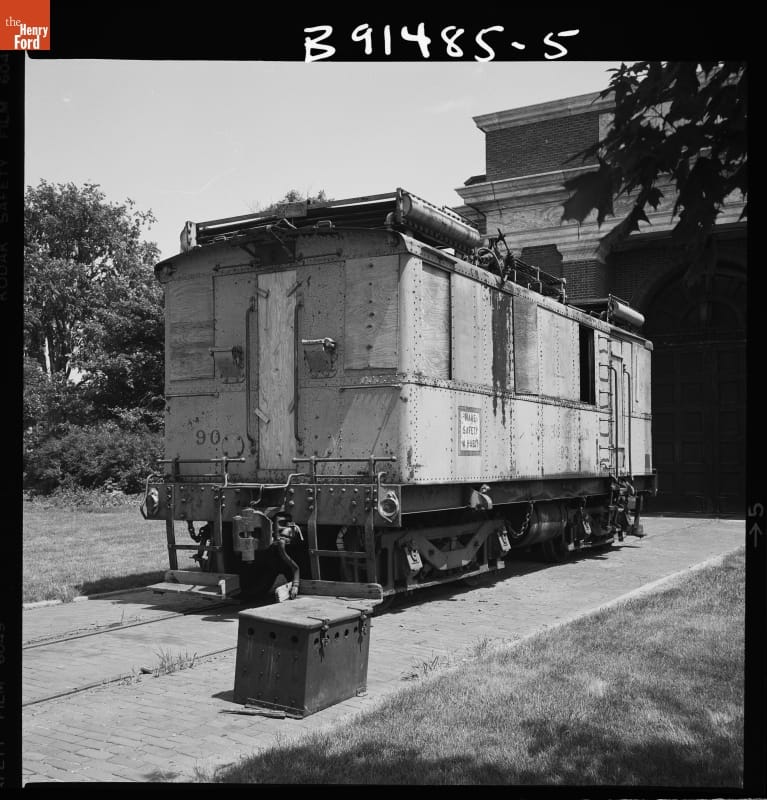
- Ingersoll-Rand Diesel-Electric Locomotive #90 Before Restoration at Henry Ford Museum, 1982 - Ingersoll-Rand, in collaboration with General Electric and American Locomotive Company, built diesel-electric locomotive #90 in 1926. Ingersoll-Rand used the locomotive in the railyard at its Phillipsburg, New Jersey, plant for some 40 years. Diesel-electric power proved more efficient and cost-effective than steam. Donated to The Henry Ford in 1970, the locomotive received a cosmetic restoration in 1983.
- 1982
- Collections - Artifact
Ingersoll-Rand Diesel-Electric Locomotive #90 Before Restoration at Henry Ford Museum, 1982
Ingersoll-Rand, in collaboration with General Electric and American Locomotive Company, built diesel-electric locomotive #90 in 1926. Ingersoll-Rand used the locomotive in the railyard at its Phillipsburg, New Jersey, plant for some 40 years. Diesel-electric power proved more efficient and cost-effective than steam. Donated to The Henry Ford in 1970, the locomotive received a cosmetic restoration in 1983.
- Ingersoll-Rand Diesel-Electric Locomotive #90 Before Restoration at Henry Ford Museum, 1982 - Ingersoll-Rand, in collaboration with General Electric and American Locomotive Company, built diesel-electric locomotive #90 in 1926. Ingersoll-Rand used the locomotive in the railyard at its Phillipsburg, New Jersey, plant for some 40 years. Diesel-electric power proved more efficient and cost-effective than steam. Donated to The Henry Ford in 1970, the locomotive received a cosmetic restoration in 1983.
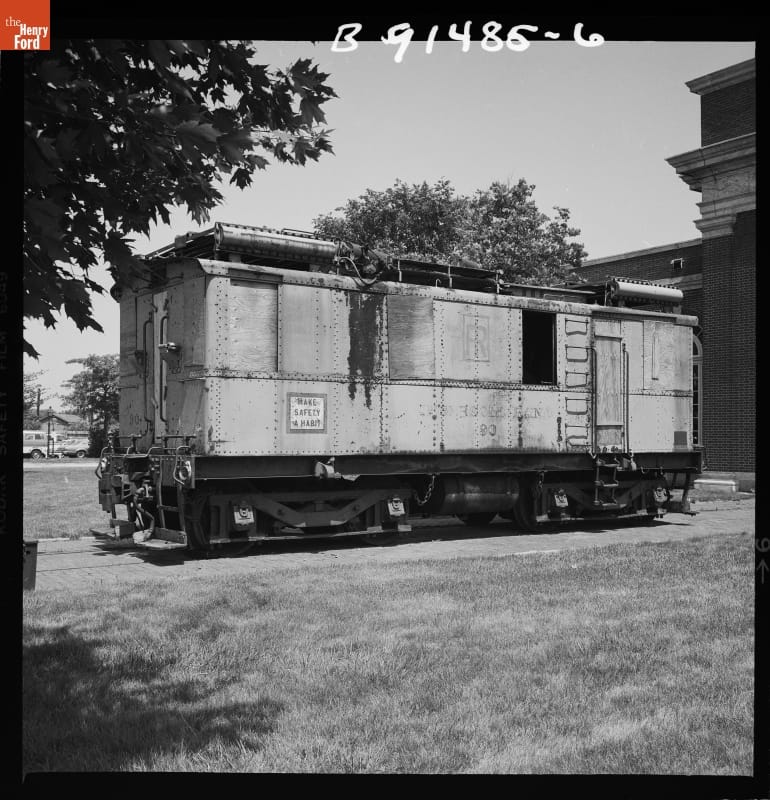
- 1982
- Collections - Artifact
Ingersoll-Rand Diesel-Electric Locomotive #90 Before Restoration at Henry Ford Museum, 1982
Ingersoll-Rand, in collaboration with General Electric and American Locomotive Company, built diesel-electric locomotive #90 in 1926. Ingersoll-Rand used the locomotive in the railyard at its Phillipsburg, New Jersey, plant for some 40 years. Diesel-electric power proved more efficient and cost-effective than steam. Donated to The Henry Ford in 1970, the locomotive received a cosmetic restoration in 1983.
- Ingersoll-Rand Diesel-Electric Locomotive #90 Before Restoration at Henry Ford Museum, 1982 - Ingersoll-Rand, in collaboration with General Electric and American Locomotive Company, built diesel-electric locomotive #90 in 1926. Ingersoll-Rand used the locomotive in the railyard at its Phillipsburg, New Jersey, plant for some 40 years. Diesel-electric power proved more efficient and cost-effective than steam. Donated to The Henry Ford in 1970, the locomotive received a cosmetic restoration in 1983.
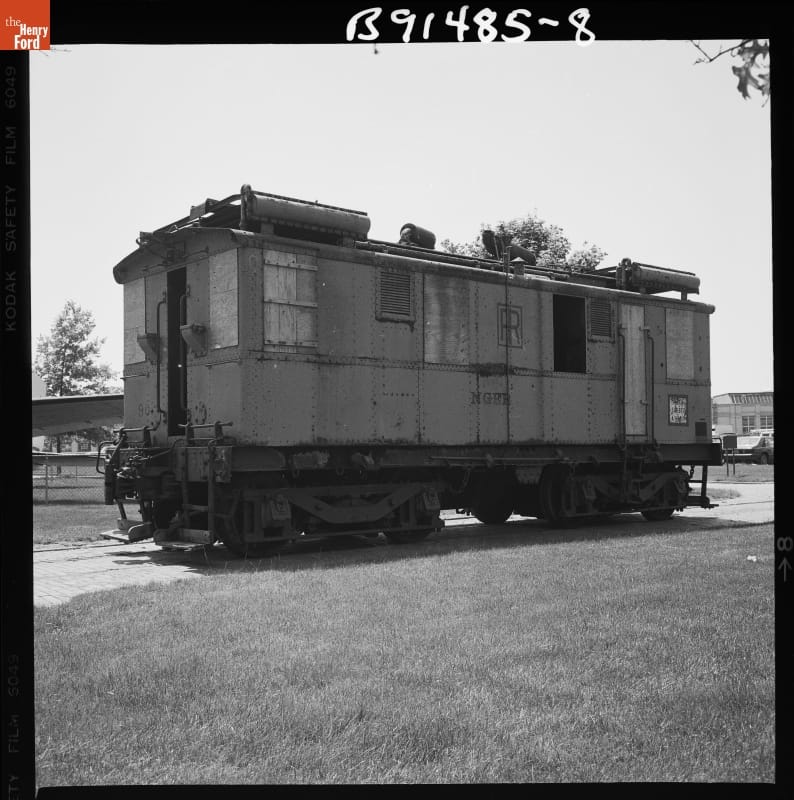
- 1982
- Collections - Artifact
Ingersoll-Rand Diesel-Electric Locomotive #90 Before Restoration at Henry Ford Museum, 1982
Ingersoll-Rand, in collaboration with General Electric and American Locomotive Company, built diesel-electric locomotive #90 in 1926. Ingersoll-Rand used the locomotive in the railyard at its Phillipsburg, New Jersey, plant for some 40 years. Diesel-electric power proved more efficient and cost-effective than steam. Donated to The Henry Ford in 1970, the locomotive received a cosmetic restoration in 1983.
- Restored Ingersoll-Rand Diesel-Electric Locomotive #90 in Greenfield Village, January 3, 1990 - Ingersoll-Rand, in collaboration with General Electric and American Locomotive Company, built diesel-electric locomotive #90 in 1926. Ingersoll-Rand used the locomotive in the railyard at its Phillipsburg, New Jersey, plant for some 40 years. Diesel-electric power proved more efficient and cost-effective than steam. Donated to The Henry Ford in 1970, the locomotive received a cosmetic restoration in 1983.
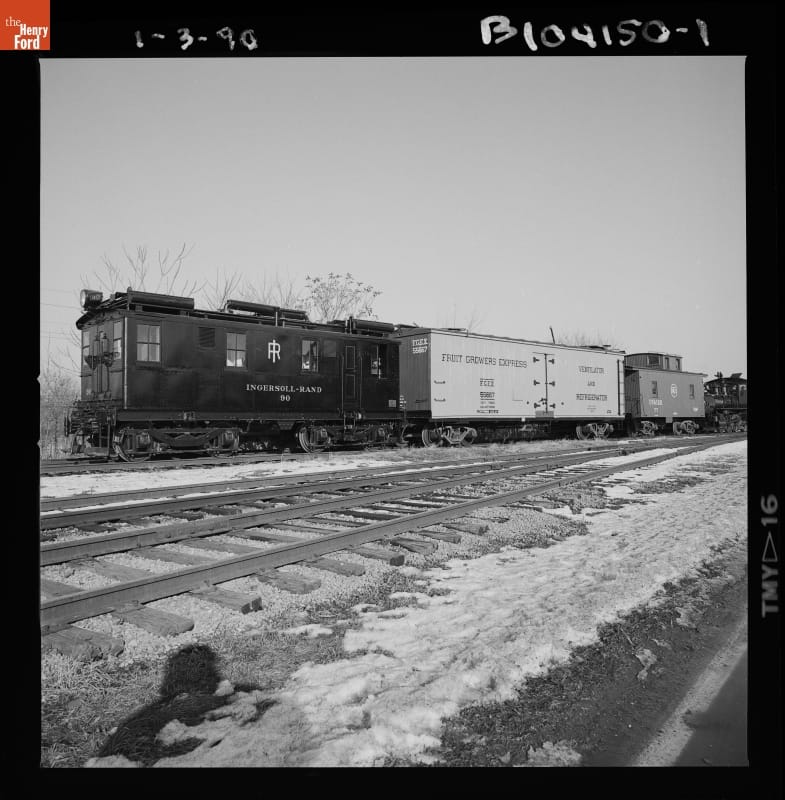
- January 03, 1990
- Collections - Artifact
Restored Ingersoll-Rand Diesel-Electric Locomotive #90 in Greenfield Village, January 3, 1990
Ingersoll-Rand, in collaboration with General Electric and American Locomotive Company, built diesel-electric locomotive #90 in 1926. Ingersoll-Rand used the locomotive in the railyard at its Phillipsburg, New Jersey, plant for some 40 years. Diesel-electric power proved more efficient and cost-effective than steam. Donated to The Henry Ford in 1970, the locomotive received a cosmetic restoration in 1983.
- M. William Grant and Randy Mason with Restored Ingersoll-Rand Diesel-Electric Locomotive No. 90 in Henry Ford Museum, January 1985 - Ingersoll-Rand, in collaboration with General Electric and American Locomotive Company, built diesel-electric locomotive #90 in 1926. Ingersoll-Rand used the locomotive in the railyard at its Phillipsburg, New Jersey, plant for some 40 years. Diesel-electric power proved more efficient and cost-effective than steam. Donated to The Henry Ford in 1970, the locomotive received a cosmetic restoration in 1983.
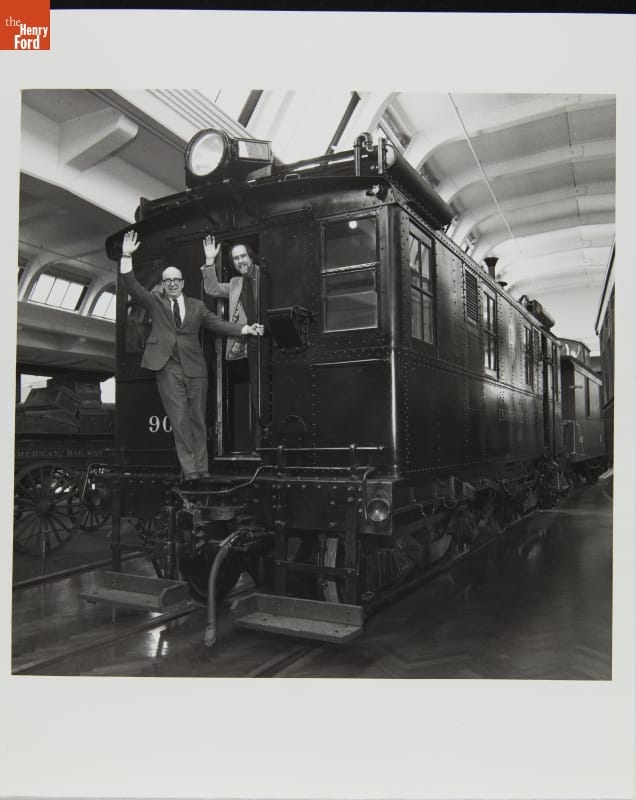
- January 01, 1985
- Collections - Artifact
M. William Grant and Randy Mason with Restored Ingersoll-Rand Diesel-Electric Locomotive No. 90 in Henry Ford Museum, January 1985
Ingersoll-Rand, in collaboration with General Electric and American Locomotive Company, built diesel-electric locomotive #90 in 1926. Ingersoll-Rand used the locomotive in the railyard at its Phillipsburg, New Jersey, plant for some 40 years. Diesel-electric power proved more efficient and cost-effective than steam. Donated to The Henry Ford in 1970, the locomotive received a cosmetic restoration in 1983.
- Ingersoll-Rand's Diesel-Electric Locomotive #90, Phillipsburg, New Jersey, March 1970 - Ingersoll-Rand, in collaboration with General Electric and American Locomotive Company, built diesel-electric locomotive #90 in 1926. Ingersoll-Rand used the locomotive in the railyard at its Phillipsburg, New Jersey, plant for some 40 years. Diesel-electric power proved more efficient and cost-effective than steam. Donated to The Henry Ford in 1970, the locomotive received a cosmetic restoration in 1983.
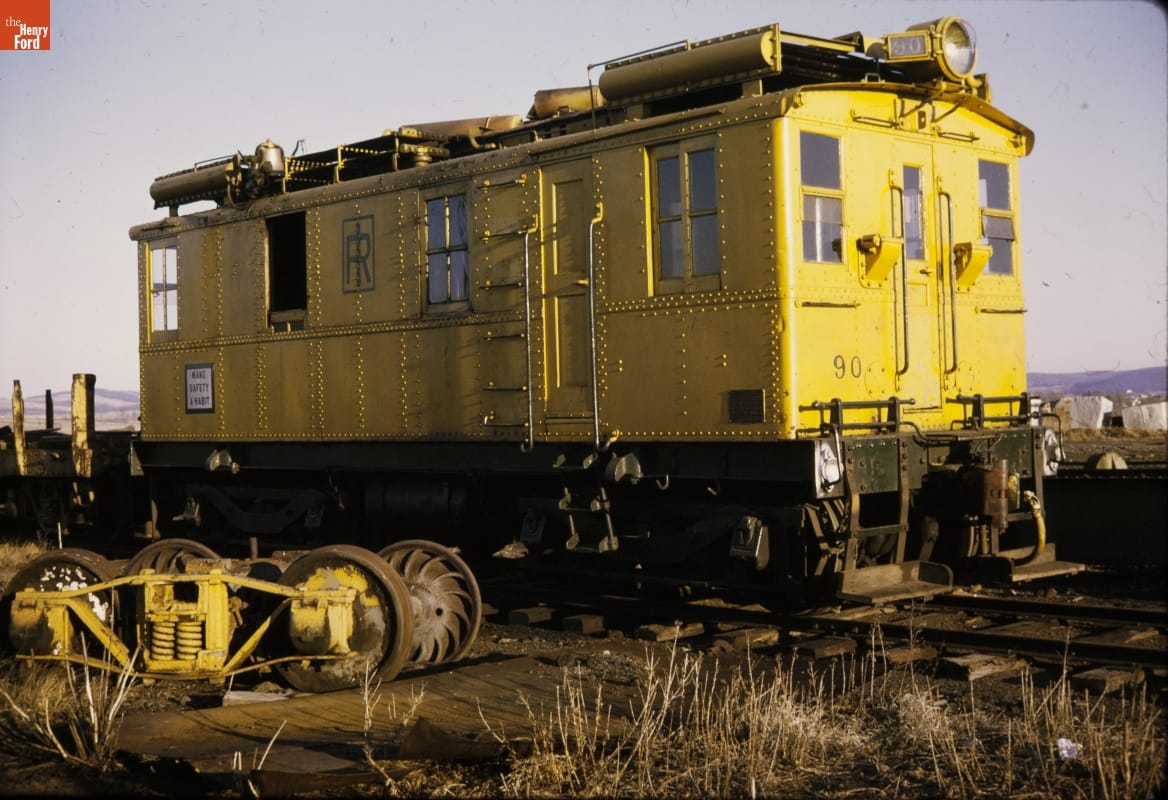
- March 01, 1970
- Collections - Artifact
Ingersoll-Rand's Diesel-Electric Locomotive #90, Phillipsburg, New Jersey, March 1970
Ingersoll-Rand, in collaboration with General Electric and American Locomotive Company, built diesel-electric locomotive #90 in 1926. Ingersoll-Rand used the locomotive in the railyard at its Phillipsburg, New Jersey, plant for some 40 years. Diesel-electric power proved more efficient and cost-effective than steam. Donated to The Henry Ford in 1970, the locomotive received a cosmetic restoration in 1983.
- Ingersoll-Rand's Diesel-Electric Locomotive #90, Phillipsburg, New Jersey, March 1970 - Ingersoll-Rand, in collaboration with General Electric and American Locomotive Company, built diesel-electric locomotive #90 in 1926. Ingersoll-Rand used the locomotive in the railyard at its Phillipsburg, New Jersey, plant for some 40 years. Diesel-electric power proved more efficient and cost-effective than steam. Donated to The Henry Ford in 1970, the locomotive received a cosmetic restoration in 1983.
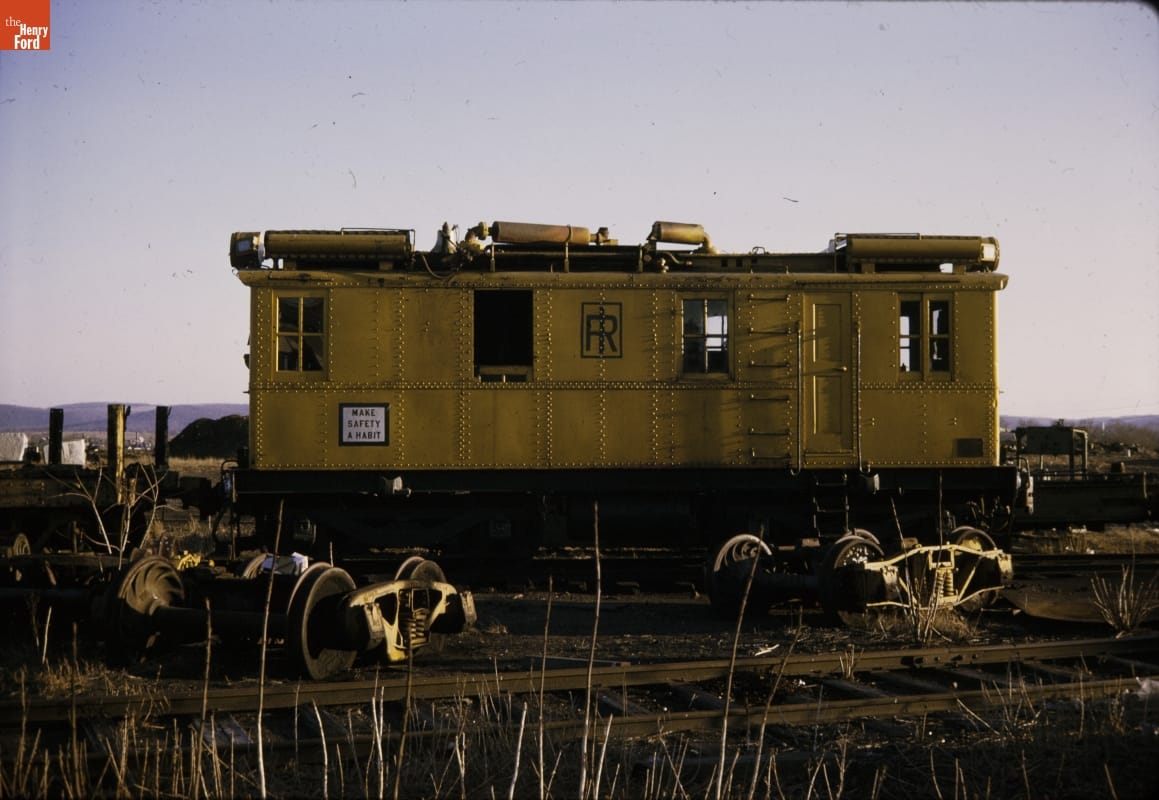
- March 01, 1970
- Collections - Artifact
Ingersoll-Rand's Diesel-Electric Locomotive #90, Phillipsburg, New Jersey, March 1970
Ingersoll-Rand, in collaboration with General Electric and American Locomotive Company, built diesel-electric locomotive #90 in 1926. Ingersoll-Rand used the locomotive in the railyard at its Phillipsburg, New Jersey, plant for some 40 years. Diesel-electric power proved more efficient and cost-effective than steam. Donated to The Henry Ford in 1970, the locomotive received a cosmetic restoration in 1983.