
Search
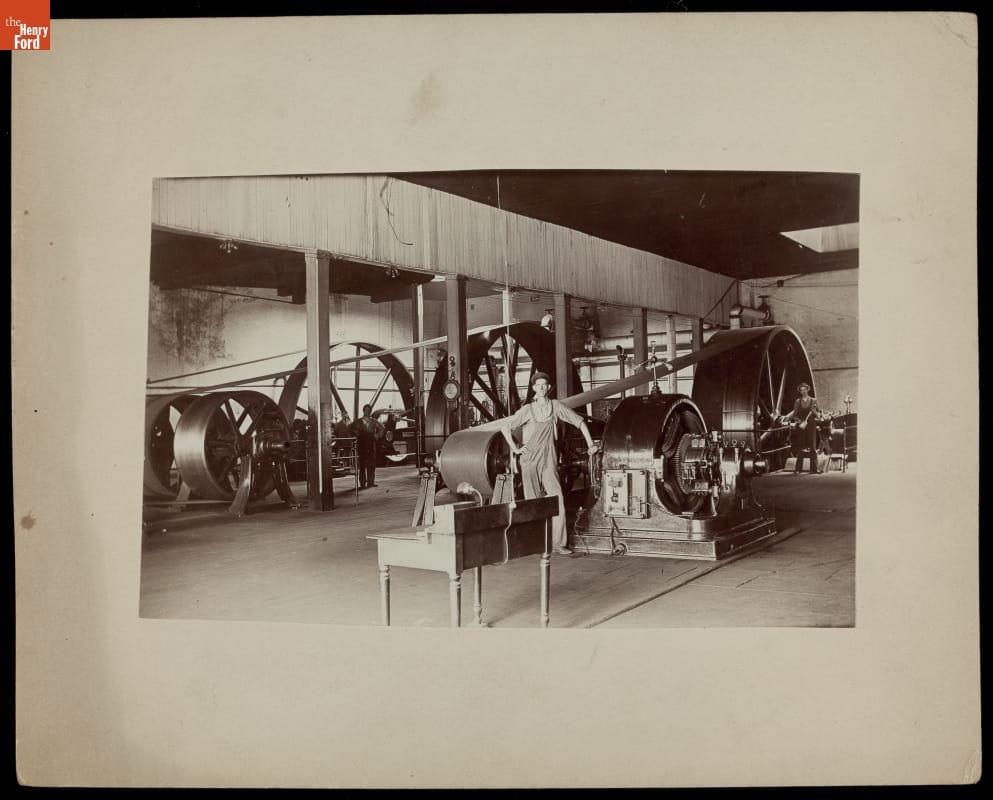
- Interior of Power House, Indianapolis Street Railway, 1899 - Established in 1864, the Indianapolis Street Railway began converting from mule power to electricity in 1890. Its first powerhouse, located at a mule barn, was supplemented by a new facility at West Washington and Brush streets in 1894. The new plant's boilers initially burned natural gas and oil, but they were converted to burn coal in 1898.
- 1899
- Collections - Artifact
Interior of Power House, Indianapolis Street Railway, 1899
Established in 1864, the Indianapolis Street Railway began converting from mule power to electricity in 1890. Its first powerhouse, located at a mule barn, was supplemented by a new facility at West Washington and Brush streets in 1894. The new plant's boilers initially burned natural gas and oil, but they were converted to burn coal in 1898.
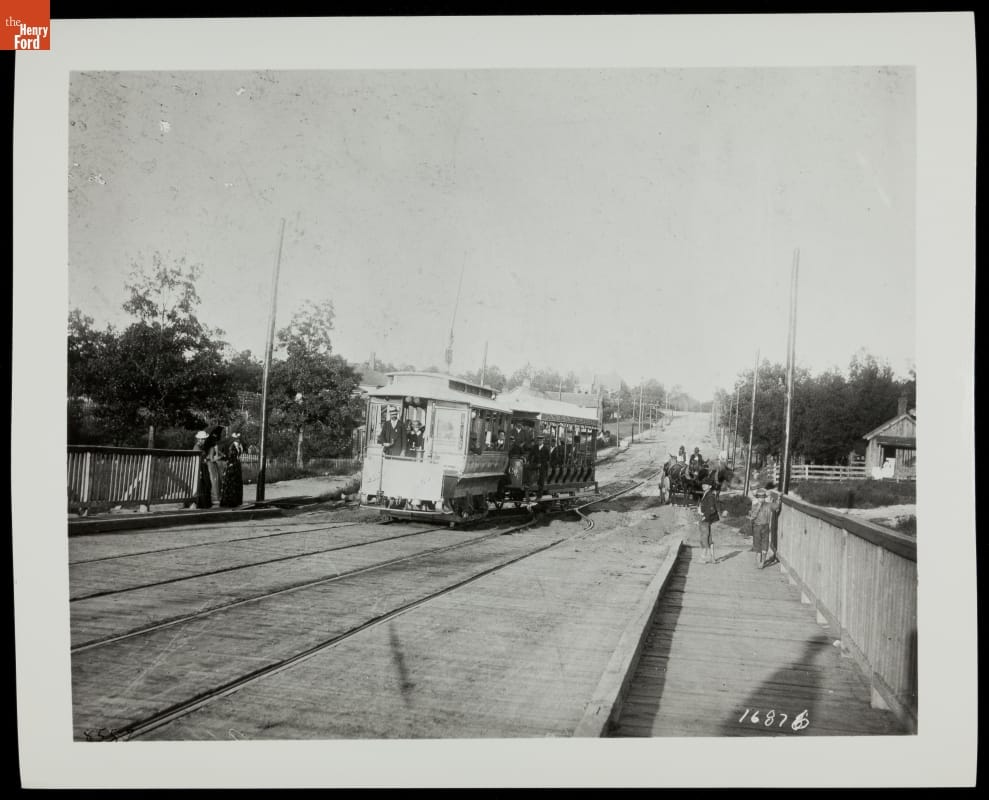
- Street Car on Atlanta & Edgewood Street Railway, Atlanta, Georgia, circa 1890 - The Atlanta and Edgewood Street Railway Company introduced Atlanta's first electric streetcars in 1889. With oak interiors and plate glass windows, they were far fancier than the city's horse-drawn cars. Unlike existing lines that provided a cheap, practical way to get around, Edgewood Avenue service offered comfortable transportation for residents of Inman Park, a planned neighborhood east of downtown.
- circa 1890
- Collections - Artifact
Street Car on Atlanta & Edgewood Street Railway, Atlanta, Georgia, circa 1890
The Atlanta and Edgewood Street Railway Company introduced Atlanta's first electric streetcars in 1889. With oak interiors and plate glass windows, they were far fancier than the city's horse-drawn cars. Unlike existing lines that provided a cheap, practical way to get around, Edgewood Avenue service offered comfortable transportation for residents of Inman Park, a planned neighborhood east of downtown.
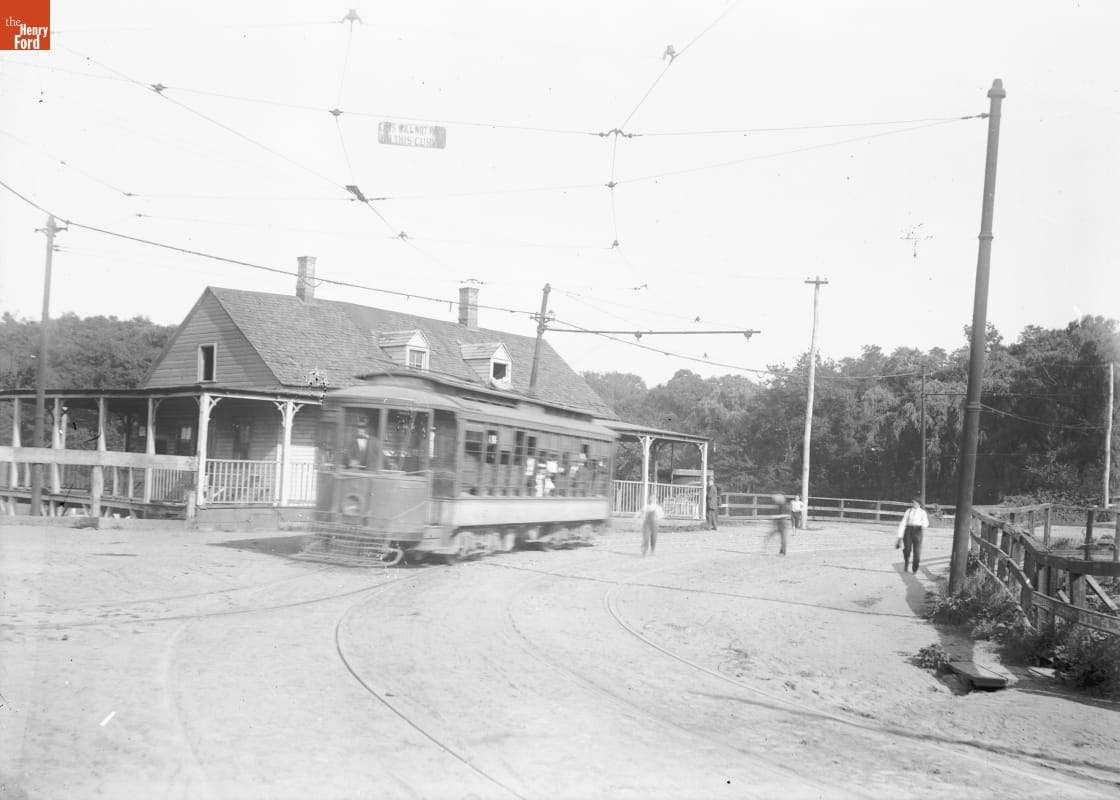
- Trolley at Far Rockaway, 1890-1915 - In 1890, Jenny Young Chandler, 25 years old and recently widowed, began working for the <EM>New York Herald</EM>. As a photojournalist and feature writer, Chandler captured life in Brooklyn, New York, and vicinity. By 1922, the time of her death, she had produced over 800 glass plate negatives. Her sensitive, insightful photographs depict people from all walks of life and the world in which they lived.
- 1890-1915
- Collections - Artifact
Trolley at Far Rockaway, 1890-1915
In 1890, Jenny Young Chandler, 25 years old and recently widowed, began working for the New York Herald. As a photojournalist and feature writer, Chandler captured life in Brooklyn, New York, and vicinity. By 1922, the time of her death, she had produced over 800 glass plate negatives. Her sensitive, insightful photographs depict people from all walks of life and the world in which they lived.
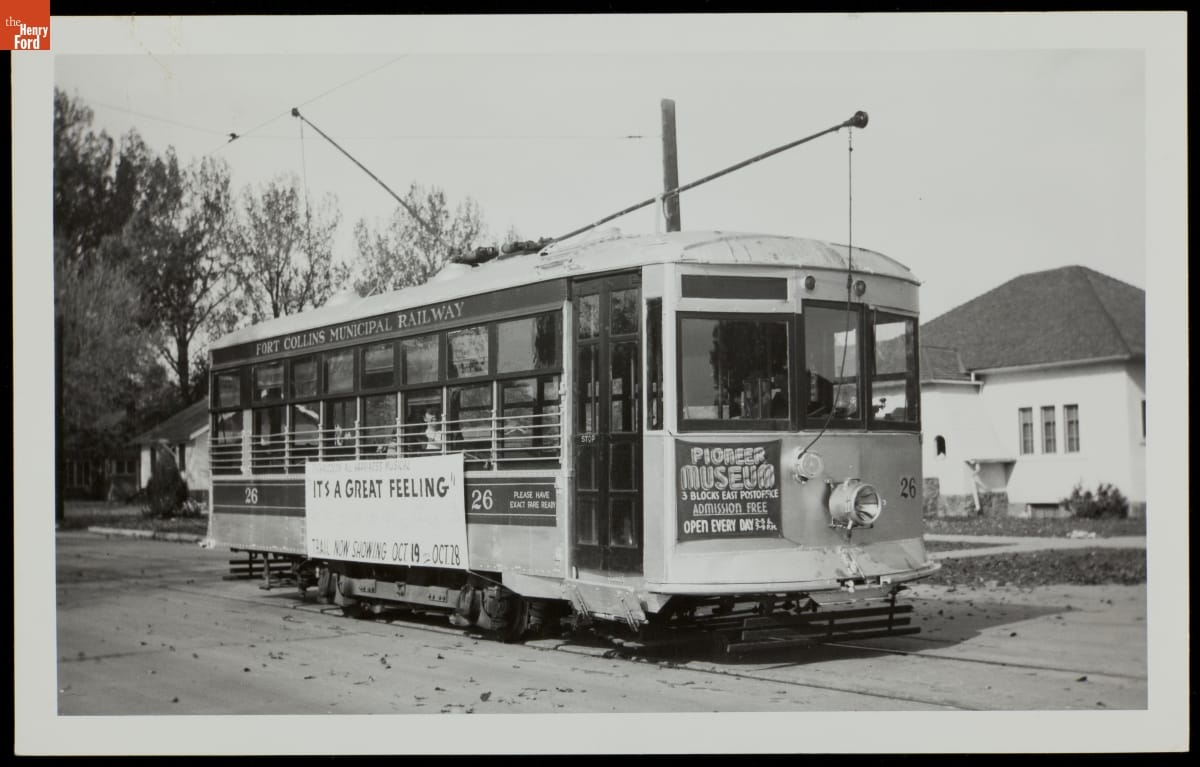
- Street Car #26, Fort Collins Municipal Railway, circa 1935 - Streetcar 26, a "Birney Safety Car," joined the Fort Collins Municipal Railway in 1924. Birneys were light, required only one operator, and featured built-in safety precautions. They worked well for the small Colorado city's transit system. Streetcar riders could travel conveniently and affordably for school, work, or pleasure--as the signs for a museum and musical on this car suggest.
- circa 1935
- Collections - Artifact
Street Car #26, Fort Collins Municipal Railway, circa 1935
Streetcar 26, a "Birney Safety Car," joined the Fort Collins Municipal Railway in 1924. Birneys were light, required only one operator, and featured built-in safety precautions. They worked well for the small Colorado city's transit system. Streetcar riders could travel conveniently and affordably for school, work, or pleasure--as the signs for a museum and musical on this car suggest.
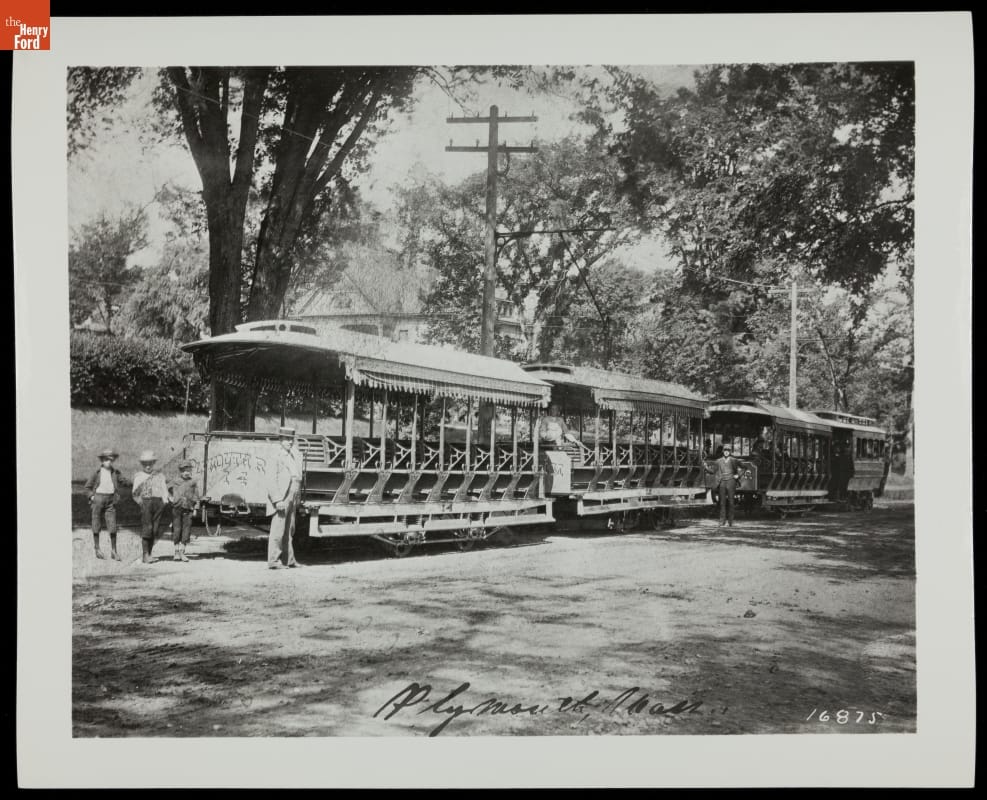
- Streetcars, Plymouth, Massachusetts, circa 1890 - Streetcars offered a convenient, practical, and affordable way to get around cities. Electric streetcars like these -- which operated in Plymouth, Massachusetts -- became common as cities built power stations in the late 1800s. They could carry more passengers and were cheaper and cleaner to operate than their horse-drawn predecessors.
- circa 1890
- Collections - Artifact
Streetcars, Plymouth, Massachusetts, circa 1890
Streetcars offered a convenient, practical, and affordable way to get around cities. Electric streetcars like these -- which operated in Plymouth, Massachusetts -- became common as cities built power stations in the late 1800s. They could carry more passengers and were cheaper and cleaner to operate than their horse-drawn predecessors.
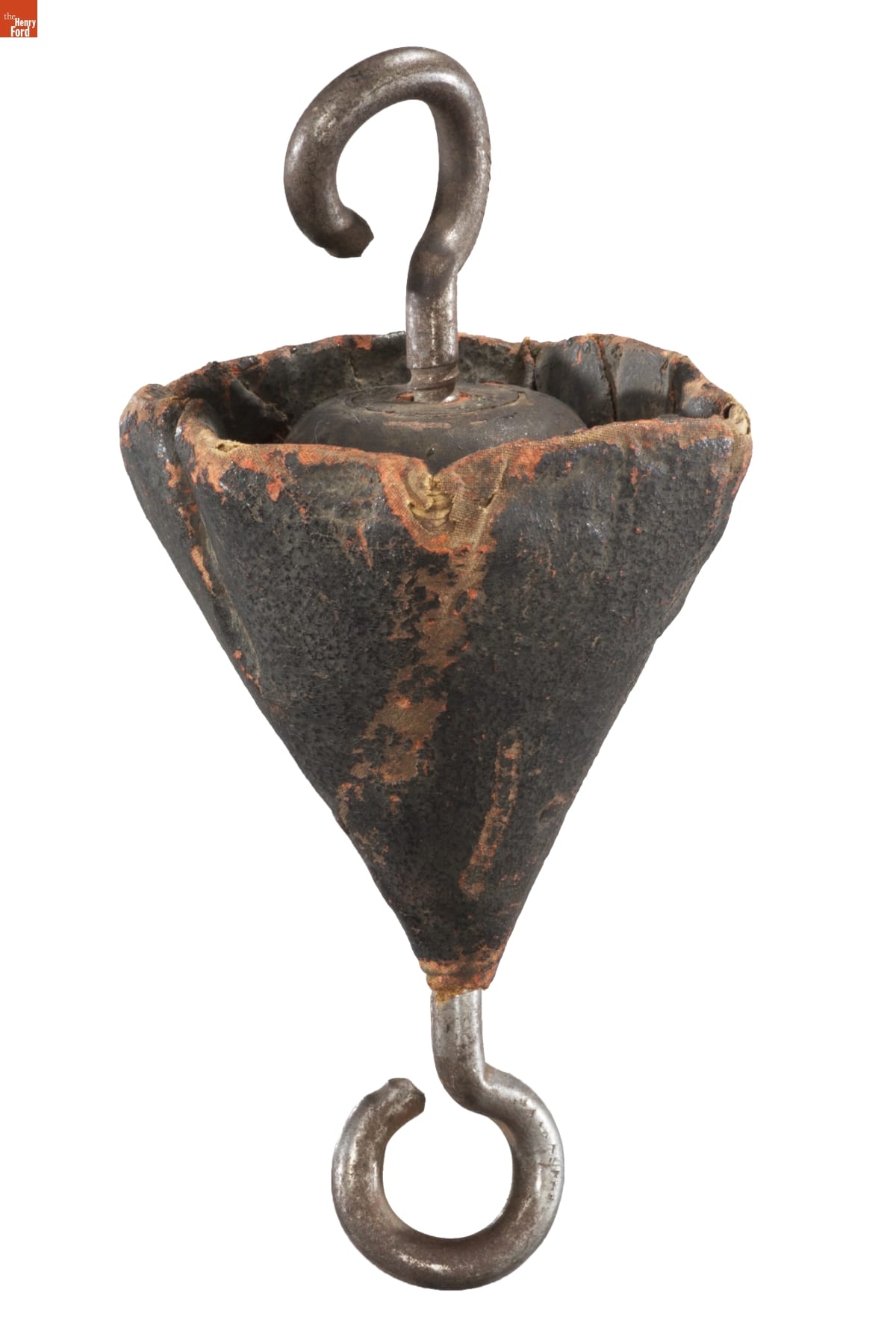
- Van Depoele Electric Manufacturing Company Trolley Line Insulator, Used in Lynn, Massachusetts,1888 - Most electric streetcars took their power from an overhead wire. A trolley wheel, at the end of a spring-loaded pole, contacted the wire and collected electric current. Insulators made from non-conductive materials -- like glass, porcelain, rubber, or wood -- isolated the electrified contact wire from its supports.
- 1888
- Collections - Artifact
Van Depoele Electric Manufacturing Company Trolley Line Insulator, Used in Lynn, Massachusetts,1888
Most electric streetcars took their power from an overhead wire. A trolley wheel, at the end of a spring-loaded pole, contacted the wire and collected electric current. Insulators made from non-conductive materials -- like glass, porcelain, rubber, or wood -- isolated the electrified contact wire from its supports.
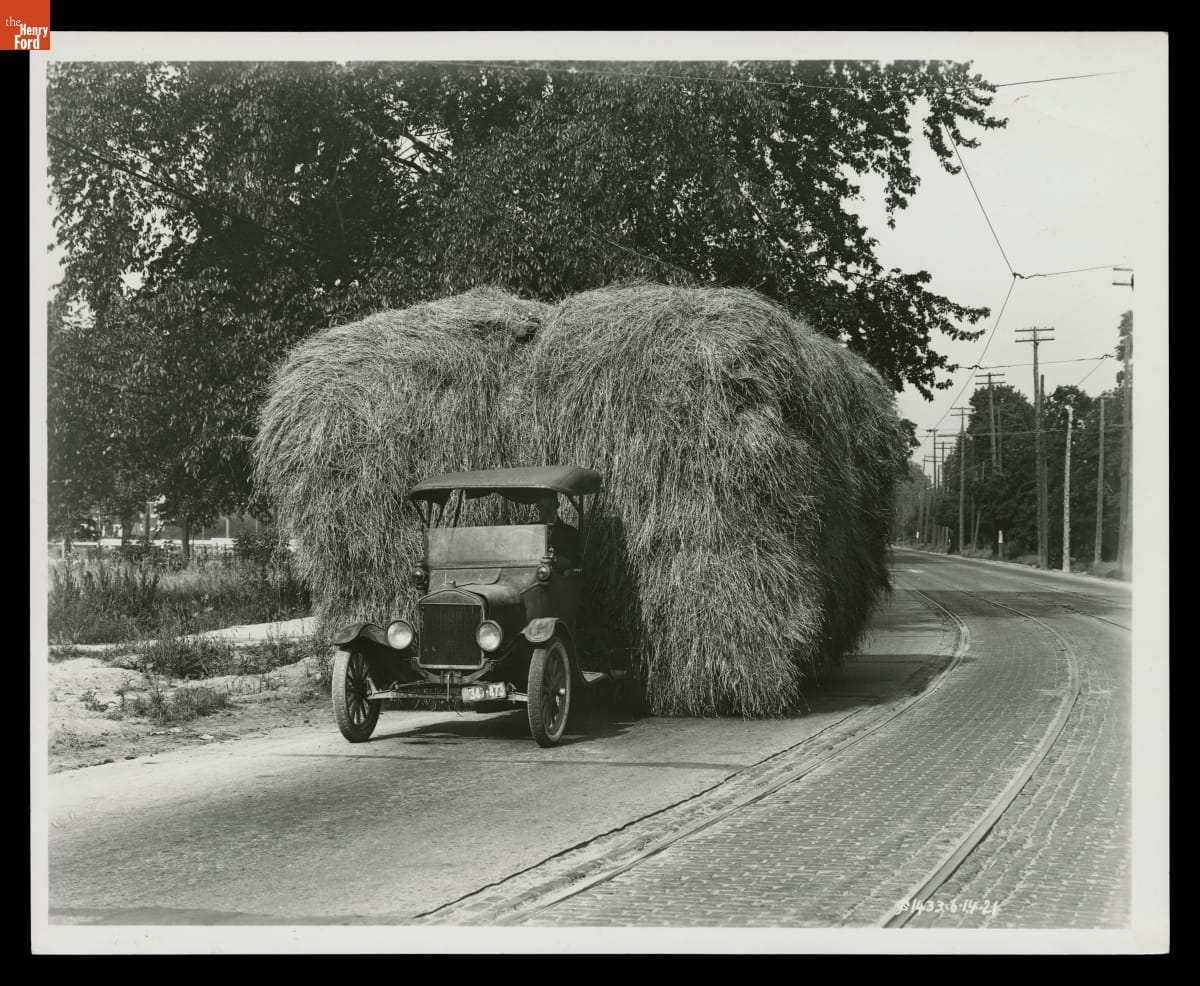
- Ford Model T Truck Hauling 8,000 Pounds of Hay, 1921 - This photograph shows a Ford Model T truck hauling a large load of hay down a paved country road. The dried fodder seems to overwhelm the small truck, yet the driver gamely travels along. Model Ts were popular for transporting harvest crops. They had earned a tough reputation among farmers who knew the vehicles could handle hard work.
- June 14, 1921
- Collections - Artifact
Ford Model T Truck Hauling 8,000 Pounds of Hay, 1921
This photograph shows a Ford Model T truck hauling a large load of hay down a paved country road. The dried fodder seems to overwhelm the small truck, yet the driver gamely travels along. Model Ts were popular for transporting harvest crops. They had earned a tough reputation among farmers who knew the vehicles could handle hard work.
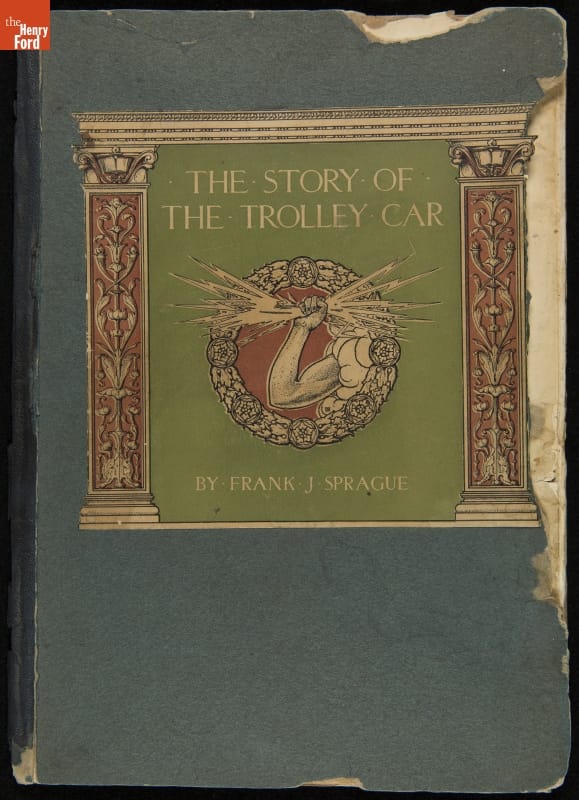
- The Story of the Trolley Car by Frank J. Sprague, 1905 - Frank Julian Sprague (1857-1934) was an inventor, engineer, and entrepreneur. Sprague, after serving in the U.S. Navy and working for Thomas Edison, developed an electric motor to power streetcars. His motor would transform public transportation. In 1887, he built the first successful, large-scale electric street railway system in Richmond, Virginia. This simply bound volume contains magazine article reprints written by Sprague about early electric railways.
- July 1905-August 1905
- Collections - Artifact
The Story of the Trolley Car by Frank J. Sprague, 1905
Frank Julian Sprague (1857-1934) was an inventor, engineer, and entrepreneur. Sprague, after serving in the U.S. Navy and working for Thomas Edison, developed an electric motor to power streetcars. His motor would transform public transportation. In 1887, he built the first successful, large-scale electric street railway system in Richmond, Virginia. This simply bound volume contains magazine article reprints written by Sprague about early electric railways.
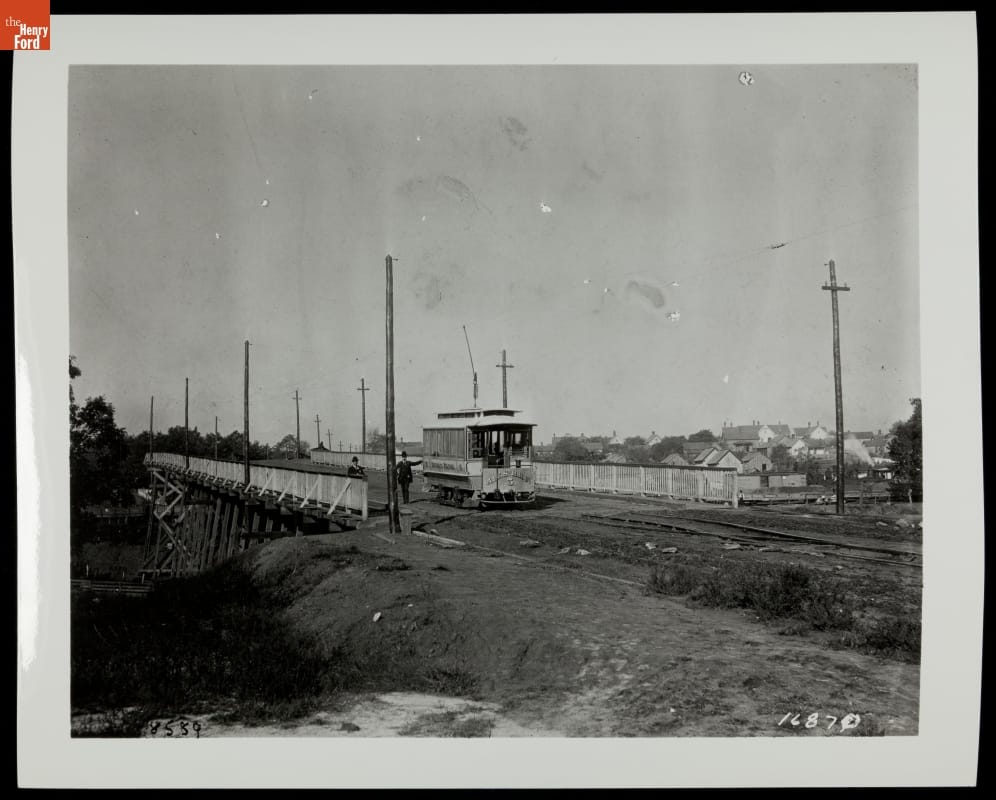
- Electric Streetcar on Tracks, Atlanta, Georgia, circa 1890 - The Atlanta and Edgewood Street Railway Company introduced Atlanta's first electric streetcars in 1889. With oak interiors and plate glass windows, they were far fancier than the city's horse-drawn cars. Unlike existing lines that provided a cheap, practical way to get around, Edgewood Avenue service offered comfortable transportation for residents of Inman Park, a planned neighborhood east of downtown.
- circa 1890
- Collections - Artifact
Electric Streetcar on Tracks, Atlanta, Georgia, circa 1890
The Atlanta and Edgewood Street Railway Company introduced Atlanta's first electric streetcars in 1889. With oak interiors and plate glass windows, they were far fancier than the city's horse-drawn cars. Unlike existing lines that provided a cheap, practical way to get around, Edgewood Avenue service offered comfortable transportation for residents of Inman Park, a planned neighborhood east of downtown.