
Search
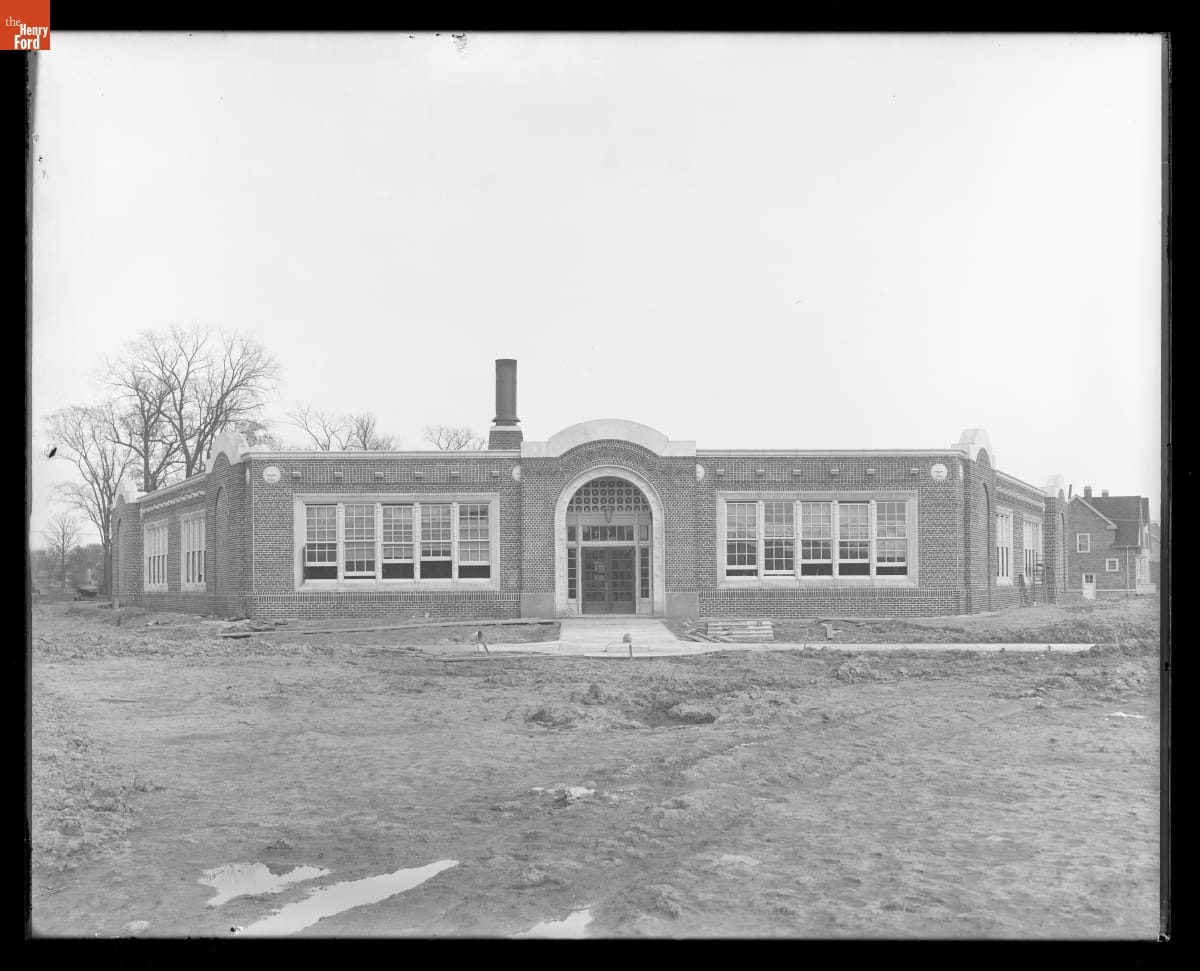
- Construction, School Building in Ford Homes District, April 1921 - In 1919, Edsel Ford and Ernest Liebold, Henry Ford's executive secretary, organized a company to build 250 houses in the Molony Subdivision in Dearborn, Michigan. Priced around $6,500 to $8,000, the homes attracted white-collar Ford employees. An elementary school, Southwestern School, was added to the neighborhood in 1921. It was renamed DuVall Elementary School to honor a longtime principal in 1958.
- April 26, 1921
- Collections - Artifact
Construction, School Building in Ford Homes District, April 1921
In 1919, Edsel Ford and Ernest Liebold, Henry Ford's executive secretary, organized a company to build 250 houses in the Molony Subdivision in Dearborn, Michigan. Priced around $6,500 to $8,000, the homes attracted white-collar Ford employees. An elementary school, Southwestern School, was added to the neighborhood in 1921. It was renamed DuVall Elementary School to honor a longtime principal in 1958.
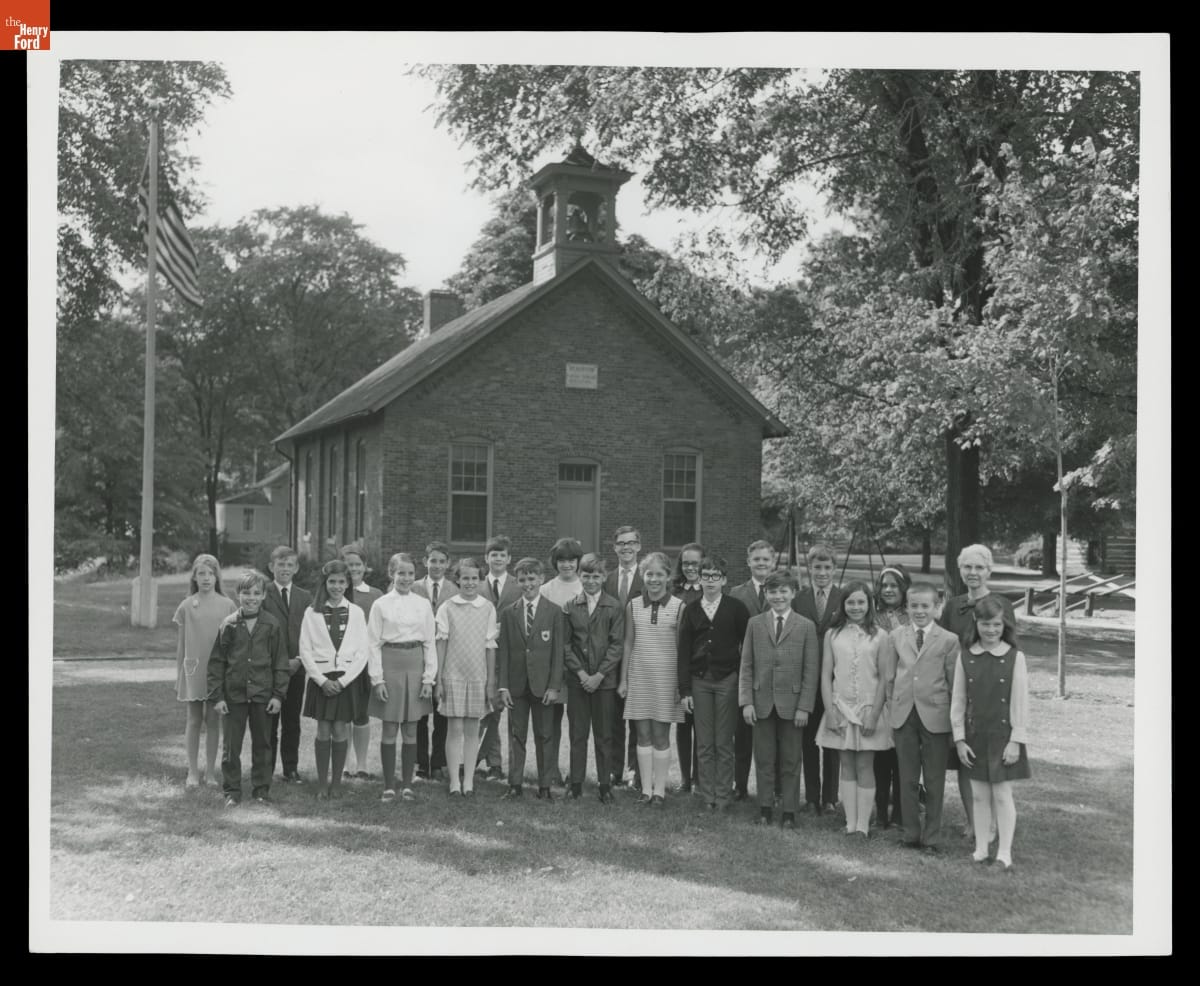
- Last Sixth-Grade Graduating Class at Edison Institute Schools, June 1969 - Henry Ford established the Edison Institute schools in 1929 on the grounds of Greenfield Village, his open-air museum in Dearborn, Michigan. The schools embraced Ford's "learn by doing" philosophy with an emphasis on hands-on learning. The last of the schools closed in 1969. This was the last sixth-grade graduating class.
- June 01, 1969
- Collections - Artifact
Last Sixth-Grade Graduating Class at Edison Institute Schools, June 1969
Henry Ford established the Edison Institute schools in 1929 on the grounds of Greenfield Village, his open-air museum in Dearborn, Michigan. The schools embraced Ford's "learn by doing" philosophy with an emphasis on hands-on learning. The last of the schools closed in 1969. This was the last sixth-grade graduating class.
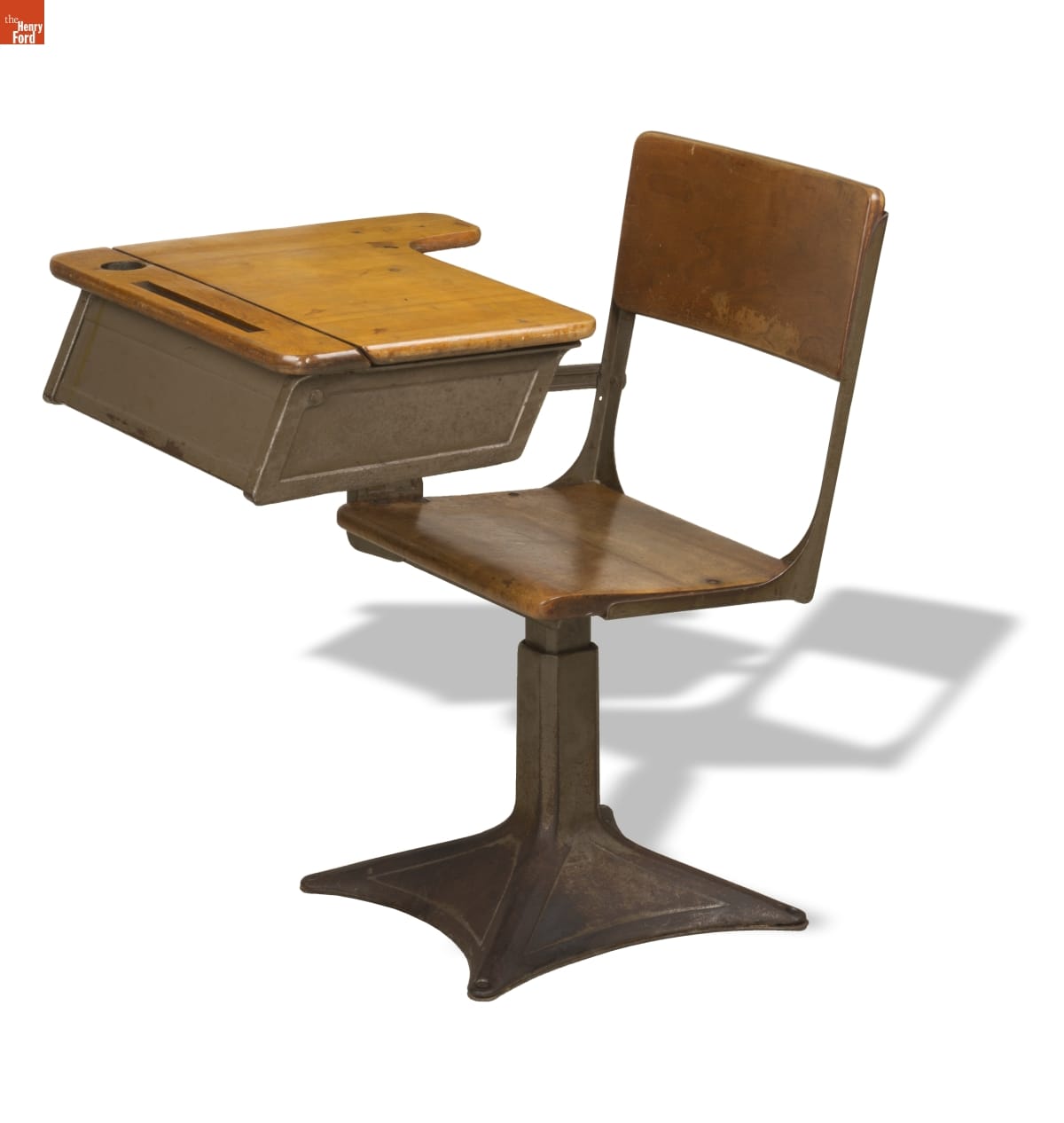
- School Desk, Used at the Shrine of the Little Flower Grade School, 1940-1949 - This type of desk became the standard for both public and private elementary schools after World War II. Students were responsible for supplying and organizing their school supplies, which were stored under the hinged desk top. These desks continued to be used in classrooms even after dip pens and ink bottles were replaced by cartridge pens and, eventually, ballpoint pens.
- 1940-1949
- Collections - Artifact
School Desk, Used at the Shrine of the Little Flower Grade School, 1940-1949
This type of desk became the standard for both public and private elementary schools after World War II. Students were responsible for supplying and organizing their school supplies, which were stored under the hinged desk top. These desks continued to be used in classrooms even after dip pens and ink bottles were replaced by cartridge pens and, eventually, ballpoint pens.
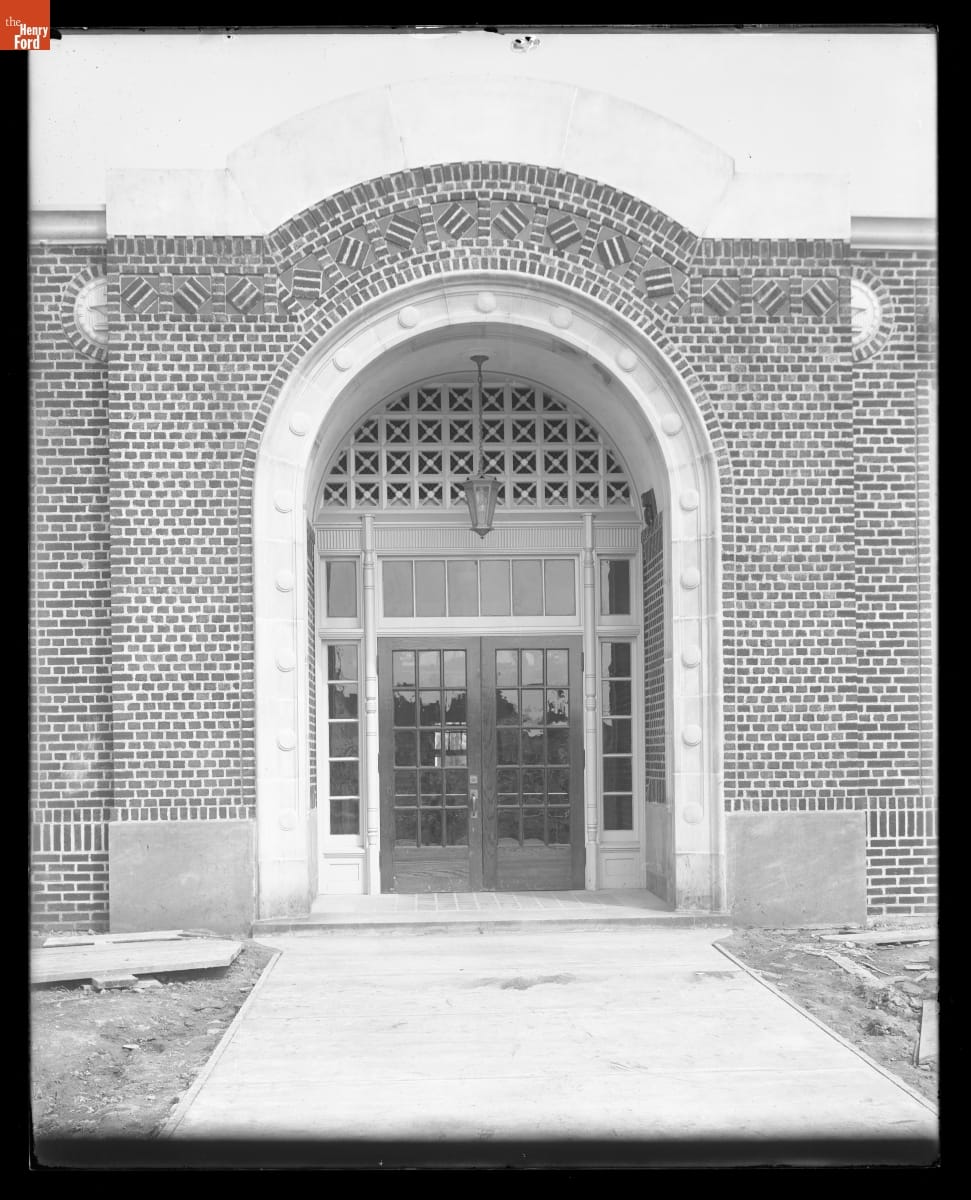
- Construction, School Building in Ford Homes District, April 1921 - In 1919, Edsel Ford and Ernest Liebold, Henry Ford's executive secretary, organized a company to build 250 houses in the Molony Subdivision in Dearborn, Michigan. Priced around $6,500 to $8,000, the homes attracted white-collar Ford employees. An elementary school, Southwestern School, was added to the neighborhood in 1921. It was renamed DuVall Elementary School to honor a longtime principal in 1958.
- April 26, 1921
- Collections - Artifact
Construction, School Building in Ford Homes District, April 1921
In 1919, Edsel Ford and Ernest Liebold, Henry Ford's executive secretary, organized a company to build 250 houses in the Molony Subdivision in Dearborn, Michigan. Priced around $6,500 to $8,000, the homes attracted white-collar Ford employees. An elementary school, Southwestern School, was added to the neighborhood in 1921. It was renamed DuVall Elementary School to honor a longtime principal in 1958.
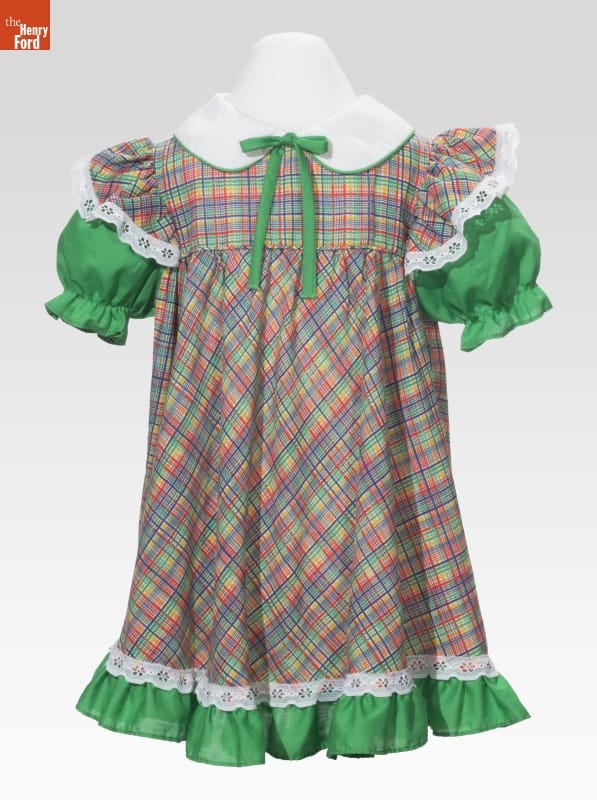
- Dress, Worn by Megan Mines on Her First Day of Kindergarten, 1980 - The first day of school often brings excitement, curiosity, wariness, and for some, a little bit of fear. Preparing for this big day usually means fresh school supplies -- crayons, pencils, notebooks, schoolbags or backpacks -- and sometimes even a brand new outfit to wear. Megan Mines donned this plaid Kelly green dress and headed off to her first day of kindergarten in Warren, Ohio, in 1980.
- 1980
- Collections - Artifact
Dress, Worn by Megan Mines on Her First Day of Kindergarten, 1980
The first day of school often brings excitement, curiosity, wariness, and for some, a little bit of fear. Preparing for this big day usually means fresh school supplies -- crayons, pencils, notebooks, schoolbags or backpacks -- and sometimes even a brand new outfit to wear. Megan Mines donned this plaid Kelly green dress and headed off to her first day of kindergarten in Warren, Ohio, in 1980.
- Making Music Your Own, 1965 -

- 1965
- Collections - Artifact
Making Music Your Own, 1965
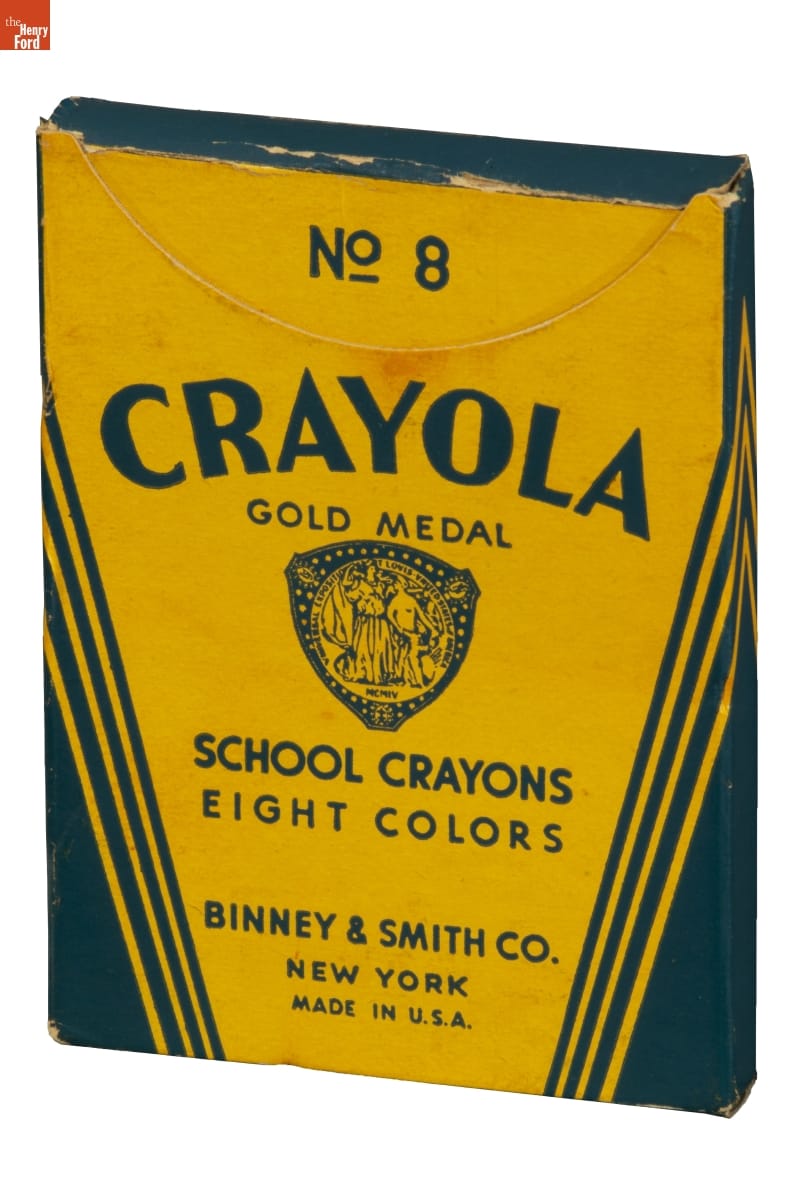
- Box of Crayola Crayons, 1950-1970 -
- 1950-1970
- Collections - Artifact
Box of Crayola Crayons, 1950-1970
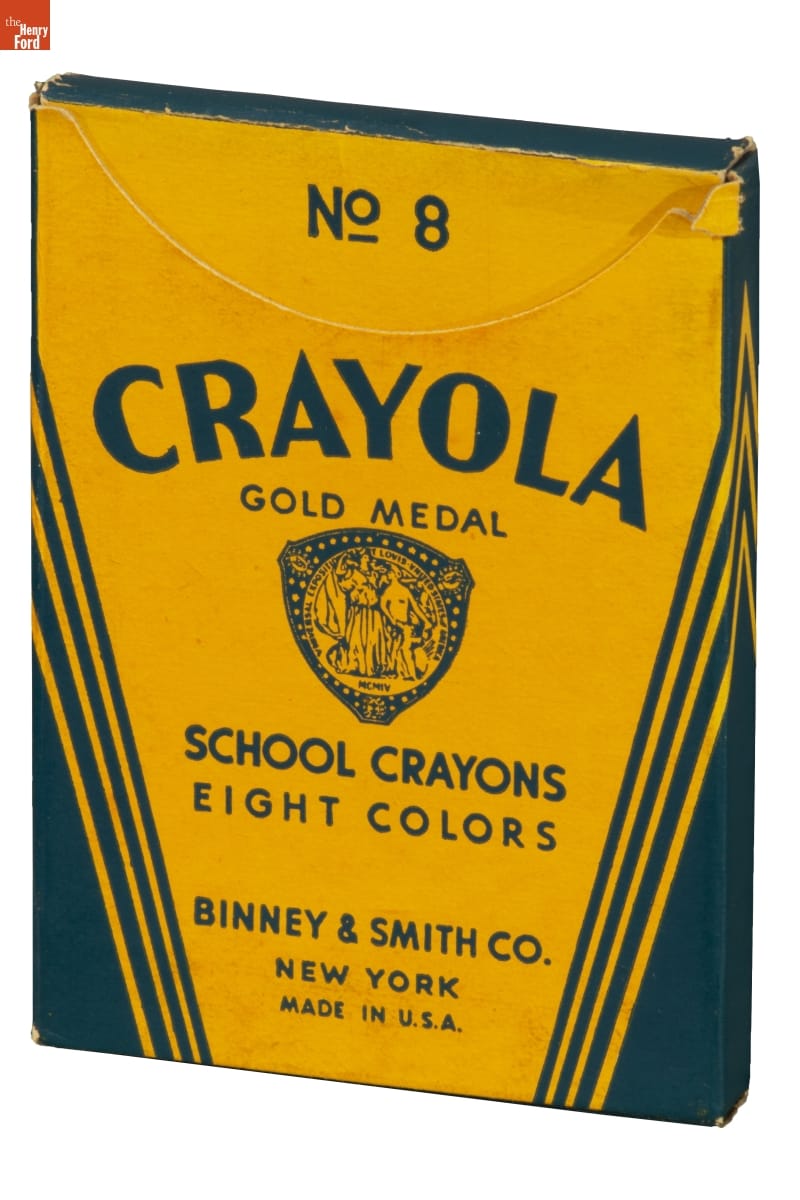
- Box of Crayola Crayons, 1950-1970 -
- 1950-1970
- Collections - Artifact
Box of Crayola Crayons, 1950-1970
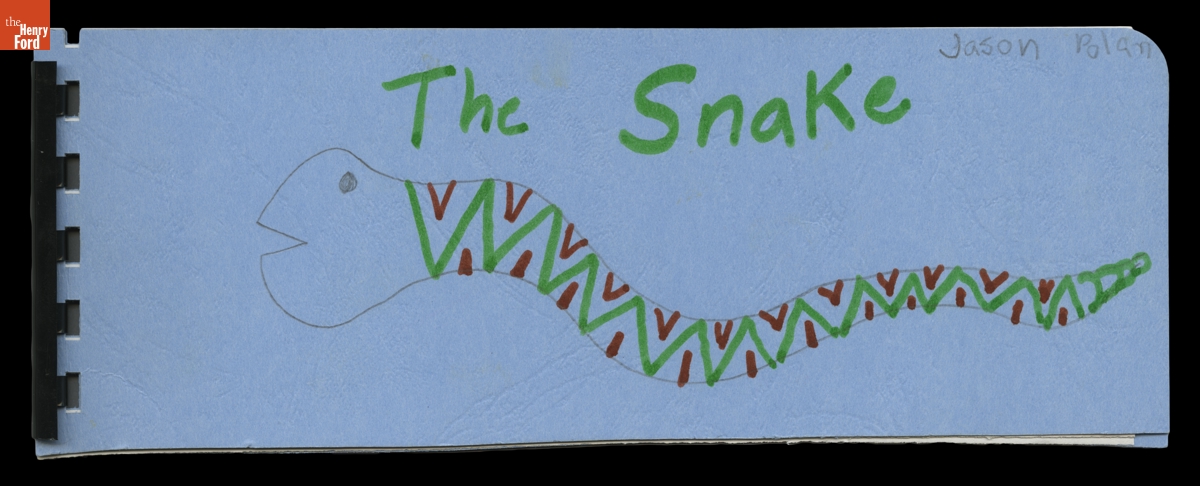
- "The Snake," by Jason Polan, circa 1990 - Jason Polan was a Michigan-born, New York-based illustrator whose visual storytelling sought to elevate the everyday—with humor and care. This collection documents Polan's life and prolific art practice, spanning childhood to adulthood; he was also a convener of creative communities. Inspiration, ideation, and completed projects are represented in preparatory material, printed matter, publications, product design, artwork, and personal collecting.
- circa 1990
- Collections - Artifact
"The Snake," by Jason Polan, circa 1990
Jason Polan was a Michigan-born, New York-based illustrator whose visual storytelling sought to elevate the everyday—with humor and care. This collection documents Polan's life and prolific art practice, spanning childhood to adulthood; he was also a convener of creative communities. Inspiration, ideation, and completed projects are represented in preparatory material, printed matter, publications, product design, artwork, and personal collecting.
- A "Time Traveler" from The Henry Ford Visits Woodward School, Detroit, Michigan, 1991 -
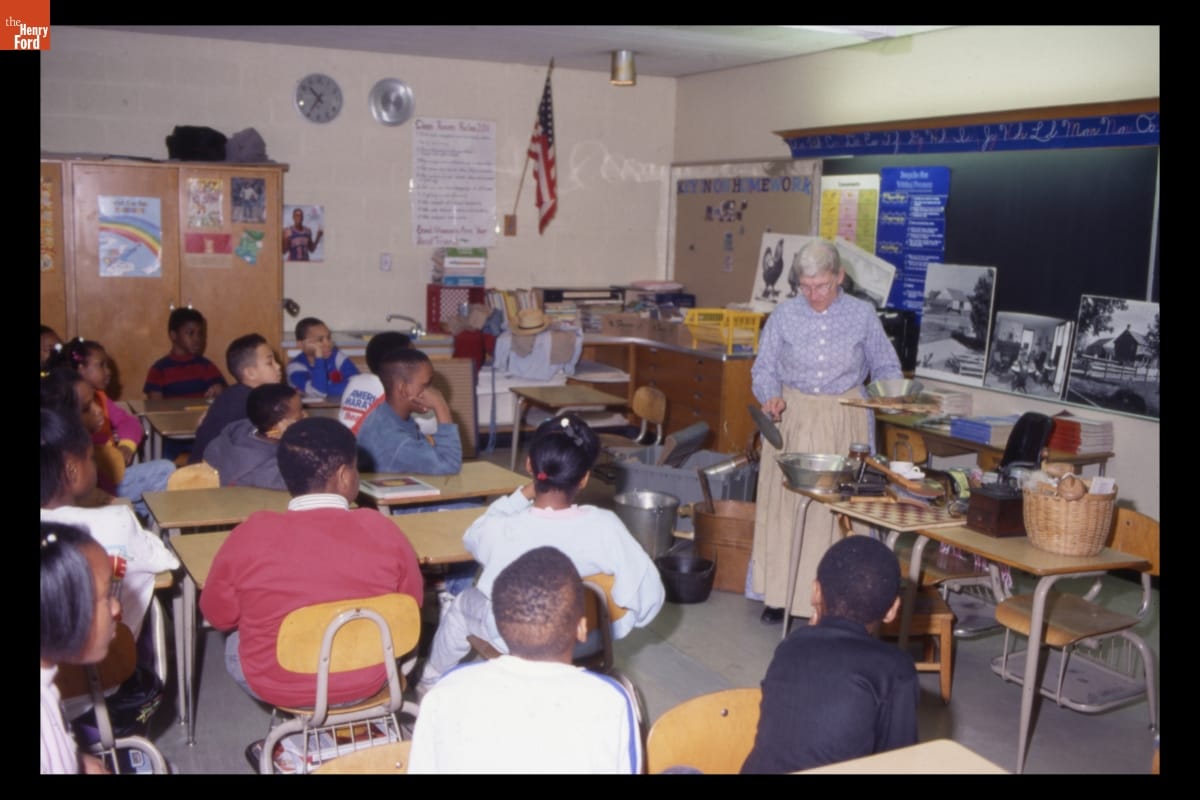
- February 21, 1991
- Collections - Artifact
A "Time Traveler" from The Henry Ford Visits Woodward School, Detroit, Michigan, 1991