
Search
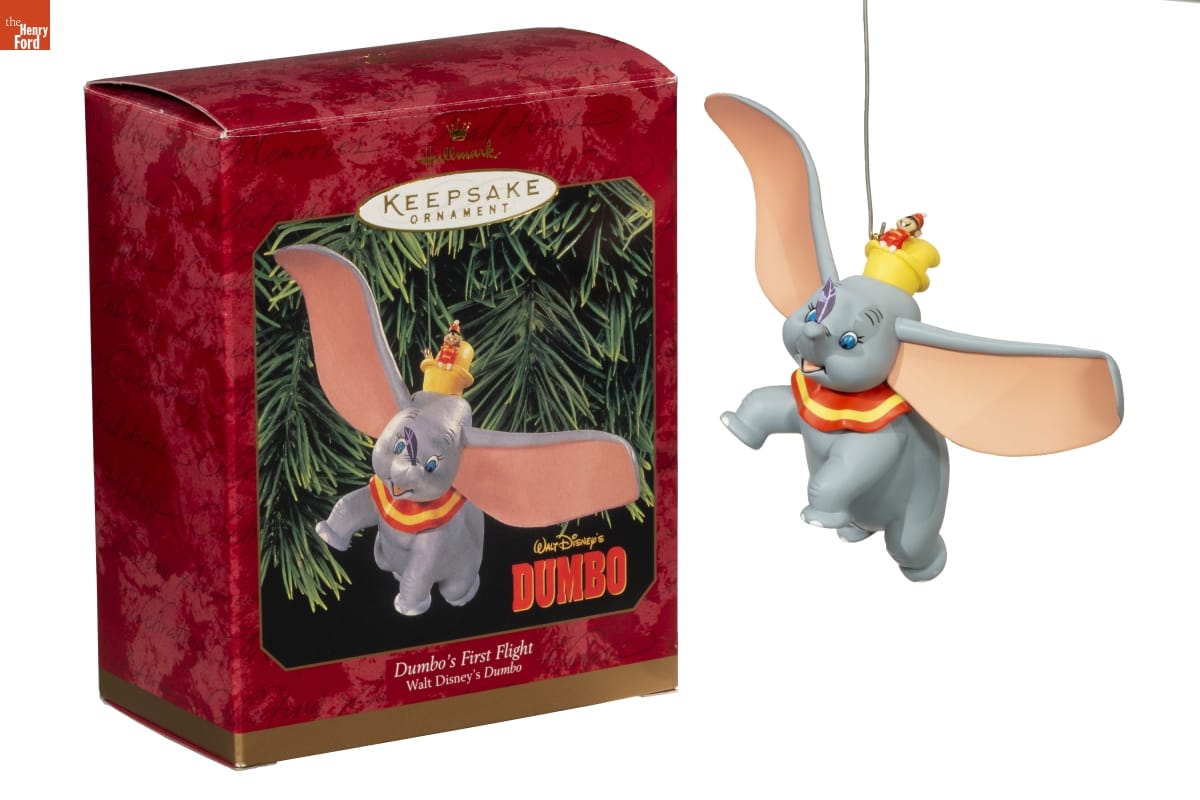
- Hallmark "Walt Disney's Dumbo: Dumbo's First Flight" Christmas Ornament, 1999 - Already known for greeting cards, Hallmark introduced a line of Christmas ornaments in 1973. The company's annual release of an increasing array of ornaments revolutionized Christmas decorating, appealing to customers' interest in marking memories and milestones as well as expressing one's personality and unique tastes.
- 1999
- Collections - Artifact
Hallmark "Walt Disney's Dumbo: Dumbo's First Flight" Christmas Ornament, 1999
Already known for greeting cards, Hallmark introduced a line of Christmas ornaments in 1973. The company's annual release of an increasing array of ornaments revolutionized Christmas decorating, appealing to customers' interest in marking memories and milestones as well as expressing one's personality and unique tastes.
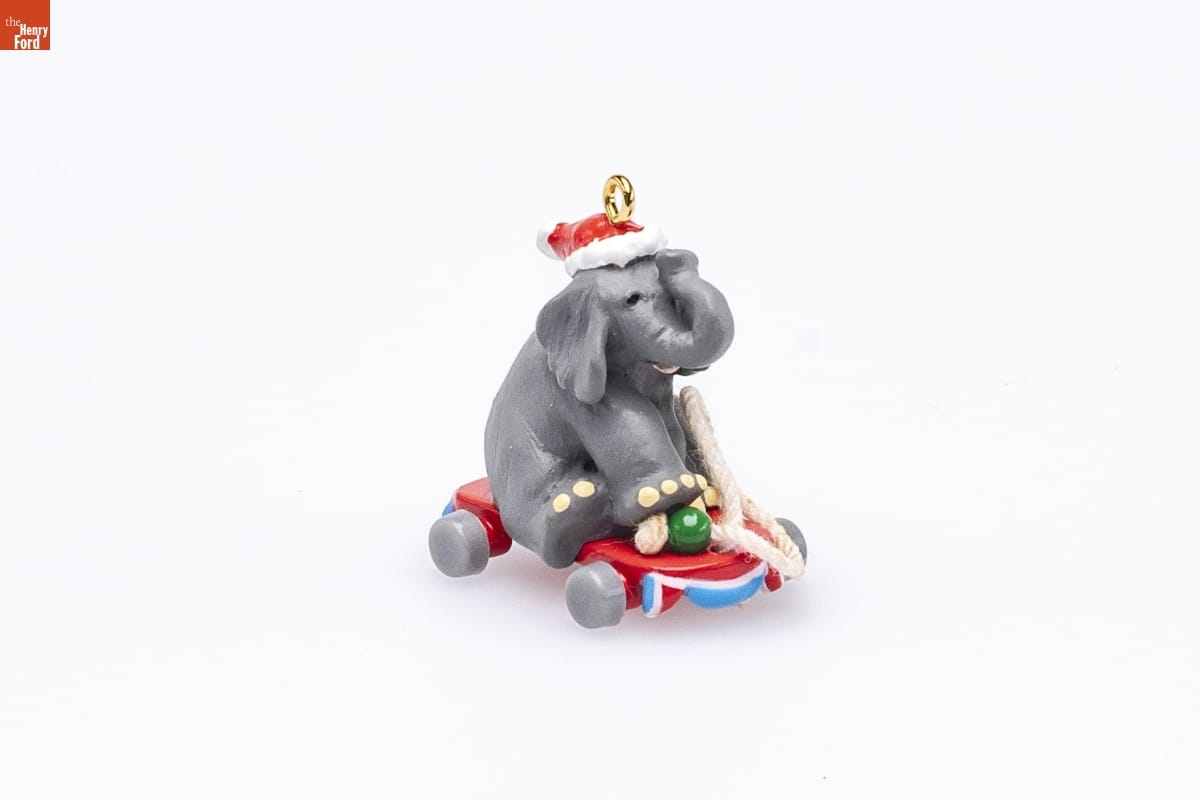
- Hallmark "Loyal Elephant" Miniature Christmas Ornament, 2000 - Already known for greeting cards, Hallmark introduced a line of Christmas ornaments in 1973. The company's annual release of an increasing array of ornaments revolutionized Christmas decorating, appealing to customers' interest in marking memories and milestones as well as expressing one's personality and unique tastes.
- 2000
- Collections - Artifact
Hallmark "Loyal Elephant" Miniature Christmas Ornament, 2000
Already known for greeting cards, Hallmark introduced a line of Christmas ornaments in 1973. The company's annual release of an increasing array of ornaments revolutionized Christmas decorating, appealing to customers' interest in marking memories and milestones as well as expressing one's personality and unique tastes.
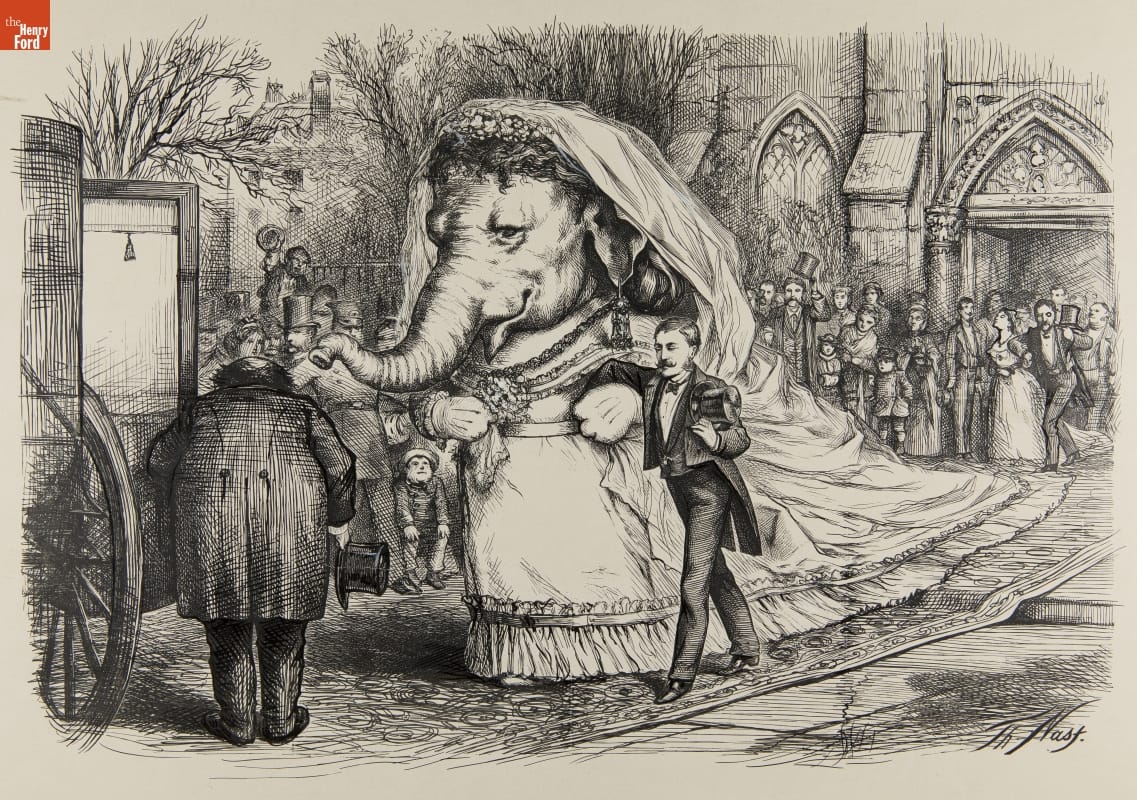
- Etching Proof, Political Cartoon by Thomas Nast, "Marriage a la Mode," 1871 - Thomas Nast (1840-1902) was an influential illustrator and political cartoonist. His illustrations -- especially those created during his 25-year career working for Harper & Brothers -- impacted American political and social life. Nast's works lampooned governmental officials and attacked corruption. He popularized characters like the Republican elephant and Democratic donkey. But his most enduring legacy is the creation of our modern image of Santa Claus.
- April 01, 1871
- Collections - Artifact
Etching Proof, Political Cartoon by Thomas Nast, "Marriage a la Mode," 1871
Thomas Nast (1840-1902) was an influential illustrator and political cartoonist. His illustrations -- especially those created during his 25-year career working for Harper & Brothers -- impacted American political and social life. Nast's works lampooned governmental officials and attacked corruption. He popularized characters like the Republican elephant and Democratic donkey. But his most enduring legacy is the creation of our modern image of Santa Claus.
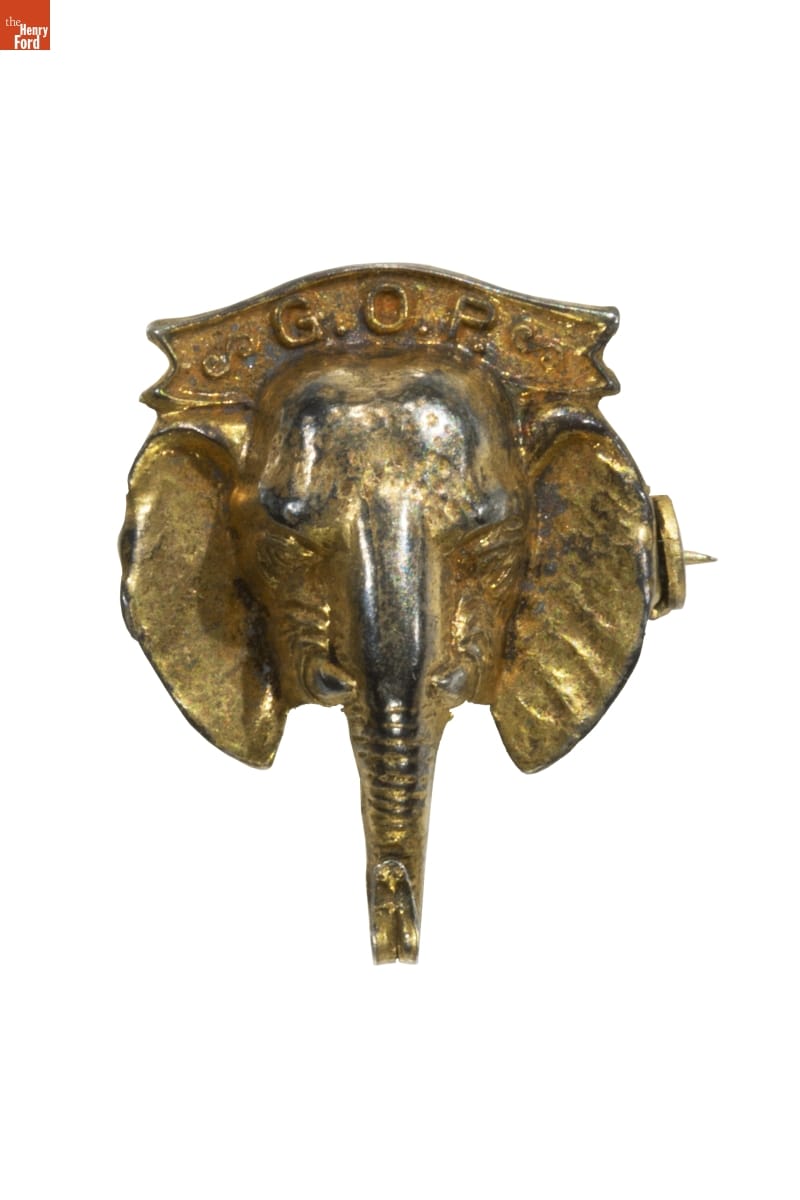
- G.O.P. Lapel Pin, 1940 - The Republican Party nominated Wendell Willkie to run against President Franklin Roosevelt in 1940. It was an unconventional choice: Willkie supported much of Roosevelt's New Deal legislation, he had voted for Roosevelt in 1932, and he was an internationalist -- controversial positions in the anti-New Deal, isolationist Republican Party. Willkie fared better than Alf Landon, the Republican's 1936 presidential candidate, but still lost.
- 1940
- Collections - Artifact
G.O.P. Lapel Pin, 1940
The Republican Party nominated Wendell Willkie to run against President Franklin Roosevelt in 1940. It was an unconventional choice: Willkie supported much of Roosevelt's New Deal legislation, he had voted for Roosevelt in 1932, and he was an internationalist -- controversial positions in the anti-New Deal, isolationist Republican Party. Willkie fared better than Alf Landon, the Republican's 1936 presidential candidate, but still lost.
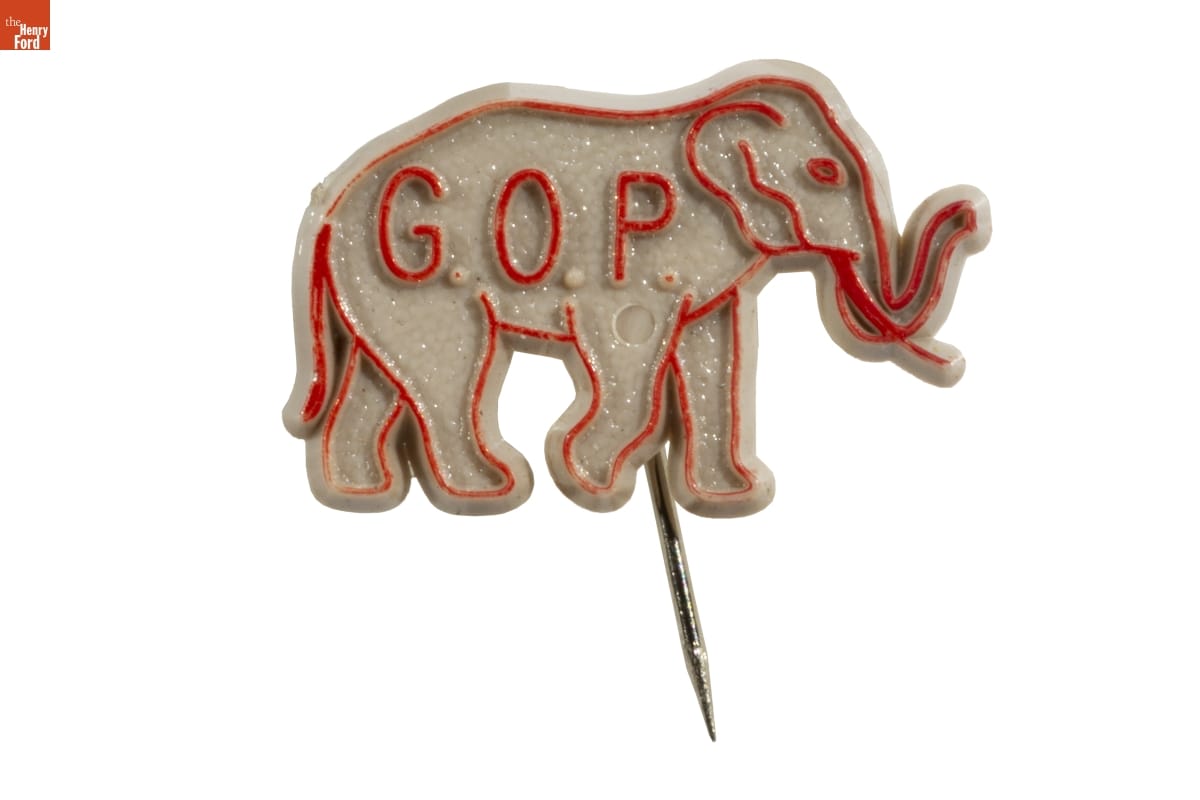
- G.O.P. Pin - The Republican Party took on the moniker Grand Old Party (or G.O.P.) in the late 1800s, around the same time the elephant became its symbol. Since then, Republican politicians and their supporters have proudly placed the party's pachyderm and acronym on a variety of campaign materials.
- Collections - Artifact
G.O.P. Pin
The Republican Party took on the moniker Grand Old Party (or G.O.P.) in the late 1800s, around the same time the elephant became its symbol. Since then, Republican politicians and their supporters have proudly placed the party's pachyderm and acronym on a variety of campaign materials.
- Bandbox, 1887 -
- 1887
- Collections - Artifact
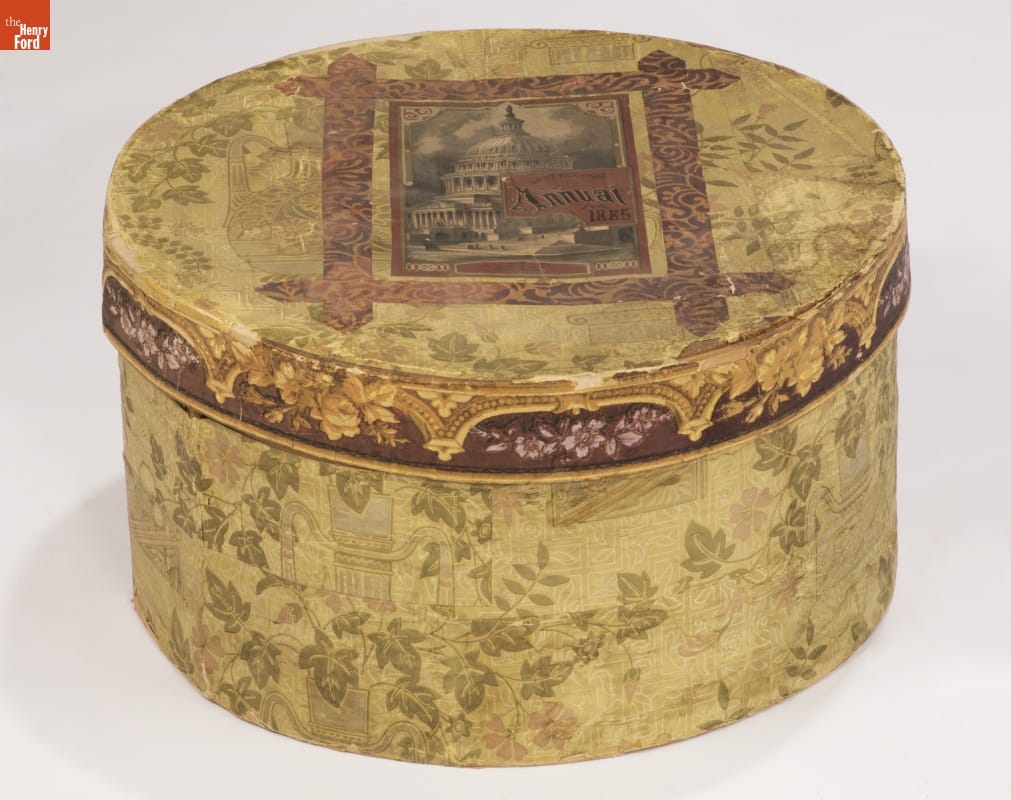
Bandbox, 1887
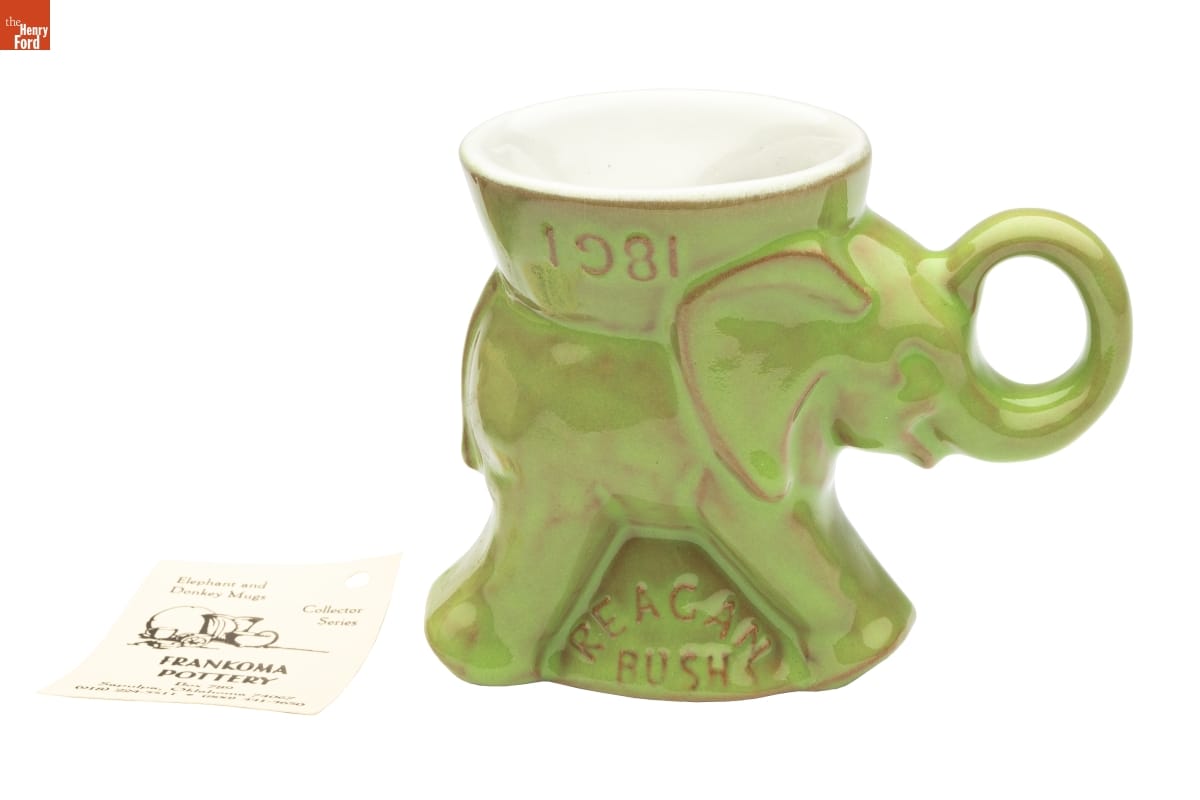
- Reagan-Bush Presidential Inaugural Commemorative Mug, 1981 - John Frank, head of the ceramics department at the University of Oklahoma, and his wife Grace Lee established Frankoma Pottery in 1933. They used native clays of Oklahoma to create their Southwestern-inspired wares. But the Franks also successfully developed new lines of commemorative pieces that became sought-after collectibles. The company made this political party mug celebrating the 1981 inauguration of President Reagan.
- 1981
- Collections - Artifact
Reagan-Bush Presidential Inaugural Commemorative Mug, 1981
John Frank, head of the ceramics department at the University of Oklahoma, and his wife Grace Lee established Frankoma Pottery in 1933. They used native clays of Oklahoma to create their Southwestern-inspired wares. But the Franks also successfully developed new lines of commemorative pieces that became sought-after collectibles. The company made this political party mug celebrating the 1981 inauguration of President Reagan.
- Marimekko Elephant Plate Made for American Airlines, 1975-1980 -
- 1975-1980
- Collections - Artifact
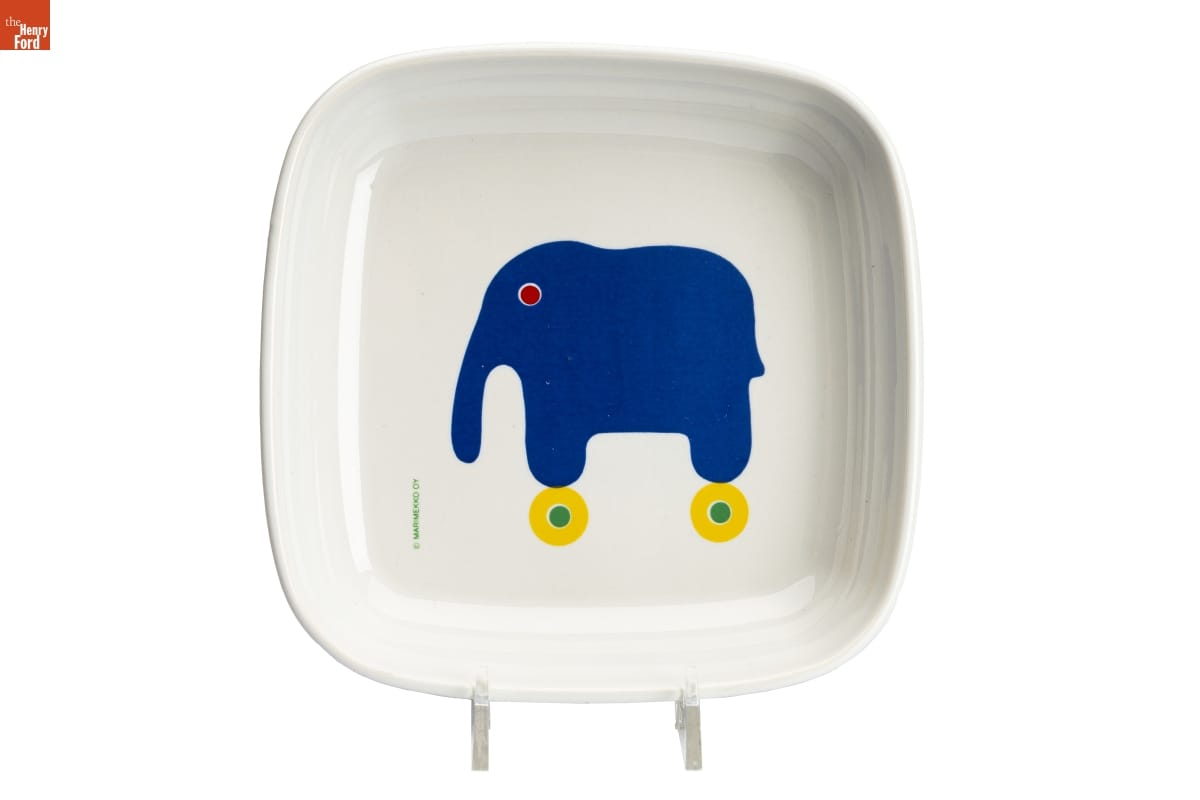
Marimekko Elephant Plate Made for American Airlines, 1975-1980
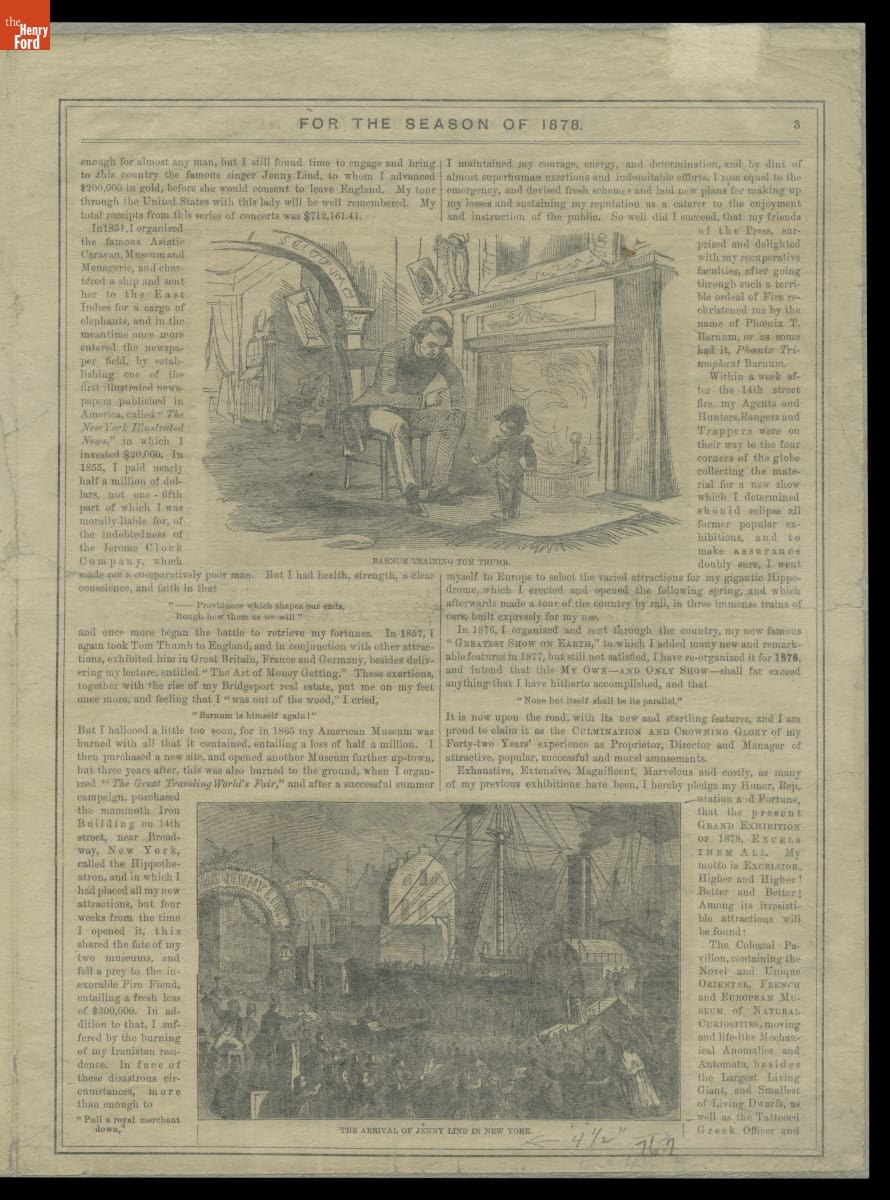
- "P.T. Barnum's Own Illustrated News for the Season of 1878" - Phineas Taylor (P.T.) Barnum (1810-1891) entered the circus business in 1876 after a 40-year career as a showman. In this presumably self-published newspaper, Barnum highlighted his past entertainment endeavor and announced his lineup for the 1878 "Greatest Show on Earth" circus. Barnum's circus featured animal menageries, clowns, automata, acrobatic horse-riders, and human "curiosities" such as Captain George Costentenus--a heavily tattooed man.
- 1878
- Collections - Artifact
"P.T. Barnum's Own Illustrated News for the Season of 1878"
Phineas Taylor (P.T.) Barnum (1810-1891) entered the circus business in 1876 after a 40-year career as a showman. In this presumably self-published newspaper, Barnum highlighted his past entertainment endeavor and announced his lineup for the 1878 "Greatest Show on Earth" circus. Barnum's circus featured animal menageries, clowns, automata, acrobatic horse-riders, and human "curiosities" such as Captain George Costentenus--a heavily tattooed man.
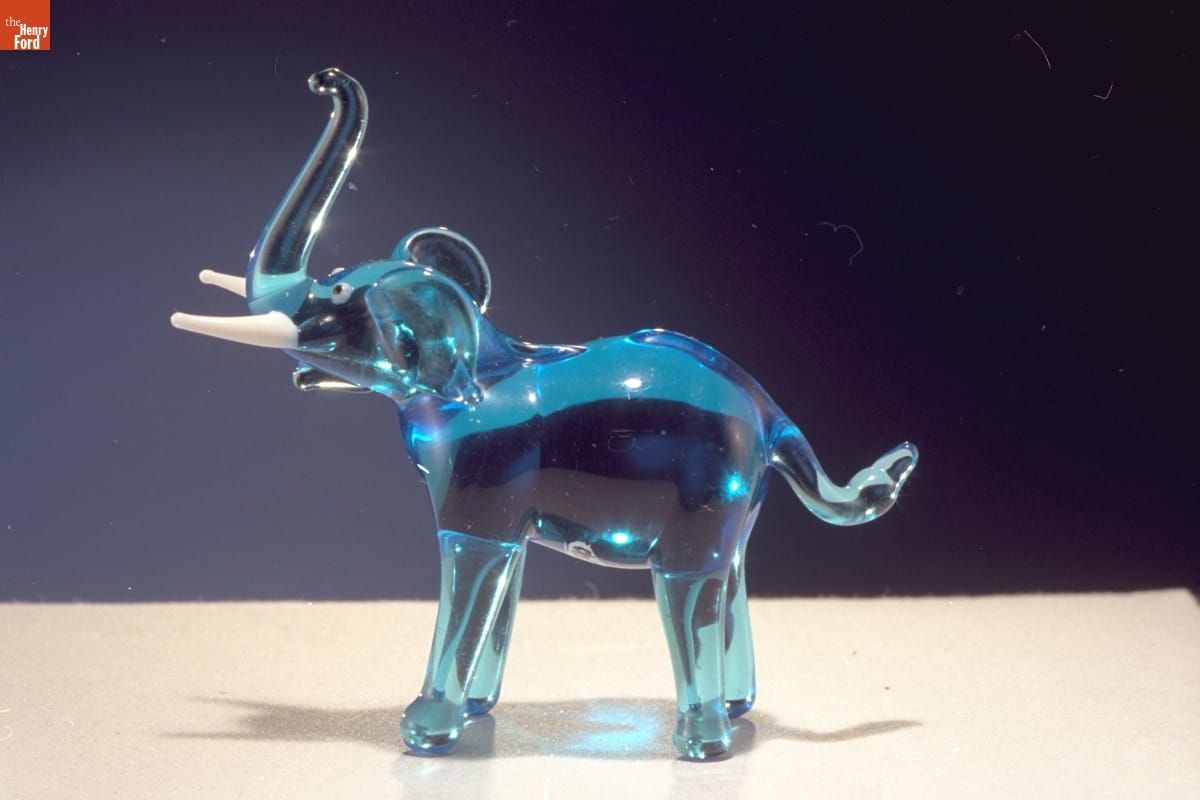
- Miniature Glass Figure, Elephant, 1955-1985 - For visitors to the resort towns around Pentwater, Michigan, a trip to Henry Carter Johnson's "Glass Menagerie" was a cherished vacation ritual. For over forty years, beginning in 1952, Johnson heated colored glass rods and fashioned them into multicolored figures. His whimsical creatures captured the imaginations of children and adults who purchased them, providing a tangible reminder of an enjoyable Michigan summer.
- 1955-1985
- Collections - Artifact
Miniature Glass Figure, Elephant, 1955-1985
For visitors to the resort towns around Pentwater, Michigan, a trip to Henry Carter Johnson's "Glass Menagerie" was a cherished vacation ritual. For over forty years, beginning in 1952, Johnson heated colored glass rods and fashioned them into multicolored figures. His whimsical creatures captured the imaginations of children and adults who purchased them, providing a tangible reminder of an enjoyable Michigan summer.