
Search
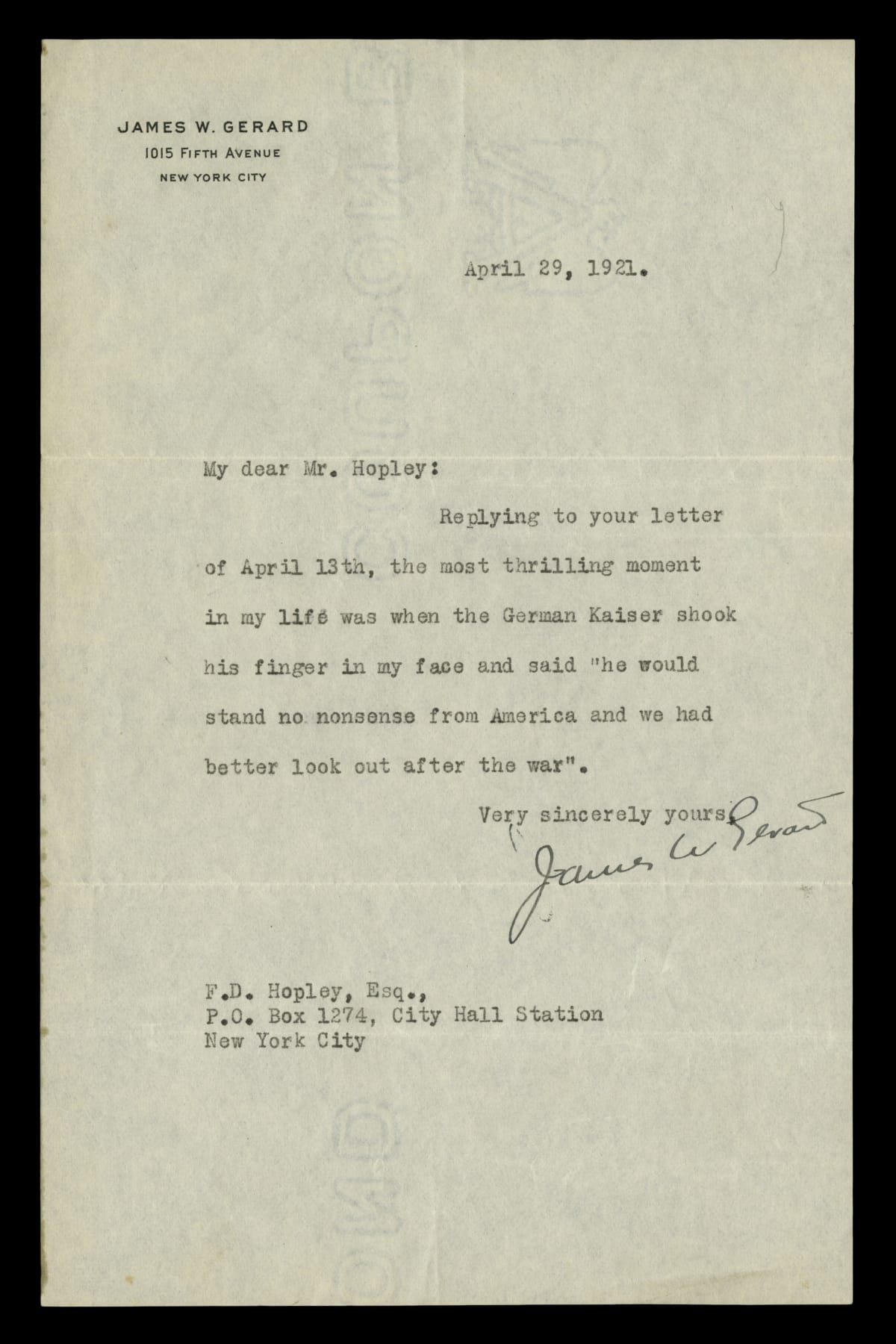
- Letter from James W. Gerard to Frank Hopley, April 29, 1921, "The Most Thrilling Moment of My Life" - Frank Dorrance Hopley (1872-1933) wrote a number of boys' books and authored stories and articles for national magazines and newspapers. In 1921, Hopley had an idea for an article -- he would ask famous individuals to share their life's most thrilling moment. James W. Gerard, U.S. Ambassador to Germany during the First World War, chose his encounter with the German Kaiser.
- April 29, 1921
- Collections - Artifact
Letter from James W. Gerard to Frank Hopley, April 29, 1921, "The Most Thrilling Moment of My Life"
Frank Dorrance Hopley (1872-1933) wrote a number of boys' books and authored stories and articles for national magazines and newspapers. In 1921, Hopley had an idea for an article -- he would ask famous individuals to share their life's most thrilling moment. James W. Gerard, U.S. Ambassador to Germany during the First World War, chose his encounter with the German Kaiser.
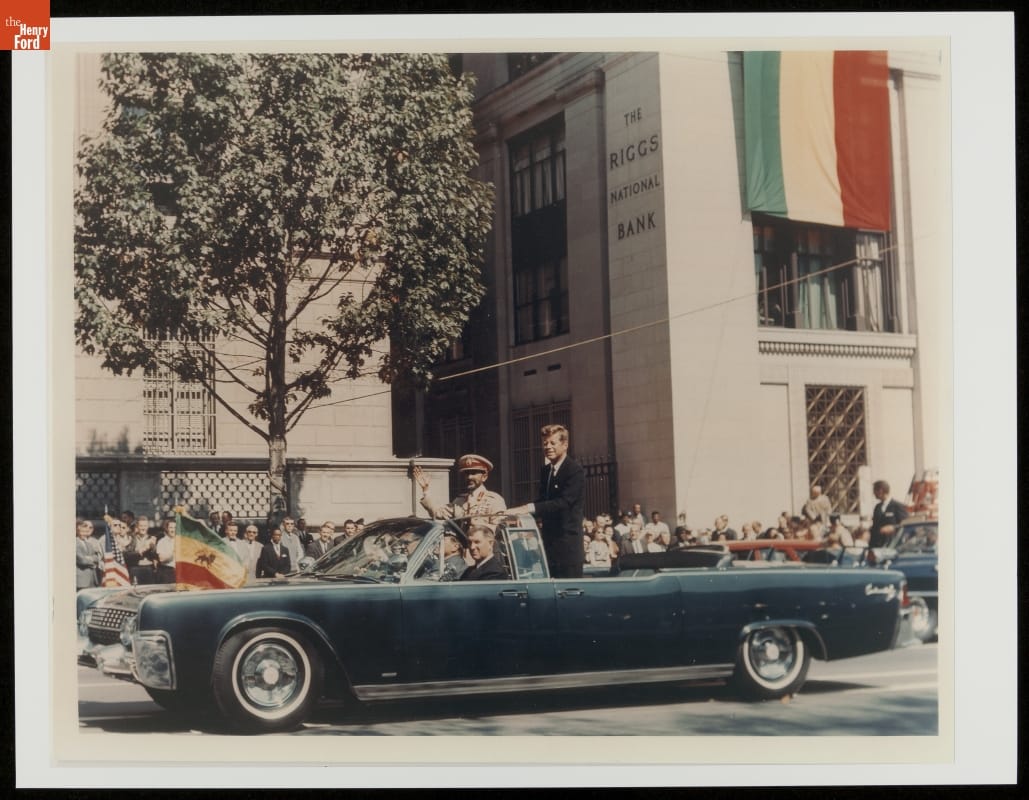
- President Kennedy and Emperor Haile Selassie in the 1961 Lincoln Continental Presidential Limousine, Washington, D.C., 1963 - Foreign policy was an outstanding aspect of John F. Kennedy's Cold War administration. Amid global political and military tensions, the president hosted many foreign leaders. This photograph, taken just six weeks before Kennedy was assassinated, shows a parade for Ethiopian emperor Hail Selassie I. The two statesmen met in October 1963 to discuss their nations' relationship and mutual concerns.
- October 01, 1961
- Collections - Artifact
President Kennedy and Emperor Haile Selassie in the 1961 Lincoln Continental Presidential Limousine, Washington, D.C., 1963
Foreign policy was an outstanding aspect of John F. Kennedy's Cold War administration. Amid global political and military tensions, the president hosted many foreign leaders. This photograph, taken just six weeks before Kennedy was assassinated, shows a parade for Ethiopian emperor Hail Selassie I. The two statesmen met in October 1963 to discuss their nations' relationship and mutual concerns.
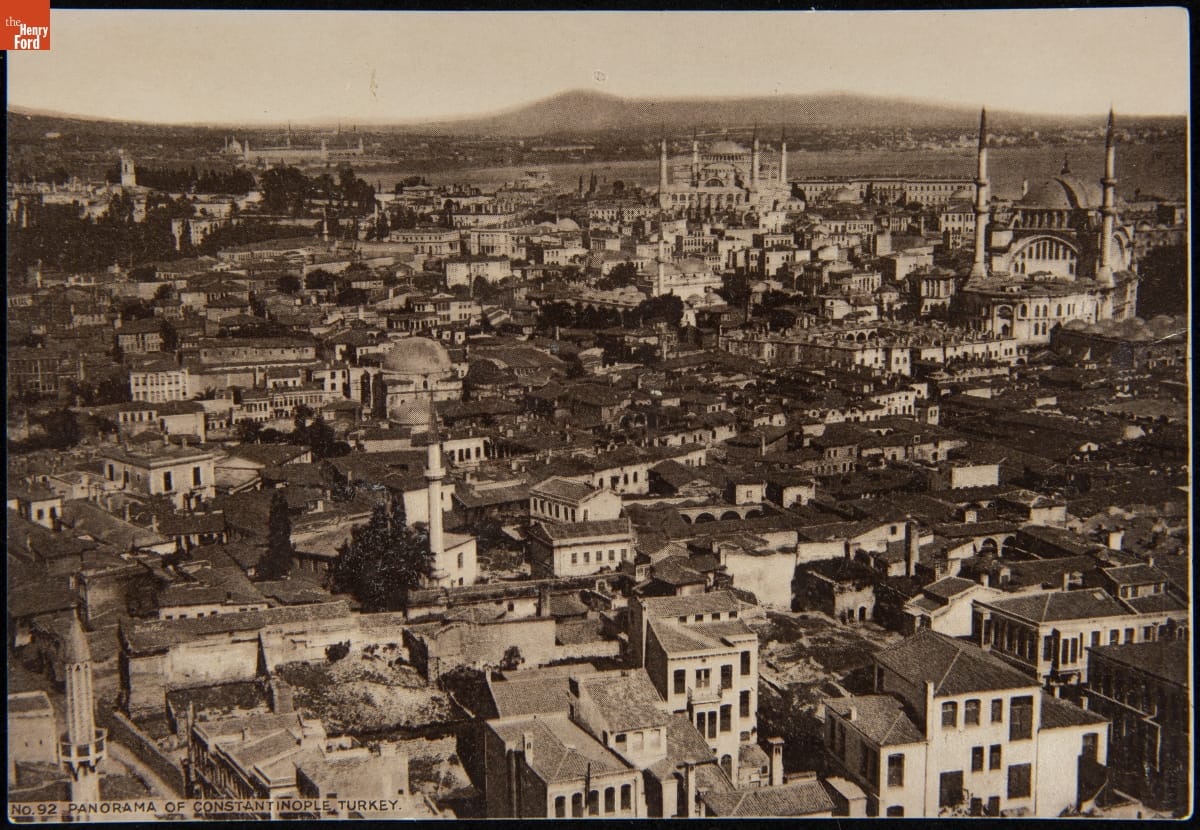
- Trade Card for C.I. Hood & Co. with Hood's Photos of the World, "Panorama of Constantinople, Turkey," 1890-1910 - In the late 19th century, trade cards were a major means of advertising goods and services. Patent medicine producer, C.I. Hood & Co., had its own advertising department, creating cookbooks, calendars, and, most abundantly, trade cards. The trade card series, "Hood's Photos of the World," became popular among consumers, as it offered views of far-away places, providing a window to the broader world.
- 1890-1910
- Collections - Artifact
Trade Card for C.I. Hood & Co. with Hood's Photos of the World, "Panorama of Constantinople, Turkey," 1890-1910
In the late 19th century, trade cards were a major means of advertising goods and services. Patent medicine producer, C.I. Hood & Co., had its own advertising department, creating cookbooks, calendars, and, most abundantly, trade cards. The trade card series, "Hood's Photos of the World," became popular among consumers, as it offered views of far-away places, providing a window to the broader world.
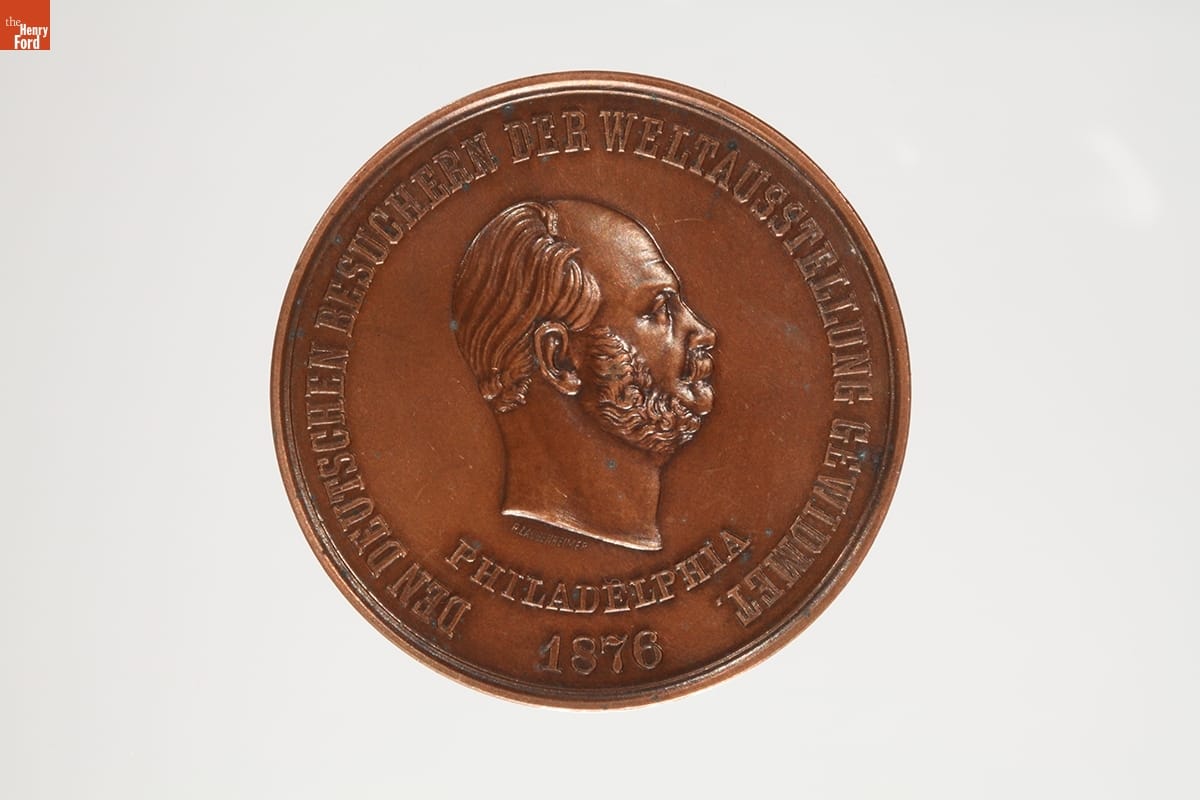
- Commemorative Medal from the United States Centennial Exposition, 1876 -
- 1876
- Collections - Artifact
Commemorative Medal from the United States Centennial Exposition, 1876
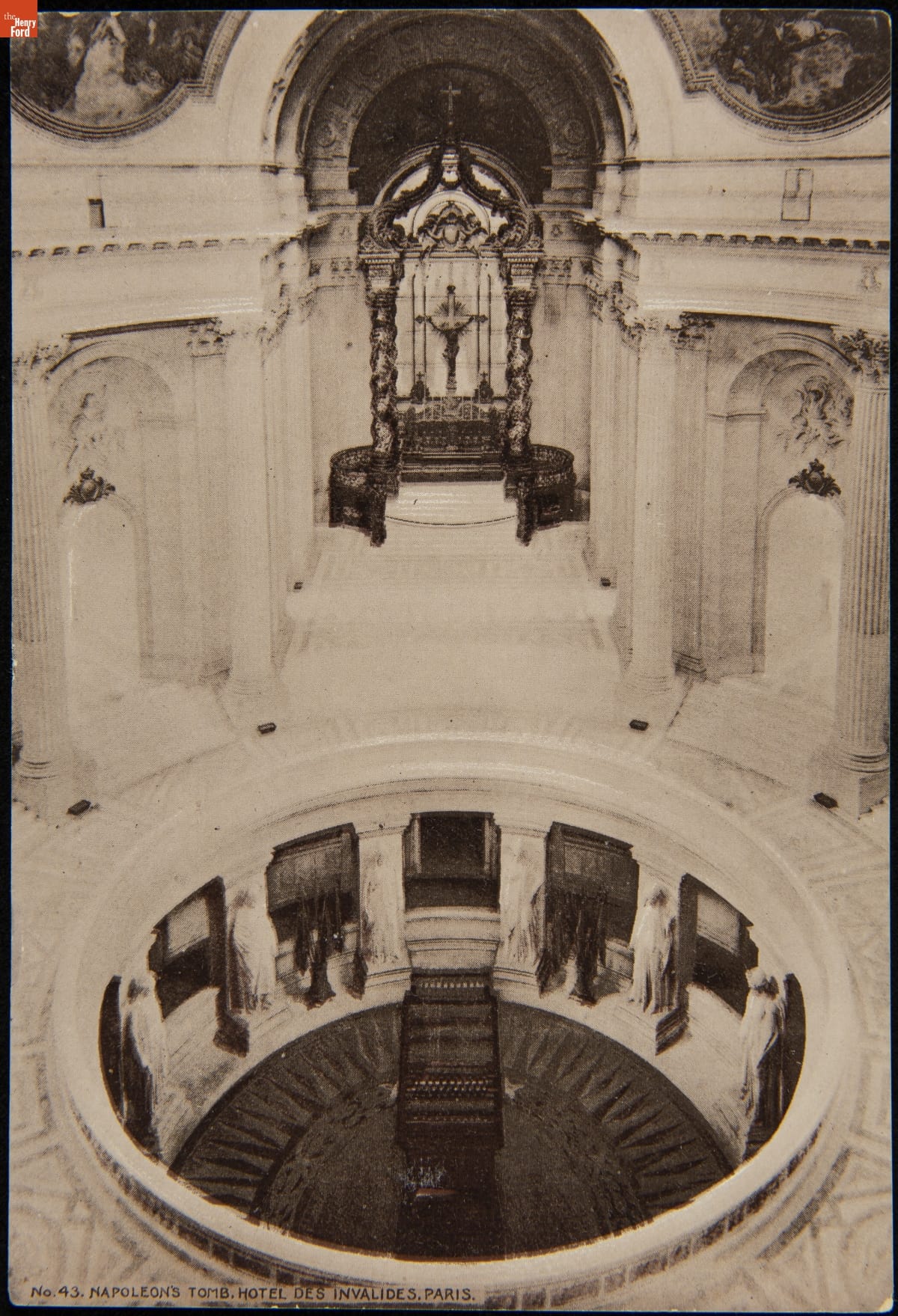
- Trade Card for C.I. Hood & Co. with Hood's Photos of the World, "Napoleon's Tomb, Hotel Des Invalides, Paris," 1890-1910 - In the late 19th century, trade cards were a major means of advertising goods and services. Patent medicine producer, C.I. Hood & Co., had its own advertising department, creating cookbooks, calendars, and, most abundantly, trade cards. The trade card series, "Hood's Photos of the World," became popular among consumers, as it offered views of far-away places, providing a window to the broader world.
- 1890-1910
- Collections - Artifact
Trade Card for C.I. Hood & Co. with Hood's Photos of the World, "Napoleon's Tomb, Hotel Des Invalides, Paris," 1890-1910
In the late 19th century, trade cards were a major means of advertising goods and services. Patent medicine producer, C.I. Hood & Co., had its own advertising department, creating cookbooks, calendars, and, most abundantly, trade cards. The trade card series, "Hood's Photos of the World," became popular among consumers, as it offered views of far-away places, providing a window to the broader world.
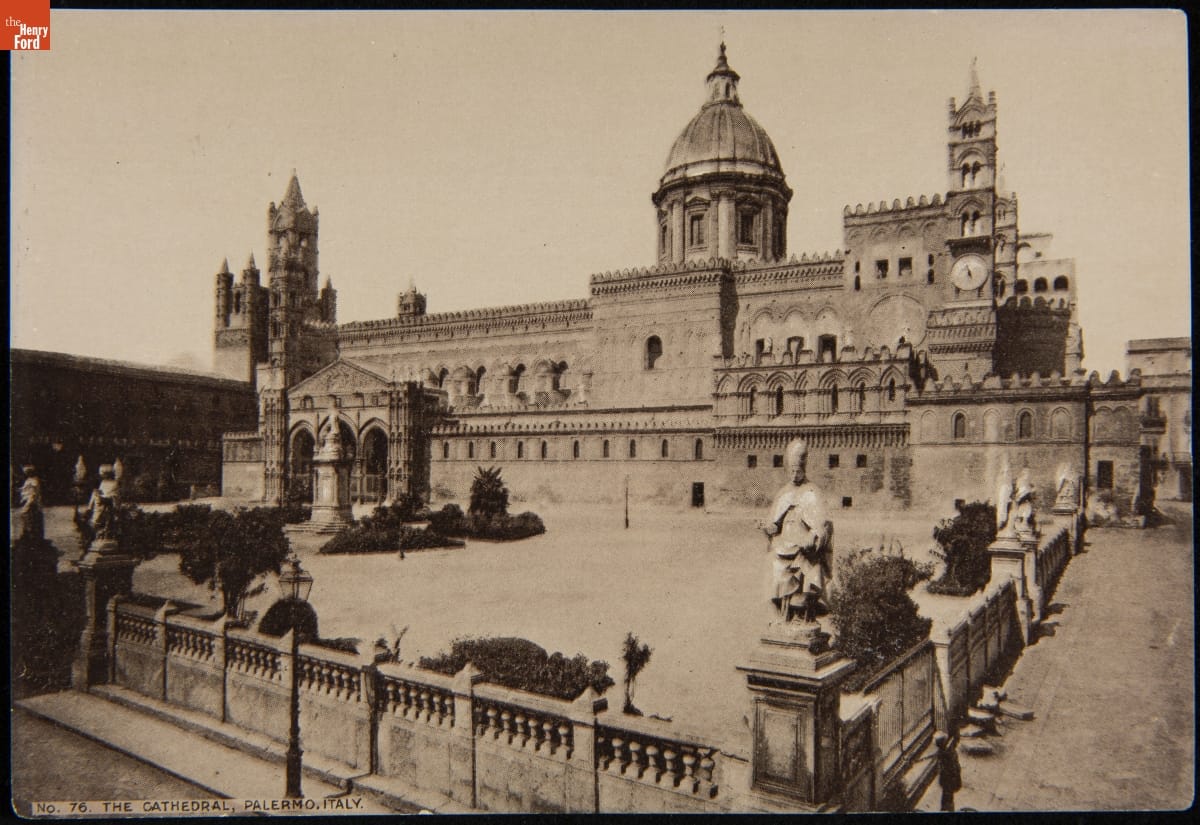
- Trade Card for C.I. Hood & Co. with Hood's Photos of the World, "Cathedral, Palermo, Italy," 1890-1910 - In the late 19th century, trade cards were a major means of advertising goods and services. Patent medicine producer, C.I. Hood & Co., had its own advertising department, creating cookbooks, calendars, and, most abundantly, trade cards. The trade card series, "Hood's Photos of the World," became popular among consumers, as it offered views of far-away places, providing a window to the broader world.
- 1890-1910
- Collections - Artifact
Trade Card for C.I. Hood & Co. with Hood's Photos of the World, "Cathedral, Palermo, Italy," 1890-1910
In the late 19th century, trade cards were a major means of advertising goods and services. Patent medicine producer, C.I. Hood & Co., had its own advertising department, creating cookbooks, calendars, and, most abundantly, trade cards. The trade card series, "Hood's Photos of the World," became popular among consumers, as it offered views of far-away places, providing a window to the broader world.
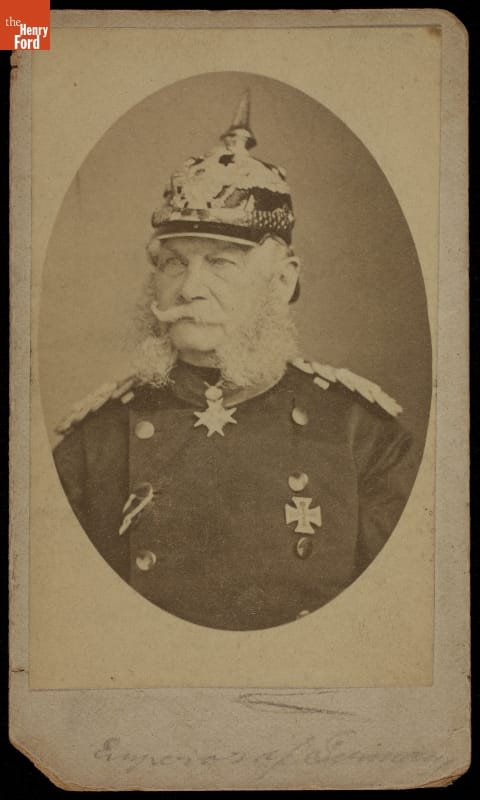
- Emperor William I of Germany, circa 1885 - Cartes-de-visite, small, professionally made photographs on cardboard stock, remained popular in the United States from the Civil War in the 1860s through the 1880s. Many were given to friends and loved ones, but enterprising photographers also produced images of famous individuals to sell to the collecting-crazed public. Celebrities, politicians, military officers, and, even foreign dignitaries, such as Emperor Wilhelm I of Germany, were popular subjects.
- circa 1885
- Collections - Artifact
Emperor William I of Germany, circa 1885
Cartes-de-visite, small, professionally made photographs on cardboard stock, remained popular in the United States from the Civil War in the 1860s through the 1880s. Many were given to friends and loved ones, but enterprising photographers also produced images of famous individuals to sell to the collecting-crazed public. Celebrities, politicians, military officers, and, even foreign dignitaries, such as Emperor Wilhelm I of Germany, were popular subjects.
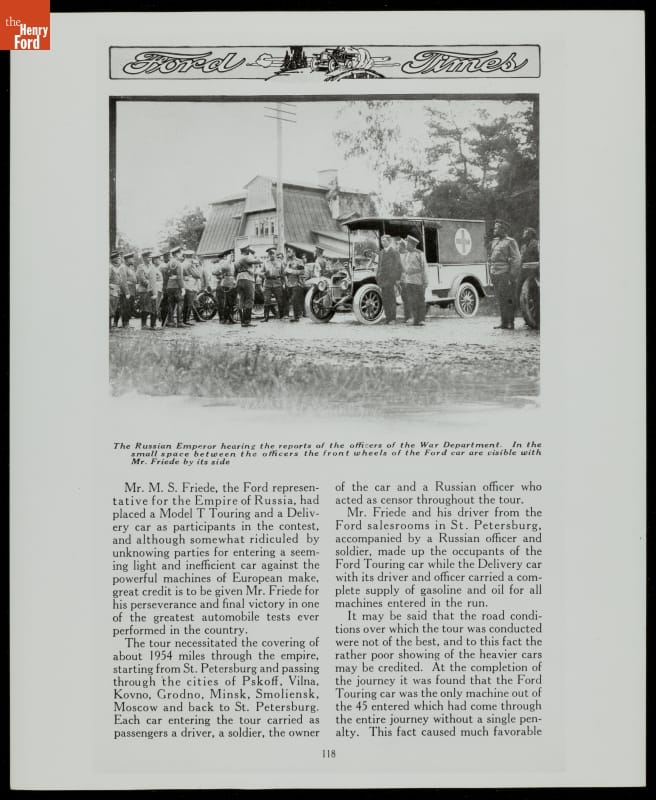
- "Ford Wins Recommendation of Russian War Department," Ford Times, 1912 - First printed in 1908, <em>Ford Times</em> was published by Ford Motor Company and distributed free of charge. Early issues targeted Ford dealers, but editors later broadened the magazine's content to appeal to Ford owners and potential buyers. This 1912 issue included a story on a Model T that completed a 1,954-mile tour through Russia, impressing Russian military officials in the process.
- 1912
- Collections - Artifact
"Ford Wins Recommendation of Russian War Department," Ford Times, 1912
First printed in 1908, Ford Times was published by Ford Motor Company and distributed free of charge. Early issues targeted Ford dealers, but editors later broadened the magazine's content to appeal to Ford owners and potential buyers. This 1912 issue included a story on a Model T that completed a 1,954-mile tour through Russia, impressing Russian military officials in the process.
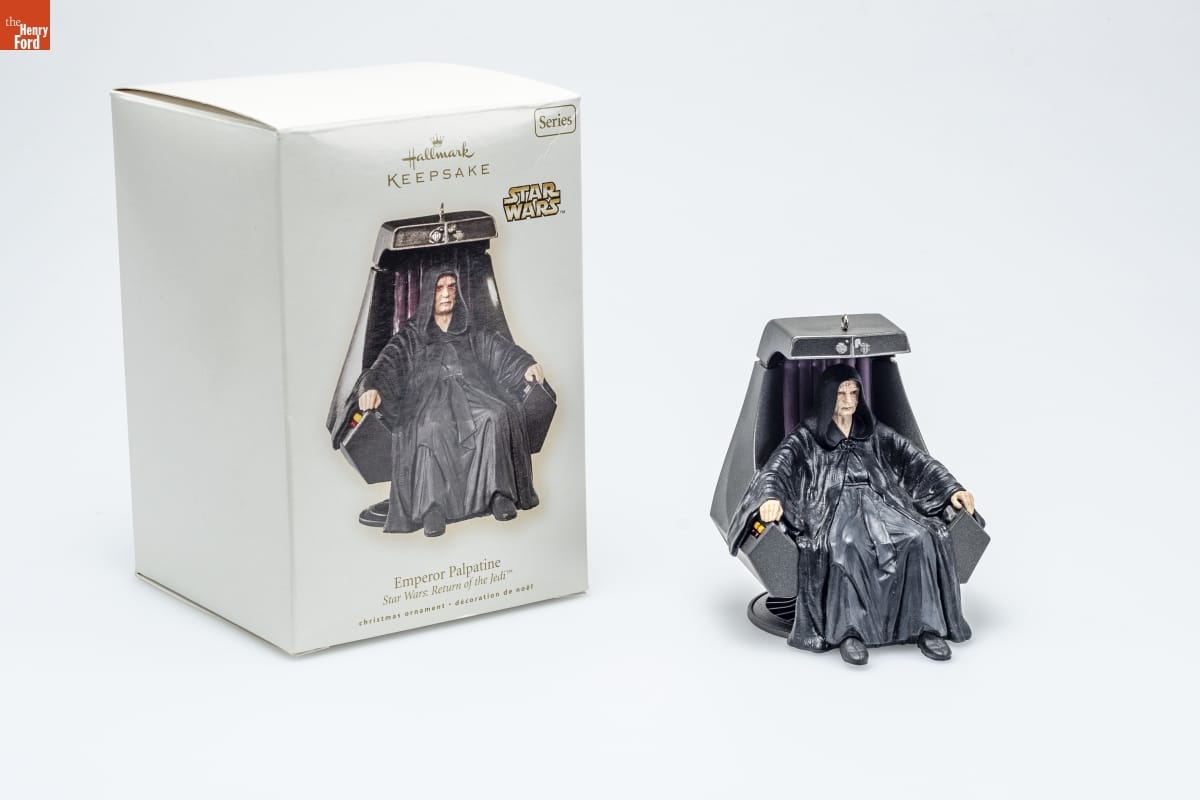
- Hallmark "Star Wars Series: Emperor Palpatine" Christmas Ornament, 2008 - Already known for greeting cards, Hallmark introduced a line of Christmas ornaments in 1973. The company's annual release of an increasing array of ornaments revolutionized Christmas decorating, appealing to customers' interest in marking memories and milestones as well as expressing one's personality and unique tastes.
- 2008
- Collections - Artifact
Hallmark "Star Wars Series: Emperor Palpatine" Christmas Ornament, 2008
Already known for greeting cards, Hallmark introduced a line of Christmas ornaments in 1973. The company's annual release of an increasing array of ornaments revolutionized Christmas decorating, appealing to customers' interest in marking memories and milestones as well as expressing one's personality and unique tastes.
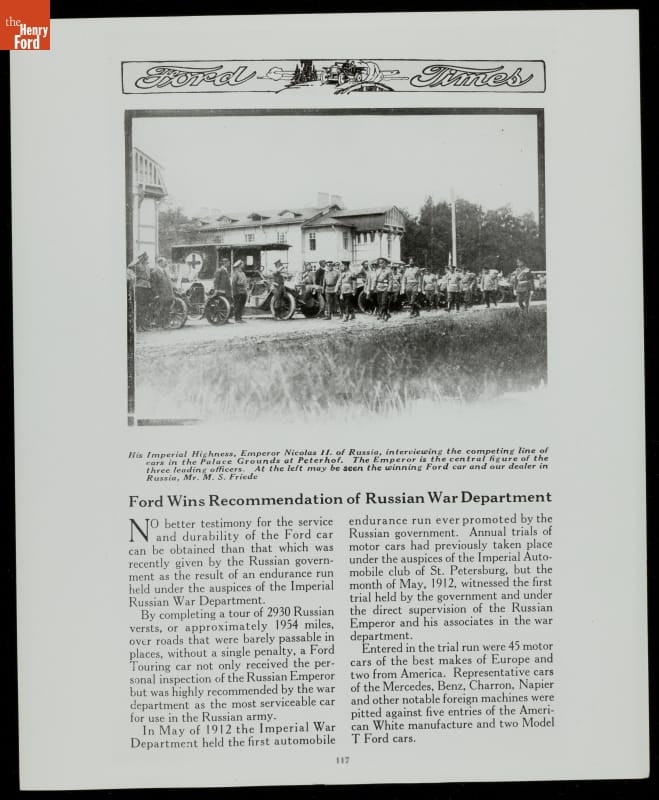
- "Ford Wins Recommendation of Russian War Department," Ford Times, 1912 - First printed in 1908, <em>Ford Times</em> was published by Ford Motor Company and distributed free of charge. Early issues targeted Ford dealers, but editors later broadened the magazine's content to appeal to Ford owners and potential buyers. This 1912 issue included a story on a Model T that completed a 1,954-mile tour through Russia, impressing Russian military officials in the process.
- 1912
- Collections - Artifact
"Ford Wins Recommendation of Russian War Department," Ford Times, 1912
First printed in 1908, Ford Times was published by Ford Motor Company and distributed free of charge. Early issues targeted Ford dealers, but editors later broadened the magazine's content to appeal to Ford owners and potential buyers. This 1912 issue included a story on a Model T that completed a 1,954-mile tour through Russia, impressing Russian military officials in the process.