
Search
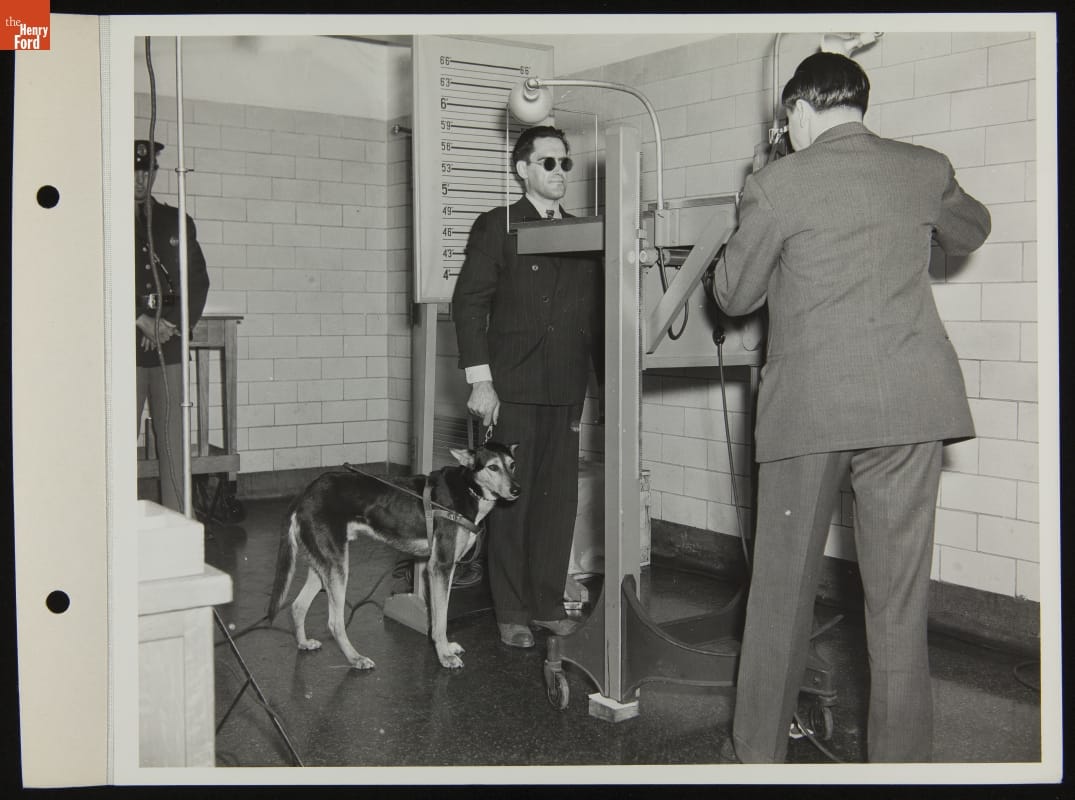
- Ford Employee Sylvester Rypkowski with Service Dog "Blackie," Being Photographed for ID Badge, October 1942 - Henry Ford believed in providing equal employment opportunities to people with disabilities -- a practice he began in the early years of his company. During World War II, Ford employed thousands of workers with disabilities. In October 1942, Ford Motor Company photographed Sylvester Rypkowski and his service dog, Blackie, as they became members of the Rouge plant's workforce.
- October 05, 1942
- Collections - Artifact
Ford Employee Sylvester Rypkowski with Service Dog "Blackie," Being Photographed for ID Badge, October 1942
Henry Ford believed in providing equal employment opportunities to people with disabilities -- a practice he began in the early years of his company. During World War II, Ford employed thousands of workers with disabilities. In October 1942, Ford Motor Company photographed Sylvester Rypkowski and his service dog, Blackie, as they became members of the Rouge plant's workforce.
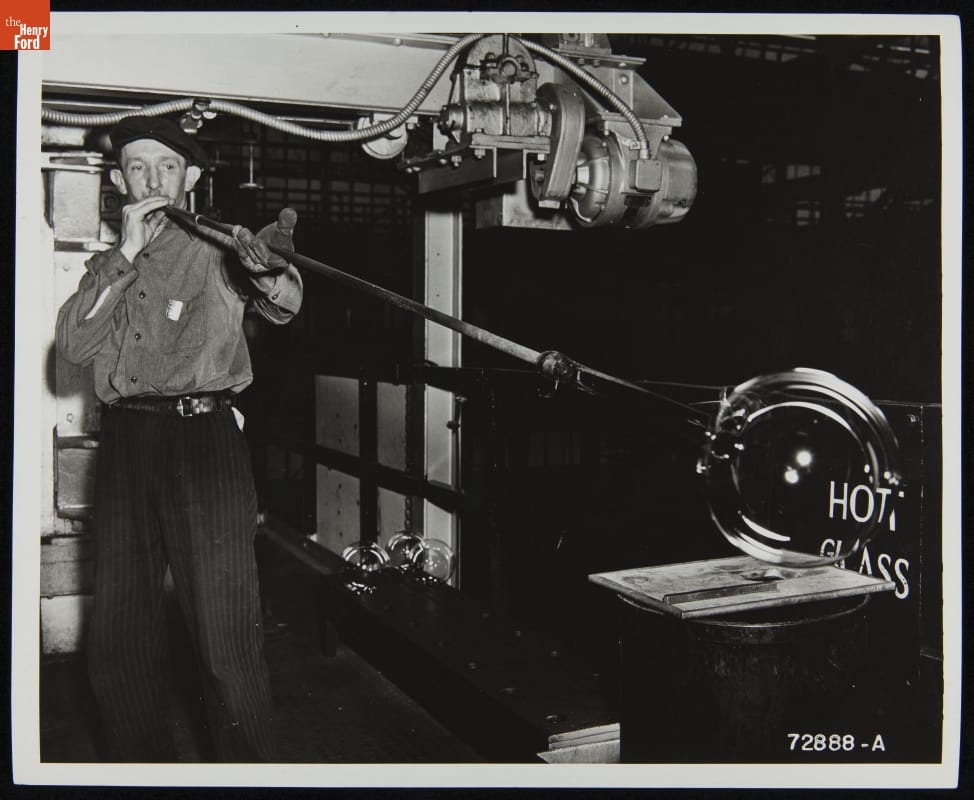
- Testing Batches of Glass at the Ford Rouge Glass Plant, 1940 - Unsatisfied with glass from outside suppliers, Ford Motor Company established its own glass plant at the Rouge in 1923. Furnaces produced molten glass, while overhead grinders and polishers worked the material to a perfectly smooth and clear finish. Two other Ford glass plants, in Pennsylvania and Minnesota, combined with the Rouge to manufacture 20 million feet of glass each year.
- January 03, 1940
- Collections - Artifact
Testing Batches of Glass at the Ford Rouge Glass Plant, 1940
Unsatisfied with glass from outside suppliers, Ford Motor Company established its own glass plant at the Rouge in 1923. Furnaces produced molten glass, while overhead grinders and polishers worked the material to a perfectly smooth and clear finish. Two other Ford glass plants, in Pennsylvania and Minnesota, combined with the Rouge to manufacture 20 million feet of glass each year.
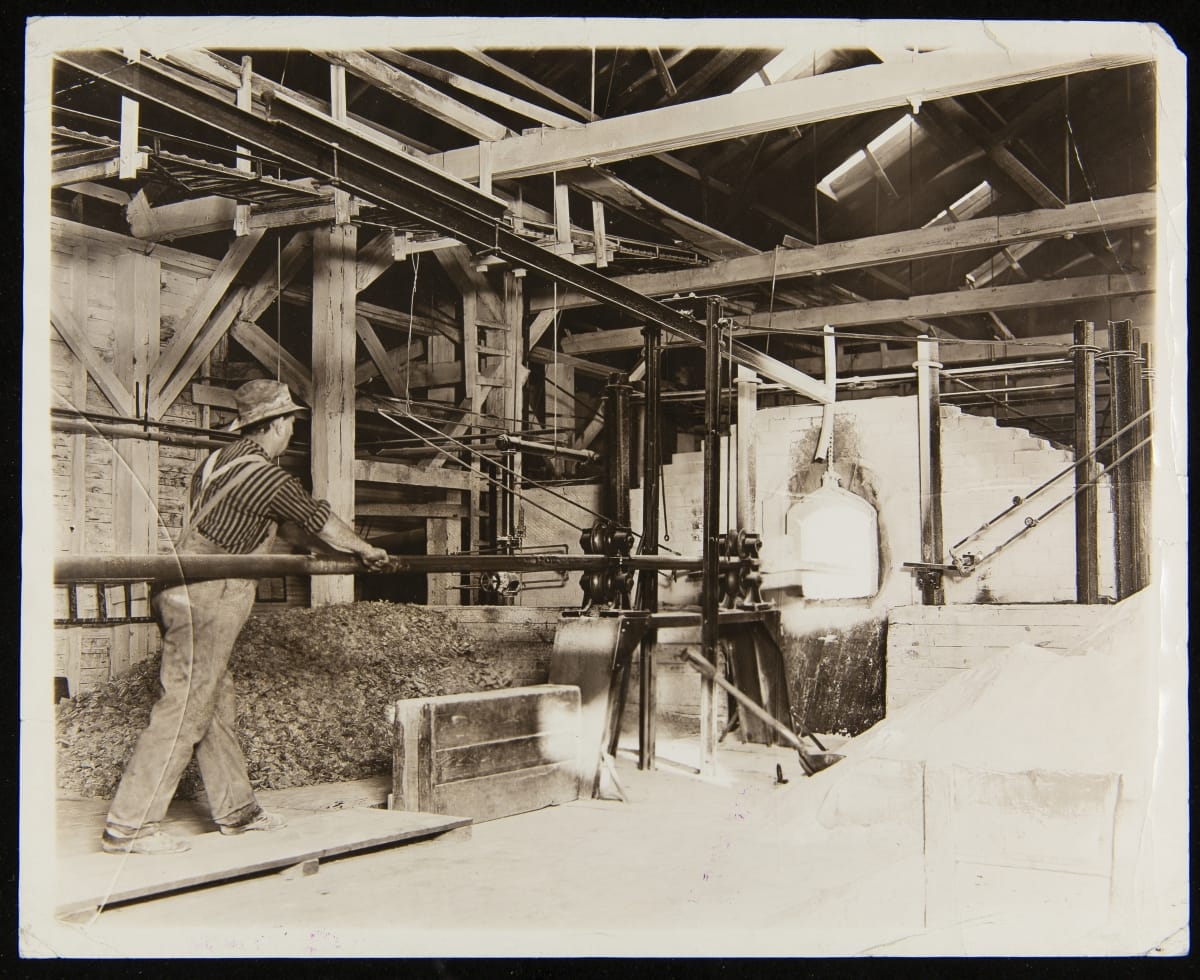
- Employee Working at Heinz Glass Factory, Sharpsburg, Pennsylvania, 1885-1910 - Before complete mechanization of the manufacturing process, many tasks at the Heinz factory were done by hand. The H.J. Heinz Company made their own boxes, glassware, cans, advertisements, and labels, allowing most production to be completed in-house. This photograph features a worker at the Heinz Glass Factory.
- 1885-1910
- Collections - Artifact
Employee Working at Heinz Glass Factory, Sharpsburg, Pennsylvania, 1885-1910
Before complete mechanization of the manufacturing process, many tasks at the Heinz factory were done by hand. The H.J. Heinz Company made their own boxes, glassware, cans, advertisements, and labels, allowing most production to be completed in-house. This photograph features a worker at the Heinz Glass Factory.
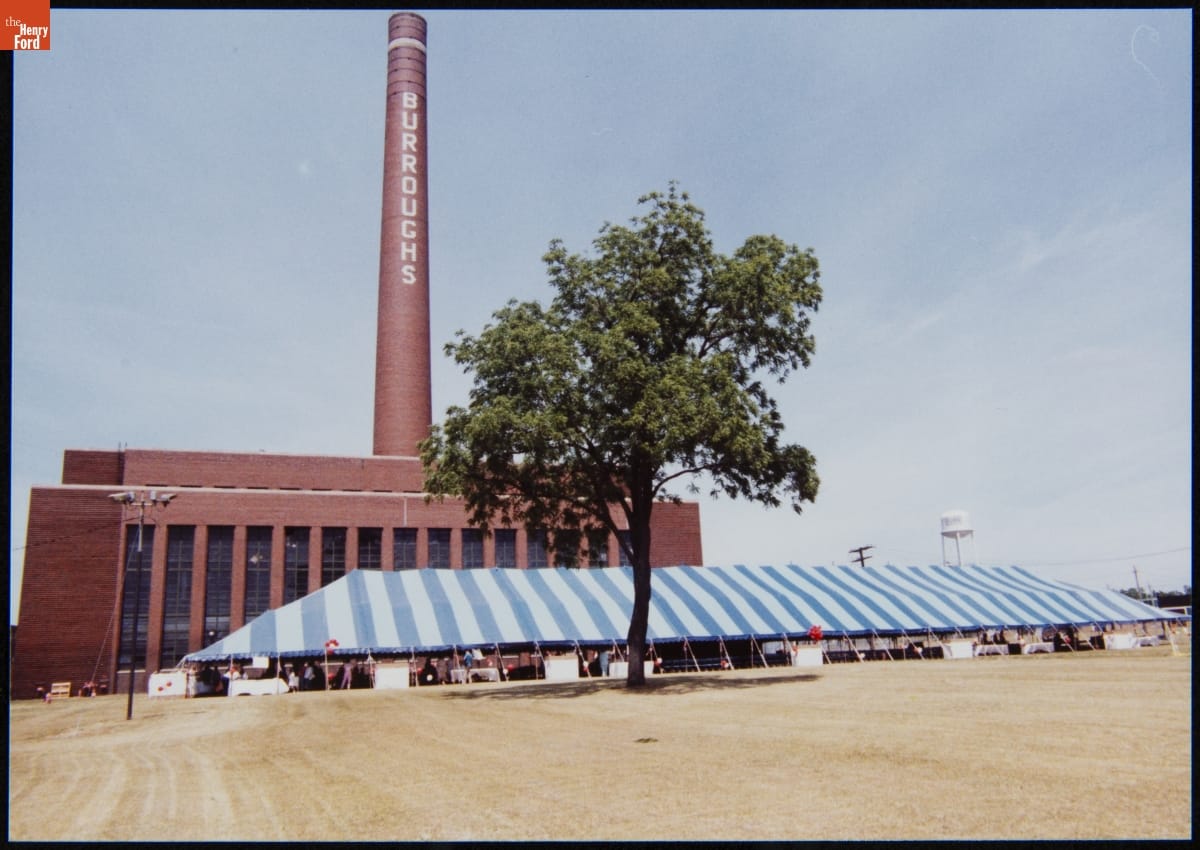
- "Big Top" Open House Event in Plymouth, Michigan, Burroughs Corporation, 1987 -
- 1987
- Collections - Artifact
"Big Top" Open House Event in Plymouth, Michigan, Burroughs Corporation, 1987
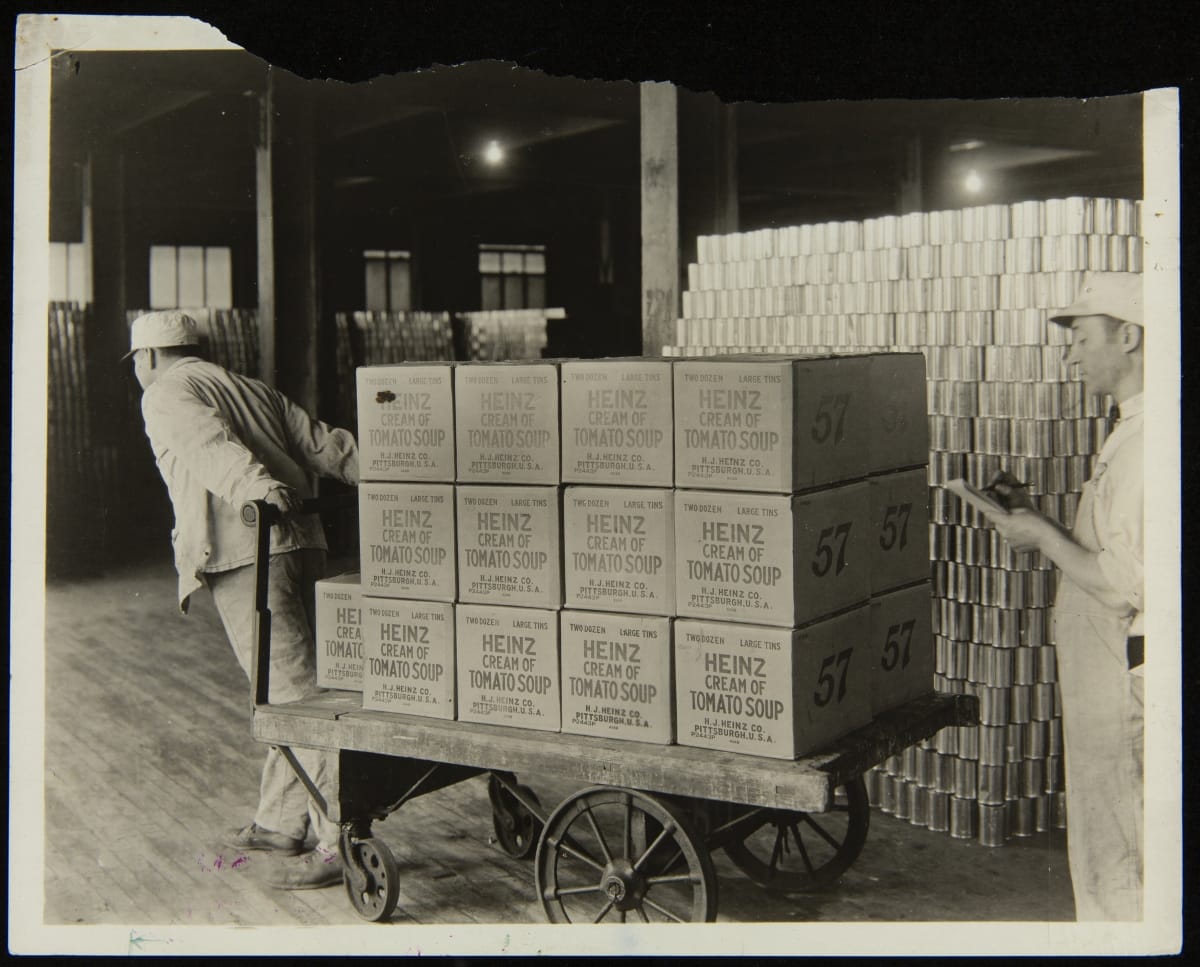
- Employee Moving Boxes of H. J. Heinz Cream of Tomato Soup, Pittsburgh, Pennsylvania, circa 1920 - Before complete mechanization of the manufacturing process, many tasks at the Heinz factory were done by hand. The H.J. Heinz Company documented the many departments of the manufacturing process through photographs. This photograph shows an employee moving boxes. These boxes were possibly heading for the shipping dock to be loaded onto a train or truck.
- circa 1920
- Collections - Artifact
Employee Moving Boxes of H. J. Heinz Cream of Tomato Soup, Pittsburgh, Pennsylvania, circa 1920
Before complete mechanization of the manufacturing process, many tasks at the Heinz factory were done by hand. The H.J. Heinz Company documented the many departments of the manufacturing process through photographs. This photograph shows an employee moving boxes. These boxes were possibly heading for the shipping dock to be loaded onto a train or truck.
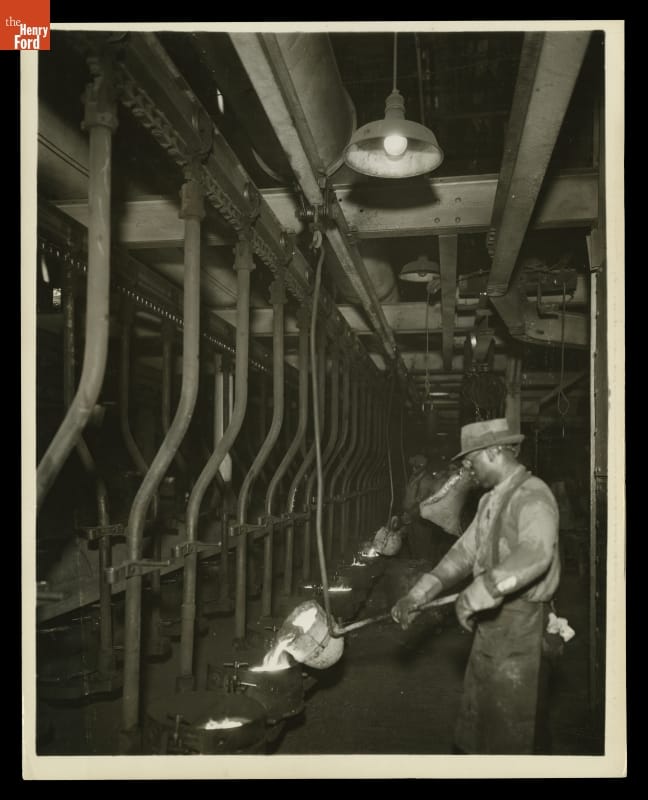
- Foundry Workers at the Ford Rouge Plant, 1934 - Workers at the Ford Rouge plant's foundry poured a molten mixture of metal, coke, and limestone into molds to create cast-metal engine blocks and parts. Once "shaken out" of their molds, castings were roughly machined before heading elsewhere for finishing and assembly. The Rouge foundry set an industry benchmark in 1932 by successfully casting Ford's intricate, single-piece V-8 engine block.
- 1934
- Collections - Artifact
Foundry Workers at the Ford Rouge Plant, 1934
Workers at the Ford Rouge plant's foundry poured a molten mixture of metal, coke, and limestone into molds to create cast-metal engine blocks and parts. Once "shaken out" of their molds, castings were roughly machined before heading elsewhere for finishing and assembly. The Rouge foundry set an industry benchmark in 1932 by successfully casting Ford's intricate, single-piece V-8 engine block.
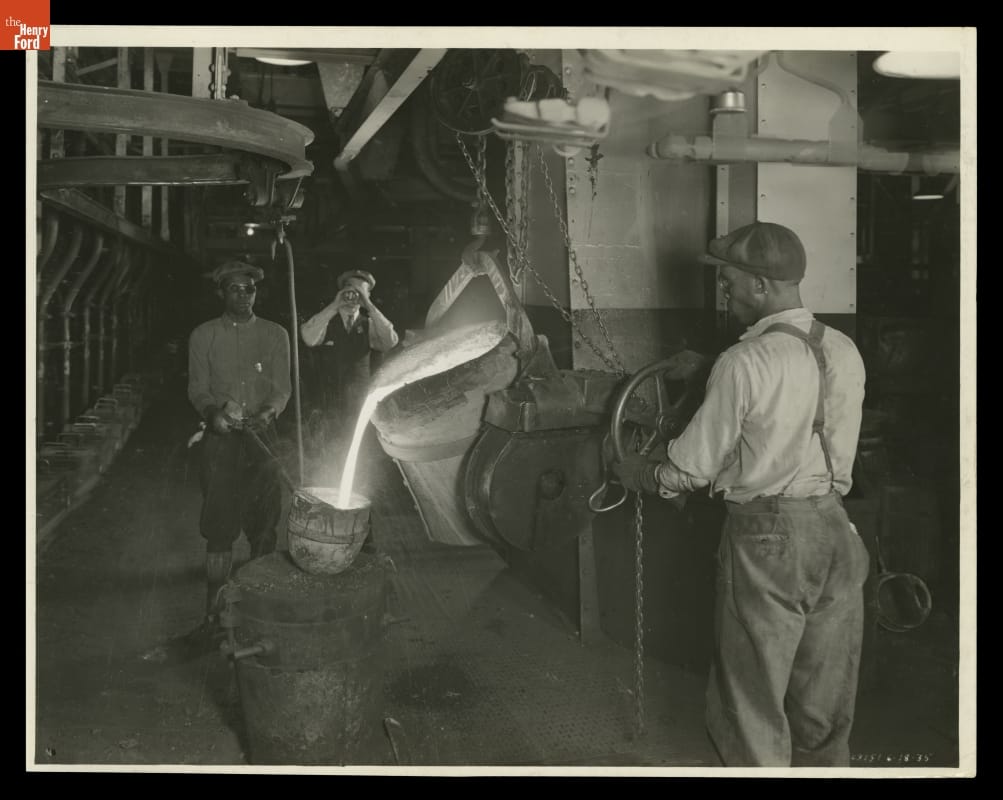
- Camshaft Casting by Foundry Workers, Ford Rouge Plant, 1935 - Workers at the Ford Rouge plant's foundry poured a molten mixture of metal, coke, and limestone into molds to create cast-metal engine blocks and parts. Once "shaken out" of their molds, castings were roughly machined before heading elsewhere for finishing and assembly. The Rouge foundry set an industry benchmark in 1932 by successfully casting Ford's intricate, single-piece V-8 engine block.
- June 18, 1935
- Collections - Artifact
Camshaft Casting by Foundry Workers, Ford Rouge Plant, 1935
Workers at the Ford Rouge plant's foundry poured a molten mixture of metal, coke, and limestone into molds to create cast-metal engine blocks and parts. Once "shaken out" of their molds, castings were roughly machined before heading elsewhere for finishing and assembly. The Rouge foundry set an industry benchmark in 1932 by successfully casting Ford's intricate, single-piece V-8 engine block.
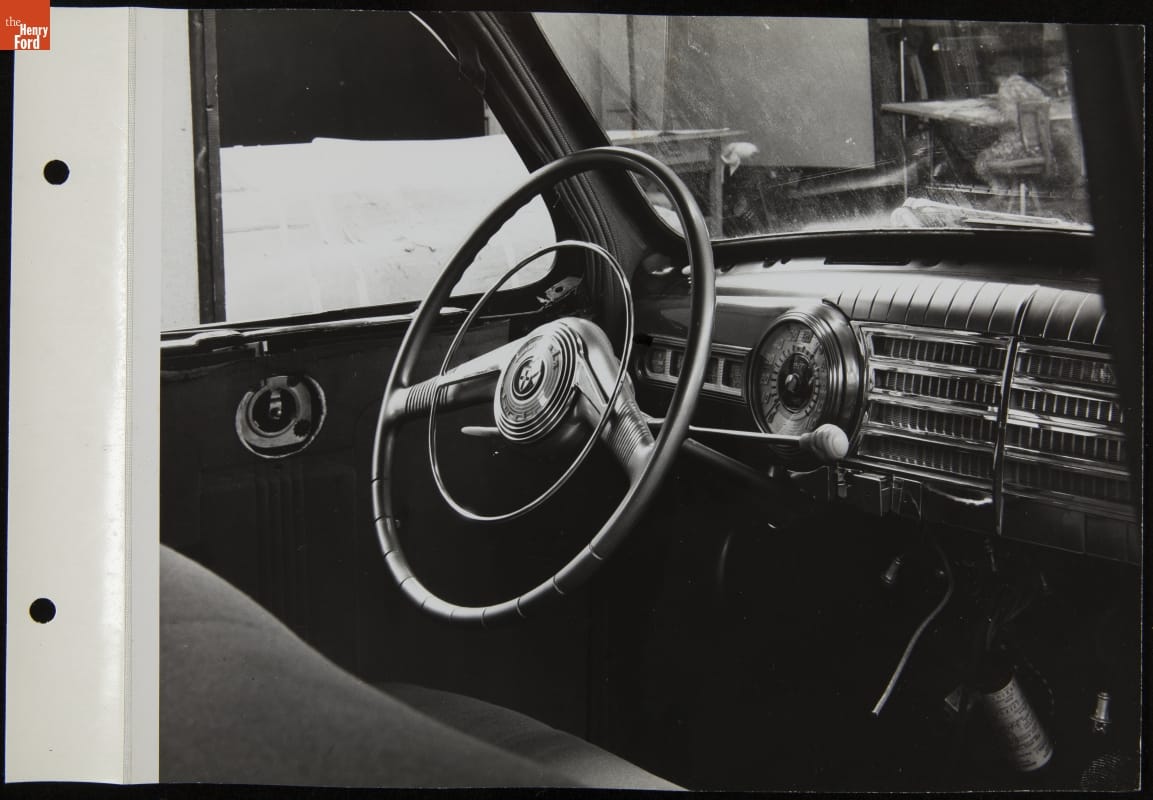
- Interior of Lincoln Zephyr Car in Design Department, Woman Designer in Background, October 1944 - With World War II moving toward a close, Lincoln designers began work on new civilian models. It was anticipated that the Lincoln Zephyr would return, so designers set about refreshing the 1942 model. However, the Zephyr name was dropped before the 1946 models -- the company's first postwar cars -- debuted.
- October 14, 1944
- Collections - Artifact
Interior of Lincoln Zephyr Car in Design Department, Woman Designer in Background, October 1944
With World War II moving toward a close, Lincoln designers began work on new civilian models. It was anticipated that the Lincoln Zephyr would return, so designers set about refreshing the 1942 model. However, the Zephyr name was dropped before the 1946 models -- the company's first postwar cars -- debuted.
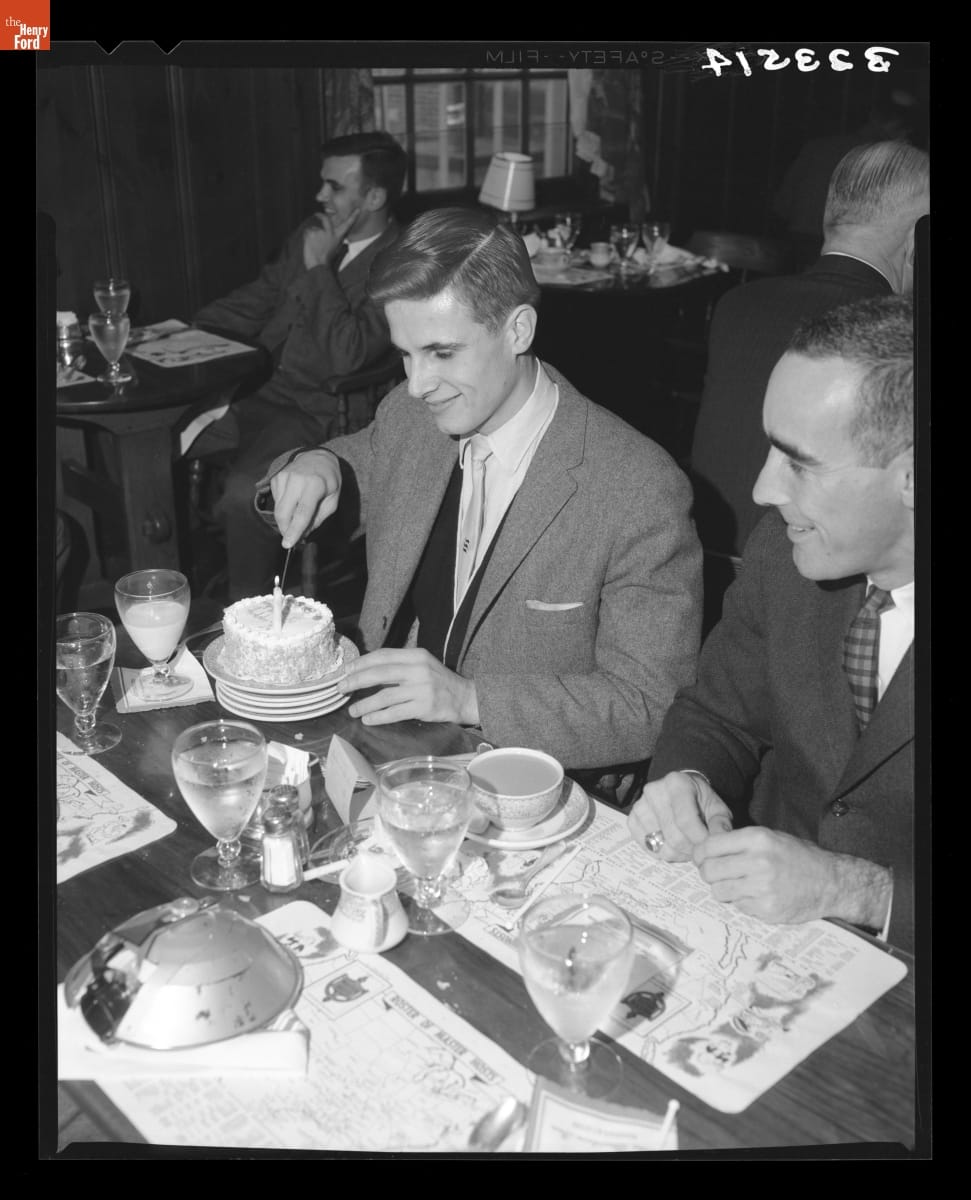
- Birthday Party for Rudy Ruzicska, November 1959 - Rudy Ruzicska was a long-time photographer at The Henry Ford. He started his 66-year-long career in 1956 while still in high school, working part-time in maintenance and cleaning. Rudy also pitched in where needed. When a position opened in photography, he took it, documenting many of the institution's events, programs, and collections over his career. Rudy retired in 2022.
- November 06, 1959
- Collections - Artifact
Birthday Party for Rudy Ruzicska, November 1959
Rudy Ruzicska was a long-time photographer at The Henry Ford. He started his 66-year-long career in 1956 while still in high school, working part-time in maintenance and cleaning. Rudy also pitched in where needed. When a position opened in photography, he took it, documenting many of the institution's events, programs, and collections over his career. Rudy retired in 2022.
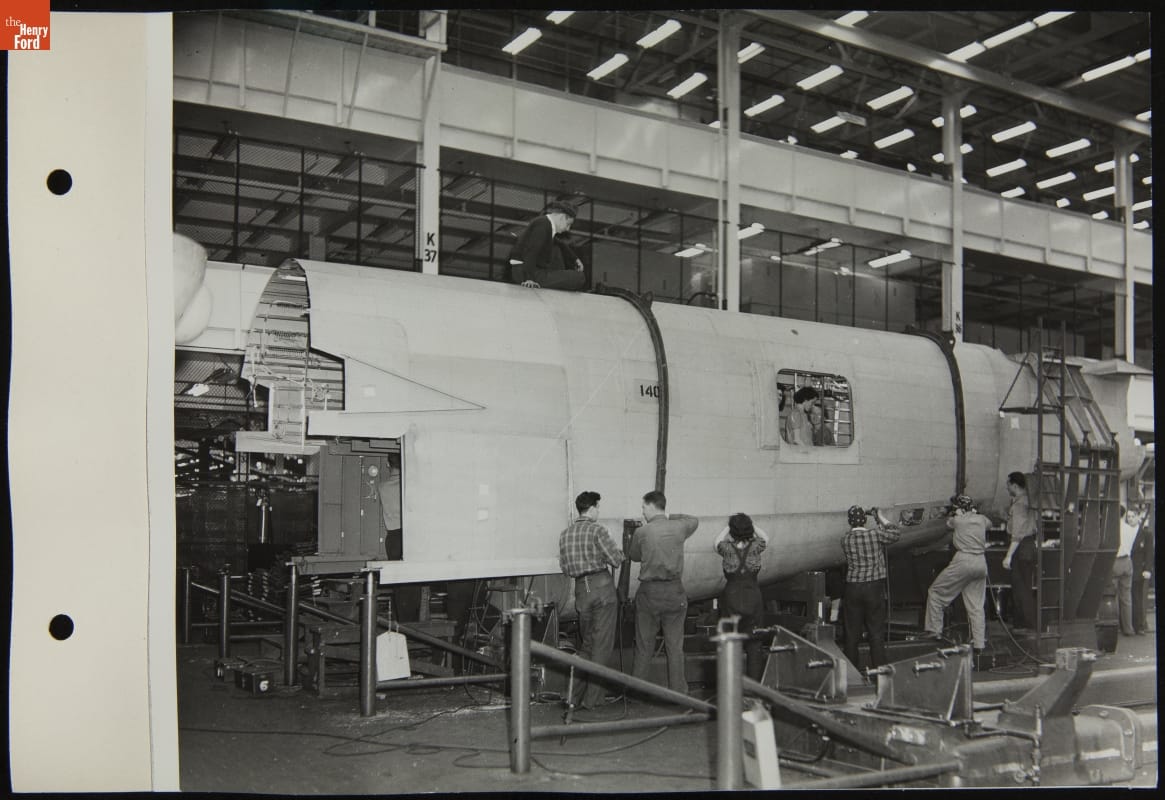
- Employees at Willow Run Assembling Bomber Frame, February 1943 - At Willow Run, Ford Motor Company built B-24 bomber planes for World War II using automobile mass production techniques. Airplanes were much more complex than cars. They required constant design changes poorly suited to a standardized assembly line. Ford overcame these difficulties and, at the plant's peak, Willow Run crews produced an average of one bomber every 63 minutes.
- February 04, 1943
- Collections - Artifact
Employees at Willow Run Assembling Bomber Frame, February 1943
At Willow Run, Ford Motor Company built B-24 bomber planes for World War II using automobile mass production techniques. Airplanes were much more complex than cars. They required constant design changes poorly suited to a standardized assembly line. Ford overcame these difficulties and, at the plant's peak, Willow Run crews produced an average of one bomber every 63 minutes.