
Search
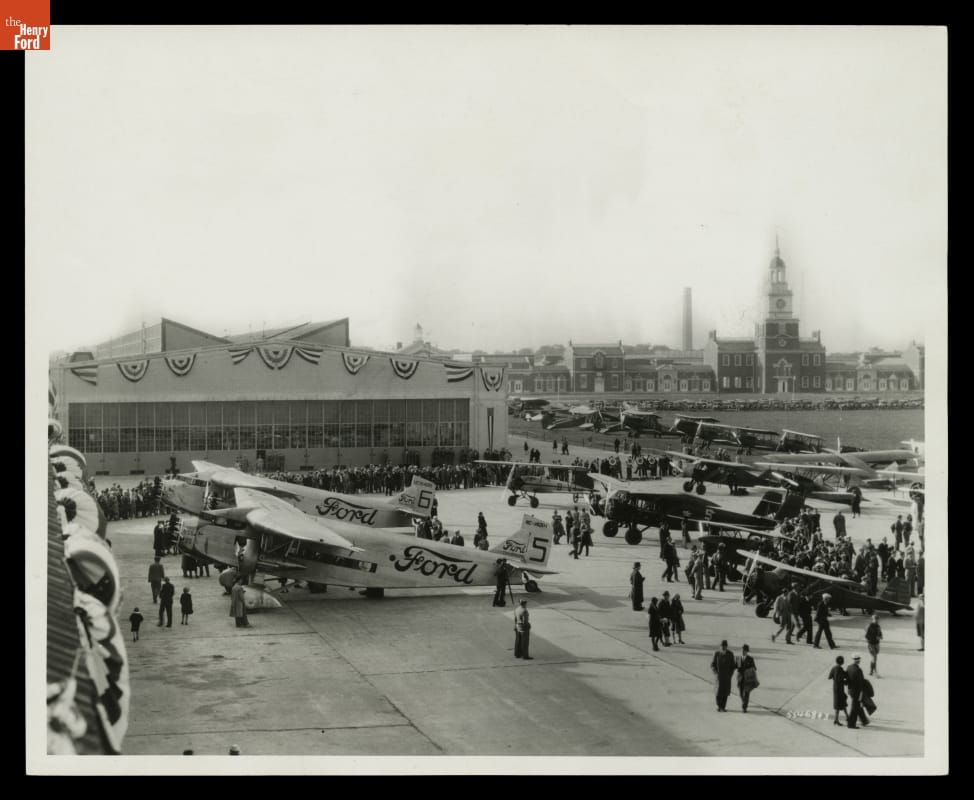
- Ford Reliability Tour at Ford Airport, Dearborn, Michigan, 1930 - From 1925-1931, Ford Motor Company sponsored annual air tours to promote reliability and safety in commercial aircraft. Pilots flew to pre-determined cities, and their airplanes were rated on the ability to take off and land quickly and maintain consistent speeds. The 1930 tour included 18 entries and visited 29 cities in the United States and Canada.
- September 27, 1930
- Collections - Artifact
Ford Reliability Tour at Ford Airport, Dearborn, Michigan, 1930
From 1925-1931, Ford Motor Company sponsored annual air tours to promote reliability and safety in commercial aircraft. Pilots flew to pre-determined cities, and their airplanes were rated on the ability to take off and land quickly and maintain consistent speeds. The 1930 tour included 18 entries and visited 29 cities in the United States and Canada.
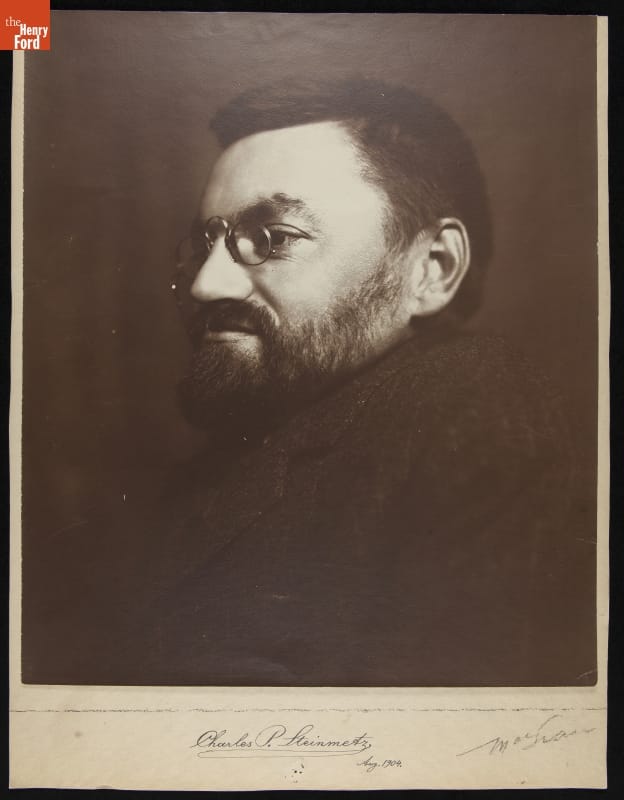
- Charles Steinmetz, August 1904 - Charles Steinmetz excelled at applying mathematical theory and scientific methods to practical engineering, helping define the role of "scientist-engineer" in the American electrical industry. Steinmetz developed important theories on alternating currents, conducted breakthrough experiments on power loss, and authored a number of influential textbooks. His innovations shaped the electrical engineering profession and improved and expanded electrical distribution systems.
- August 01, 1904
- Collections - Artifact
Charles Steinmetz, August 1904
Charles Steinmetz excelled at applying mathematical theory and scientific methods to practical engineering, helping define the role of "scientist-engineer" in the American electrical industry. Steinmetz developed important theories on alternating currents, conducted breakthrough experiments on power loss, and authored a number of influential textbooks. His innovations shaped the electrical engineering profession and improved and expanded electrical distribution systems.
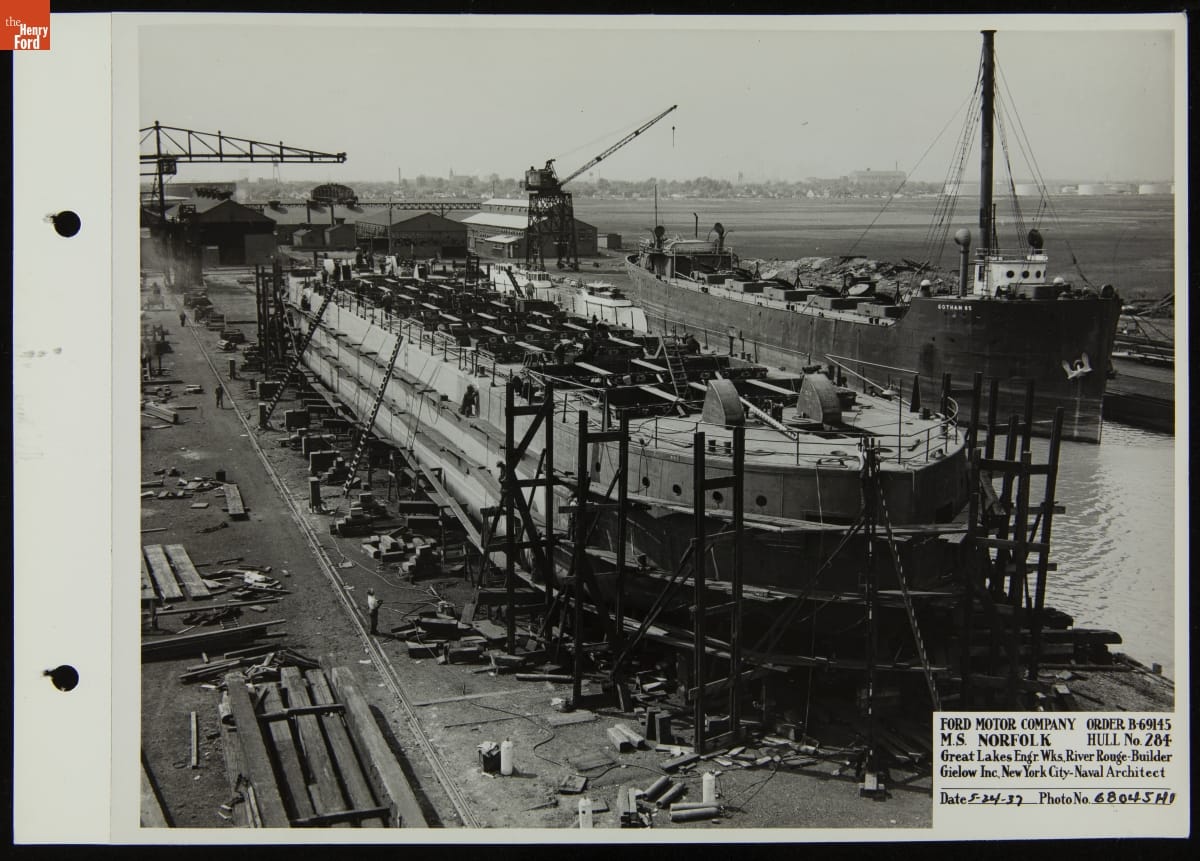
- Ford Freighter "Norfolk" under Construction at Great Lakes Engineering Works, May 24, 1937 - Ford Motor Company built four canal boats in the 1930s to transport finished auto parts between Ford's production plants on the East Coast and its River Rouge complex in Michigan. The freighters were designed to travel on the New York State Barge Canal. The <em>Norfolk</em>, named for the location of one of the Ford's East Coast plants, began service in 1937.
- April 30, 1937
- Collections - Artifact
Ford Freighter "Norfolk" under Construction at Great Lakes Engineering Works, May 24, 1937
Ford Motor Company built four canal boats in the 1930s to transport finished auto parts between Ford's production plants on the East Coast and its River Rouge complex in Michigan. The freighters were designed to travel on the New York State Barge Canal. The Norfolk, named for the location of one of the Ford's East Coast plants, began service in 1937.
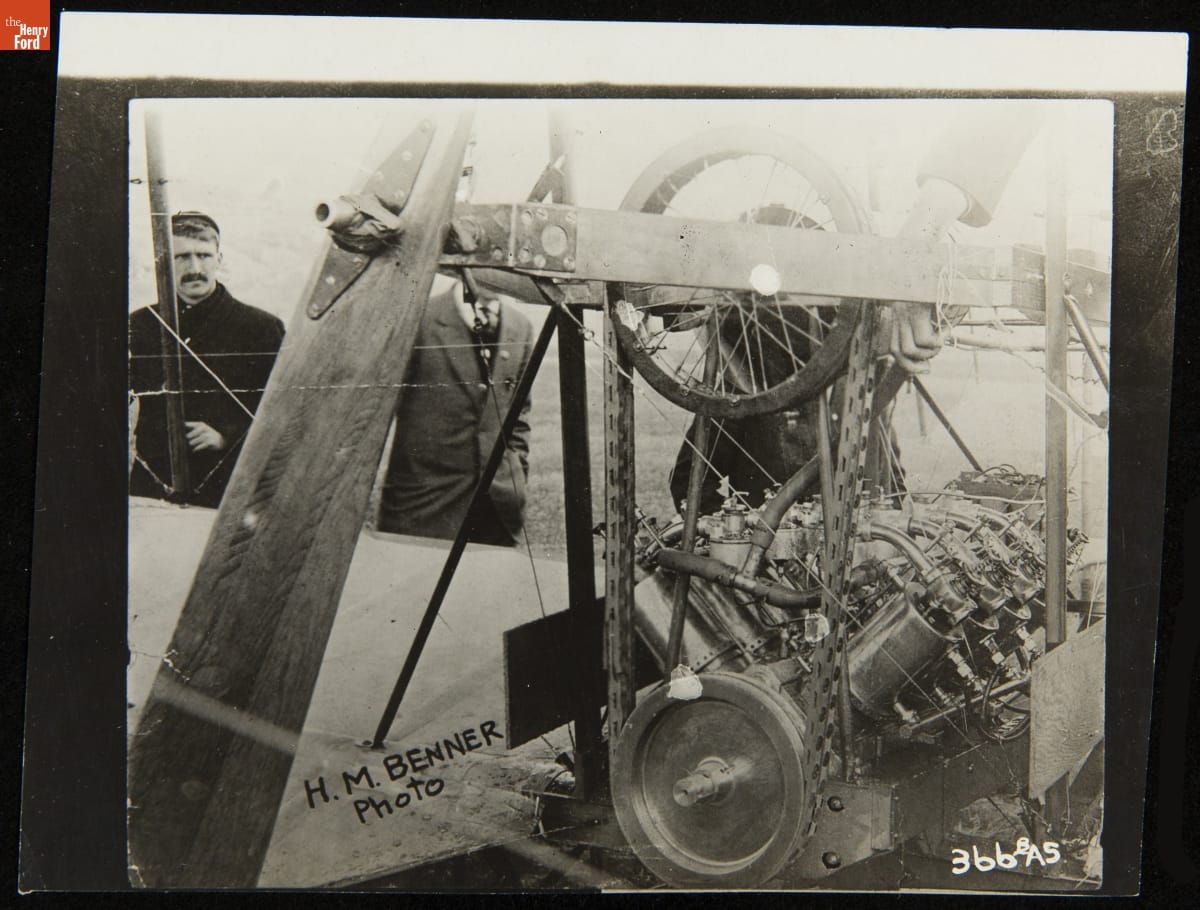
- Engine Designed by Glenn Curtiss for the Aerial Experiment Association's "Silver Dart" Airplane, 1908-1909 - In 1907, Alexander Graham Bell recruited a team of young aviation enthusiasts for his elite Aerial Experiment Association (AEA). The group produced a string of airplanes that ultimately achieved manned flight and contributed key developments to the fledgling field of aviation. AEA "motor expert" Glenn Curtiss designed this water-cooled engine to prevent overheating and allow for longer flights.
- 1908-1909
- Collections - Artifact
Engine Designed by Glenn Curtiss for the Aerial Experiment Association's "Silver Dart" Airplane, 1908-1909
In 1907, Alexander Graham Bell recruited a team of young aviation enthusiasts for his elite Aerial Experiment Association (AEA). The group produced a string of airplanes that ultimately achieved manned flight and contributed key developments to the fledgling field of aviation. AEA "motor expert" Glenn Curtiss designed this water-cooled engine to prevent overheating and allow for longer flights.
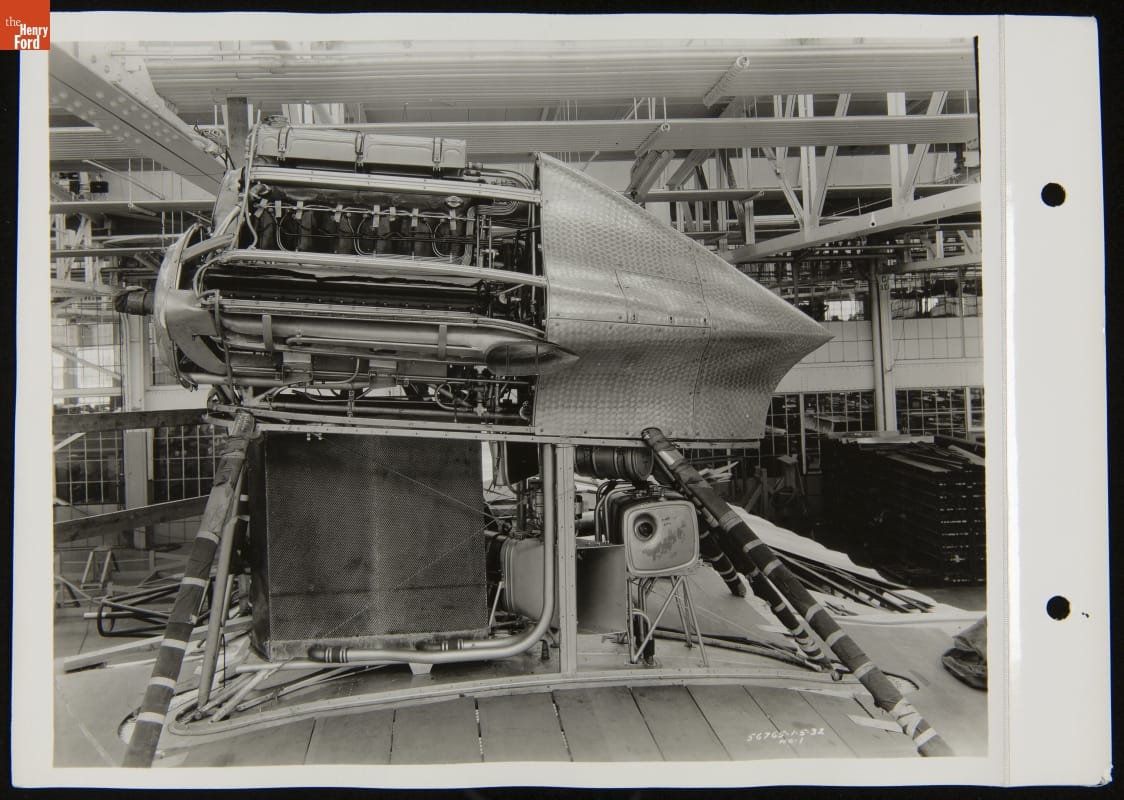
- Construction of Ford Tri-Motor 14-AT Showing Center Hispano Suiza Engine, January 1932 - Ford Motor Company's Tri-Motor, built from 1926-1933, flew in many early American airline fleets. The all-metal airplane was rugged, dependable, and equally adaptable to passenger and freight service. Tri-Motors were built with some of the same mass production techniques used in Ford's automobile plants. This version, the 14-AT, featured three Hispano-Suiza Engines. This photograph reveals the interior of the central engine.
- January 05, 1932
- Collections - Artifact
Construction of Ford Tri-Motor 14-AT Showing Center Hispano Suiza Engine, January 1932
Ford Motor Company's Tri-Motor, built from 1926-1933, flew in many early American airline fleets. The all-metal airplane was rugged, dependable, and equally adaptable to passenger and freight service. Tri-Motors were built with some of the same mass production techniques used in Ford's automobile plants. This version, the 14-AT, featured three Hispano-Suiza Engines. This photograph reveals the interior of the central engine.
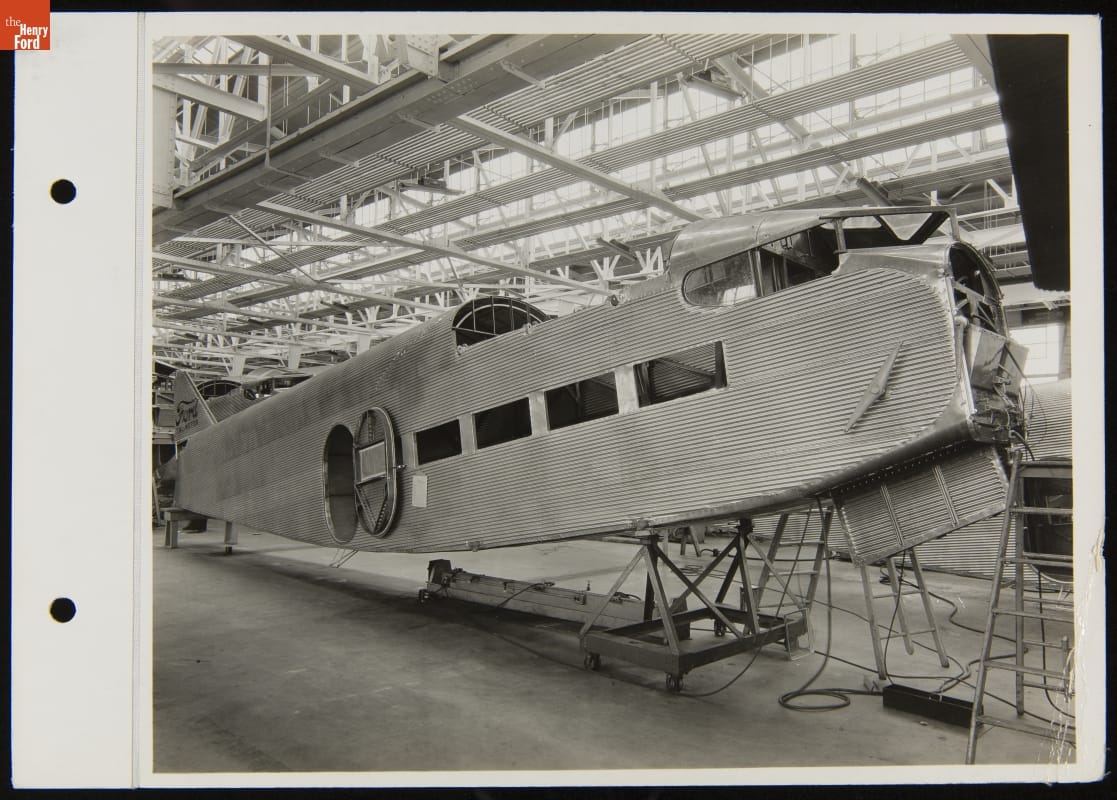
- Ford Tri-Motor Airplane Fuselage Being Constructed at the Stout Factory, Dearborn, Michigan, April 1929 - Ford Motor Company's Tri-Motor, built from 1926-1933, flew in many early American airline fleets. The all-metal airplane was rugged, dependable, and equally adaptable to passenger and freight service. Tri-Motors were built with some of the same mass production techniques used in Ford's automobile plants. The fuselage, or the main body of the airplane, is constructed in this photograph.
- April 30, 1929
- Collections - Artifact
Ford Tri-Motor Airplane Fuselage Being Constructed at the Stout Factory, Dearborn, Michigan, April 1929
Ford Motor Company's Tri-Motor, built from 1926-1933, flew in many early American airline fleets. The all-metal airplane was rugged, dependable, and equally adaptable to passenger and freight service. Tri-Motors were built with some of the same mass production techniques used in Ford's automobile plants. The fuselage, or the main body of the airplane, is constructed in this photograph.
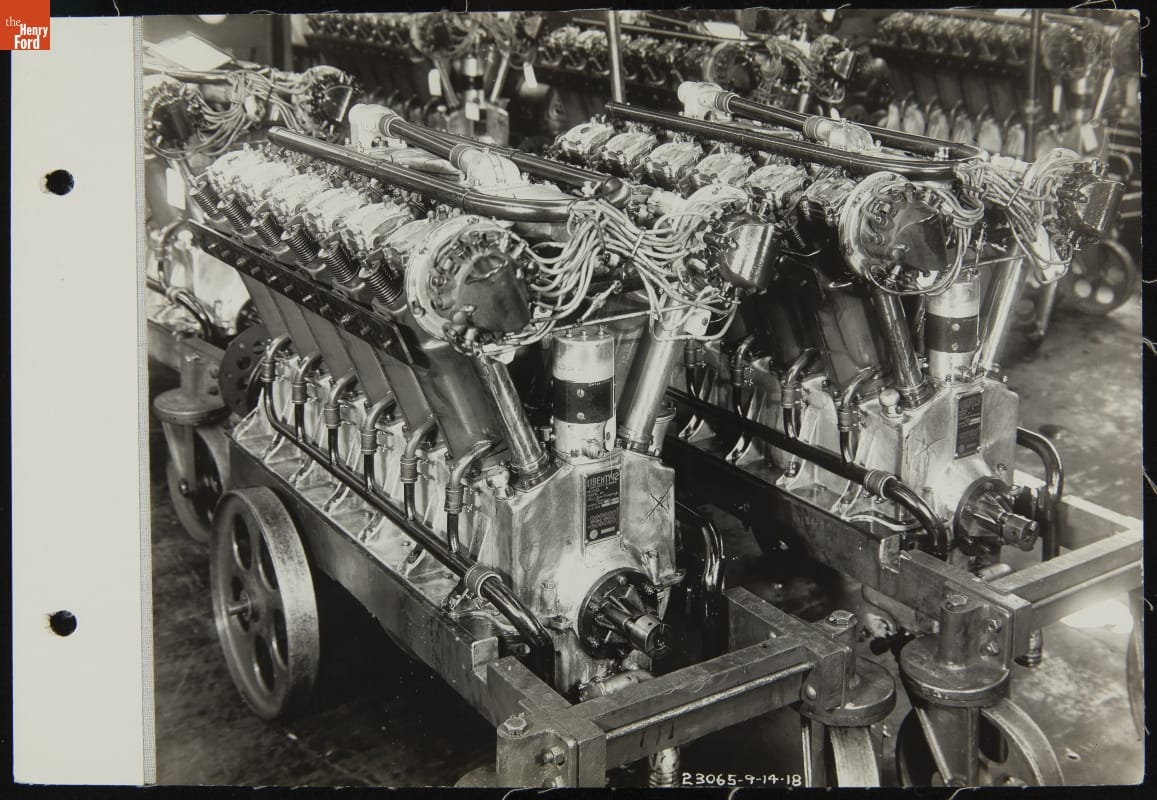
- Liberty Engine, 1918 - Designed at the urging of the United States government, the 400-horsepower Liberty V-12 engine powered military aircraft during World War I. Ford Motor Company manufactured 3,950 of these engines from May to November 1918. Lincoln, Marmon, Packard, Buick, and Cadillac also built Liberty engines during the war. Altogether, U.S. automakers produced more than 20,000 units.
- September 14, 1918
- Collections - Artifact
Liberty Engine, 1918
Designed at the urging of the United States government, the 400-horsepower Liberty V-12 engine powered military aircraft during World War I. Ford Motor Company manufactured 3,950 of these engines from May to November 1918. Lincoln, Marmon, Packard, Buick, and Cadillac also built Liberty engines during the war. Altogether, U.S. automakers produced more than 20,000 units.
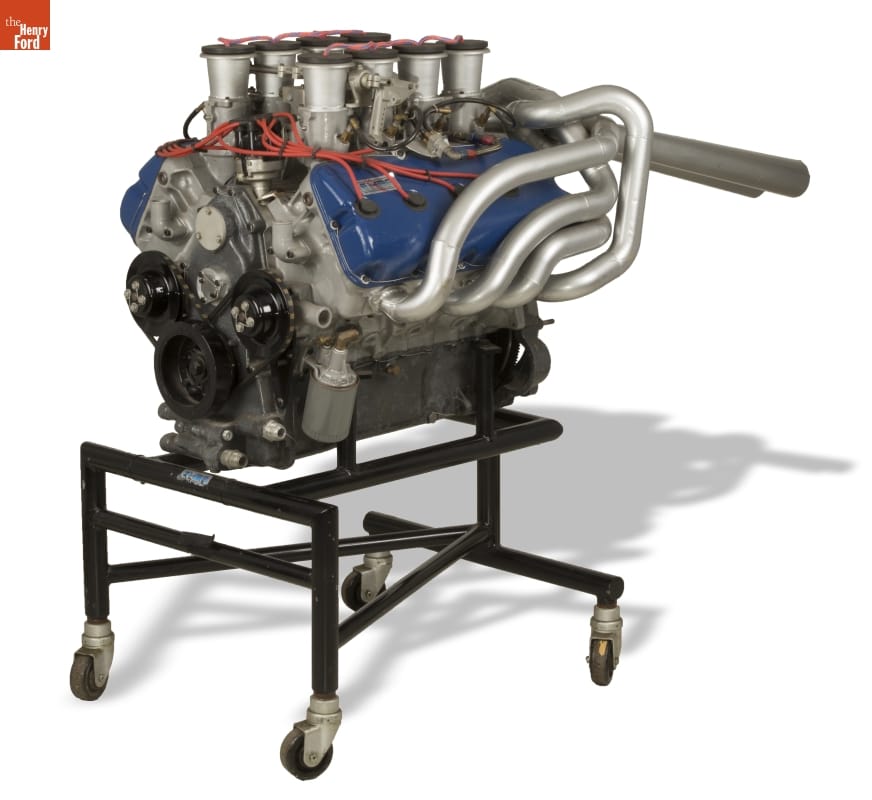
- Ford "Calliope" V-8 Automobile Engine, 1968 - Ford engineers developed the aluminum-block 427-cubic-inch "calliope" engine for the 1968 Le Mans 24-hour race. Three valves per cylinder were connected to pushrods driven by twin camshafts in the block. The distinctive fuel injector stacks above each cylinder, resembling whistles on a musical calliope, gave the engine its nickname. Rules changes at Le Mans prevented the engine from ever racing.
- 1968
- Collections - Artifact
Ford "Calliope" V-8 Automobile Engine, 1968
Ford engineers developed the aluminum-block 427-cubic-inch "calliope" engine for the 1968 Le Mans 24-hour race. Three valves per cylinder were connected to pushrods driven by twin camshafts in the block. The distinctive fuel injector stacks above each cylinder, resembling whistles on a musical calliope, gave the engine its nickname. Rules changes at Le Mans prevented the engine from ever racing.
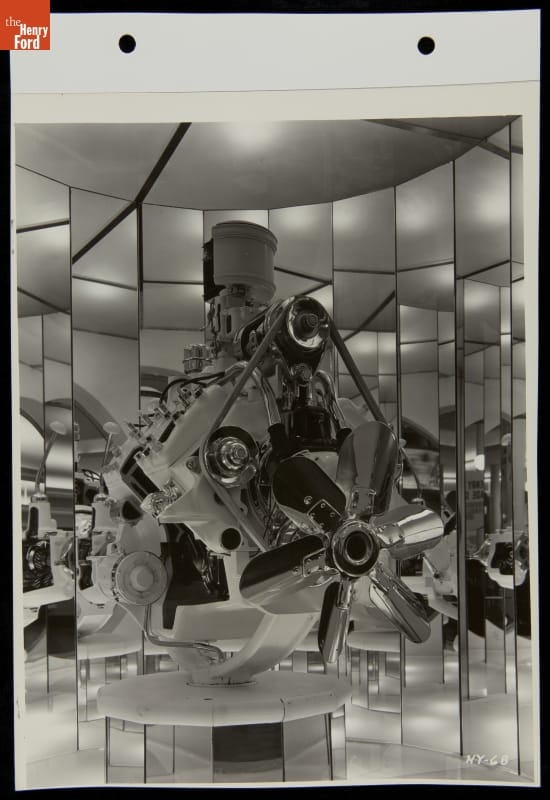
- "Ford V-8 Engine Shows its Inner Workings," Ford Exposition, New York World's Fair, 1939 - Henry Ford viewed national expositions as business opportunities <EM>and</EM> platforms for public education. During the 1939-40 New York World's Fair, Ford Motor Company spent more than $5 million to build and maintain an elaborate exposition space. Informative displays and manufacturing demonstrations inside Ford's massive fair building offered visitors an in-depth, entertaining, and educational look at industrial processes.
- May 03, 1939
- Collections - Artifact
"Ford V-8 Engine Shows its Inner Workings," Ford Exposition, New York World's Fair, 1939
Henry Ford viewed national expositions as business opportunities and platforms for public education. During the 1939-40 New York World's Fair, Ford Motor Company spent more than $5 million to build and maintain an elaborate exposition space. Informative displays and manufacturing demonstrations inside Ford's massive fair building offered visitors an in-depth, entertaining, and educational look at industrial processes.
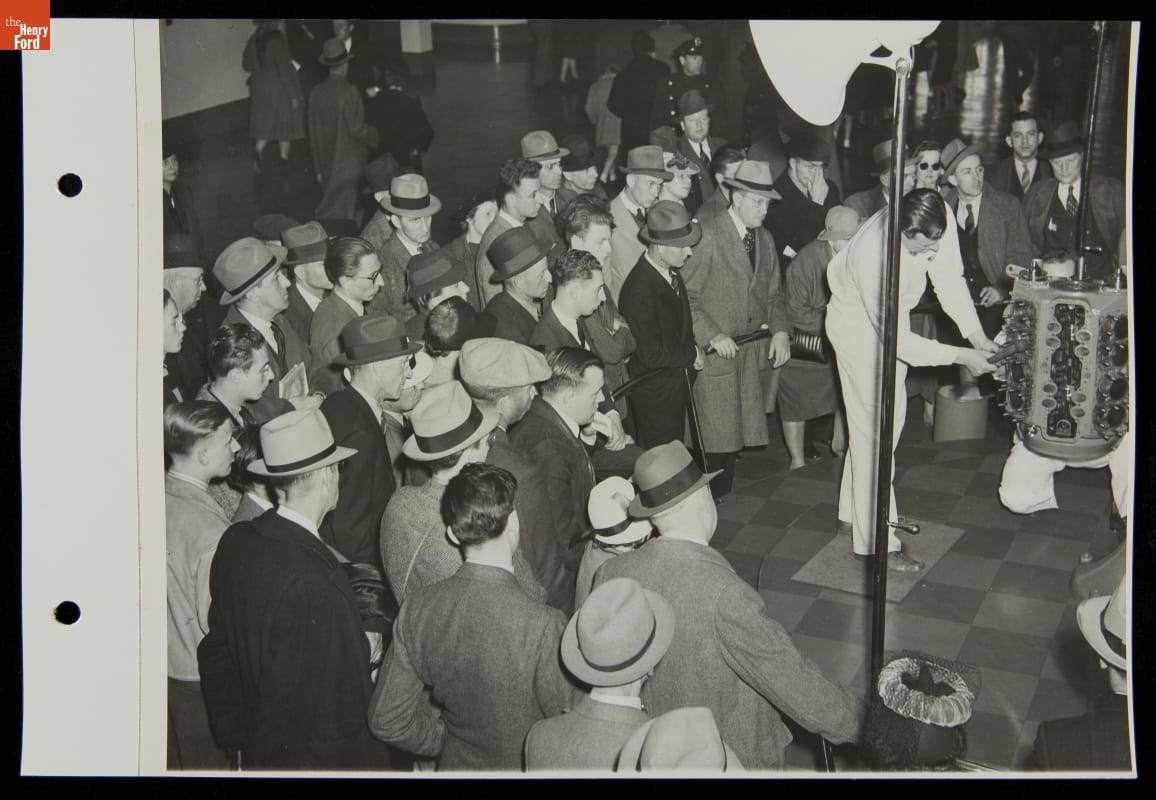
- Crowds near Motor Assembly, Ford Exposition, New York World's Fair, 1939 - Henry Ford viewed national expositions as business opportunities <EM>and</EM> platforms for public education. During the 1939-40 New York World's Fair, Ford Motor Company spent more than $5 million to build and maintain an elaborate exposition space. Informative displays and manufacturing demonstrations inside Ford's massive fair building offered visitors an in-depth, entertaining, and educational look at industrial processes.
- 1939
- Collections - Artifact
Crowds near Motor Assembly, Ford Exposition, New York World's Fair, 1939
Henry Ford viewed national expositions as business opportunities and platforms for public education. During the 1939-40 New York World's Fair, Ford Motor Company spent more than $5 million to build and maintain an elaborate exposition space. Informative displays and manufacturing demonstrations inside Ford's massive fair building offered visitors an in-depth, entertaining, and educational look at industrial processes.