
Search
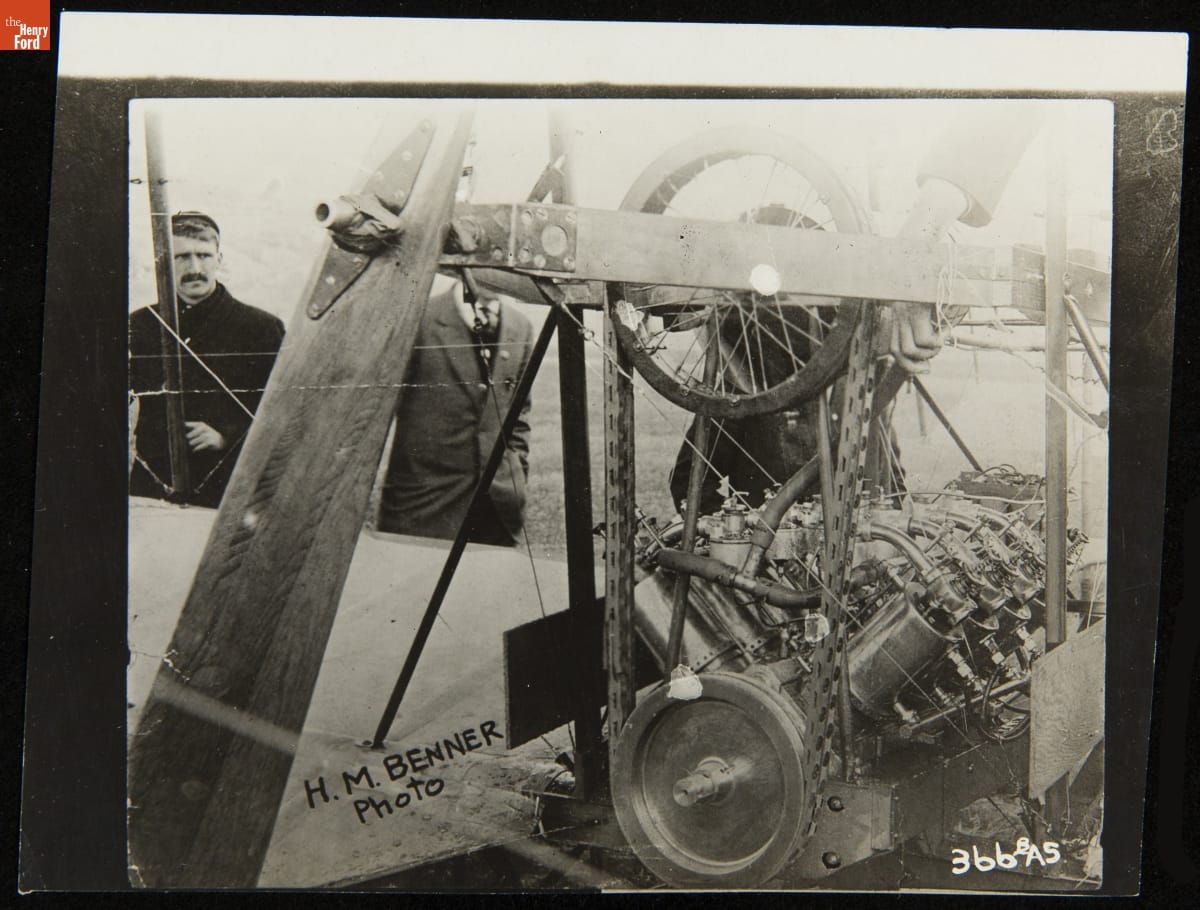
- Engine Designed by Glenn Curtiss for the Aerial Experiment Association's "Silver Dart" Airplane, 1908-1909 - In 1907, Alexander Graham Bell recruited a team of young aviation enthusiasts for his elite Aerial Experiment Association (AEA). The group produced a string of airplanes that ultimately achieved manned flight and contributed key developments to the fledgling field of aviation. AEA "motor expert" Glenn Curtiss designed this water-cooled engine to prevent overheating and allow for longer flights.
- 1908-1909
- Collections - Artifact
Engine Designed by Glenn Curtiss for the Aerial Experiment Association's "Silver Dart" Airplane, 1908-1909
In 1907, Alexander Graham Bell recruited a team of young aviation enthusiasts for his elite Aerial Experiment Association (AEA). The group produced a string of airplanes that ultimately achieved manned flight and contributed key developments to the fledgling field of aviation. AEA "motor expert" Glenn Curtiss designed this water-cooled engine to prevent overheating and allow for longer flights.
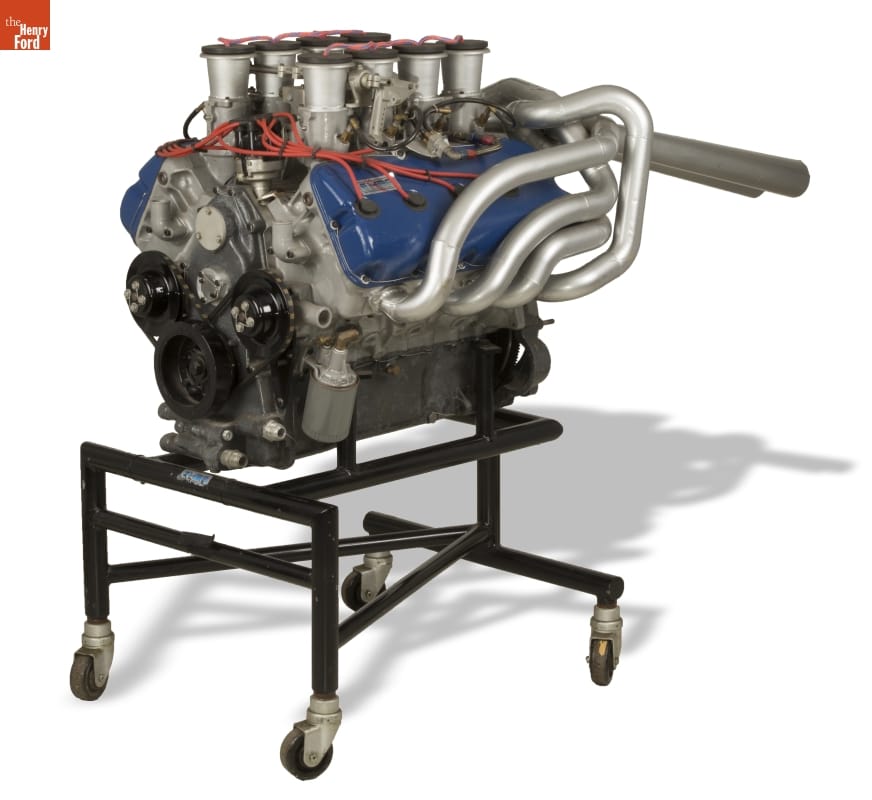
- Ford "Calliope" V-8 Automobile Engine, 1968 - Ford engineers developed the aluminum-block 427-cubic-inch "calliope" engine for the 1968 Le Mans 24-hour race. Three valves per cylinder were connected to pushrods driven by twin camshafts in the block. The distinctive fuel injector stacks above each cylinder, resembling whistles on a musical calliope, gave the engine its nickname. Rules changes at Le Mans prevented the engine from ever racing.
- 1968
- Collections - Artifact
Ford "Calliope" V-8 Automobile Engine, 1968
Ford engineers developed the aluminum-block 427-cubic-inch "calliope" engine for the 1968 Le Mans 24-hour race. Three valves per cylinder were connected to pushrods driven by twin camshafts in the block. The distinctive fuel injector stacks above each cylinder, resembling whistles on a musical calliope, gave the engine its nickname. Rules changes at Le Mans prevented the engine from ever racing.
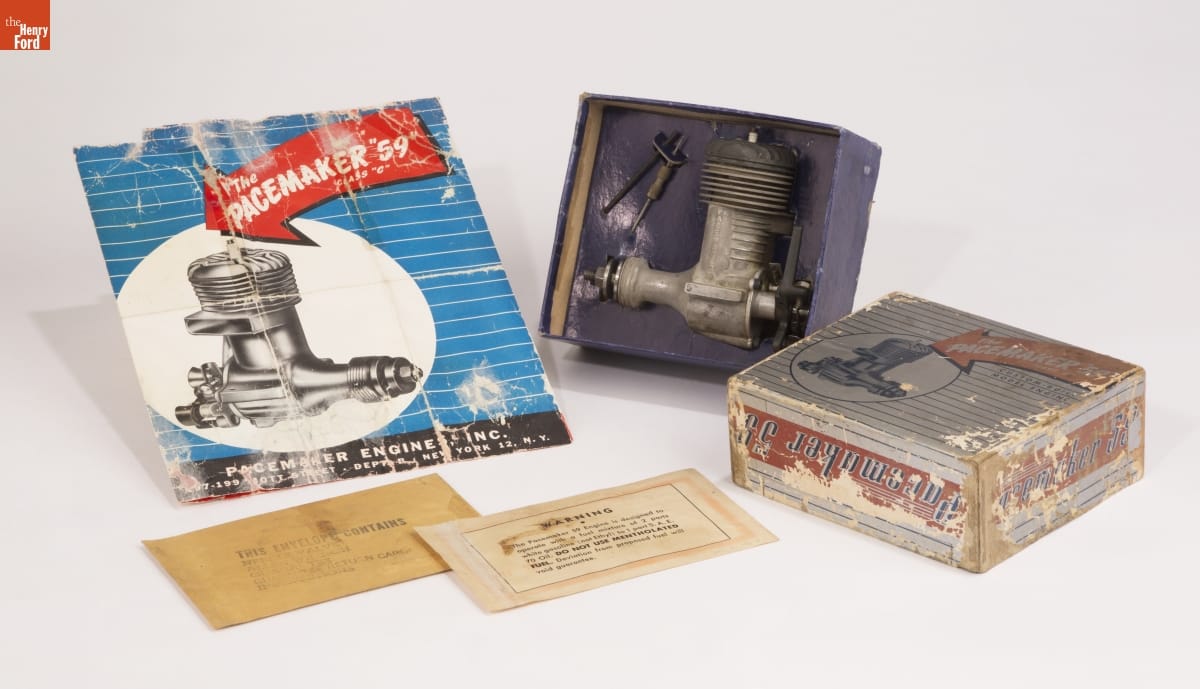
- Pacemaker "59" Engine, 1946-1947 - Tether cars, gas-powered model race cars, were popular in the 1930s and 1940s. They were raced individually while tethered to a central pivot, or against each other on a scaled-down board track. This Pacemaker "59" race engine was produced by Pacemaker Engines of New York, New York. "59" refers to its displacement of .594 cubic inches.
- 1946-1947
- Collections - Artifact
Pacemaker "59" Engine, 1946-1947
Tether cars, gas-powered model race cars, were popular in the 1930s and 1940s. They were raced individually while tethered to a central pivot, or against each other on a scaled-down board track. This Pacemaker "59" race engine was produced by Pacemaker Engines of New York, New York. "59" refers to its displacement of .594 cubic inches.
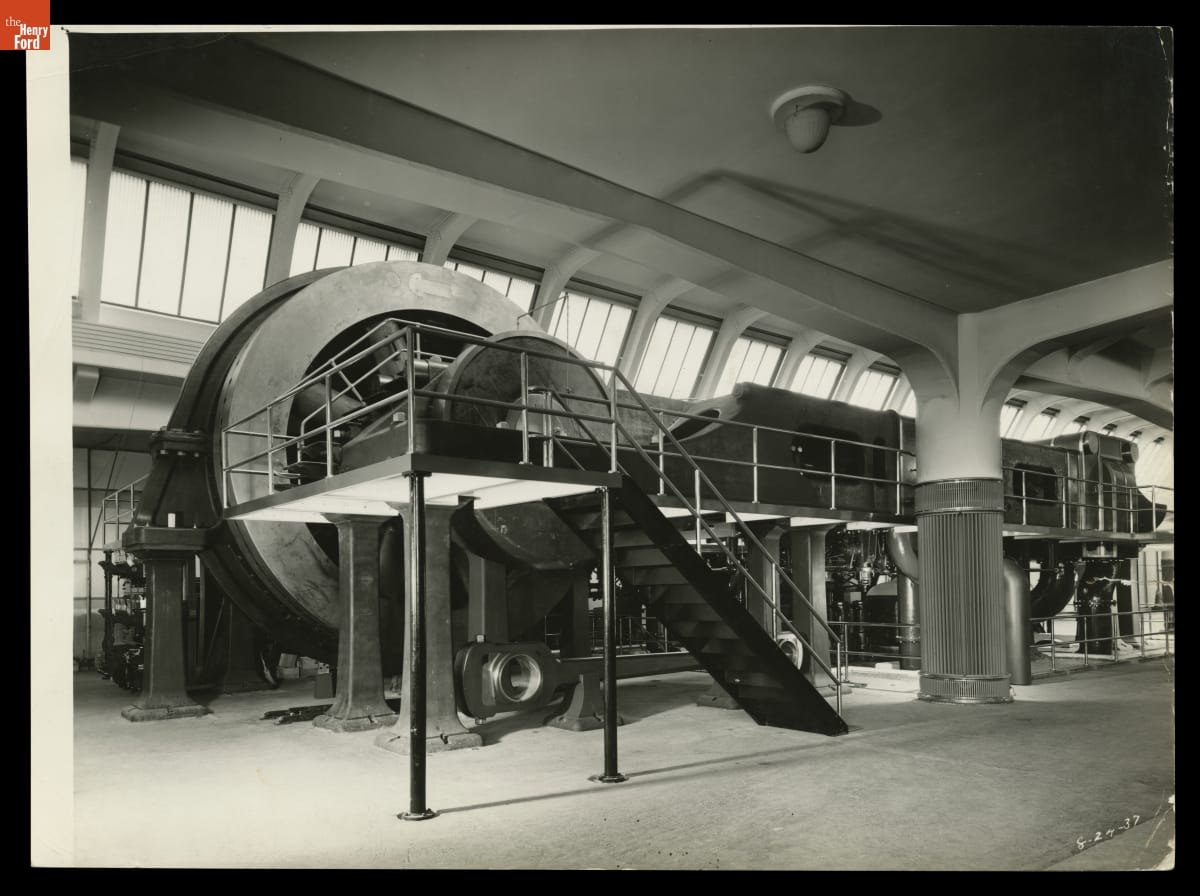
- Gas-Steam Engine Used at the Ford Highland Park Plant, on Exhibit in Henry Ford Museum in August 1937 -
- August 24, 1937
- Collections - Artifact
Gas-Steam Engine Used at the Ford Highland Park Plant, on Exhibit in Henry Ford Museum in August 1937
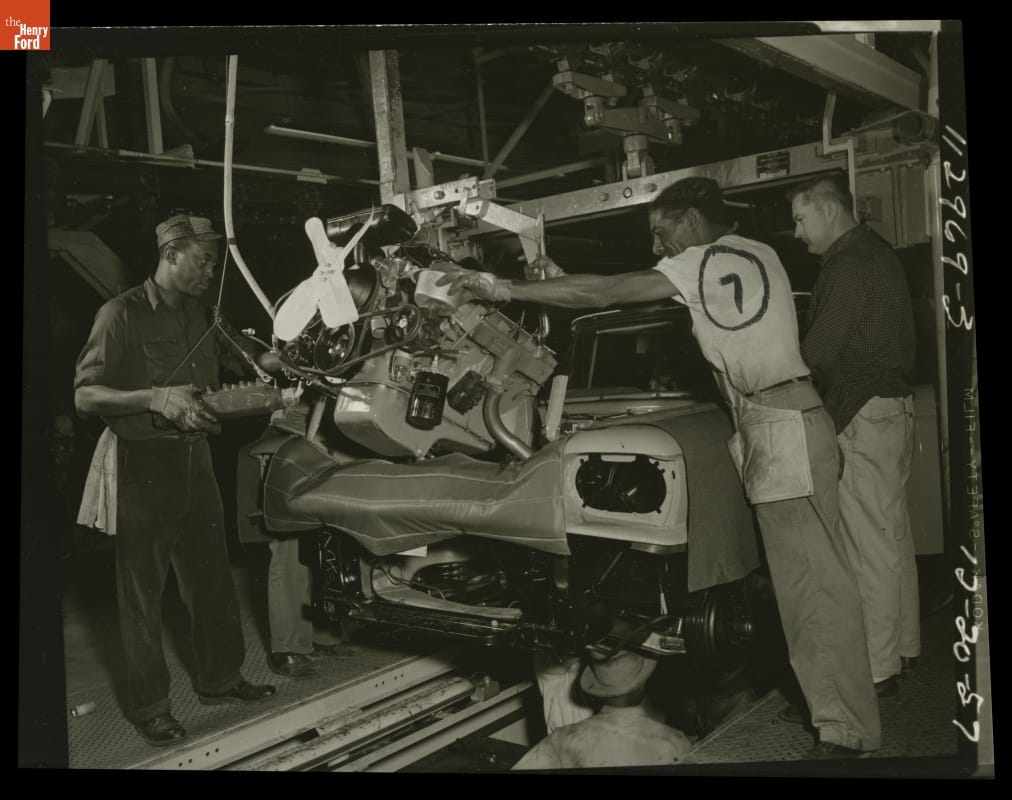
- Workers Dropping Engine into 1958 Ford Thunderbird Body on Assembly Line, 1957 - Ford's two-seat Thunderbird was a hit when it debuted for 1955, but vice president Robert McNamara reasoned that adding more seats would sell even more cars. The 1958 model year brought the four-seat "Squarebird" -- so nicknamed for its boxy proportions. Aesthetic arguments aside, McNamara was right. Ford sold nearly 16,000 more Thunderbirds for 1958 than it had the year before.
- December 20, 1957
- Collections - Artifact
Workers Dropping Engine into 1958 Ford Thunderbird Body on Assembly Line, 1957
Ford's two-seat Thunderbird was a hit when it debuted for 1955, but vice president Robert McNamara reasoned that adding more seats would sell even more cars. The 1958 model year brought the four-seat "Squarebird" -- so nicknamed for its boxy proportions. Aesthetic arguments aside, McNamara was right. Ford sold nearly 16,000 more Thunderbirds for 1958 than it had the year before.
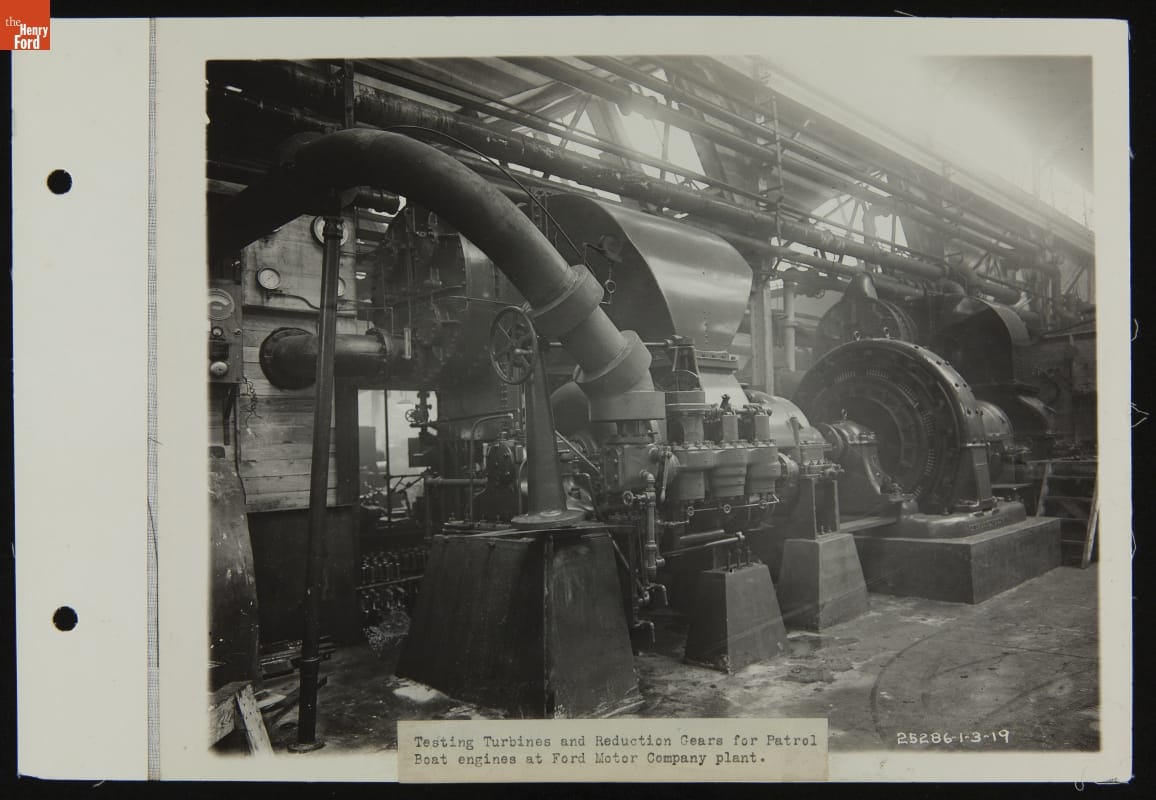
- Testing Turbines and Reduction Gears for Eagle Boat Engines at Ford Rouge Plant, June 1919 - Ford Motor Company built Eagle anti-submarine patrol boats for the U.S. Navy during World War I. While most of the work occurred in new facilities at the mouth of the Rouge River, Ford assembled the boats' turbine engines, boilers and propulsion systems at its Highland Park plant. The war ended before any of the Eagle patrol boats saw combat.
- June 13, 1919
- Collections - Artifact
Testing Turbines and Reduction Gears for Eagle Boat Engines at Ford Rouge Plant, June 1919
Ford Motor Company built Eagle anti-submarine patrol boats for the U.S. Navy during World War I. While most of the work occurred in new facilities at the mouth of the Rouge River, Ford assembled the boats' turbine engines, boilers and propulsion systems at its Highland Park plant. The war ended before any of the Eagle patrol boats saw combat.
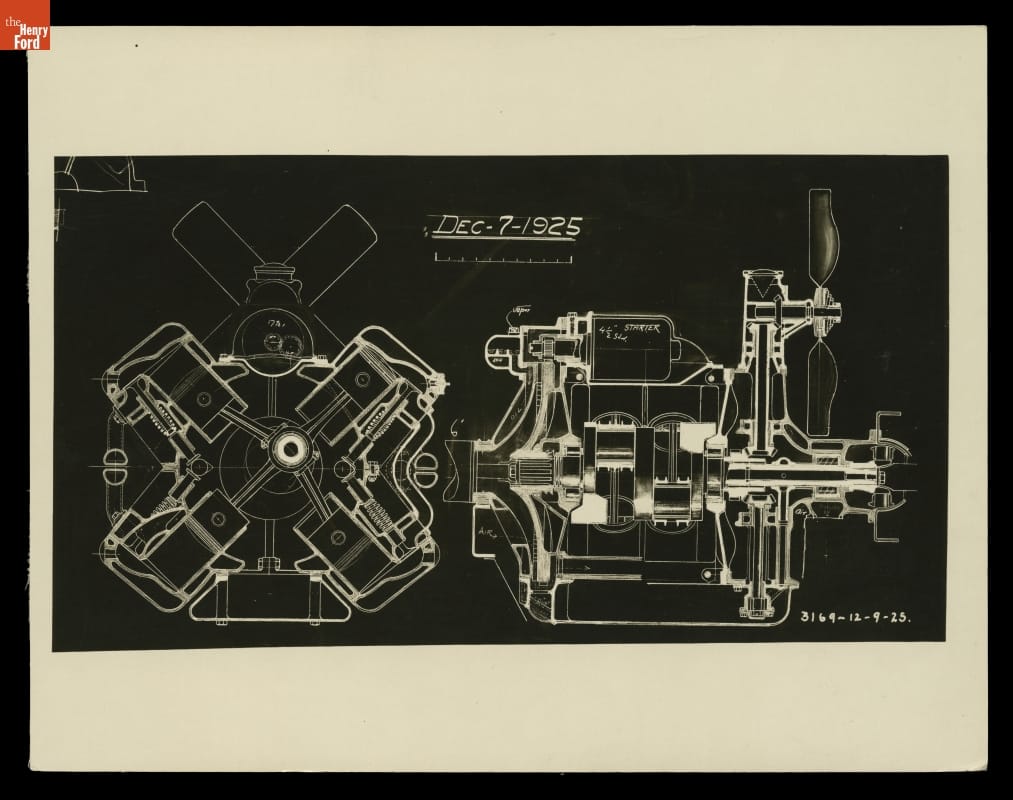
- Blackboard Drawing of an X-Engine, 1925 - Blackboards were one of Henry Ford's favorite tools when developing a new design. He used them at least as far back as 1907 when work began on the new Model T. Chalk sketches and drawings could be changed quickly as ideas were discussed. Henry was not much of a draftsman, but he surrounded himself with people who could draw.
- December 09, 1925
- Collections - Artifact
Blackboard Drawing of an X-Engine, 1925
Blackboards were one of Henry Ford's favorite tools when developing a new design. He used them at least as far back as 1907 when work began on the new Model T. Chalk sketches and drawings could be changed quickly as ideas were discussed. Henry was not much of a draftsman, but he surrounded himself with people who could draw.
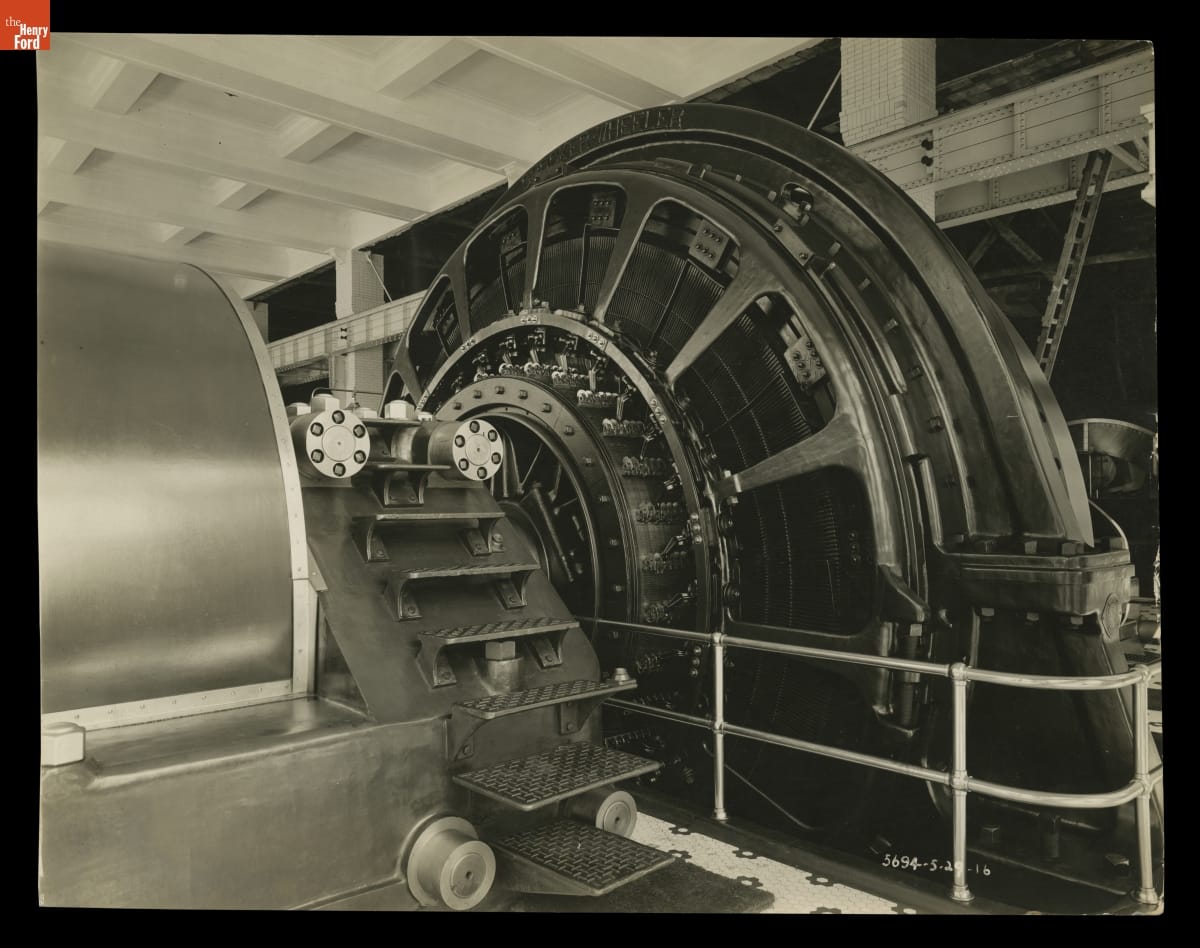
- Gas-Steam Engine at the Ford Motor Company Highland Park Plant Powerhouse, May 1916 - Ford Motor Company opened its Highland Park plant in 1910. It was here that Ford produced most of its 15 million Model T cars, developed its moving assembly line, and instituted its Five Dollar Day. The plant's electricity was supplied by an on-site powerhouse with generators connected to nine gas-steam hybrid engines. Together, the nine engines produced 53,000 horsepower.
- May 29, 1916
- Collections - Artifact
Gas-Steam Engine at the Ford Motor Company Highland Park Plant Powerhouse, May 1916
Ford Motor Company opened its Highland Park plant in 1910. It was here that Ford produced most of its 15 million Model T cars, developed its moving assembly line, and instituted its Five Dollar Day. The plant's electricity was supplied by an on-site powerhouse with generators connected to nine gas-steam hybrid engines. Together, the nine engines produced 53,000 horsepower.
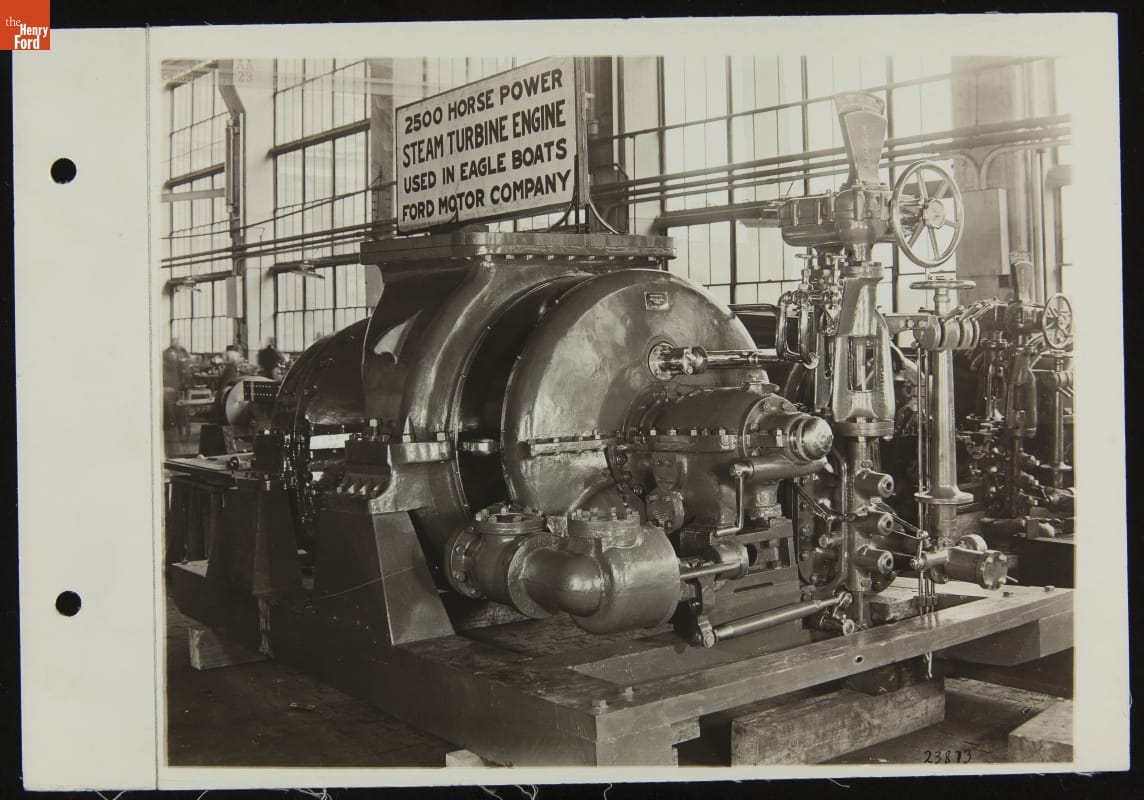
- 2500 Horsepower Steam Turbine Engine Used in Eagle Boats, Ford Motor Company, October 1918 - The first vehicles built at Ford Motor Company's Rouge factory weren't automobiles but boats. These Eagle boats were designed to challenge German submarines during World War I, but they saw only limited action before the armistice. Each Eagle was powered by one of these 2,500-horsepower steam-turbine engines. Sixty Eagles were produced between May 1918 and October 1919.
- October 28, 1918
- Collections - Artifact
2500 Horsepower Steam Turbine Engine Used in Eagle Boats, Ford Motor Company, October 1918
The first vehicles built at Ford Motor Company's Rouge factory weren't automobiles but boats. These Eagle boats were designed to challenge German submarines during World War I, but they saw only limited action before the armistice. Each Eagle was powered by one of these 2,500-horsepower steam-turbine engines. Sixty Eagles were produced between May 1918 and October 1919.
- Model of Valve -
- Collections - Artifact
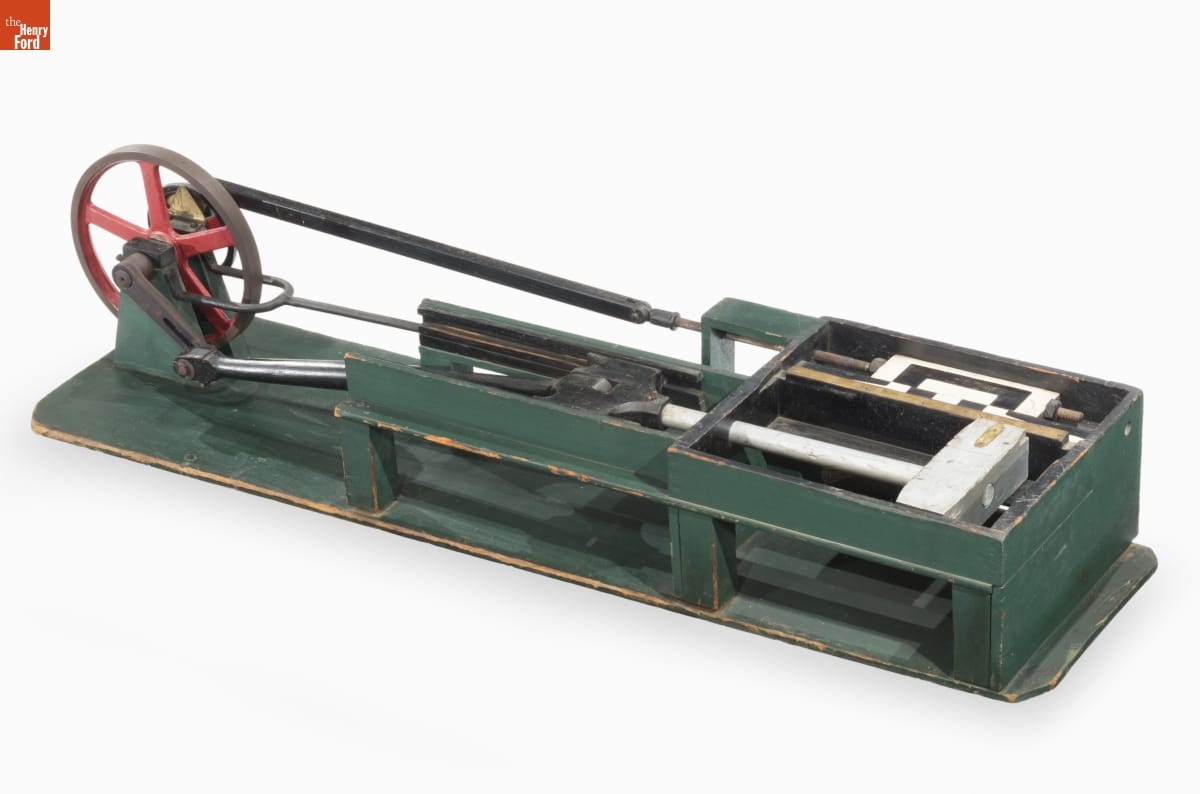
Model of Valve