
Search
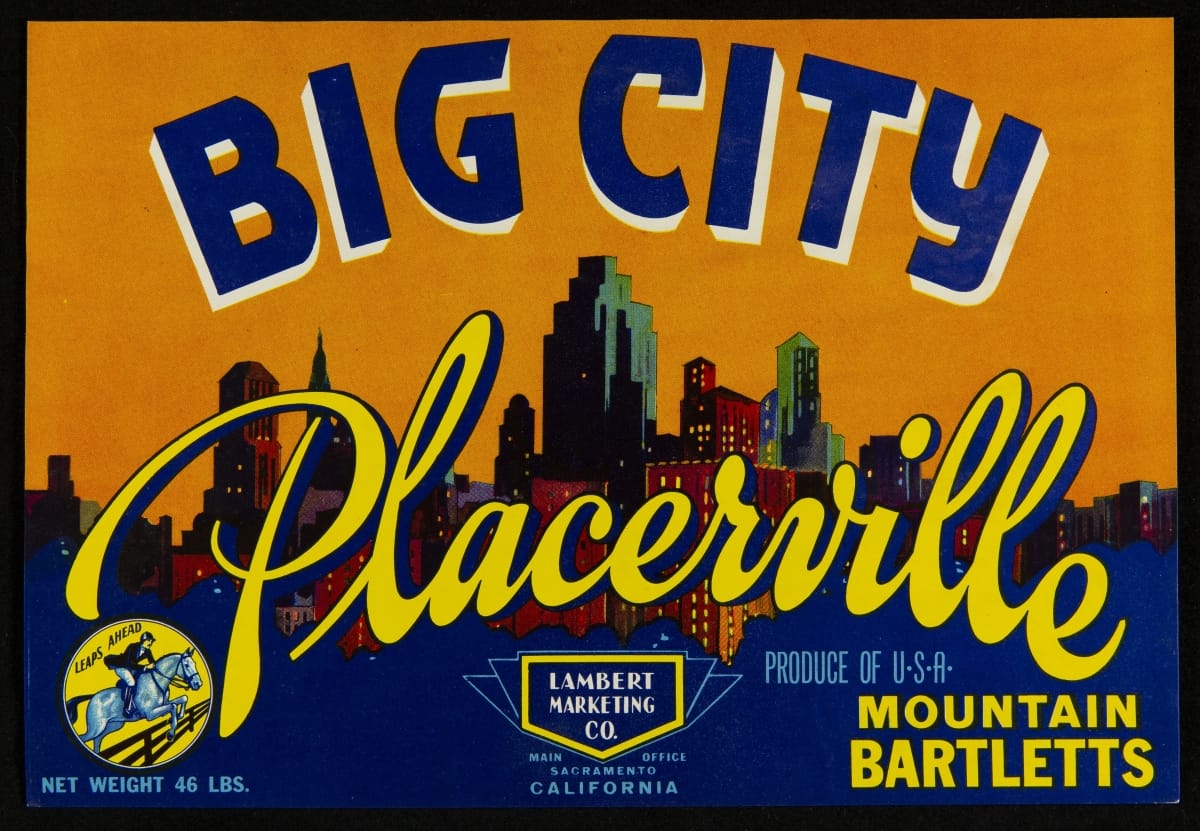
- "Big City Brand Mountain Bartlett Pears," 1940-1950 - In 1869, the transcontinental railroad opened eastern markets to the West Coast produce industry for the first time. As produce companies shipped crates of fruits and vegetables across the country, they needed a way to distinguish their goods from their competitors'. Colorful, eye-catching labels, like this one for Big City Brand Mountain Bartlett Pears, were created to attract grocers purchasing goods from wholesale markets.
- 1940-1950
- Collections - Artifact
"Big City Brand Mountain Bartlett Pears," 1940-1950
In 1869, the transcontinental railroad opened eastern markets to the West Coast produce industry for the first time. As produce companies shipped crates of fruits and vegetables across the country, they needed a way to distinguish their goods from their competitors'. Colorful, eye-catching labels, like this one for Big City Brand Mountain Bartlett Pears, were created to attract grocers purchasing goods from wholesale markets.
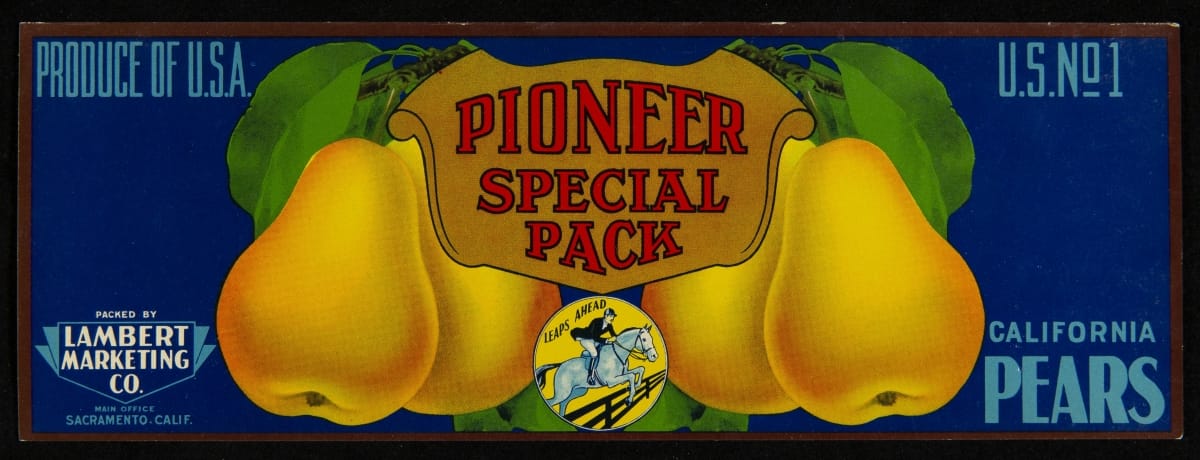
- Crate Label, "Pioneer Special Pack Brand California Pears," 1940-1950 - In 1869, the transcontinental railroad opened eastern markets to the West Coast produce industry for the first time. As produce companies shipped crates of fruits and vegetables across the country, they needed a way to distinguish their goods from their competitors'. Colorful, eye-catching labels, like this one for Pioneer Special Pack Brand California Pears, were created to attract grocers purchasing goods from wholesale markets.
- 1940-1950
- Collections - Artifact
Crate Label, "Pioneer Special Pack Brand California Pears," 1940-1950
In 1869, the transcontinental railroad opened eastern markets to the West Coast produce industry for the first time. As produce companies shipped crates of fruits and vegetables across the country, they needed a way to distinguish their goods from their competitors'. Colorful, eye-catching labels, like this one for Pioneer Special Pack Brand California Pears, were created to attract grocers purchasing goods from wholesale markets.
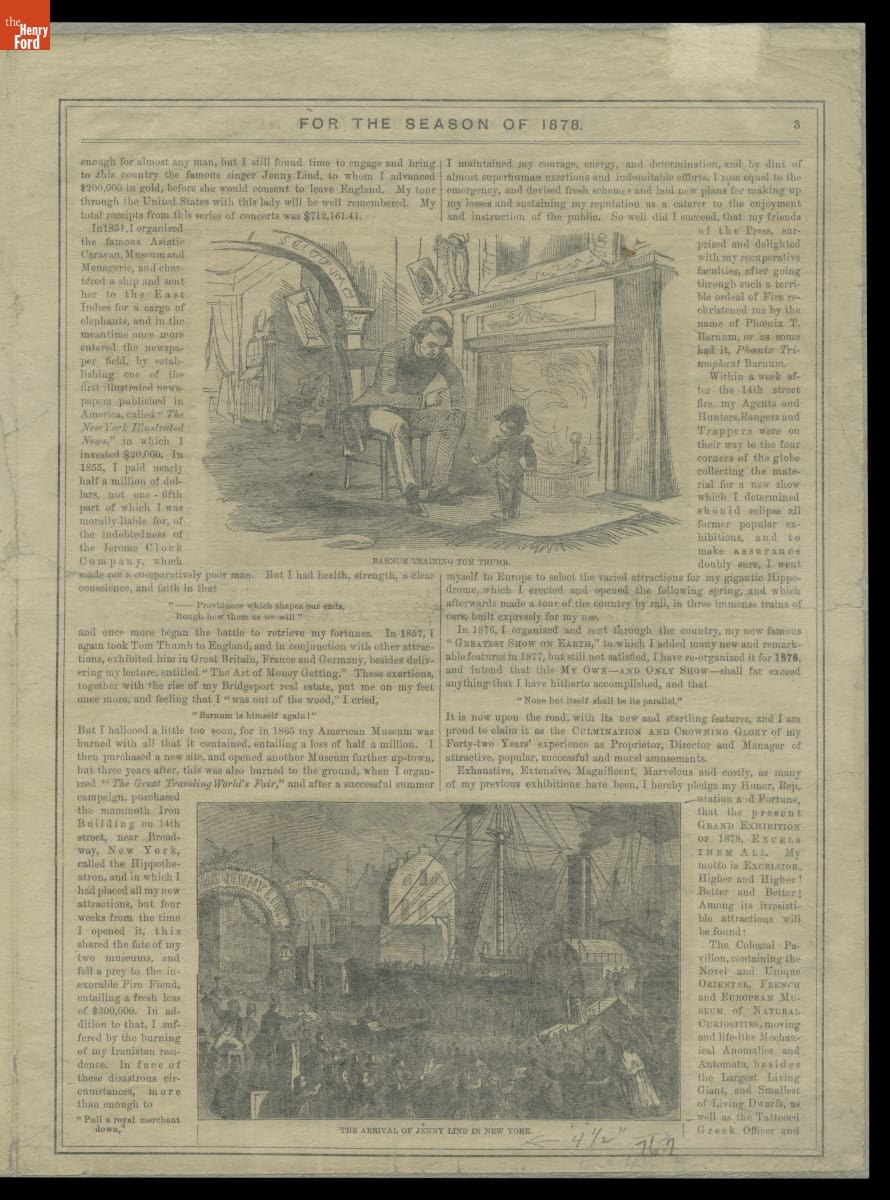
- "P.T. Barnum's Own Illustrated News for the Season of 1878" - Phineas Taylor (P.T.) Barnum (1810-1891) entered the circus business in 1876 after a 40-year career as a showman. In this presumably self-published newspaper, Barnum highlighted his past entertainment endeavor and announced his lineup for the 1878 "Greatest Show on Earth" circus. Barnum's circus featured animal menageries, clowns, automata, acrobatic horse-riders, and human "curiosities" such as Captain George Costentenus--a heavily tattooed man.
- 1878
- Collections - Artifact
"P.T. Barnum's Own Illustrated News for the Season of 1878"
Phineas Taylor (P.T.) Barnum (1810-1891) entered the circus business in 1876 after a 40-year career as a showman. In this presumably self-published newspaper, Barnum highlighted his past entertainment endeavor and announced his lineup for the 1878 "Greatest Show on Earth" circus. Barnum's circus featured animal menageries, clowns, automata, acrobatic horse-riders, and human "curiosities" such as Captain George Costentenus--a heavily tattooed man.
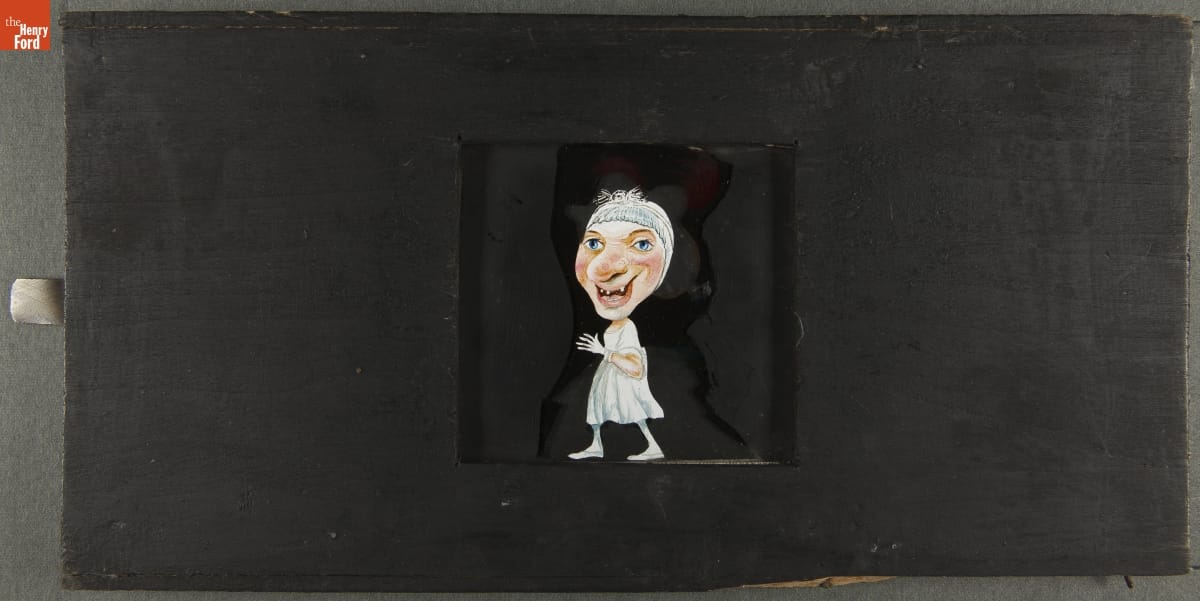
- Mechanical Lantern Slide, "Mirabelle - Horsewoman of the Paris Hippodrome," 1870-1915 - Magic lanterns use a concave mirror and light source to project images on glass slides with painted or photographic scenes. Developed in the 17th century, magic lanterns predate slide projectors and motion pictures. In the hands of magicians, they became "lanterns of fright," projecting wondrous images and apparitions. Slide themes ranged widely: exotic travel, folklore, advertising, history, science, and art.
- 1870-1915
- Collections - Artifact
Mechanical Lantern Slide, "Mirabelle - Horsewoman of the Paris Hippodrome," 1870-1915
Magic lanterns use a concave mirror and light source to project images on glass slides with painted or photographic scenes. Developed in the 17th century, magic lanterns predate slide projectors and motion pictures. In the hands of magicians, they became "lanterns of fright," projecting wondrous images and apparitions. Slide themes ranged widely: exotic travel, folklore, advertising, history, science, and art.
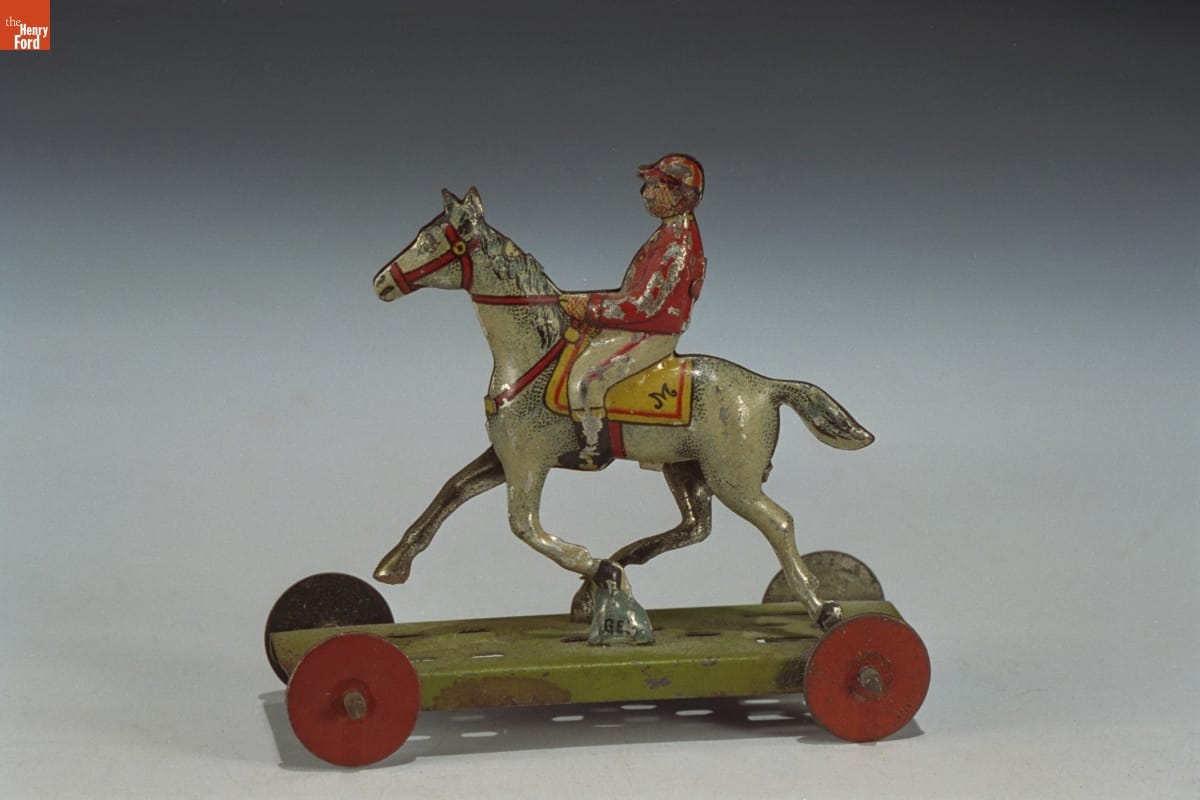
- Horse and Rider Penny Toy, 1890-1930 - Toy companies began making small, inexpensive, yet colorful, tin toys in the late 19th century. Over the years, toymakers stamped tin into shapes of animals, trains, boats, soldiers and even this horse and rider. Children could purchase these low-priced toys from shopkeepers or street vendors. These mass-produced toys -- though not meant to last -- provided fun for just a few pennies.
- 1890-1930
- Collections - Artifact
Horse and Rider Penny Toy, 1890-1930
Toy companies began making small, inexpensive, yet colorful, tin toys in the late 19th century. Over the years, toymakers stamped tin into shapes of animals, trains, boats, soldiers and even this horse and rider. Children could purchase these low-priced toys from shopkeepers or street vendors. These mass-produced toys -- though not meant to last -- provided fun for just a few pennies.
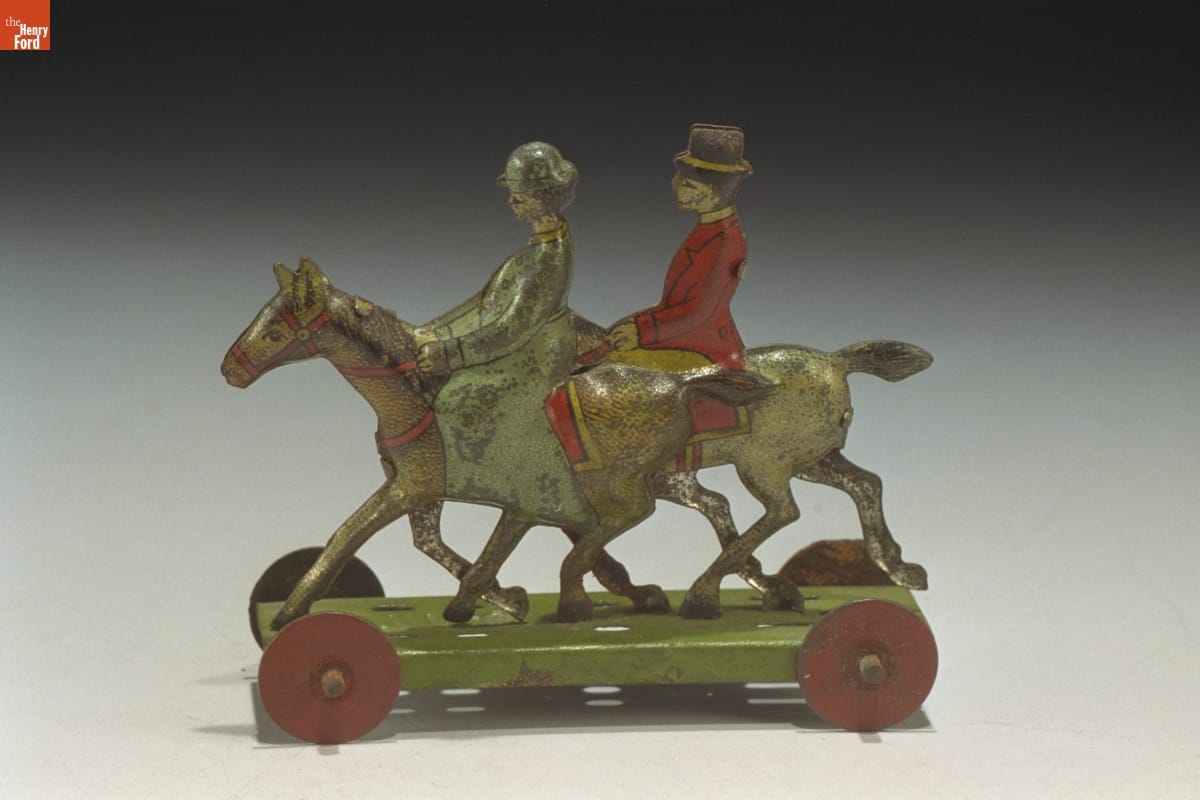
- Horses and Riders Penny Toy, circa 1890 - Toy companies began making small, inexpensive, yet colorful, tin toys in the late 19th century. Over the years, toymakers stamped tin into shapes of animals, trains, boats, soldiers and even this couple riding horses. Children could purchase these low-priced toys from shopkeepers or street vendors. These mass-produced toys -- though not meant to last -- provided fun for just a few pennies.
- circa 1890
- Collections - Artifact
Horses and Riders Penny Toy, circa 1890
Toy companies began making small, inexpensive, yet colorful, tin toys in the late 19th century. Over the years, toymakers stamped tin into shapes of animals, trains, boats, soldiers and even this couple riding horses. Children could purchase these low-priced toys from shopkeepers or street vendors. These mass-produced toys -- though not meant to last -- provided fun for just a few pennies.
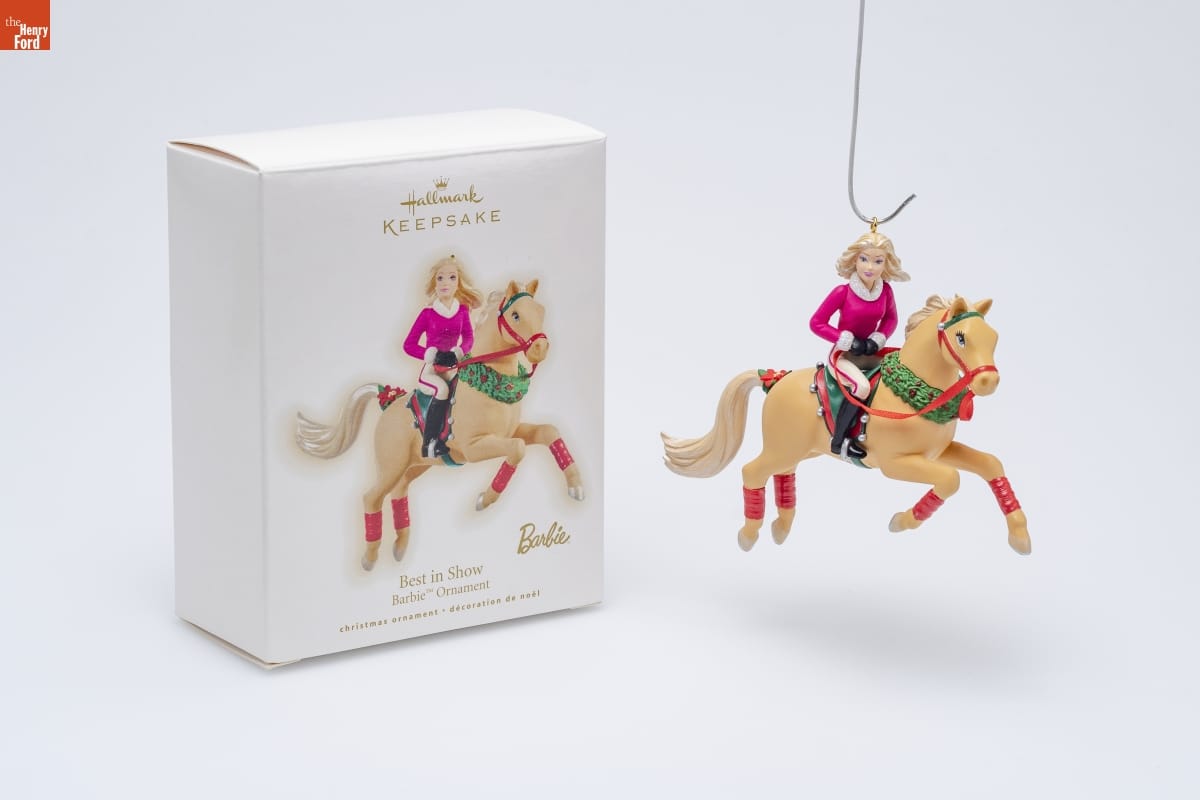
- Hallmark "Best in Show Barbie" Christmas Ornament, 2009 - Already known for greeting cards, Hallmark introduced a line of Christmas ornaments in 1973. The company's annual release of an increasing array of ornaments revolutionized Christmas decorating, appealing to customers' interest in marking memories and milestones as well as expressing one's personality and unique tastes.
- 2009
- Collections - Artifact
Hallmark "Best in Show Barbie" Christmas Ornament, 2009
Already known for greeting cards, Hallmark introduced a line of Christmas ornaments in 1973. The company's annual release of an increasing array of ornaments revolutionized Christmas decorating, appealing to customers' interest in marking memories and milestones as well as expressing one's personality and unique tastes.
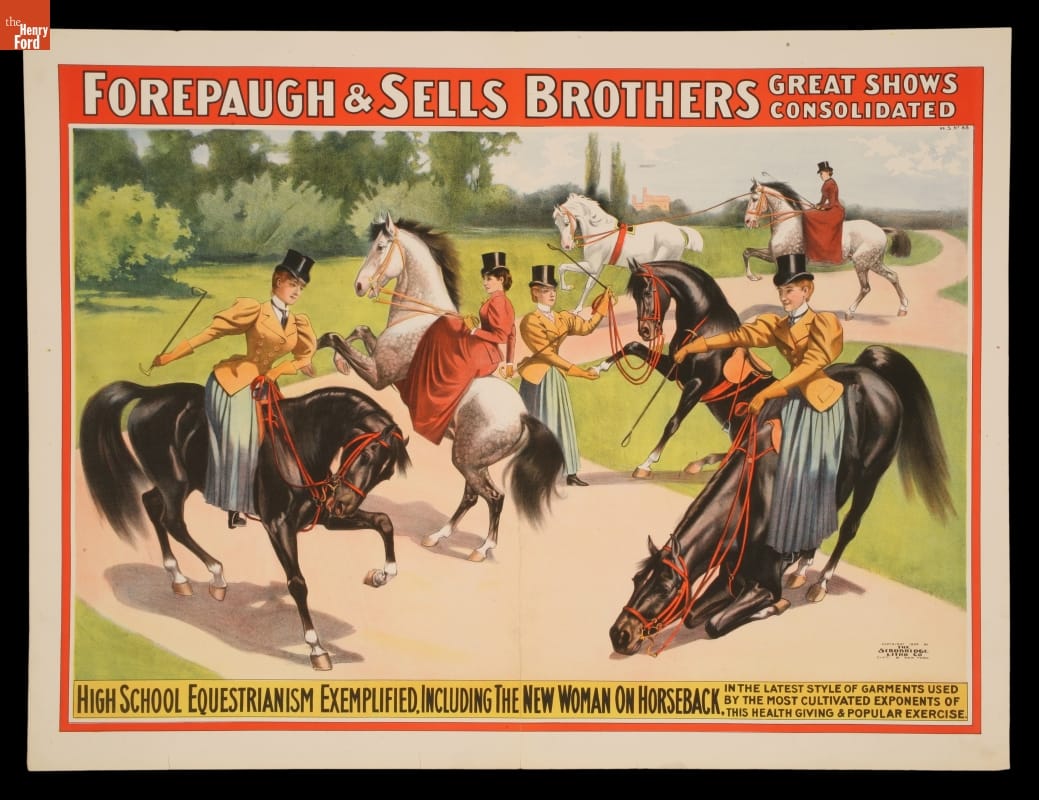
- Circus Poster, Forepaugh & Sells Brothers, "High School Equestrianism Exemplified, 1899 -
- 1899
- Collections - Artifact
Circus Poster, Forepaugh & Sells Brothers, "High School Equestrianism Exemplified, 1899