
Search
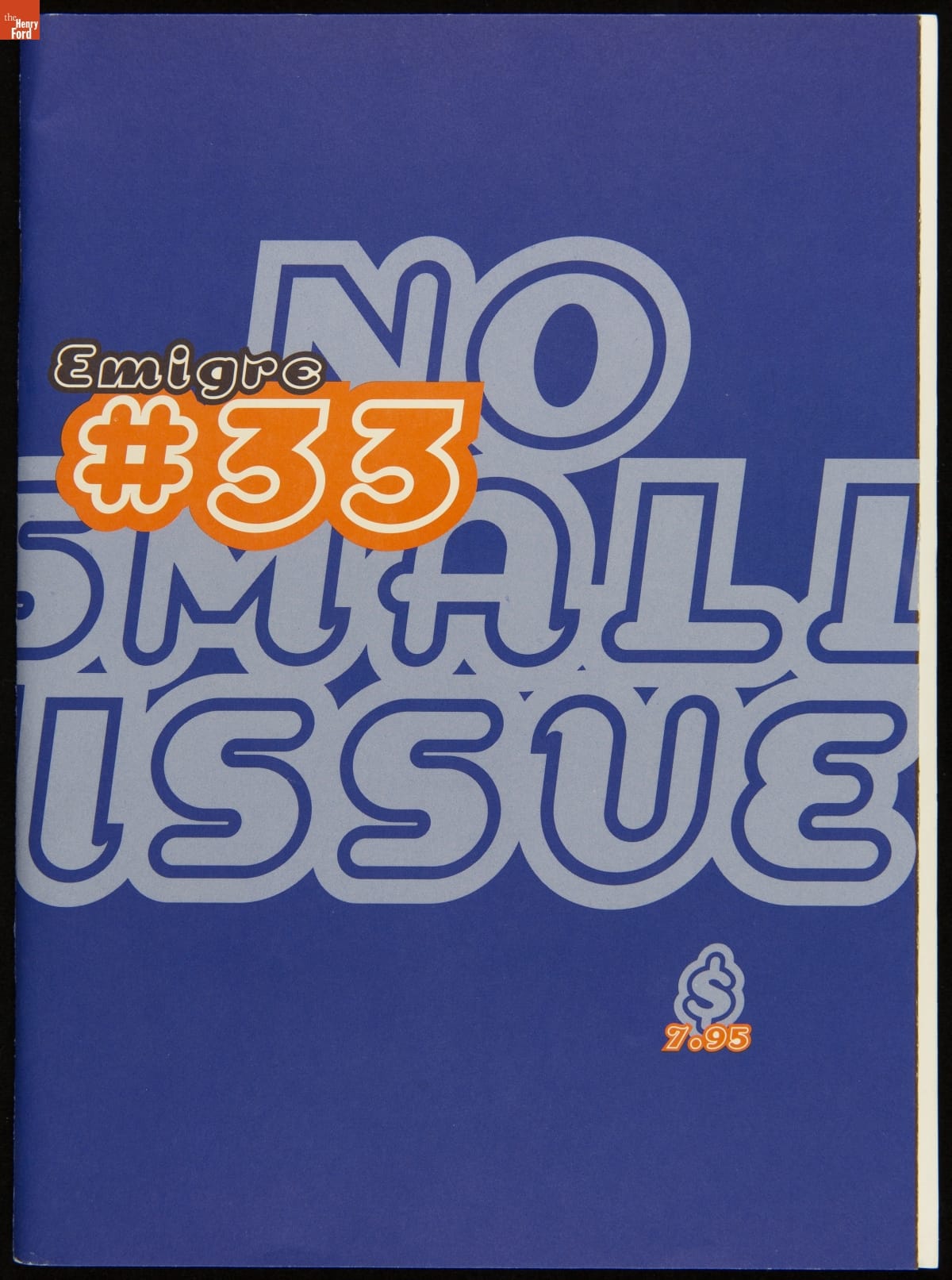
- Magazine, Emigre No. 33, "No Small Issue," 1995 - Emigre is a digital type foundry established by Rudy VanderLans and Zuzana Licko. The company's history is linked with the introduction of the 1984 Macintosh computer, used to design their early bitmapped typefaces. Emigre's digital work gained notoriety -- defying visual communication standards with fractured, layered combinations of text and image. <em>Emigre</em> magazine showcased their fonts and promoted groundbreaking designers.
- 1995
- Collections - Artifact
Magazine, Emigre No. 33, "No Small Issue," 1995
Emigre is a digital type foundry established by Rudy VanderLans and Zuzana Licko. The company's history is linked with the introduction of the 1984 Macintosh computer, used to design their early bitmapped typefaces. Emigre's digital work gained notoriety -- defying visual communication standards with fractured, layered combinations of text and image. Emigre magazine showcased their fonts and promoted groundbreaking designers.
- Essay by John Burroughs, "On Instinct," 1906-1907 -

- 1906-1907
- Collections - Artifact
Essay by John Burroughs, "On Instinct," 1906-1907
- Reproduction of the 1856 Essay by John Burroughs, "Work and Wait" - Naturalist John Burroughs penned this composition during his college preparatory studies at Cooperstown Seminary. This was an early foray into essay writing in which Burroughs would excel. The photostatic reproduction of this essay, pictured above, was used by Clara Barrus, Burroughs' literary executor and official biographer, for her book <EM>The Life and Letters of John Burroughs</EM>, published in 1925.

- 1856
- Collections - Artifact
Reproduction of the 1856 Essay by John Burroughs, "Work and Wait"
Naturalist John Burroughs penned this composition during his college preparatory studies at Cooperstown Seminary. This was an early foray into essay writing in which Burroughs would excel. The photostatic reproduction of this essay, pictured above, was used by Clara Barrus, Burroughs' literary executor and official biographer, for her book The Life and Letters of John Burroughs, published in 1925.
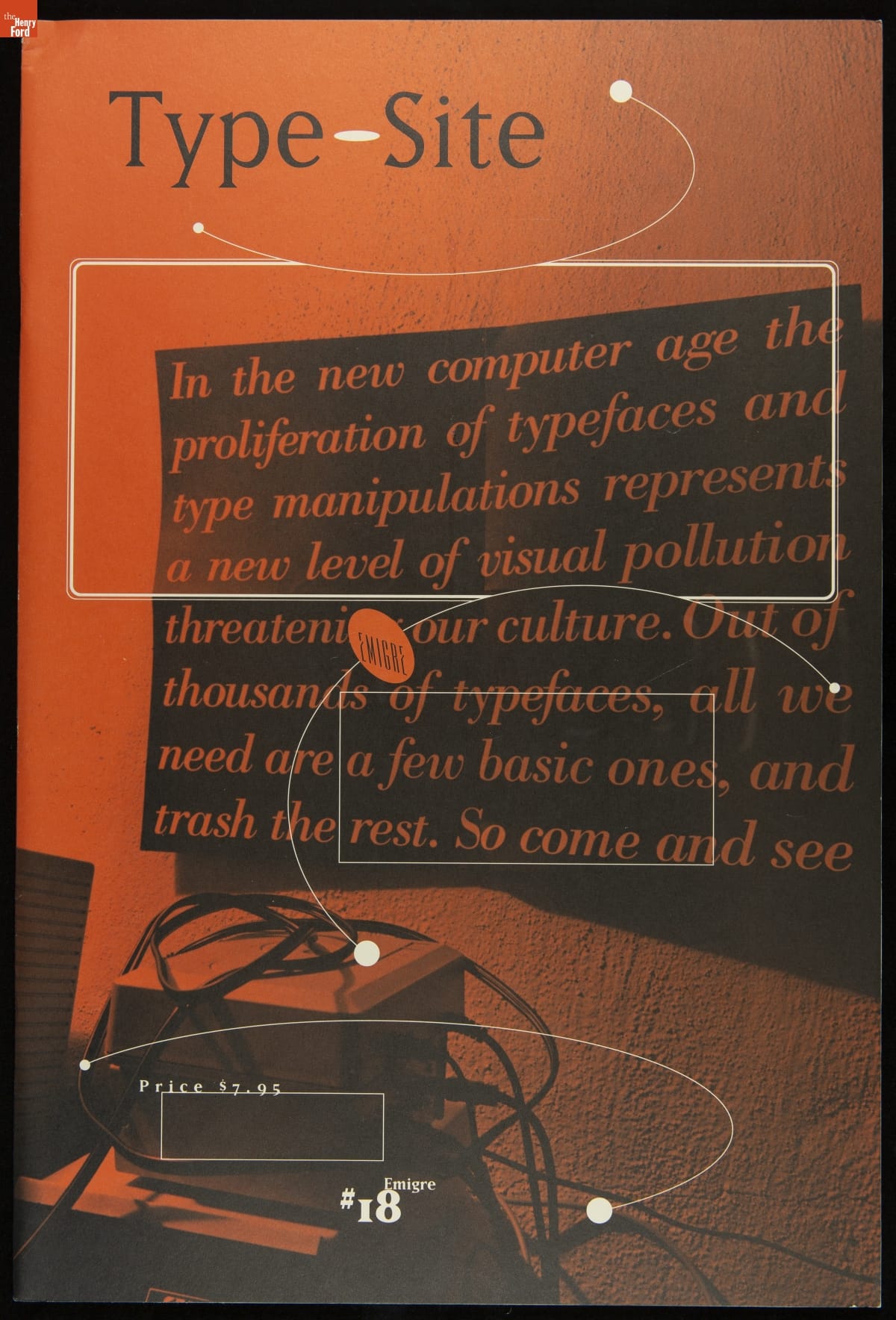
- Magazine, Emigre No. 18, "Type-Site," 1991 - Emigre is a digital type foundry established by Rudy VanderLans and Zuzana Licko. The company's history is linked with the introduction of the 1984 Macintosh computer, used to design their early bitmapped typefaces. Emigre's digital work gained notoriety -- defying visual communication standards with fractured, layered combinations of text and image. <em>Emigre</em> magazine showcased their fonts and promoted groundbreaking designers.
- 1991
- Collections - Artifact
Magazine, Emigre No. 18, "Type-Site," 1991
Emigre is a digital type foundry established by Rudy VanderLans and Zuzana Licko. The company's history is linked with the introduction of the 1984 Macintosh computer, used to design their early bitmapped typefaces. Emigre's digital work gained notoriety -- defying visual communication standards with fractured, layered combinations of text and image. Emigre magazine showcased their fonts and promoted groundbreaking designers.
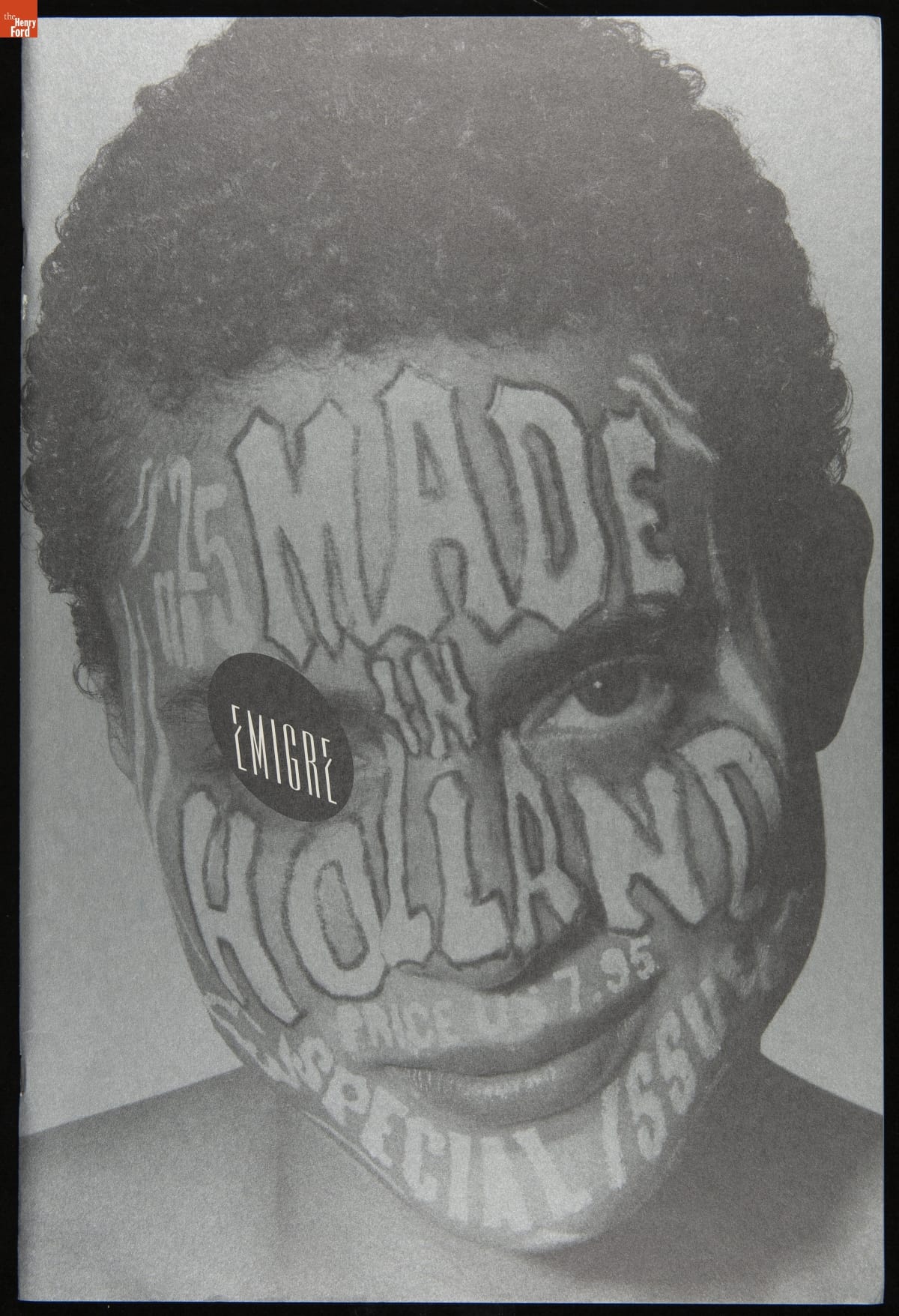
- Magazine, Emigre No. 25, "Made In Holland," 1993 - Emigre is a digital type foundry established by Rudy VanderLans and Zuzana Licko. The company's history is linked with the introduction of the 1984 Macintosh computer, used to design their early bitmapped typefaces. Emigre's digital work gained notoriety -- defying visual communication standards with fractured, layered combinations of text and image. <em>Emigre</em> magazine showcased their fonts and promoted groundbreaking designers.
- 1993
- Collections - Artifact
Magazine, Emigre No. 25, "Made In Holland," 1993
Emigre is a digital type foundry established by Rudy VanderLans and Zuzana Licko. The company's history is linked with the introduction of the 1984 Macintosh computer, used to design their early bitmapped typefaces. Emigre's digital work gained notoriety -- defying visual communication standards with fractured, layered combinations of text and image. Emigre magazine showcased their fonts and promoted groundbreaking designers.
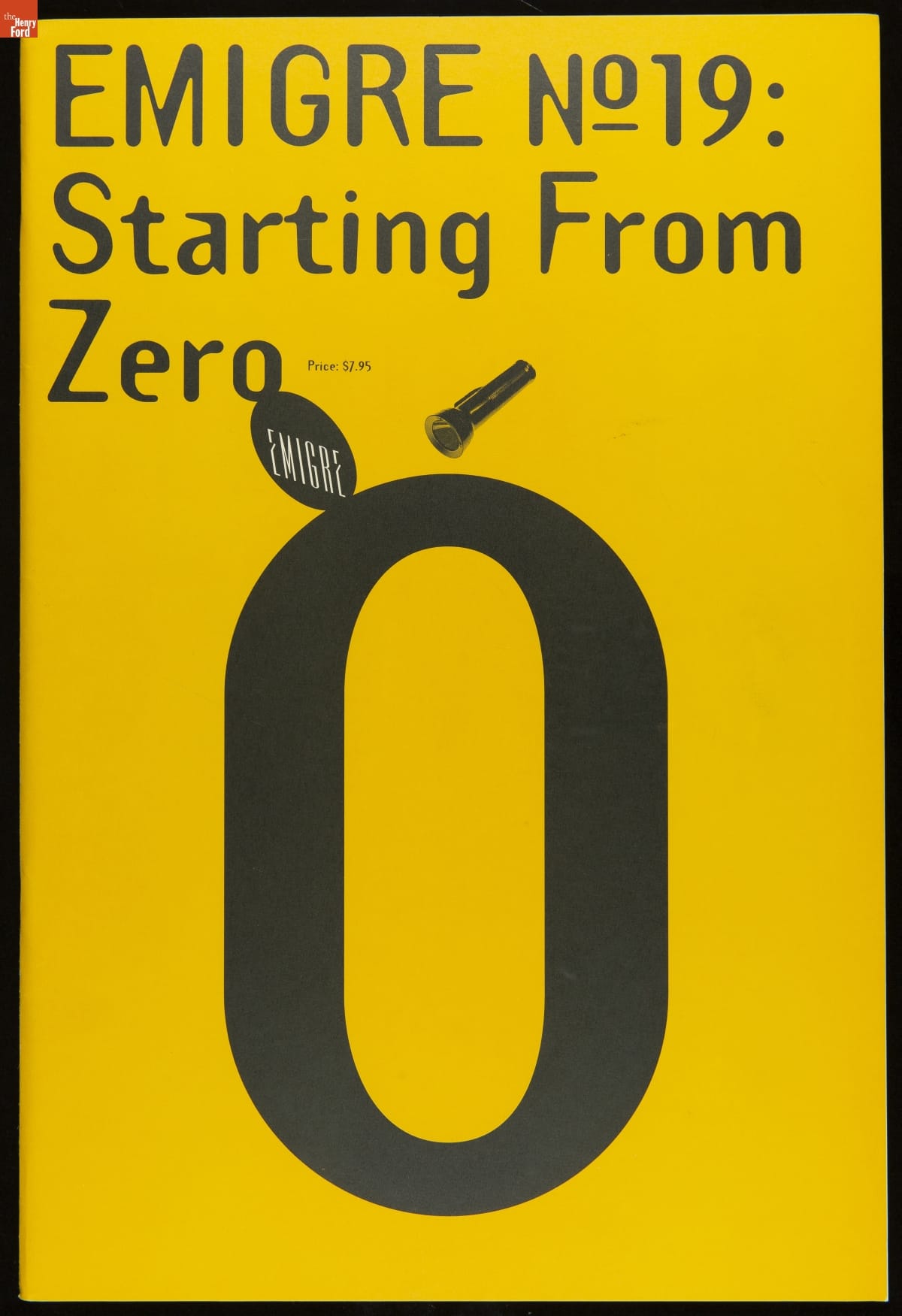
- Magazine, Emigre No. 19, "Starting From Zero," 1991 - Emigre is a digital type foundry established by Rudy VanderLans and Zuzana Licko. The company's history is linked with the introduction of the 1984 Macintosh computer, used to design their early bitmapped typefaces. Emigre's digital work gained notoriety -- defying visual communication standards with fractured, layered combinations of text and image. <em>Emigre</em> magazine showcased their fonts and promoted groundbreaking designers.
- 1991
- Collections - Artifact
Magazine, Emigre No. 19, "Starting From Zero," 1991
Emigre is a digital type foundry established by Rudy VanderLans and Zuzana Licko. The company's history is linked with the introduction of the 1984 Macintosh computer, used to design their early bitmapped typefaces. Emigre's digital work gained notoriety -- defying visual communication standards with fractured, layered combinations of text and image. Emigre magazine showcased their fonts and promoted groundbreaking designers.
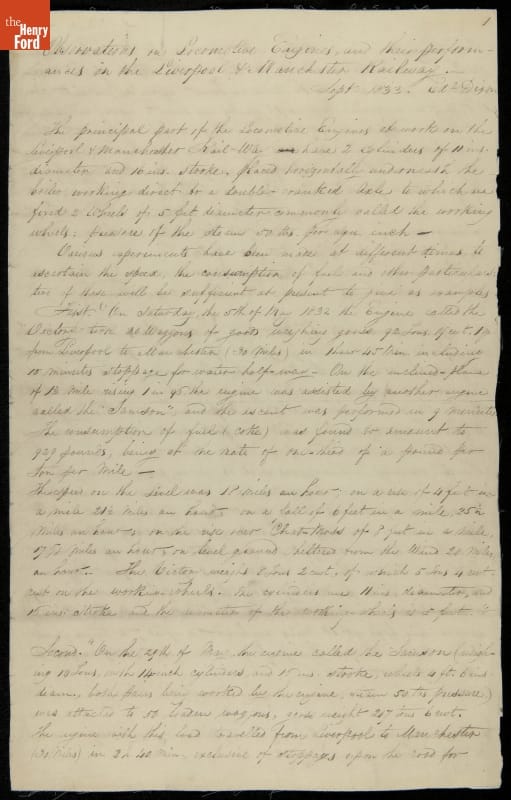
- Essay by John Dixon, "Observations on Locomotive Engines and Their Performances on the Liverpool and Manchester Railway," 1833 - The Liverpool and Manchester Railway, connecting its namesake cities in the United Kingdom, opened in 1830. It was the first railroad operated exclusively with steam locomotives. In this essay, civil engineer John Dixon reported on the speed and fuel consumption of those locomotives. Dixon concluded that larger engines, though slower and heavier, were most profitable for hauling freight.
- September 01, 1833
- Collections - Artifact
Essay by John Dixon, "Observations on Locomotive Engines and Their Performances on the Liverpool and Manchester Railway," 1833
The Liverpool and Manchester Railway, connecting its namesake cities in the United Kingdom, opened in 1830. It was the first railroad operated exclusively with steam locomotives. In this essay, civil engineer John Dixon reported on the speed and fuel consumption of those locomotives. Dixon concluded that larger engines, though slower and heavier, were most profitable for hauling freight.
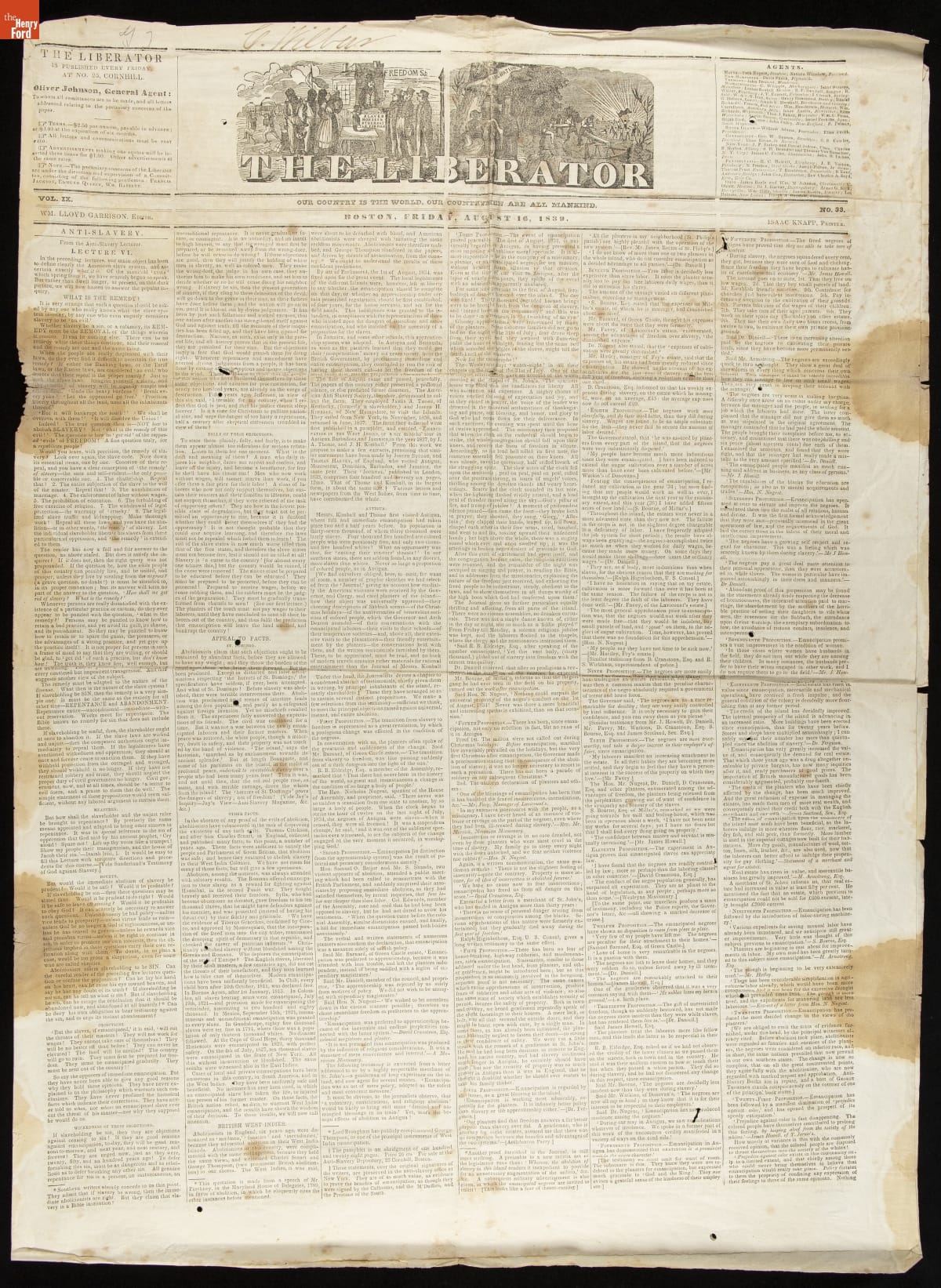
- The Liberator, Vol. 9, No. 33, August 16, 1839 -
- August 16, 1839
- Collections - Artifact
The Liberator, Vol. 9, No. 33, August 16, 1839
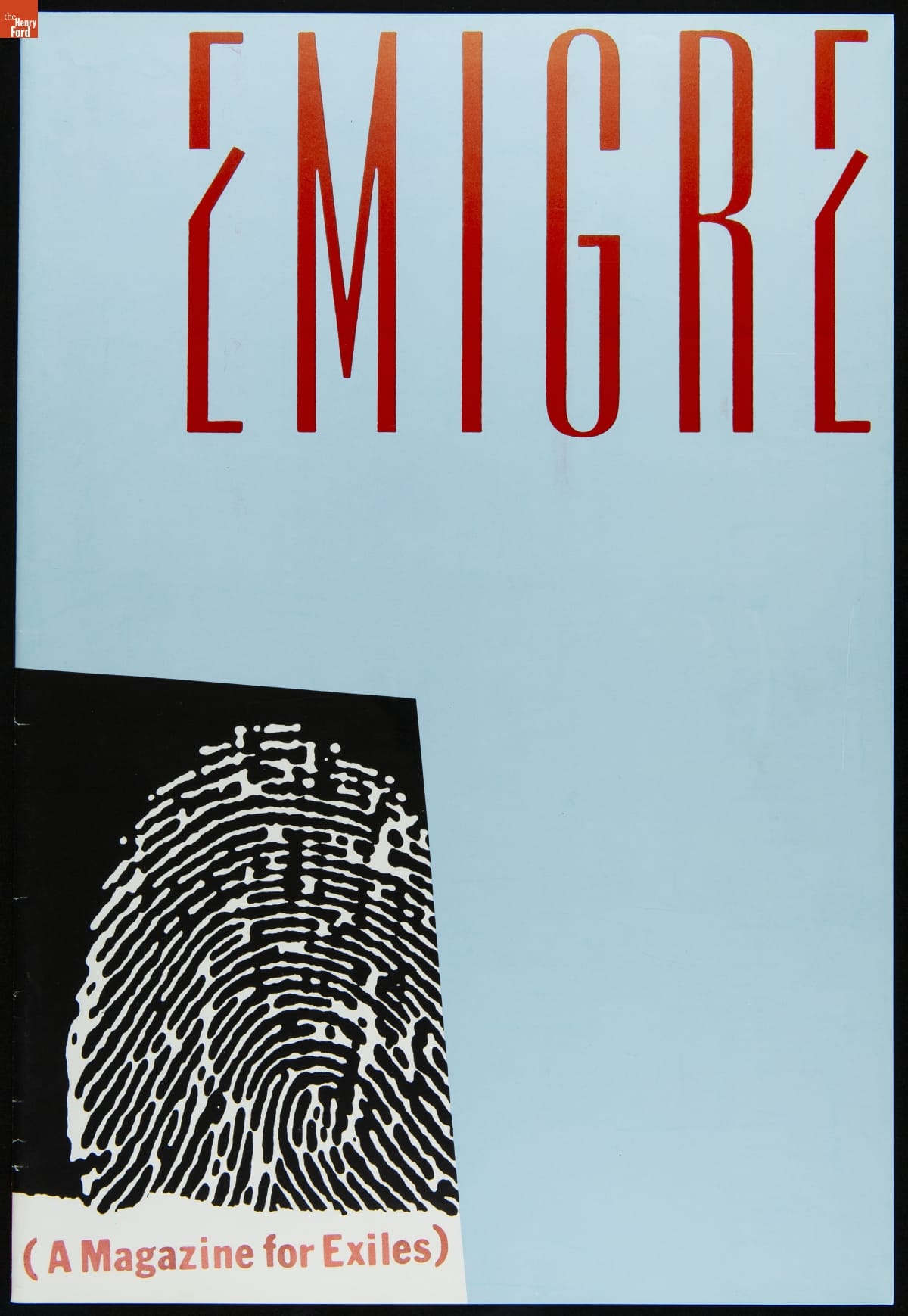
- Magazine, Emigre No. 1, "A Magazine for Exiles," 1984 - Emigre is a digital type foundry established by Rudy VanderLans and Zuzana Licko. The company's history is linked with the introduction of the 1984 Macintosh computer, used to design their early bitmapped typefaces. Emigre's digital work gained notoriety -- defying visual communication standards with fractured, layered combinations of text and image. <em>Emigre</em> magazine showcased their fonts and promoted groundbreaking designers.
- 1984
- Collections - Artifact
Magazine, Emigre No. 1, "A Magazine for Exiles," 1984
Emigre is a digital type foundry established by Rudy VanderLans and Zuzana Licko. The company's history is linked with the introduction of the 1984 Macintosh computer, used to design their early bitmapped typefaces. Emigre's digital work gained notoriety -- defying visual communication standards with fractured, layered combinations of text and image. Emigre magazine showcased their fonts and promoted groundbreaking designers.
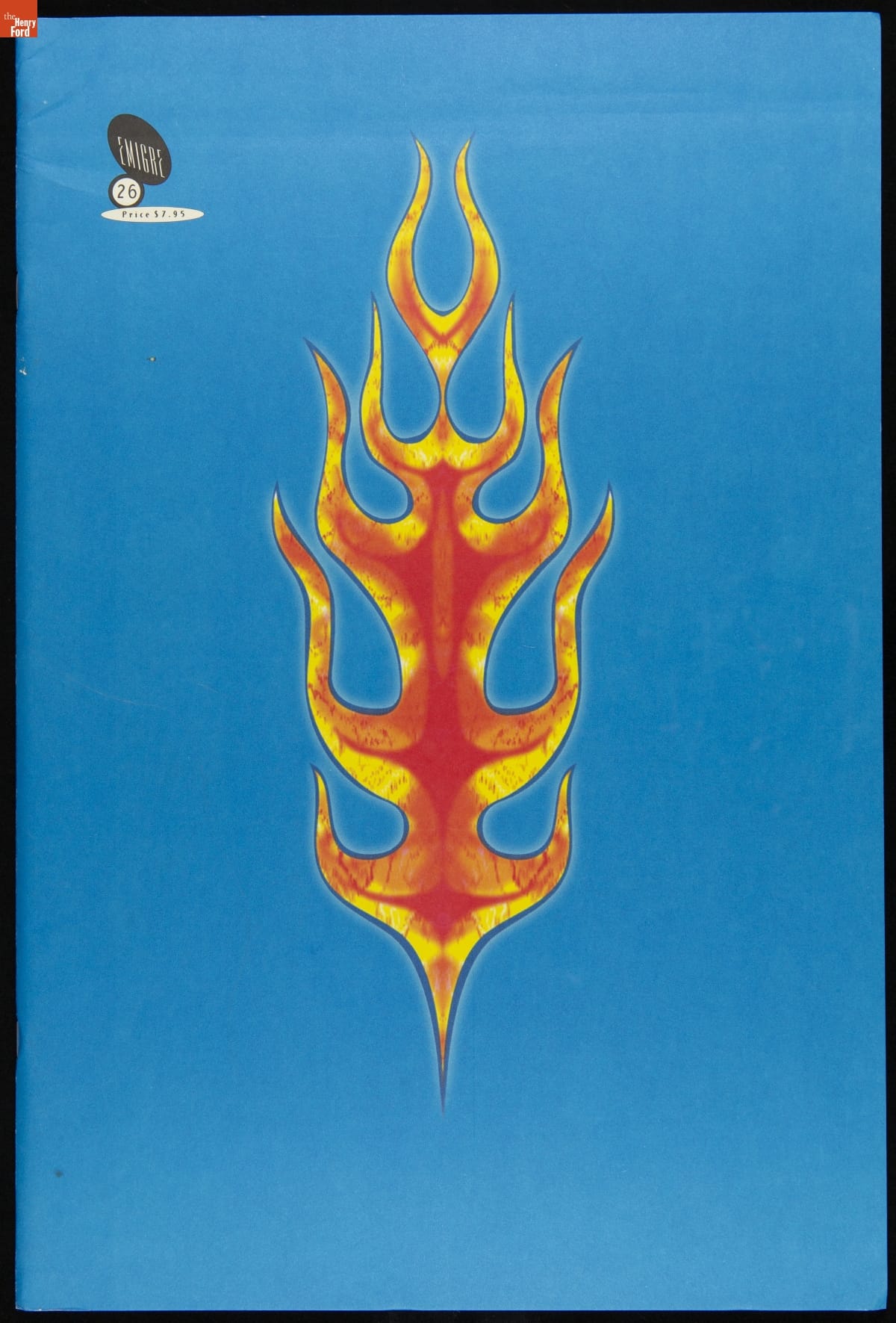
- Magazine, Emigre No. 26, "All Fired Up," 1993 - Emigre is a digital type foundry established by Rudy VanderLans and Zuzana Licko. The company's history is linked with the introduction of the 1984 Macintosh computer, used to design their early bitmapped typefaces. Emigre's digital work gained notoriety -- defying visual communication standards with fractured, layered combinations of text and image. <em>Emigre</em> magazine showcased their fonts and promoted groundbreaking designers.
- 1993
- Collections - Artifact
Magazine, Emigre No. 26, "All Fired Up," 1993
Emigre is a digital type foundry established by Rudy VanderLans and Zuzana Licko. The company's history is linked with the introduction of the 1984 Macintosh computer, used to design their early bitmapped typefaces. Emigre's digital work gained notoriety -- defying visual communication standards with fractured, layered combinations of text and image. Emigre magazine showcased their fonts and promoted groundbreaking designers.