
Search
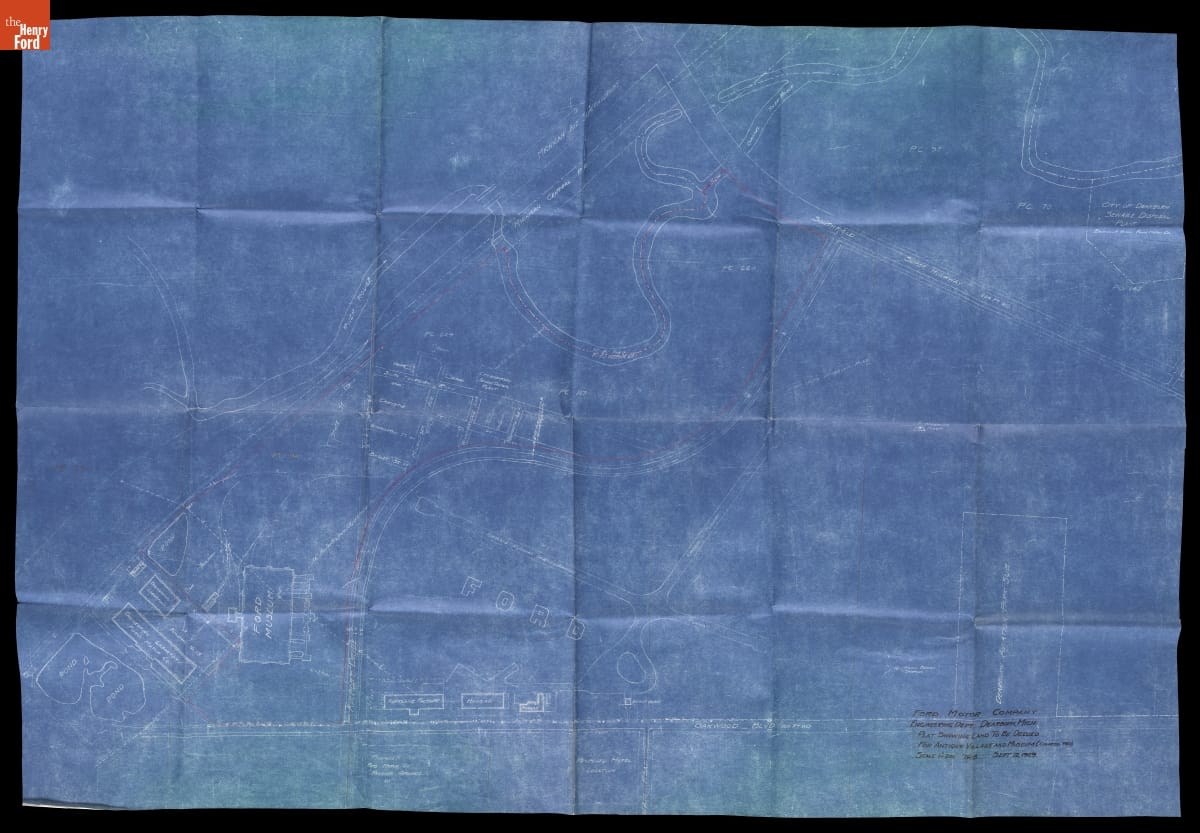
- Plat Showing Land to be Deeded for Antique Village and Museum, September 12, 1929 -
- September 12, 1929
- Collections - Artifact
Plat Showing Land to be Deeded for Antique Village and Museum, September 12, 1929
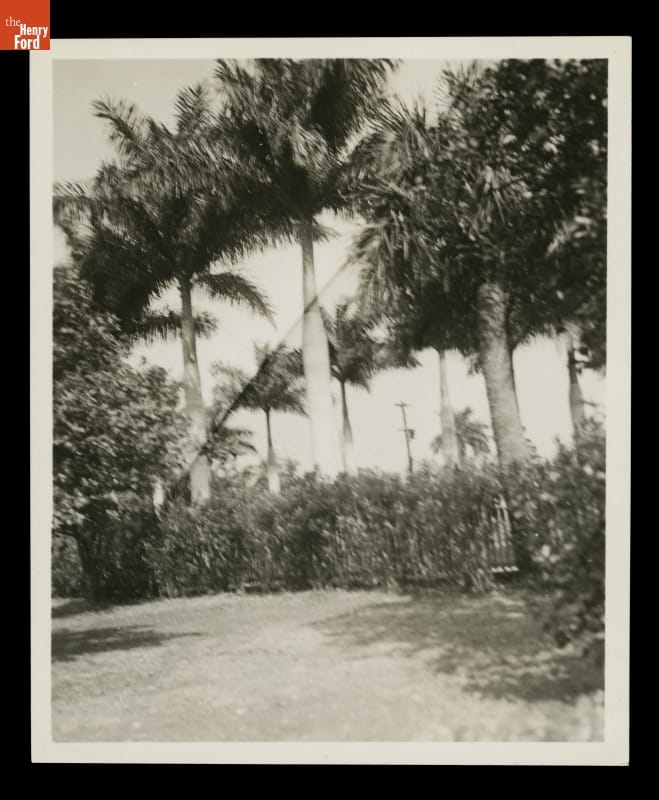
- Grounds of "The Mangoes," Winter Estate of Henry and Clara Ford, circa 1925 - In 1916, Henry and Clara Ford purchased "The Mangoes." The Fort Myers, Florida, property adjoined the winter home of Thomas Edison -- Henry's friend and mentor. The Fords' estate featured a Craftsman bungalow and grounds lush with citrus trees and tropical plants. This image shows the variety of plant life found at the Fords' winter retreat.
- circa 1925
- Collections - Artifact
Grounds of "The Mangoes," Winter Estate of Henry and Clara Ford, circa 1925
In 1916, Henry and Clara Ford purchased "The Mangoes." The Fort Myers, Florida, property adjoined the winter home of Thomas Edison -- Henry's friend and mentor. The Fords' estate featured a Craftsman bungalow and grounds lush with citrus trees and tropical plants. This image shows the variety of plant life found at the Fords' winter retreat.
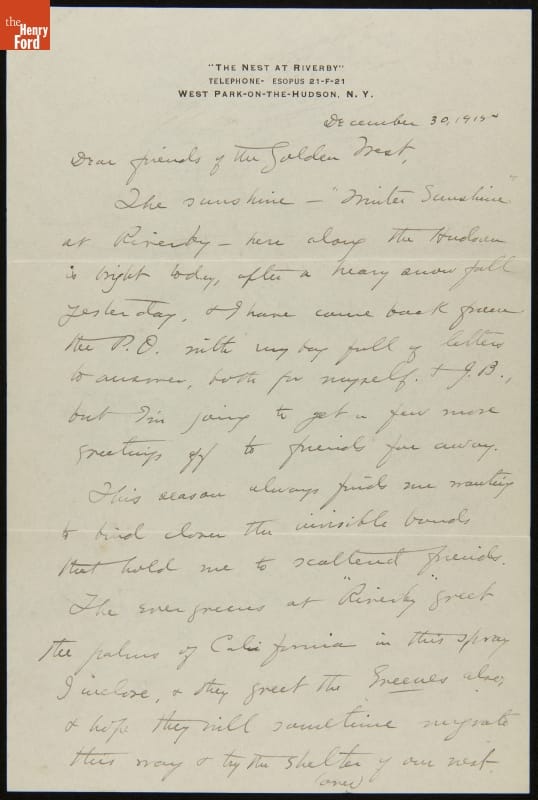
- Letter from Clara Barrus to Mr. and Mrs. J. Edward B. Greene, December 30, 1915 - Dr. Clara Barrus was one of a small number of women who graduated from medical school in the late 19th century. In 1901, she began a close friendship with John Burroughs, the famous naturalist. Burroughs later named Barrus his literary executor and official biographer. Her correspondence covers a variety of subjects, including her relationship with Burroughs and her experiences setting up her own private sanatorium.
- December 30, 1915
- Collections - Artifact
Letter from Clara Barrus to Mr. and Mrs. J. Edward B. Greene, December 30, 1915
Dr. Clara Barrus was one of a small number of women who graduated from medical school in the late 19th century. In 1901, she began a close friendship with John Burroughs, the famous naturalist. Burroughs later named Barrus his literary executor and official biographer. Her correspondence covers a variety of subjects, including her relationship with Burroughs and her experiences setting up her own private sanatorium.
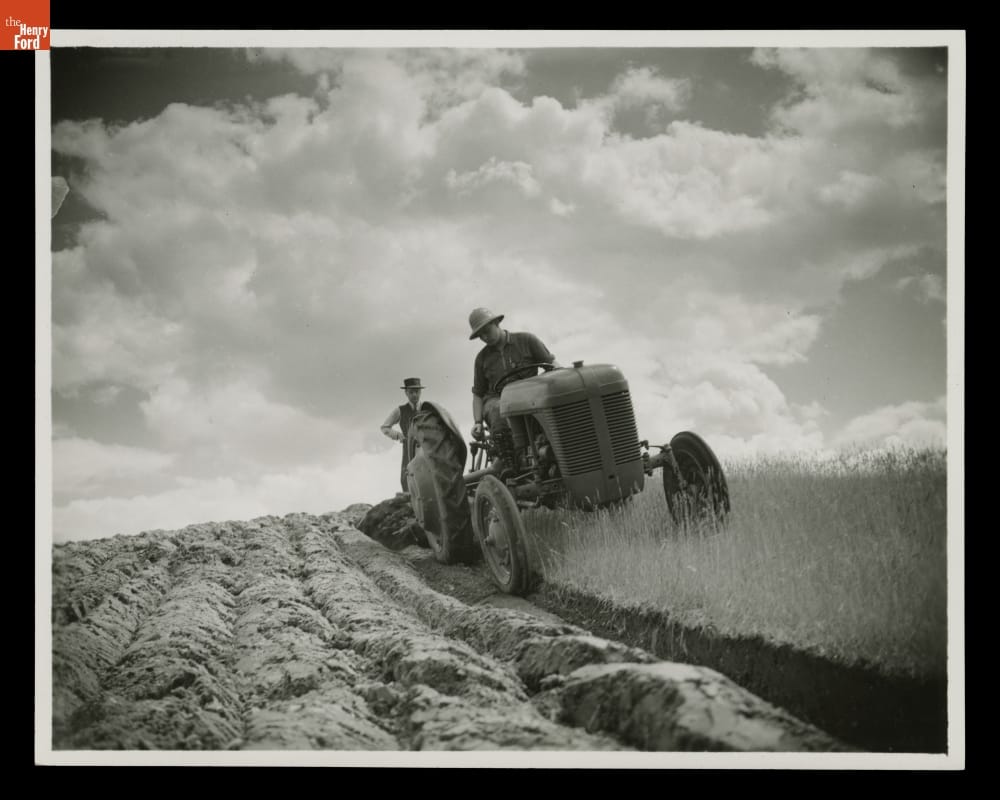
- Ford-Ferguson Tractor at Haven Hill, Oakland County, Michigan, 1939 -
- June 14, 1939
- Collections - Artifact
Ford-Ferguson Tractor at Haven Hill, Oakland County, Michigan, 1939
- Clara Barrus' Cottage at Riverby, "The Nest," circa 1915 -
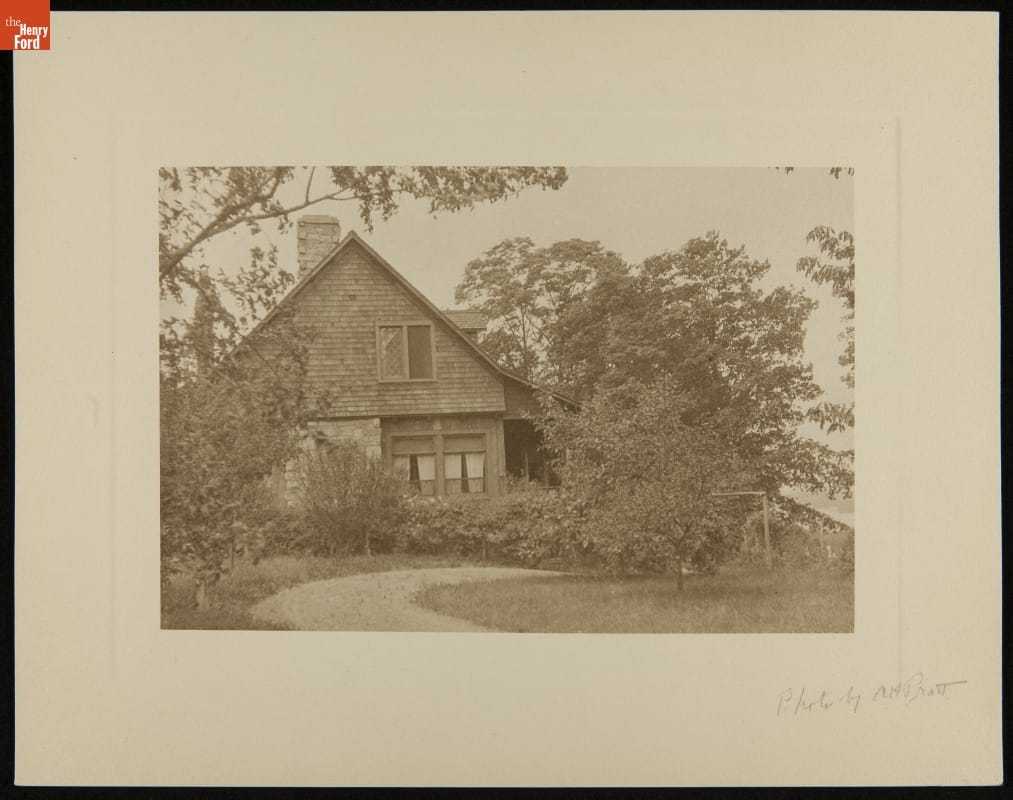
- circa 1915
- Collections - Artifact
Clara Barrus' Cottage at Riverby, "The Nest," circa 1915
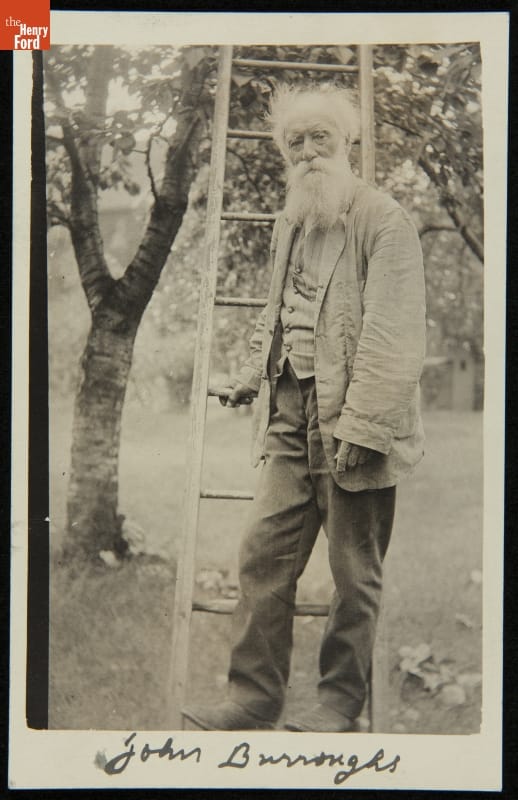
- John Burroughs Holding a Ladder near Riverby, circa 1909 - John Burroughs (1837-1921) was an internationally known naturalist and essayist who wrote about accessible and familiar landscapes. In 1873, Burroughs bought a plot of land overlooking the Hudson in the Catskills of upstate New York and named it Riverby. Here, he farmed and cultivated grapes and fruit trees. He also erected a family home and built secluded retreats where he penned some of his most famous works.
- circa 1909
- Collections - Artifact
John Burroughs Holding a Ladder near Riverby, circa 1909
John Burroughs (1837-1921) was an internationally known naturalist and essayist who wrote about accessible and familiar landscapes. In 1873, Burroughs bought a plot of land overlooking the Hudson in the Catskills of upstate New York and named it Riverby. Here, he farmed and cultivated grapes and fruit trees. He also erected a family home and built secluded retreats where he penned some of his most famous works.
- Letter from George Washington to Benjamin Grimes, 1787 -
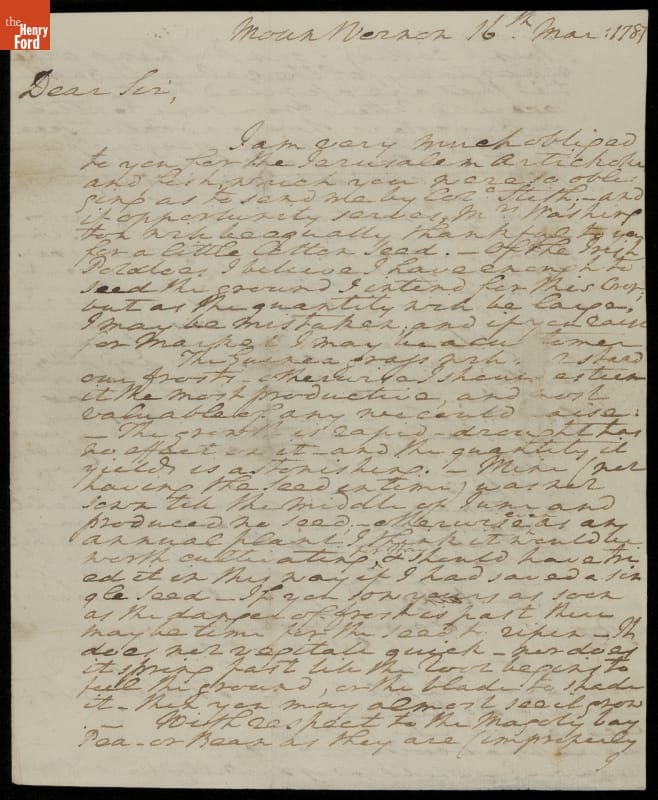
- March 16, 1787
- Collections - Artifact
Letter from George Washington to Benjamin Grimes, 1787
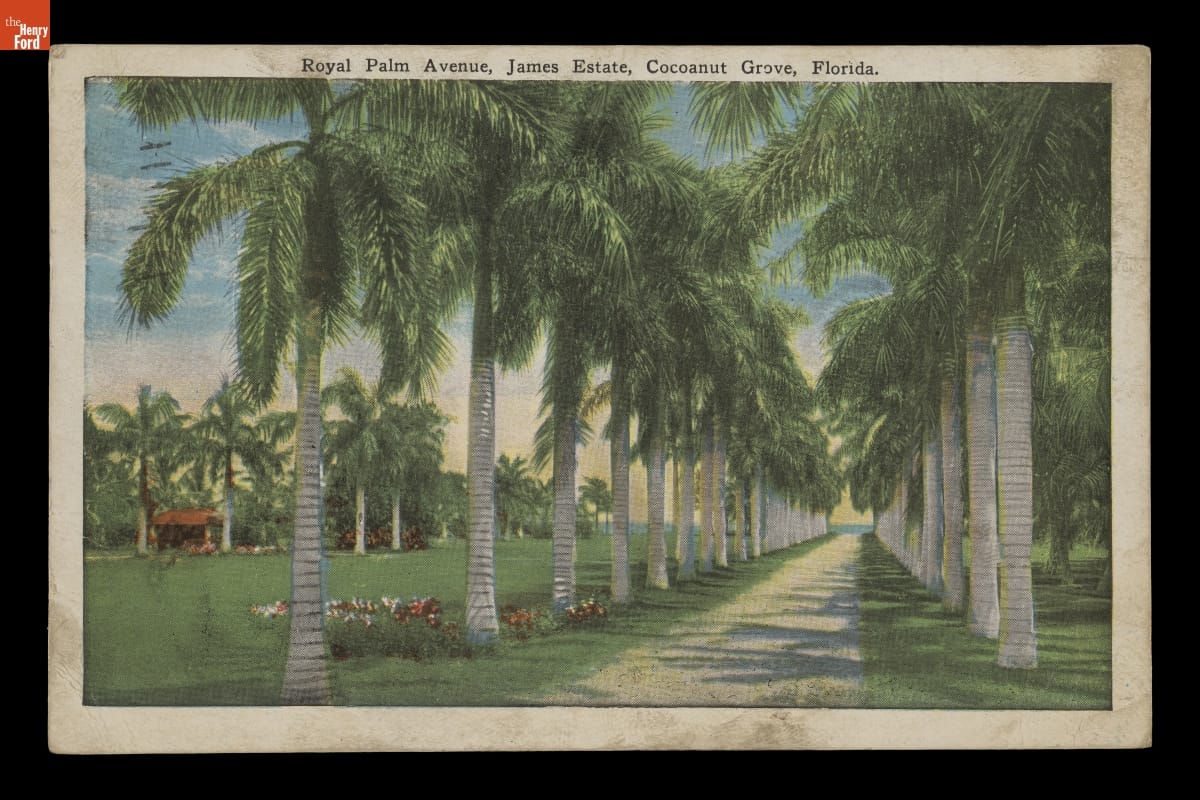
- "Royal Palm Avenue, James Estate, Cocoanut Grove, Florida," Sent to Andrew Purnell, Postmarked May 10, 1926 - Andrew Purnell Jr. (1898-1975) was born in Selma, Alabama. He served in France during World War I and returned to the U.S. in 1919. Purnell married Lela May Cooper in 1920, and by 1926, the couple had moved to Mobile, where he worked as a railroad freight handler. The Purnells kept in touch with family and friends by exchanging postcards and letters.
- Collections - Artifact
"Royal Palm Avenue, James Estate, Cocoanut Grove, Florida," Sent to Andrew Purnell, Postmarked May 10, 1926
Andrew Purnell Jr. (1898-1975) was born in Selma, Alabama. He served in France during World War I and returned to the U.S. in 1919. Purnell married Lela May Cooper in 1920, and by 1926, the couple had moved to Mobile, where he worked as a railroad freight handler. The Purnells kept in touch with family and friends by exchanging postcards and letters.
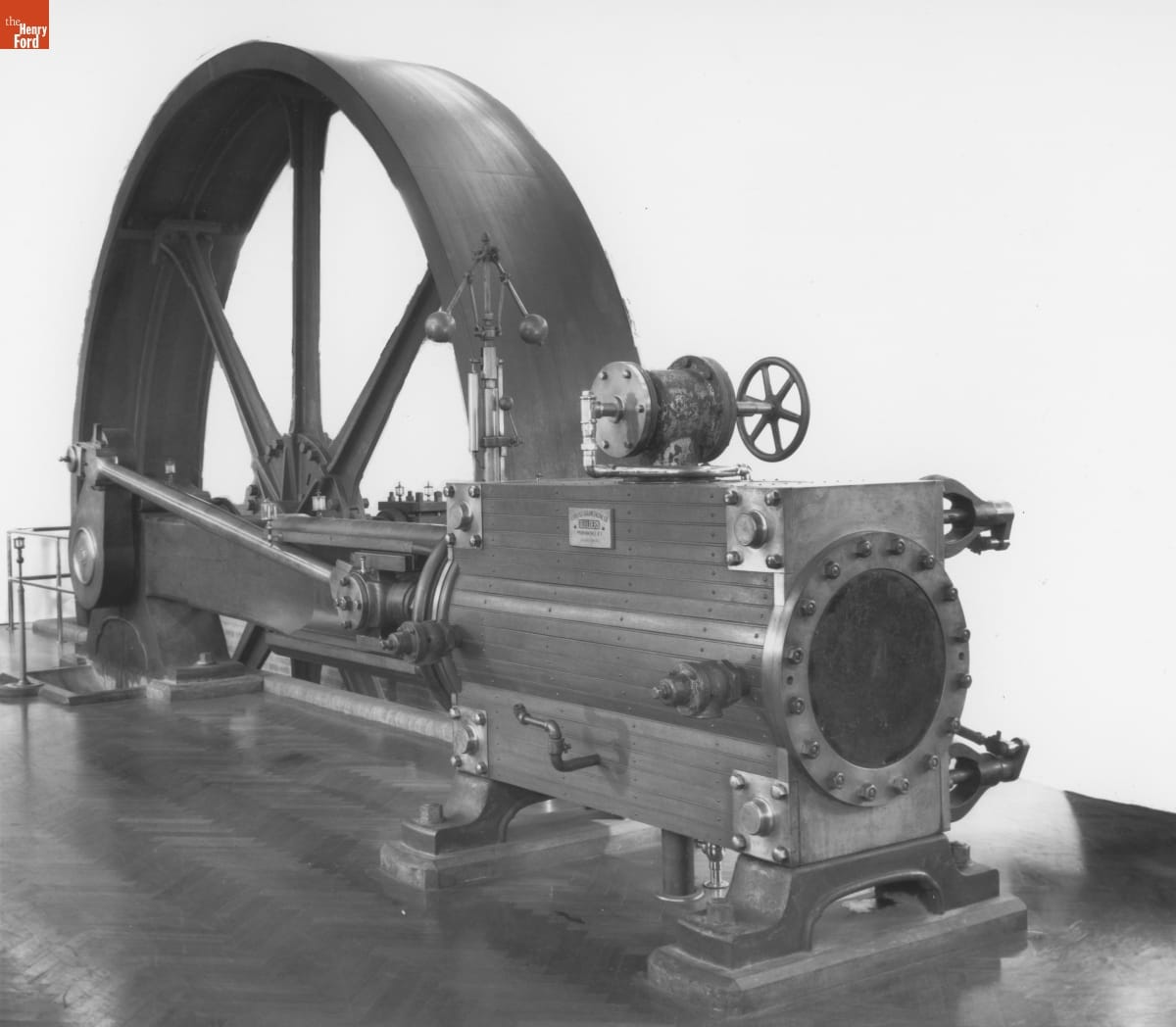
- Corliss Steam Engine, 1859 - George Corliss was one of the United States' most highly regarded steam engine designers. His valve innovations made his engines particularly important to the textile industry--where a combination of high power output and quick response to changes in load were greatly valued. He designed many of the machines used to manufacture his engines and was a pioneer in standardized manufacturing techniques.
- 1859
- Collections - Artifact
Corliss Steam Engine, 1859
George Corliss was one of the United States' most highly regarded steam engine designers. His valve innovations made his engines particularly important to the textile industry--where a combination of high power output and quick response to changes in load were greatly valued. He designed many of the machines used to manufacture his engines and was a pioneer in standardized manufacturing techniques.
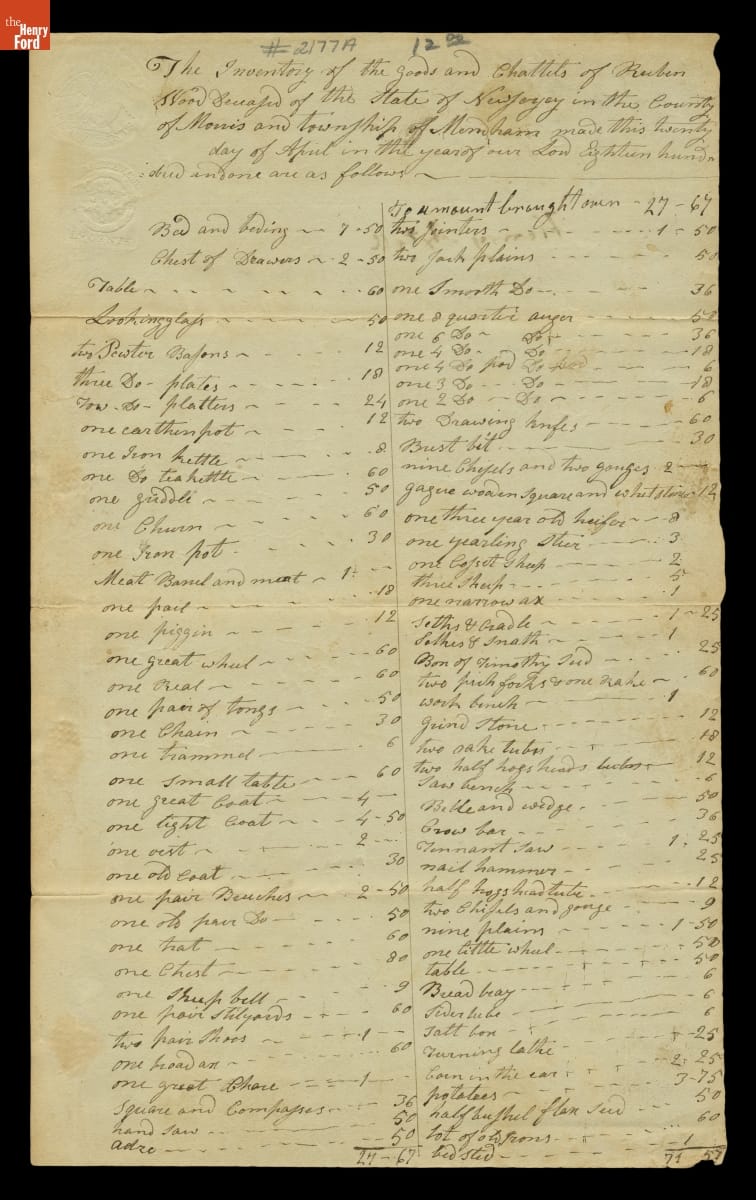
- Estate Inventory of Ruben Wood, Filed April 20, 1801 -
- April 20, 1801
- Collections - Artifact
Estate Inventory of Ruben Wood, Filed April 20, 1801