
Search
- European Recovery Program Poster, circa 1950 -
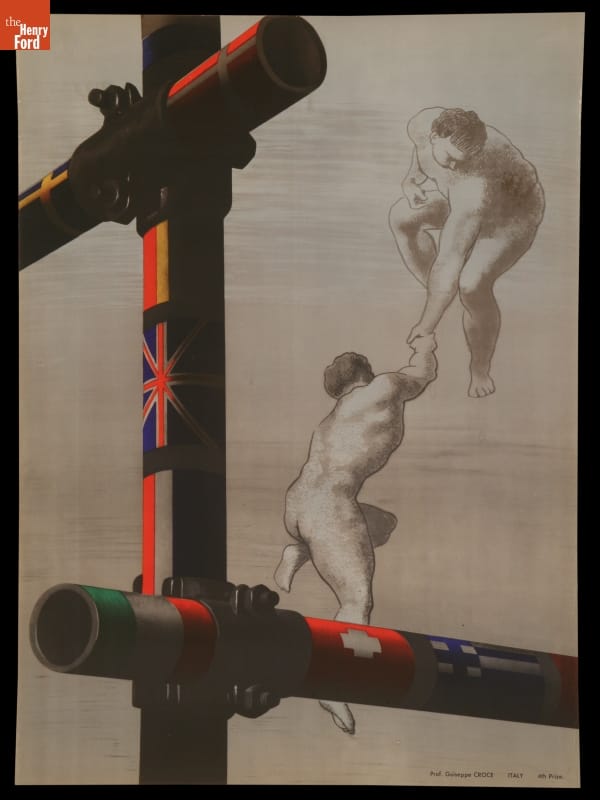
- circa 1950
- Collections - Artifact
European Recovery Program Poster, circa 1950
- European Recovery Program Poster, "La Cooperation Inter-europeenne pour un Niveau de Vie plus Eleve," circa 1950 -
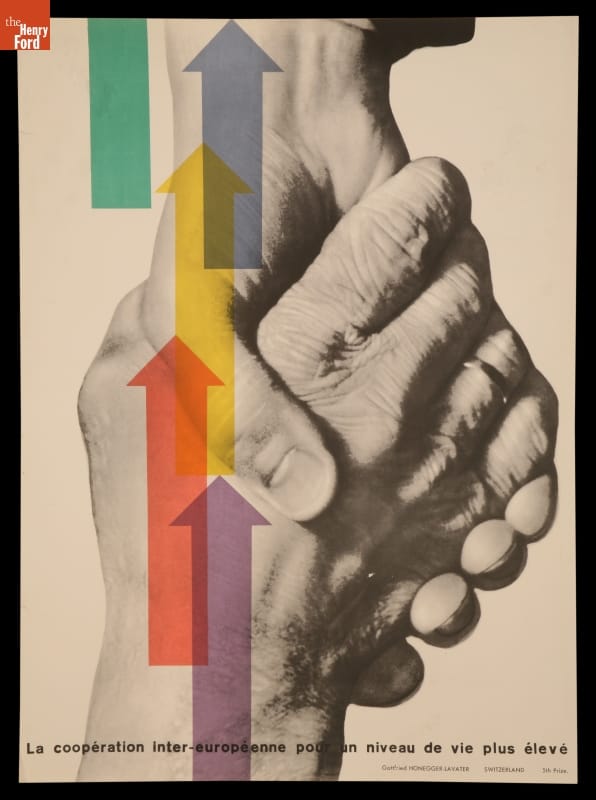
- circa 1950
- Collections - Artifact
European Recovery Program Poster, "La Cooperation Inter-europeenne pour un Niveau de Vie plus Eleve," circa 1950
- "United States Lines, Sailings To and From Europe," January 3, 1938 - United States Lines was formed in 1921 and operated transatlantic passenger ocean liners until 1969. In the 1930s, when this brochure was printed, the company built two new liners: <em>Manhattan</em> and <em>Washington</em>. The arrival of transatlantic jet airliners in the late 1950s -- which cut travel time from days to hours -- ended the age of ocean liners.
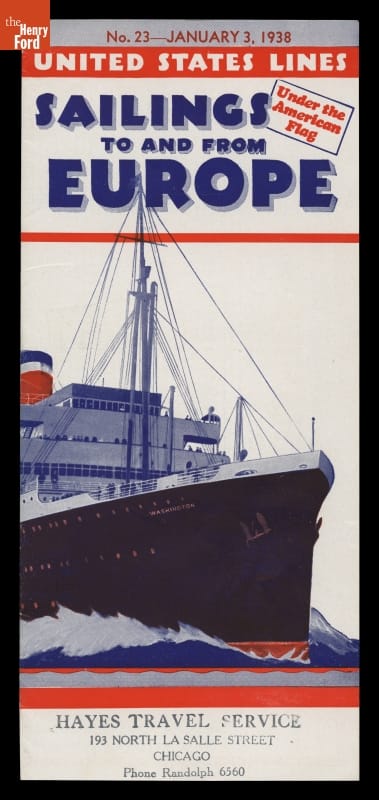
- January 03, 1938
- Collections - Artifact
"United States Lines, Sailings To and From Europe," January 3, 1938
United States Lines was formed in 1921 and operated transatlantic passenger ocean liners until 1969. In the 1930s, when this brochure was printed, the company built two new liners: Manhattan and Washington. The arrival of transatlantic jet airliners in the late 1950s -- which cut travel time from days to hours -- ended the age of ocean liners.
- "Opportunity in America to Keep a Good Garden and Help the World Eat Better," circa 1945 -
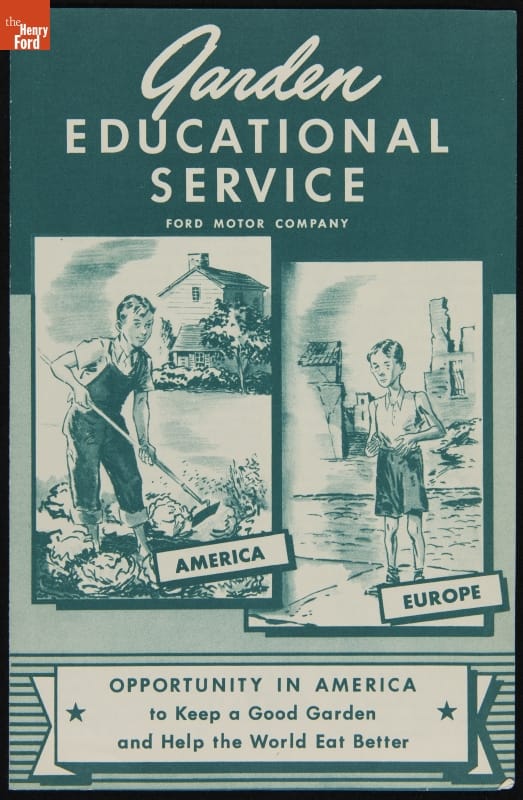
- circa 1945
- Collections - Artifact
"Opportunity in America to Keep a Good Garden and Help the World Eat Better," circa 1945
- Racing Helmet Worn by Rudolf Caracciola, 1939 - Rudolf Caracciola, a native of Remagen, Germany, was a three-time winner of the European Drivers' Championship and a three-time winner of the European Hillclimbing Championship. Caracciola wore this helmet during the 1939 Grand Prix season in which he finished third overall -- though an official winner was never declared due to the outbreak of World War II.
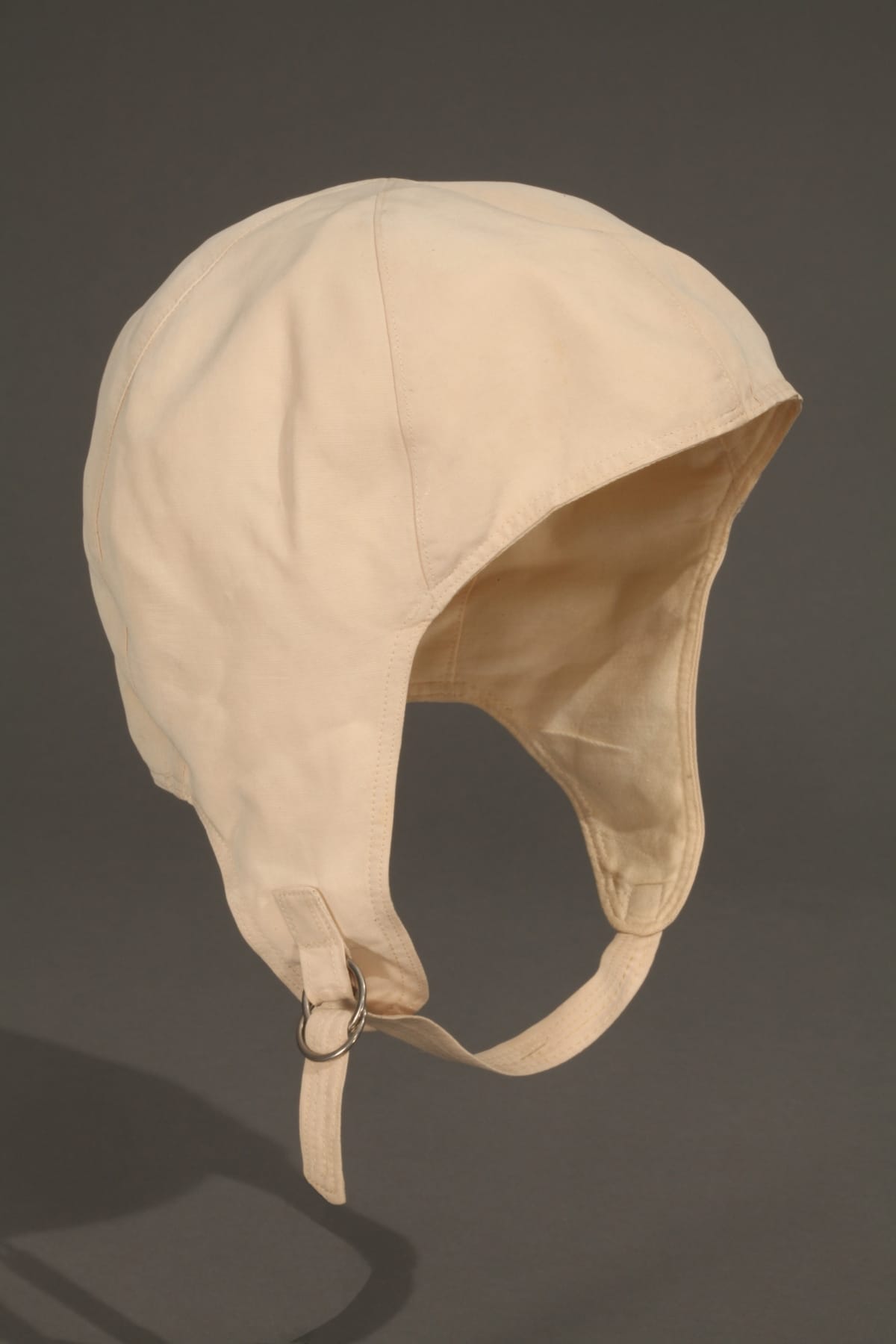
- 1939
- Collections - Artifact
Racing Helmet Worn by Rudolf Caracciola, 1939
Rudolf Caracciola, a native of Remagen, Germany, was a three-time winner of the European Drivers' Championship and a three-time winner of the European Hillclimbing Championship. Caracciola wore this helmet during the 1939 Grand Prix season in which he finished third overall -- though an official winner was never declared due to the outbreak of World War II.
- Cameo Bracelet, 1850-1870 -
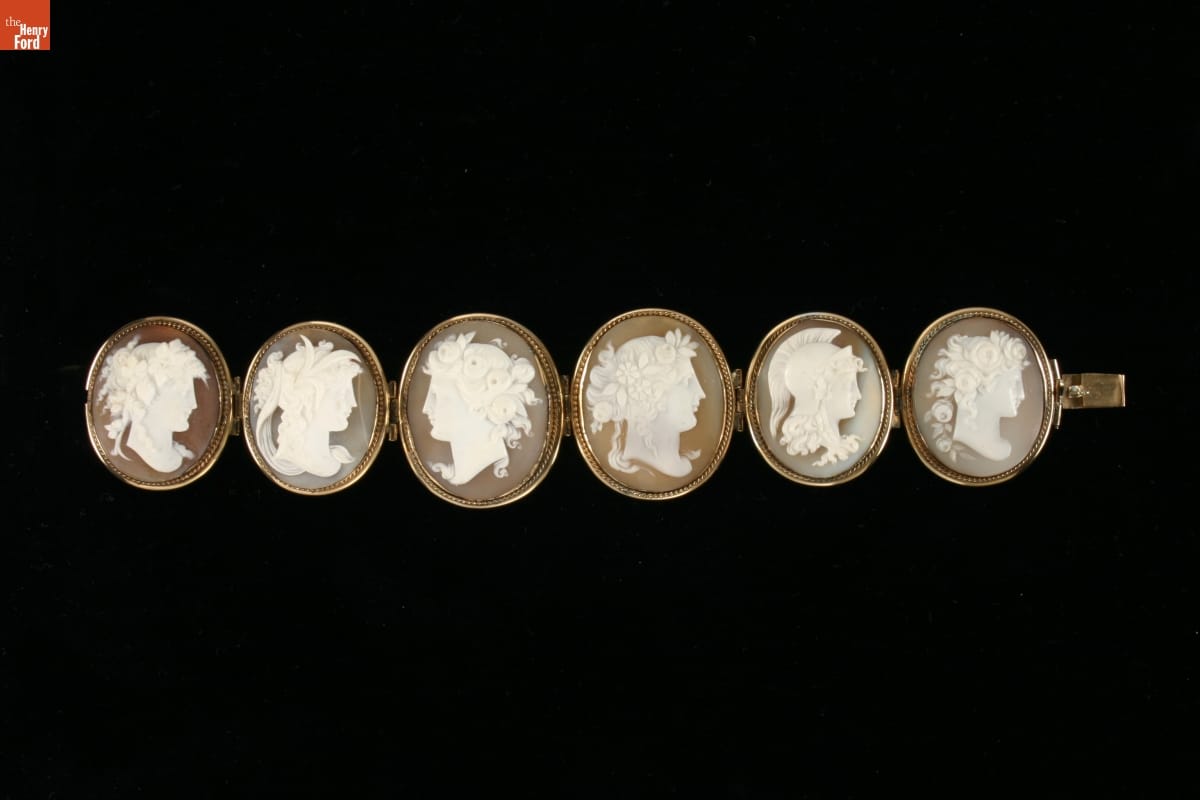
- 1850-1870
- Collections - Artifact
Cameo Bracelet, 1850-1870
- Bracelet, 1837-1861 -
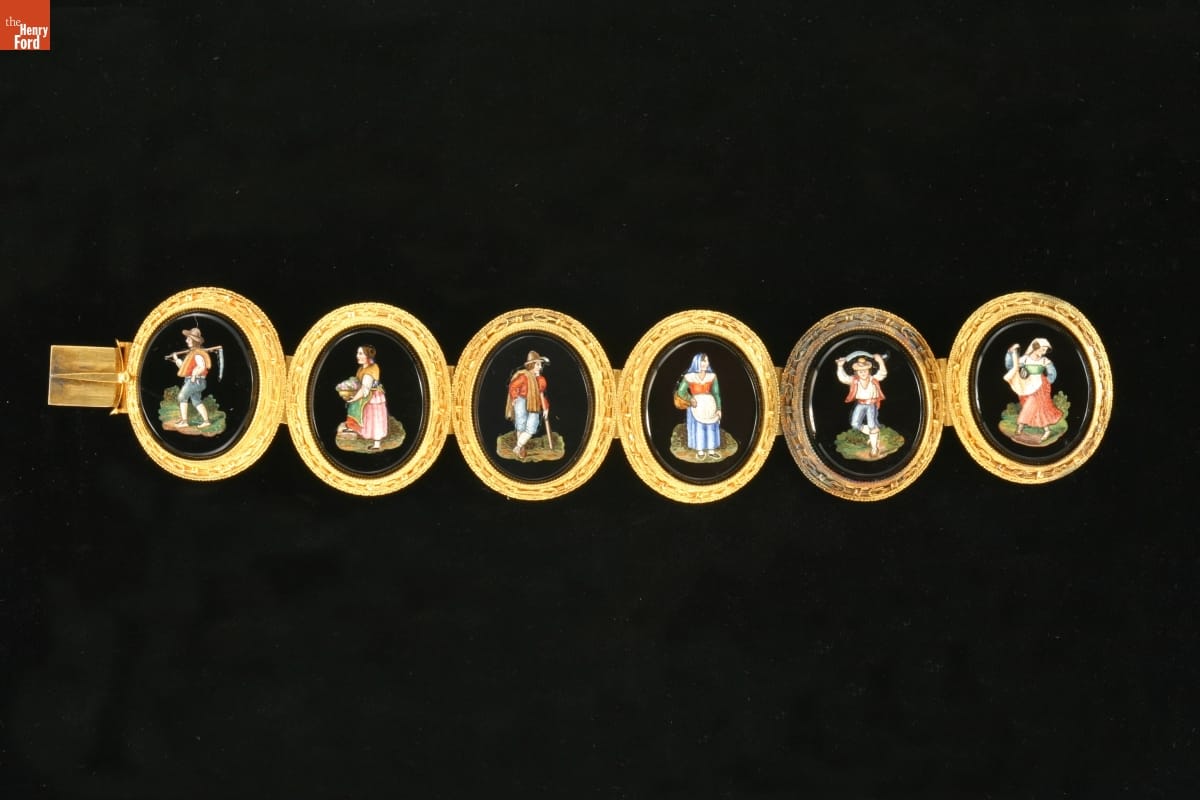
- 1837-1861
- Collections - Artifact
Bracelet, 1837-1861
- Telegram from Edsel Ford to W. J. Scripps, Radio Station WWJ, regarding American Red Cross Relief Fund, May 21, 1940 -
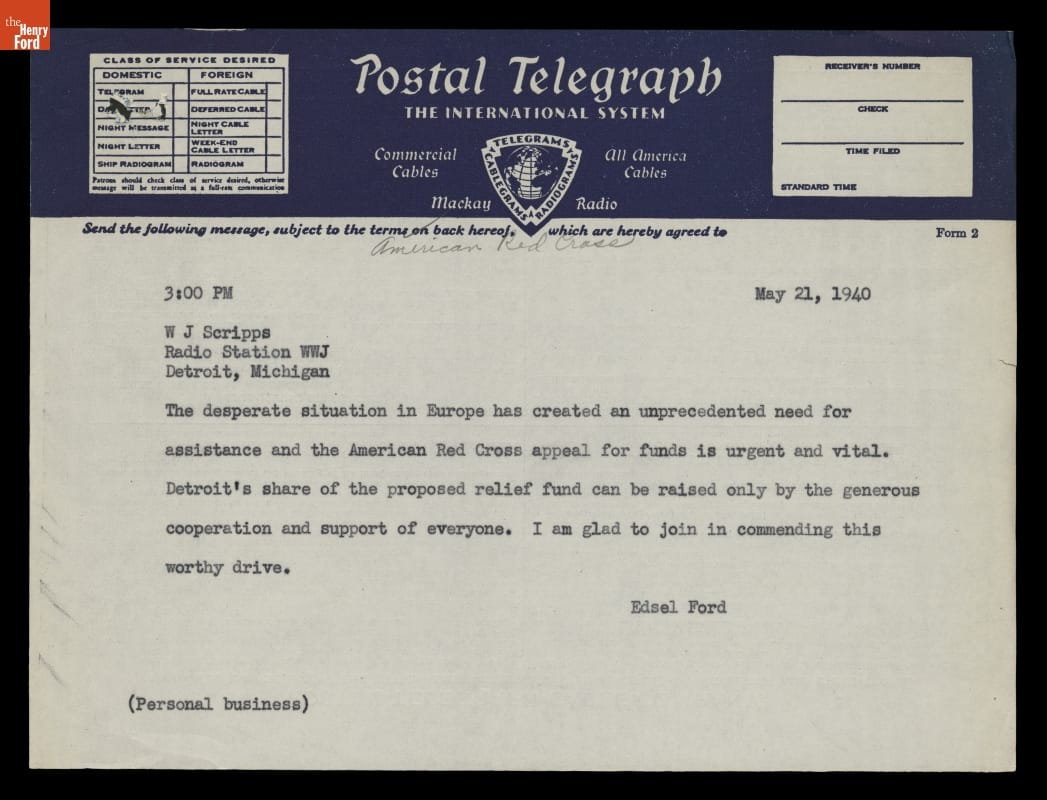
- May 21, 1940
- Collections - Artifact
Telegram from Edsel Ford to W. J. Scripps, Radio Station WWJ, regarding American Red Cross Relief Fund, May 21, 1940
- Carroll Shelby in Europe, 1964 - Carroll Shelby had his competitive-driving career cut short by a heart condition, but that didn't stop him from becoming one of America's most influential race car designers and entrepreneurs. Shelby played a vital role in Ford's campaign against Ferrari at Le Mans. He also collaborated with Ford and Chrysler on numerous special vehicles.
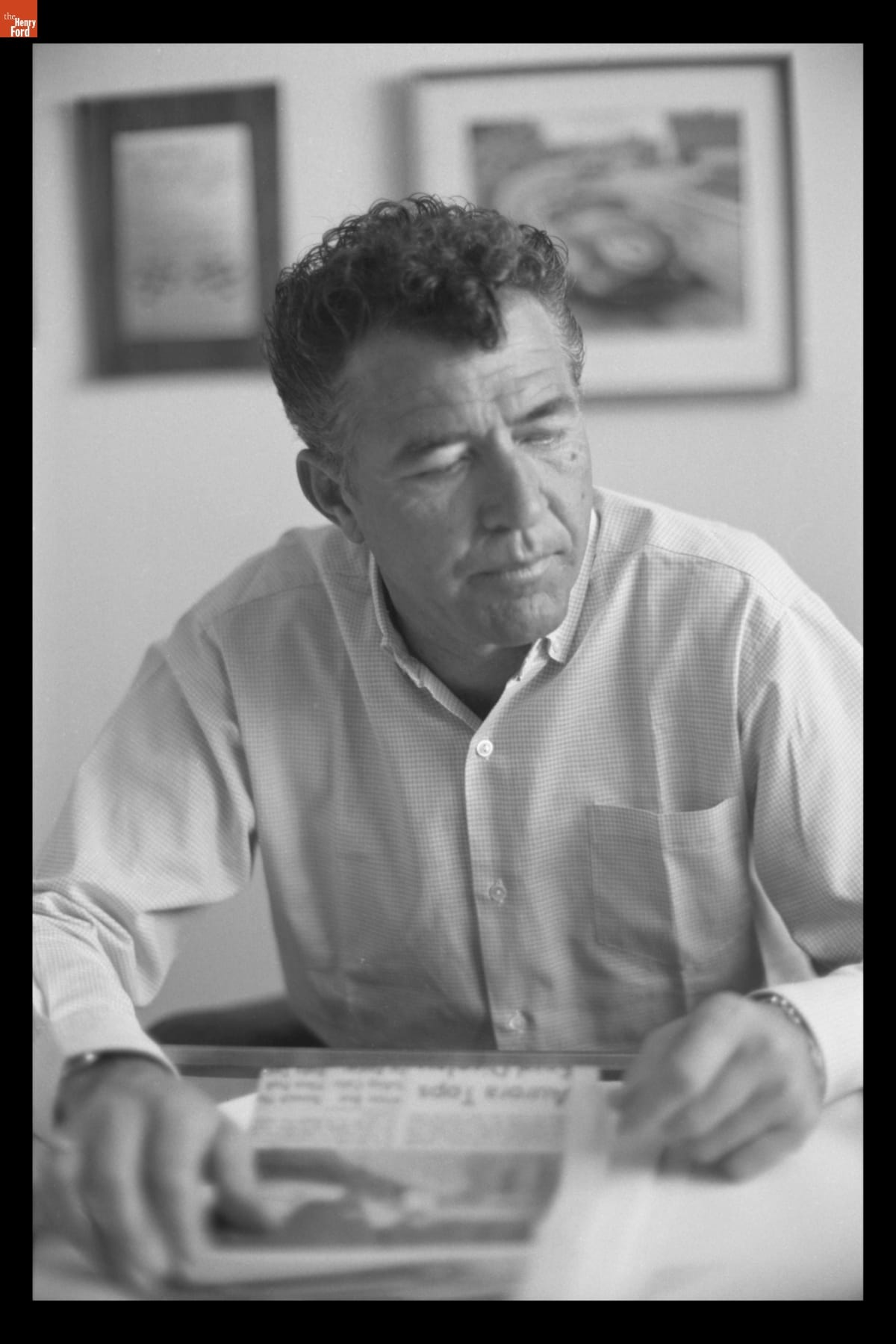
- 1964
- Collections - Artifact
Carroll Shelby in Europe, 1964
Carroll Shelby had his competitive-driving career cut short by a heart condition, but that didn't stop him from becoming one of America's most influential race car designers and entrepreneurs. Shelby played a vital role in Ford's campaign against Ferrari at Le Mans. He also collaborated with Ford and Chrysler on numerous special vehicles.
- European Recovery Program Poster, "Pour S'Elever et Vivre Mieux," circa 1950 -
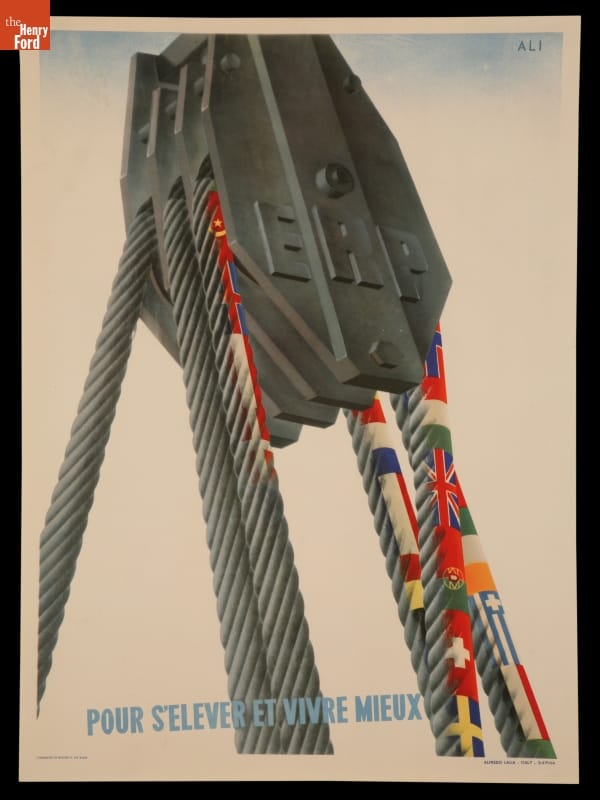
- circa 1950
- Collections - Artifact
European Recovery Program Poster, "Pour S'Elever et Vivre Mieux," circa 1950