
Search
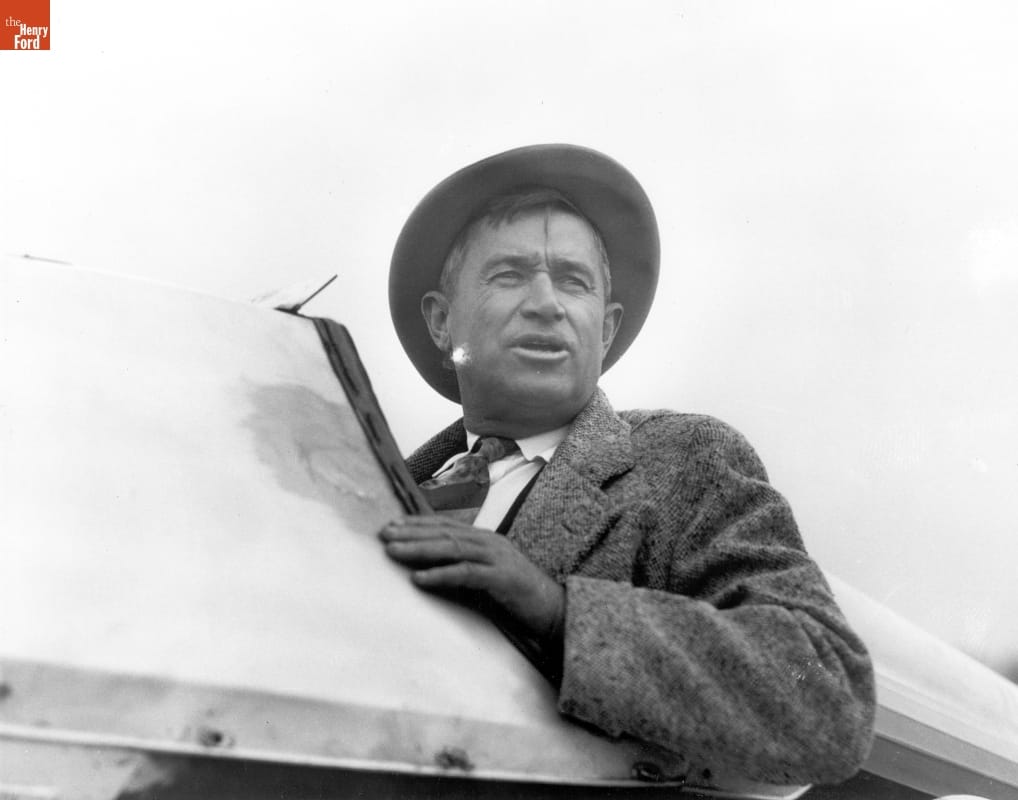
- Will Rogers in Ford Flivver #1 Airplane, 1927 - Popular humorist Will Rogers posed in a Ford Flivver airplane in 1927. The Flivver was Henry Ford's unsuccessful attempt to build a "Model T for the sky," a simple and affordable aircraft that anyone could fly. Rogers, along with aviator Wiley Post, died in an unrelated airplane crash in Alaska in 1935.
- 1927
- Collections - Artifact
Will Rogers in Ford Flivver #1 Airplane, 1927
Popular humorist Will Rogers posed in a Ford Flivver airplane in 1927. The Flivver was Henry Ford's unsuccessful attempt to build a "Model T for the sky," a simple and affordable aircraft that anyone could fly. Rogers, along with aviator Wiley Post, died in an unrelated airplane crash in Alaska in 1935.
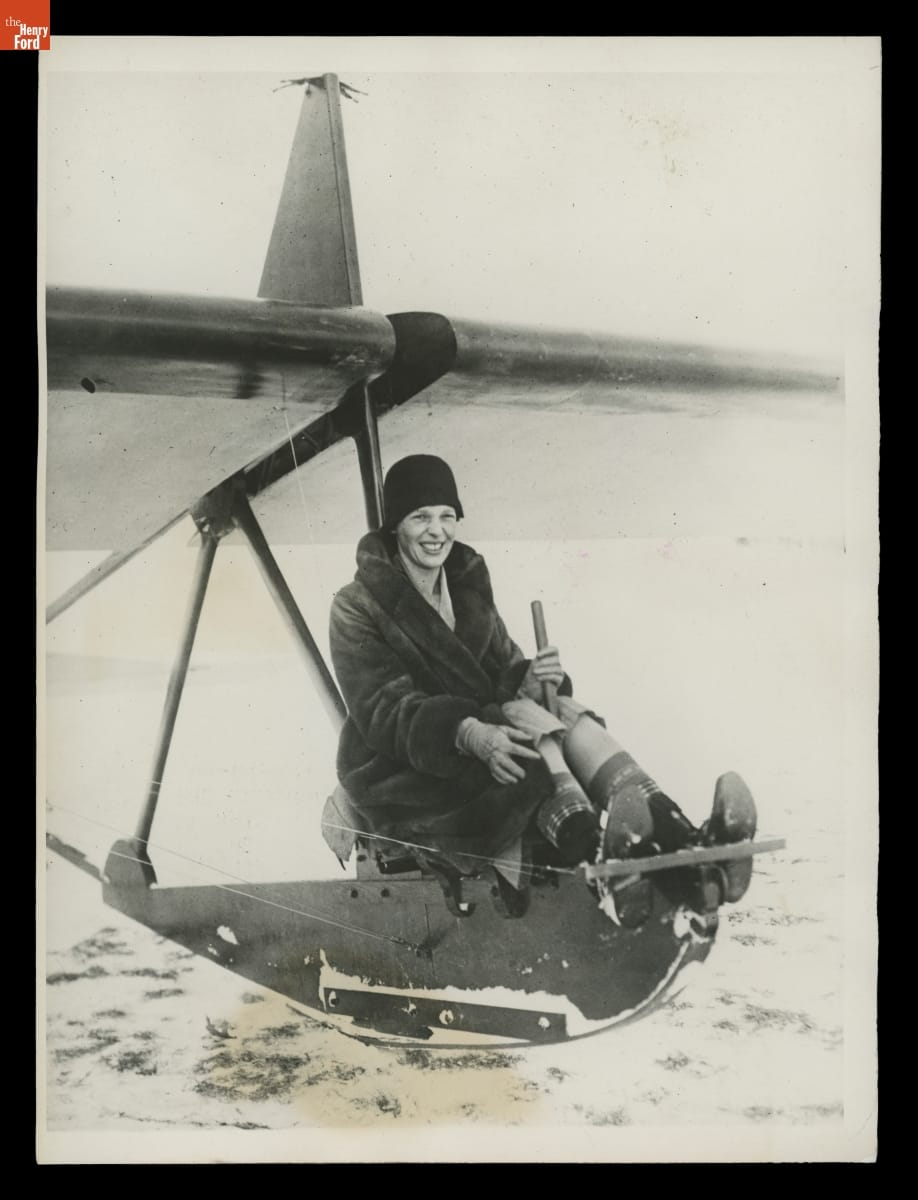
- Amelia Earhart in an Experimental Ice-Glider at Wildwood Farm, Lake Orion, Michigan, March 1929 - Amelia Earhart took her first airplane ride in 1920. From then on, she devoted her life to flight. Earhart set records, made headlines and became one of the world's most famous pilots. Her speeches supported the growing aviation industry, and her product endorsements helped fund her flying. Earhart's disappearance during her around-the-world flight attempt in 1937 added to her mystique.
- March 01, 1929
- Collections - Artifact
Amelia Earhart in an Experimental Ice-Glider at Wildwood Farm, Lake Orion, Michigan, March 1929
Amelia Earhart took her first airplane ride in 1920. From then on, she devoted her life to flight. Earhart set records, made headlines and became one of the world's most famous pilots. Her speeches supported the growing aviation industry, and her product endorsements helped fund her flying. Earhart's disappearance during her around-the-world flight attempt in 1937 added to her mystique.
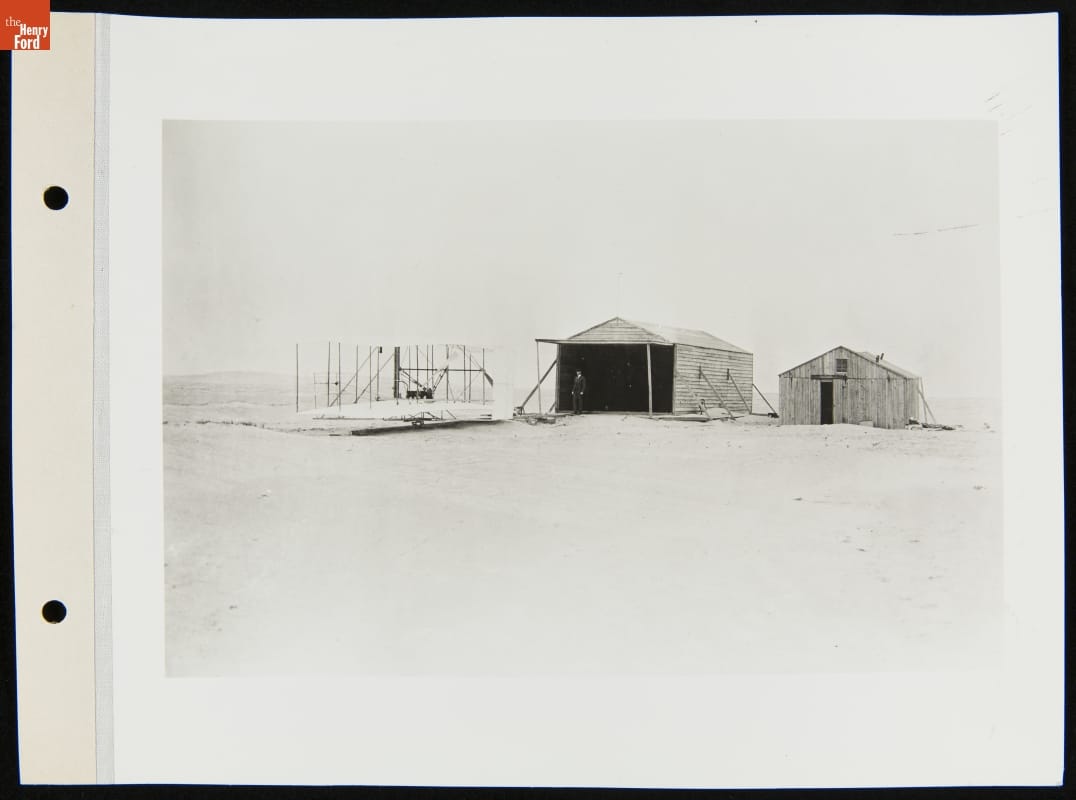
- The Wright Brothers' 1903 Flyer and Camp at Kill Devil Hills, North Carolina - Wilbur and Orville Wright established a modest camp among the sand dunes at Kill Devil Hills. They built a wooden shed to house their glider -- and themselves -- in 1901. When they returned with the powered Flyer airplane in 1903, the brothers built a new, larger hangar and converted the old shed into living quarters. Wilbur jokingly called it their "summer house."
- November 24, 1903
- Collections - Artifact
The Wright Brothers' 1903 Flyer and Camp at Kill Devil Hills, North Carolina
Wilbur and Orville Wright established a modest camp among the sand dunes at Kill Devil Hills. They built a wooden shed to house their glider -- and themselves -- in 1901. When they returned with the powered Flyer airplane in 1903, the brothers built a new, larger hangar and converted the old shed into living quarters. Wilbur jokingly called it their "summer house."
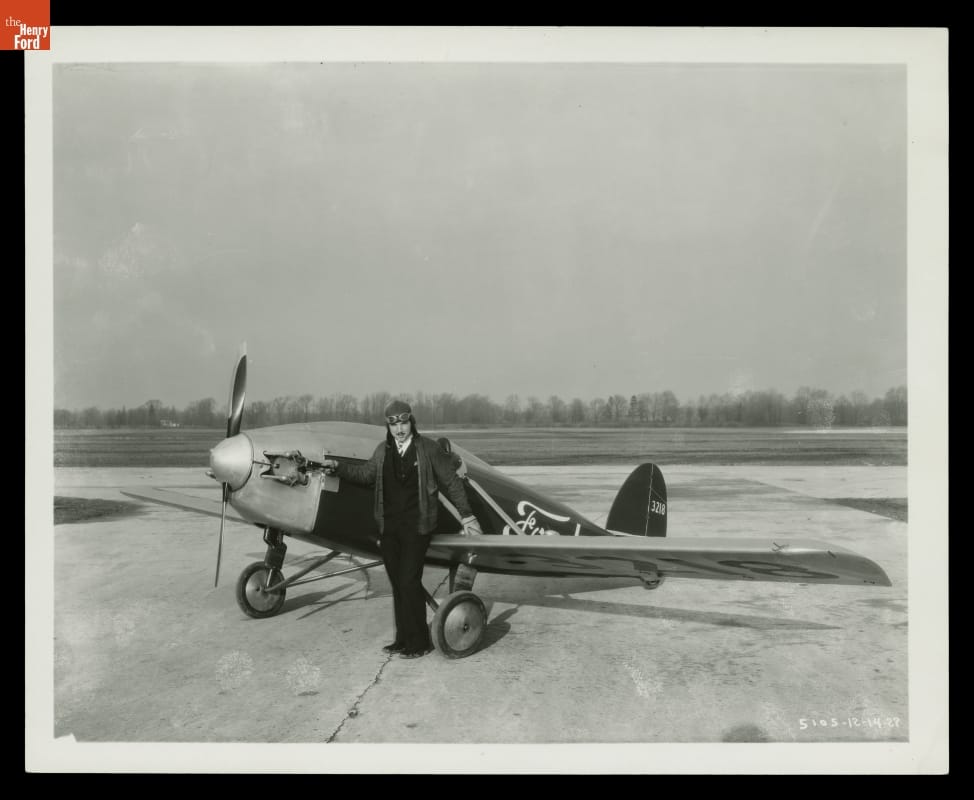
- Harry Brooks with Ford Flivver Airplane #3 at Ford Airport, December 1927 - Test pilot Harry Brooks posed with a Ford Flivver airplane in 1927. The Flivver was Henry Ford's attempt to create a small, affordable airplane that almost anyone could fly -- a Model T for the sky. Three or four prototypes were built, but Ford abandoned the project after Brooks died in a Flivver crash near Melbourne, Florida, in 1928.
- December 14, 1927
- Collections - Artifact
Harry Brooks with Ford Flivver Airplane #3 at Ford Airport, December 1927
Test pilot Harry Brooks posed with a Ford Flivver airplane in 1927. The Flivver was Henry Ford's attempt to create a small, affordable airplane that almost anyone could fly -- a Model T for the sky. Three or four prototypes were built, but Ford abandoned the project after Brooks died in a Flivver crash near Melbourne, Florida, in 1928.
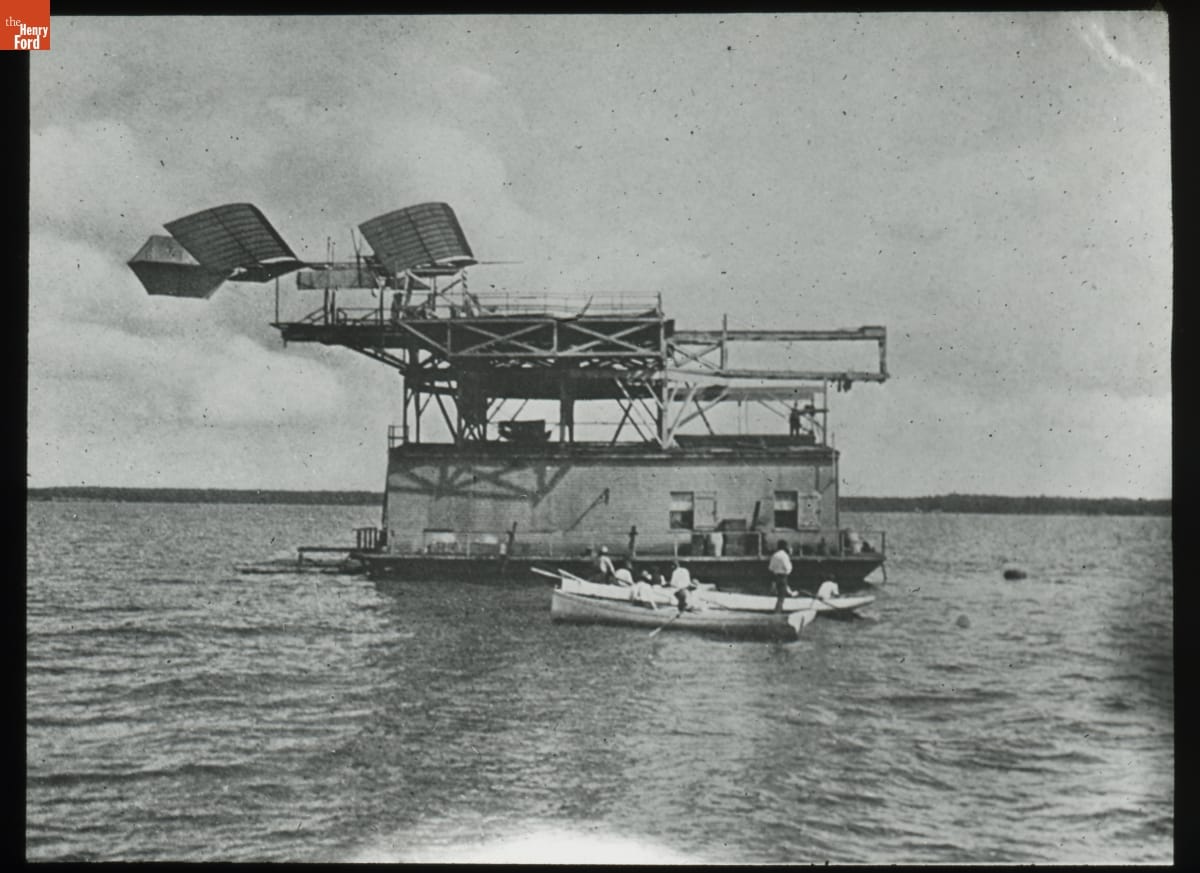
- "Langley Aerodrome," 1896 - Samuel Pierpont Langley, Secretary of the Smithsonian Institution, experimented successfully with unpiloted, steam-powered Aerodromes like the one seen here. He launched his aircraft from a houseboat on the Potomac River. Langley later designed a piloted, gasoline-powered version he called the Great Aerodrome, but two attempts to fly it in 1903 ended quickly with crashes into the river.
- 1896
- Collections - Artifact
"Langley Aerodrome," 1896
Samuel Pierpont Langley, Secretary of the Smithsonian Institution, experimented successfully with unpiloted, steam-powered Aerodromes like the one seen here. He launched his aircraft from a houseboat on the Potomac River. Langley later designed a piloted, gasoline-powered version he called the Great Aerodrome, but two attempts to fly it in 1903 ended quickly with crashes into the river.
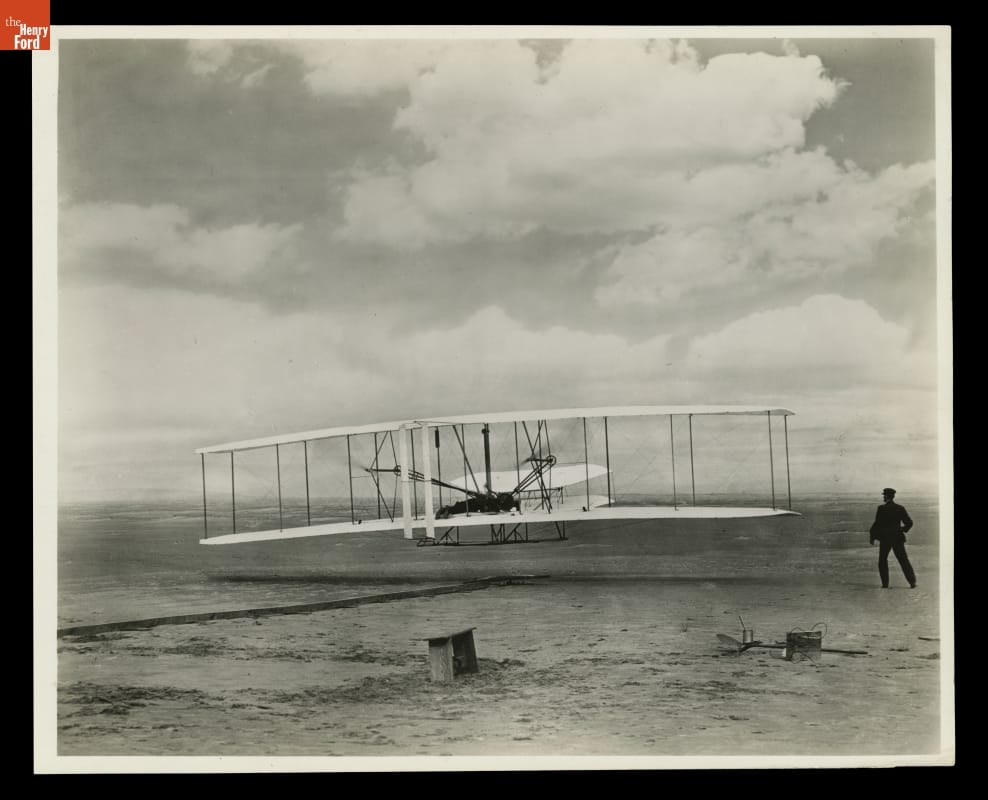
- The Wright Flyer's First Flight, Kill Devil Hills, North Carolina, December 17, 1903 - When John T. Daniels snapped the shutter on Orville Wright's camera, he captured one of the most significant images ever taken. The photo not only shows the moment of liftoff during the Wright brothers' first flight, but also the instant that heavier-than-air flight began. Daniels, a crewman at the Kill Devil Hills Life-Saving Station, had never used a camera before.
- December 17, 1903
- Collections - Artifact
The Wright Flyer's First Flight, Kill Devil Hills, North Carolina, December 17, 1903
When John T. Daniels snapped the shutter on Orville Wright's camera, he captured one of the most significant images ever taken. The photo not only shows the moment of liftoff during the Wright brothers' first flight, but also the instant that heavier-than-air flight began. Daniels, a crewman at the Kill Devil Hills Life-Saving Station, had never used a camera before.
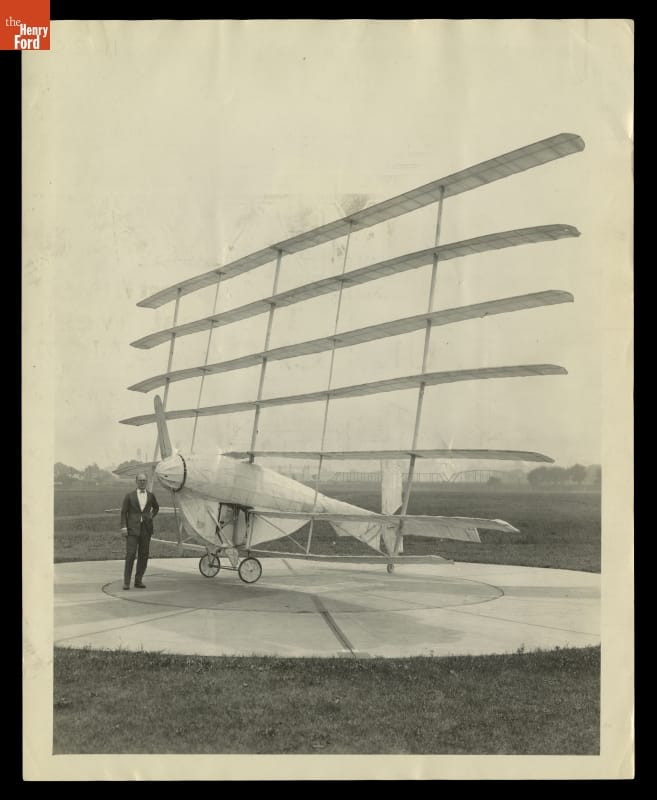
- W. F. Gerhardt and Cycleplane, McCook Field near Dayton, Ohio, 1923-1924 -
- 1923-1924
- Collections - Artifact
W. F. Gerhardt and Cycleplane, McCook Field near Dayton, Ohio, 1923-1924
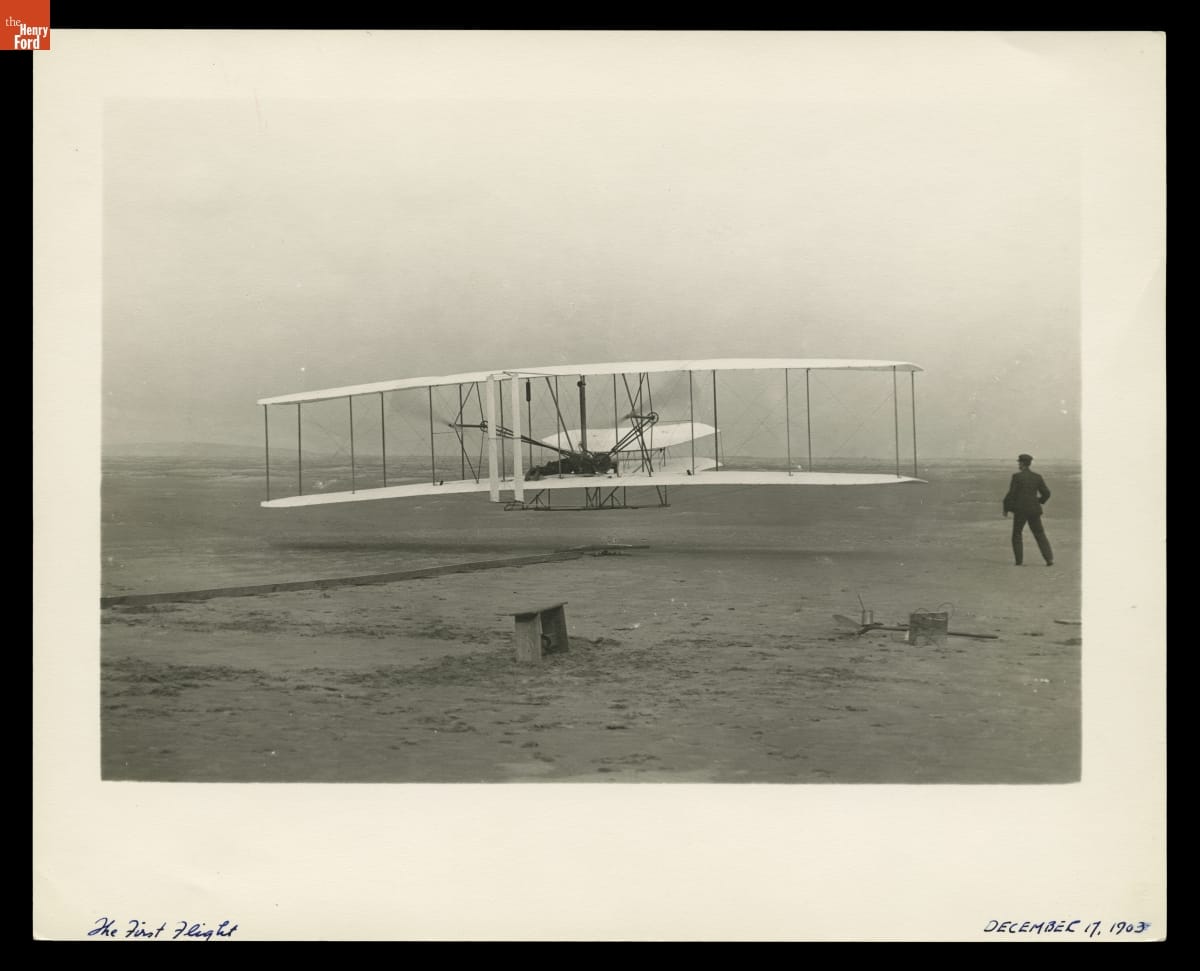
- First Flight of Wright 1903 Flyer at Kill Devil Hills, North Carolina, December 17, 1903 - When John T. Daniels snapped the shutter on Orville Wright's camera, he captured one of the most significant images ever taken. The photo not only shows the moment of liftoff during the Wright brothers' first flight, but also the instant that heavier-than-air flight began. Daniels, a crewman at the Kill Devil Hills Life-Saving Station, had never used a camera before.
- December 17, 1903
- Collections - Artifact
First Flight of Wright 1903 Flyer at Kill Devil Hills, North Carolina, December 17, 1903
When John T. Daniels snapped the shutter on Orville Wright's camera, he captured one of the most significant images ever taken. The photo not only shows the moment of liftoff during the Wright brothers' first flight, but also the instant that heavier-than-air flight began. Daniels, a crewman at the Kill Devil Hills Life-Saving Station, had never used a camera before.
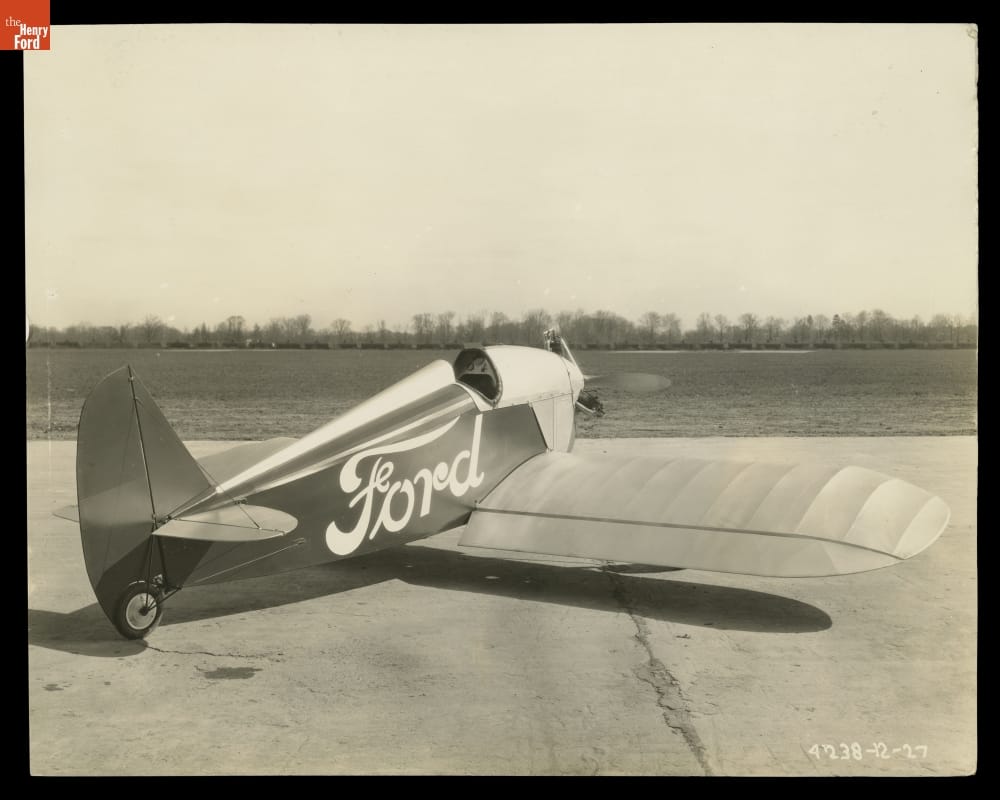
- Ford Flivver Airplane #1 at Ford Airport, April 12, 1927 - This is Ford's Flivver #1, a quick, highly maneuverable plane that created a media buzz when it was demonstrated at the 1926 Ford Reliability Tour. The press called the single-seat plane the "Model T of the air," but it was purely experimental. Ford would never mass produce the Flivver.
- April 12, 1927
- Collections - Artifact
Ford Flivver Airplane #1 at Ford Airport, April 12, 1927
This is Ford's Flivver #1, a quick, highly maneuverable plane that created a media buzz when it was demonstrated at the 1926 Ford Reliability Tour. The press called the single-seat plane the "Model T of the air," but it was purely experimental. Ford would never mass produce the Flivver.
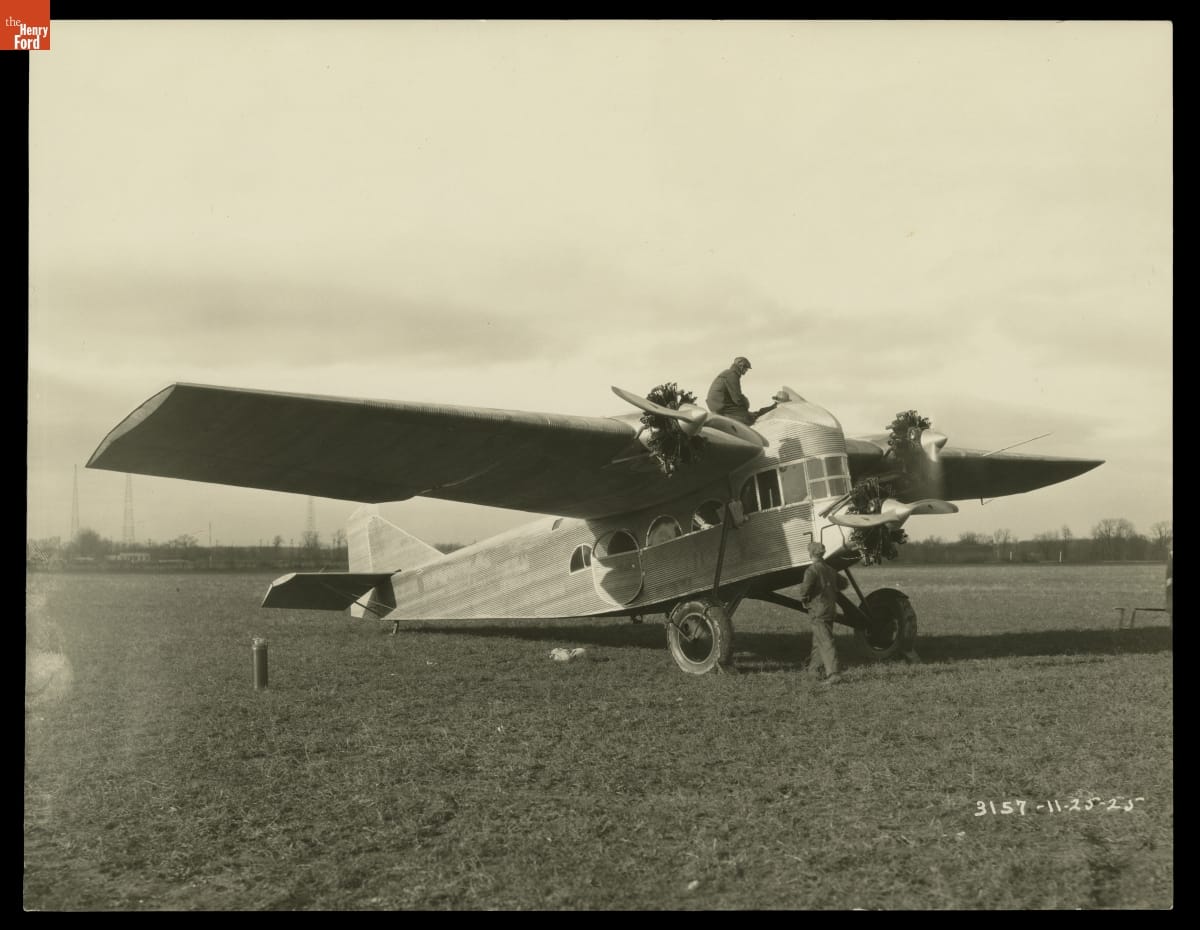
- First Tri-Motor Airplane Built by Stout Metal Airplane Company, Ford Airport, Dearborn, Michigan, 1925 - William B. Stout's first aircraft built after his firm became a division of Ford Motor Company was this 3-AT. First tested in November 1925, the ungainly and poor-handling plane was a flop. The single 3-AT was destroyed in a fire two months later. Lessons from the failure informed the design of the considerably more successful 4-AT -- the celebrated Ford Tri-Motor.
- November 25, 1925
- Collections - Artifact
First Tri-Motor Airplane Built by Stout Metal Airplane Company, Ford Airport, Dearborn, Michigan, 1925
William B. Stout's first aircraft built after his firm became a division of Ford Motor Company was this 3-AT. First tested in November 1925, the ungainly and poor-handling plane was a flop. The single 3-AT was destroyed in a fire two months later. Lessons from the failure informed the design of the considerably more successful 4-AT -- the celebrated Ford Tri-Motor.