
Search
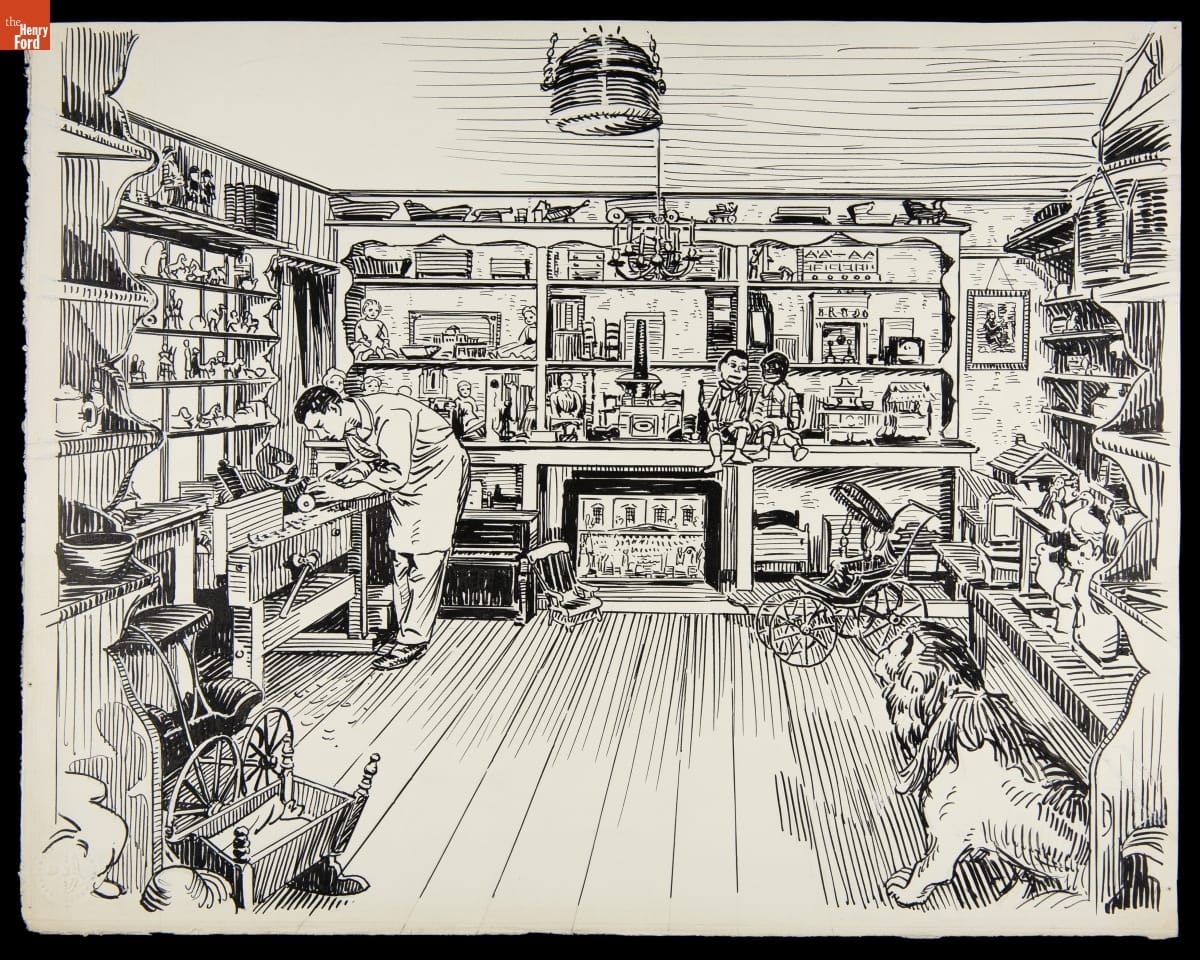
- Toy Shop in Henry Ford Museum "Street of Shops" Exhibit, circa 1941 - Henry Ford encouraged and appreciated the work of artist and illustrator Irving Bacon. In 1915, Bacon joined the Photographic Department of Ford Motor Company after he returned from studying art in Europe. Over the next thirty years, Bacon painted scenes depicting Ford's life, created portraiture, and illustrated articles for company publications. This drawing depicts the Street of Shops exhibit in the Henry Ford Museum.
- circa 1941
- Collections - Artifact
Toy Shop in Henry Ford Museum "Street of Shops" Exhibit, circa 1941
Henry Ford encouraged and appreciated the work of artist and illustrator Irving Bacon. In 1915, Bacon joined the Photographic Department of Ford Motor Company after he returned from studying art in Europe. Over the next thirty years, Bacon painted scenes depicting Ford's life, created portraiture, and illustrated articles for company publications. This drawing depicts the Street of Shops exhibit in the Henry Ford Museum.
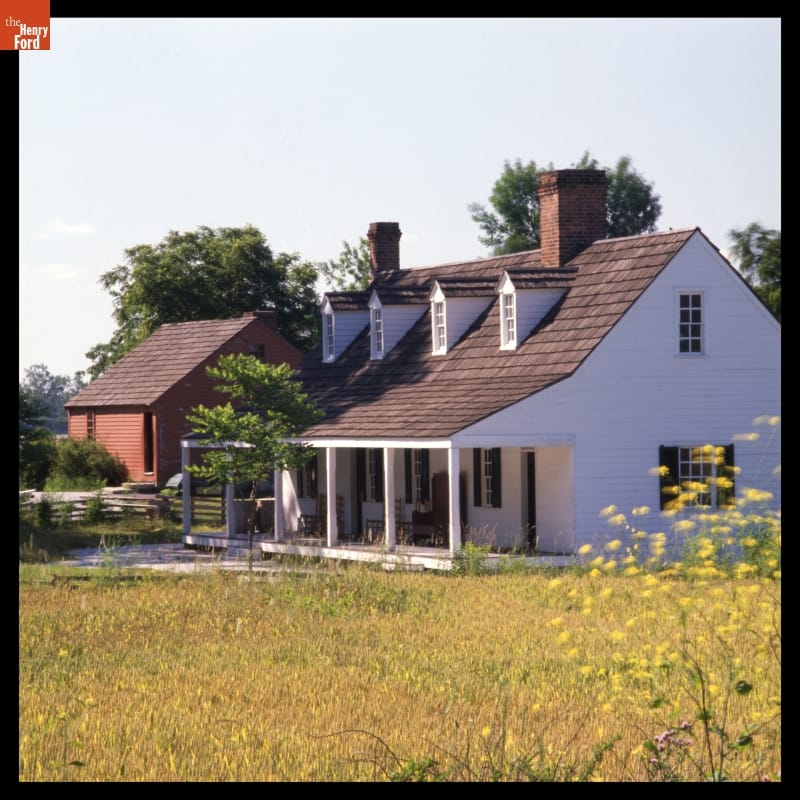
- Susquehanna Plantation in Greenfield Village, August 1989 - Henry Carroll owned this southern Maryland house (pictured here at Greenfield Village) in the decades before and after the Civil War. Its form -- one room deep with porches -- invited cooling breezes in the warm, humid climate. In 1860, the Carrolls raised tobacco and wheat on their 700-acre plantation. Seventy-five enslaved African Americans provided the skill and labor that supported the Carroll family's comfortable life.
- August 01, 1989
- Collections - Artifact
Susquehanna Plantation in Greenfield Village, August 1989
Henry Carroll owned this southern Maryland house (pictured here at Greenfield Village) in the decades before and after the Civil War. Its form -- one room deep with porches -- invited cooling breezes in the warm, humid climate. In 1860, the Carrolls raised tobacco and wheat on their 700-acre plantation. Seventy-five enslaved African Americans provided the skill and labor that supported the Carroll family's comfortable life.
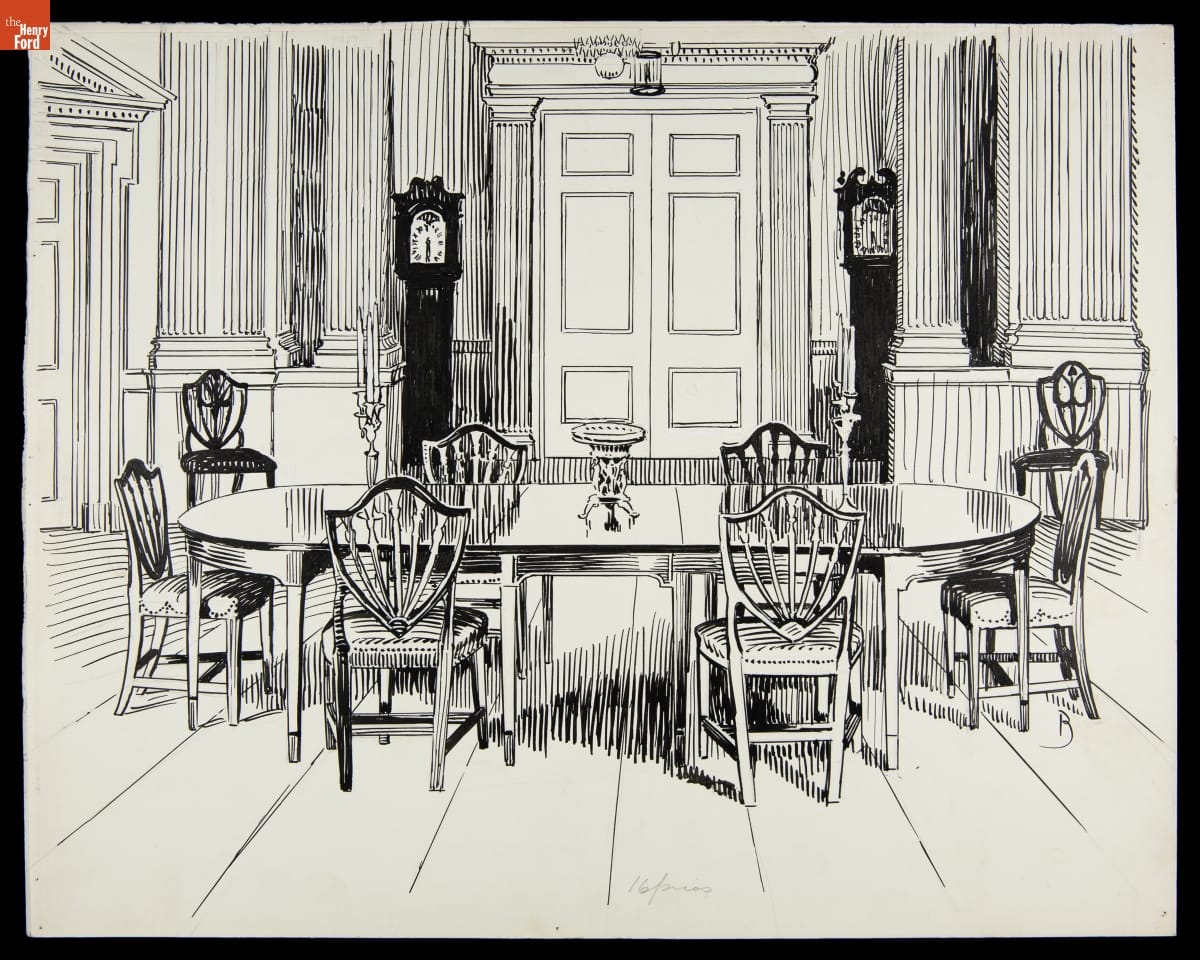
- Fine Arts Collection in Henry Ford Museum, circa 1941 - Henry Ford encouraged and appreciated the work of artist and illustrator Irving Bacon. In 1915, Bacon joined the Photographic Department of Ford Motor Company after he returned from studying art in Europe. Over the next thirty years, Bacon painted scenes depicting Ford's life, created portraiture, and illustrated articles for company publications. This drawing depicts a display in the Henry Ford Museum.
- circa 1941
- Collections - Artifact
Fine Arts Collection in Henry Ford Museum, circa 1941
Henry Ford encouraged and appreciated the work of artist and illustrator Irving Bacon. In 1915, Bacon joined the Photographic Department of Ford Motor Company after he returned from studying art in Europe. Over the next thirty years, Bacon painted scenes depicting Ford's life, created portraiture, and illustrated articles for company publications. This drawing depicts a display in the Henry Ford Museum.
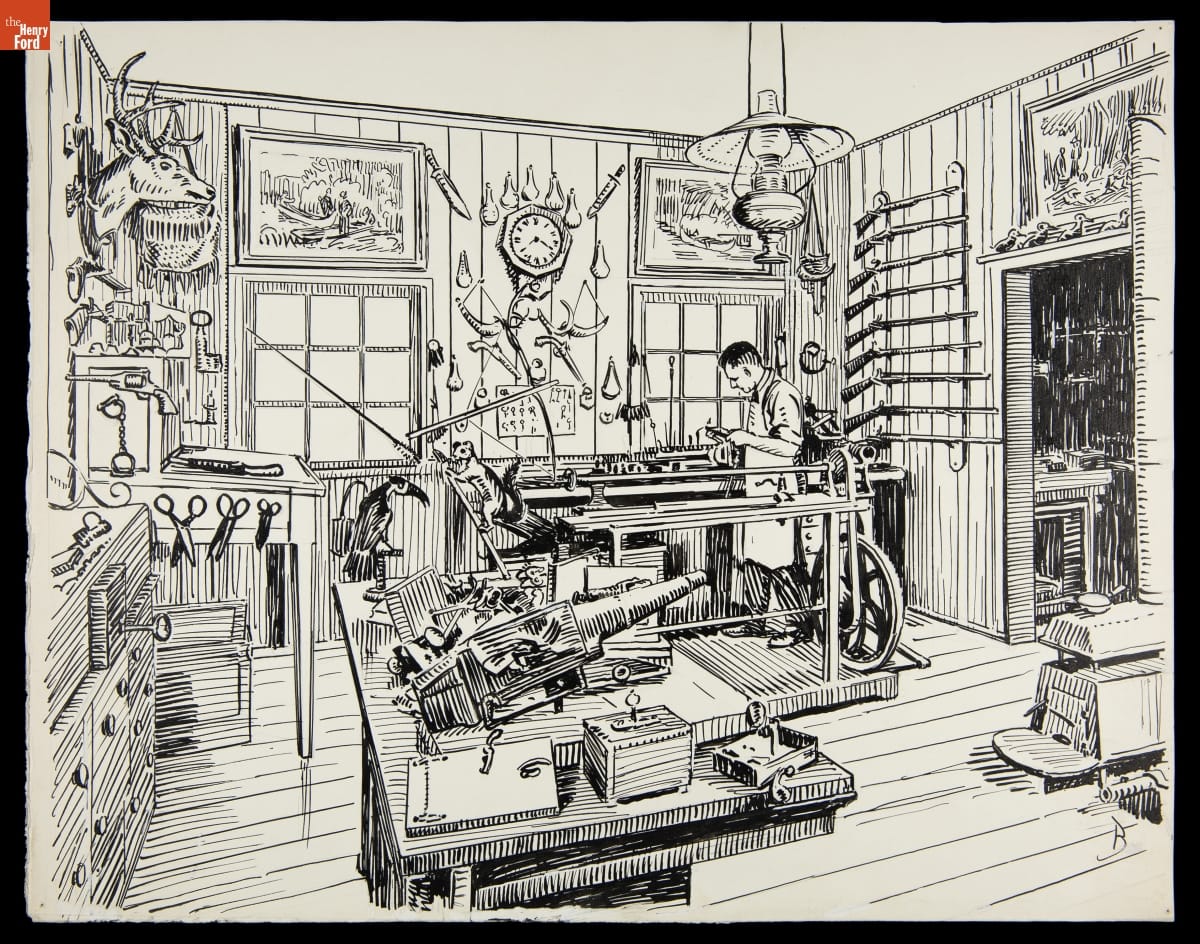
- Gun and Locksmith Shop in Henry Ford Museum "Street of Shops" Exhibit, circa 1941 - Henry Ford encouraged and appreciated the work of artist and illustrator Irving Bacon. In 1915, Bacon joined the Photographic Department of Ford Motor Company after he returned from studying art in Europe. Over the next thirty years, Bacon painted scenes depicting Ford's life, created portraiture, and illustrated articles for company publications. This drawing depicts the Street of Shops exhibit in the Henry Ford Museum.
- circa 1941
- Collections - Artifact
Gun and Locksmith Shop in Henry Ford Museum "Street of Shops" Exhibit, circa 1941
Henry Ford encouraged and appreciated the work of artist and illustrator Irving Bacon. In 1915, Bacon joined the Photographic Department of Ford Motor Company after he returned from studying art in Europe. Over the next thirty years, Bacon painted scenes depicting Ford's life, created portraiture, and illustrated articles for company publications. This drawing depicts the Street of Shops exhibit in the Henry Ford Museum.
- Noah Webster House at its Original Site on Temple Street in New Haven Connecticut, circa 1927 - Noah and Rebecca Webster built their comfortable home in a fashionable middle-class neighborhood of New Haven, Connecticut, during the early 1820s. They lived only a few blocks from New Haven's town green and very near Yale College. The house, shown here (far right) about 1927, was situated close to the street, as were most urban homes of the early 19th century.
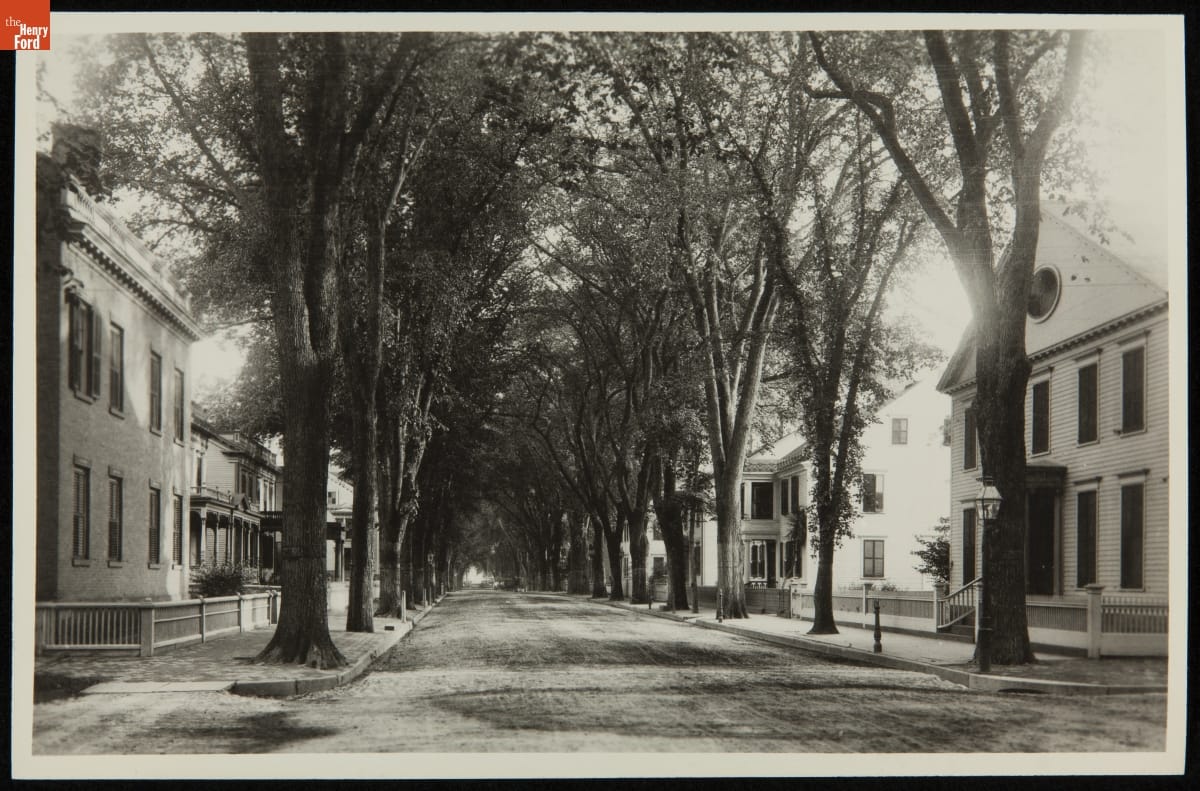
- circa 1927
- Collections - Artifact
Noah Webster House at its Original Site on Temple Street in New Haven Connecticut, circa 1927
Noah and Rebecca Webster built their comfortable home in a fashionable middle-class neighborhood of New Haven, Connecticut, during the early 1820s. They lived only a few blocks from New Haven's town green and very near Yale College. The house, shown here (far right) about 1927, was situated close to the street, as were most urban homes of the early 19th century.
- Preparing Charles Steinmetz Cabin for Dismantling before the Move to Greenfield Village, February 22, 1930 - Charles Steinmetz owned this cabin overlooking a tributary of the Mohawk River, just outside of Schenectady, New York. The cabin's simplicity was a contrast to the General Electric laboratories where Steinmetz spent his workweek. It served as a getaway -- for quiet study or writing, but also for more animated weekend camp gatherings for selected friends and associates.
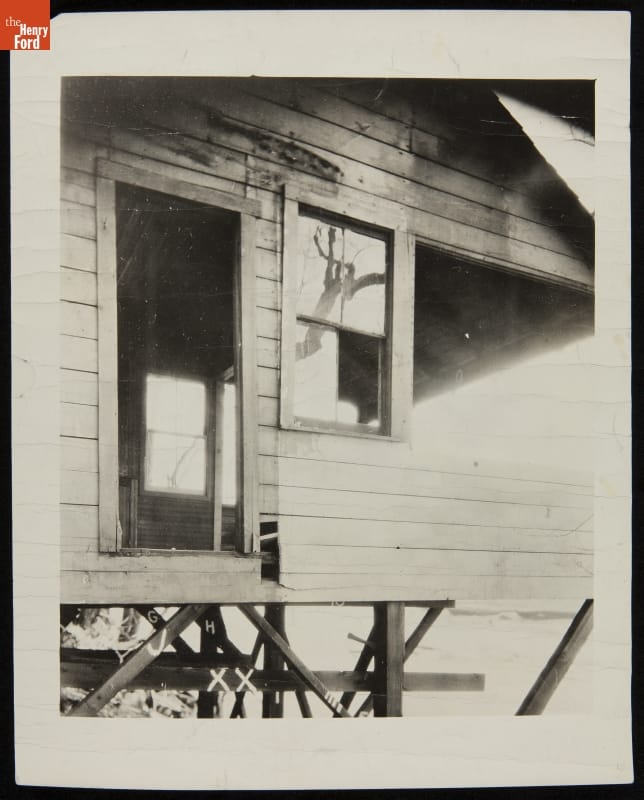
- February 22, 1930
- Collections - Artifact
Preparing Charles Steinmetz Cabin for Dismantling before the Move to Greenfield Village, February 22, 1930
Charles Steinmetz owned this cabin overlooking a tributary of the Mohawk River, just outside of Schenectady, New York. The cabin's simplicity was a contrast to the General Electric laboratories where Steinmetz spent his workweek. It served as a getaway -- for quiet study or writing, but also for more animated weekend camp gatherings for selected friends and associates.
- Marking the Supports of Charles Steinmetz Cabin before Dismantling for the Move to Greenfield Village, February 22, 1930 - Charles Steinmetz owned this cabin overlooking a tributary of the Mohawk River, just outside of Schenectady, New York. The cabin's simplicity was a contrast to the General Electric laboratories where Steinmetz spent his workweek. It served as a getaway -- for quiet study or writing, but also for more animated weekend camp gatherings for selected friends and associates.
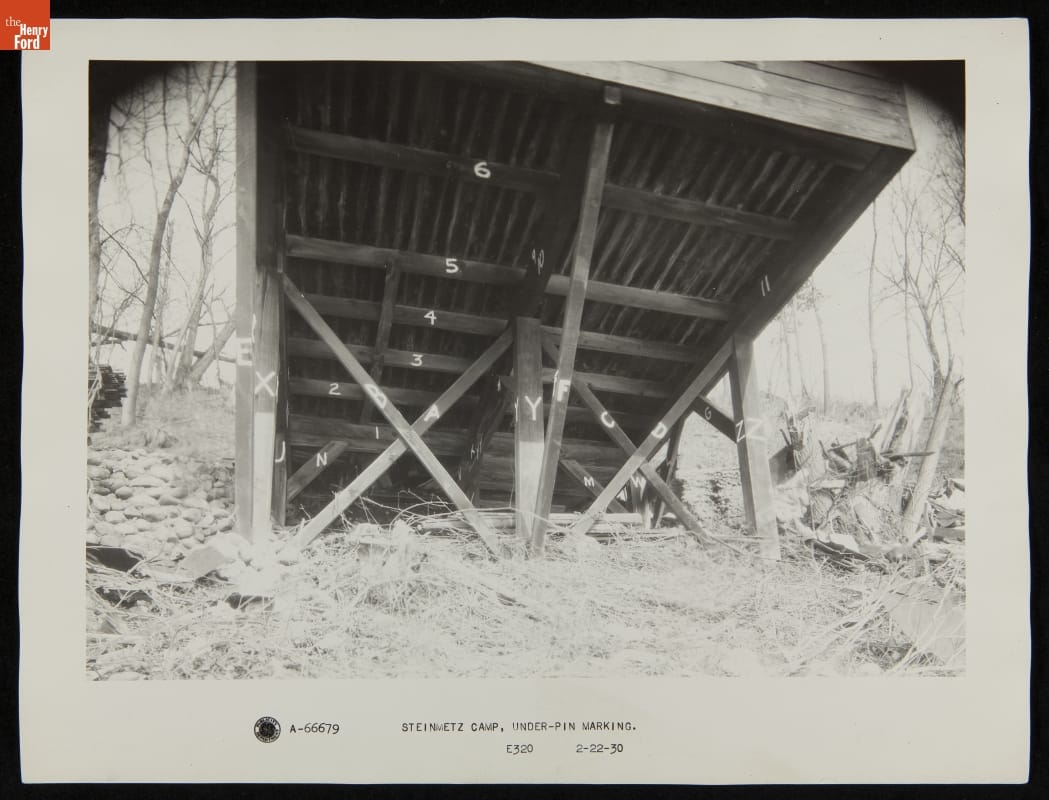
- February 22, 1930
- Collections - Artifact
Marking the Supports of Charles Steinmetz Cabin before Dismantling for the Move to Greenfield Village, February 22, 1930
Charles Steinmetz owned this cabin overlooking a tributary of the Mohawk River, just outside of Schenectady, New York. The cabin's simplicity was a contrast to the General Electric laboratories where Steinmetz spent his workweek. It served as a getaway -- for quiet study or writing, but also for more animated weekend camp gatherings for selected friends and associates.
- Documentary Photograph of Noah Webster Home before Dismantling and Relocation to Greenfield Village, 1936 - This is a detail of textbook pioneer and spelling reformer Noah Webster's home on its original site in New Haven, Connecticut. Henry Ford admired Webster and recognized his house as an important piece of American history. Ford had the building moved to Greenfield Village - his historical outdoor museum in Dearborn, Michigan. This view documents exterior decoration shortly before the move to Greenfield Village.
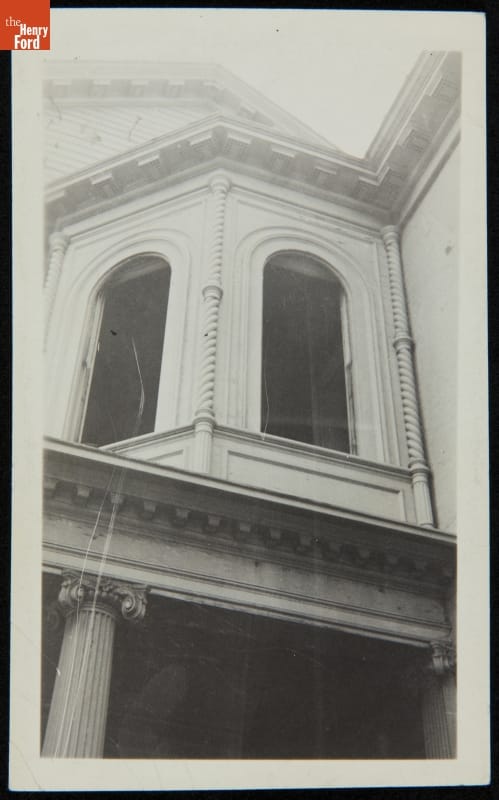
- 1936
- Collections - Artifact
Documentary Photograph of Noah Webster Home before Dismantling and Relocation to Greenfield Village, 1936
This is a detail of textbook pioneer and spelling reformer Noah Webster's home on its original site in New Haven, Connecticut. Henry Ford admired Webster and recognized his house as an important piece of American history. Ford had the building moved to Greenfield Village - his historical outdoor museum in Dearborn, Michigan. This view documents exterior decoration shortly before the move to Greenfield Village.
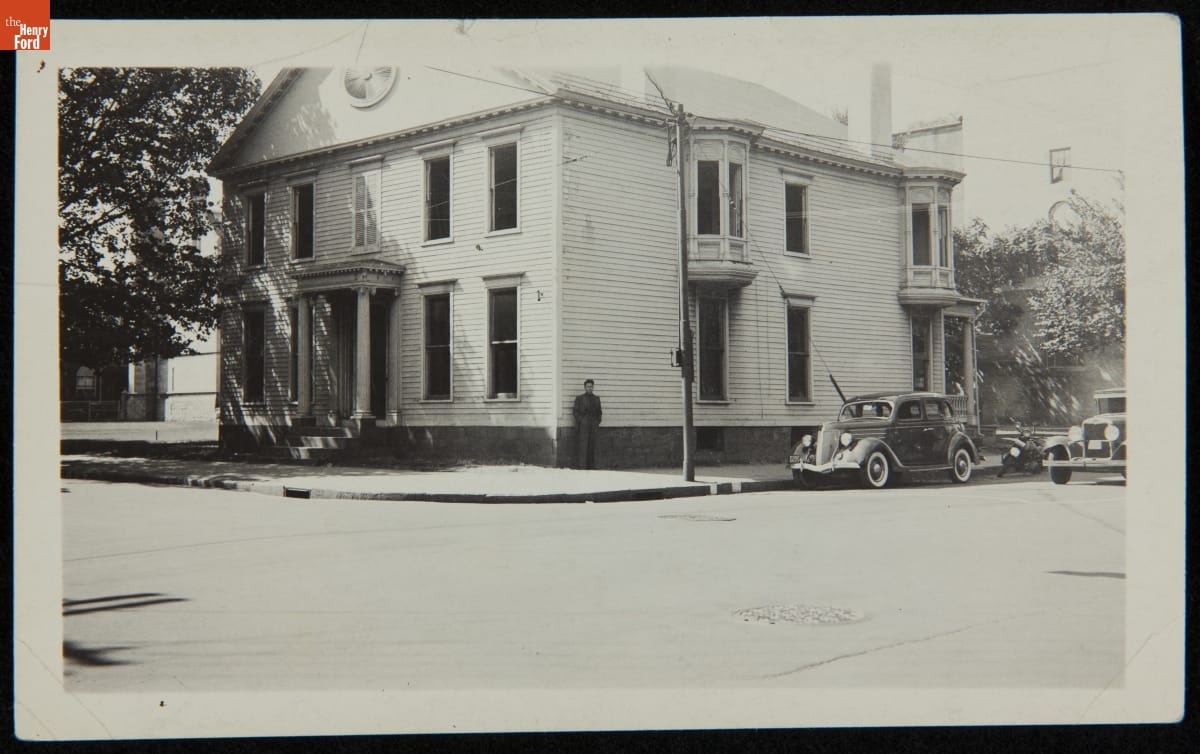
- Documentary Photograph of Noah Webster Home before Dismantling and Relocation to Greenfield Village, 1936 - This is textbook pioneer and spelling reformer Noah Webster's home on its original site in New Haven, Connecticut. Henry Ford admired Webster and recognized his house as an important piece of American history. Ford had the building moved to Greenfield Village - his historical outdoor museum in Dearborn, Michigan. This view documents architectural details, including second floor bay windows not moved with the house.
- 1936
- Collections - Artifact
Documentary Photograph of Noah Webster Home before Dismantling and Relocation to Greenfield Village, 1936
This is textbook pioneer and spelling reformer Noah Webster's home on its original site in New Haven, Connecticut. Henry Ford admired Webster and recognized his house as an important piece of American history. Ford had the building moved to Greenfield Village - his historical outdoor museum in Dearborn, Michigan. This view documents architectural details, including second floor bay windows not moved with the house.
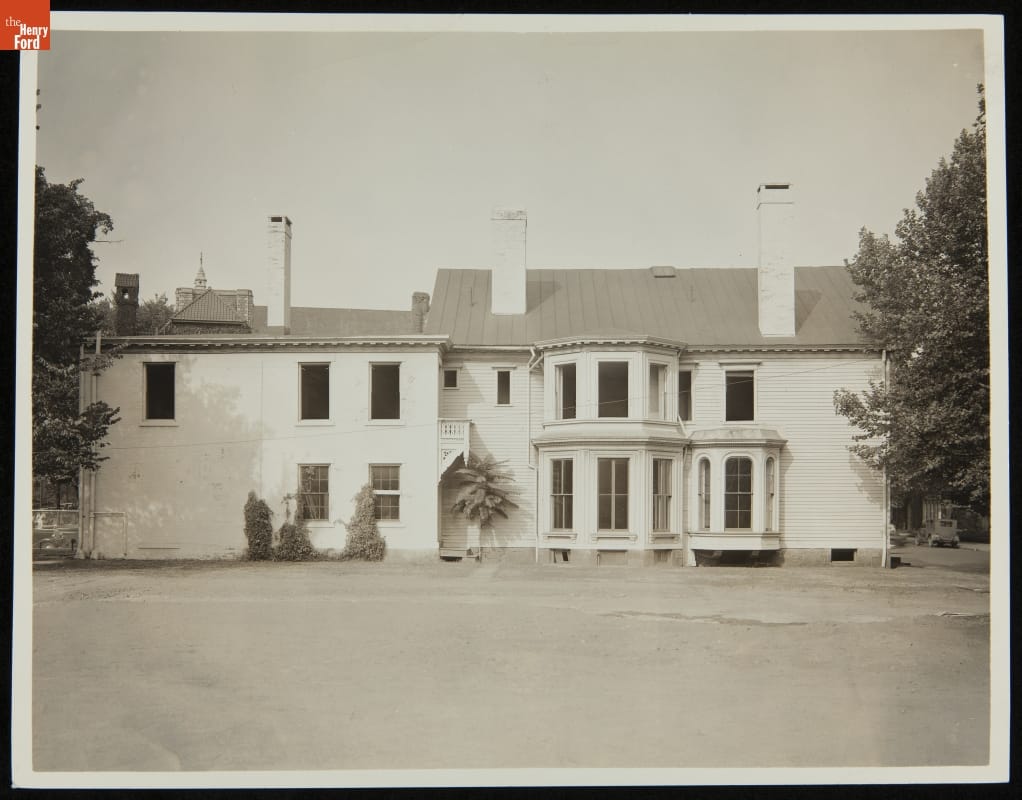
- Documentary Photograph of Noah Webster Home before Dismantling and Relocation to Greenfield Village, 1936 - This is textbook pioneer and spelling reformer Noah Webster's home on its original site in New Haven, Connecticut. Henry Ford admired Webster and recognized his house as an important piece of American history. Ford had the building moved to Greenfield Village - his historical outdoor museum in Dearborn, Michigan. This side view documents later additions not moved with the house.
- 1936
- Collections - Artifact
Documentary Photograph of Noah Webster Home before Dismantling and Relocation to Greenfield Village, 1936
This is textbook pioneer and spelling reformer Noah Webster's home on its original site in New Haven, Connecticut. Henry Ford admired Webster and recognized his house as an important piece of American history. Ford had the building moved to Greenfield Village - his historical outdoor museum in Dearborn, Michigan. This side view documents later additions not moved with the house.