
Search
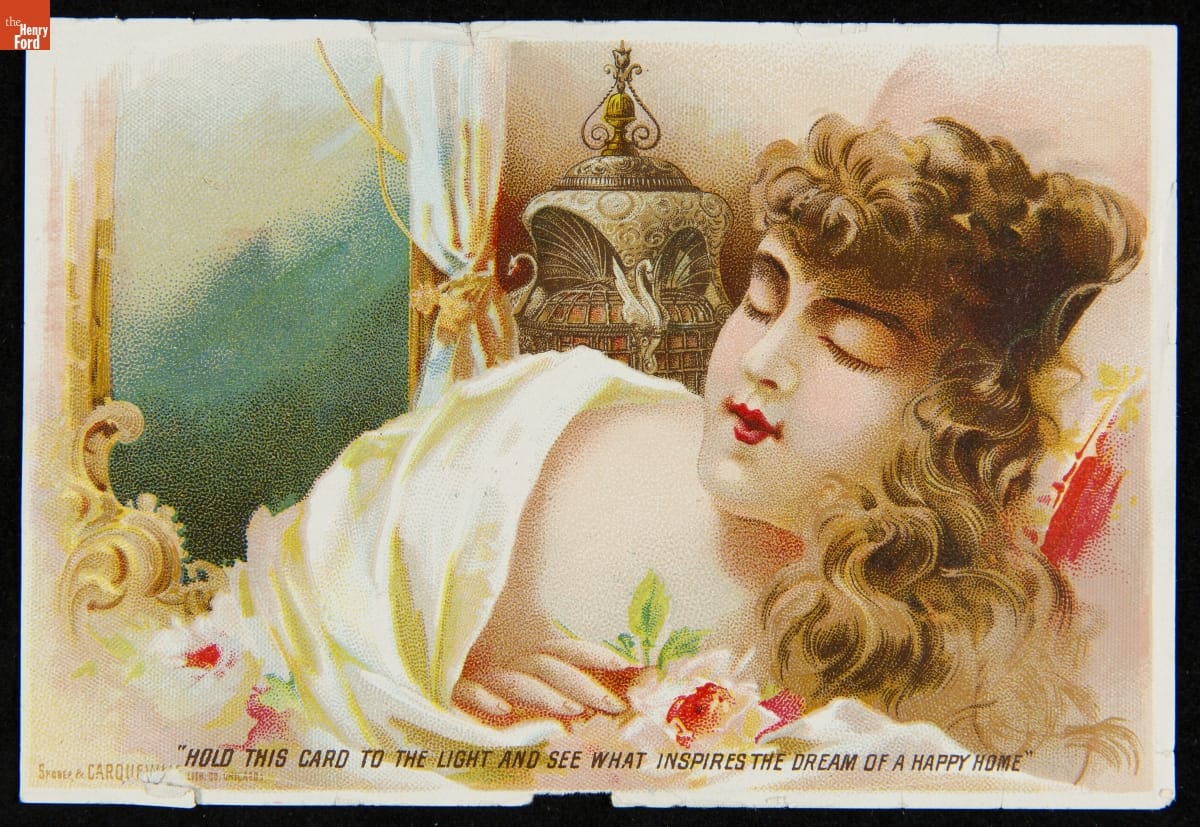
- Trade Card for Garland Stoves and Ranges, Michigan Stove Co., 1880-1900 - As color printing gained momentum in the late 19th century, trade cards became a major means of advertising goods and services. Sometimes, a trade card featured an illusion or interactive element, like this one for Michigan Stove Company, which instructs the viewer to hold the card to a light, revealing the "Garland Stoves and Ranges" logo in the window.
- 1880-1900
- Collections - Artifact
Trade Card for Garland Stoves and Ranges, Michigan Stove Co., 1880-1900
As color printing gained momentum in the late 19th century, trade cards became a major means of advertising goods and services. Sometimes, a trade card featured an illusion or interactive element, like this one for Michigan Stove Company, which instructs the viewer to hold the card to a light, revealing the "Garland Stoves and Ranges" logo in the window.
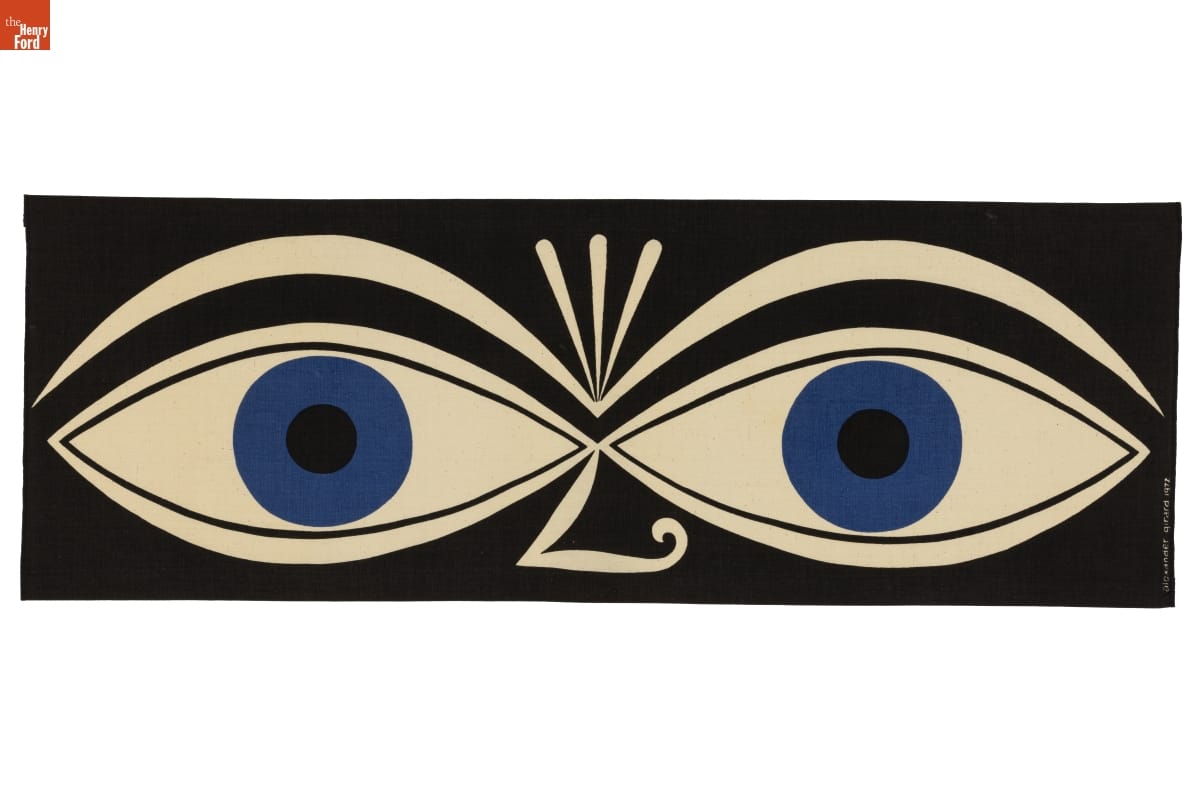
- Environmental Enrichment Panel, "Eyes," Designed by Alexander Girard for Herman Miller, 1972 - Alexander Girard, Herman Miller Textile Division's Director of Design, created a series of forty folk art-inspired graphic panels aptly named "Environmental Enrichment Panels" in 1972. They were meant to enrich the office environment, adorning the moveable walls of Robert Propst's Action Office II -- more commonly known as the cubicle.
- 1972
- Collections - Artifact
Environmental Enrichment Panel, "Eyes," Designed by Alexander Girard for Herman Miller, 1972
Alexander Girard, Herman Miller Textile Division's Director of Design, created a series of forty folk art-inspired graphic panels aptly named "Environmental Enrichment Panels" in 1972. They were meant to enrich the office environment, adorning the moveable walls of Robert Propst's Action Office II -- more commonly known as the cubicle.
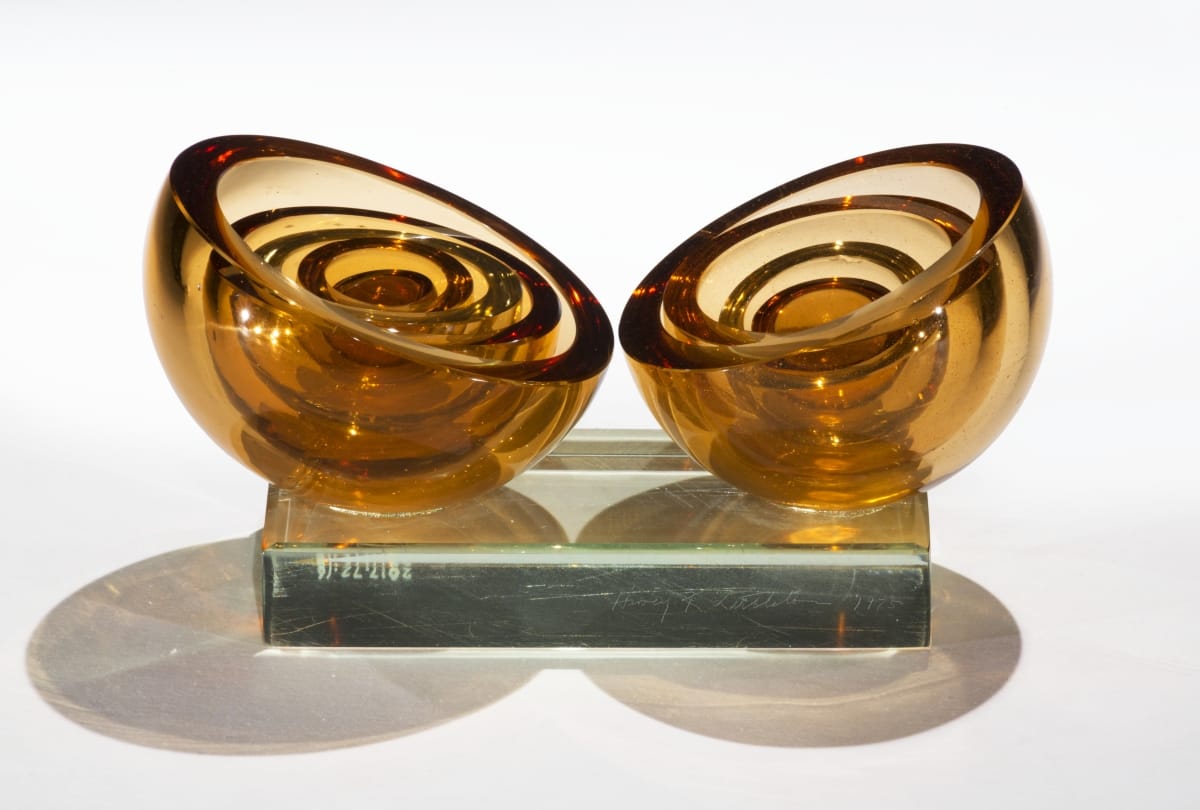
- Eyes by Harvey K. Littleton, 1975 -
- 1975
- Collections - Artifact
Eyes by Harvey K. Littleton, 1975
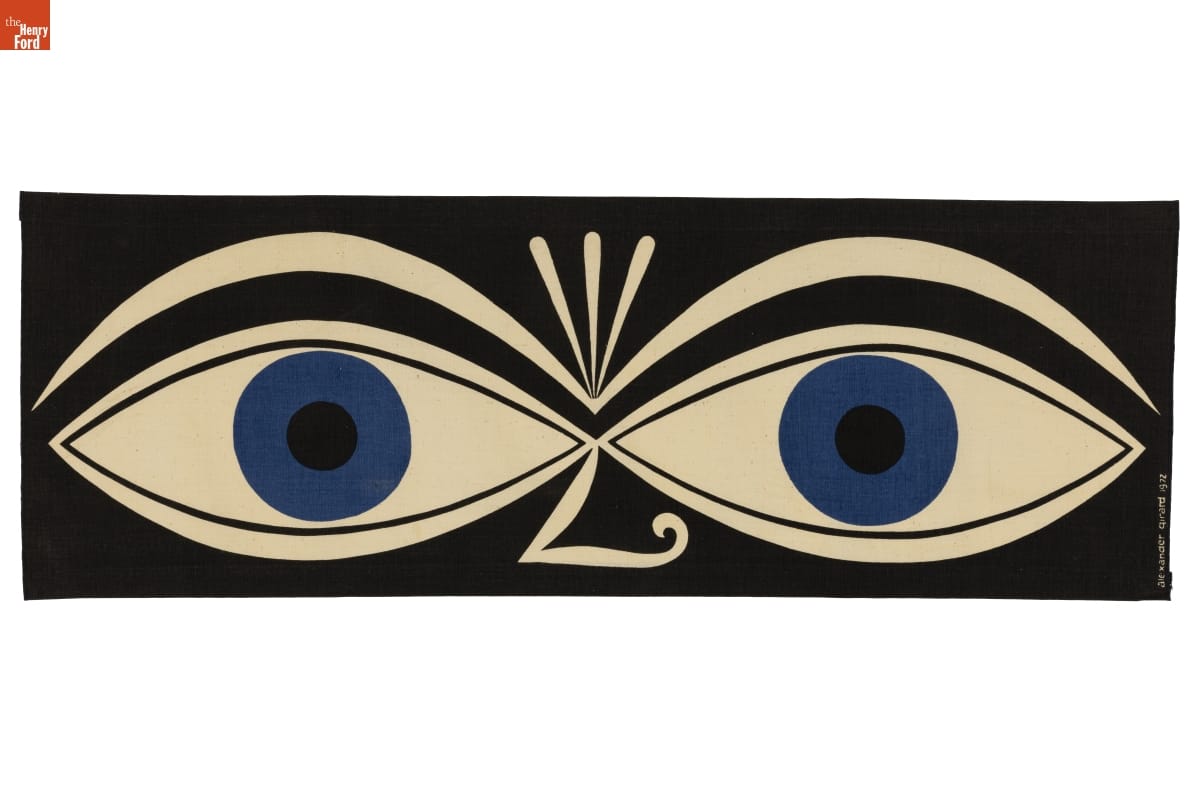
- Environmental Enrichment Panel, "Eyes," Designed by Alexander Girard for Herman Miller, 1972 - Alexander Girard, Herman Miller Textile Division's Director of Design, created a series of forty folk art-inspired graphic panels aptly named "Environmental Enrichment Panels" in 1972. They were meant to enrich the office environment, adorning the moveable walls of Robert Propst's Action Office II -- more commonly known as the cubicle.
- 1972
- Collections - Artifact
Environmental Enrichment Panel, "Eyes," Designed by Alexander Girard for Herman Miller, 1972
Alexander Girard, Herman Miller Textile Division's Director of Design, created a series of forty folk art-inspired graphic panels aptly named "Environmental Enrichment Panels" in 1972. They were meant to enrich the office environment, adorning the moveable walls of Robert Propst's Action Office II -- more commonly known as the cubicle.
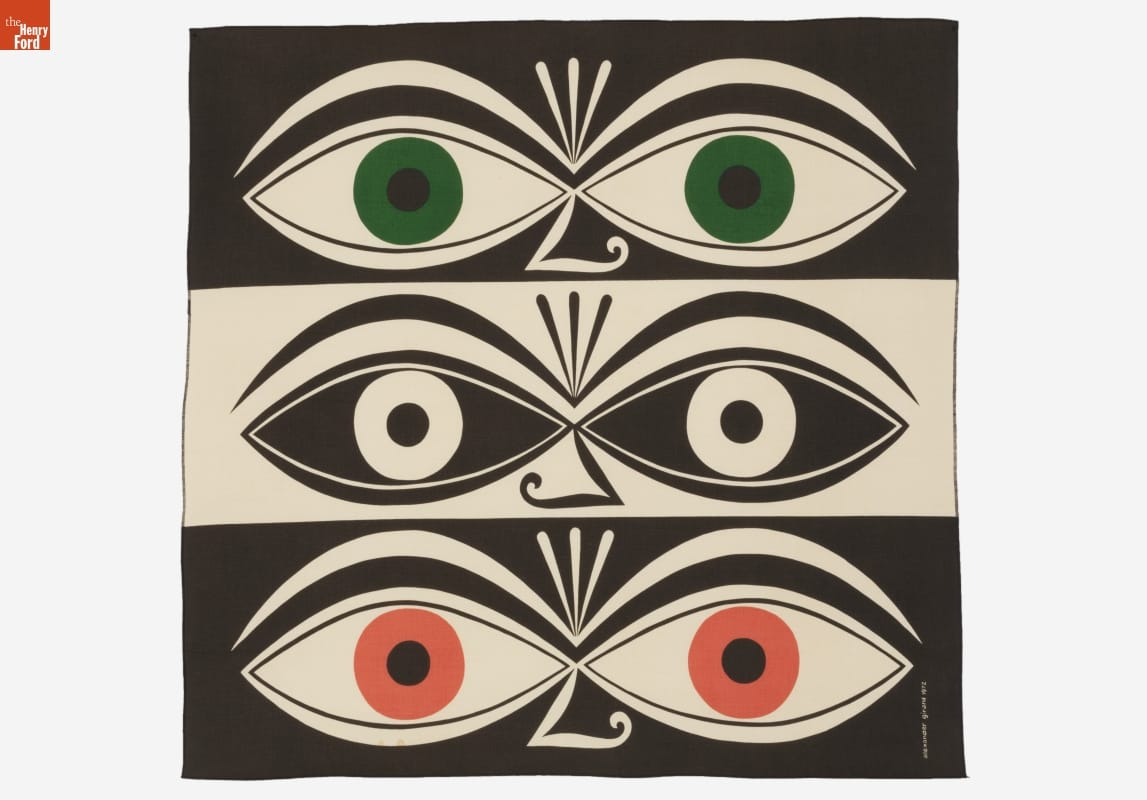
- Environmental Enrichment Panel, "Triple Eyes," Designed by Alexander Girard for Herman Miller, 1972 - Alexander Girard, Herman Miller Textile Division's Director of Design, created a series of forty folk art-inspired graphic panels aptly named "Environmental Enrichment Panels" in 1972. They were meant to enrich the office environment, adorning the moveable walls of Robert Propst's Action Office II -- more commonly known as the cubicle.
- 1972
- Collections - Artifact
Environmental Enrichment Panel, "Triple Eyes," Designed by Alexander Girard for Herman Miller, 1972
Alexander Girard, Herman Miller Textile Division's Director of Design, created a series of forty folk art-inspired graphic panels aptly named "Environmental Enrichment Panels" in 1972. They were meant to enrich the office environment, adorning the moveable walls of Robert Propst's Action Office II -- more commonly known as the cubicle.