
Search
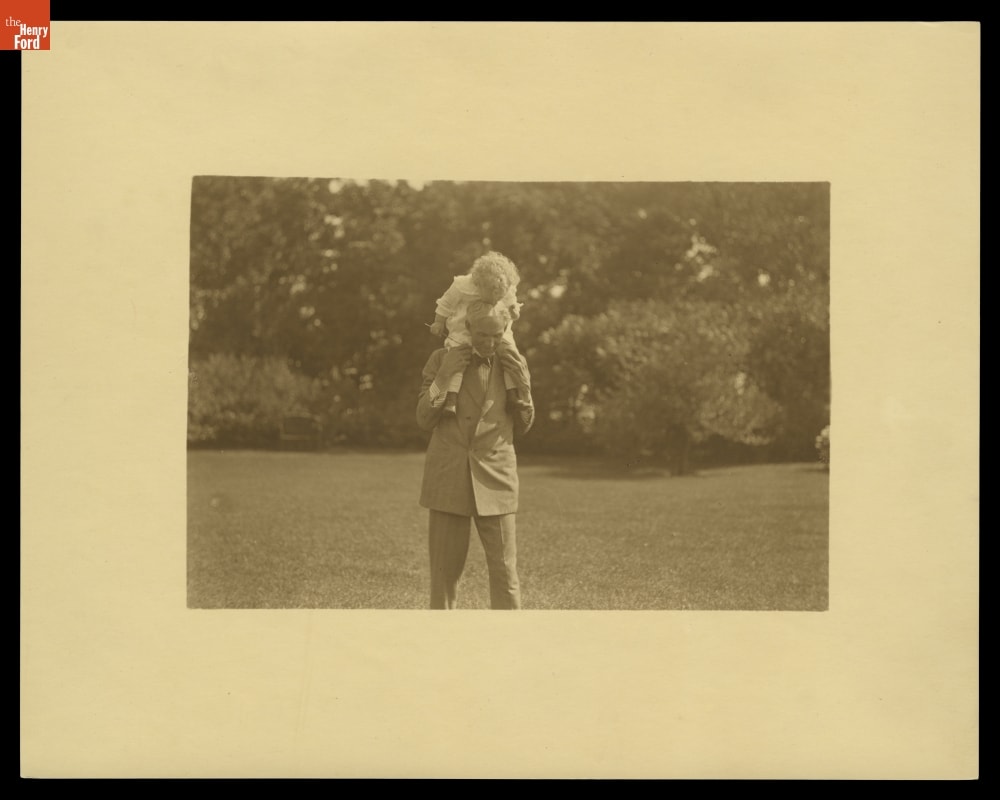
- Henry Ford Carrying Grandson Henry Ford II at Fair Lane, Dearborn, Michigan, 1919 - In the early 1910s, Henry and Clara Ford selected 1300 acres of farmland in Dearborn, Michigan, as the site for a new home. They called the estate Fair Lane. Surrounded by woods, meadows, gardens, and the nature they loved, Henry and Clara found this home a peaceful respite. Here they could wander the landscaped grounds, entertain guests, and play with grandchildren.
- 1919
- Collections - Artifact
Henry Ford Carrying Grandson Henry Ford II at Fair Lane, Dearborn, Michigan, 1919
In the early 1910s, Henry and Clara Ford selected 1300 acres of farmland in Dearborn, Michigan, as the site for a new home. They called the estate Fair Lane. Surrounded by woods, meadows, gardens, and the nature they loved, Henry and Clara found this home a peaceful respite. Here they could wander the landscaped grounds, entertain guests, and play with grandchildren.
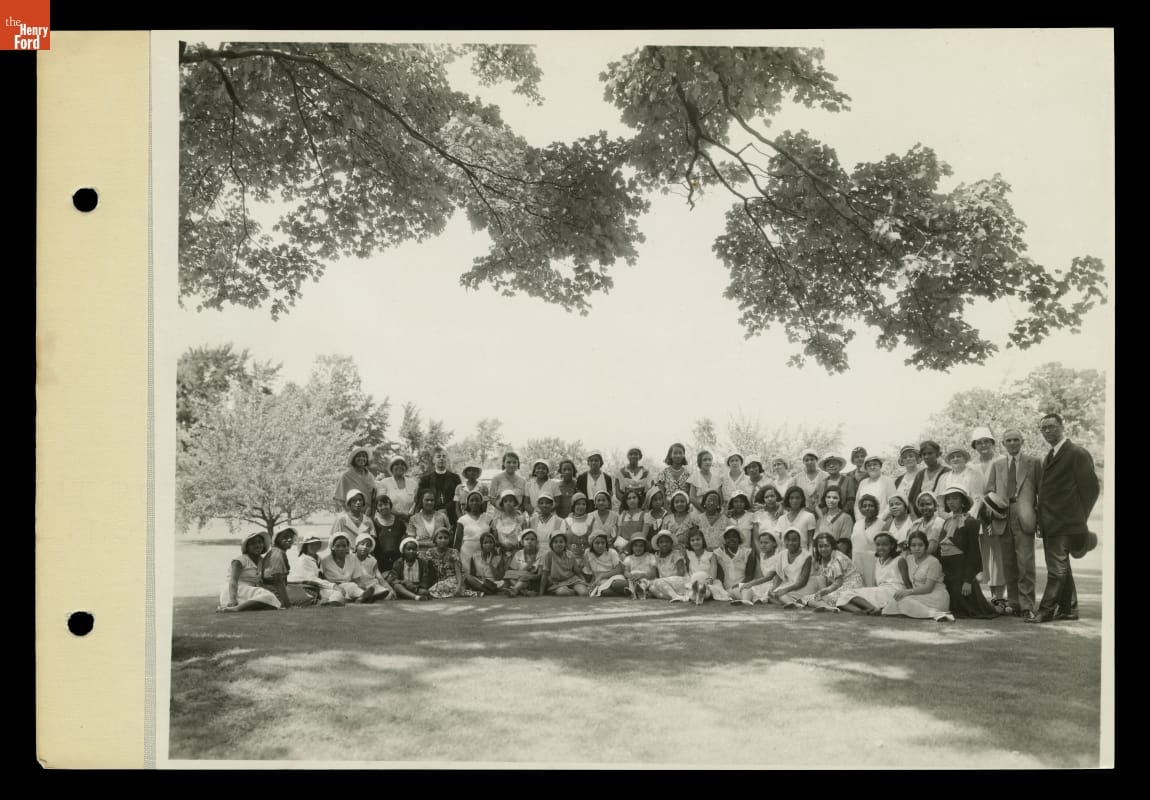
- Henry Ford and Clara Ford with Group on the Grounds of Fair Lane, 1932 - In the early 1910s, Henry and Clara Ford selected 1300 acres of farmland in Dearborn, Michigan, as the site for a new home. They called the estate Fair Lane. Surrounded by woods, meadows, gardens, and the nature they loved, Henry and Clara found this home a peaceful respite. Here they could wander the landscaped grounds, entertain guests, and play with grandchildren.
- July 09, 1932
- Collections - Artifact
Henry Ford and Clara Ford with Group on the Grounds of Fair Lane, 1932
In the early 1910s, Henry and Clara Ford selected 1300 acres of farmland in Dearborn, Michigan, as the site for a new home. They called the estate Fair Lane. Surrounded by woods, meadows, gardens, and the nature they loved, Henry and Clara found this home a peaceful respite. Here they could wander the landscaped grounds, entertain guests, and play with grandchildren.
- Henry Ford's Private Railroad Car "Fair Lane," 1921 - By 1920, Henry and Clara Ford found it increasingly difficult to travel with any degree of privacy. They purchased a private railcar and named it <EM>Fair Lane</EM>. The car had four private rooms, an observation lounge, a dining room, and a fully equipped kitchen. It could accommodate eight passengers. The couple made over 400 trips using <EM>Fair Lane</EM> before selling the passenger car in 1942.

- June 23, 1921
- Collections - Artifact
Henry Ford's Private Railroad Car "Fair Lane," 1921
By 1920, Henry and Clara Ford found it increasingly difficult to travel with any degree of privacy. They purchased a private railcar and named it Fair Lane. The car had four private rooms, an observation lounge, a dining room, and a fully equipped kitchen. It could accommodate eight passengers. The couple made over 400 trips using Fair Lane before selling the passenger car in 1942.
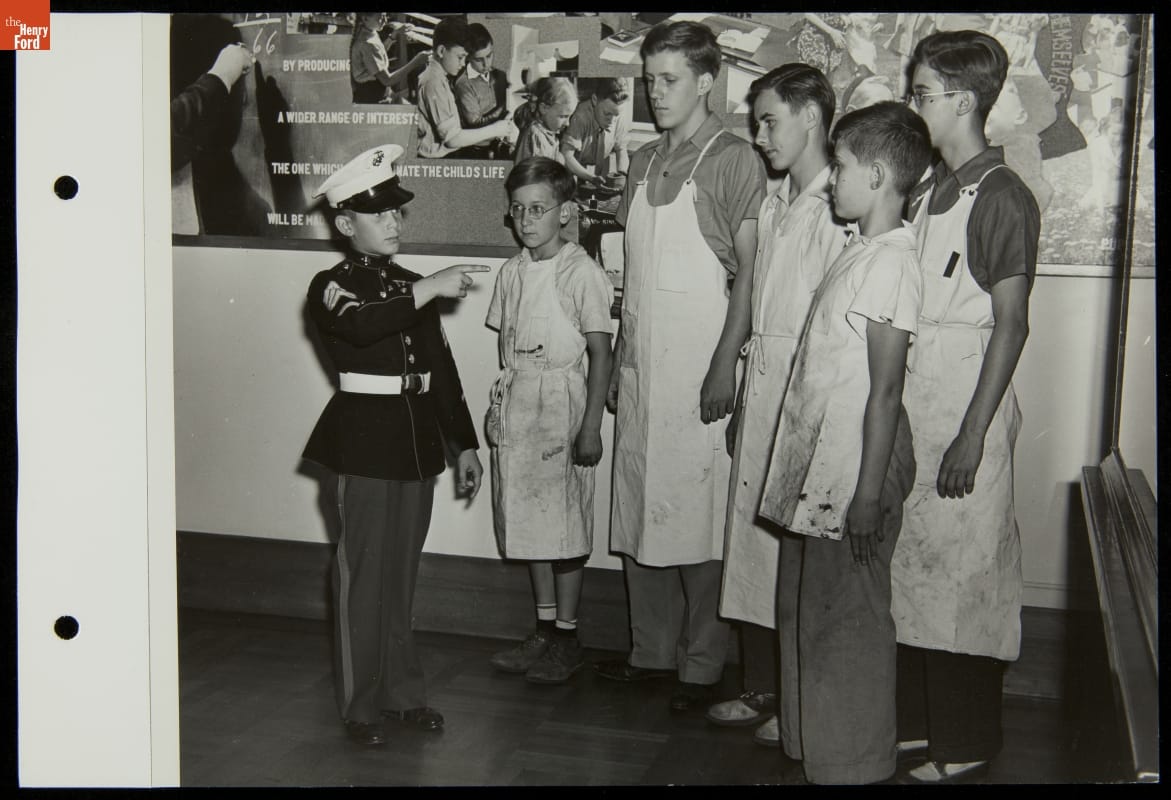
- Marine Corps' Mascot, Ford Exposition, New York World's Fair, 1940 -
- September 05, 1940
- Collections - Artifact
Marine Corps' Mascot, Ford Exposition, New York World's Fair, 1940
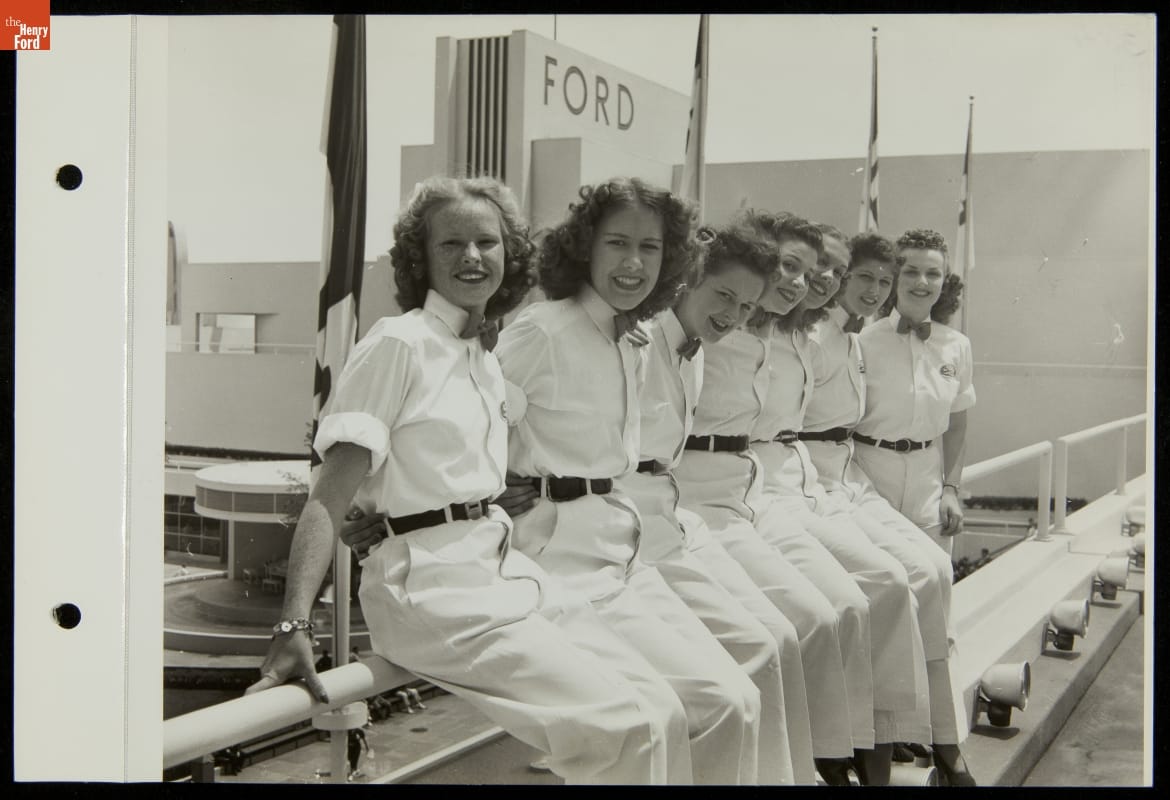
- Florida Girls at Ford Exposition, New York World's Fair, 1939 -
- 1939
- Collections - Artifact
Florida Girls at Ford Exposition, New York World's Fair, 1939
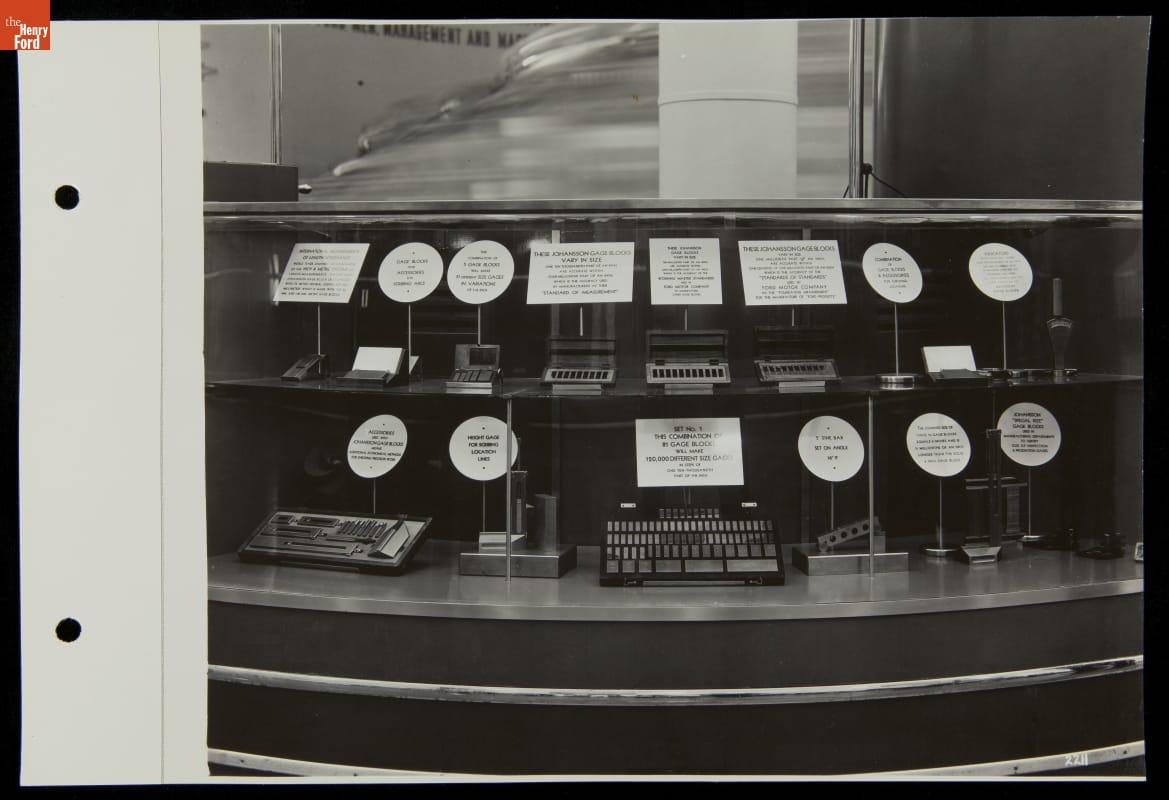
- Johansson Gage Blocks Exhibit, Ford Exposition, New York World's Fair, 1939 - Henry Ford viewed national expositions as business opportunities <EM>and</EM> platforms for public education. During the 1939-40 New York World's Fair, Ford Motor Company spent more than $5 million to build and maintain an elaborate exposition space. Informative displays and manufacturing demonstrations inside Ford's massive fair building offered visitors an in-depth, entertaining, and educational look at industrial processes.
- May 29, 1940
- Collections - Artifact
Johansson Gage Blocks Exhibit, Ford Exposition, New York World's Fair, 1939
Henry Ford viewed national expositions as business opportunities and platforms for public education. During the 1939-40 New York World's Fair, Ford Motor Company spent more than $5 million to build and maintain an elaborate exposition space. Informative displays and manufacturing demonstrations inside Ford's massive fair building offered visitors an in-depth, entertaining, and educational look at industrial processes.
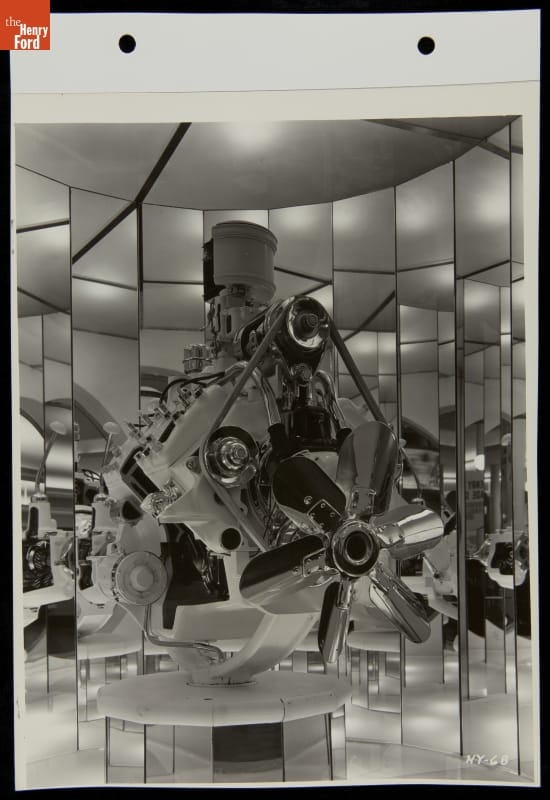
- "Ford V-8 Engine Shows its Inner Workings," Ford Exposition, New York World's Fair, 1939 - Henry Ford viewed national expositions as business opportunities <EM>and</EM> platforms for public education. During the 1939-40 New York World's Fair, Ford Motor Company spent more than $5 million to build and maintain an elaborate exposition space. Informative displays and manufacturing demonstrations inside Ford's massive fair building offered visitors an in-depth, entertaining, and educational look at industrial processes.
- May 03, 1939
- Collections - Artifact
"Ford V-8 Engine Shows its Inner Workings," Ford Exposition, New York World's Fair, 1939
Henry Ford viewed national expositions as business opportunities and platforms for public education. During the 1939-40 New York World's Fair, Ford Motor Company spent more than $5 million to build and maintain an elaborate exposition space. Informative displays and manufacturing demonstrations inside Ford's massive fair building offered visitors an in-depth, entertaining, and educational look at industrial processes.
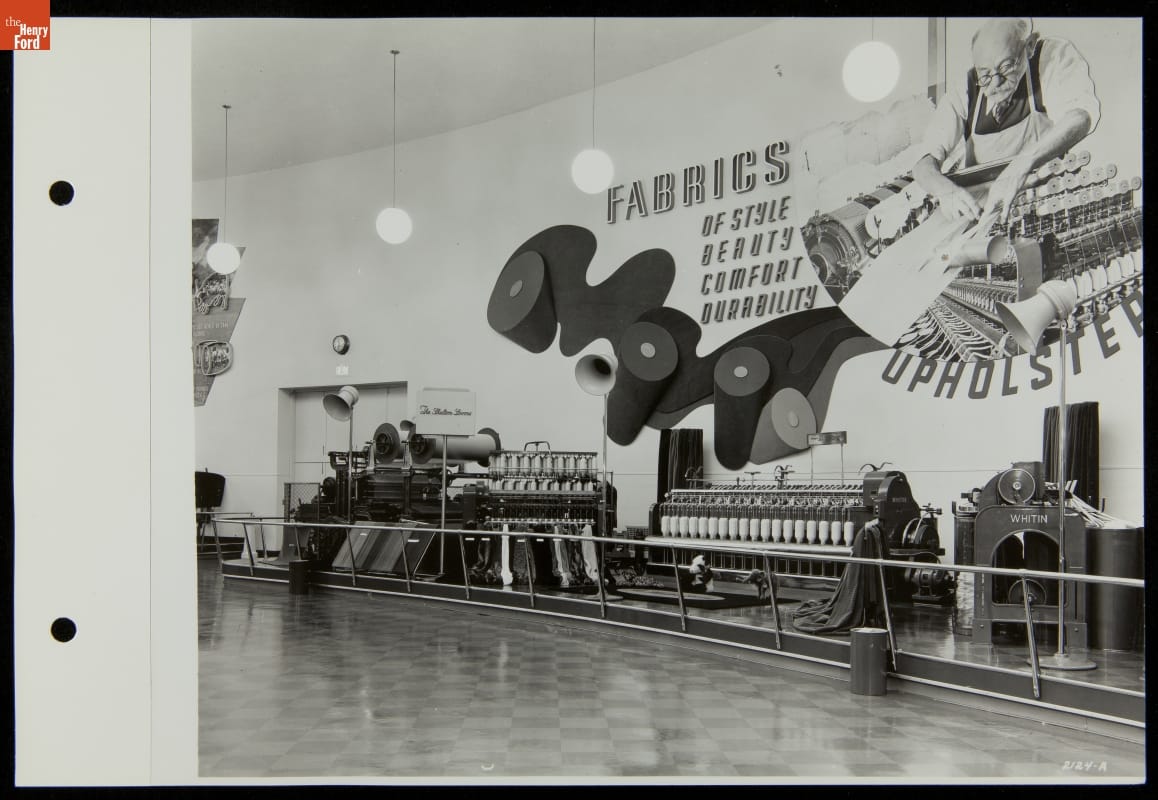
- Shelton Looms Exhibit, Ford Exposition, New York World's Fair, 1940 - Henry Ford viewed national expositions as business opportunities <EM>and</EM> platforms for public education. During the 1939-40 New York World's Fair, Ford Motor Company spent more than $5 million to build and maintain an elaborate exposition space. Informative displays and manufacturing demonstrations inside Ford's massive fair building offered visitors an in-depth, entertaining, and educational look at industrial processes.
- May 16, 1940
- Collections - Artifact
Shelton Looms Exhibit, Ford Exposition, New York World's Fair, 1940
Henry Ford viewed national expositions as business opportunities and platforms for public education. During the 1939-40 New York World's Fair, Ford Motor Company spent more than $5 million to build and maintain an elaborate exposition space. Informative displays and manufacturing demonstrations inside Ford's massive fair building offered visitors an in-depth, entertaining, and educational look at industrial processes.
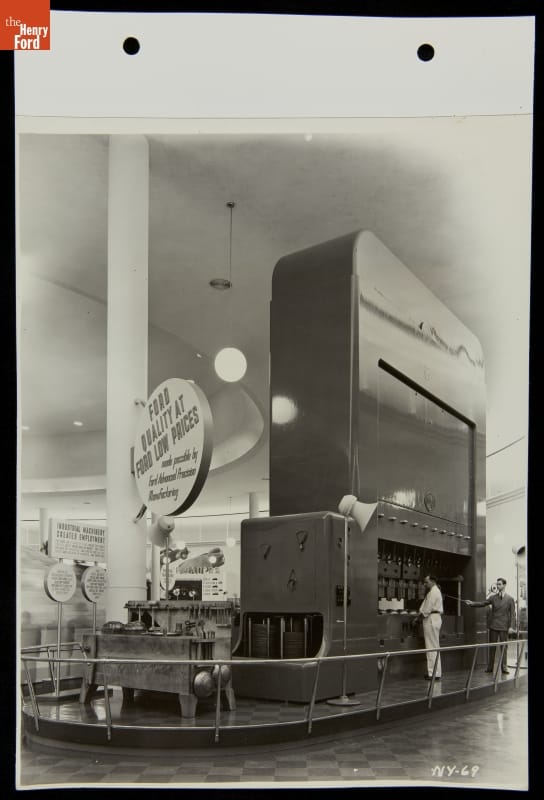
- Bliss Press, Ford Exposition, New York World's Fair, 1939 - Henry Ford viewed national expositions as business opportunities <EM>and</EM> platforms for public education. During the 1939-40 New York World's Fair, Ford Motor Company spent more than $5 million to build and maintain an elaborate exposition space. Informative displays and manufacturing demonstrations inside Ford's massive fair building offered visitors an in-depth, entertaining, and educational look at industrial processes.
- May 03, 1939
- Collections - Artifact
Bliss Press, Ford Exposition, New York World's Fair, 1939
Henry Ford viewed national expositions as business opportunities and platforms for public education. During the 1939-40 New York World's Fair, Ford Motor Company spent more than $5 million to build and maintain an elaborate exposition space. Informative displays and manufacturing demonstrations inside Ford's massive fair building offered visitors an in-depth, entertaining, and educational look at industrial processes.
- Crowds near Motor Assembly, Ford Exposition, New York World's Fair, 1939 - Henry Ford viewed national expositions as business opportunities <EM>and</EM> platforms for public education. During the 1939-40 New York World's Fair, Ford Motor Company spent more than $5 million to build and maintain an elaborate exposition space. Informative displays and manufacturing demonstrations inside Ford's massive fair building offered visitors an in-depth, entertaining, and educational look at industrial processes.
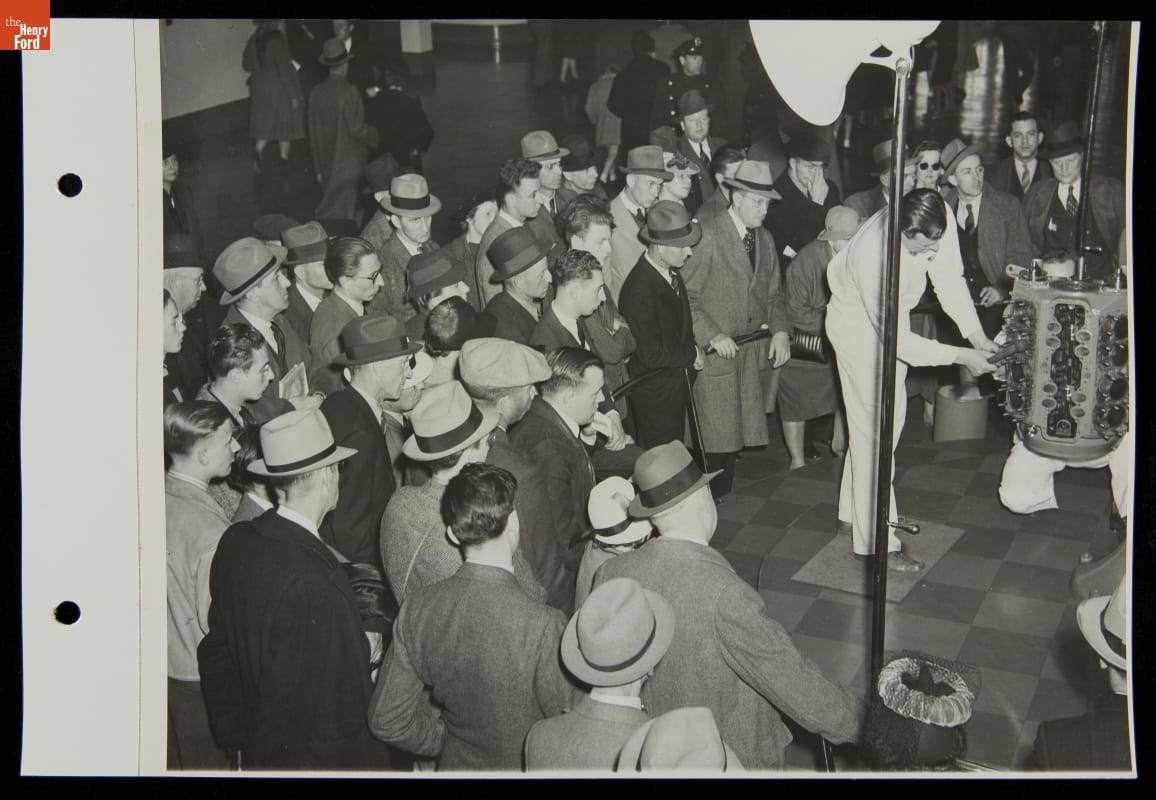
- 1939
- Collections - Artifact
Crowds near Motor Assembly, Ford Exposition, New York World's Fair, 1939
Henry Ford viewed national expositions as business opportunities and platforms for public education. During the 1939-40 New York World's Fair, Ford Motor Company spent more than $5 million to build and maintain an elaborate exposition space. Informative displays and manufacturing demonstrations inside Ford's massive fair building offered visitors an in-depth, entertaining, and educational look at industrial processes.