
Search
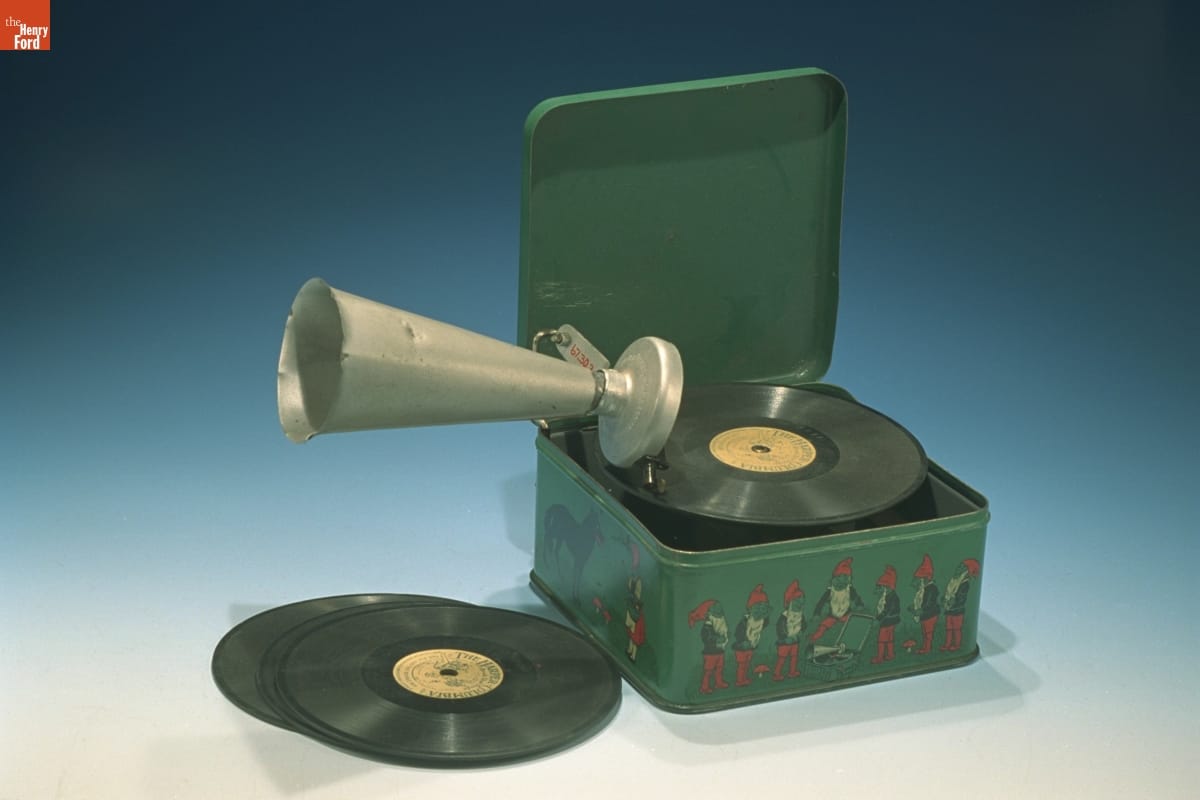
- "Pygmyphone" Phonograph and Records, 1925-1932 - Toys that make sounds have always delighted children. During the 1900s, child-oriented music boxes, phonographs, and other mechanical music devices became popular. This prominent German toy company, founded in 1863, had a department that made children's phonographs between 1925 and 1932.
- 1925-1932
- Collections - Artifact
"Pygmyphone" Phonograph and Records, 1925-1932
Toys that make sounds have always delighted children. During the 1900s, child-oriented music boxes, phonographs, and other mechanical music devices became popular. This prominent German toy company, founded in 1863, had a department that made children's phonographs between 1925 and 1932.
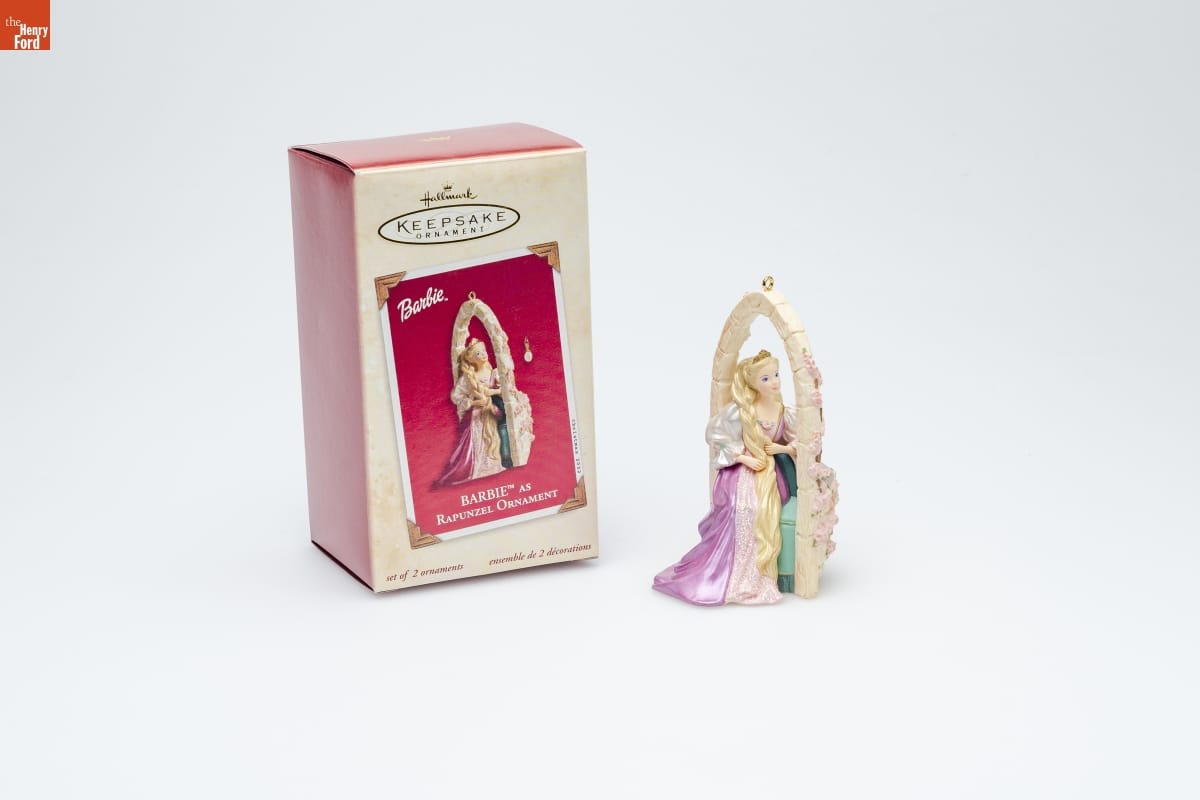
- Hallmark "BARBIE as Rapunzel" Christmas Ornament, 2002 - Already known for greeting cards, Hallmark introduced a line of Christmas ornaments in 1973. The company's annual release of an increasing array of ornaments revolutionized Christmas decorating, appealing to customers' interest in marking memories and milestones as well as expressing one's personality and unique tastes.
- 2002
- Collections - Artifact
Hallmark "BARBIE as Rapunzel" Christmas Ornament, 2002
Already known for greeting cards, Hallmark introduced a line of Christmas ornaments in 1973. The company's annual release of an increasing array of ornaments revolutionized Christmas decorating, appealing to customers' interest in marking memories and milestones as well as expressing one's personality and unique tastes.
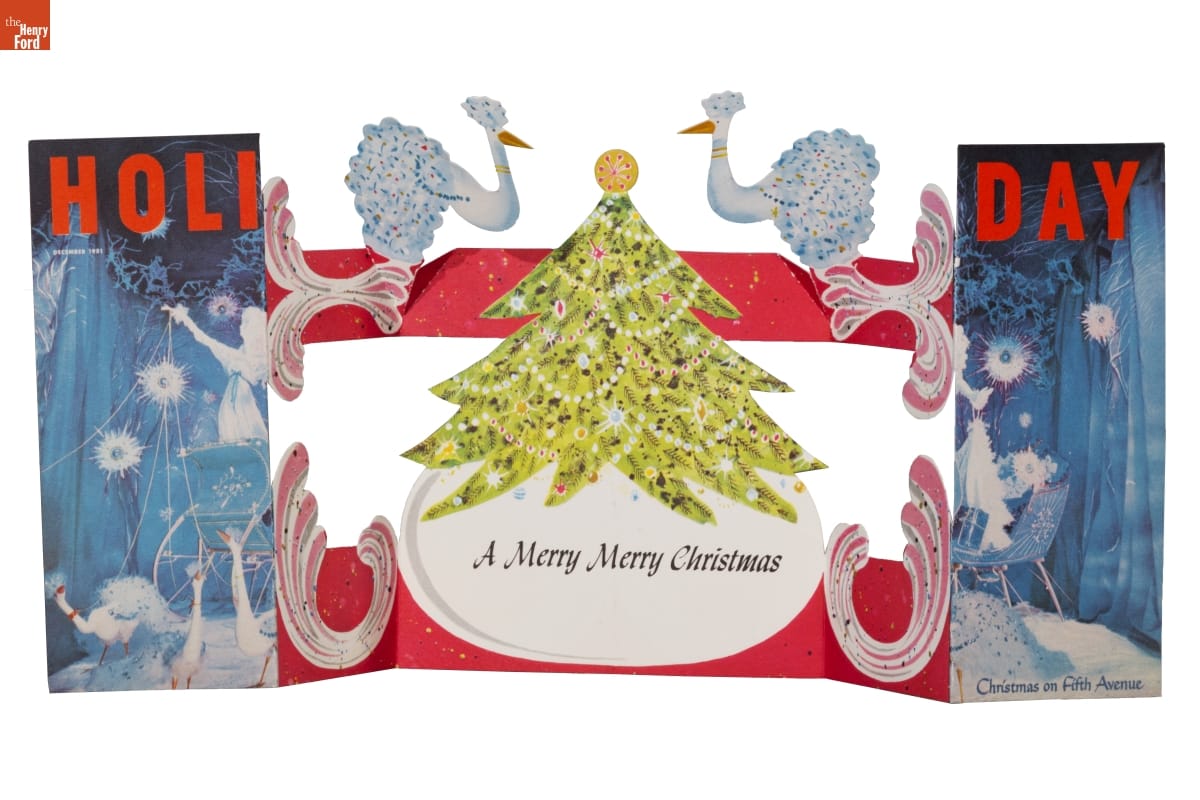
- 3-Dimensional Christmas Card, "A Merry, Merry Christmas," 1951 - Karl Koehler designed three-dimensional Christmas cards in the late 1940s and 1950s. He folded, scored, and snipped paper printed with his artwork, then assembled the cards in his studio. Koehler's creations folded flat for mailing, but when opened they brought unexpected joy with their pop-out shapes. Holiday shoppers found his line of "Mantelpiece" cards at high-end department stores throughout the country.
- 1951
- Collections - Artifact
3-Dimensional Christmas Card, "A Merry, Merry Christmas," 1951
Karl Koehler designed three-dimensional Christmas cards in the late 1940s and 1950s. He folded, scored, and snipped paper printed with his artwork, then assembled the cards in his studio. Koehler's creations folded flat for mailing, but when opened they brought unexpected joy with their pop-out shapes. Holiday shoppers found his line of "Mantelpiece" cards at high-end department stores throughout the country.
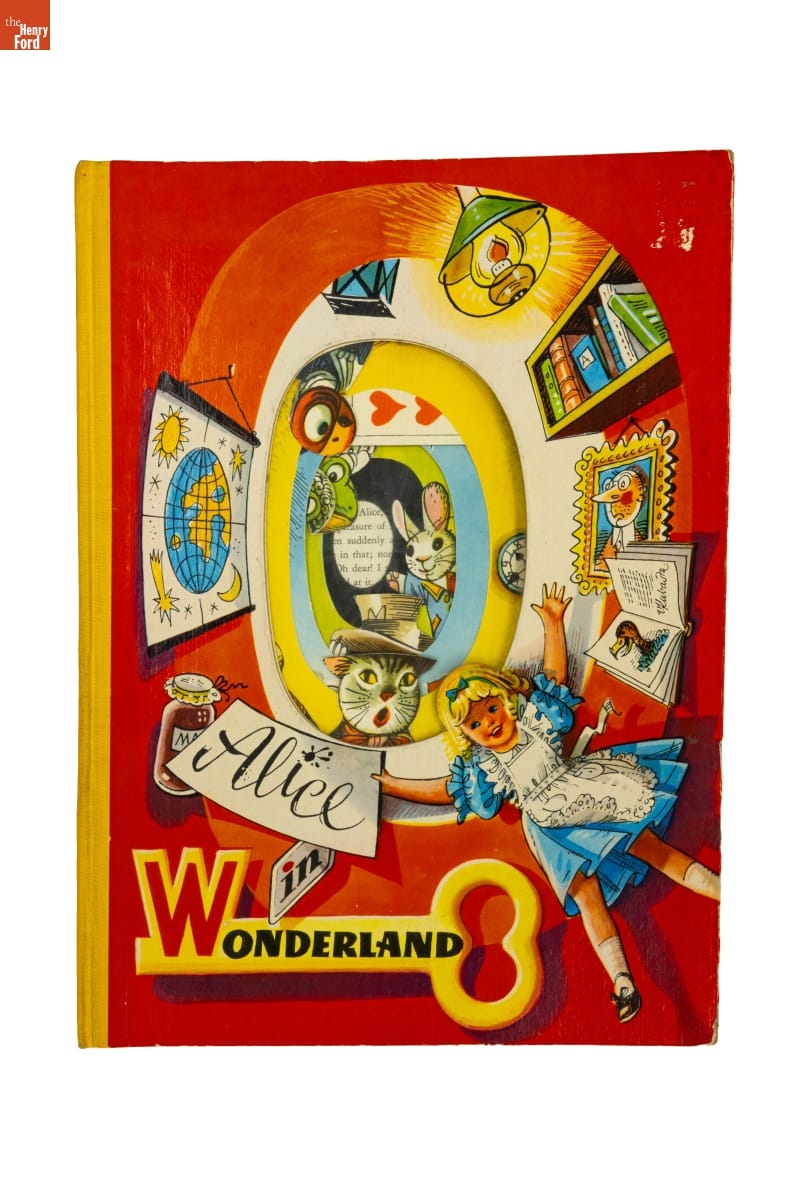
- "Alice in Wonderland" - Vojtech Kubasta (1914-1992), a Czech artist, illustrator, and designer, engineered imaginative movable and pop-up books, advertisements, holiday creches, and other materials. In the mid-1950s, Kubasta created his first of hundreds of pop-up book titles. His colorful and vivid illustrations and fresh and intricate three-dimensional designs inspired movable book artists and aficionados worldwide, spurring a pop-up book renaissance.
- 1952-1992
- Collections - Artifact
"Alice in Wonderland"
Vojtech Kubasta (1914-1992), a Czech artist, illustrator, and designer, engineered imaginative movable and pop-up books, advertisements, holiday creches, and other materials. In the mid-1950s, Kubasta created his first of hundreds of pop-up book titles. His colorful and vivid illustrations and fresh and intricate three-dimensional designs inspired movable book artists and aficionados worldwide, spurring a pop-up book renaissance.
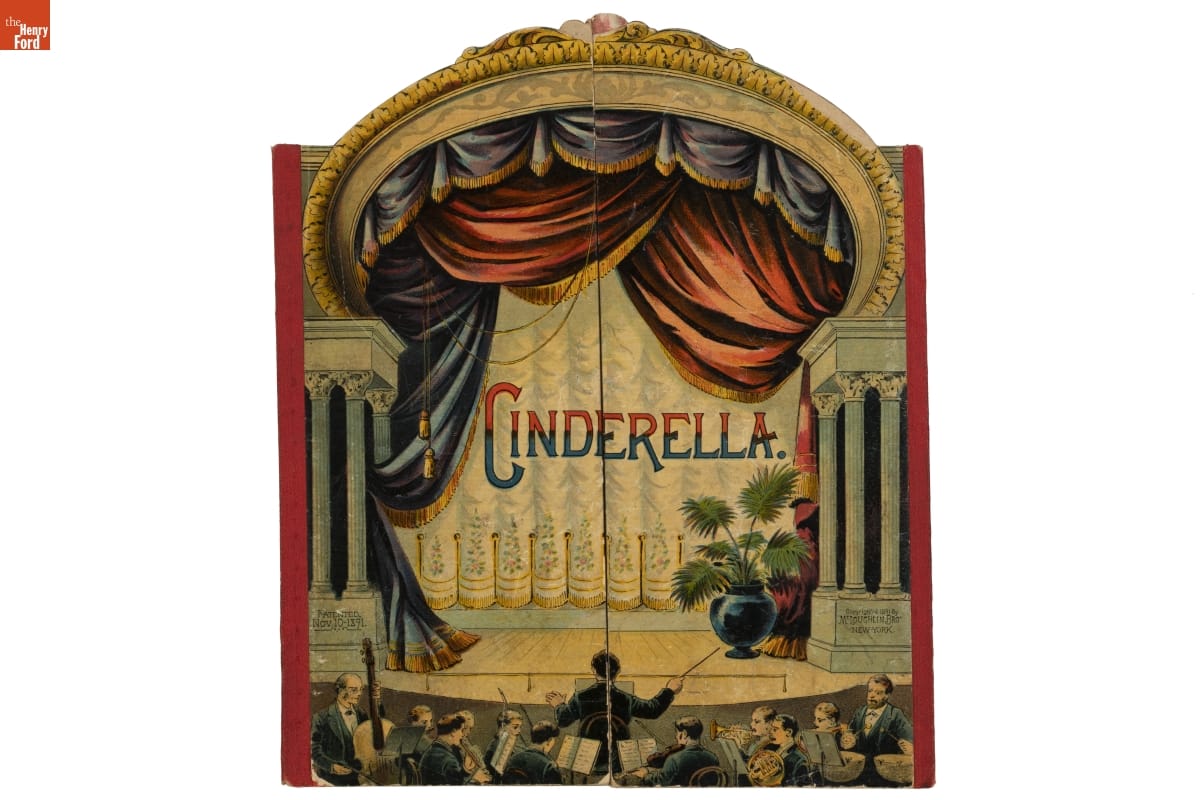
- Fold-out Book, "Cinderella," 1891 - In 1891, the McLoughlin Bros. publishing firm patented this arch-shaped variant of the rectangular "pantomime" books available at the time. Pantomime books depicted a theater during a live stage show. Readers turned the pages to reveal each new scene as a family of theatergoers -- printed behind the cover flaps -- watched the "play" unfold.
- 1891
- Collections - Artifact
Fold-out Book, "Cinderella," 1891
In 1891, the McLoughlin Bros. publishing firm patented this arch-shaped variant of the rectangular "pantomime" books available at the time. Pantomime books depicted a theater during a live stage show. Readers turned the pages to reveal each new scene as a family of theatergoers -- printed behind the cover flaps -- watched the "play" unfold.
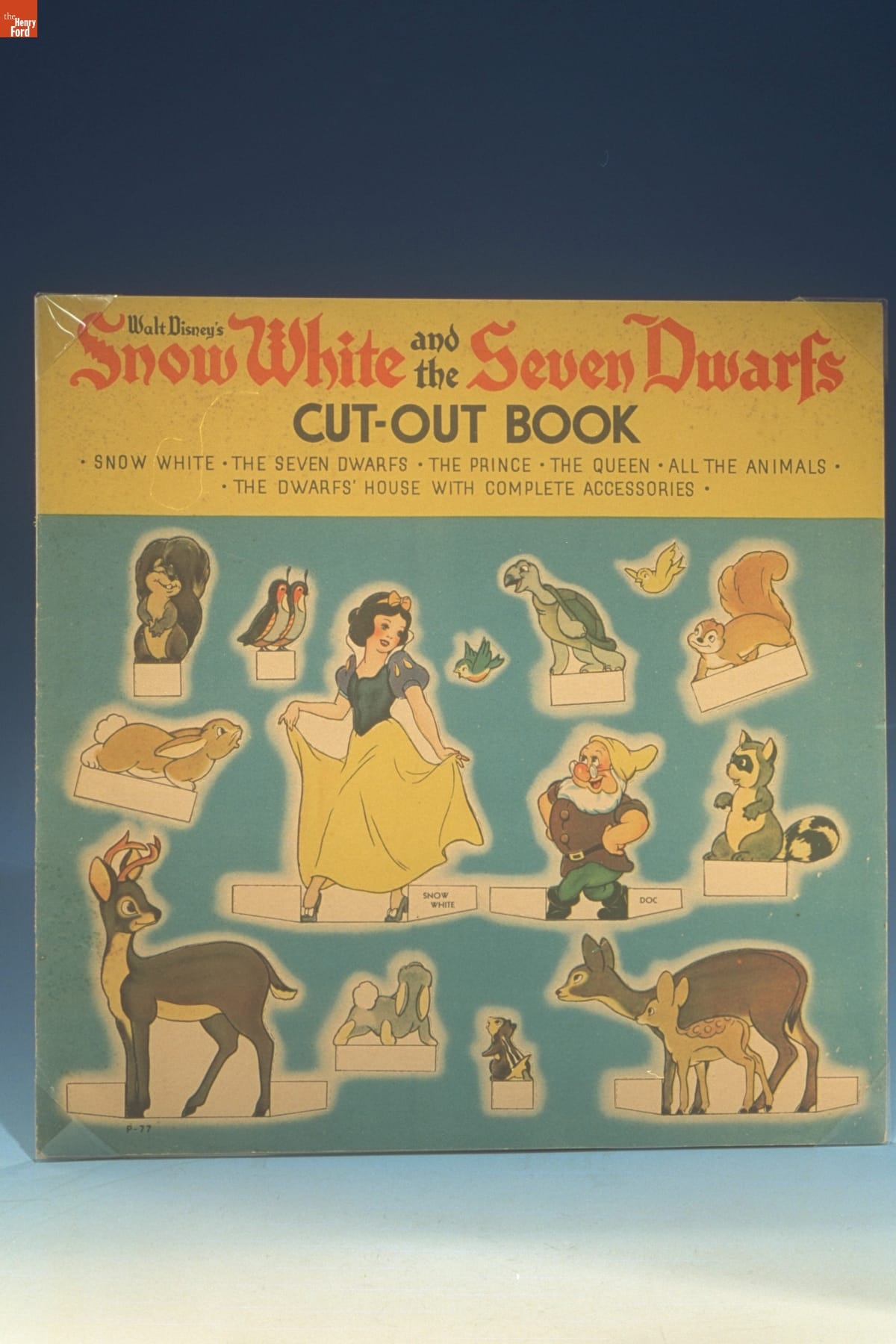
- Snow White and the Seven Dwarfs Cut-Out Book, 1938 - <em>Snow White and the Seven Dwarfs</em>, Walt Disney's first animated feature film, premiered in 1937. Audiences and critics loved it. As part of the film's promotion, Disney licensed manufacturers to create an array of themed merchandise--more than 2,100 different products. Fans of the movie could purchase books, dolls, puzzles, toys, and valentines, among other items, with images of their favorite characters.
- 1938
- Collections - Artifact
Snow White and the Seven Dwarfs Cut-Out Book, 1938
Snow White and the Seven Dwarfs, Walt Disney's first animated feature film, premiered in 1937. Audiences and critics loved it. As part of the film's promotion, Disney licensed manufacturers to create an array of themed merchandise--more than 2,100 different products. Fans of the movie could purchase books, dolls, puzzles, toys, and valentines, among other items, with images of their favorite characters.
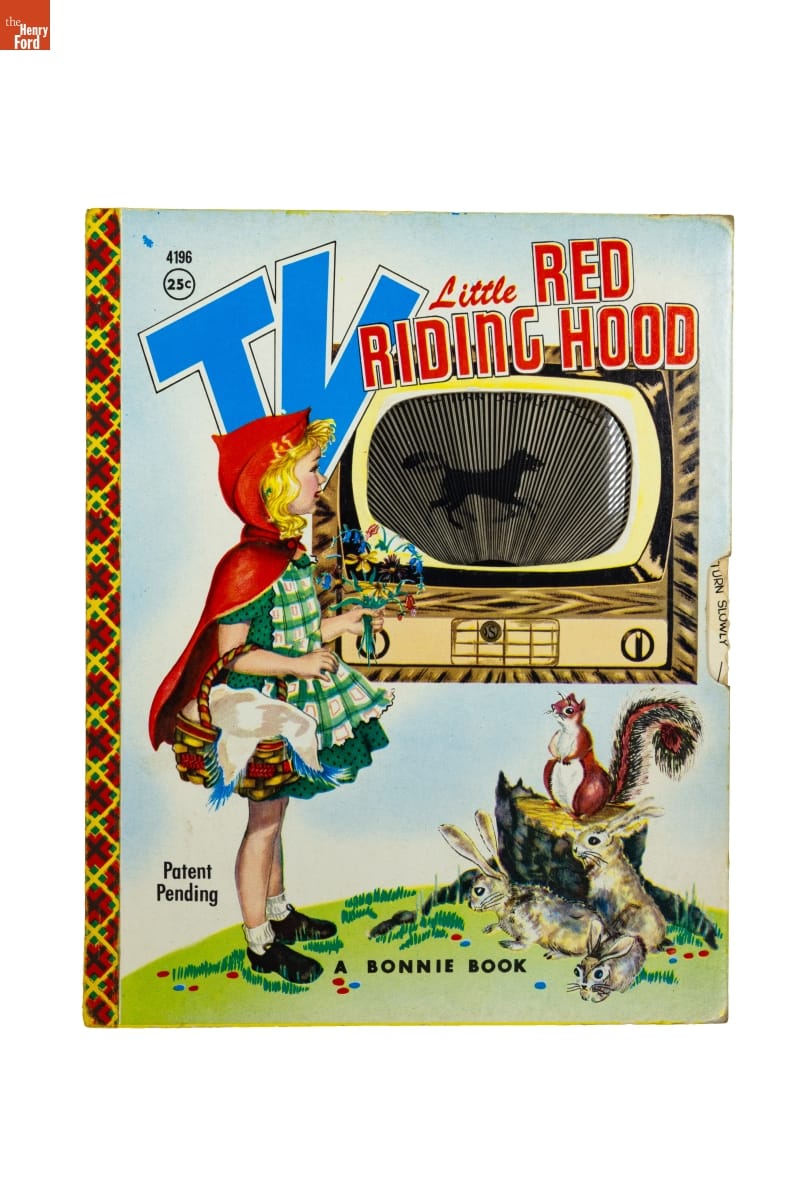
- "TV Little Red Riding Hood," 1955 - After World War II, televisions began competing with books and other playthings for children's time and attention. This movable book enticed young readers with a simple gimmick. When readers turned the wheel, the pictures in the die-cut opening on the cover appeared to move -- much like the flickering black and white images then being transmitted to home television sets.
- 1955
- Collections - Artifact
"TV Little Red Riding Hood," 1955
After World War II, televisions began competing with books and other playthings for children's time and attention. This movable book enticed young readers with a simple gimmick. When readers turned the wheel, the pictures in the die-cut opening on the cover appeared to move -- much like the flickering black and white images then being transmitted to home television sets.
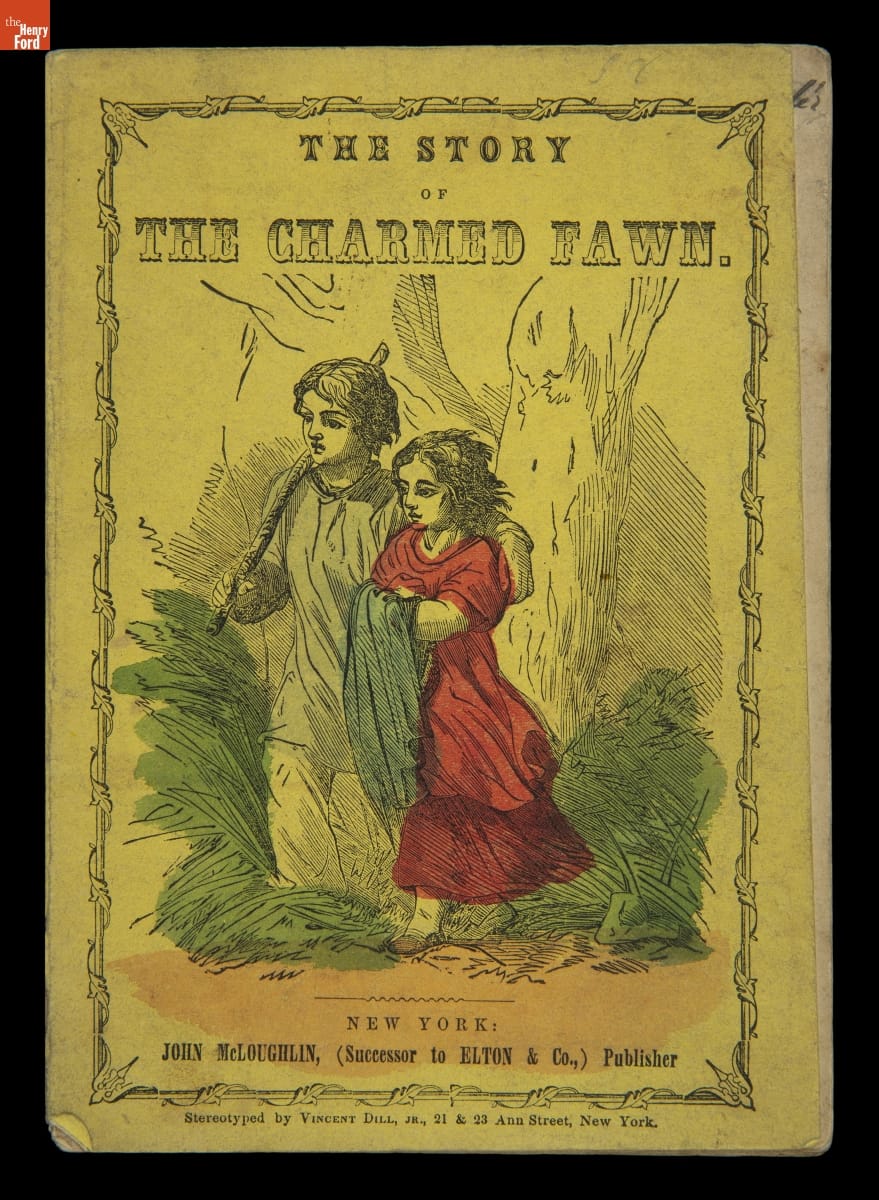
- "The Story of the Charmed Fawn," 1850-1858 - As a teenager, John McLoughlin, Jr. (1827-1905) learned wood engraving and printing at his father's New York publishing firm. Around 1850, he took over the business and capitalized on an emerging children's market with "toy books" like this one. Its cover image is hand-colored, but McLoughlin would soon become well-known for his skillful use of new color printing techniques.
- 1850-1858
- Collections - Artifact
"The Story of the Charmed Fawn," 1850-1858
As a teenager, John McLoughlin, Jr. (1827-1905) learned wood engraving and printing at his father's New York publishing firm. Around 1850, he took over the business and capitalized on an emerging children's market with "toy books" like this one. Its cover image is hand-colored, but McLoughlin would soon become well-known for his skillful use of new color printing techniques.
- Book Used by the Wright Family, "Grimm's Fairy Tales," 1880-1889 - Bishop Milton Wright maintained an extensive library in his Dayton, Ohio, home. His books ranged from scientific works like Charles Darwin's <EM>On the Origin of Species</EM>, to poems by Virgil, to novels by Mark Twain. Wright's sons, Wilbur and Orville, used the bishop's books on physics and ornithology to start their research on the problem of human flight.

- 1880-1889
- Collections - Artifact
Book Used by the Wright Family, "Grimm's Fairy Tales," 1880-1889
Bishop Milton Wright maintained an extensive library in his Dayton, Ohio, home. His books ranged from scientific works like Charles Darwin's On the Origin of Species, to poems by Virgil, to novels by Mark Twain. Wright's sons, Wilbur and Orville, used the bishop's books on physics and ornithology to start their research on the problem of human flight.
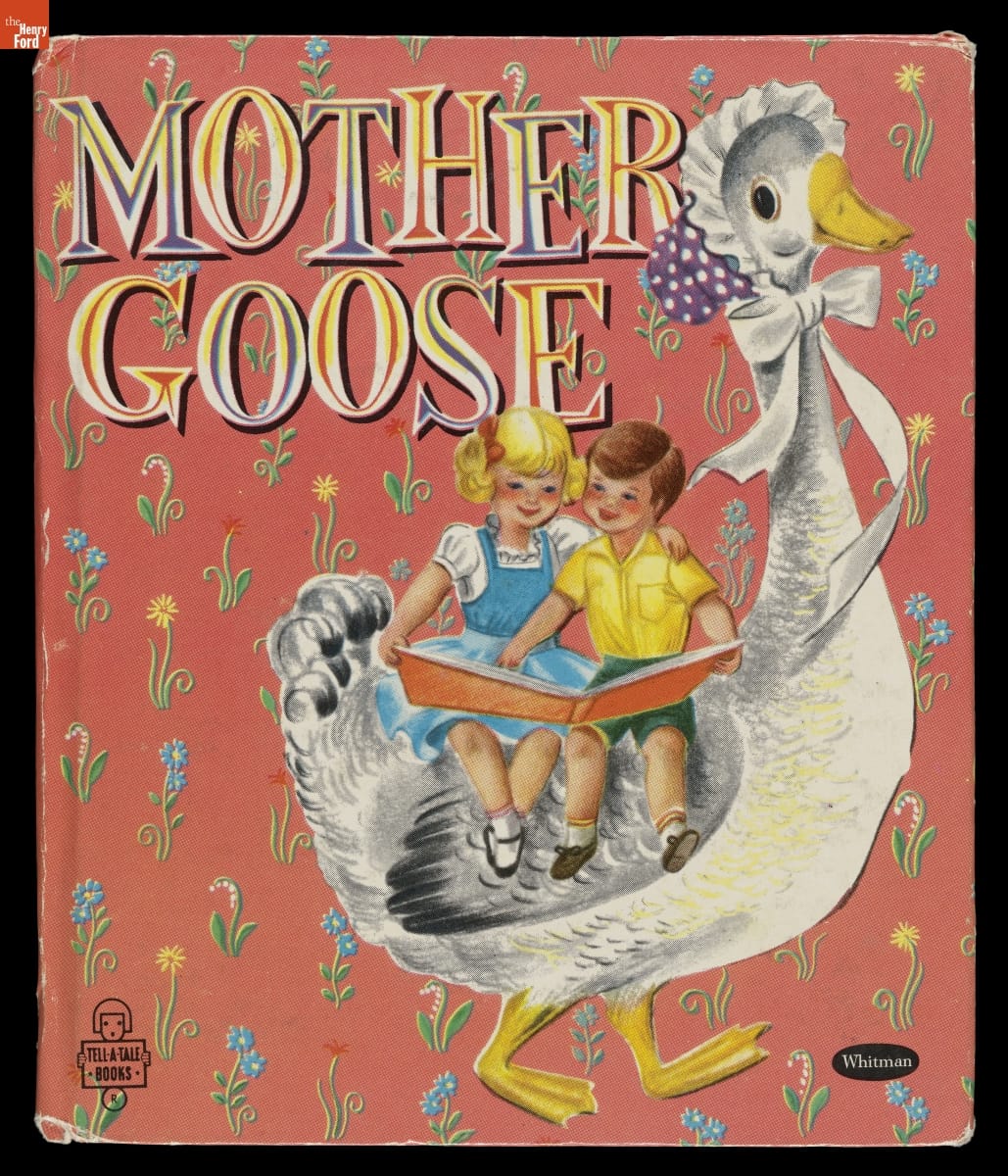
- "Mother Goose," 1955 - <body>Charles Clement began illustrating children's books in the late 1940s. His works appeared in titles such as <i>Little Red Hen</i>, <i>Toy Hunt</i>, and <i>The Night Before Christmas</i> (his last in 1955). In 1950, Clement and his wife, Louise, moved to Tucson, Arizona. From the mid-1950s, Clement produced and became well-known for his mosaics, ceramics, murals, architectural sculptures, and public art. </body>
- 1955
- Collections - Artifact
"Mother Goose," 1955
Charles Clement began illustrating children's books in the late 1940s. His works appeared in titles such as Little Red Hen, Toy Hunt, and The Night Before Christmas (his last in 1955). In 1950, Clement and his wife, Louise, moved to Tucson, Arizona. From the mid-1950s, Clement produced and became well-known for his mosaics, ceramics, murals, architectural sculptures, and public art.