
Search
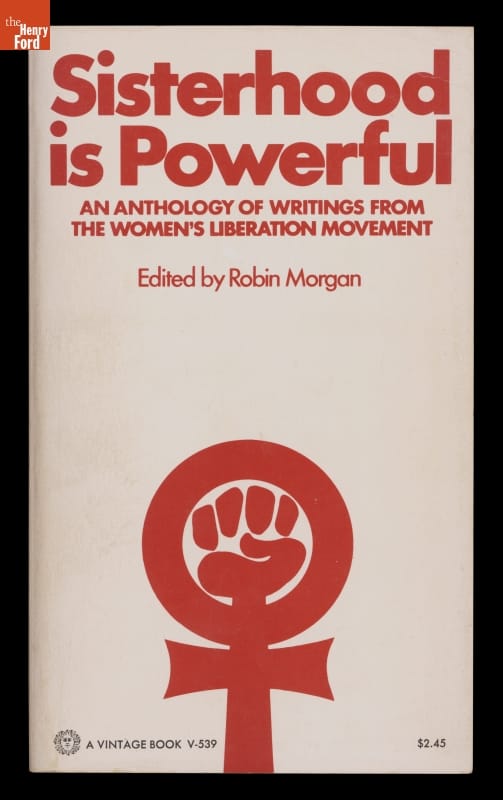
- "Sisterhood is Powerful. An Anthology of Writings From the Women's Liberation Movement," 1970 - Robin Morgan, writer, poet, and activist, edited this anthology of feminist writing in 1970. It was an influential book at the start of the modern Women's Movement in the United States. The anthology contains historical documents and works by well-known feminists of the time.
- 1970
- Collections - Artifact
"Sisterhood is Powerful. An Anthology of Writings From the Women's Liberation Movement," 1970
Robin Morgan, writer, poet, and activist, edited this anthology of feminist writing in 1970. It was an influential book at the start of the modern Women's Movement in the United States. The anthology contains historical documents and works by well-known feminists of the time.
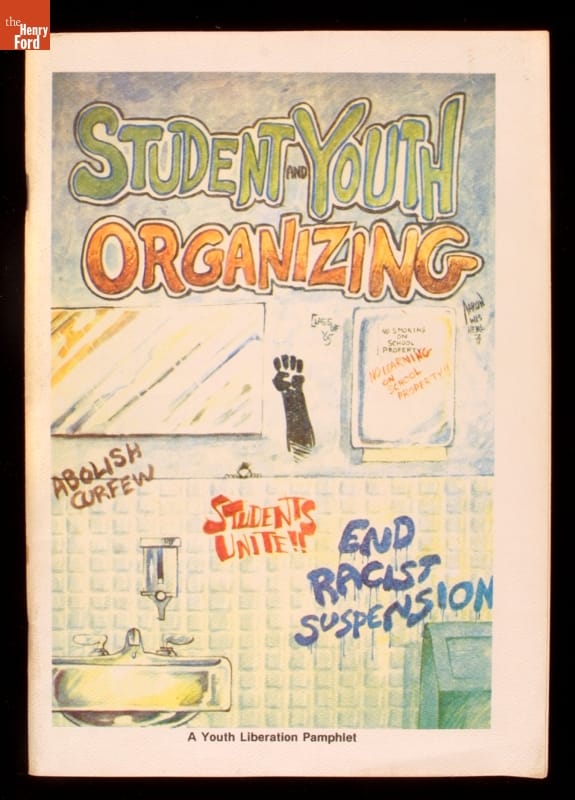
- "Student and Youth Organizing" 1977 - The Civil Rights movement of the 1960s inspired other groups of people to demand their equal rights. This pamphlet from 1977 helped inexperienced high school and college students effectively organize and respond to unfair policies.
- 1977
- Collections - Artifact
"Student and Youth Organizing" 1977
The Civil Rights movement of the 1960s inspired other groups of people to demand their equal rights. This pamphlet from 1977 helped inexperienced high school and college students effectively organize and respond to unfair policies.
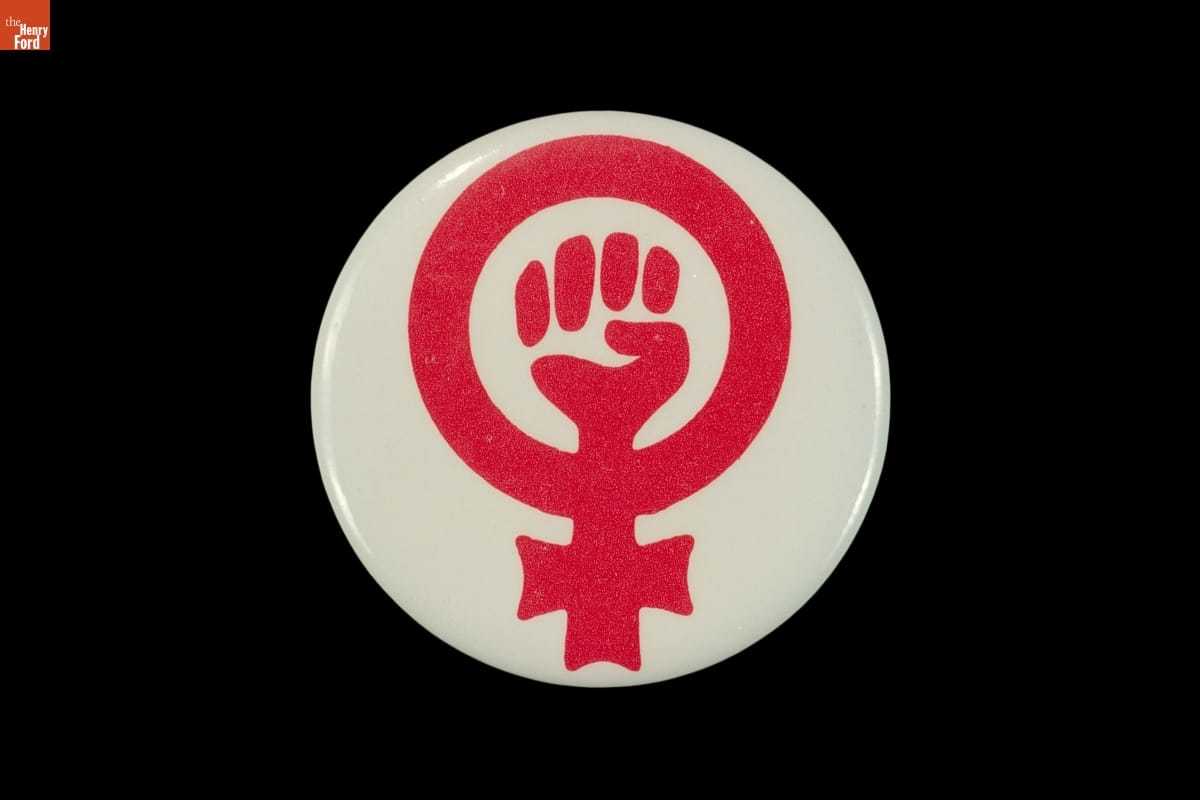
- Button, Women's Liberation Movement, circa 1970 - The Civil Rights movement of the 1960s inspired other groups of people to demand their equal rights. American women renewed their call for equality during this period. This button depicts a raised fist -- a symbol of solidarity, defiance and revolution -- inside the biological female symbol. Together these images convey women's frustration with inequality.
- circa 1970
- Collections - Artifact
Button, Women's Liberation Movement, circa 1970
The Civil Rights movement of the 1960s inspired other groups of people to demand their equal rights. American women renewed their call for equality during this period. This button depicts a raised fist -- a symbol of solidarity, defiance and revolution -- inside the biological female symbol. Together these images convey women's frustration with inequality.
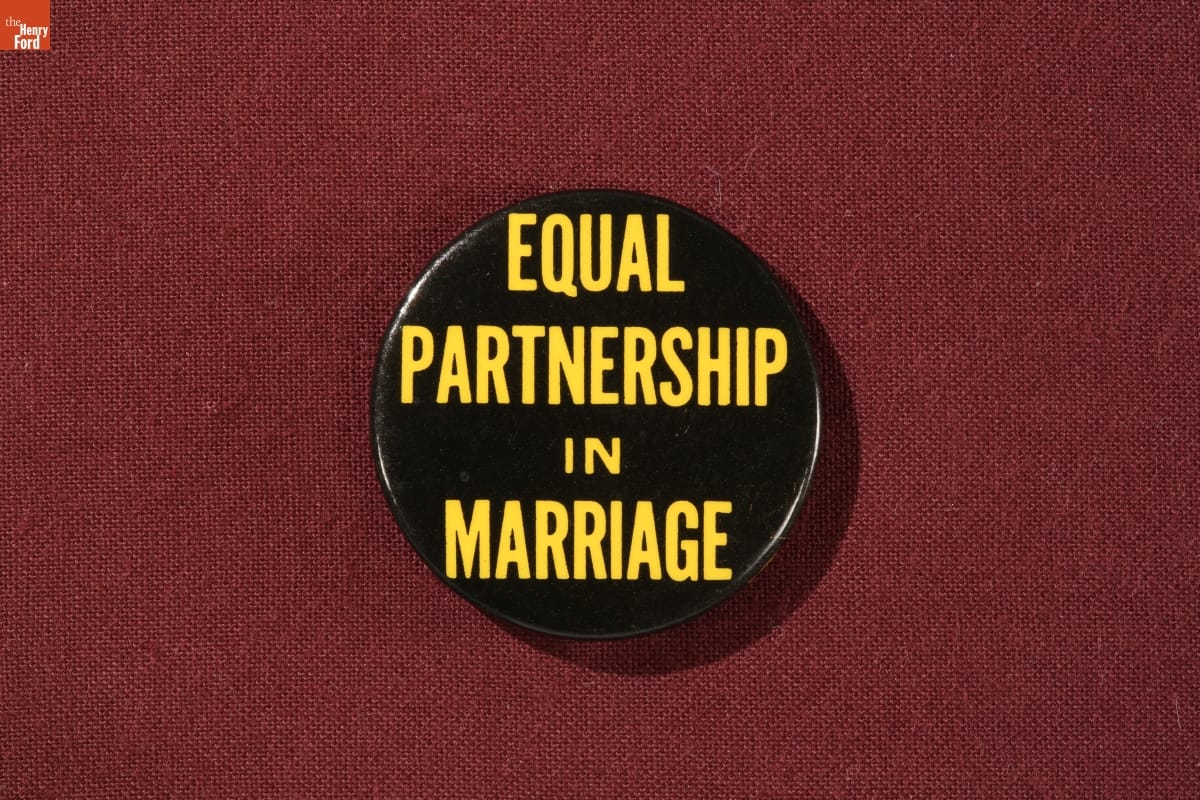
- Button, "Equal Partnership in Marriage," 1974 - In the 1970s, women's rights activists rallied against legal inequalities in the workplace, divorce and property rights, and many other areas. Supporters of a constitutional amendment that would guarantee women equal rights with men championed numerous individual causes. This button promoted equality in marriage law.
- 1974
- Collections - Artifact
Button, "Equal Partnership in Marriage," 1974
In the 1970s, women's rights activists rallied against legal inequalities in the workplace, divorce and property rights, and many other areas. Supporters of a constitutional amendment that would guarantee women equal rights with men championed numerous individual causes. This button promoted equality in marriage law.
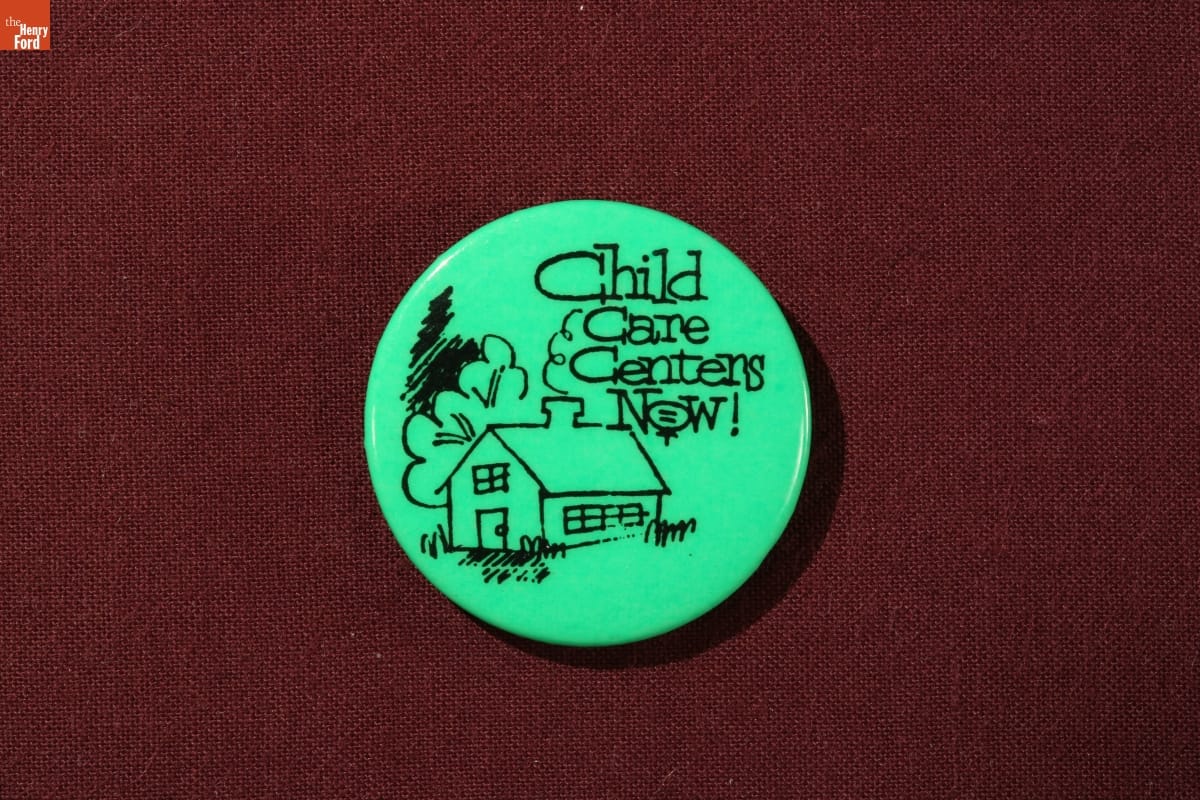
- Button, "Child Care Centers Now," 1974 - In the 1970s, women's rights activists rallied against legal inequalities in the workplace, divorce and property rights, and many other areas. Supporters of a constitutional amendment that would guarantee women equal rights with men championed numerous individual causes. This button promoted affordable child care, which would allow women with children to pursue rewarding careers.
- 1974
- Collections - Artifact
Button, "Child Care Centers Now," 1974
In the 1970s, women's rights activists rallied against legal inequalities in the workplace, divorce and property rights, and many other areas. Supporters of a constitutional amendment that would guarantee women equal rights with men championed numerous individual causes. This button promoted affordable child care, which would allow women with children to pursue rewarding careers.
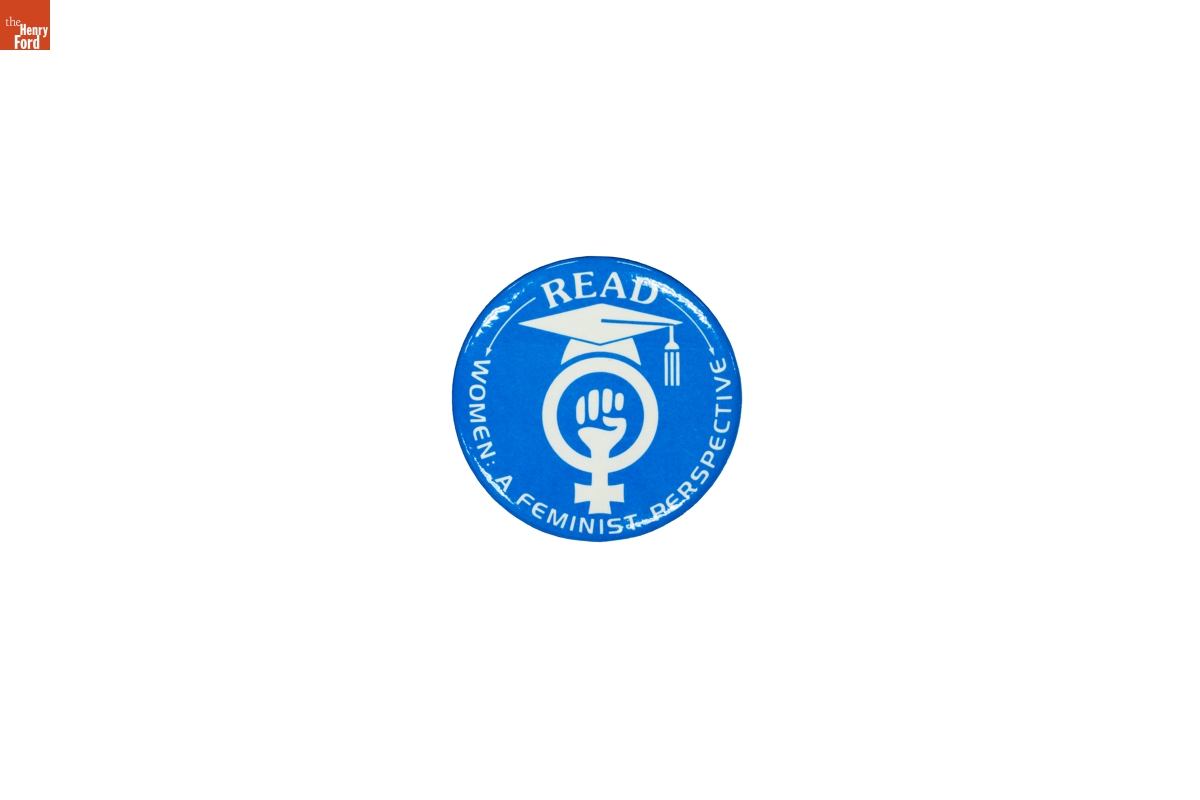
- "READ Women: A Feminist Perspective" Button, 1975-1980 -
- 1975-1980
- Collections - Artifact
"READ Women: A Feminist Perspective" Button, 1975-1980
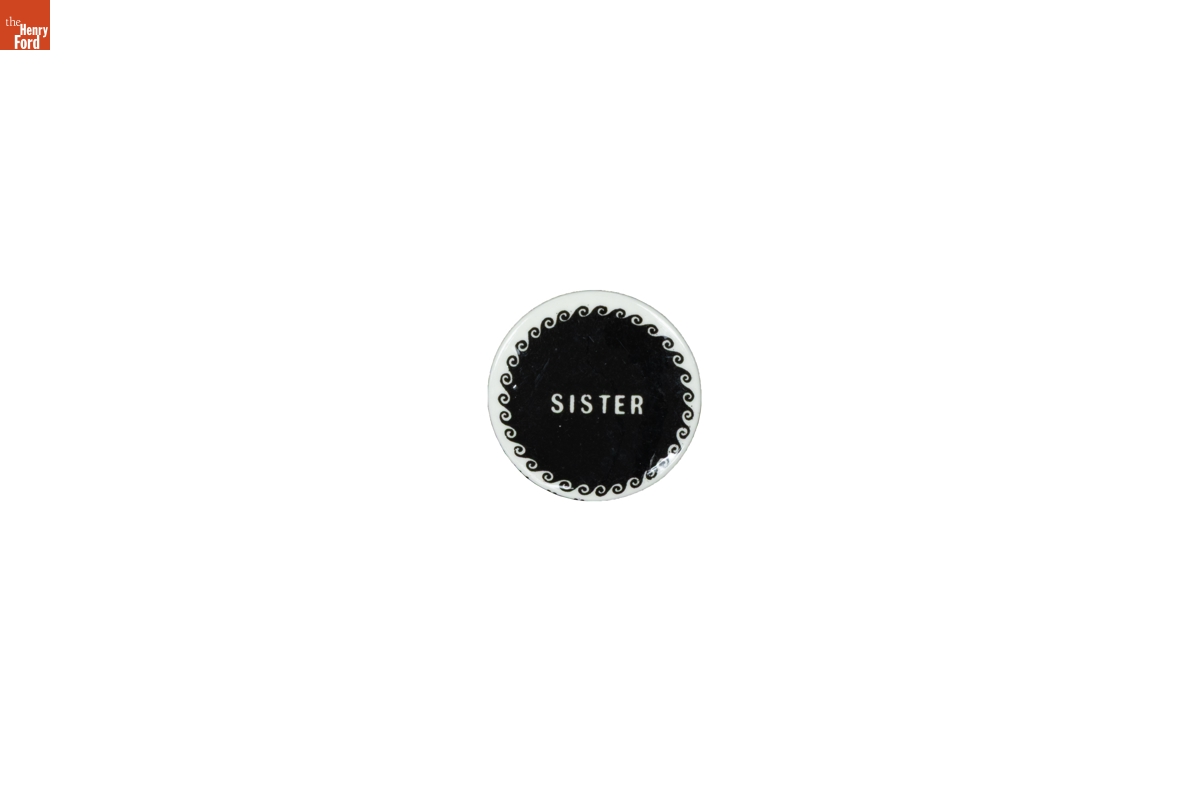
- "Sister" Button, 1974 -
- 1974
- Collections - Artifact
"Sister" Button, 1974
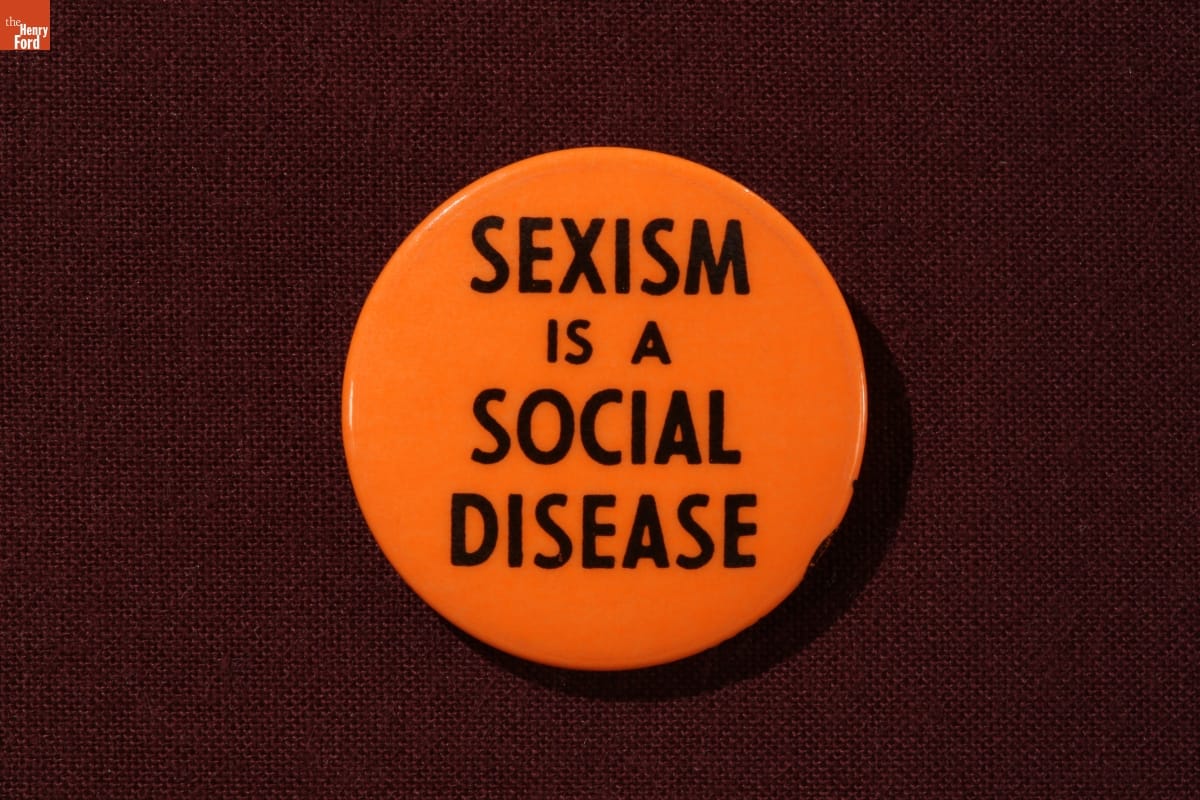
- Button, "Sexism is a Social Disease," 1974 - In the 1970s, women's rights activists rallied against legal inequalities in the workplace, divorce and property rights, and many other areas. Supporters of a constitutional amendment that would guarantee women equal rights with men championed numerous individual causes. This button likened gender discrimination to social disease--an illness whose incidence is directly related to socioeconomic status.
- 1974
- Collections - Artifact
Button, "Sexism is a Social Disease," 1974
In the 1970s, women's rights activists rallied against legal inequalities in the workplace, divorce and property rights, and many other areas. Supporters of a constitutional amendment that would guarantee women equal rights with men championed numerous individual causes. This button likened gender discrimination to social disease--an illness whose incidence is directly related to socioeconomic status.
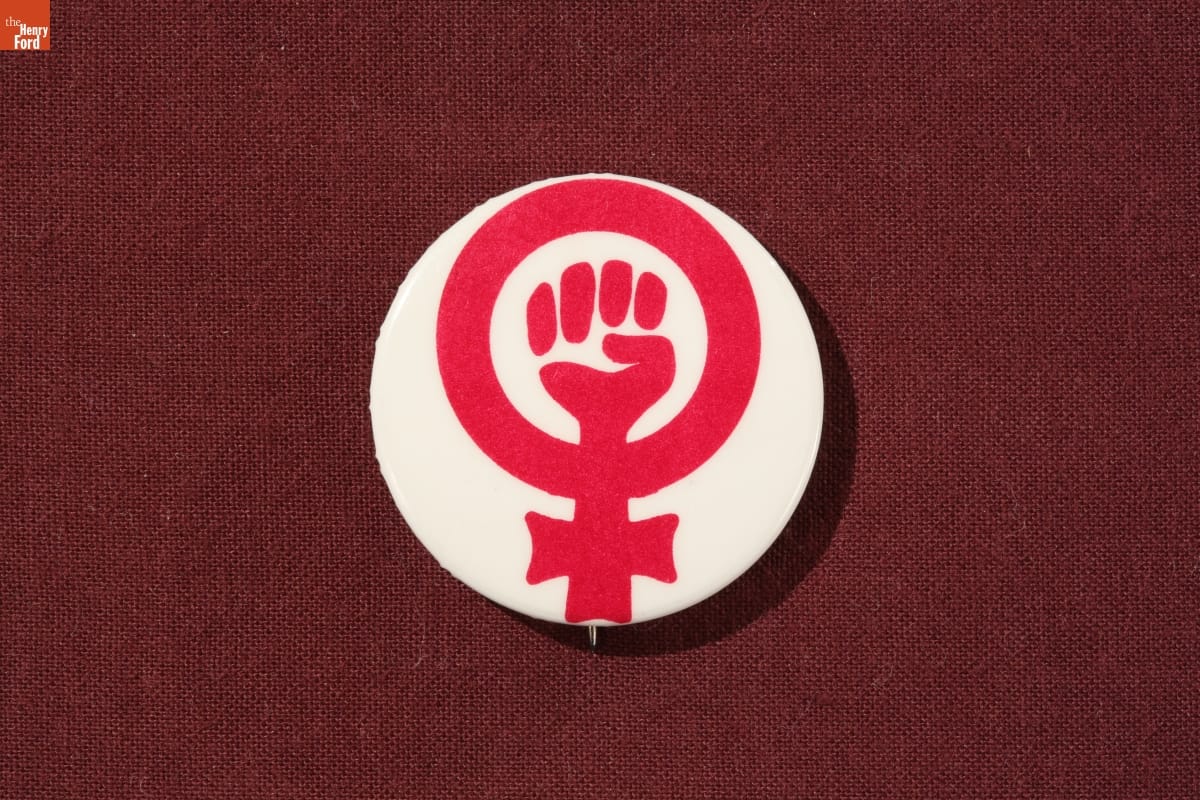
- Button, Women's Liberation Movement, circa 1970 - The Civil Rights movement of the 1960s inspired other groups of people to demand their equal rights. American women renewed their call for equality during this period. This button depicts a raised fist -- a symbol of solidarity, defiance and revolution -- inside the biological female symbol. Together these images convey women's frustration with inequality.
- circa 1970
- Collections - Artifact
Button, Women's Liberation Movement, circa 1970
The Civil Rights movement of the 1960s inspired other groups of people to demand their equal rights. American women renewed their call for equality during this period. This button depicts a raised fist -- a symbol of solidarity, defiance and revolution -- inside the biological female symbol. Together these images convey women's frustration with inequality.
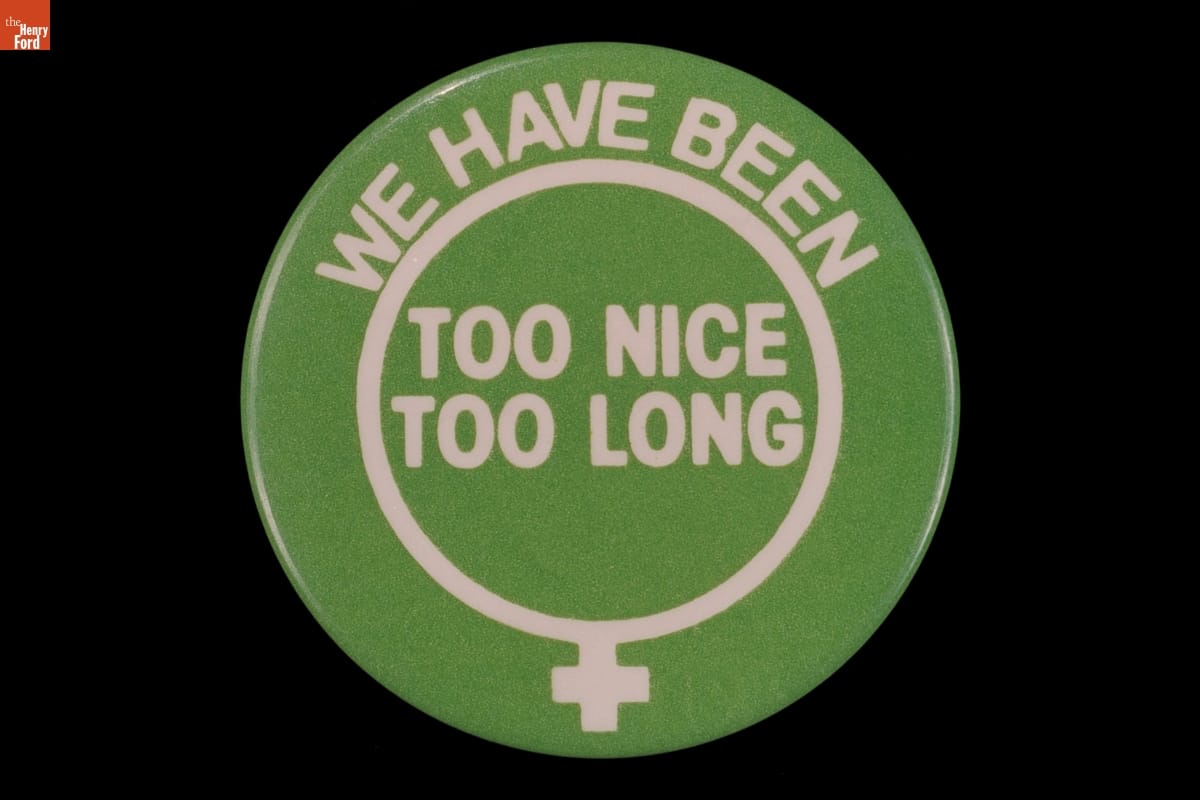
- Button, "We Have Been Nice Too Long," circa 1970 - The Civil Rights movement of the 1960s inspired other groups of people to demand their equal rights. American women renewed their call for equality during this period. This campaign button from about 1970 urged women to become active supporters for their equal rights.
- circa 1970
- Collections - Artifact
Button, "We Have Been Nice Too Long," circa 1970
The Civil Rights movement of the 1960s inspired other groups of people to demand their equal rights. American women renewed their call for equality during this period. This campaign button from about 1970 urged women to become active supporters for their equal rights.