
Search
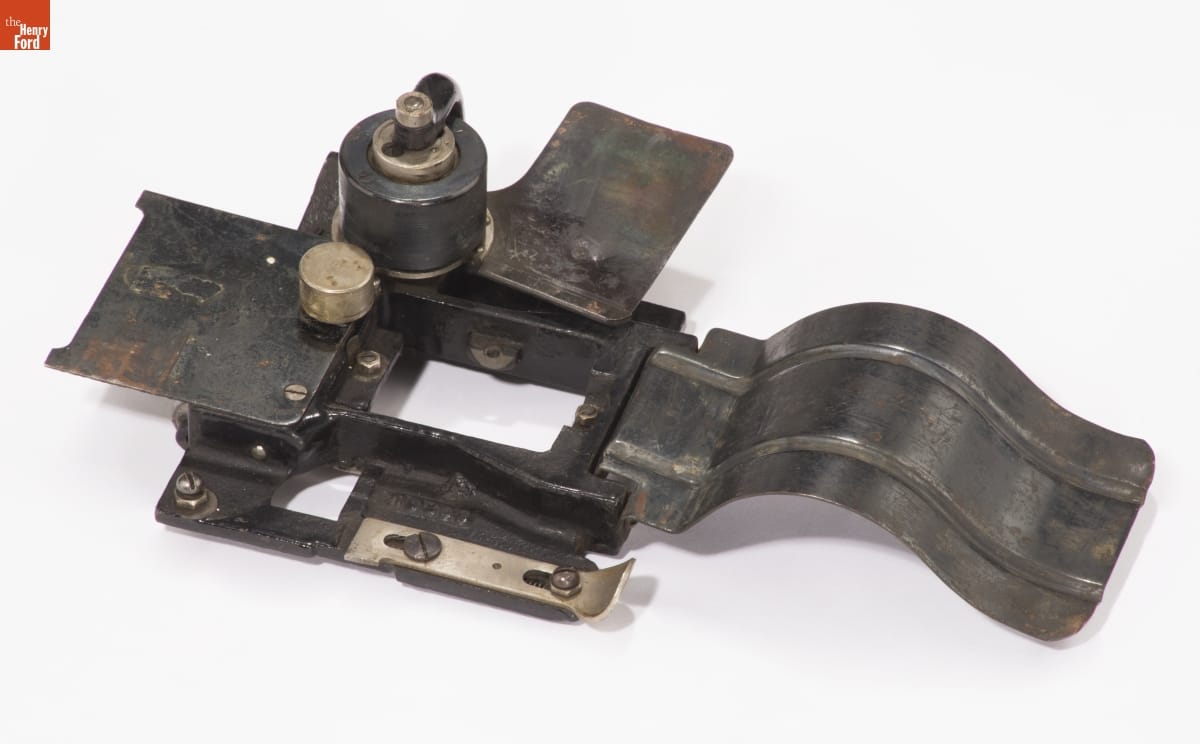
- Edison Projecting Kinetoscope Film Gate, 1905-1915 - In motion-picture projectors, a gate is a rectangular opening where film is held flat by pressure. This opening allows the projector lamp's light to pass through, illuminating the film. Uniform pressure ensures the film is held flat against the focal plane of the lens, creating a projection that is in focus.
- 1905-1915
- Collections - Artifact
Edison Projecting Kinetoscope Film Gate, 1905-1915
In motion-picture projectors, a gate is a rectangular opening where film is held flat by pressure. This opening allows the projector lamp's light to pass through, illuminating the film. Uniform pressure ensures the film is held flat against the focal plane of the lens, creating a projection that is in focus.
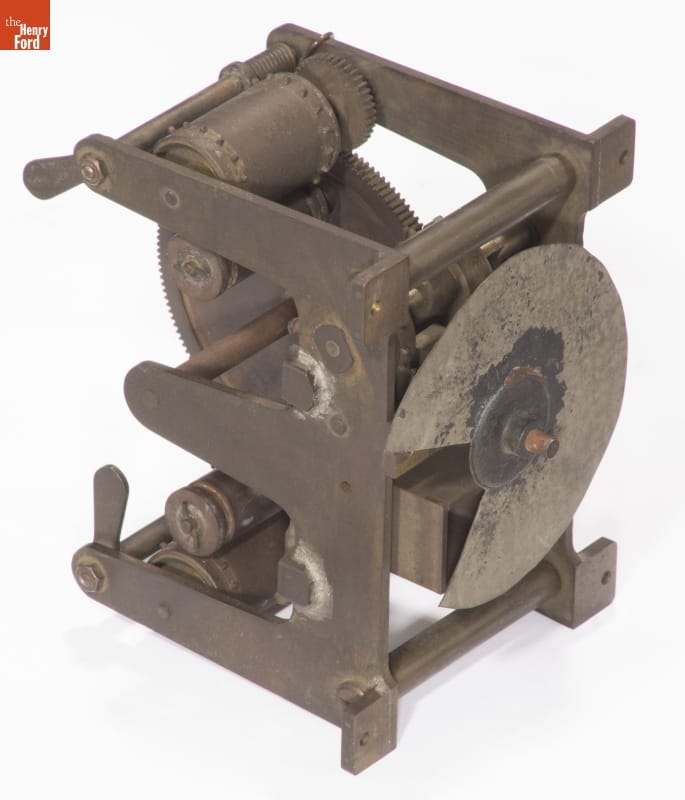
- Film Gate, 1895-1920 - A Geneva or Maltese cross movement is a mechanical gear system that transforms a continuous rotating movement into a stepped movement. While the illusion is that the film in a movie projector is running past the lens in a steady stream, each frame must stop for 1/24 of a second in front of the lens. Geneva movements allow this conversion.
- 1895-1920
- Collections - Artifact
Film Gate, 1895-1920
A Geneva or Maltese cross movement is a mechanical gear system that transforms a continuous rotating movement into a stepped movement. While the illusion is that the film in a movie projector is running past the lens in a steady stream, each frame must stop for 1/24 of a second in front of the lens. Geneva movements allow this conversion.
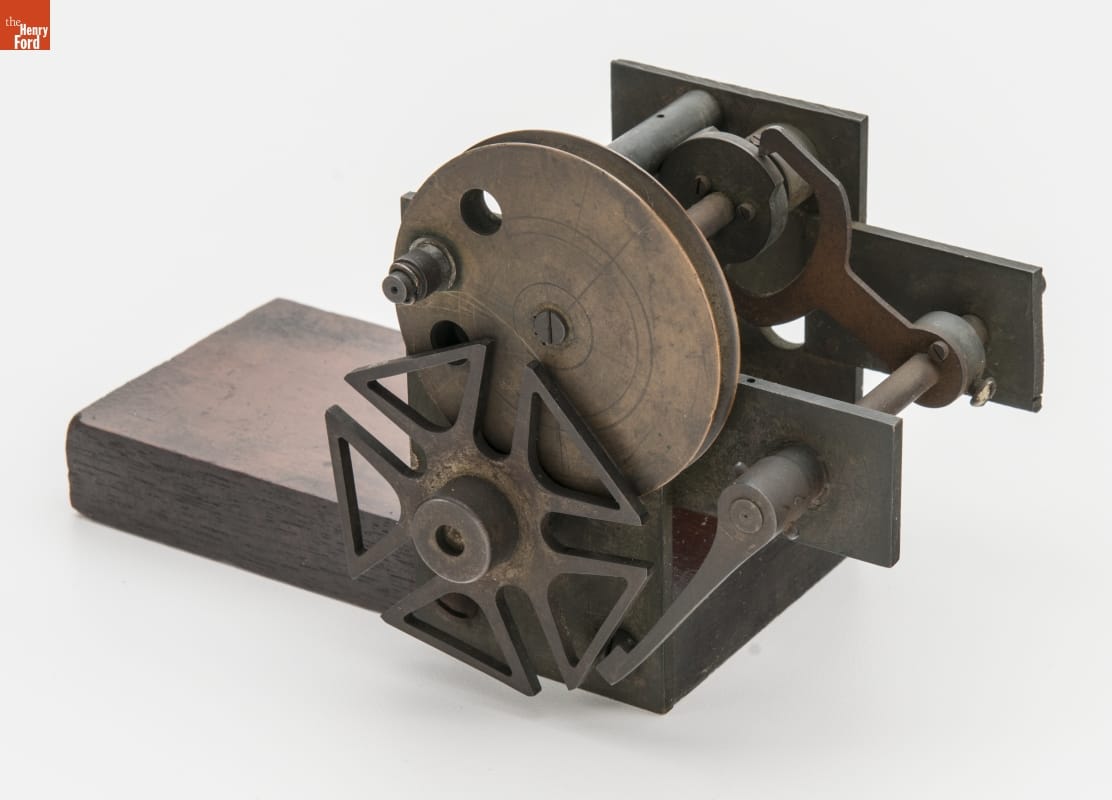
- Film Gate, circa 1895 - A Geneva or Maltese cross movement is a mechanical gear system that transforms a continuous rotating movement into a stepped movement. While the illusion is that the film in a movie projector is running past the lens in a steady stream, each frame must stop for 1/24 of a second in front of the lens. Geneva movements allow this conversion.
- circa 1895
- Collections - Artifact
Film Gate, circa 1895
A Geneva or Maltese cross movement is a mechanical gear system that transforms a continuous rotating movement into a stepped movement. While the illusion is that the film in a movie projector is running past the lens in a steady stream, each frame must stop for 1/24 of a second in front of the lens. Geneva movements allow this conversion.