
Search
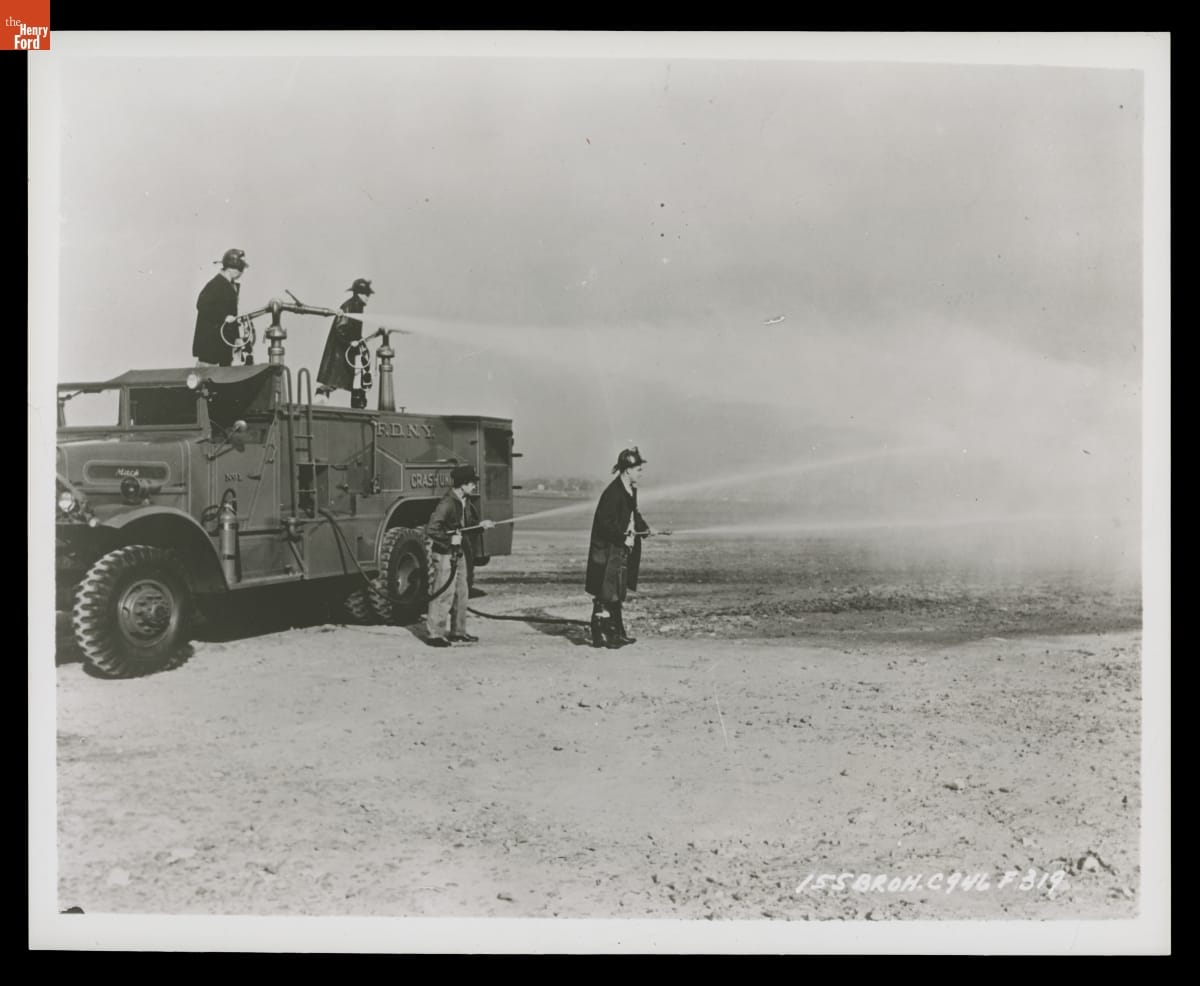
- New York Fire Department Crash Unit Firemen Using the Hoses on a Fire Truck, 1945-1950 - Founded in Brooklyn, New York, in 1900, Mack Brothers Company relocated to Allentown, Pennsylvania, five years later. The company renamed itself Mack Trucks and chose a bulldog as its mascot in 1922. Mack built its first firefighting equipment around 1911. Mack itself stopped building complete fire trucks in 1990, but Mack's chassis continued to be used by other builders.
- 1945-1950
- Collections - Artifact
New York Fire Department Crash Unit Firemen Using the Hoses on a Fire Truck, 1945-1950
Founded in Brooklyn, New York, in 1900, Mack Brothers Company relocated to Allentown, Pennsylvania, five years later. The company renamed itself Mack Trucks and chose a bulldog as its mascot in 1922. Mack built its first firefighting equipment around 1911. Mack itself stopped building complete fire trucks in 1990, but Mack's chassis continued to be used by other builders.
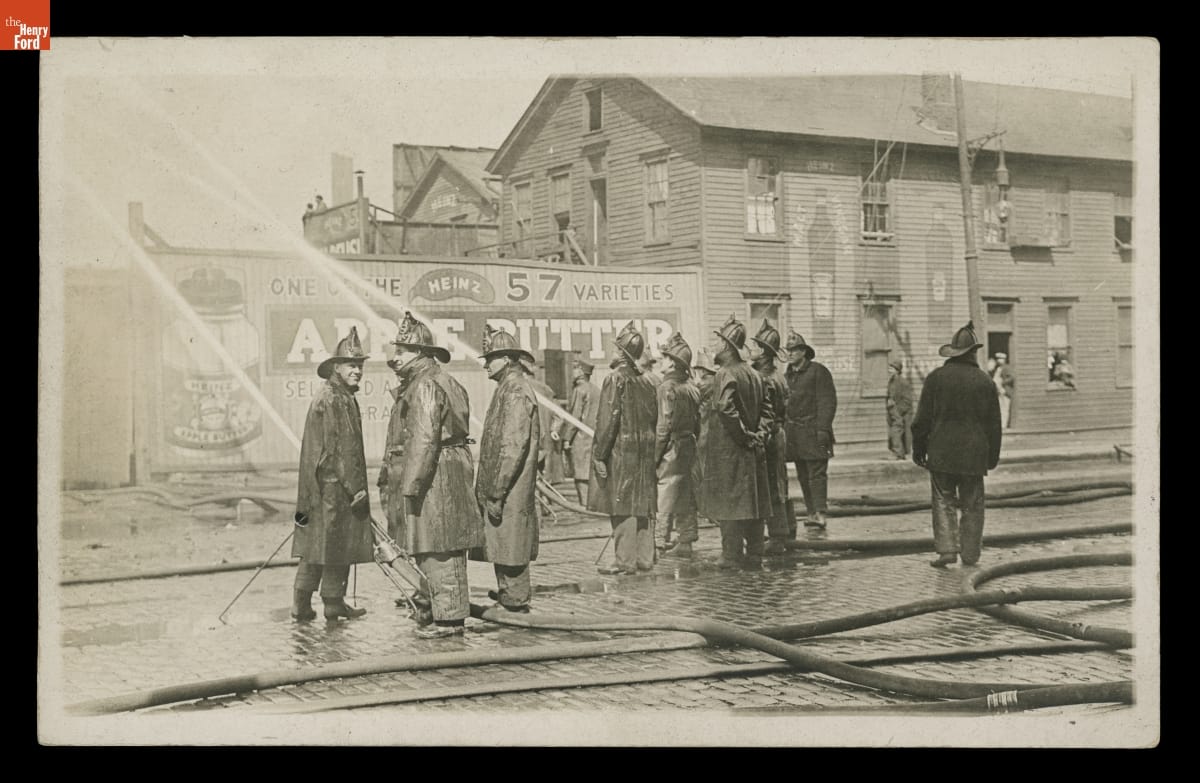
- Firefighters at the Scene of the H.J. Heinz Chicago Branch House Fire, 1911 - This photograph shows the scene of a destructive fire at a H.J. Heinz Company branch house in Chicago, Illinois, in 1911. Fire was a constant threat to factories and industrial facilities. Firefighters focused their efforts on saving lives, controlling the fire, and preventing damage to nearby buildings.
- 1911
- Collections - Artifact
Firefighters at the Scene of the H.J. Heinz Chicago Branch House Fire, 1911
This photograph shows the scene of a destructive fire at a H.J. Heinz Company branch house in Chicago, Illinois, in 1911. Fire was a constant threat to factories and industrial facilities. Firefighters focused their efforts on saving lives, controlling the fire, and preventing damage to nearby buildings.
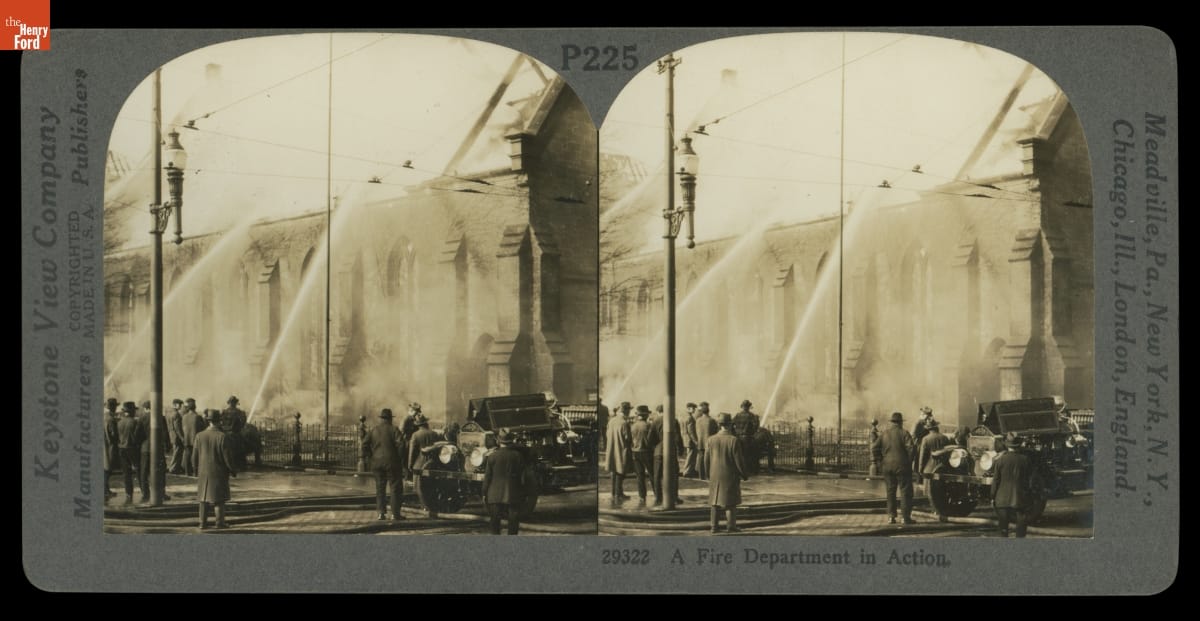
- Stereograph, "A Fire Department in Action," circa 1925 - A stereograph consists of two offset photos that appear to have three-dimensional depth when seen through a special stereoscope viewer. Firefighters and their dangerous work were popular subjects for stereographs. The description on the back of this example made that point well: "People like to see the swift fire trucks and the firemen at work."
- circa 1925
- Collections - Artifact
Stereograph, "A Fire Department in Action," circa 1925
A stereograph consists of two offset photos that appear to have three-dimensional depth when seen through a special stereoscope viewer. Firefighters and their dangerous work were popular subjects for stereographs. The description on the back of this example made that point well: "People like to see the swift fire trucks and the firemen at work."
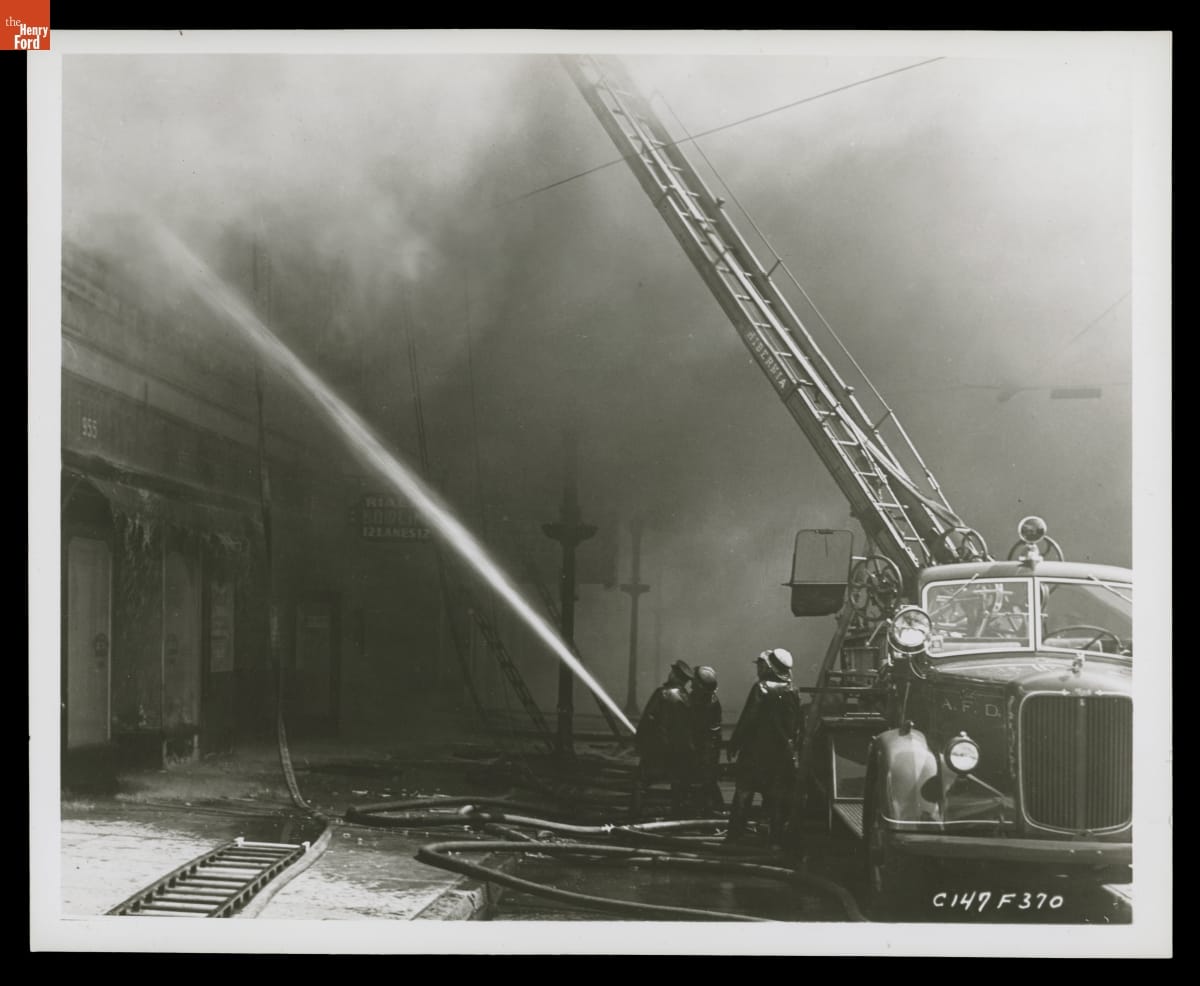
- Firefighters Using Hoses at the Scene of a Fire, January 1947 - Founded in Brooklyn, New York, in 1900, Mack Brothers Company relocated to Allentown, Pennsylvania, five years later. The company renamed itself Mack Trucks and chose a bulldog as its mascot in 1922. Mack built its first firefighting equipment around 1911. Mack itself stopped building complete fire trucks in 1990, but Mack's chassis continued to be used by other builders.
- January 01, 1947
- Collections - Artifact
Firefighters Using Hoses at the Scene of a Fire, January 1947
Founded in Brooklyn, New York, in 1900, Mack Brothers Company relocated to Allentown, Pennsylvania, five years later. The company renamed itself Mack Trucks and chose a bulldog as its mascot in 1922. Mack built its first firefighting equipment around 1911. Mack itself stopped building complete fire trucks in 1990, but Mack's chassis continued to be used by other builders.
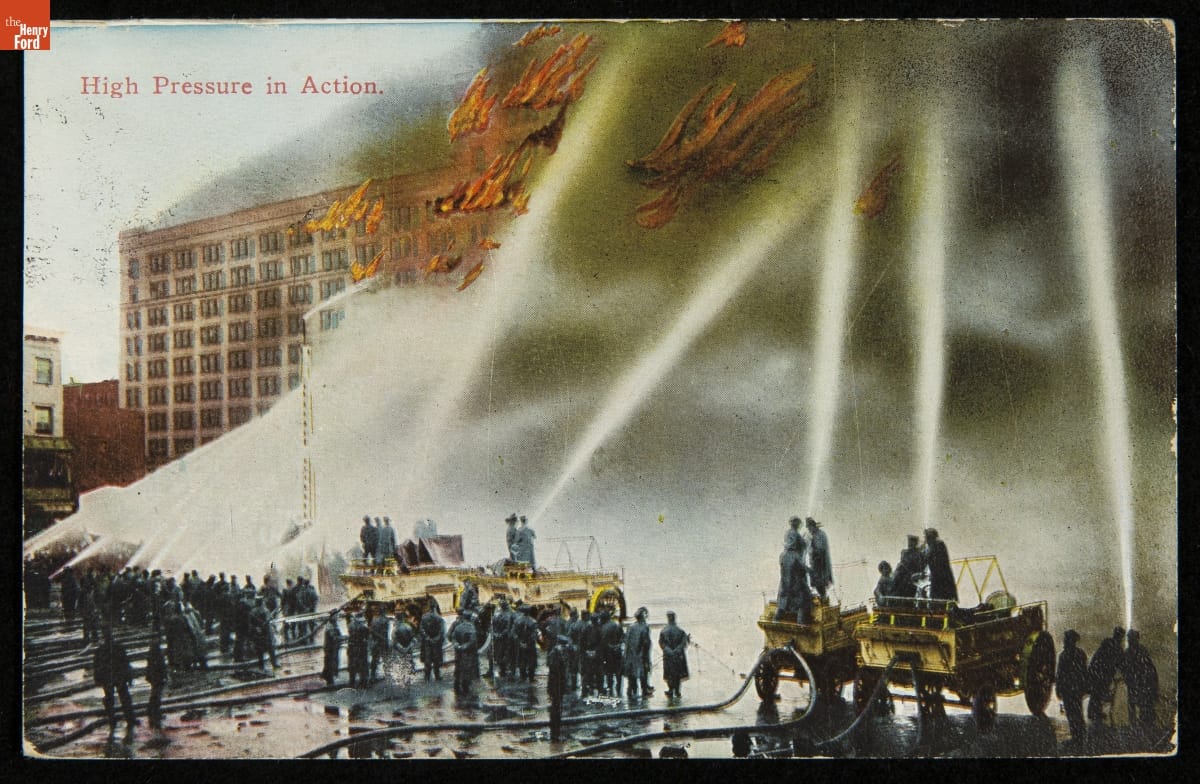
- "High Pressure in Action," 1911 - Water is the primary tool for fighting most fires. Water vaporizes when it contacts fire, and that process robs the fire of oxygen. Vaporization also absorbs heat from fire and from potential fuel sources. Firefighters depend on high-pressure pumps to direct water where needed. As buildings grew taller, higher pressures became necessary.
- December 07, 1911
- Collections - Artifact
"High Pressure in Action," 1911
Water is the primary tool for fighting most fires. Water vaporizes when it contacts fire, and that process robs the fire of oxygen. Vaporization also absorbs heat from fire and from potential fuel sources. Firefighters depend on high-pressure pumps to direct water where needed. As buildings grew taller, higher pressures became necessary.
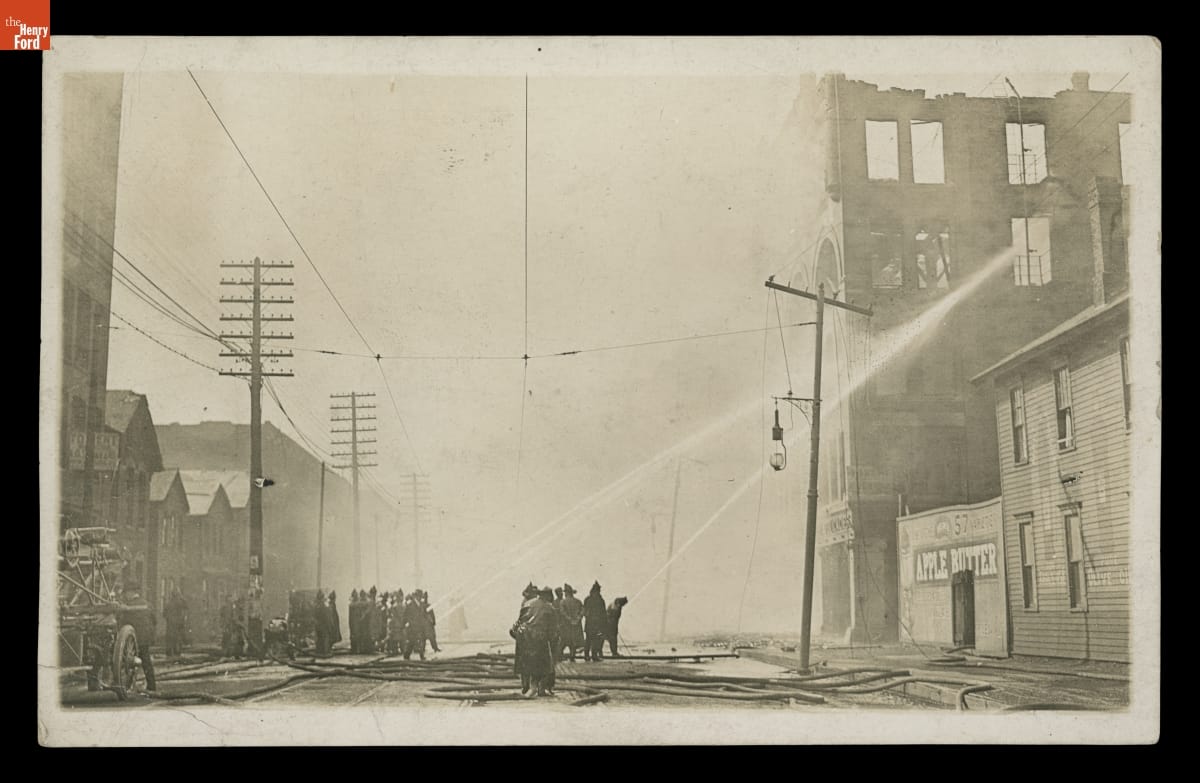
- Firefighters at the Scene of the H.J. Heinz Chicago Branch House Fire, 1911 - This photograph shows the scene of a destructive fire at a H.J. Heinz Company branch house in Chicago, Illinois, in 1911. Fire was a constant threat to factories and industrial facilities. Firefighters focused their efforts on saving lives, controlling the fire, and preventing damage to nearby buildings.
- 1911
- Collections - Artifact
Firefighters at the Scene of the H.J. Heinz Chicago Branch House Fire, 1911
This photograph shows the scene of a destructive fire at a H.J. Heinz Company branch house in Chicago, Illinois, in 1911. Fire was a constant threat to factories and industrial facilities. Firefighters focused their efforts on saving lives, controlling the fire, and preventing damage to nearby buildings.
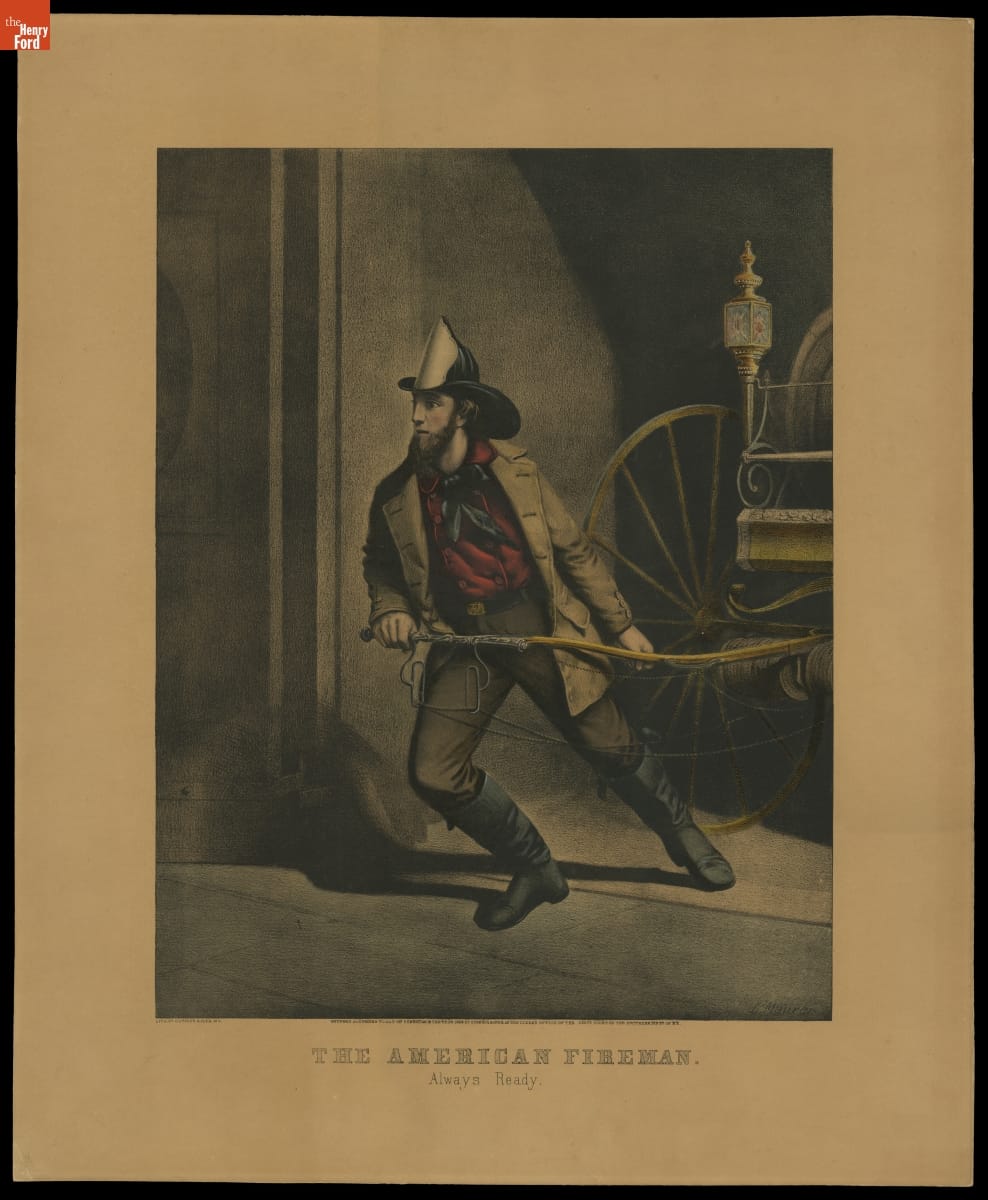
- Lithograph, "The American Fireman. Always Ready," 1858 - The firefighter became -- and remains -- a heroic symbol of bravery and devotion to duty. Artist Louis Maurer created a series of four prints that celebrated "The American Fireman" in 1858. Maurer's scenes were based on his personal observations of volunteer firefighters at work in New York City.
- 1858
- Collections - Artifact
Lithograph, "The American Fireman. Always Ready," 1858
The firefighter became -- and remains -- a heroic symbol of bravery and devotion to duty. Artist Louis Maurer created a series of four prints that celebrated "The American Fireman" in 1858. Maurer's scenes were based on his personal observations of volunteer firefighters at work in New York City.
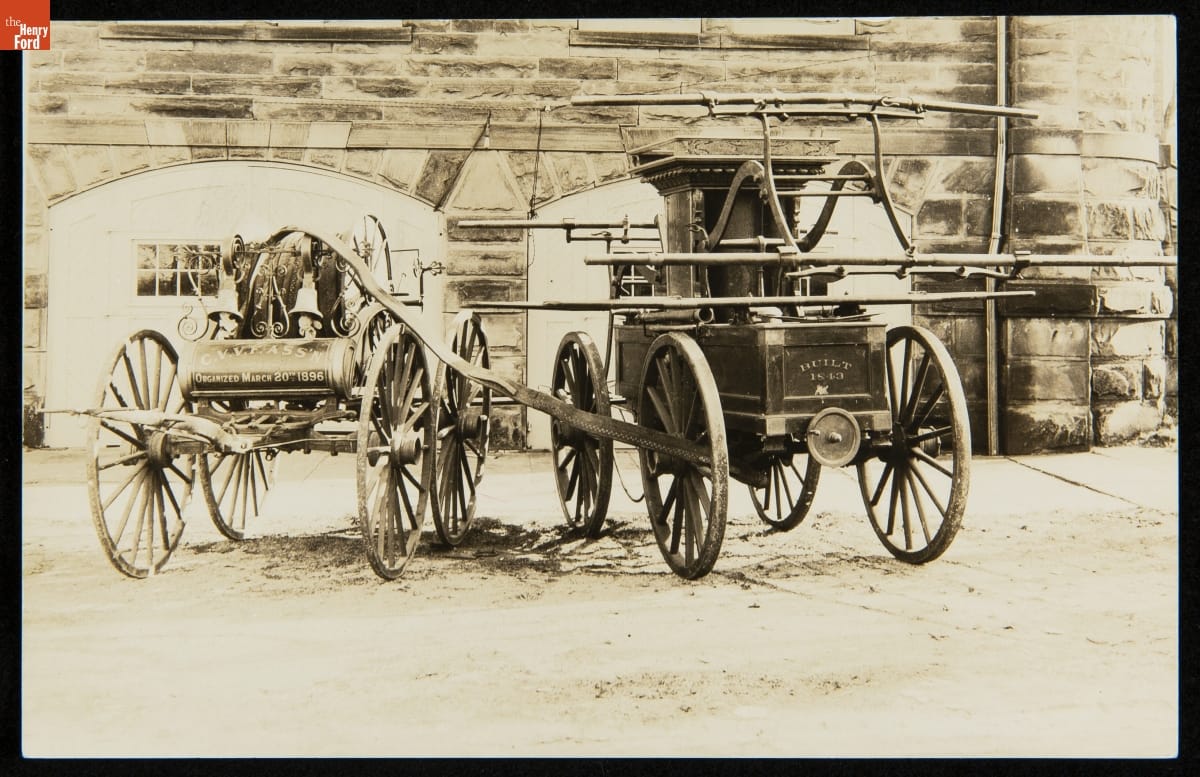
- 1843 Fire Engine and 1830-1880 Fire Hose Carriage, Photographed circa 1930 - American fire departments in the early 19th century operated on hand power. Firefighters activated pump engines by manually pushing on long bars -- called brakes -- to work the pump. In many cases, pump engines and hose carts were even pulled to the scene of a fire by hand. This photograph, taken about 1930, shows fire apparatus from a century earlier.
- circa 1930
- Collections - Artifact
1843 Fire Engine and 1830-1880 Fire Hose Carriage, Photographed circa 1930
American fire departments in the early 19th century operated on hand power. Firefighters activated pump engines by manually pushing on long bars -- called brakes -- to work the pump. In many cases, pump engines and hose carts were even pulled to the scene of a fire by hand. This photograph, taken about 1930, shows fire apparatus from a century earlier.
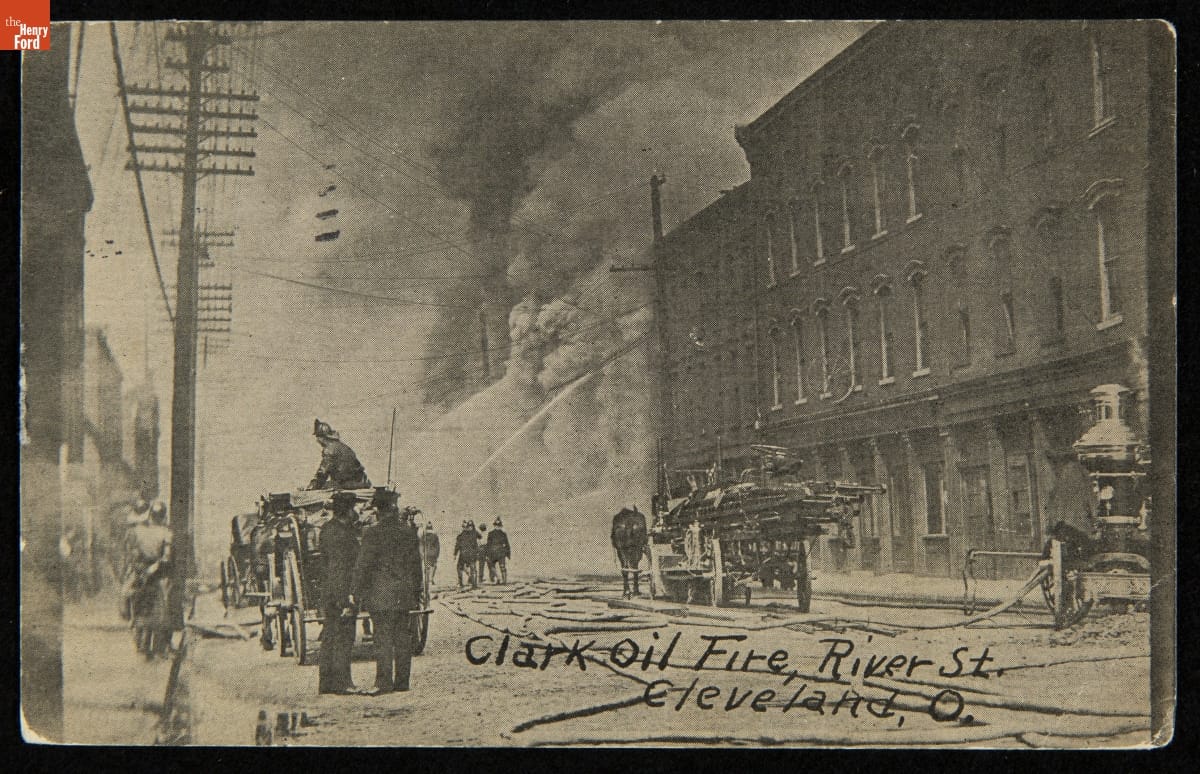
- "Clark Oil Fire, River St., Cleveland, O.," 1912 - This photograph shows the scene of a destructive fire at a Clark Oil facility in Cleveland, Ohio, in 1912. Fire was a constant threat to factories and industrial buildings. Firefighters focused their efforts on saving lives, controlling the fire, and preventing damage to nearby structures.
- January 09, 1912
- Collections - Artifact
"Clark Oil Fire, River St., Cleveland, O.," 1912
This photograph shows the scene of a destructive fire at a Clark Oil facility in Cleveland, Ohio, in 1912. Fire was a constant threat to factories and industrial buildings. Firefighters focused their efforts on saving lives, controlling the fire, and preventing damage to nearby structures.
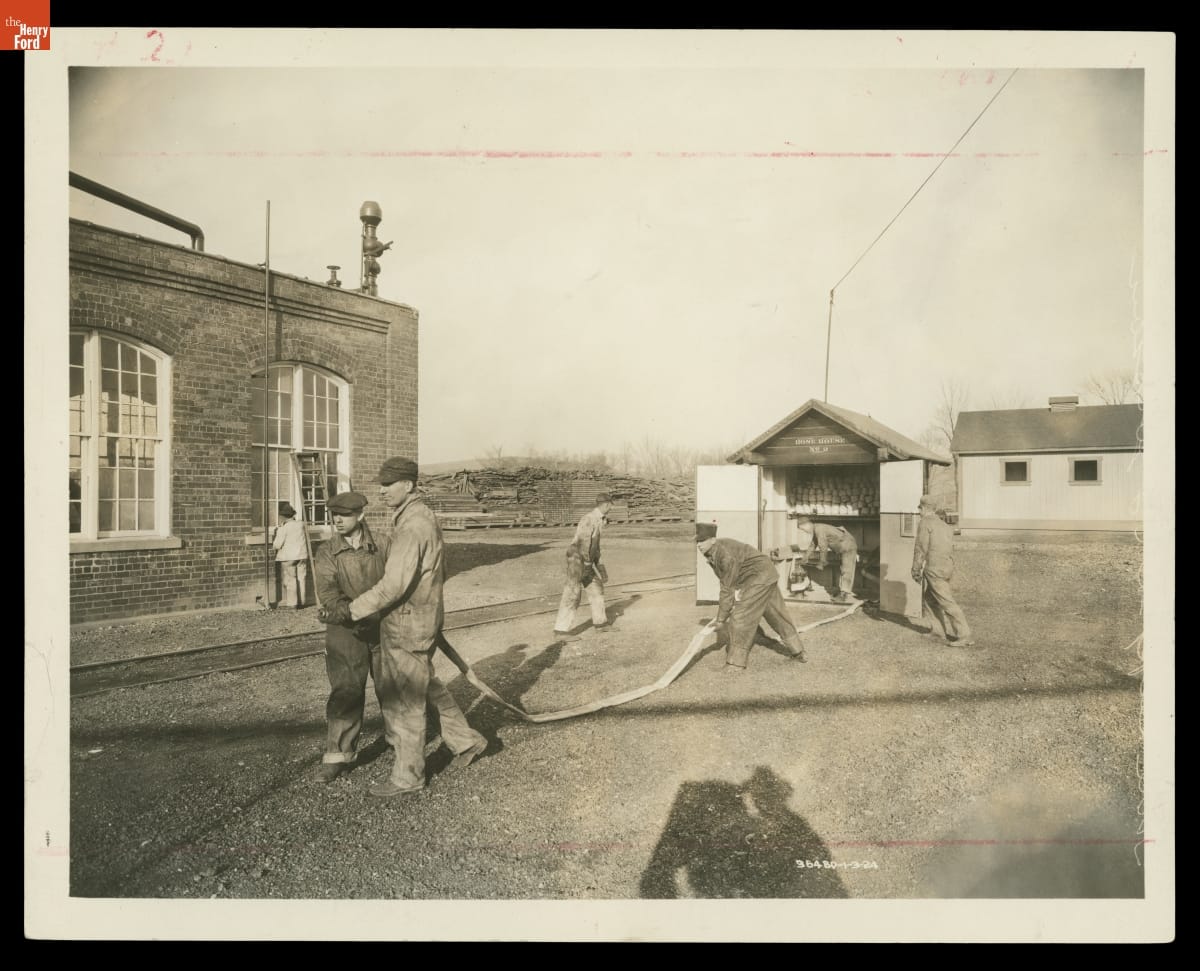
- D.T. & I. Railroad Fire Department of Jackson, Ohio, January 3, 1924 - Fire was a constant threat on American railroads -- particularly in the days of steam locomotives that heated water with wood or coal-fueled fires. Most railroads maintained their own fire departments to protect against blazes at roundhouses and maintenance facilities. This photo shows employees of the Detroit, Toledo & Ironton Railroad fire department.
- January 03, 1924
- Collections - Artifact
D.T. & I. Railroad Fire Department of Jackson, Ohio, January 3, 1924
Fire was a constant threat on American railroads -- particularly in the days of steam locomotives that heated water with wood or coal-fueled fires. Most railroads maintained their own fire departments to protect against blazes at roundhouses and maintenance facilities. This photo shows employees of the Detroit, Toledo & Ironton Railroad fire department.