
Search
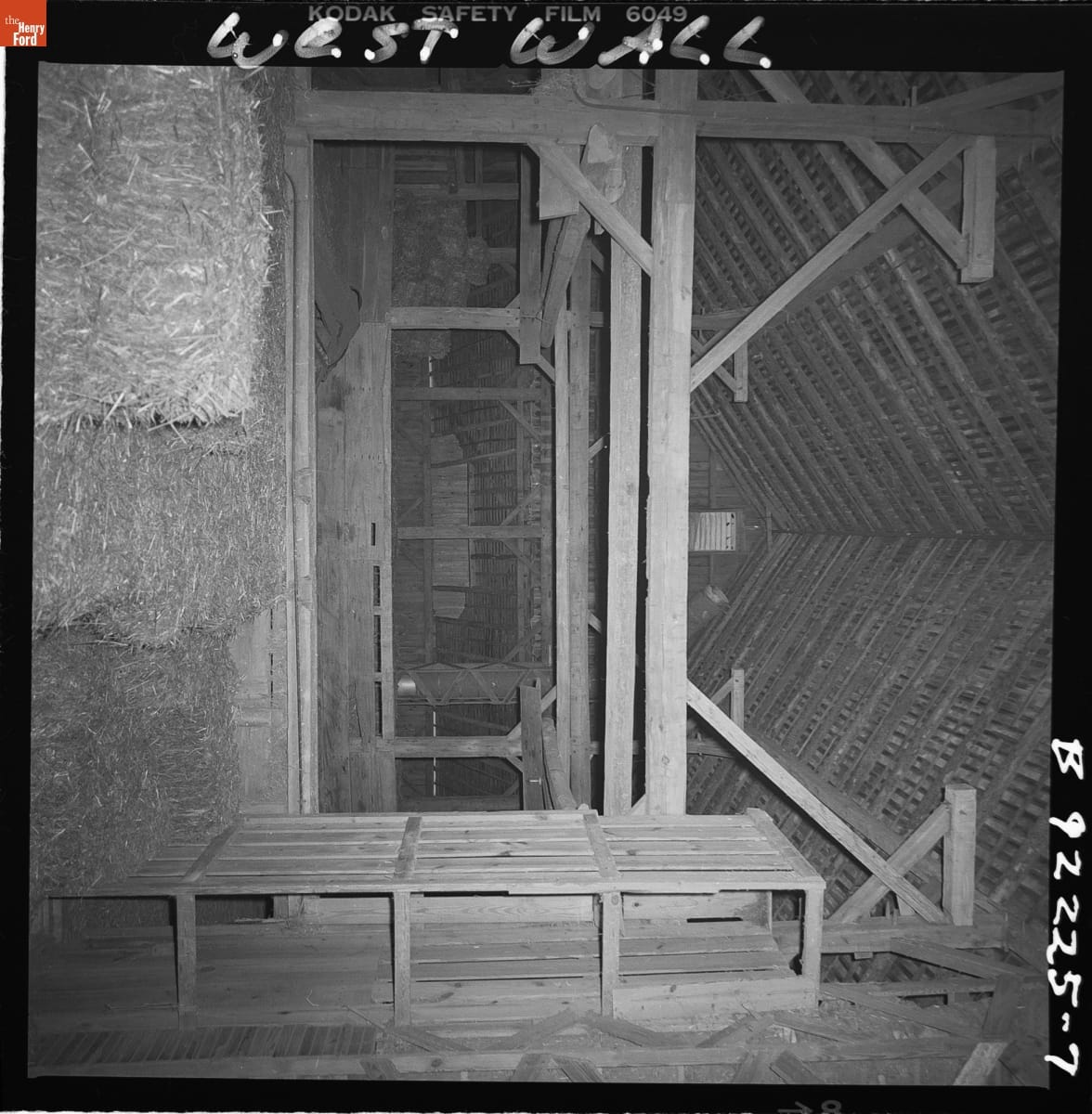
- Interior of Firestone Barn at its Original Site, Columbiana County, Ohio, February 7, 1983 - In 1983, Greenfield Village acquired the Firestone family's 19th-century farmhouse and barn in eastern Ohio. After careful documentation and disassembly, workers shipped the structures' original components to Dearborn, Michigan. There, craftsmen recreated architectural elements of the barn that had been replaced or drastically altered over the years, made repairs, and reconstructed the building in time for its dedication on June 29, 1985.
- February 07, 1983
- Collections - Artifact
Interior of Firestone Barn at its Original Site, Columbiana County, Ohio, February 7, 1983
In 1983, Greenfield Village acquired the Firestone family's 19th-century farmhouse and barn in eastern Ohio. After careful documentation and disassembly, workers shipped the structures' original components to Dearborn, Michigan. There, craftsmen recreated architectural elements of the barn that had been replaced or drastically altered over the years, made repairs, and reconstructed the building in time for its dedication on June 29, 1985.
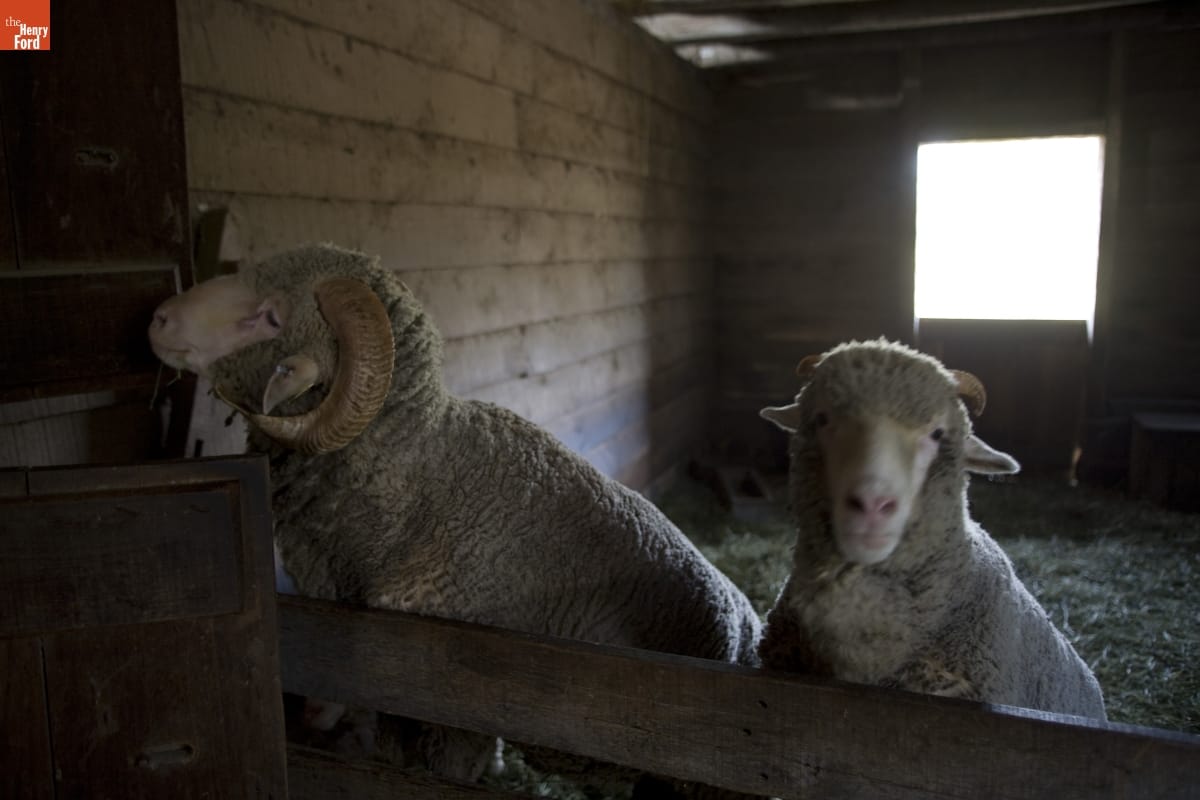
- Firestone Farm in Greenfield Village, September 2007 - Firestone Farm in Greenfield Village is a "living history" re-creation of what life was like on the Ohio farm of Benjamin and Catherine Firestone in 1885. The Firestone's raised Merino sheep, a popular breed selectively bred during the 1800s to produce wrinkly skin. The Merinos' wrinkly skin yielded more wool--and profit. This image from 2007 shows some of our Merino sheep.
- September 01, 2007
- Collections - Artifact
Firestone Farm in Greenfield Village, September 2007
Firestone Farm in Greenfield Village is a "living history" re-creation of what life was like on the Ohio farm of Benjamin and Catherine Firestone in 1885. The Firestone's raised Merino sheep, a popular breed selectively bred during the 1800s to produce wrinkly skin. The Merinos' wrinkly skin yielded more wool--and profit. This image from 2007 shows some of our Merino sheep.
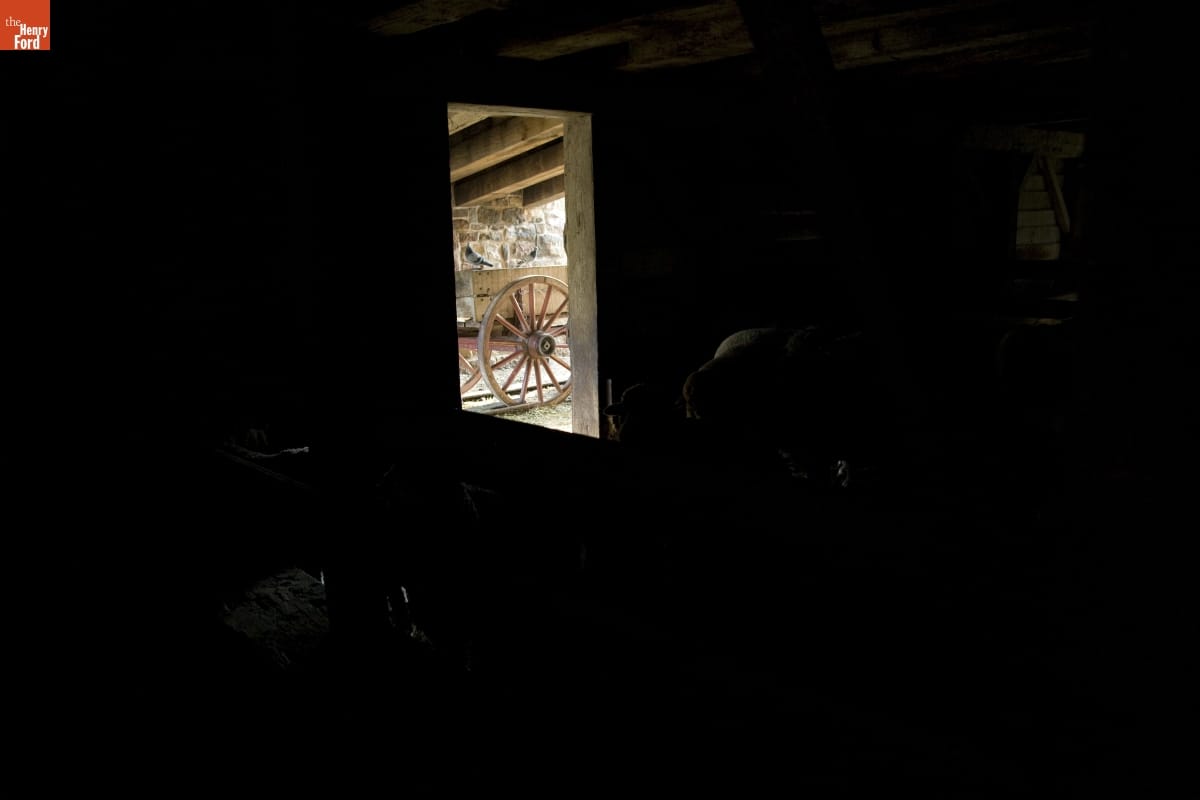
- Firestone Farm in Greenfield Village, September 2007 - Firestone Farm in Greenfield Village is a "living history" re-creation of what life was like on the Ohio farm of Benjamin and Catherine Firestone in 1885. The Firestone's raised Merino sheep, a popular breed selectively bred during the 1800s to produce wrinkly skin. The Merinos' wrinkly skin yielded more wool--and profit. This image from 2007 shows some of our Merino sheep.
- September 01, 2007
- Collections - Artifact
Firestone Farm in Greenfield Village, September 2007
Firestone Farm in Greenfield Village is a "living history" re-creation of what life was like on the Ohio farm of Benjamin and Catherine Firestone in 1885. The Firestone's raised Merino sheep, a popular breed selectively bred during the 1800s to produce wrinkly skin. The Merinos' wrinkly skin yielded more wool--and profit. This image from 2007 shows some of our Merino sheep.
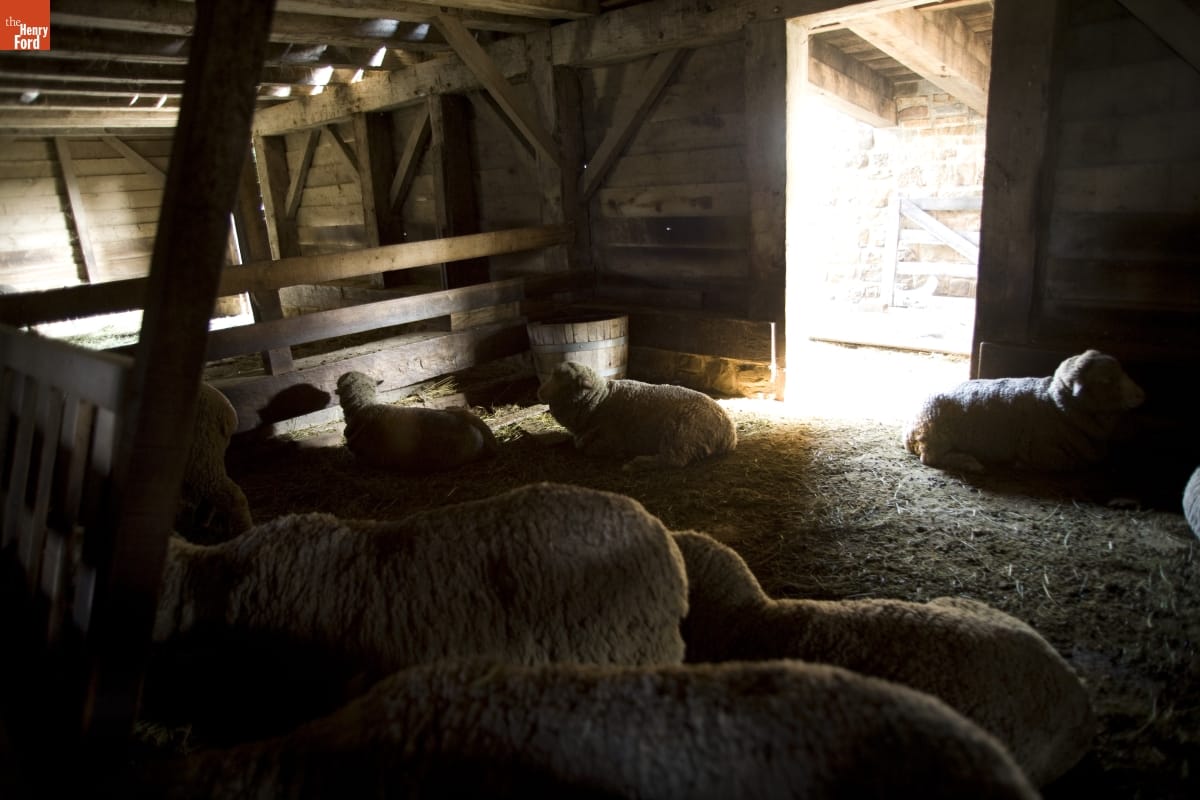
- Firestone Farm in Greenfield Village, September 2007 - Firestone Farm in Greenfield Village is a "living history" re-creation of what life was like on the Ohio farm of Benjamin and Catherine Firestone in 1885. The Firestone's raised Merino sheep, a popular breed selectively bred during the 1800s to produce wrinkly skin. The Merinos' wrinkly skin yielded more wool--and profit. This image from 2007 shows some of our Merino sheep.
- September 01, 2007
- Collections - Artifact
Firestone Farm in Greenfield Village, September 2007
Firestone Farm in Greenfield Village is a "living history" re-creation of what life was like on the Ohio farm of Benjamin and Catherine Firestone in 1885. The Firestone's raised Merino sheep, a popular breed selectively bred during the 1800s to produce wrinkly skin. The Merinos' wrinkly skin yielded more wool--and profit. This image from 2007 shows some of our Merino sheep.
- Firestone Farm in Greenfield Village, September 2007 - Firestone Farm in Greenfield Village is a "living history" re-creation of what life was like on the Ohio farm of Benjamin and Catherine Firestone in 1885. The Firestone's raised Merino sheep, a popular breed selectively bred during the 1800s to produce wrinkly skin. The Merinos' wrinkly skin yielded more wool--and profit. This image from 2007 shows some of our Merino sheep.
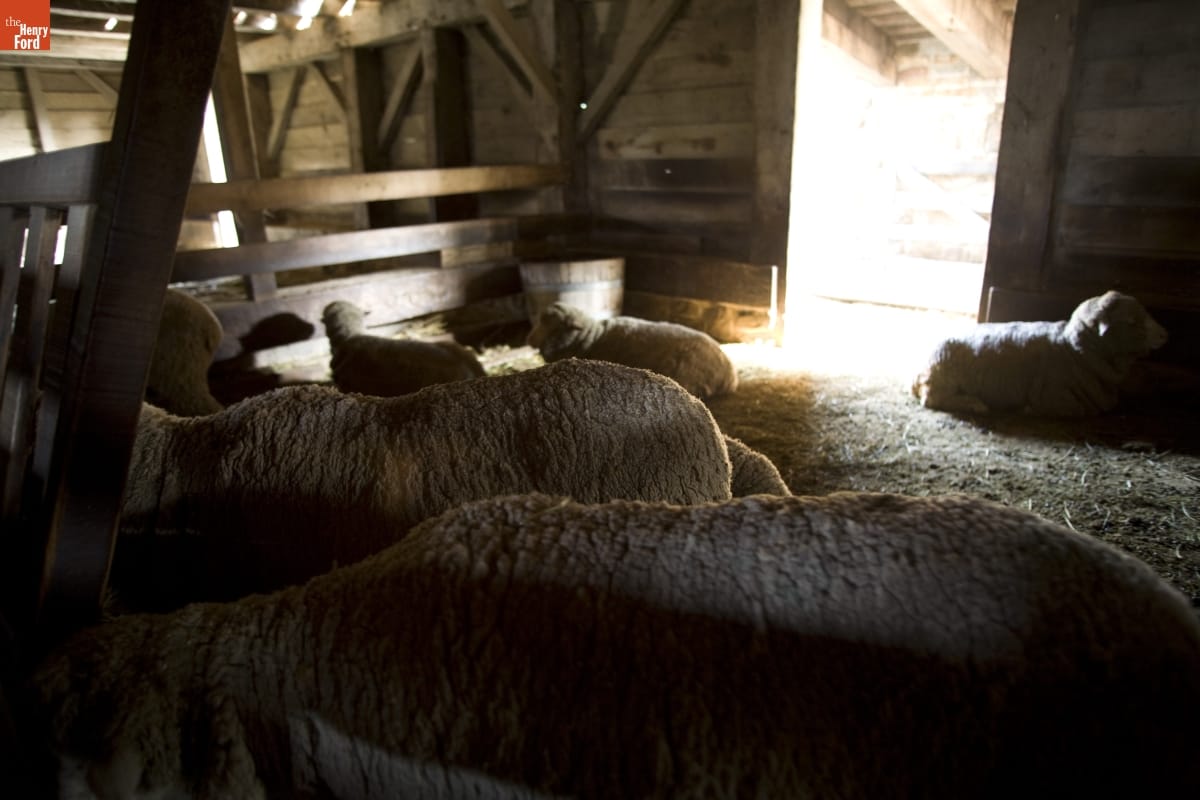
- September 01, 2007
- Collections - Artifact
Firestone Farm in Greenfield Village, September 2007
Firestone Farm in Greenfield Village is a "living history" re-creation of what life was like on the Ohio farm of Benjamin and Catherine Firestone in 1885. The Firestone's raised Merino sheep, a popular breed selectively bred during the 1800s to produce wrinkly skin. The Merinos' wrinkly skin yielded more wool--and profit. This image from 2007 shows some of our Merino sheep.
- Firestone Farm in Greenfield Village, September 2007 - Firestone Farm in Greenfield Village is a "living history" re-creation of what life was like on the Ohio farm of Benjamin and Catherine Firestone in 1885. The Firestone's raised Merino sheep, a popular breed selectively bred during the 1800s to produce wrinkly skin. The Merinos' wrinkly skin yielded more wool--and profit. This image from 2007 shows some of our Merino sheep.
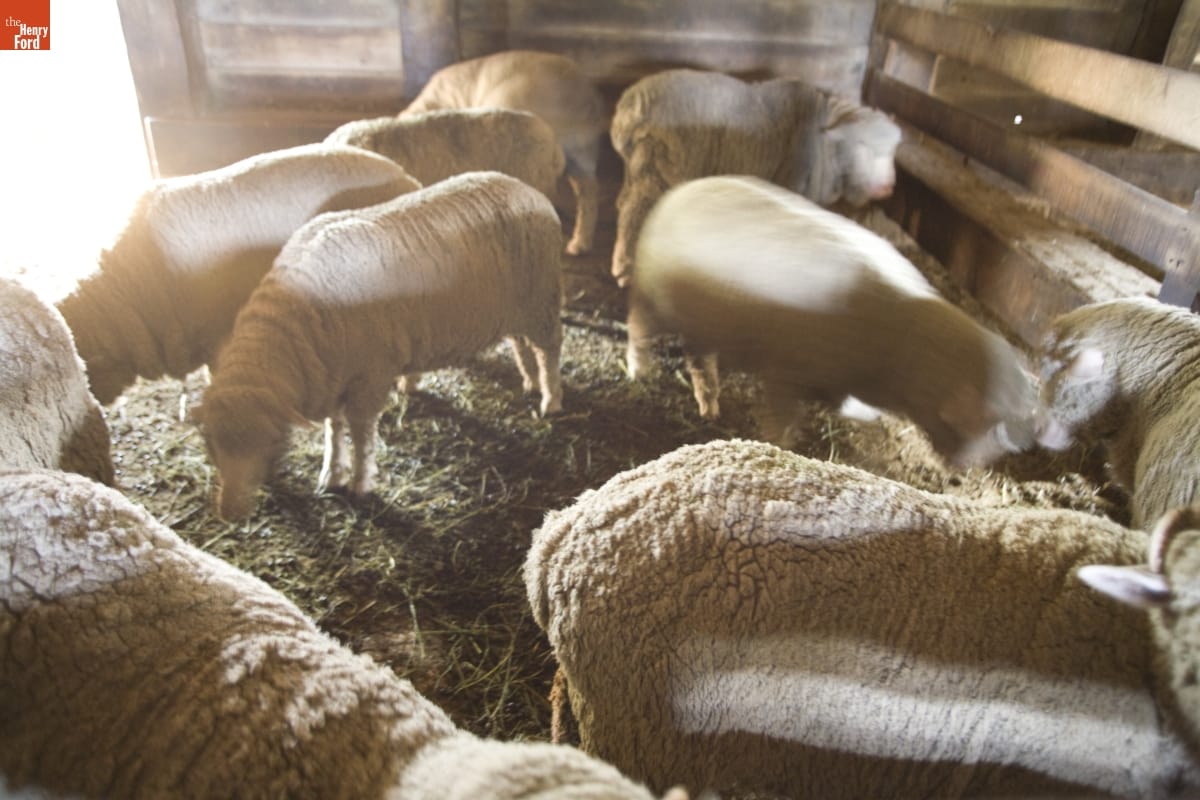
- September 01, 2007
- Collections - Artifact
Firestone Farm in Greenfield Village, September 2007
Firestone Farm in Greenfield Village is a "living history" re-creation of what life was like on the Ohio farm of Benjamin and Catherine Firestone in 1885. The Firestone's raised Merino sheep, a popular breed selectively bred during the 1800s to produce wrinkly skin. The Merinos' wrinkly skin yielded more wool--and profit. This image from 2007 shows some of our Merino sheep.
- Firestone Farm in Greenfield Village, September 2007 - Firestone Farm in Greenfield Village is a "living history" re-creation of what life was like on the Ohio farm of Benjamin and Catherine Firestone in 1885. The Firestone's raised Merino sheep, a popular breed selectively bred during the 1800s to produce wrinkly skin. The Merinos' wrinkly skin yielded more wool--and profit. This image from 2007 shows some of our Merino sheep.
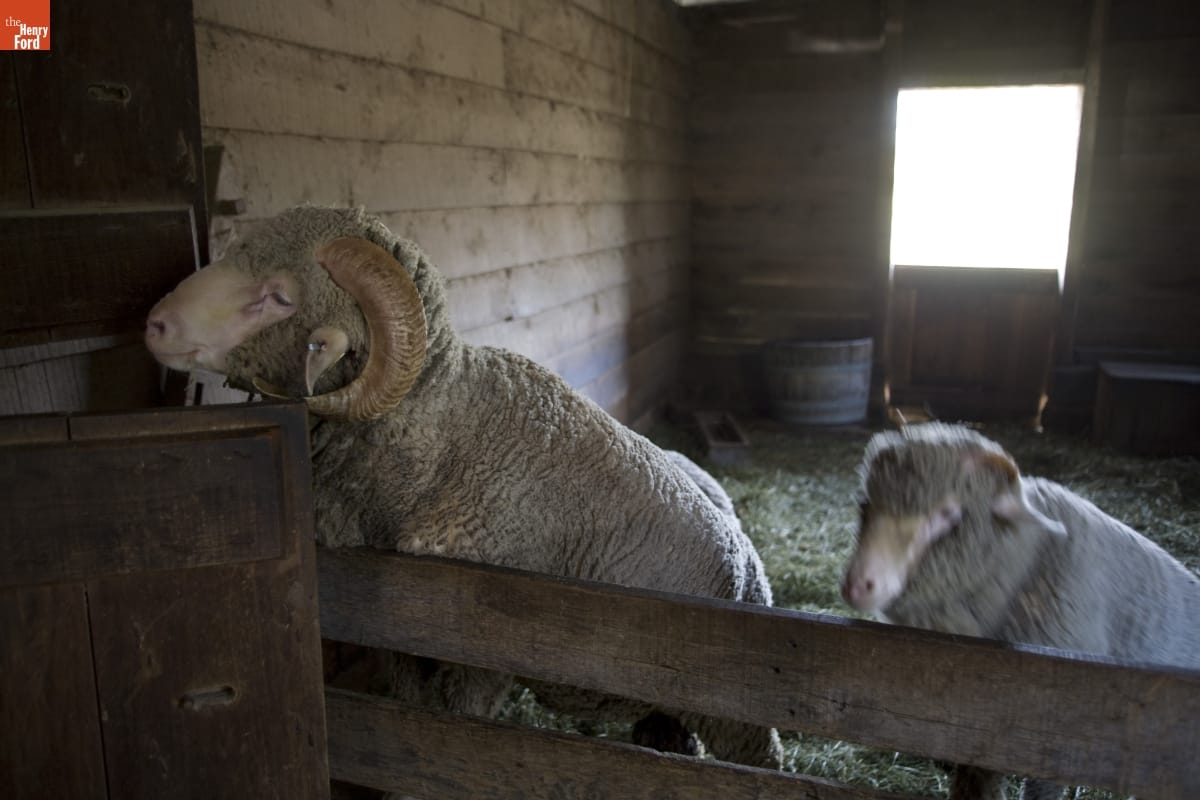
- September 01, 2007
- Collections - Artifact
Firestone Farm in Greenfield Village, September 2007
Firestone Farm in Greenfield Village is a "living history" re-creation of what life was like on the Ohio farm of Benjamin and Catherine Firestone in 1885. The Firestone's raised Merino sheep, a popular breed selectively bred during the 1800s to produce wrinkly skin. The Merinos' wrinkly skin yielded more wool--and profit. This image from 2007 shows some of our Merino sheep.
- Firestone Farm in Greenfield Village, September 2007 - Firestone Farm in Greenfield Village is a "living history" re-creation of what life was like on the Ohio farm of Benjamin and Catherine Firestone in 1885. The Firestone's raised Merino sheep, a popular breed selectively bred during the 1800s to produce wrinkly skin. The Merinos' wrinkly skin yielded more wool--and profit. This image from 2007 shows some of our Merino sheep.
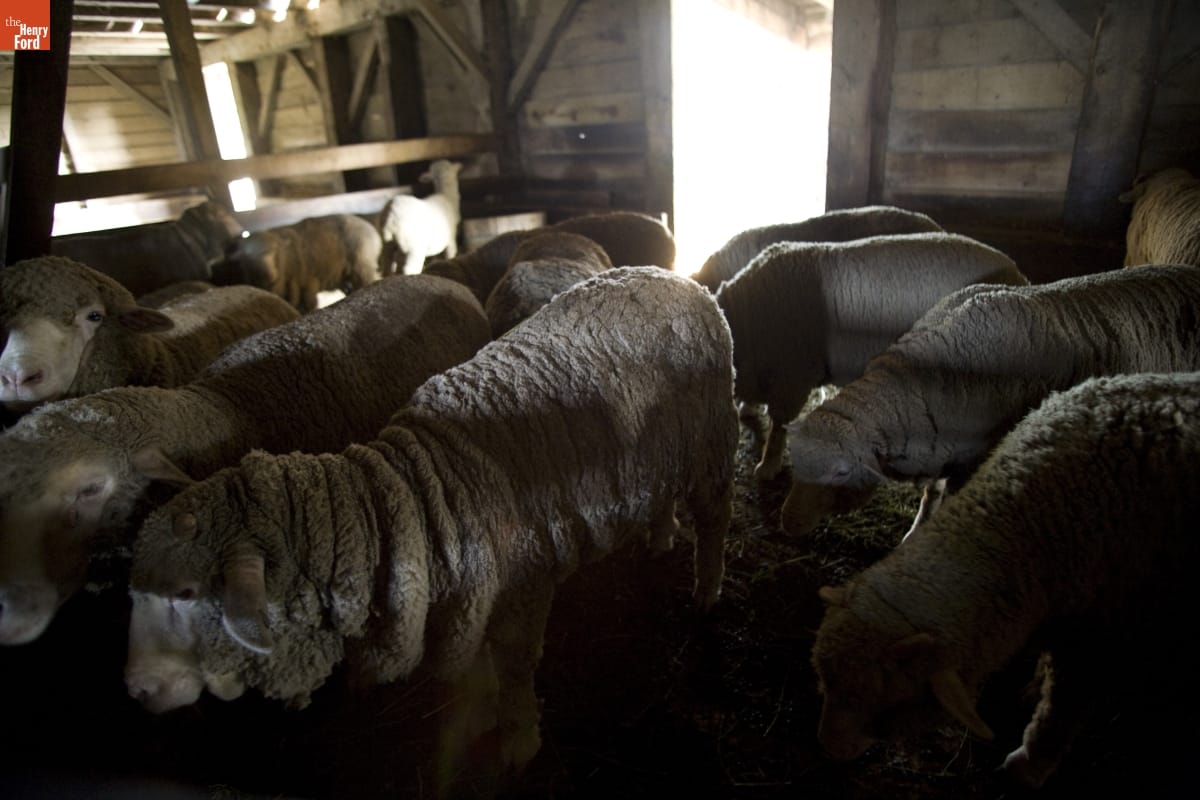
- September 01, 2007
- Collections - Artifact
Firestone Farm in Greenfield Village, September 2007
Firestone Farm in Greenfield Village is a "living history" re-creation of what life was like on the Ohio farm of Benjamin and Catherine Firestone in 1885. The Firestone's raised Merino sheep, a popular breed selectively bred during the 1800s to produce wrinkly skin. The Merinos' wrinkly skin yielded more wool--and profit. This image from 2007 shows some of our Merino sheep.
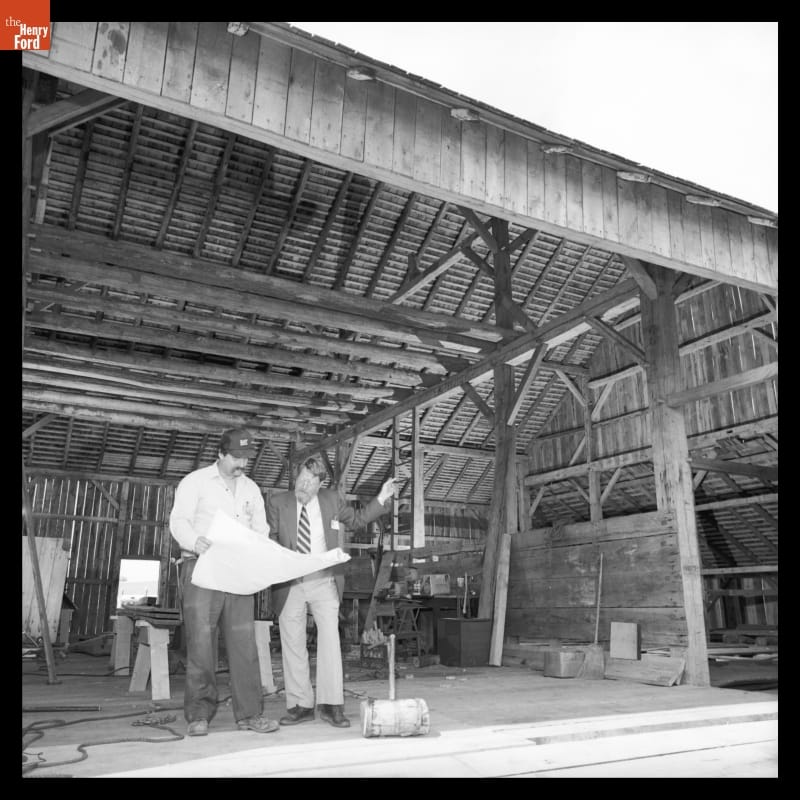
- Carpenter Dave Shockley and Project Director Peter Cousins Study Plans in the Partially Reconstructed Firestone Barn, May 1985 - In 1983, Greenfield Village acquired the Firestone family's 19th-century farmhouse and barn in eastern Ohio. After careful documentation and disassembly, workers shipped the structures' original components to Dearborn, Michigan. There, craftsmen recreated architectural elements of the barn that had been replaced or drastically altered over the years, made repairs, and reconstructed the building in time for its dedication on June 29, 1985.
- May 22, 1985
- Collections - Artifact
Carpenter Dave Shockley and Project Director Peter Cousins Study Plans in the Partially Reconstructed Firestone Barn, May 1985
In 1983, Greenfield Village acquired the Firestone family's 19th-century farmhouse and barn in eastern Ohio. After careful documentation and disassembly, workers shipped the structures' original components to Dearborn, Michigan. There, craftsmen recreated architectural elements of the barn that had been replaced or drastically altered over the years, made repairs, and reconstructed the building in time for its dedication on June 29, 1985.
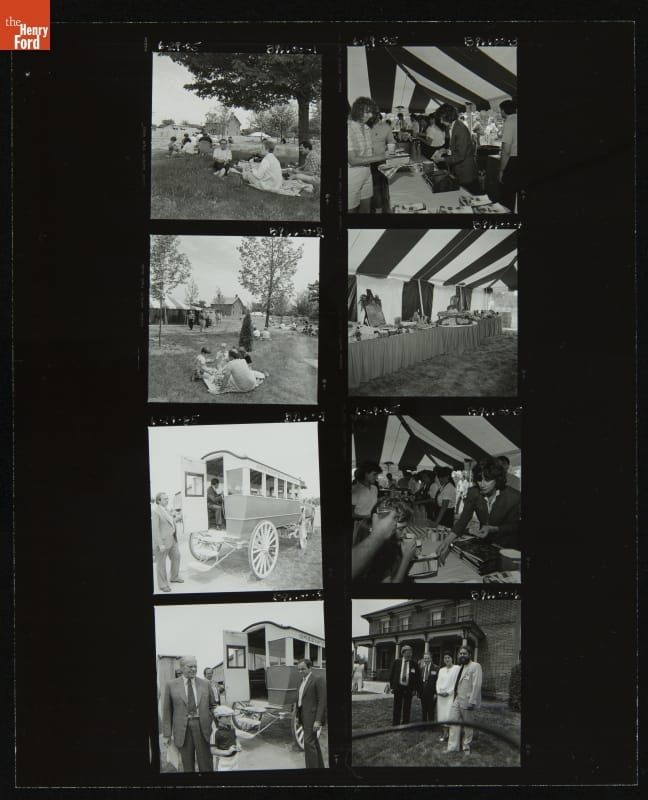
- Firestone Farm Dedication Ceremony, Greenfield Village, June 29, 1985 - In 1983, the Firestone family donated their circa 1828 Columbiana County, Ohio, farmstead to Greenfield Village. The farm had been the boyhood home of Harvey Firestone, who later became a tire and rubber magnate and friend of Henry Ford. On June 29, 1985, descendants of Henry Ford and Harvey Firestone along with former U.S. President Gerald Ford helped dedicate the newly installed farm.
- June 29, 1985
- Collections - Artifact
Firestone Farm Dedication Ceremony, Greenfield Village, June 29, 1985
In 1983, the Firestone family donated their circa 1828 Columbiana County, Ohio, farmstead to Greenfield Village. The farm had been the boyhood home of Harvey Firestone, who later became a tire and rubber magnate and friend of Henry Ford. On June 29, 1985, descendants of Henry Ford and Harvey Firestone along with former U.S. President Gerald Ford helped dedicate the newly installed farm.