
Search
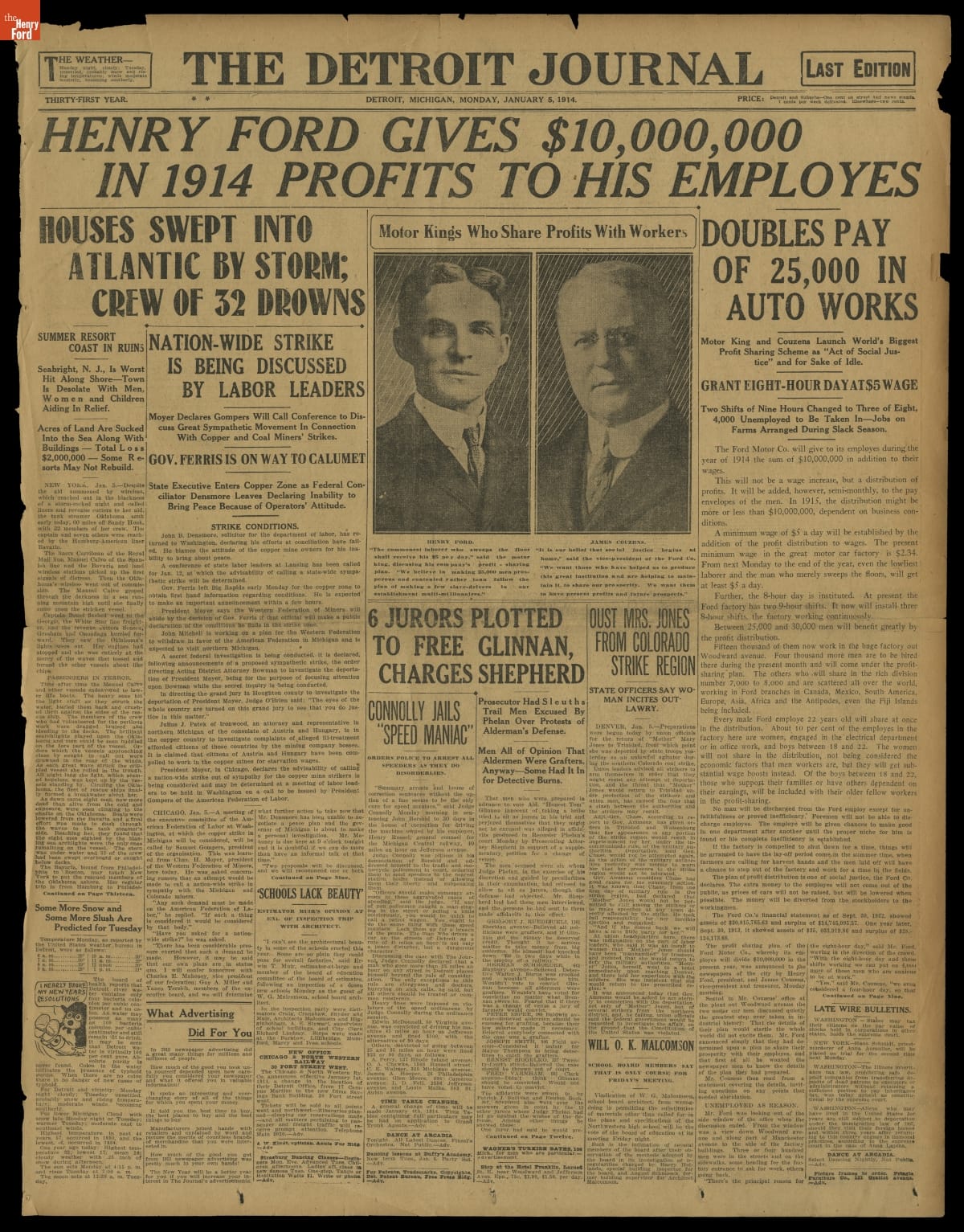
- Newspaper Article, "Henry Ford Gives $10,000,000 in 1914 Profits to His Employes" - When Henry Ford introduced the moving assembly line in 1913 he loved it but his employees didn't. The work was boring and relentless, and worker turnover was high. To get workers to stay, Henry more than doubled their pay, from $2.34 per day to $5 per day. It was headline news in Detroit and around the country.

- January 05, 1914
- Collections - Artifact
Newspaper Article, "Henry Ford Gives $10,000,000 in 1914 Profits to His Employes"
When Henry Ford introduced the moving assembly line in 1913 he loved it but his employees didn't. The work was boring and relentless, and worker turnover was high. To get workers to stay, Henry more than doubled their pay, from $2.34 per day to $5 per day. It was headline news in Detroit and around the country.
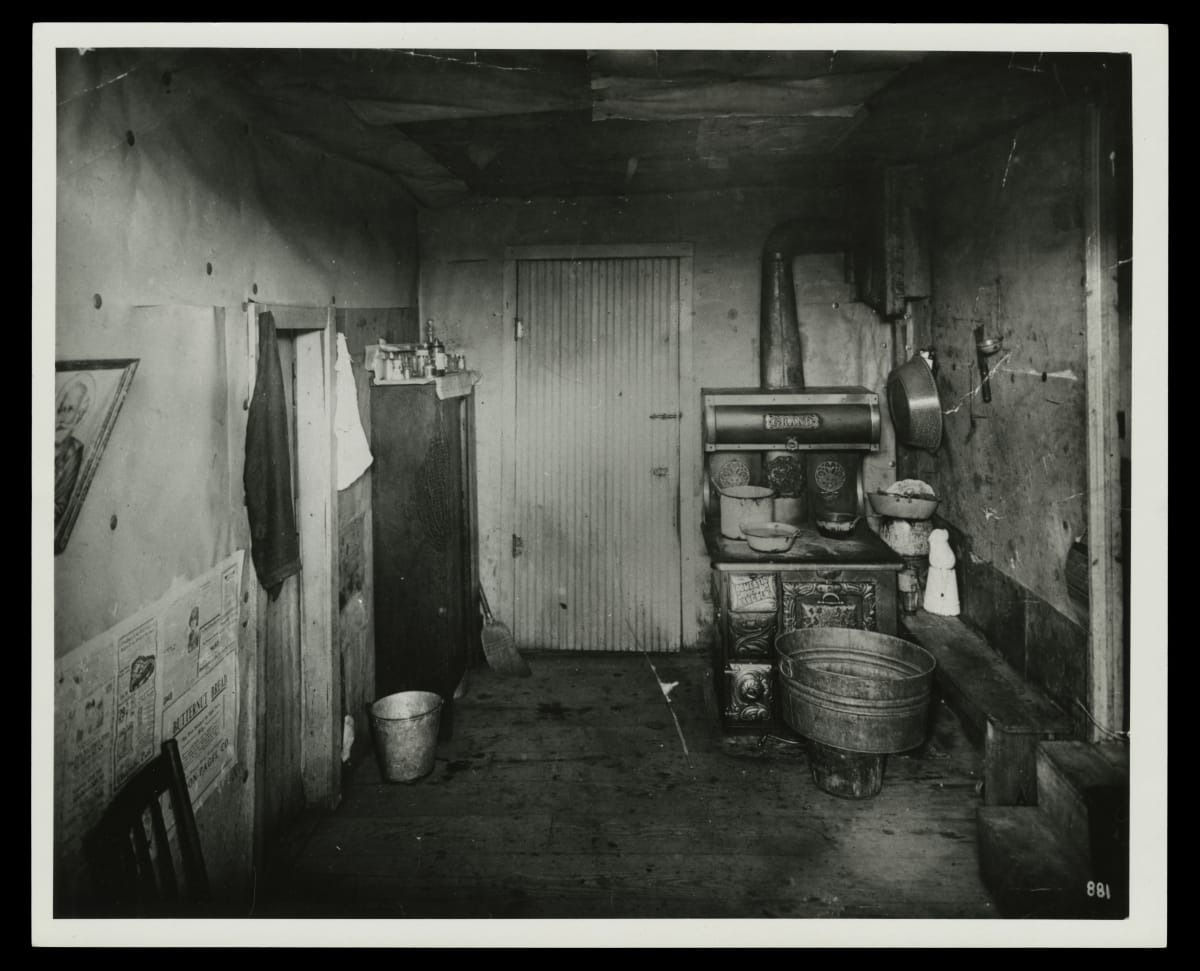
- Unimproved Kitchen of Employee's Home, Ford Sociological Department, circa 1914 - Ford Motor Company established its Sociological Department in 1914. The department established rules and conditions that Ford employees had to meet to qualify for the company's Five Dollar Day pay rate. Department officials monitored employees both at work and at home. This photograph documented what the department considered to be undesirable living conditions at an employee's house.
- 1913-1914
- Collections - Artifact
Unimproved Kitchen of Employee's Home, Ford Sociological Department, circa 1914
Ford Motor Company established its Sociological Department in 1914. The department established rules and conditions that Ford employees had to meet to qualify for the company's Five Dollar Day pay rate. Department officials monitored employees both at work and at home. This photograph documented what the department considered to be undesirable living conditions at an employee's house.
- Newspaper Article, "Henry Ford Gives $10,000,000 in 1914 Profits to His Employes" - When Henry Ford introduced the moving assembly line in 1913 he loved it but his employees didn't. The work was boring and relentless, and worker turnover was high. To get workers to stay, Henry more than doubled their pay, from $2.34 per day to $5 per day. It was headline news in Detroit and around the country.
- January 05, 1914
- Collections - Artifact
Newspaper Article, "Henry Ford Gives $10,000,000 in 1914 Profits to His Employes"
When Henry Ford introduced the moving assembly line in 1913 he loved it but his employees didn't. The work was boring and relentless, and worker turnover was high. To get workers to stay, Henry more than doubled their pay, from $2.34 per day to $5 per day. It was headline news in Detroit and around the country.
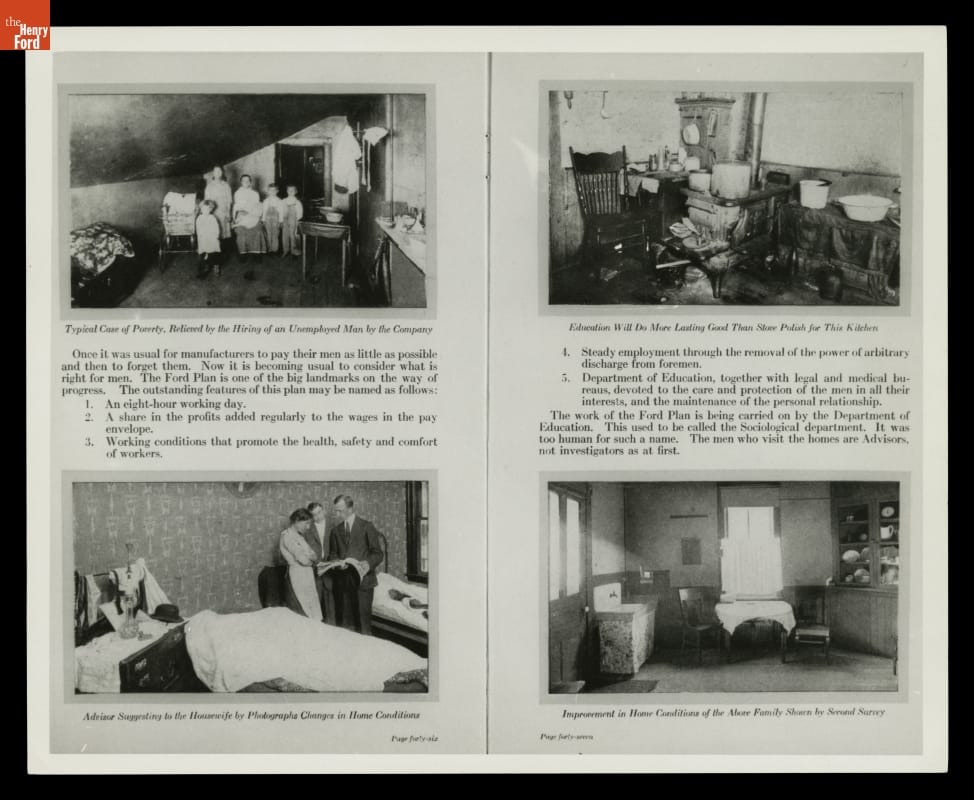
- Checking on Ford Employees Home Conditions, Views from "Factory Facts From Ford," 1917 - Beyond revolutionizing America's industrial production, Henry Ford and other managers at Ford Motor Company instituted a wide-reaching corporate welfare program that opened up the most intimate and personal details of employee's personal, family, and financial life to investigators from the Sociological Department. After the announcement of the $5 per day profit sharing plan in January 1914, Henry Ford wanted to ensure that employees, many of whom were non-English speaking immigrants, did not squander the funds. To this end, the Ford Sociological Department was created to investigate and monitor the personal and work lives of employees to the extent that investigators (later called Advisors) conducted home visits, checked bank deposits, and monitored children's school attendance as well as divorce filings. In addition, the Sociological Department advisors provided hygiene instruction, financial and legal advice, and worked with the English School to teach Ford's immigrant workers English.
- 1917
- Collections - Artifact
Checking on Ford Employees Home Conditions, Views from "Factory Facts From Ford," 1917
Beyond revolutionizing America's industrial production, Henry Ford and other managers at Ford Motor Company instituted a wide-reaching corporate welfare program that opened up the most intimate and personal details of employee's personal, family, and financial life to investigators from the Sociological Department. After the announcement of the $5 per day profit sharing plan in January 1914, Henry Ford wanted to ensure that employees, many of whom were non-English speaking immigrants, did not squander the funds. To this end, the Ford Sociological Department was created to investigate and monitor the personal and work lives of employees to the extent that investigators (later called Advisors) conducted home visits, checked bank deposits, and monitored children's school attendance as well as divorce filings. In addition, the Sociological Department advisors provided hygiene instruction, financial and legal advice, and worked with the English School to teach Ford's immigrant workers English.
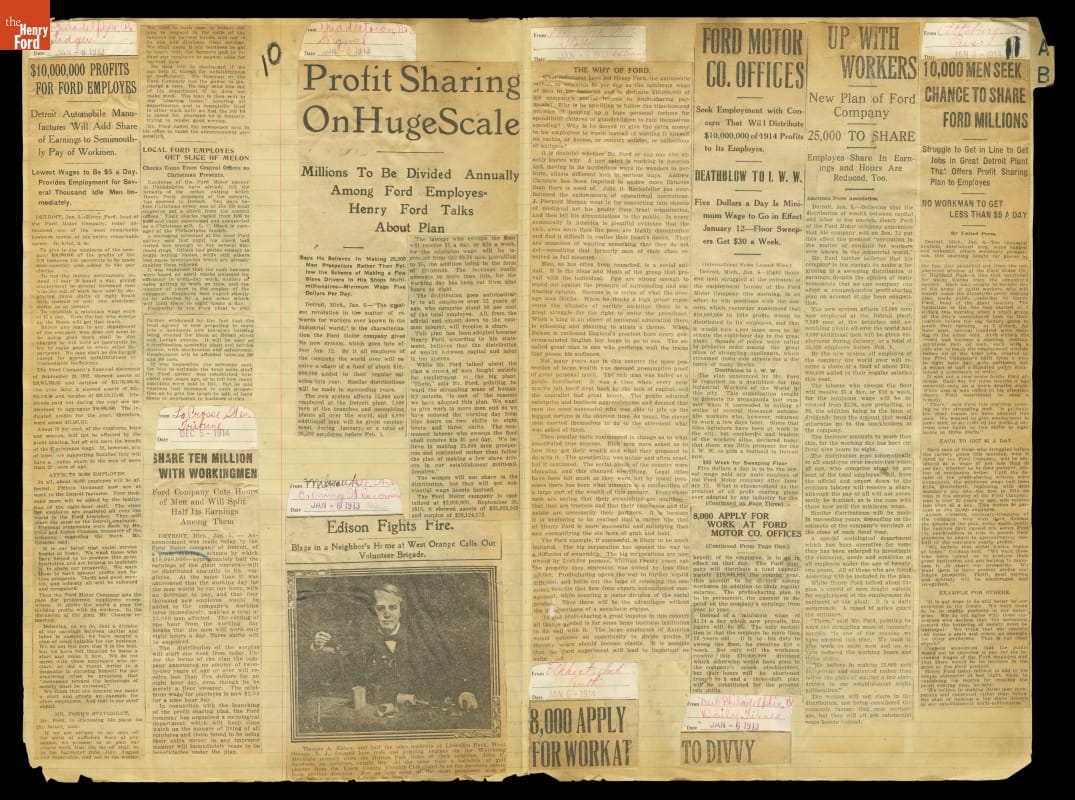
- Ford Motor Company Clipping Book, Volume 2, January 6-10, 1914 - Henry Ford's office kept a file of newspaper articles from across the country that covered Ford Motor Company and other topics of interest to Henry. These pages are from the days following Ford's announcement of the $5 per day profit sharing plan in January 1914. While Ford's primary objective was to reduce employee turnover, the $5 day was also excellent publicity.
- 03 January 1914-06 January 1914
- Collections - Artifact
Ford Motor Company Clipping Book, Volume 2, January 6-10, 1914
Henry Ford's office kept a file of newspaper articles from across the country that covered Ford Motor Company and other topics of interest to Henry. These pages are from the days following Ford's announcement of the $5 per day profit sharing plan in January 1914. While Ford's primary objective was to reduce employee turnover, the $5 day was also excellent publicity.
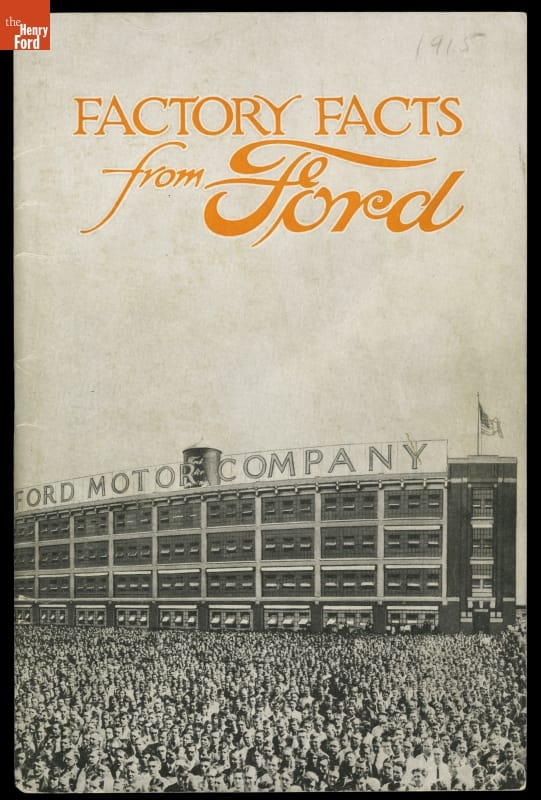
- "Factory Facts from Ford," 1915 - This pamphlet covers topics about Ford Motor Company and highlights the Ford Sociological Department. The department was created to ensure that employees, many of whom were non-English-speaking immigrants, did not squander their $5 per day wages. Investigators monitored the personal and work lives of employees. In addition, the department provided hygiene instruction, financial and legal advice, and an English-language school.
- 1915
- Collections - Artifact
"Factory Facts from Ford," 1915
This pamphlet covers topics about Ford Motor Company and highlights the Ford Sociological Department. The department was created to ensure that employees, many of whom were non-English-speaking immigrants, did not squander their $5 per day wages. Investigators monitored the personal and work lives of employees. In addition, the department provided hygiene instruction, financial and legal advice, and an English-language school.
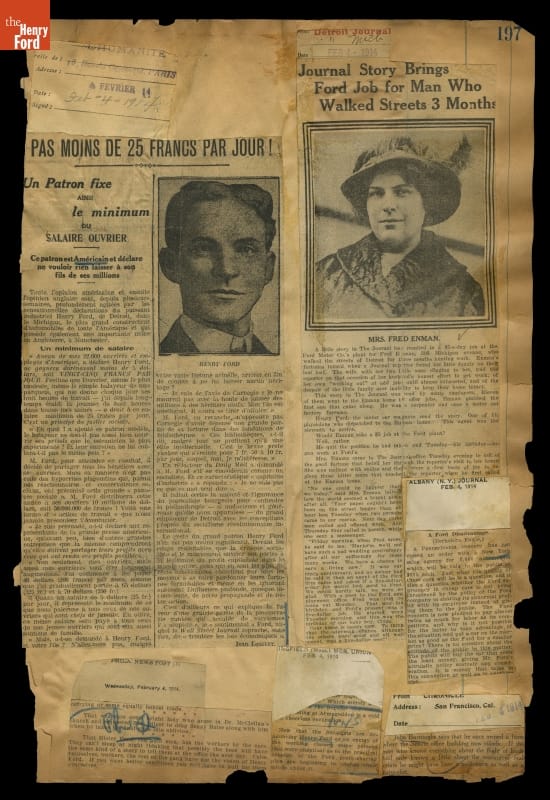
- Ford Motor Company Clipping Book, Volume 4, January 12-February 14, 1914 - Henry Ford's office kept a file of newspaper articles that covered Ford Motor Company and other topics of interest to Mr. Ford. These clippings are from the days following Ford's announcement of the Five Dollar Day profit-sharing plan in January 1914. While Ford's primary goal was to reduce employee turnover, the raise generated great publicity around the world.
- 12 January 1914-14 February 1914
- Collections - Artifact
Ford Motor Company Clipping Book, Volume 4, January 12-February 14, 1914
Henry Ford's office kept a file of newspaper articles that covered Ford Motor Company and other topics of interest to Mr. Ford. These clippings are from the days following Ford's announcement of the Five Dollar Day profit-sharing plan in January 1914. While Ford's primary goal was to reduce employee turnover, the raise generated great publicity around the world.
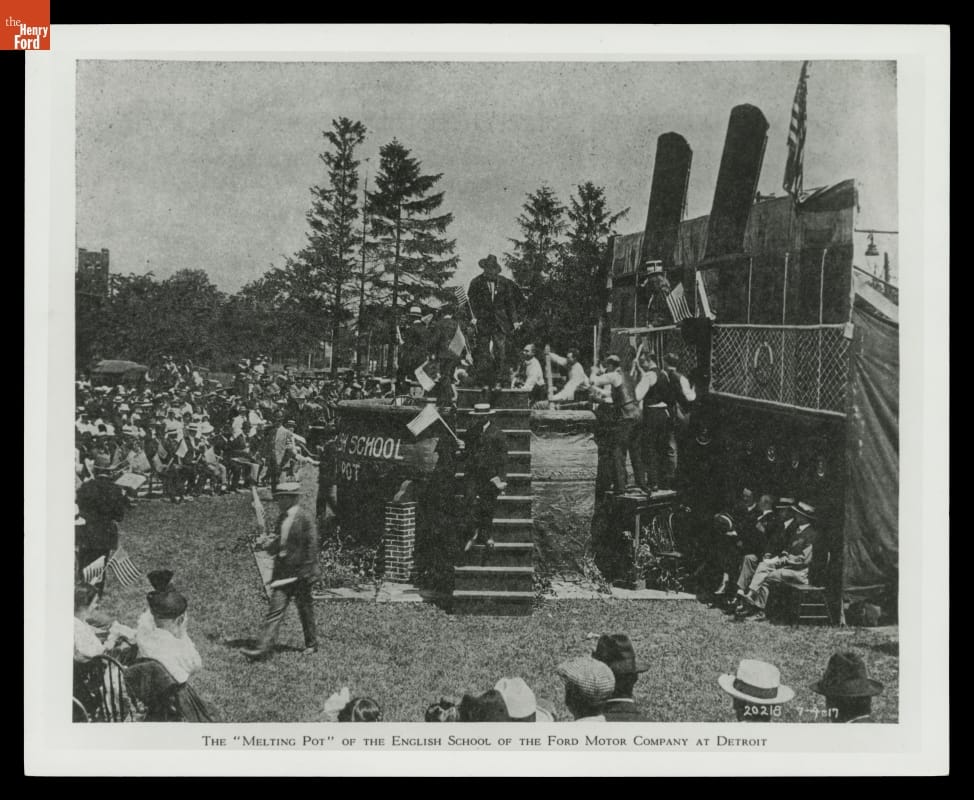
- Melting Pot Ceremony at Ford English School, July 4, 1917 - In 1914 Ford Motor Company established the Ford English School, where the automaker's diverse immigrant employees could learn the English language and take civics lessons in preparation for becoming U.S. citizens. At the graduation ceremony, students wearing clothing from their native countries descended into a large "American Melting Pot" and emerged wearing homogenous suits and waving American flags.
- July 04, 1917
- Collections - Artifact
Melting Pot Ceremony at Ford English School, July 4, 1917
In 1914 Ford Motor Company established the Ford English School, where the automaker's diverse immigrant employees could learn the English language and take civics lessons in preparation for becoming U.S. citizens. At the graduation ceremony, students wearing clothing from their native countries descended into a large "American Melting Pot" and emerged wearing homogenous suits and waving American flags.
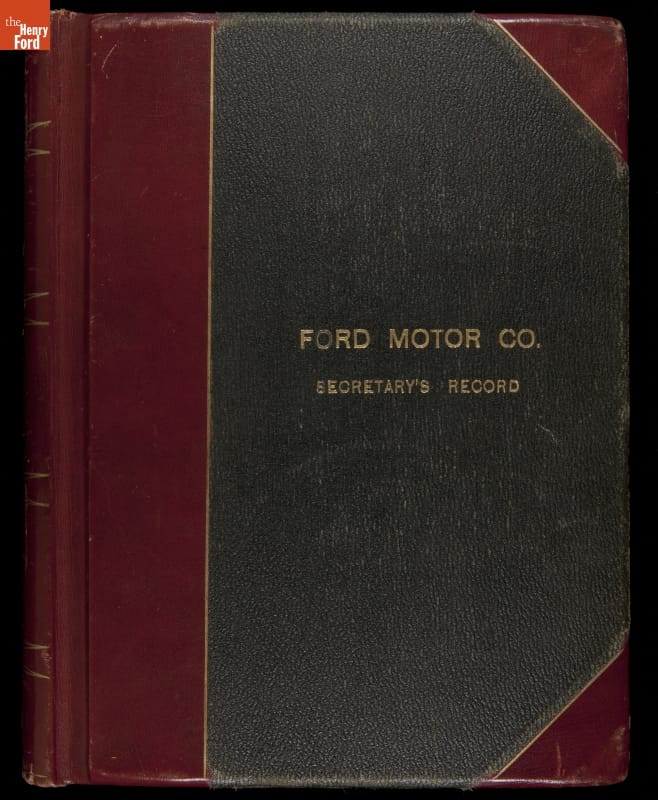
- Ford Motor Company Meeting Minutes Book, 1911-1919 - These few paragraphs from the January 5th meeting of Ford's Board of Directors announcing the a $5.00 a day wage for an eight hour work day brought thousands of workers to Detroit and sent shock waves through the upper echelon of the automobile industry.
- 1911-1919
- Collections - Artifact
Ford Motor Company Meeting Minutes Book, 1911-1919
These few paragraphs from the January 5th meeting of Ford's Board of Directors announcing the a $5.00 a day wage for an eight hour work day brought thousands of workers to Detroit and sent shock waves through the upper echelon of the automobile industry.
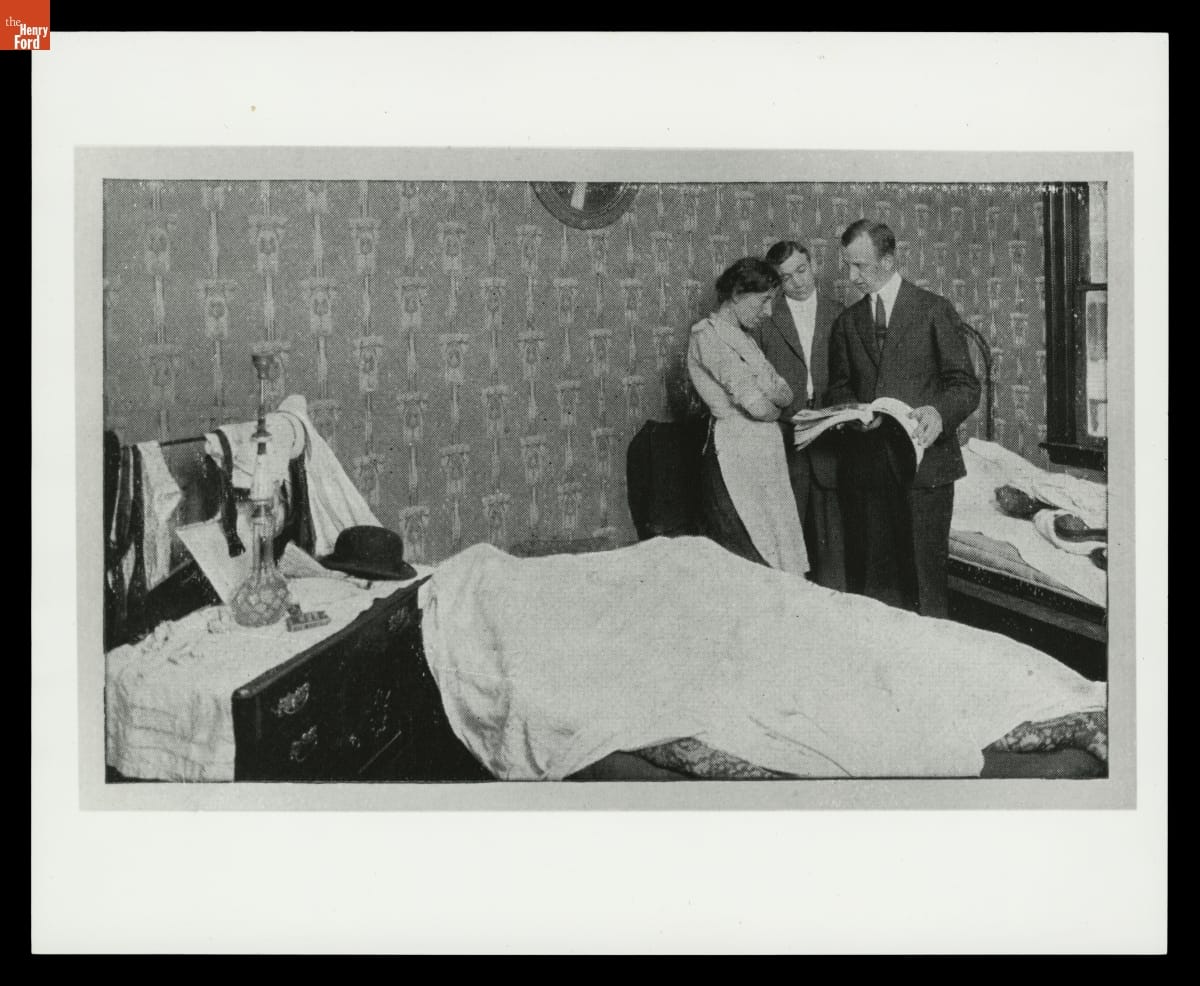
- Ford Sociological Department Advisor Inspecting Employee Home Conditions, Inkster, Michigan, 1915 - Ford Motor Company established its Sociological Department in 1914. The department established rules and conditions that Ford employees had to meet to qualify for the company's Five Dollar Day pay rate. Department officials monitored employees both at work and at home. This photograph showed an inspector making departmental recommendations for home improvements to an employee and his wife.
- 1915
- Collections - Artifact
Ford Sociological Department Advisor Inspecting Employee Home Conditions, Inkster, Michigan, 1915
Ford Motor Company established its Sociological Department in 1914. The department established rules and conditions that Ford employees had to meet to qualify for the company's Five Dollar Day pay rate. Department officials monitored employees both at work and at home. This photograph showed an inspector making departmental recommendations for home improvements to an employee and his wife.