
Search
- Flail, circa 1850 - Farmers have used flails to thresh grain for thousands of years. This heavy, wooden club attached with a leather thong to a long handle was swung repeatedly against the harvested grain. This action separated the grains from the stalk. By the mid-1800s, innovative Americans began to patent mechanized threshing machines which replaced this laborious task.
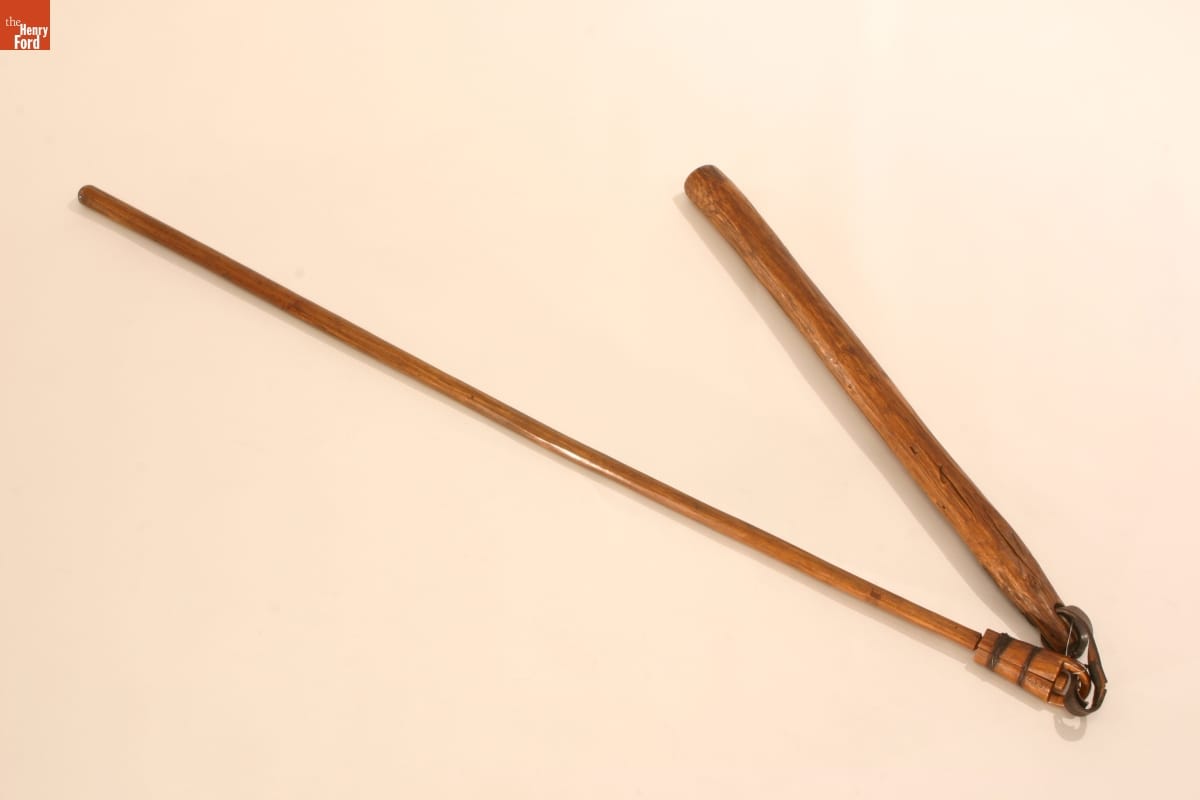
- circa 1850
- Collections - Artifact
Flail, circa 1850
Farmers have used flails to thresh grain for thousands of years. This heavy, wooden club attached with a leather thong to a long handle was swung repeatedly against the harvested grain. This action separated the grains from the stalk. By the mid-1800s, innovative Americans began to patent mechanized threshing machines which replaced this laborious task.
- Flail -
- Collections - Artifact
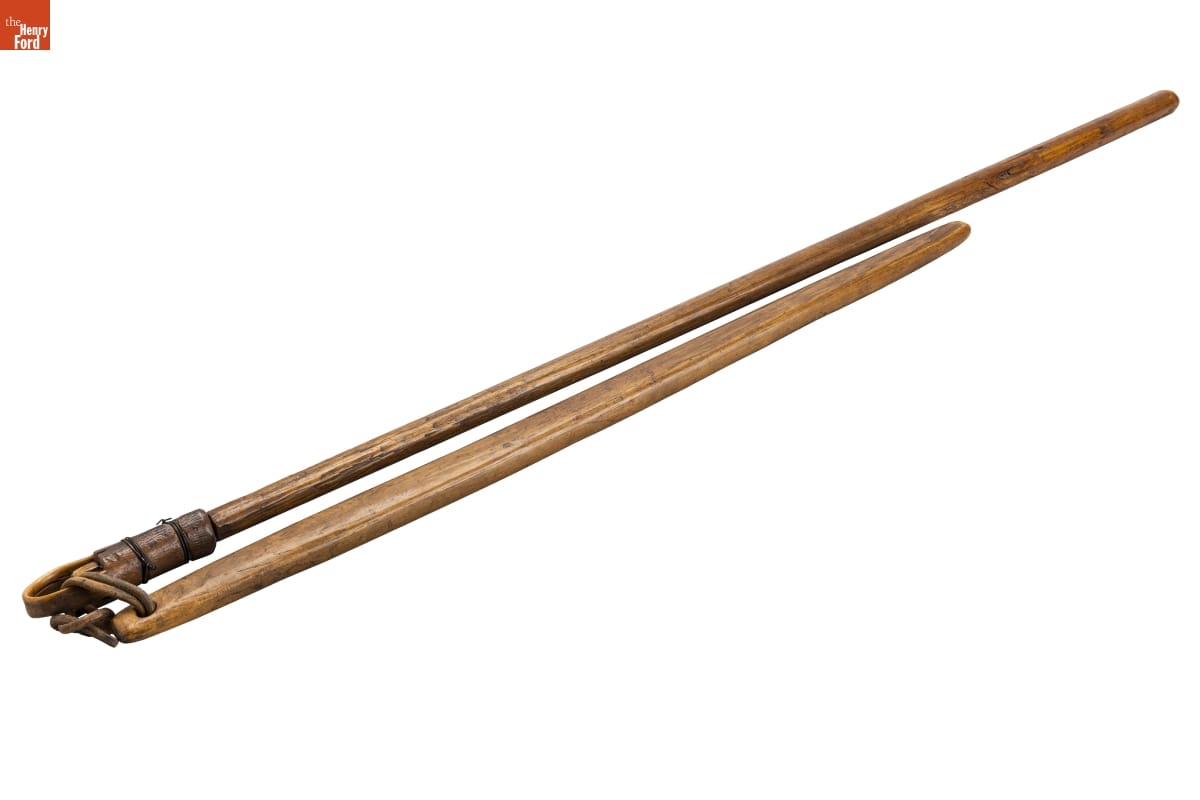
Flail
- Flail, circa 1850 - Farmers have used flails to thresh grain for thousands of years. This heavy, wooden club attached with a leather thong to a long handle was swung repeatedly against the harvested grain. This action separated the grains from the stalk. By the mid-1800s, innovative Americans began to patent mechanized threshing machines which replaced this laborious task.
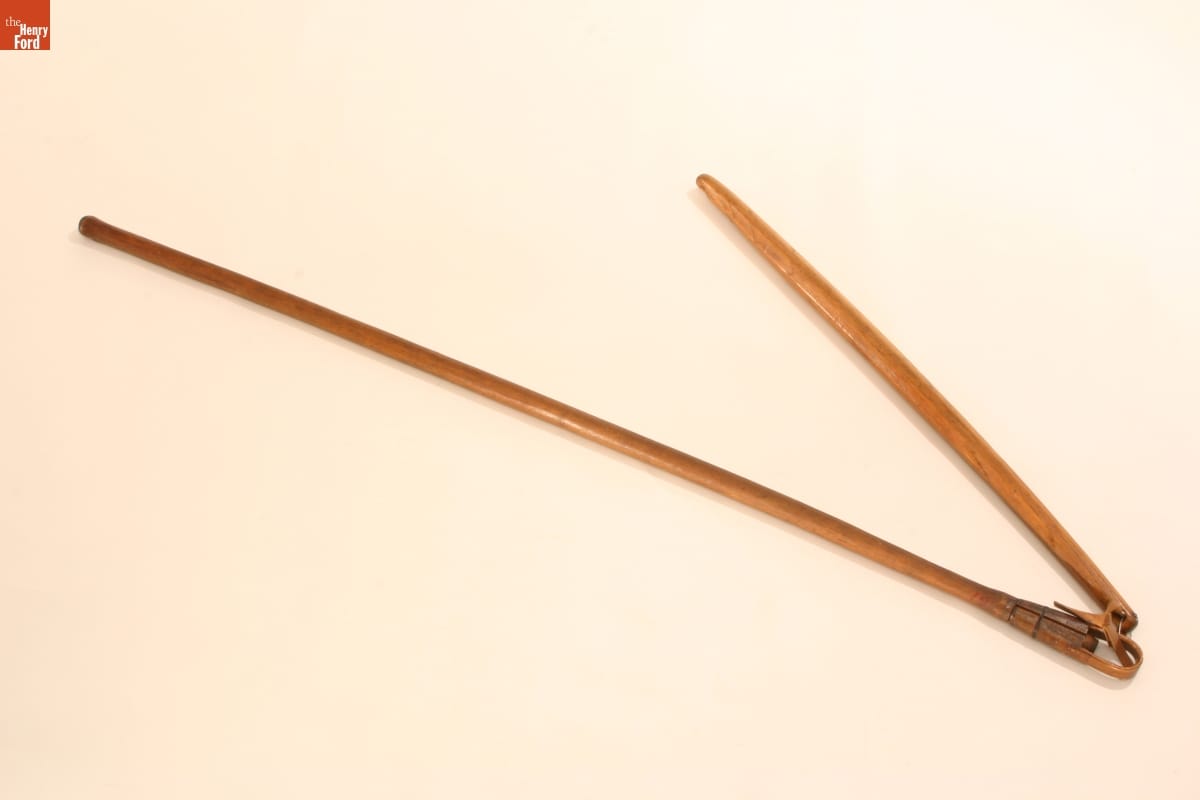
- circa 1850
- Collections - Artifact
Flail, circa 1850
Farmers have used flails to thresh grain for thousands of years. This heavy, wooden club attached with a leather thong to a long handle was swung repeatedly against the harvested grain. This action separated the grains from the stalk. By the mid-1800s, innovative Americans began to patent mechanized threshing machines which replaced this laborious task.
- Flail, circa 1860 - Farmers have used flails to thresh grain for thousands of years. This heavy, wooden club attached with a leather thong to a long handle was swung repeatedly against the harvested grain. This action separated the grains from the stalk. By the mid-1800s, innovative Americans began to patent mechanized threshing machines which replaced this laborious task.
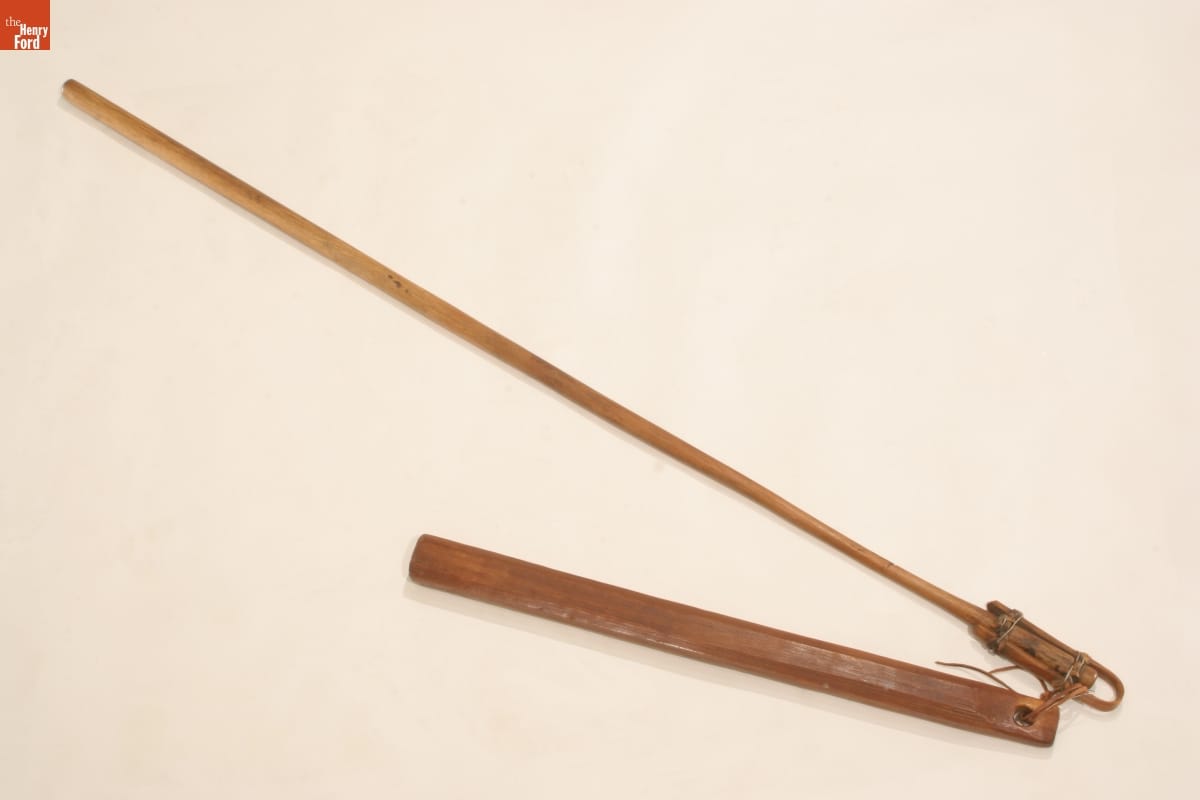
- circa 1860
- Collections - Artifact
Flail, circa 1860
Farmers have used flails to thresh grain for thousands of years. This heavy, wooden club attached with a leather thong to a long handle was swung repeatedly against the harvested grain. This action separated the grains from the stalk. By the mid-1800s, innovative Americans began to patent mechanized threshing machines which replaced this laborious task.
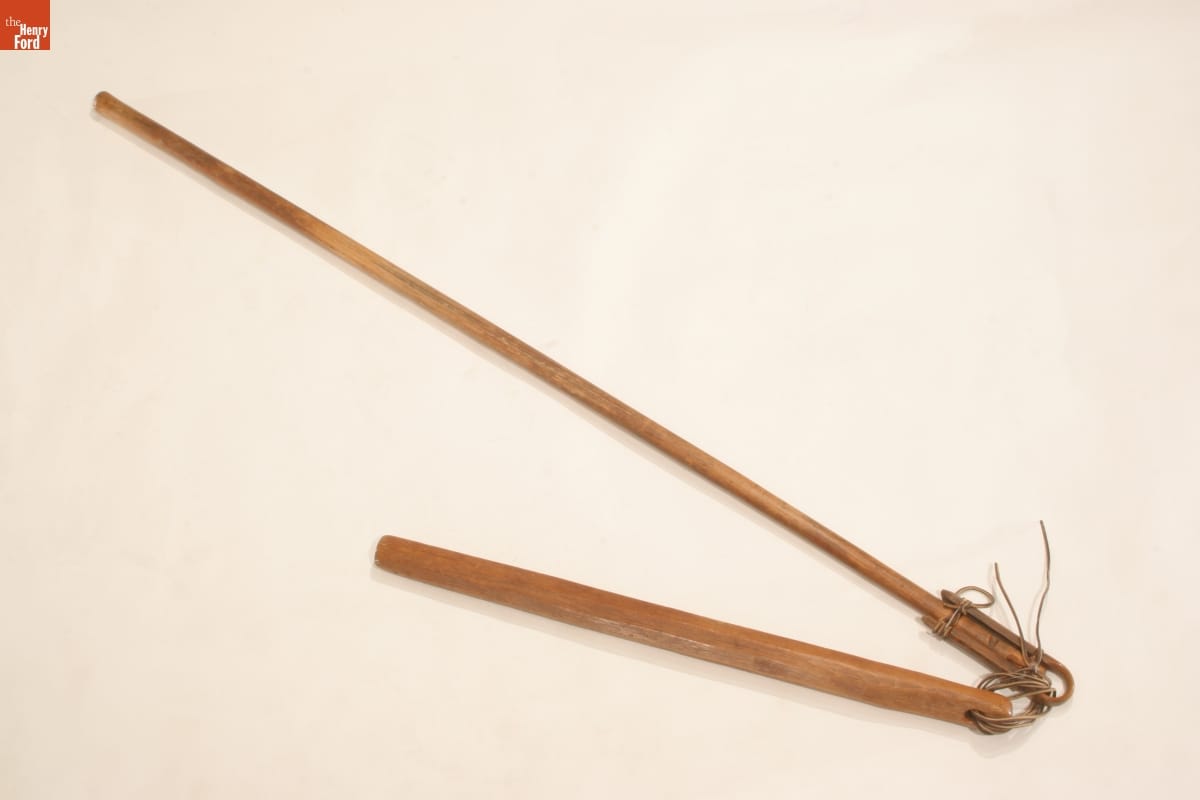
- Flail, circa 1860 - Farmers have used flails to thresh grain for thousands of years. This heavy, wooden club attached with a leather thong to a long handle was swung repeatedly against the harvested grain. This action separated the grains from the stalk. By the mid-1800s, innovative Americans began to patent mechanized threshing machines which replaced this laborious task.
- circa 1860
- Collections - Artifact
Flail, circa 1860
Farmers have used flails to thresh grain for thousands of years. This heavy, wooden club attached with a leather thong to a long handle was swung repeatedly against the harvested grain. This action separated the grains from the stalk. By the mid-1800s, innovative Americans began to patent mechanized threshing machines which replaced this laborious task.
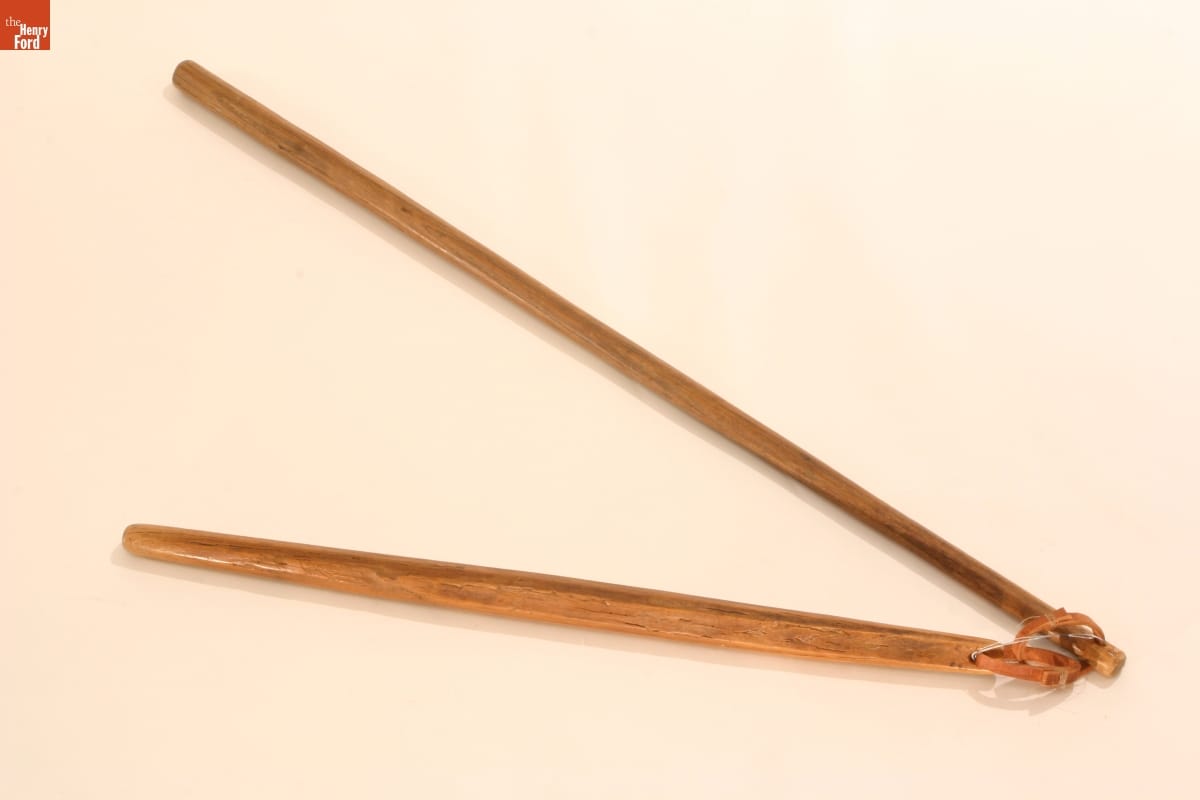
- Flail, circa 1875 - Farmers have used flails to thresh grain for thousands of years. This heavy, wooden club attached with a leather thong to a long handle was swung repeatedly against the harvested grain. This action separated the grains from the stalk. By the mid-1800s, innovative Americans began to patent mechanized threshing machines which replaced this laborious task.
- circa 1875
- Collections - Artifact
Flail, circa 1875
Farmers have used flails to thresh grain for thousands of years. This heavy, wooden club attached with a leather thong to a long handle was swung repeatedly against the harvested grain. This action separated the grains from the stalk. By the mid-1800s, innovative Americans began to patent mechanized threshing machines which replaced this laborious task.
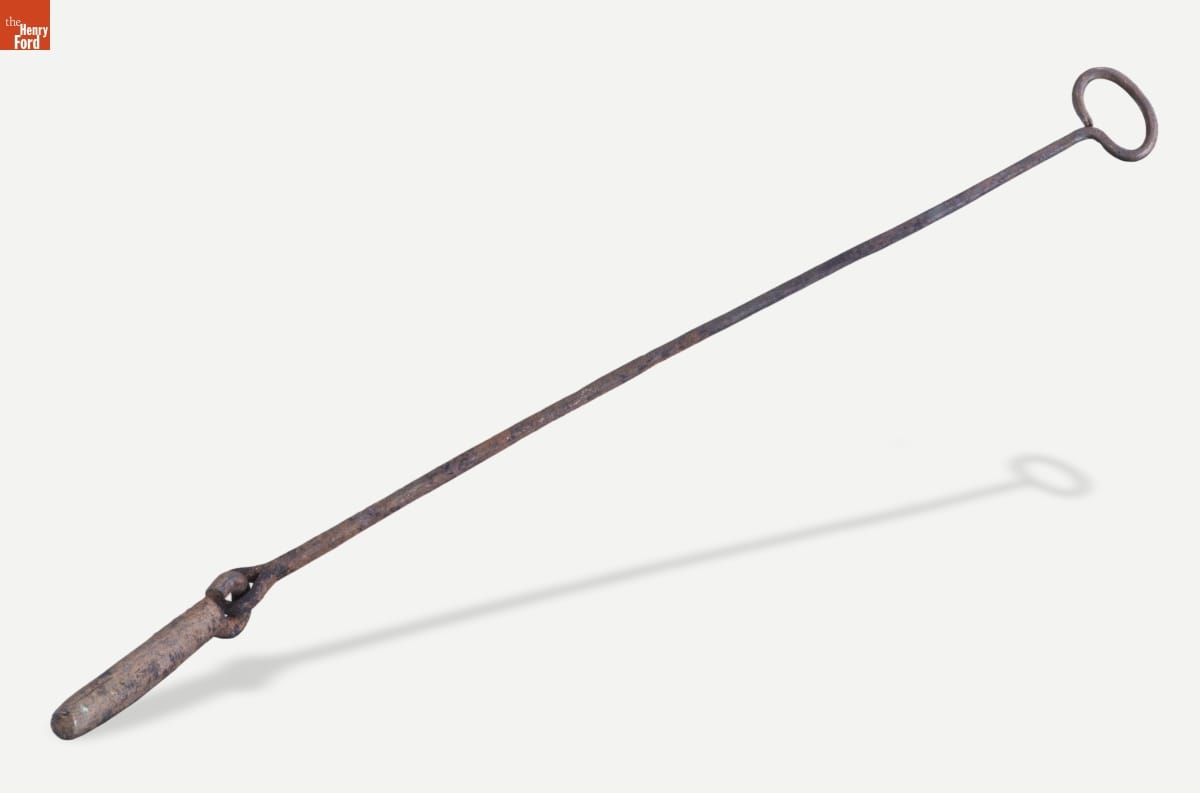
- Flail -
- Collections - Artifact
Flail
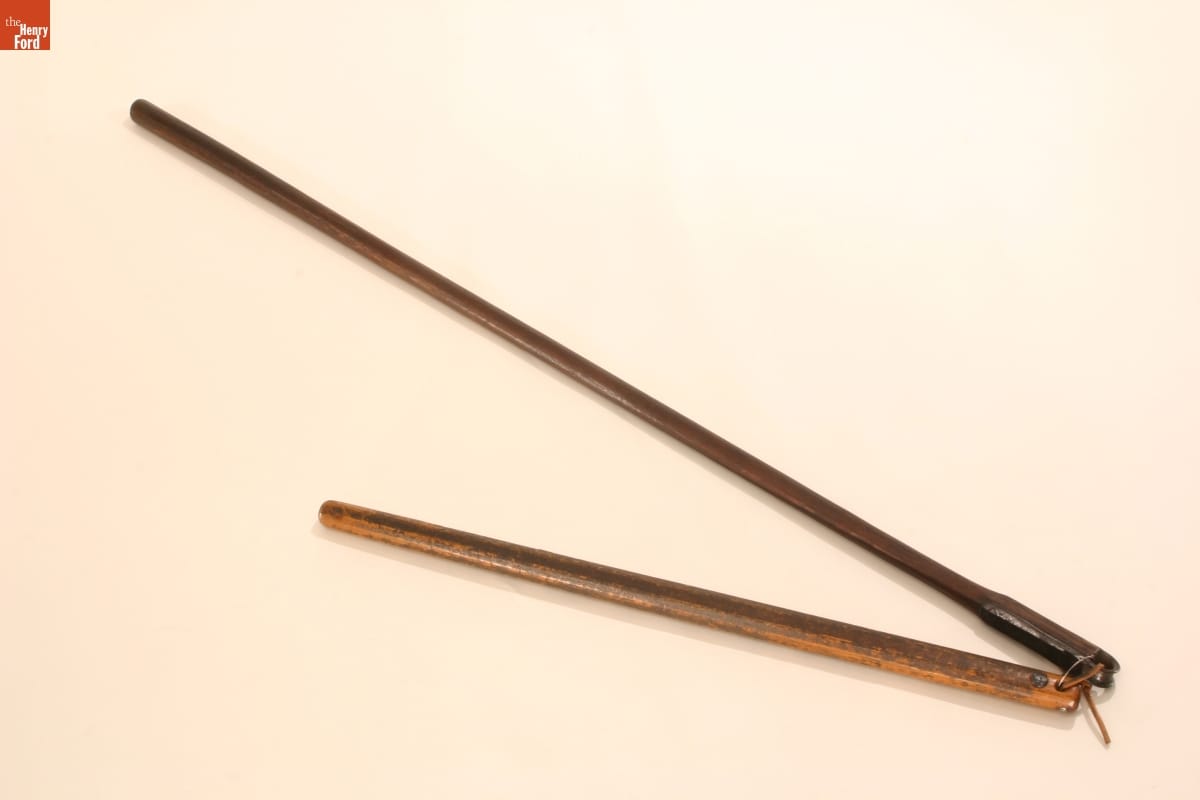
- Flail, circa 1850 - Farmers have used flails to thresh grain for thousands of years. This heavy, wooden club attached with a leather thong to a long handle was swung repeatedly against the harvested grain. This action separated the grains from the stalk. By the mid-1800s, innovative Americans began to patent mechanized threshing machines which replaced this laborious task.
- circa 1850
- Collections - Artifact
Flail, circa 1850
Farmers have used flails to thresh grain for thousands of years. This heavy, wooden club attached with a leather thong to a long handle was swung repeatedly against the harvested grain. This action separated the grains from the stalk. By the mid-1800s, innovative Americans began to patent mechanized threshing machines which replaced this laborious task.
- Flail, circa 1870 - Farmers have used flails to thresh grain for thousands of years. This heavy, wooden club attached with a leather thong to a long handle was swung repeatedly against the harvested grain. This action separated the grains from the stalk. By the mid-1800s, innovative Americans began to patent mechanized threshing machines which replaced this laborious task.
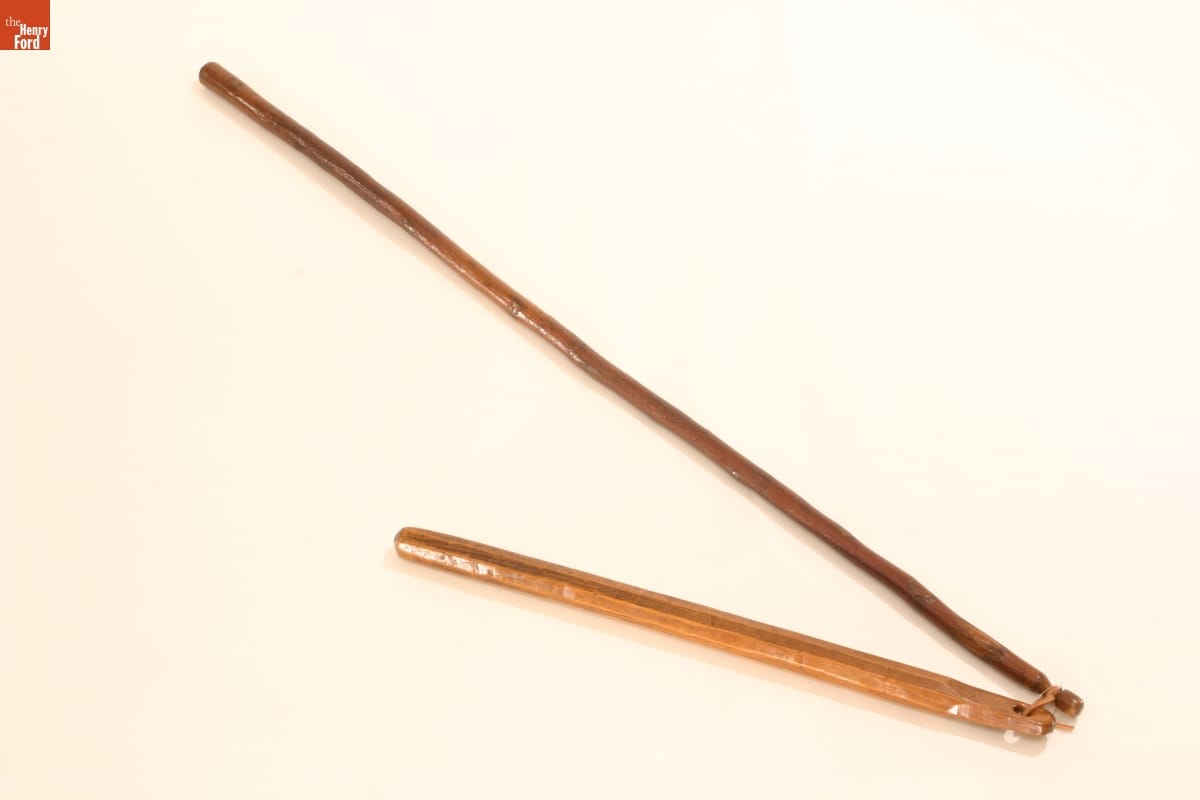
- circa 1870
- Collections - Artifact
Flail, circa 1870
Farmers have used flails to thresh grain for thousands of years. This heavy, wooden club attached with a leather thong to a long handle was swung repeatedly against the harvested grain. This action separated the grains from the stalk. By the mid-1800s, innovative Americans began to patent mechanized threshing machines which replaced this laborious task.
- Flail, circa 1850 - Farmers have used flails to thresh grain for thousands of years. This heavy, wooden club attached with a leather thong to a long handle was swung repeatedly against the harvested grain. This action separated the grains from the stalk. By the mid-1800s, innovative Americans began to patent mechanized threshing machines which replaced this laborious task.
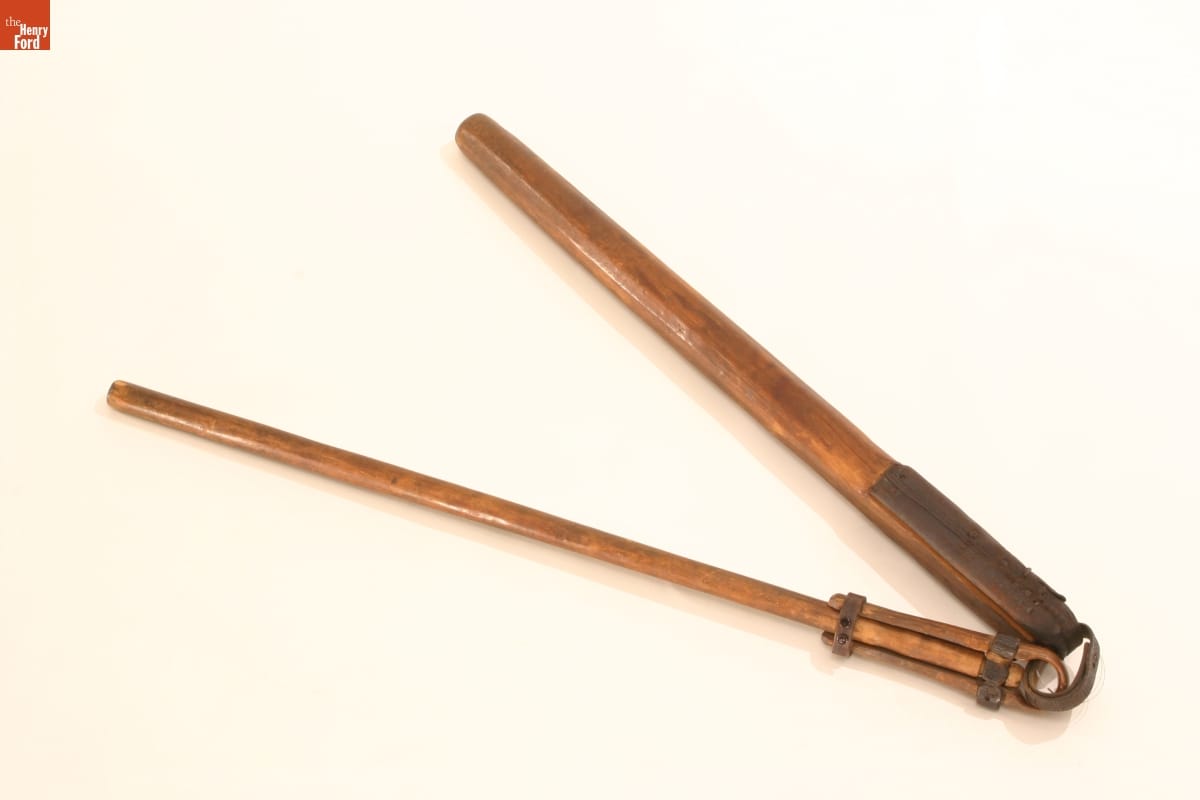
- circa 1850
- Collections - Artifact
Flail, circa 1850
Farmers have used flails to thresh grain for thousands of years. This heavy, wooden club attached with a leather thong to a long handle was swung repeatedly against the harvested grain. This action separated the grains from the stalk. By the mid-1800s, innovative Americans began to patent mechanized threshing machines which replaced this laborious task.