
Search
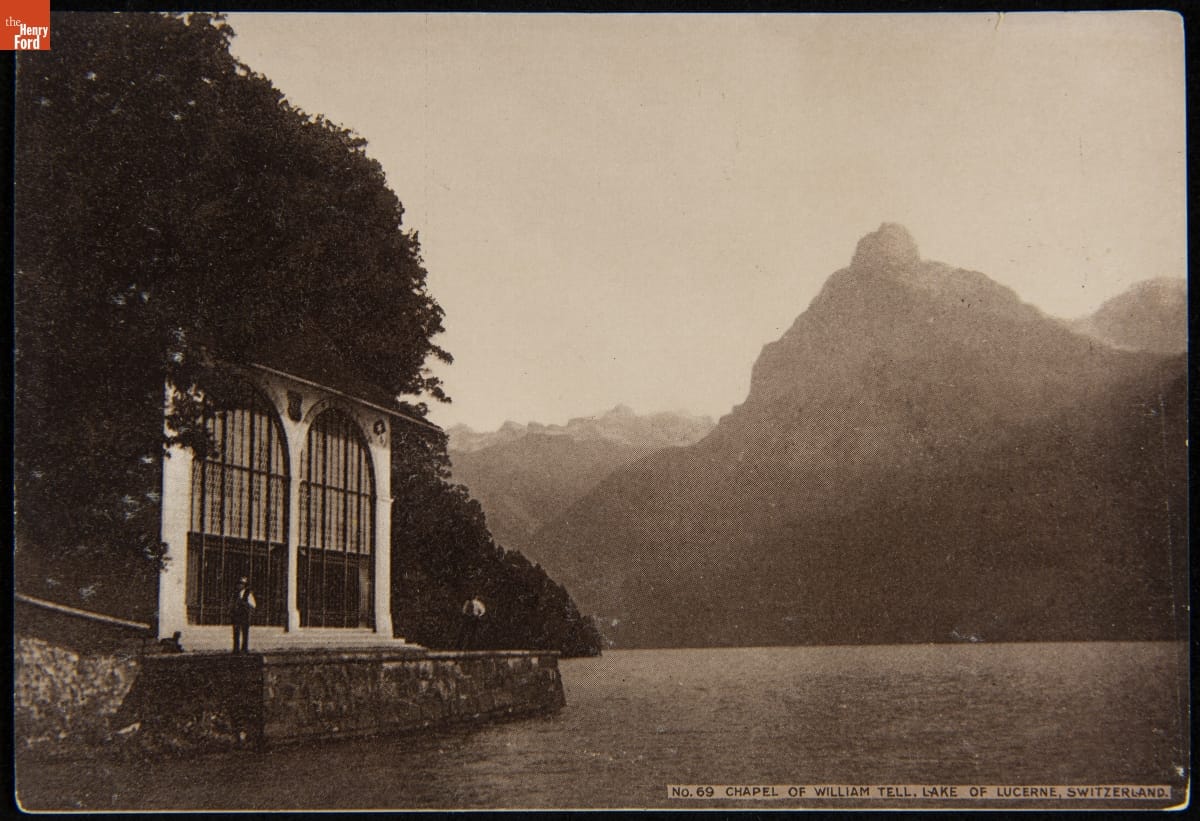
- Trade Card for C.I. Hood & Co. with Hood's Photos of the World, "Chapel of William Tell, Lake of Lucerne, Switzerland," 1890-1910 - In the late 19th century, trade cards were a major means of advertising goods and services. Patent medicine producer, C.I. Hood & Co., had its own advertising department, creating cookbooks, calendars, and, most abundantly, trade cards. The trade card series, "Hood's Photos of the World," became popular among consumers, as it offered views of far-away places, providing a window to the broader world.
- 1890-1910
- Collections - Artifact
Trade Card for C.I. Hood & Co. with Hood's Photos of the World, "Chapel of William Tell, Lake of Lucerne, Switzerland," 1890-1910
In the late 19th century, trade cards were a major means of advertising goods and services. Patent medicine producer, C.I. Hood & Co., had its own advertising department, creating cookbooks, calendars, and, most abundantly, trade cards. The trade card series, "Hood's Photos of the World," became popular among consumers, as it offered views of far-away places, providing a window to the broader world.
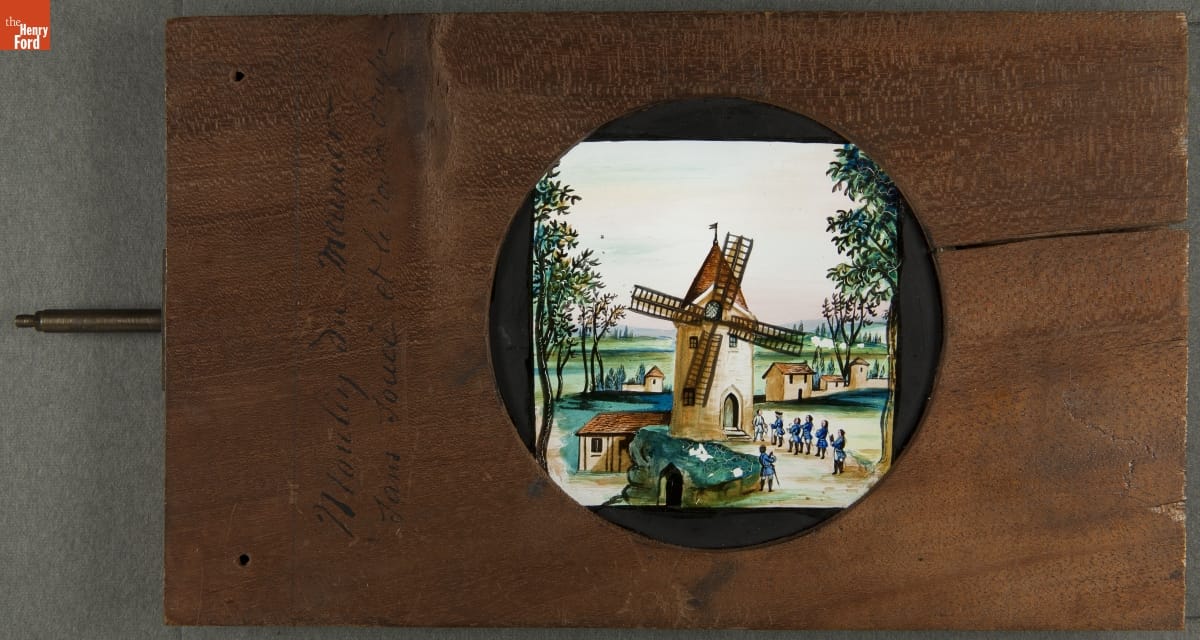
- Mechanical Lantern Slide, "The Miller of Sans Souci and the King of Prussia," 1860-1900 - Magic lanterns use a concave mirror and light source to project images on glass slides with painted or photographic scenes. Developed in the 17th century, magic lanterns predate slide projectors and motion pictures. In the hands of magicians, they became "lanterns of fright," projecting wondrous images and apparitions. Slide themes ranged widely: exotic travel, folklore, advertising, history, science, and art.
- 1860-1900
- Collections - Artifact
Mechanical Lantern Slide, "The Miller of Sans Souci and the King of Prussia," 1860-1900
Magic lanterns use a concave mirror and light source to project images on glass slides with painted or photographic scenes. Developed in the 17th century, magic lanterns predate slide projectors and motion pictures. In the hands of magicians, they became "lanterns of fright," projecting wondrous images and apparitions. Slide themes ranged widely: exotic travel, folklore, advertising, history, science, and art.
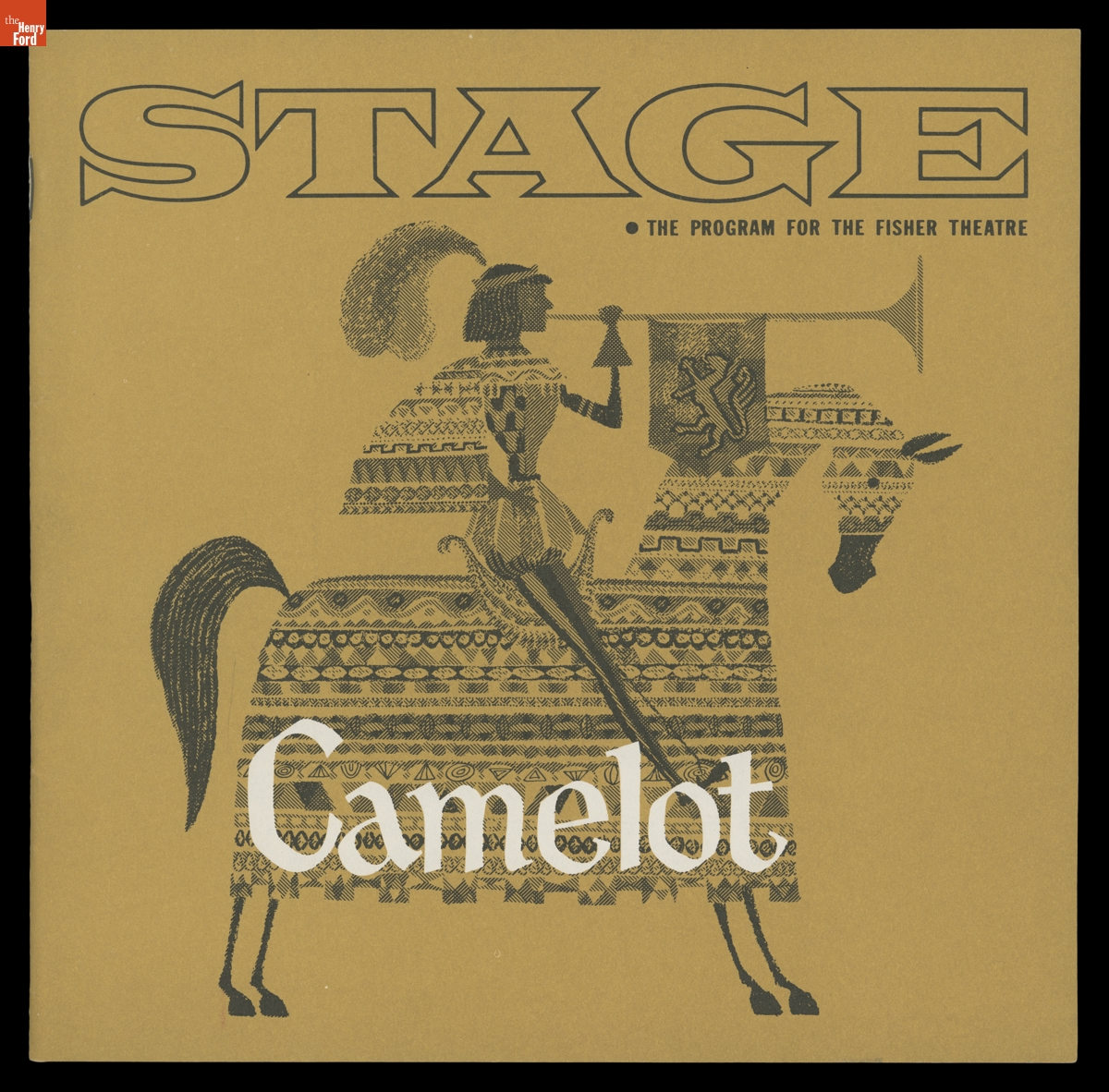
- "Camelot," 1963 - <html><body>Alan Jay Lerner and Fredrick Loewe-- a multiple award-winning librettist and composer team-- created <i>Camelot</i> in 1960. The show's plot focuses on the love triangle between King Arthur, Lady Guinevere, and Sir Lancelot and its effect on the titular kingdom. <i>Camelot</i> was allegedly John F. Kennedy's favorite musical and became heavily associated with his presidency following his assassination.</body> </html>
- 04 February 1963 - 23 February 1963
- Collections - Artifact
"Camelot," 1963
Alan Jay Lerner and Fredrick Loewe-- a multiple award-winning librettist and composer team-- created Camelot in 1960. The show's plot focuses on the love triangle between King Arthur, Lady Guinevere, and Sir Lancelot and its effect on the titular kingdom. Camelot was allegedly John F. Kennedy's favorite musical and became heavily associated with his presidency following his assassination. - Chromolithograph, "Gambrinus und Seine Apostel in America," 1867 -
- 1867
- Collections - Artifact
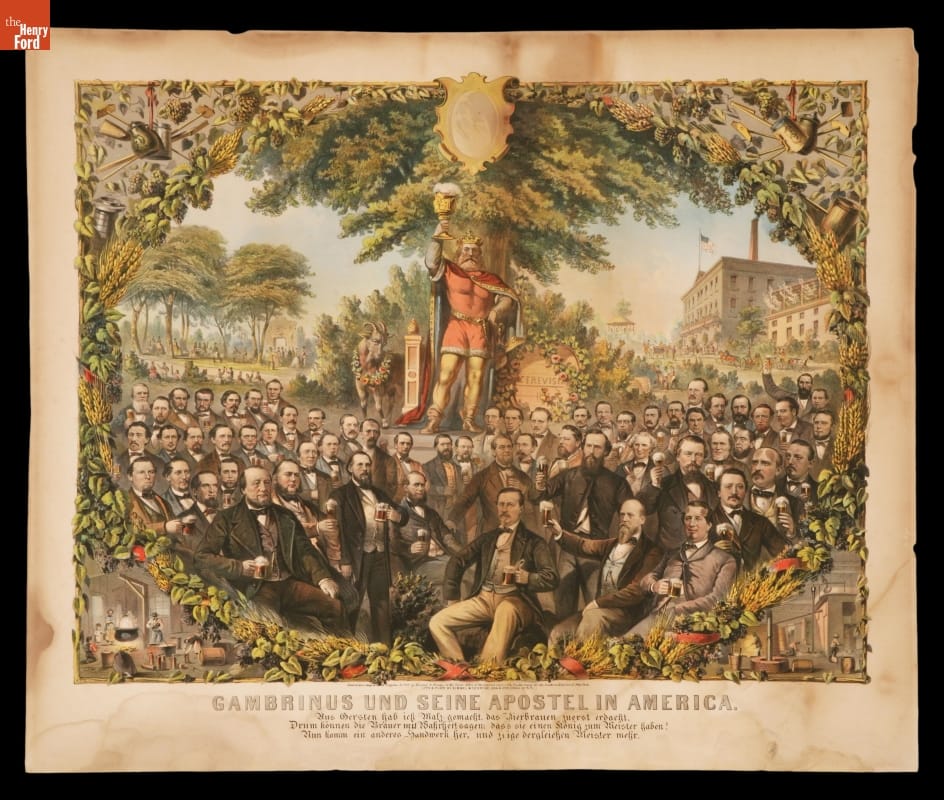
Chromolithograph, "Gambrinus und Seine Apostel in America," 1867
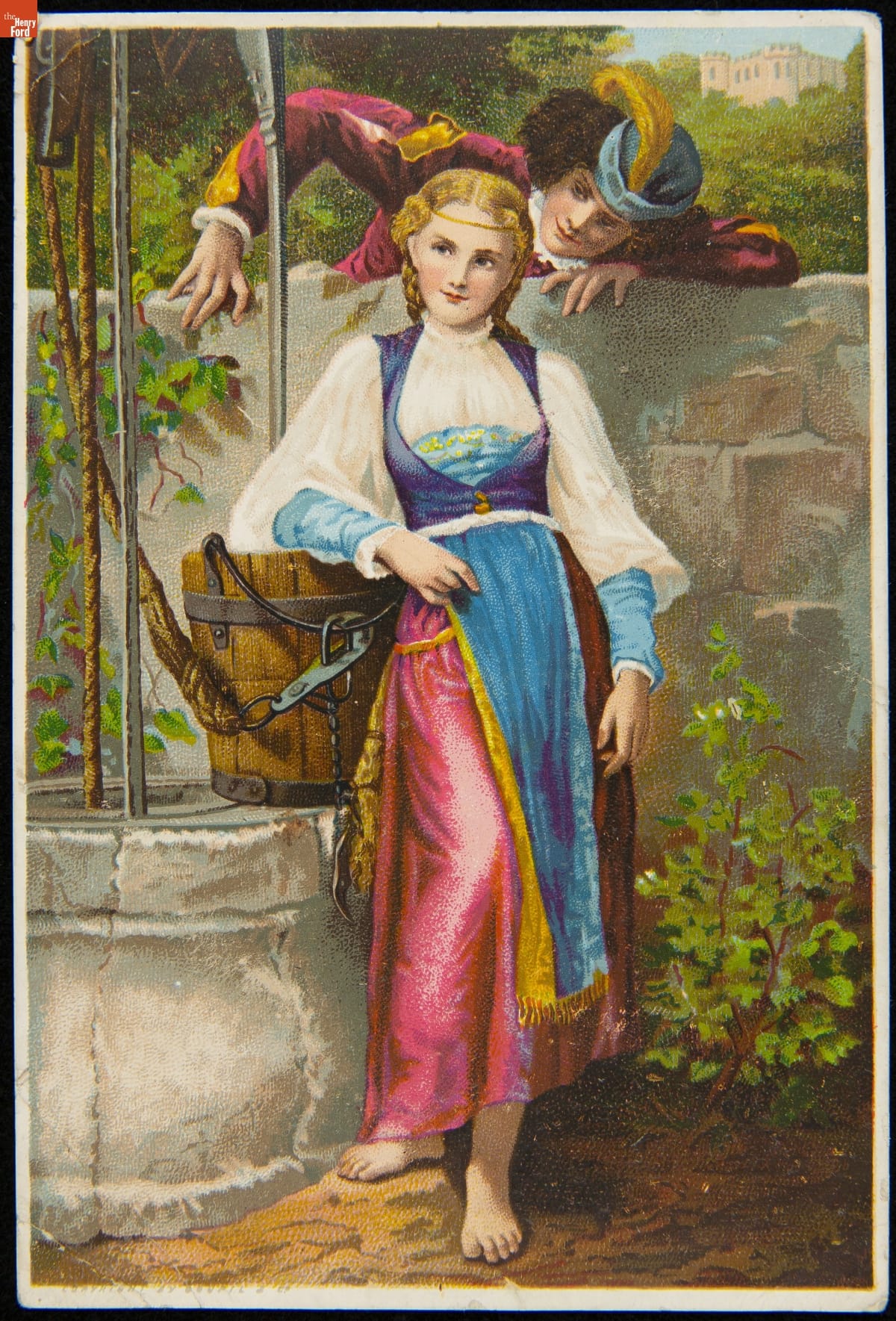
- Trade Card for Dr. Jayne's Patent Medicines, "The Talking Well," 1880-1900 - In the last third of the nineteenth century, an unprecedented variety of consumer goods and services flooded the American market. Advertisers, armed with new methods of color printing, bombarded potential customers with trade cards. Americans enjoyed and often saved the vibrant little advertisements found in product packages or distributed by local merchants. Many survive as historical records of commercialism in the United States.
- 1880-1900
- Collections - Artifact
Trade Card for Dr. Jayne's Patent Medicines, "The Talking Well," 1880-1900
In the last third of the nineteenth century, an unprecedented variety of consumer goods and services flooded the American market. Advertisers, armed with new methods of color printing, bombarded potential customers with trade cards. Americans enjoyed and often saved the vibrant little advertisements found in product packages or distributed by local merchants. Many survive as historical records of commercialism in the United States.
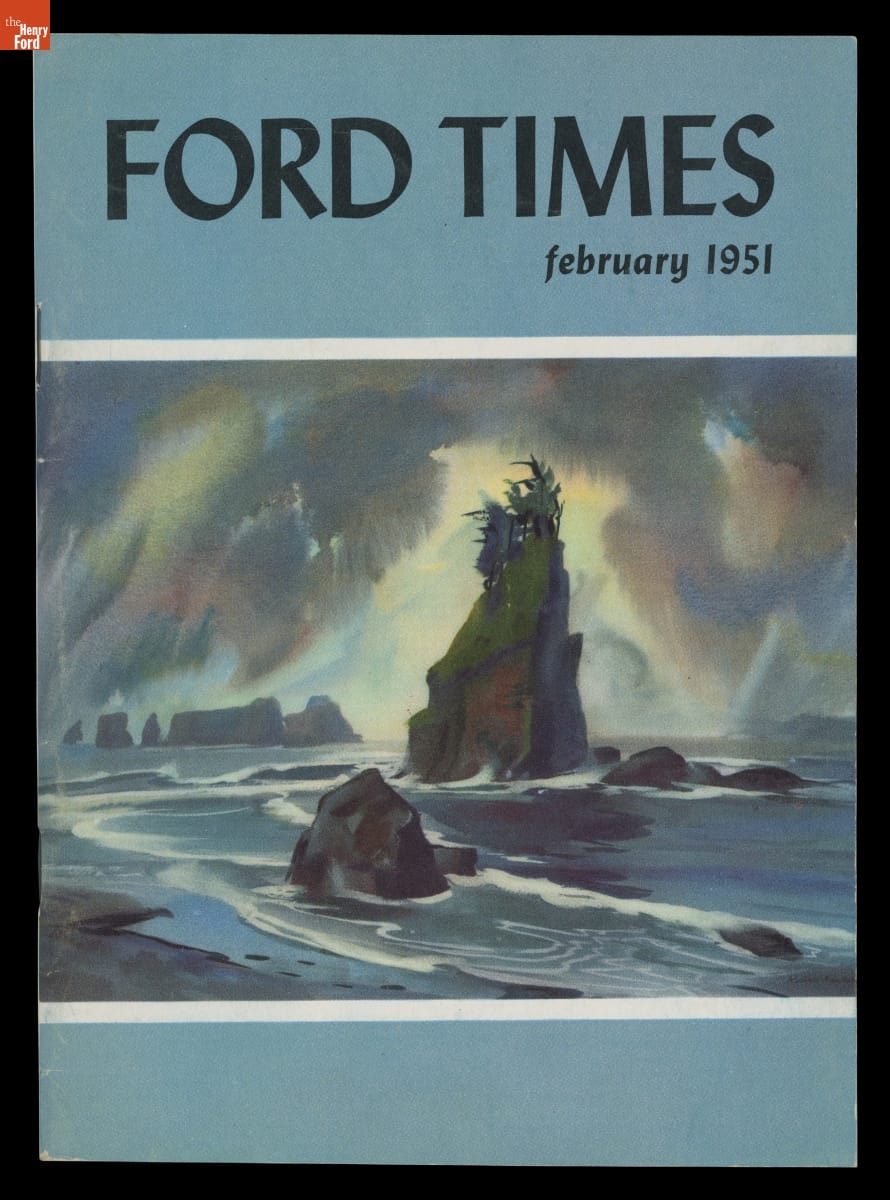
- "Ford Times," February 1951 - Ford Motor Company published<em> Ford Times</em> magazine from 1908 to 1917 and again from 1943 to 1993. Intended for dealers and consumers, the publication was key to Ford's public relations efforts. With articles emphasizing a range of topics, including automobiles but also recreation, food, history, nature, and culture, <em>Ford Times</em> became an important document of 20th-century American life.
- February 01, 1951
- Collections - Artifact
"Ford Times," February 1951
Ford Motor Company published Ford Times magazine from 1908 to 1917 and again from 1943 to 1993. Intended for dealers and consumers, the publication was key to Ford's public relations efforts. With articles emphasizing a range of topics, including automobiles but also recreation, food, history, nature, and culture, Ford Times became an important document of 20th-century American life.