
Search
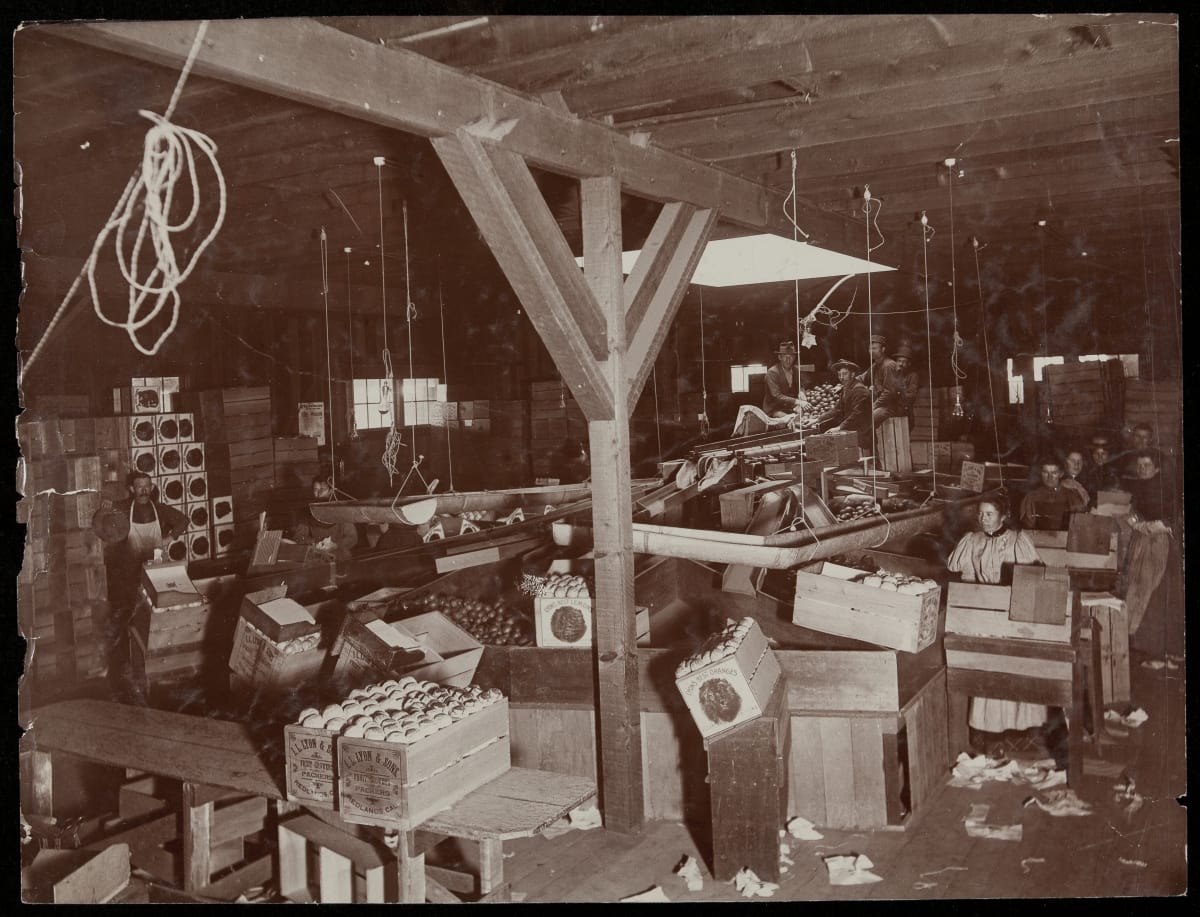
- Workers at L. L. Lyon & Sons Fruit Growers & Packers, Redlands, California, circa 1900 - For nearly thirty years, 1895 to 1924, the Detroit Publishing Company was one of the major image publishers in the world. The company had a wide-ranging stock of original photographs, including many scenes from across North America. Here, workers in California pack lemons and oranges for shipping.
- circa 1900
- Collections - Artifact
Workers at L. L. Lyon & Sons Fruit Growers & Packers, Redlands, California, circa 1900
For nearly thirty years, 1895 to 1924, the Detroit Publishing Company was one of the major image publishers in the world. The company had a wide-ranging stock of original photographs, including many scenes from across North America. Here, workers in California pack lemons and oranges for shipping.
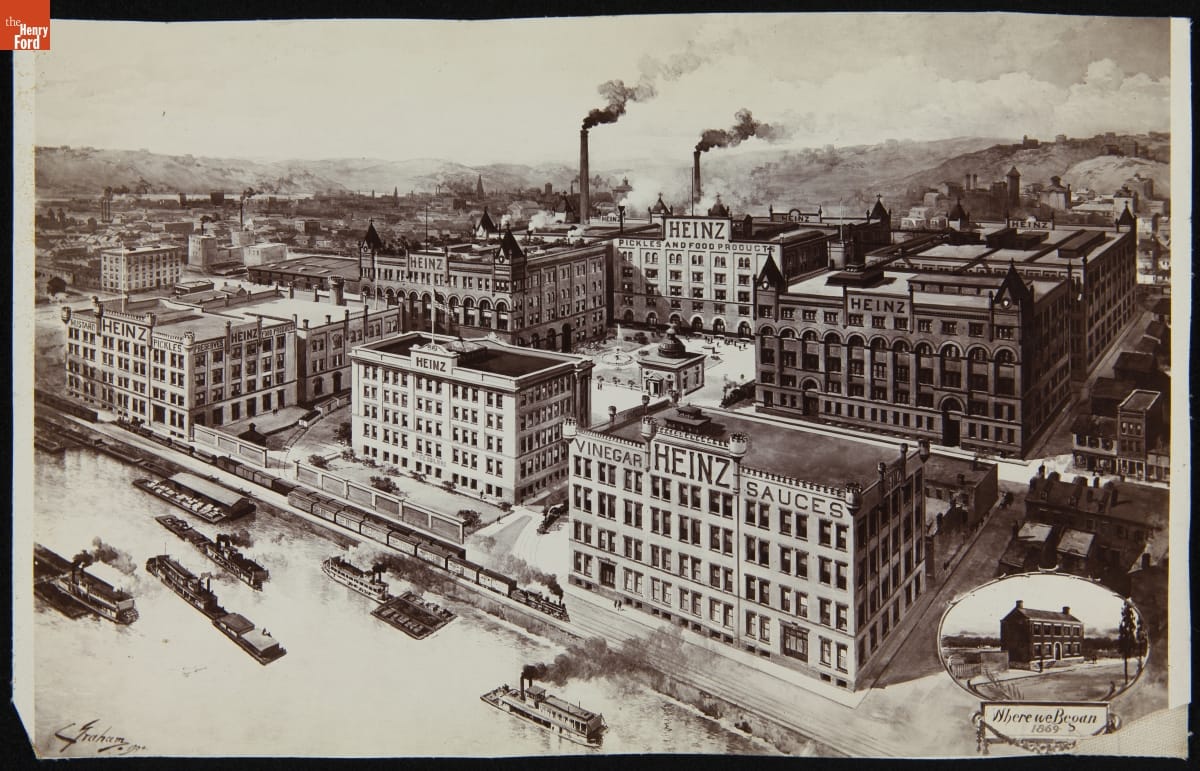
- H. J. Heinz Plant in Pittsburgh, Pennsylvania, with Inset Showing Heinz House, 1904 - The H.J. Heinz Company had humble beginnings in 1869 when its founder began selling horseradish out his parents' home in Sharpsburg, Pennsylvania. With a rapidly expanding product line and extensive marketing, the Heinz brand became a household name by the turn of the century. Its main plant in Pittsburgh, Pennsylvania (seen here), was known as the "Home of the 57" and offered tours for visitors.
- 1904
- Collections - Artifact
H. J. Heinz Plant in Pittsburgh, Pennsylvania, with Inset Showing Heinz House, 1904
The H.J. Heinz Company had humble beginnings in 1869 when its founder began selling horseradish out his parents' home in Sharpsburg, Pennsylvania. With a rapidly expanding product line and extensive marketing, the Heinz brand became a household name by the turn of the century. Its main plant in Pittsburgh, Pennsylvania (seen here), was known as the "Home of the 57" and offered tours for visitors.
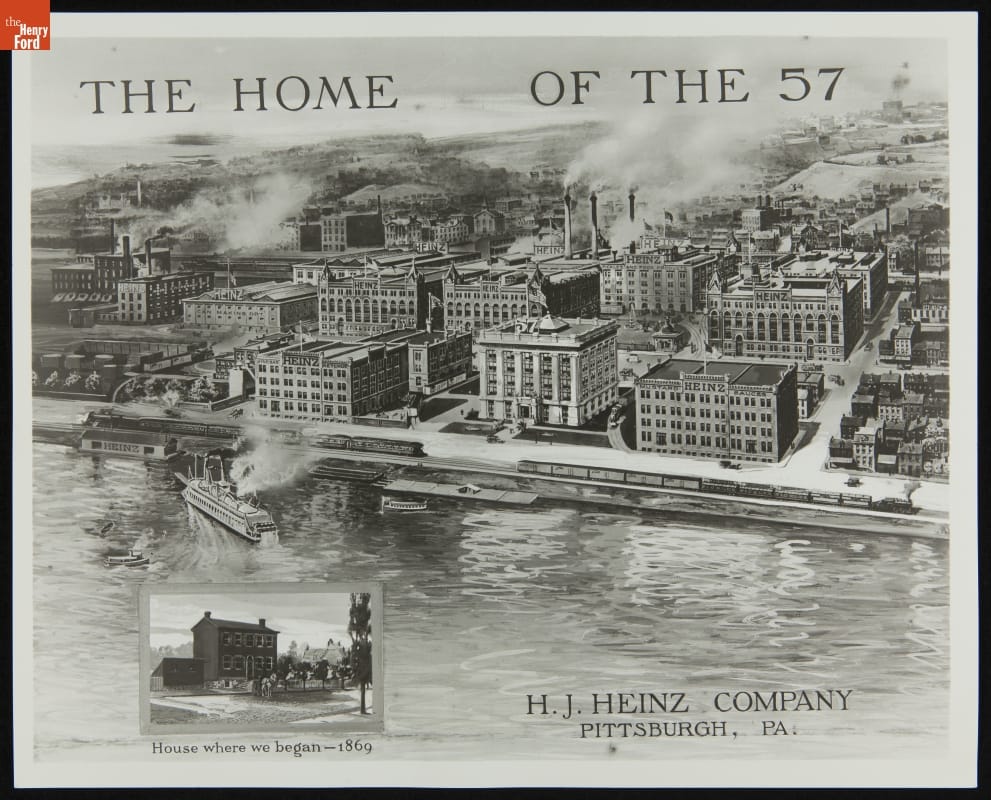
- H. J. Heinz Company in Pittsburgh, Pennsylvania, 1904-1953, with Inset Showing Heinz House - The H.J. Heinz Company had humble beginnings in 1869 when its founder began selling horseradish out his parents' home in Sharpsburg, Pennsylvania. With a rapidly expanding product line and extensive marketing, the Heinz brand became a household name by the turn of the century. Its main plant in Pittsburgh, Pennsylvania (seen here), was known as the "Home of the 57" and offered tours for visitors.
- 1904-1953
- Collections - Artifact
H. J. Heinz Company in Pittsburgh, Pennsylvania, 1904-1953, with Inset Showing Heinz House
The H.J. Heinz Company had humble beginnings in 1869 when its founder began selling horseradish out his parents' home in Sharpsburg, Pennsylvania. With a rapidly expanding product line and extensive marketing, the Heinz brand became a household name by the turn of the century. Its main plant in Pittsburgh, Pennsylvania (seen here), was known as the "Home of the 57" and offered tours for visitors.
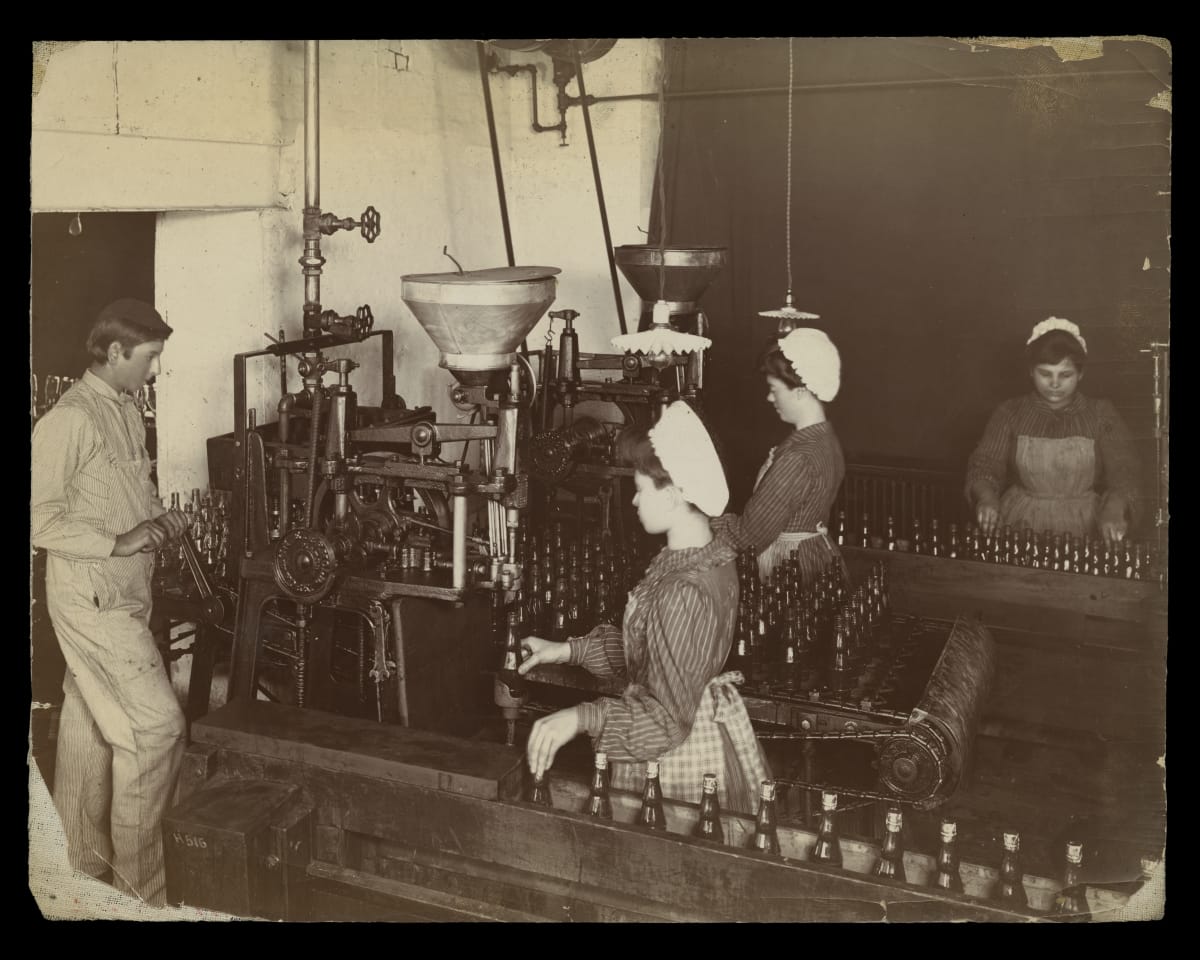
- Employees Filling Bottles at the H. J. Heinz Factory, circa 1890 - Before complete mechanization of the manufacturing process, many tasks at the Heinz factory were done by hand. The H.J. Heinz Company documented the many departments of the manufacturing process through photographs. This photograph shows employees filling ketchup bottles.
- circa 1890
- Collections - Artifact
Employees Filling Bottles at the H. J. Heinz Factory, circa 1890
Before complete mechanization of the manufacturing process, many tasks at the Heinz factory were done by hand. The H.J. Heinz Company documented the many departments of the manufacturing process through photographs. This photograph shows employees filling ketchup bottles.
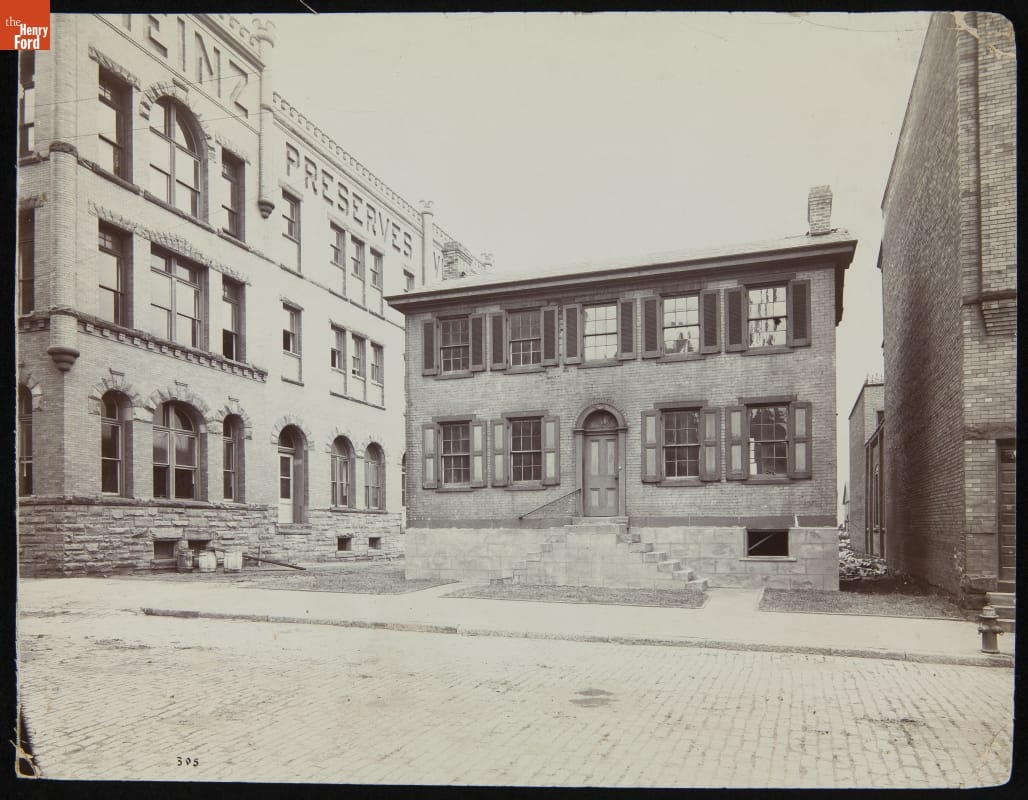
- Heinz House after Relocation to the H. J. Heinz Plant in Pittsburgh, Pennsylvania, 1904 - In 1869, H.J. Heinz started his processed food business at his parents' home in Sharpsburg, Pennsylvania. Though operations soon outgrew the house, it remained an important part of company history. In 1904, Heinz moved the house 5 miles down the Allegheny River to his Pittsburgh factory, where it served as a company museum for visiting tourists.
- 1904
- Collections - Artifact
Heinz House after Relocation to the H. J. Heinz Plant in Pittsburgh, Pennsylvania, 1904
In 1869, H.J. Heinz started his processed food business at his parents' home in Sharpsburg, Pennsylvania. Though operations soon outgrew the house, it remained an important part of company history. In 1904, Heinz moved the house 5 miles down the Allegheny River to his Pittsburgh factory, where it served as a company museum for visiting tourists.
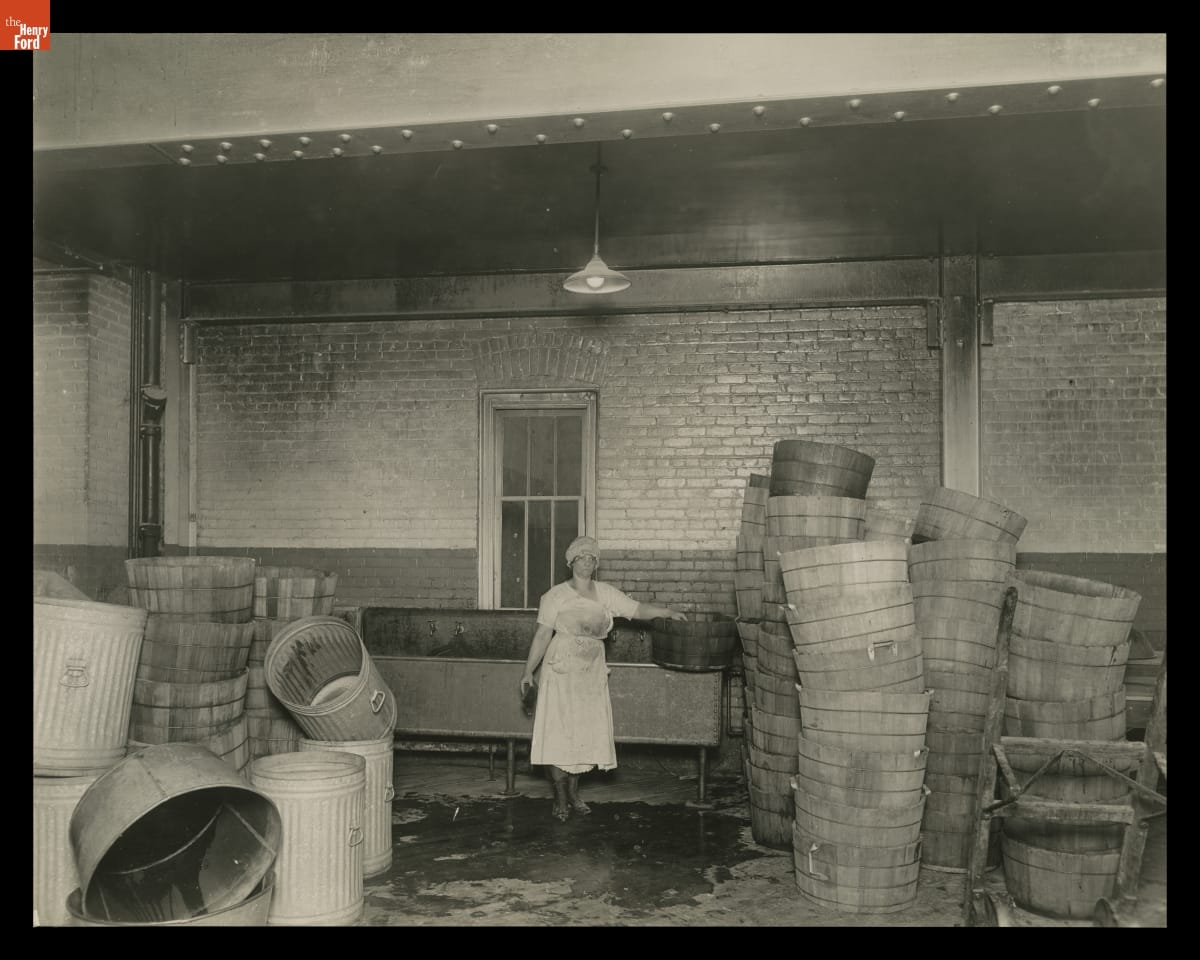
- Woman Washing Buckets at the New England Pie Company, Detroit, Michigan, circa 1923 -
- circa 1923
- Collections - Artifact
Woman Washing Buckets at the New England Pie Company, Detroit, Michigan, circa 1923
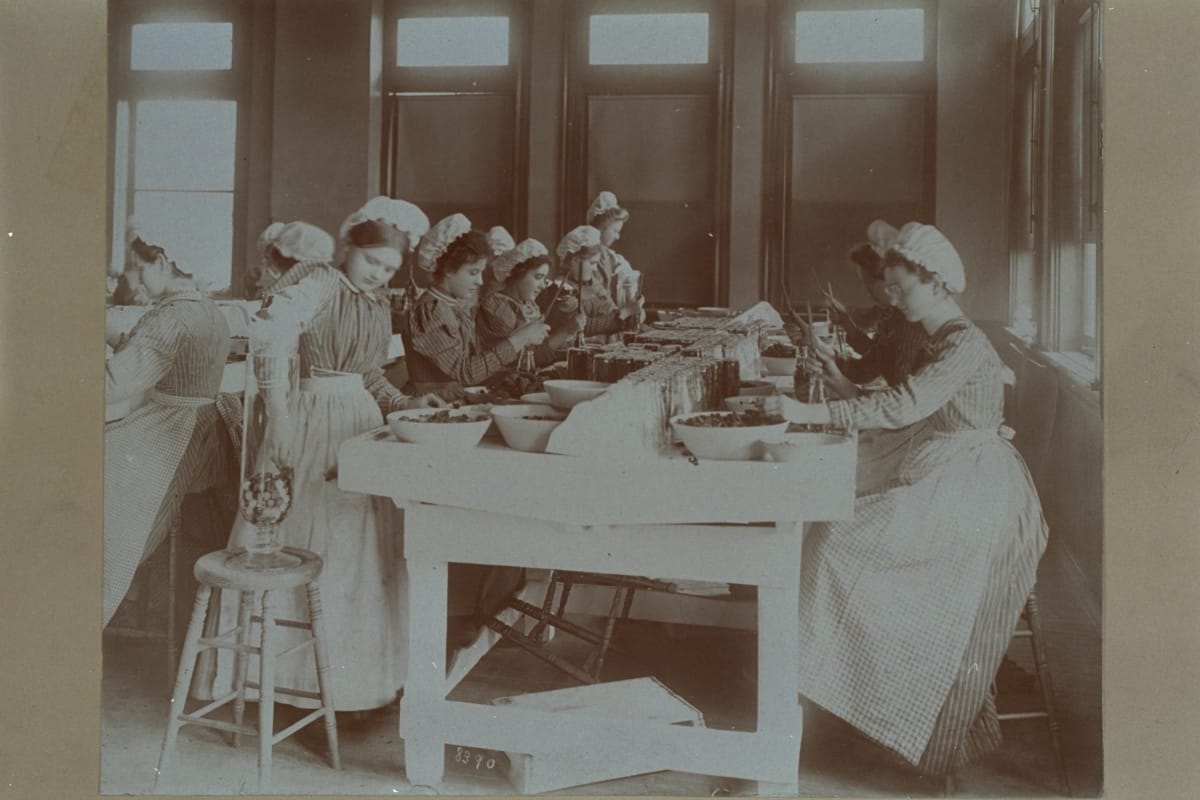
- Women Workers Packing Pickles into Jars at the H.J. Heinz Factory, circa 1910 - Before the Heinz name was synonymous with ketchup, the H. J. Heinz Company was known for its many varieties of pickles. Every day Heinz's team of female employees, referred to as "Heinz Girls," meticulously packed pickle jars. Different sized pickles were placed in uniquely sized jars which required fluted wands to accurately pack the pickles into their specific arrangements.
- circa 1910
- Collections - Artifact
Women Workers Packing Pickles into Jars at the H.J. Heinz Factory, circa 1910
Before the Heinz name was synonymous with ketchup, the H. J. Heinz Company was known for its many varieties of pickles. Every day Heinz's team of female employees, referred to as "Heinz Girls," meticulously packed pickle jars. Different sized pickles were placed in uniquely sized jars which required fluted wands to accurately pack the pickles into their specific arrangements.
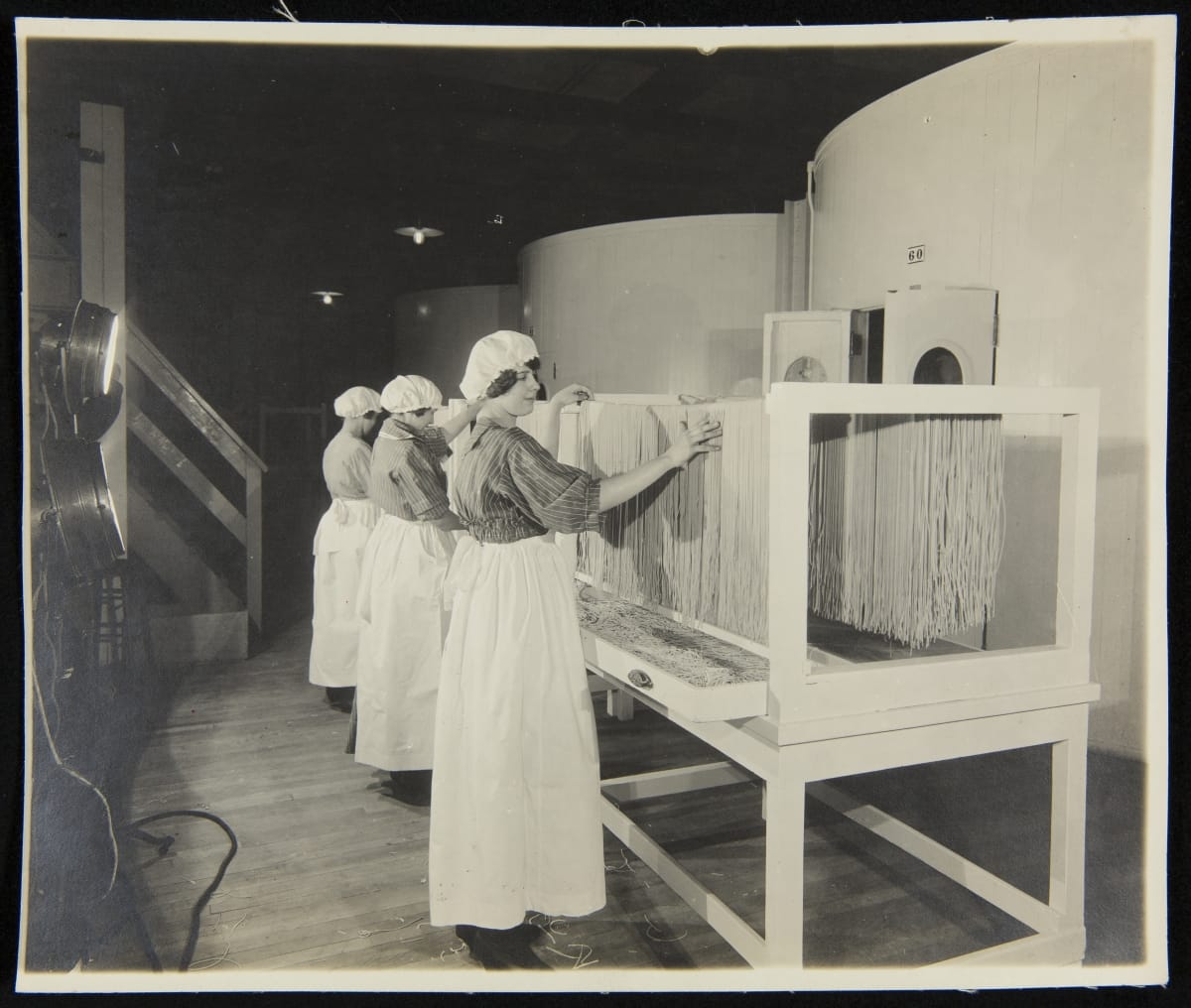
- Heinz Employees Spreading Spaghetti along a Rack, circa 1910 - Before complete mechanization of the manufacturing process, many tasks at the Heinz factory were done by hand. The H. J. Heinz Company documented the many departments of the manufacturing process through photographs. This photograph shows employees in the Spaghetti Department spreading spaghetti on racks.
- circa 1910
- Collections - Artifact
Heinz Employees Spreading Spaghetti along a Rack, circa 1910
Before complete mechanization of the manufacturing process, many tasks at the Heinz factory were done by hand. The H. J. Heinz Company documented the many departments of the manufacturing process through photographs. This photograph shows employees in the Spaghetti Department spreading spaghetti on racks.
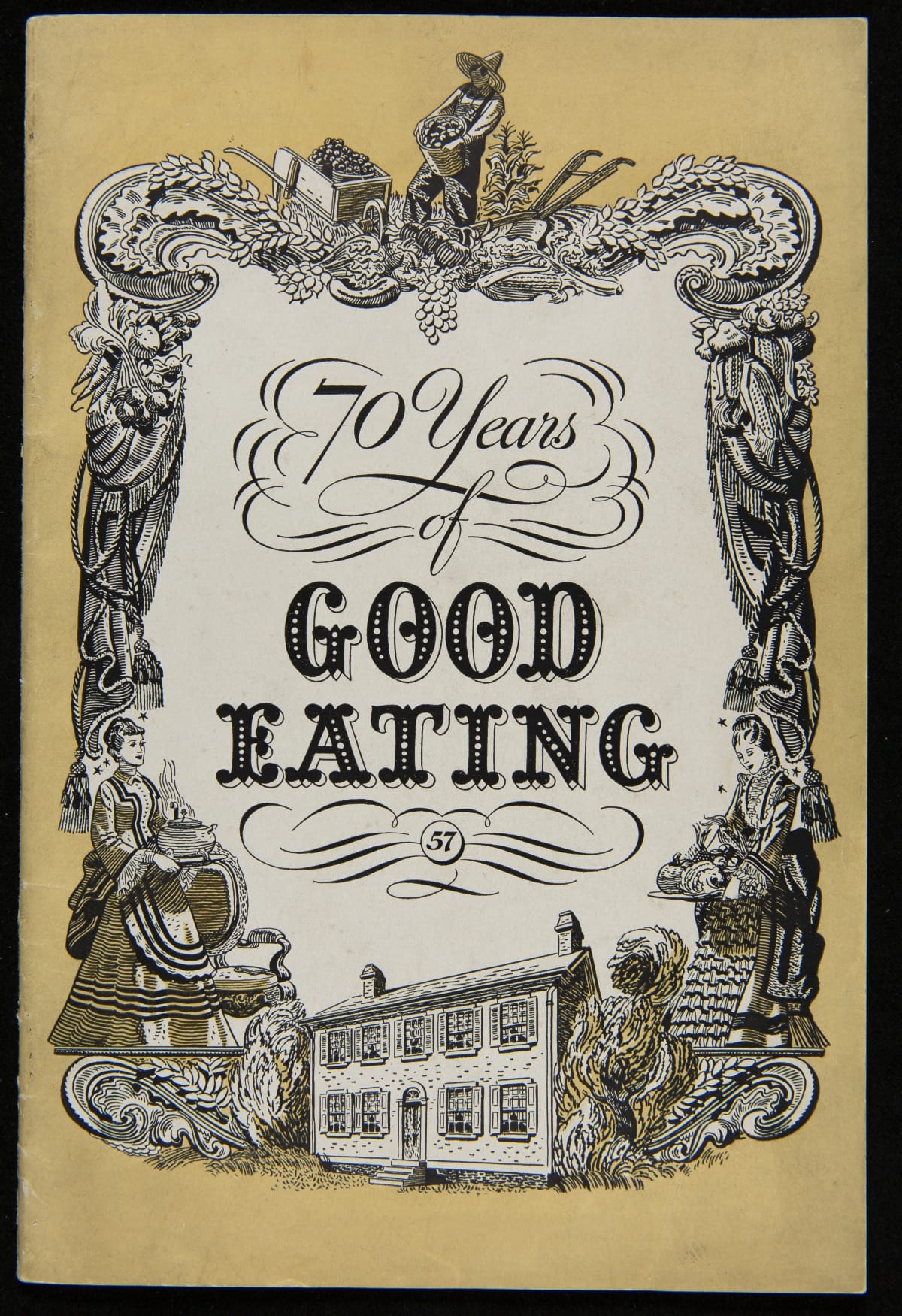
- "70 Years of Good Eating," H. J. Heinz Company, Pittsburgh, Pennsylvania, 1939 - This booklet from 1939 provides readers with a history of the evolution of the H.J. Heinz Company's product line from exclusively selling horseradish to selling ready-to-serve foods like Heinz Cooked Spaghetti. It also features "behind the scenes" photographs of the Pittsburgh, Pennsylvania, factory and a look at the various Heinz factory plants from around the world.
- 1939
- Collections - Artifact
"70 Years of Good Eating," H. J. Heinz Company, Pittsburgh, Pennsylvania, 1939
This booklet from 1939 provides readers with a history of the evolution of the H.J. Heinz Company's product line from exclusively selling horseradish to selling ready-to-serve foods like Heinz Cooked Spaghetti. It also features "behind the scenes" photographs of the Pittsburgh, Pennsylvania, factory and a look at the various Heinz factory plants from around the world.
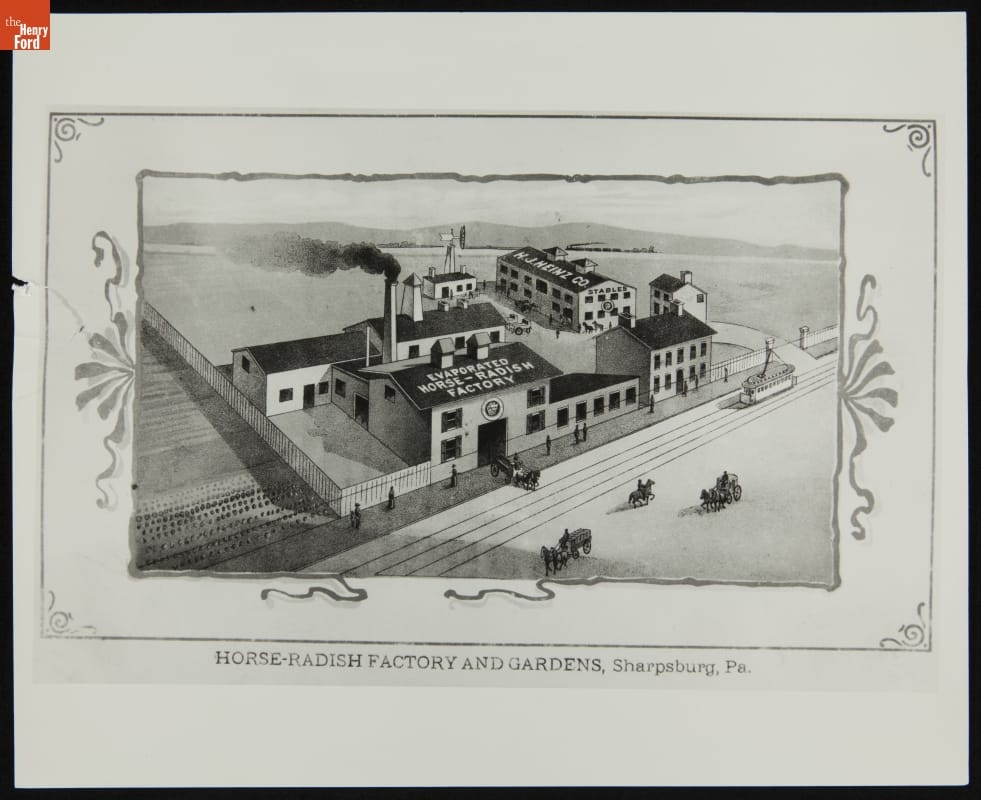
- H. J. Heinz Company Factory, Heinz House and Garden, Sharpsburg, Pennsylvania, 1895 - In 1869, enterprising Henry J. Heinz began his successful business by bottling horseradish in the basement of his parents' home in Sharpsburg, Pennsylvania. By 1895 that small operation had turned into a full-fledged factory. This image provides an overhead view of what was by then called the "Horseradish Factory." The "House Where We Began" can be seen on the far right.
- 1895
- Collections - Artifact
H. J. Heinz Company Factory, Heinz House and Garden, Sharpsburg, Pennsylvania, 1895
In 1869, enterprising Henry J. Heinz began his successful business by bottling horseradish in the basement of his parents' home in Sharpsburg, Pennsylvania. By 1895 that small operation had turned into a full-fledged factory. This image provides an overhead view of what was by then called the "Horseradish Factory." The "House Where We Began" can be seen on the far right.