
Search
- "Saran Wrap" Transparent Cling Wrap, circa 1954 - Saran Wrap, introduced in 1953, came from the research and development that created many plastics during World War II. Its strength and tight clinginess--and ability to keep food fresher longer--made it popular with consumers. Though convenient and inexpensive, plastic wrap is made from chemicals that are potentially harmful as they break down. Plastic wrap is hard to recycle, contributing to the plastic pollution crisis.
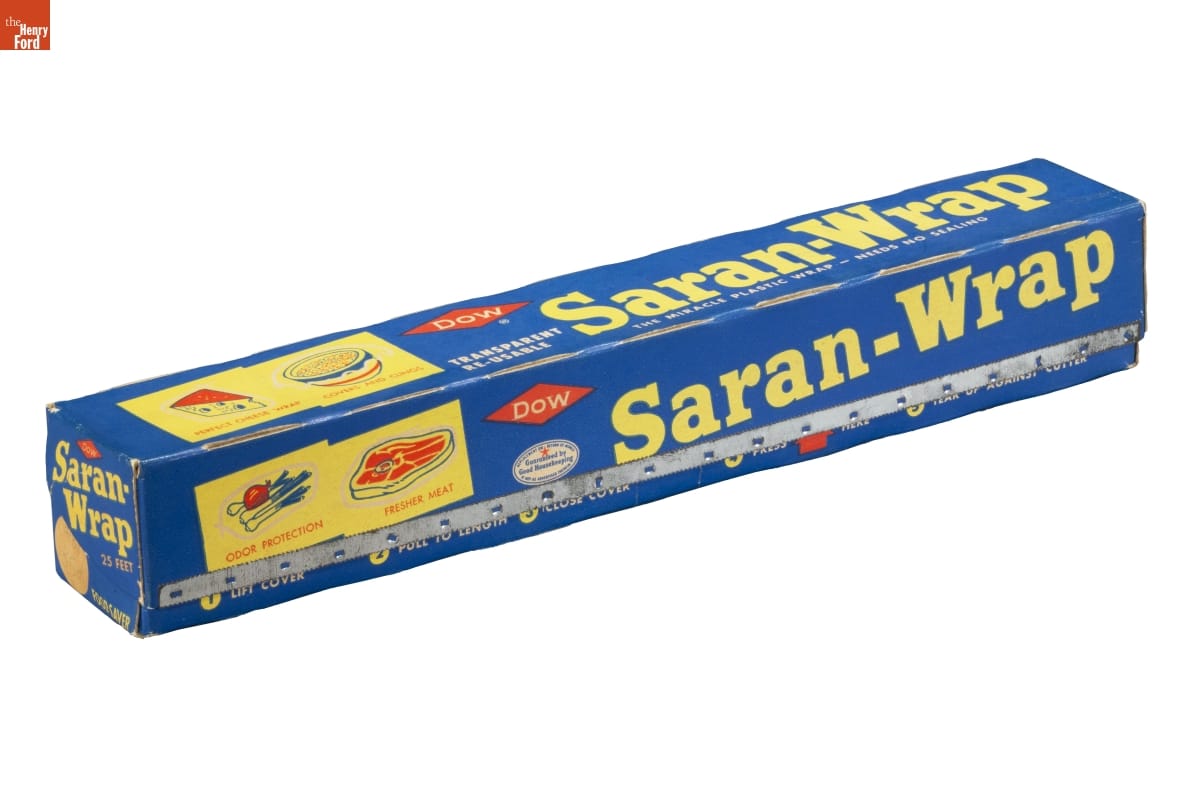
- circa 1954
- Collections - Artifact
"Saran Wrap" Transparent Cling Wrap, circa 1954
Saran Wrap, introduced in 1953, came from the research and development that created many plastics during World War II. Its strength and tight clinginess--and ability to keep food fresher longer--made it popular with consumers. Though convenient and inexpensive, plastic wrap is made from chemicals that are potentially harmful as they break down. Plastic wrap is hard to recycle, contributing to the plastic pollution crisis.
- "Zip-Strip Saran Wrap" Transparent Cling Wrap, circa 1959 - Saran Wrap, introduced in 1953, came from the research and development that created many plastics during World War II. Its strength and tight clinginess--and ability to keep food fresher longer--made it popular with consumers. Though convenient and inexpensive, plastic wrap is made from chemicals that are potentially harmful as they break down. Plastic wrap is hard to recycle, contributing to the plastic pollution crisis.
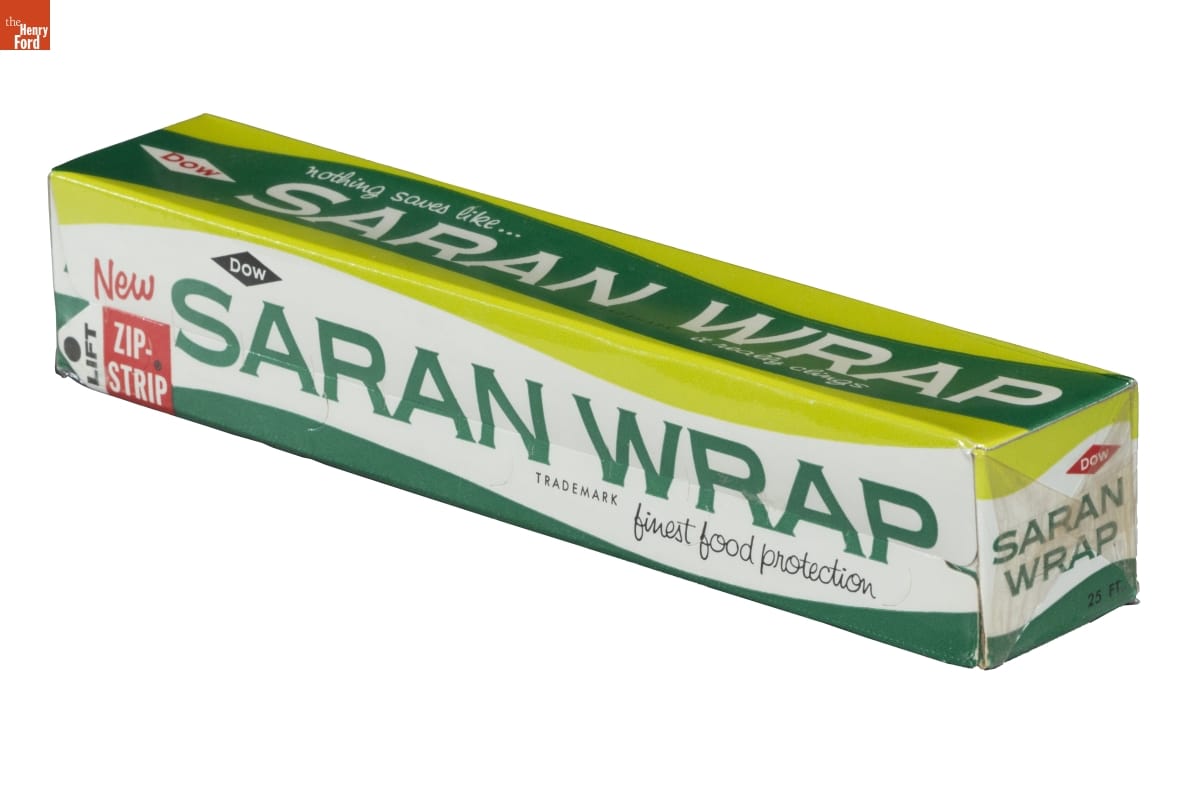
- circa 1959
- Collections - Artifact
"Zip-Strip Saran Wrap" Transparent Cling Wrap, circa 1959
Saran Wrap, introduced in 1953, came from the research and development that created many plastics during World War II. Its strength and tight clinginess--and ability to keep food fresher longer--made it popular with consumers. Though convenient and inexpensive, plastic wrap is made from chemicals that are potentially harmful as they break down. Plastic wrap is hard to recycle, contributing to the plastic pollution crisis.
- "Saran Wrap" Transparent Cling Wrap, circa 1954 - Saran Wrap, introduced in 1953, came from the research and development that created many plastics during World War II. Its strength and tight clinginess--and ability to keep food fresher longer--made it popular with consumers. Though convenient and inexpensive, plastic wrap is made from chemicals that are potentially harmful as they break down. Plastic wrap is hard to recycle, contributing to the plastic pollution crisis.
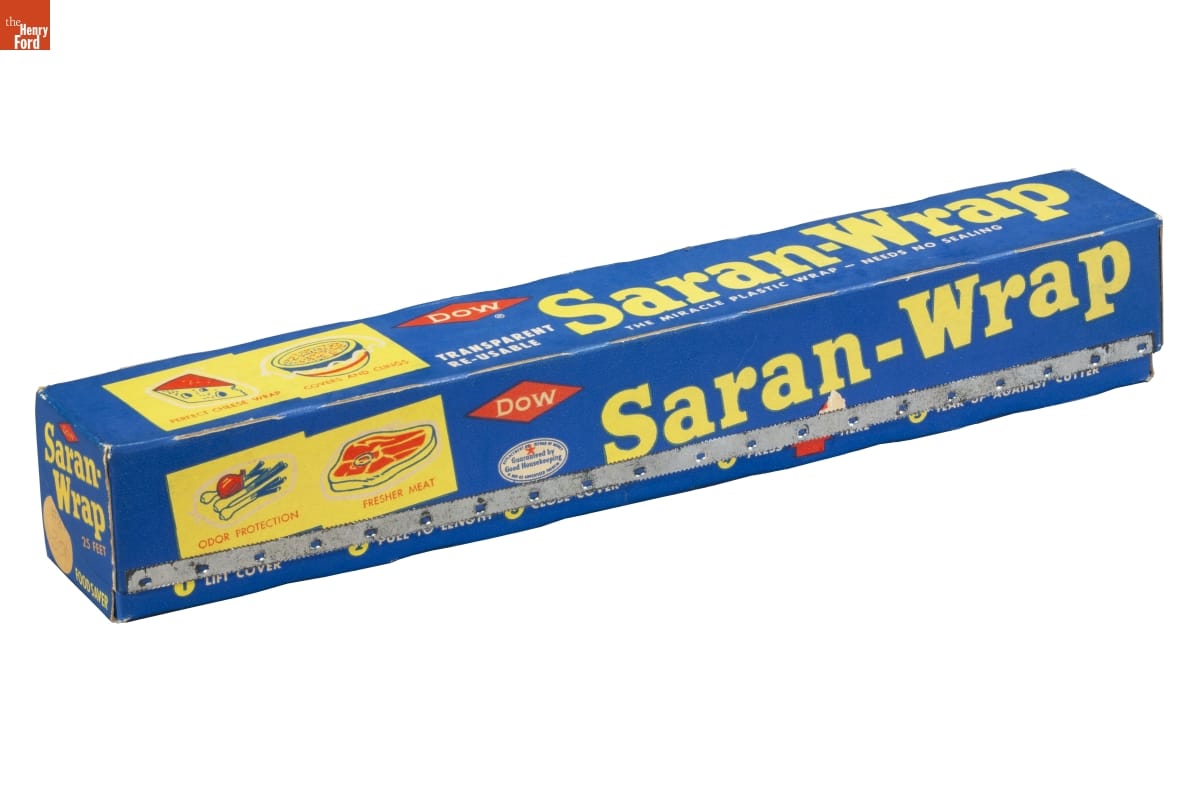
- circa 1954
- Collections - Artifact
"Saran Wrap" Transparent Cling Wrap, circa 1954
Saran Wrap, introduced in 1953, came from the research and development that created many plastics during World War II. Its strength and tight clinginess--and ability to keep food fresher longer--made it popular with consumers. Though convenient and inexpensive, plastic wrap is made from chemicals that are potentially harmful as they break down. Plastic wrap is hard to recycle, contributing to the plastic pollution crisis.
- "Zip-Strip Saran Wrap" Transparent Cling Wrap, circa 1959 - Saran Wrap, introduced in 1953, came from the research and development that created many plastics during World War II. Its strength and tight clinginess--and ability to keep food fresher longer--made it popular with consumers. Though convenient and inexpensive, plastic wrap is made from chemicals that are potentially harmful as they break down. Plastic wrap is hard to recycle, contributing to the plastic pollution crisis.
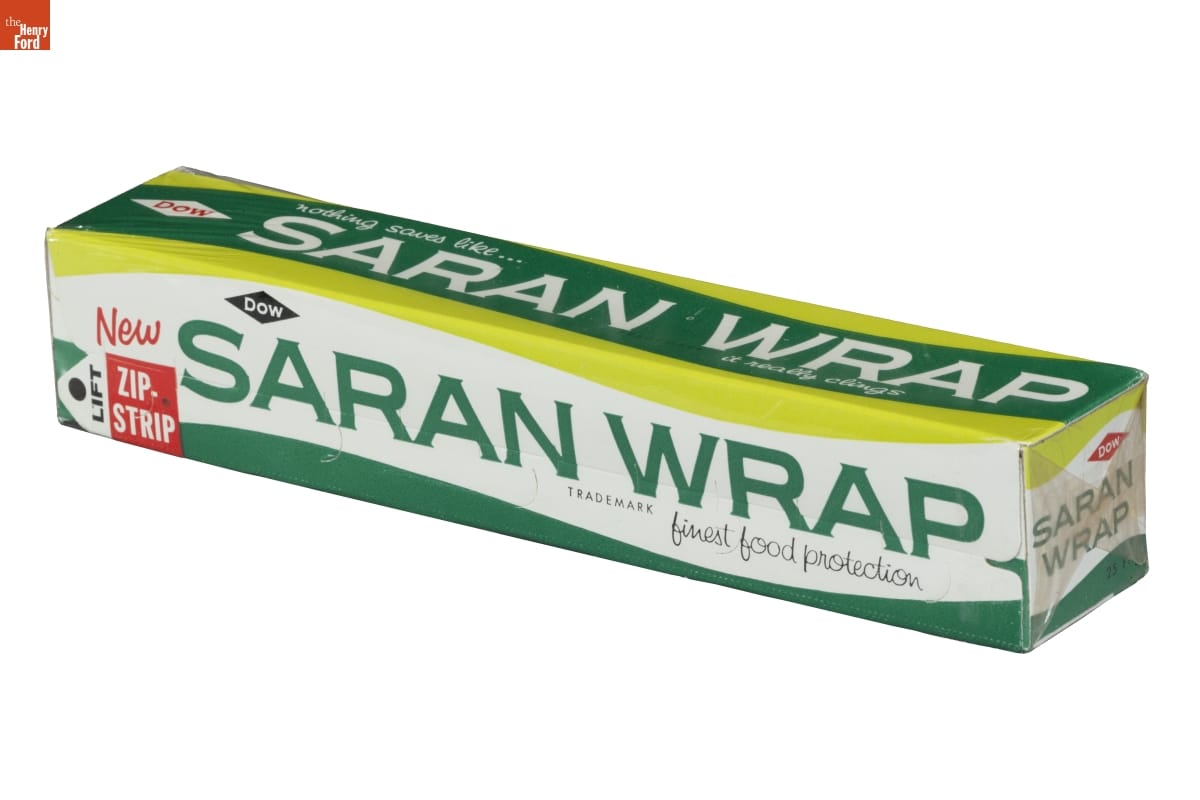
- circa 1959
- Collections - Artifact
"Zip-Strip Saran Wrap" Transparent Cling Wrap, circa 1959
Saran Wrap, introduced in 1953, came from the research and development that created many plastics during World War II. Its strength and tight clinginess--and ability to keep food fresher longer--made it popular with consumers. Though convenient and inexpensive, plastic wrap is made from chemicals that are potentially harmful as they break down. Plastic wrap is hard to recycle, contributing to the plastic pollution crisis.