
Search
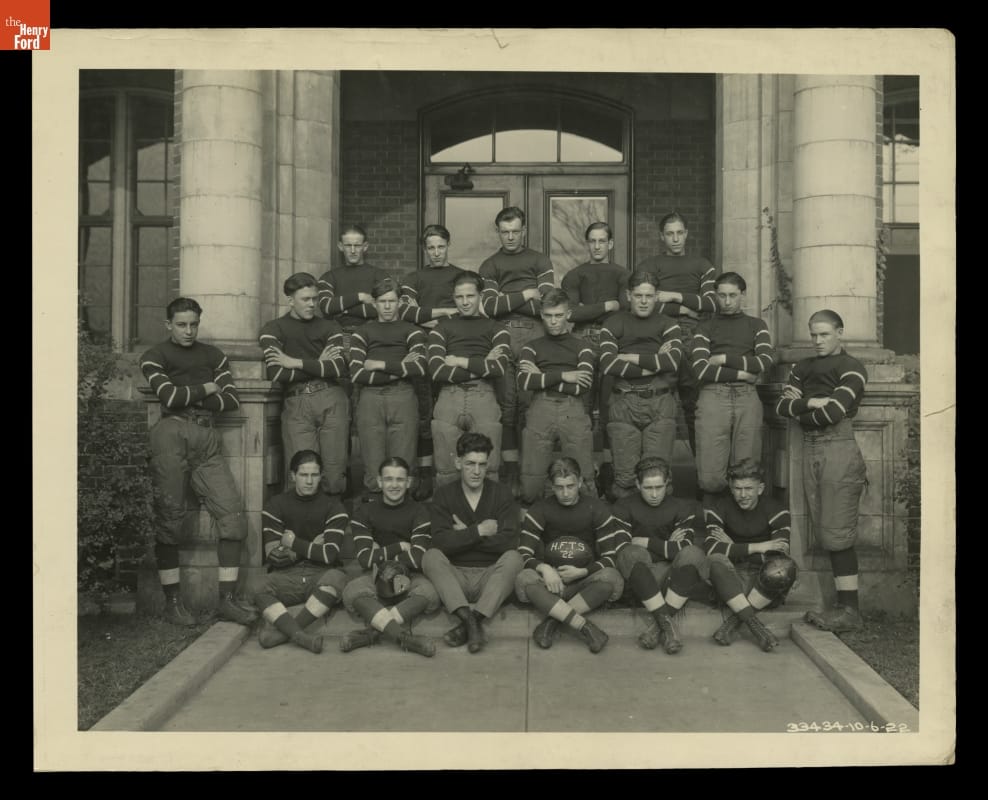
- Henry Ford Trade School Football Team, 1922 - Boys who attended the Henry Ford Trade School learned by doing. The school, the brainchild of Henry Ford, trained teenage boys in a variety of skilled, industrial trade work. In addition to the manual training received, students attended traditional academic classes and could take part in athletic opportunities through a variety of sports like football.
- October 06, 1922
- Collections - Artifact
Henry Ford Trade School Football Team, 1922
Boys who attended the Henry Ford Trade School learned by doing. The school, the brainchild of Henry Ford, trained teenage boys in a variety of skilled, industrial trade work. In addition to the manual training received, students attended traditional academic classes and could take part in athletic opportunities through a variety of sports like football.
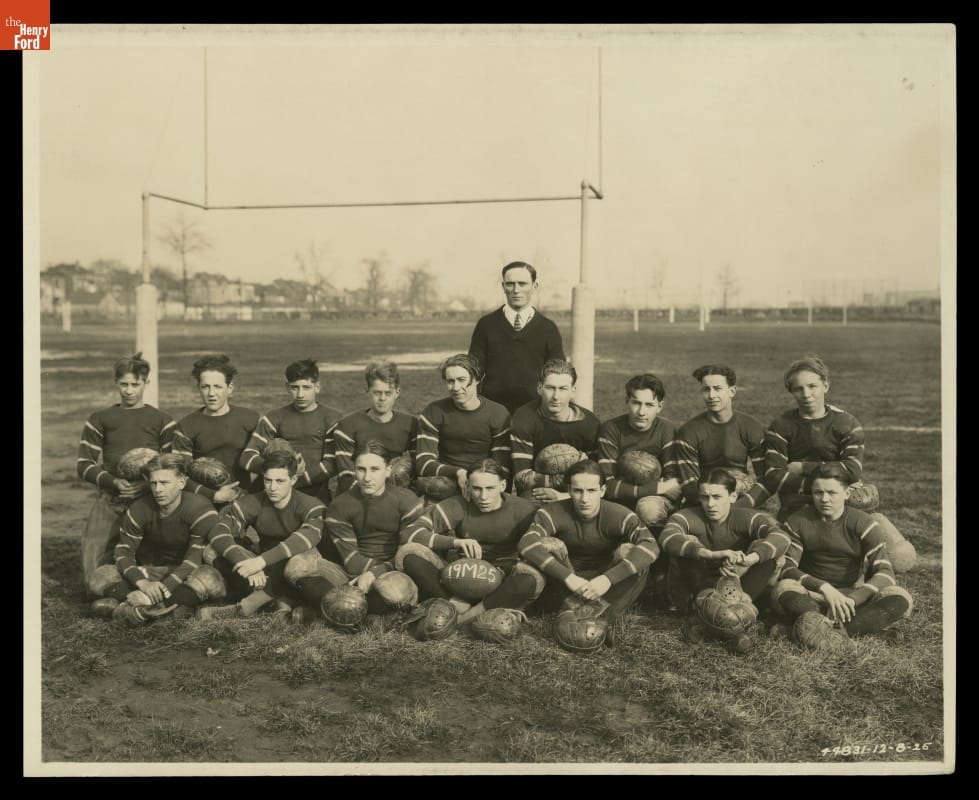
- Henry Ford Trade School Football Team, December 1925 - Boys who attended the Henry Ford Trade School learned by doing. The school, the brainchild of Henry Ford, trained teenage boys in a variety of skilled, industrial trade work. In addition to the manual training received, students attended traditional academic classes and could take part in athletic opportunities through a variety of sports like football.
- December 08, 1925
- Collections - Artifact
Henry Ford Trade School Football Team, December 1925
Boys who attended the Henry Ford Trade School learned by doing. The school, the brainchild of Henry Ford, trained teenage boys in a variety of skilled, industrial trade work. In addition to the manual training received, students attended traditional academic classes and could take part in athletic opportunities through a variety of sports like football.
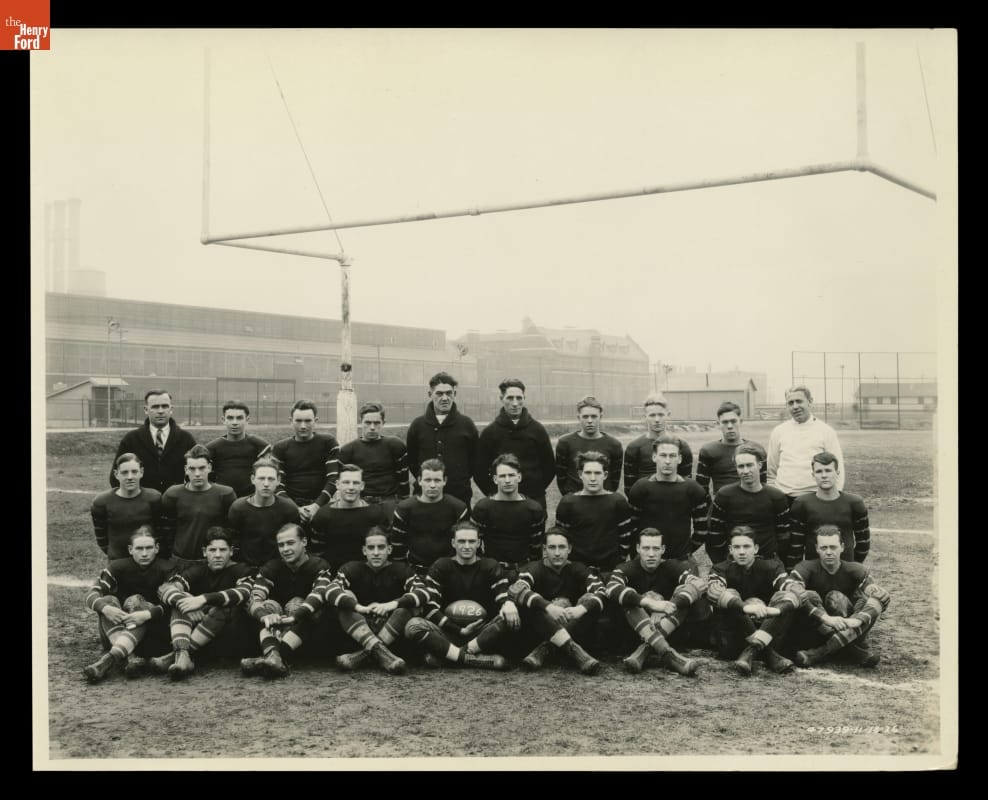
- Henry Ford Trade School Football Team, November 1926 - Boys who attended the Henry Ford Trade School learned by doing. The school, the brainchild of Henry Ford, trained teenage boys in a variety of skilled, industrial trade work. In addition to the manual training received, students attended traditional academic classes and could take part in athletic opportunities through a variety of sports like football.
- November 13, 1926
- Collections - Artifact
Henry Ford Trade School Football Team, November 1926
Boys who attended the Henry Ford Trade School learned by doing. The school, the brainchild of Henry Ford, trained teenage boys in a variety of skilled, industrial trade work. In addition to the manual training received, students attended traditional academic classes and could take part in athletic opportunities through a variety of sports like football.
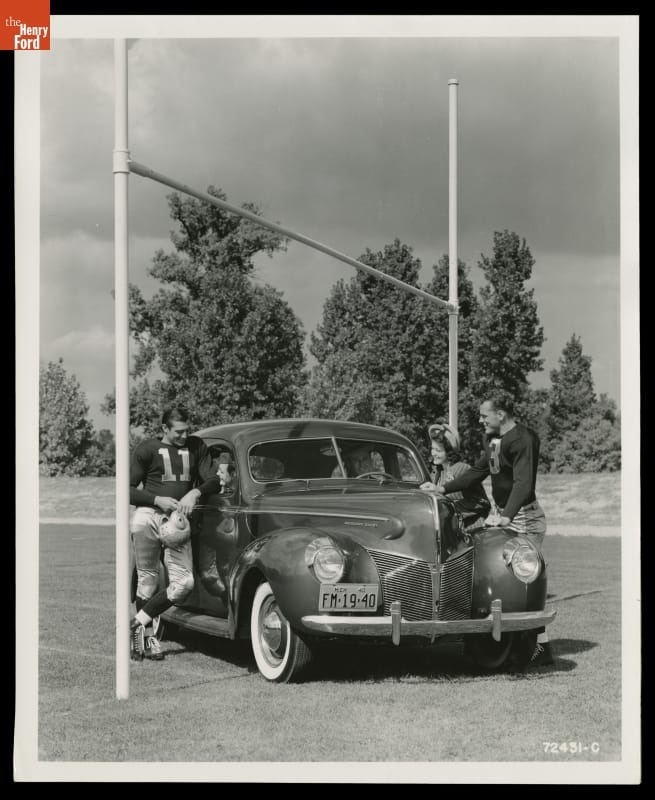
- Advertising Photograph, Young Woman and Football Players with a 1940 Mercury Town Sedan - Ford Motor Company launched its Mercury line for 1939. The medium-priced car fit neatly between the basic Ford and the upmarket Lincoln. Ford promoted Mercury as a larger car that was economical to operate. The 1940 model seen here featured a 116-inch wheelbase -- four inches longer than a comparable Ford -- and fuel economy of up to 20 miles per gallon.
- September 21, 1939
- Collections - Artifact
Advertising Photograph, Young Woman and Football Players with a 1940 Mercury Town Sedan
Ford Motor Company launched its Mercury line for 1939. The medium-priced car fit neatly between the basic Ford and the upmarket Lincoln. Ford promoted Mercury as a larger car that was economical to operate. The 1940 model seen here featured a 116-inch wheelbase -- four inches longer than a comparable Ford -- and fuel economy of up to 20 miles per gallon.
- Advertising Photograph, Young Woman and Football Players with a 1940 Mercury Town Sedan - Ford Motor Company launched its Mercury line for 1939. The medium-priced car fit neatly between the basic Ford and the upmarket Lincoln. Ford promoted Mercury as a larger car that was economical to operate. The 1940 model seen here featured a 116-inch wheelbase -- four inches longer than a comparable Ford -- and fuel economy of up to 20 miles per gallon.
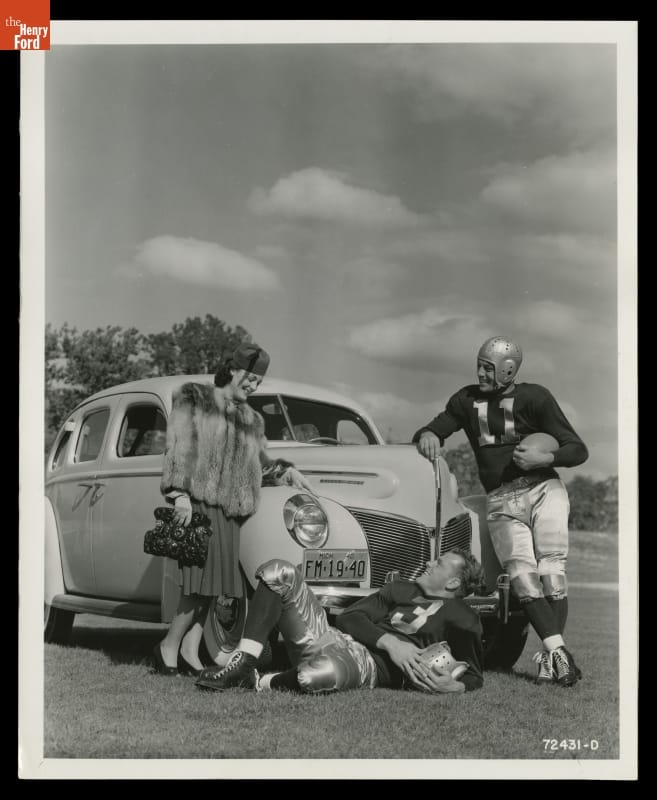
- September 21, 1939
- Collections - Artifact
Advertising Photograph, Young Woman and Football Players with a 1940 Mercury Town Sedan
Ford Motor Company launched its Mercury line for 1939. The medium-priced car fit neatly between the basic Ford and the upmarket Lincoln. Ford promoted Mercury as a larger car that was economical to operate. The 1940 model seen here featured a 116-inch wheelbase -- four inches longer than a comparable Ford -- and fuel economy of up to 20 miles per gallon.
- Advertising Photograph, Young Woman and Football Player with a 1940 Mercury Town Sedan - Ford Motor Company launched its Mercury line for 1939. The medium-priced car fit neatly between the basic Ford and the upmarket Lincoln. Ford promoted Mercury as a larger car that was economical to operate. The 1940 model seen here featured a 116-inch wheelbase -- four inches longer than a comparable Ford -- and fuel economy of up to 20 miles per gallon.
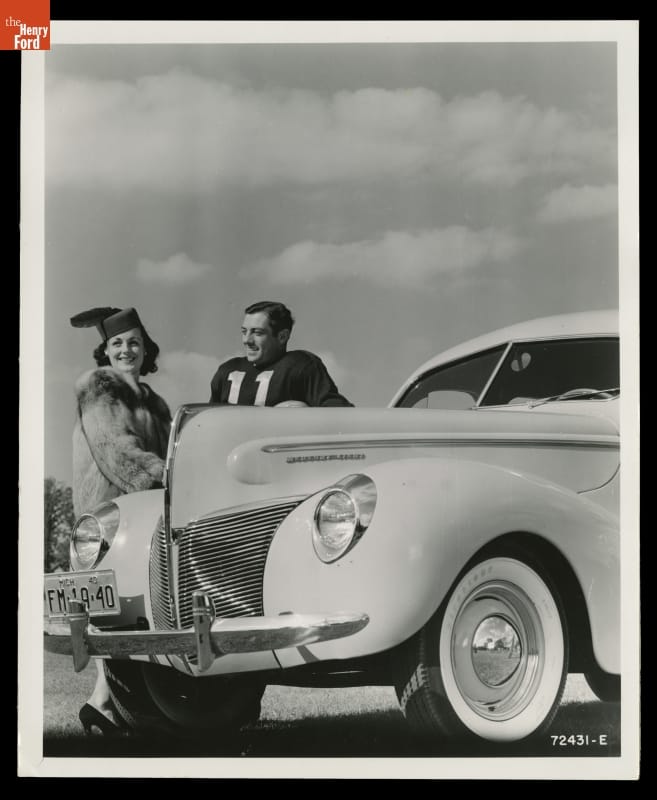
- September 21, 1939
- Collections - Artifact
Advertising Photograph, Young Woman and Football Player with a 1940 Mercury Town Sedan
Ford Motor Company launched its Mercury line for 1939. The medium-priced car fit neatly between the basic Ford and the upmarket Lincoln. Ford promoted Mercury as a larger car that was economical to operate. The 1940 model seen here featured a 116-inch wheelbase -- four inches longer than a comparable Ford -- and fuel economy of up to 20 miles per gallon.
- Advertising Photograph, Young Woman and Football Players with a 1940 Mercury Town Sedan - Ford Motor Company launched its Mercury line for 1939. The medium-priced car fit neatly between the basic Ford and the upmarket Lincoln. Ford promoted Mercury as a larger car that was economical to operate. The 1940 model seen here featured a 116-inch wheelbase -- four inches longer than a comparable Ford -- and fuel economy of up to 20 miles per gallon.
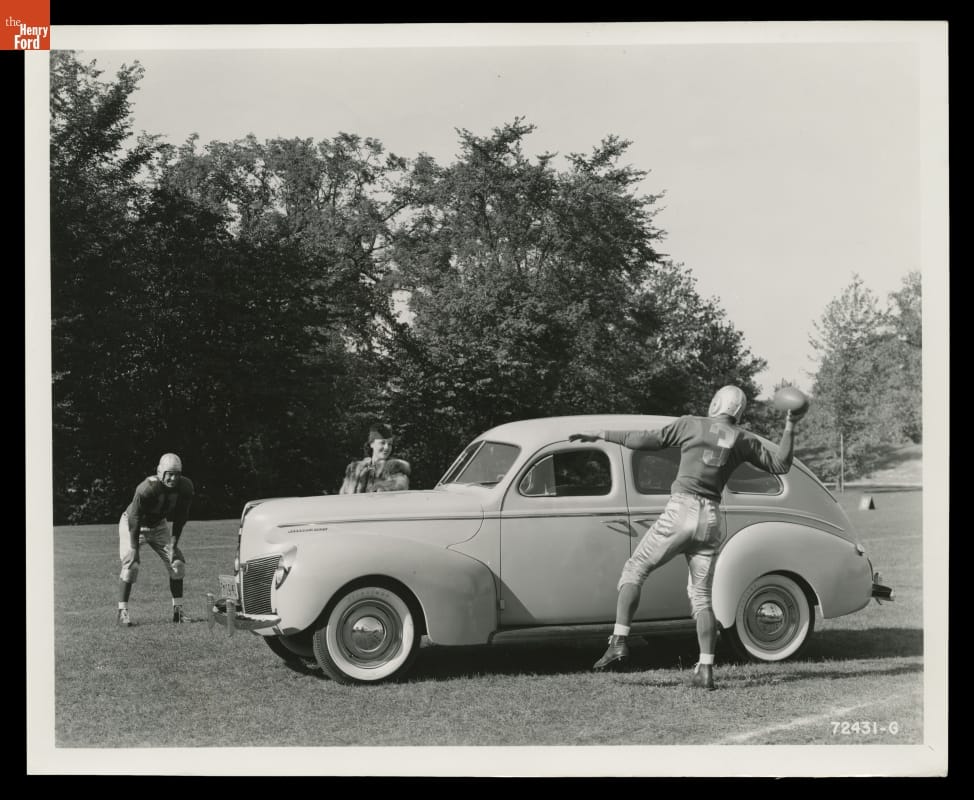
- September 21, 1939
- Collections - Artifact
Advertising Photograph, Young Woman and Football Players with a 1940 Mercury Town Sedan
Ford Motor Company launched its Mercury line for 1939. The medium-priced car fit neatly between the basic Ford and the upmarket Lincoln. Ford promoted Mercury as a larger car that was economical to operate. The 1940 model seen here featured a 116-inch wheelbase -- four inches longer than a comparable Ford -- and fuel economy of up to 20 miles per gallon.
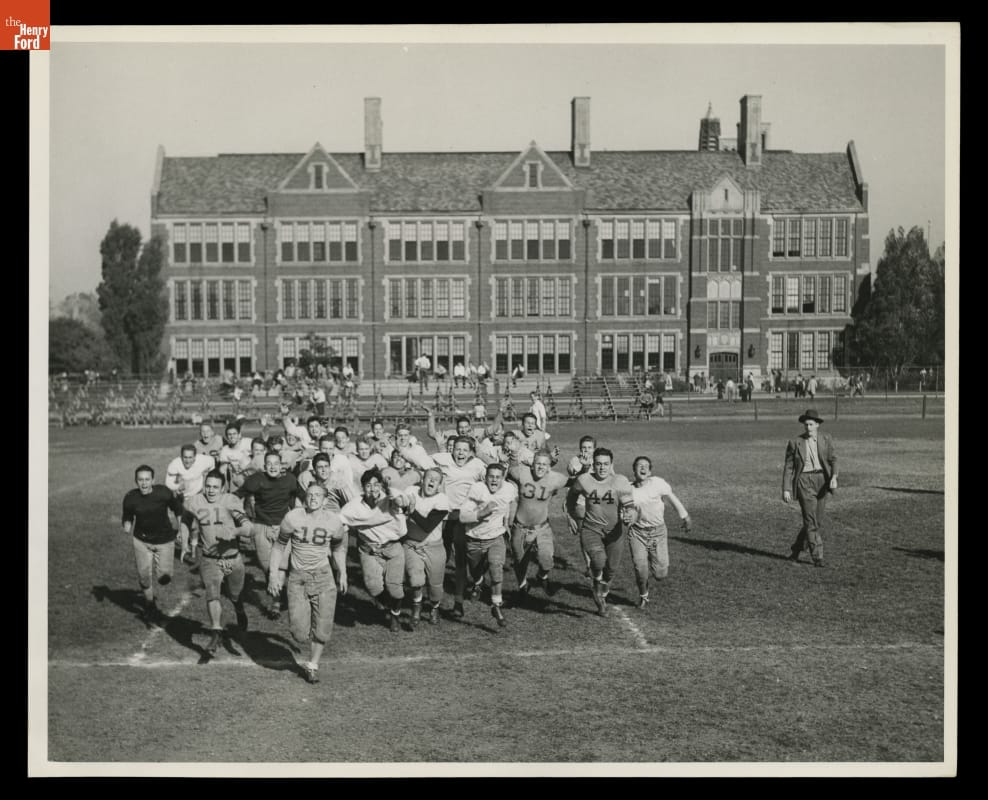
- Advertising Photograph for the Detroit Catholic Central versus Boys Town Football Game on October 22, 1944 -
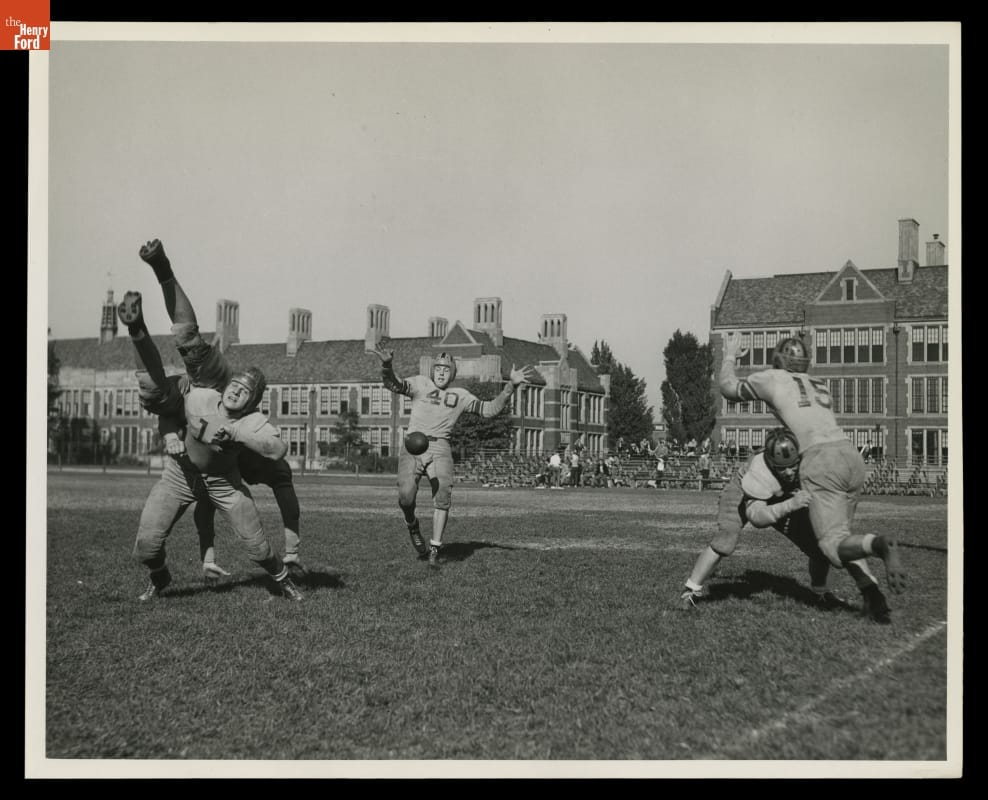
- October 14, 1944
- Collections - Artifact
Advertising Photograph for the Detroit Catholic Central versus Boys Town Football Game on October 22, 1944
- Advertising Photograph for the Detroit Catholic Central versus Boys Town Football Game on October 22, 1944 -
- October 14, 1944
- Collections - Artifact
Advertising Photograph for the Detroit Catholic Central versus Boys Town Football Game on October 22, 1944
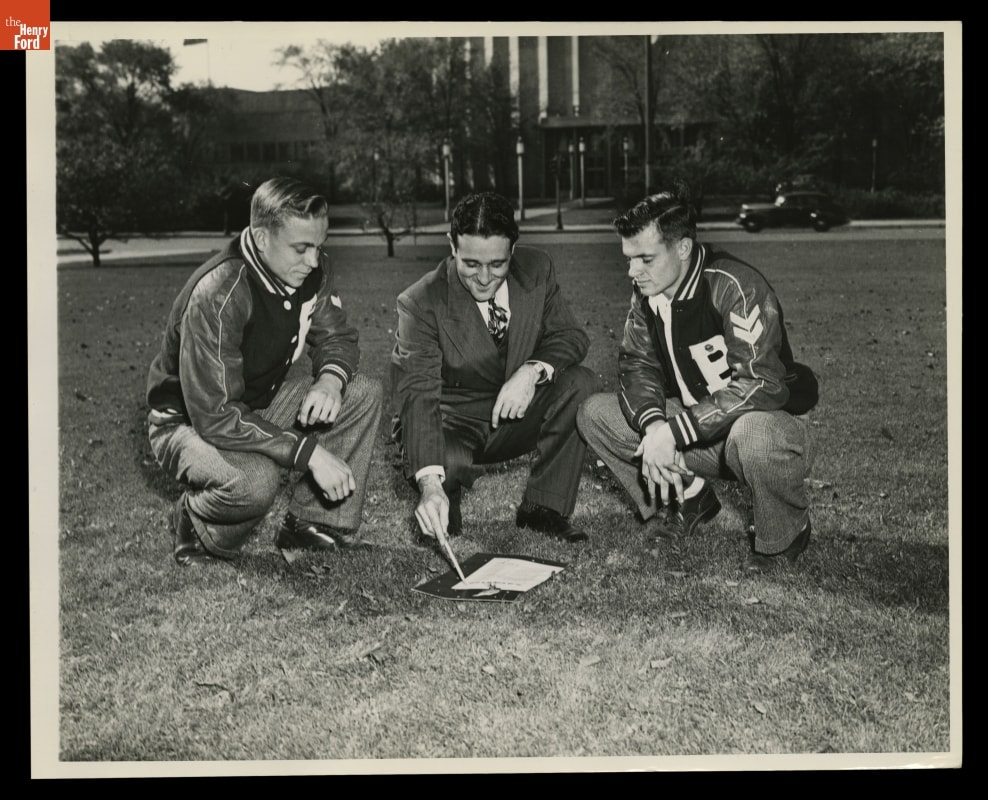
- Boys Town Football Players Visiting the Ford Rouge Plant before Game with Detroit Catholic Central, October 21, 1944 -
- October 21, 1944
- Collections - Artifact
Boys Town Football Players Visiting the Ford Rouge Plant before Game with Detroit Catholic Central, October 21, 1944