
Search
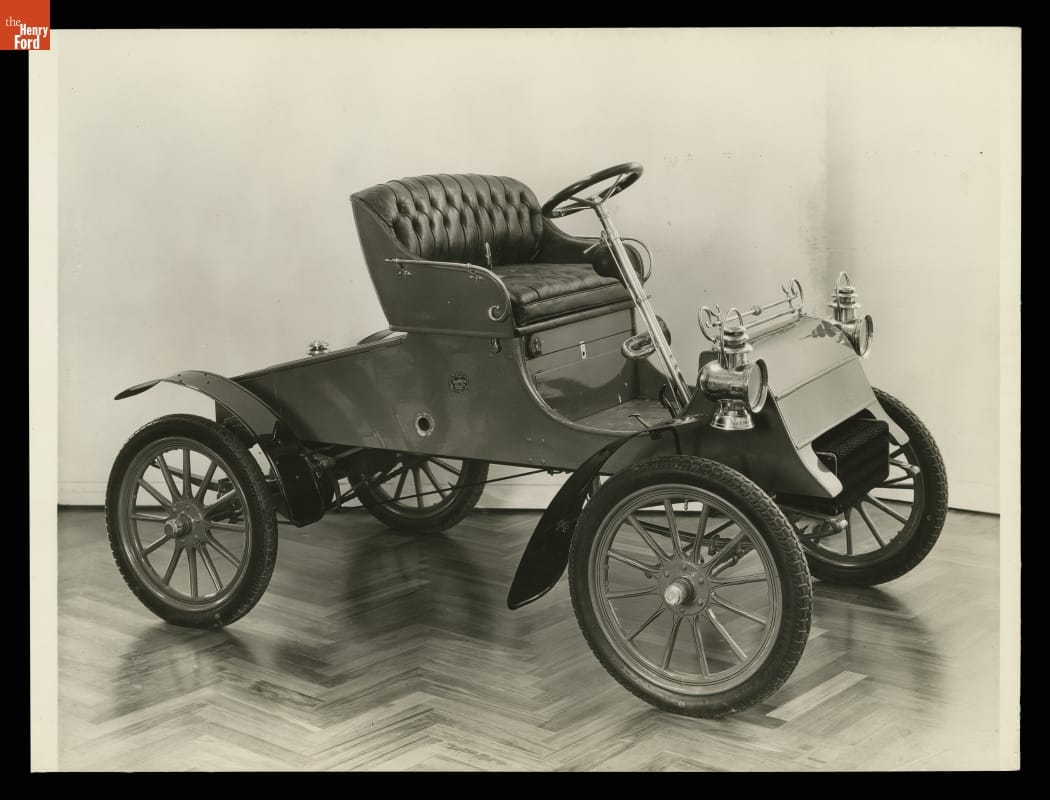
- 1903 Ford Model A Roadster in Henry Ford Museum, circa 1934 - A 1934 exhibition at Henry Ford's museum in Dearborn, Michigan, featured this Model A roadster, the first automobile produced and sold by the fledgling Ford Motor Company. In many ways, the original Ford was typical -- it looked like a carriage without the horse. But unlike other early autos, the 1903 Model A had a steering wheel rather than a tiller.
- April 20, 1934
- Collections - Artifact
1903 Ford Model A Roadster in Henry Ford Museum, circa 1934
A 1934 exhibition at Henry Ford's museum in Dearborn, Michigan, featured this Model A roadster, the first automobile produced and sold by the fledgling Ford Motor Company. In many ways, the original Ford was typical -- it looked like a carriage without the horse. But unlike other early autos, the 1903 Model A had a steering wheel rather than a tiller.
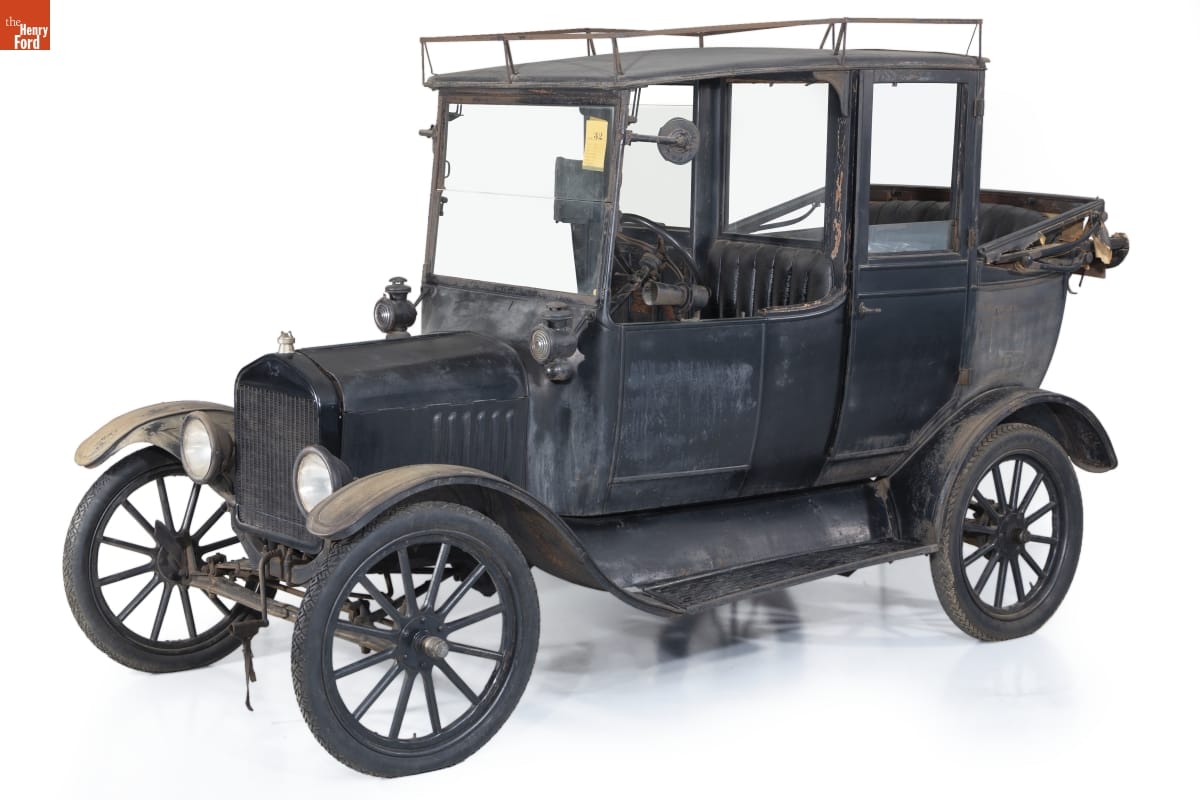
- 1917 Ford Model T Taxicab - The ever-versatile Ford Model T could be adapted for taxicab service. Taxi drivers appreciated the same qualities that made the Model T so appealing to private owners: its low price and modest operating costs. This cab features a landaulet body -- with a fixed roof for the driver and a convertible roof for the passengers.
- 1917
- Collections - Artifact
1917 Ford Model T Taxicab
The ever-versatile Ford Model T could be adapted for taxicab service. Taxi drivers appreciated the same qualities that made the Model T so appealing to private owners: its low price and modest operating costs. This cab features a landaulet body -- with a fixed roof for the driver and a convertible roof for the passengers.
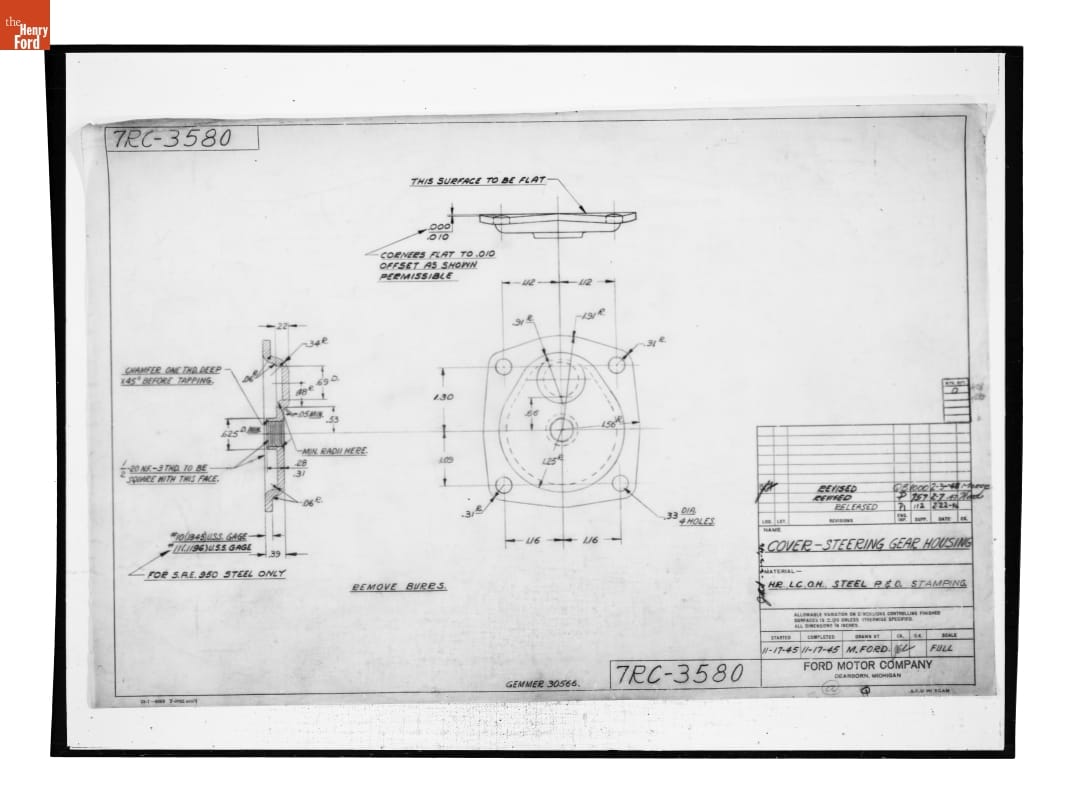
- Drawing, "Cover - Steering Gear Housing," Ford Automobile, February 3, 1948 - The Ford Motor Company created over a million parts drawings from 1903 to 1957. Many of these drawings specify engineering requirements for the components of Ford-made vehicles--including automobiles, trucks, tractors, military vehicles and Tri-motor airplanes. Others document assembly components, stages of casting and forging, or experimental designs. Beginning in the 1940s, Ford transferred the drawings to microfilm.
- February 03, 1948
- Collections - Artifact
Drawing, "Cover - Steering Gear Housing," Ford Automobile, February 3, 1948
The Ford Motor Company created over a million parts drawings from 1903 to 1957. Many of these drawings specify engineering requirements for the components of Ford-made vehicles--including automobiles, trucks, tractors, military vehicles and Tri-motor airplanes. Others document assembly components, stages of casting and forging, or experimental designs. Beginning in the 1940s, Ford transferred the drawings to microfilm.
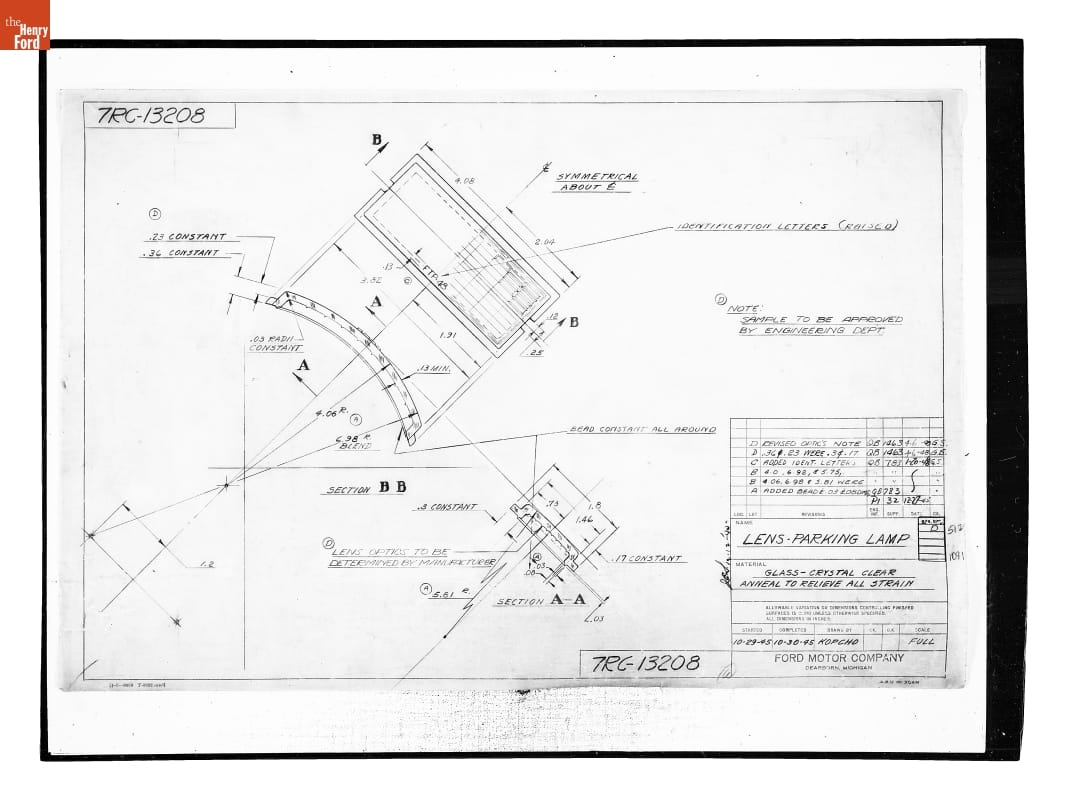
- Drawing, "Lens - Parking Lamp," Ford Automobile, April 6, 1948 - The Ford Motor Company created over a million parts drawings from 1903 to 1957. Many of these drawings specify engineering requirements for the components of Ford-made vehicles--including automobiles, trucks, tractors, military vehicles and Tri-motor airplanes. Others document assembly components, stages of casting and forging, or experimental designs. Beginning in the 1940s, Ford transferred the drawings to microfilm.
- April 06, 1948
- Collections - Artifact
Drawing, "Lens - Parking Lamp," Ford Automobile, April 6, 1948
The Ford Motor Company created over a million parts drawings from 1903 to 1957. Many of these drawings specify engineering requirements for the components of Ford-made vehicles--including automobiles, trucks, tractors, military vehicles and Tri-motor airplanes. Others document assembly components, stages of casting and forging, or experimental designs. Beginning in the 1940s, Ford transferred the drawings to microfilm.
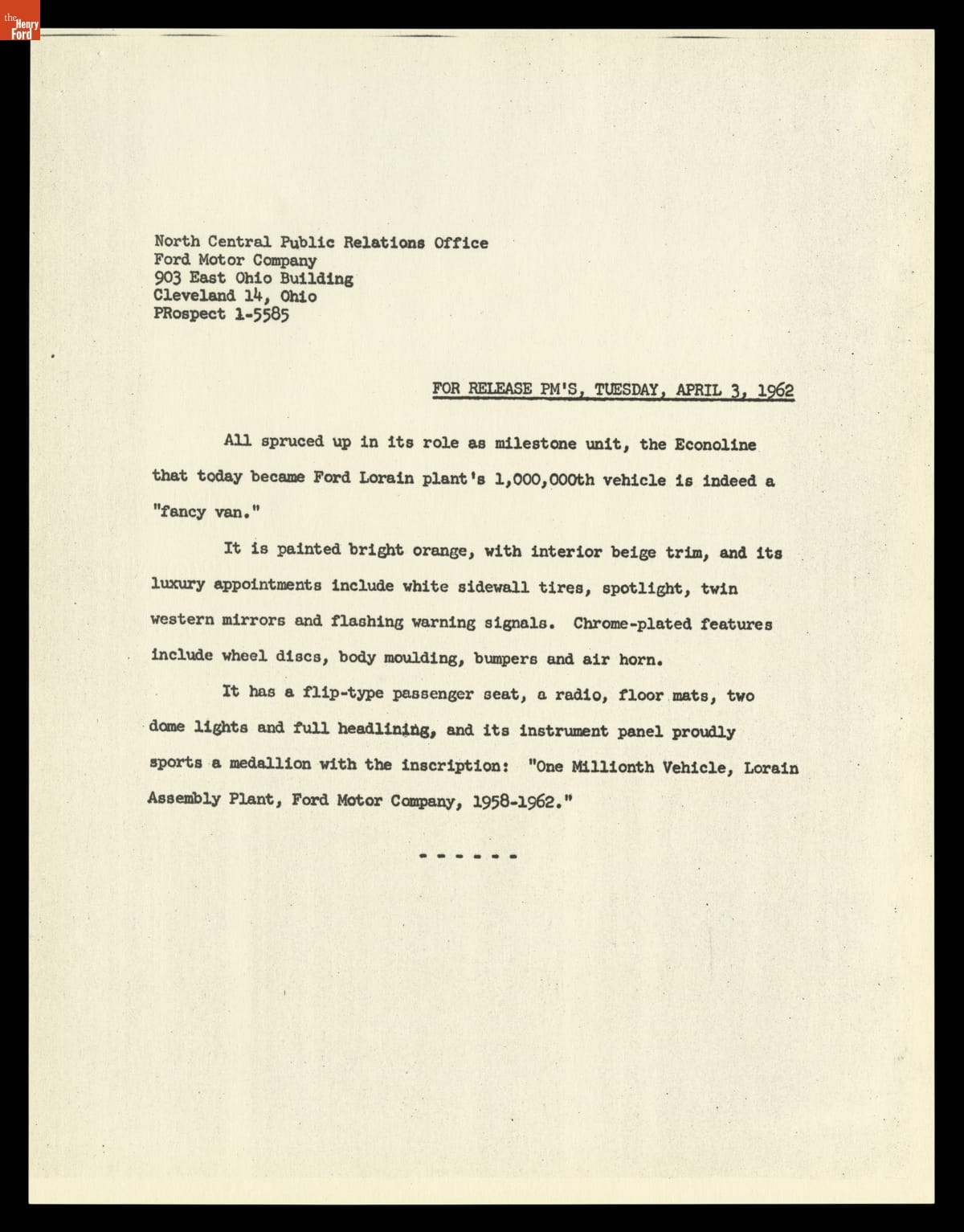
- One Millionth Vehicle Built at Ford Motor Comapany Assembly Plant, Lorain, Ohio, April 3, 1962 - Ford Motor Company opened an assembly plant in Lorain, Ohio, in 1958. Over the years, the factory manufactured various Ford and Mercury models. On April 3, 1962, employees celebrated production of the plant's one millionth vehicle: a Ford Econoline van. Workers at Lorain built another seven million vehicles before the plant closed in 2005.
- April 03, 1962
- Collections - Artifact
One Millionth Vehicle Built at Ford Motor Comapany Assembly Plant, Lorain, Ohio, April 3, 1962
Ford Motor Company opened an assembly plant in Lorain, Ohio, in 1958. Over the years, the factory manufactured various Ford and Mercury models. On April 3, 1962, employees celebrated production of the plant's one millionth vehicle: a Ford Econoline van. Workers at Lorain built another seven million vehicles before the plant closed in 2005.
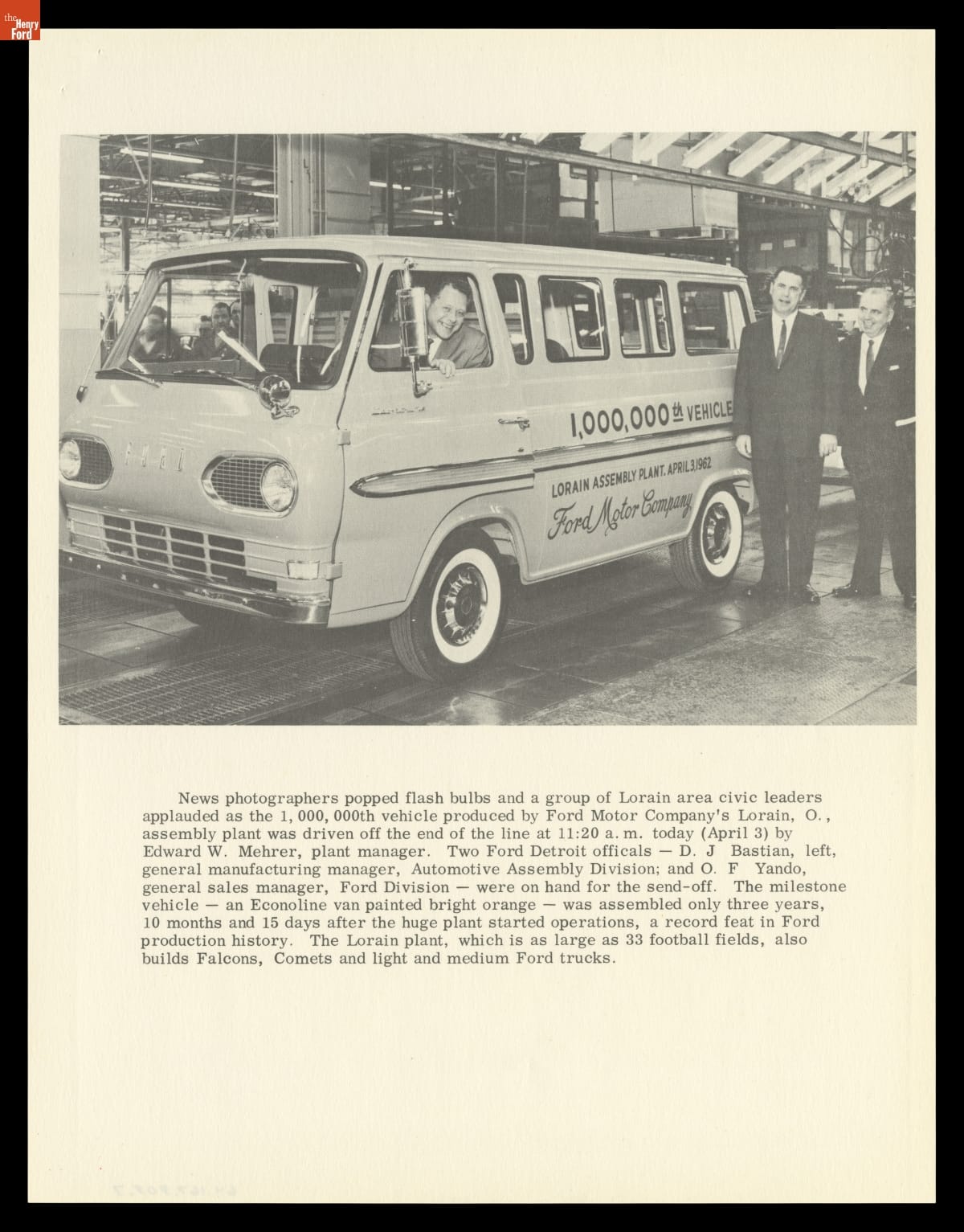
- 1,000,000th Vehicle Built at Ford Motor Company Assembly Plant, Lorain, Ohio, April 3, 1962 - Ford Motor Company opened an assembly plant in Lorain, Ohio, in 1958. Over the years, the factory manufactured various Ford and Mercury models. On April 3, 1962, employees celebrated production of the plant's one millionth vehicle: a Ford Econoline van. Workers at Lorain built another seven million vehicles before the plant closed in 2005.
- April 03, 1962
- Collections - Artifact
1,000,000th Vehicle Built at Ford Motor Company Assembly Plant, Lorain, Ohio, April 3, 1962
Ford Motor Company opened an assembly plant in Lorain, Ohio, in 1958. Over the years, the factory manufactured various Ford and Mercury models. On April 3, 1962, employees celebrated production of the plant's one millionth vehicle: a Ford Econoline van. Workers at Lorain built another seven million vehicles before the plant closed in 2005.
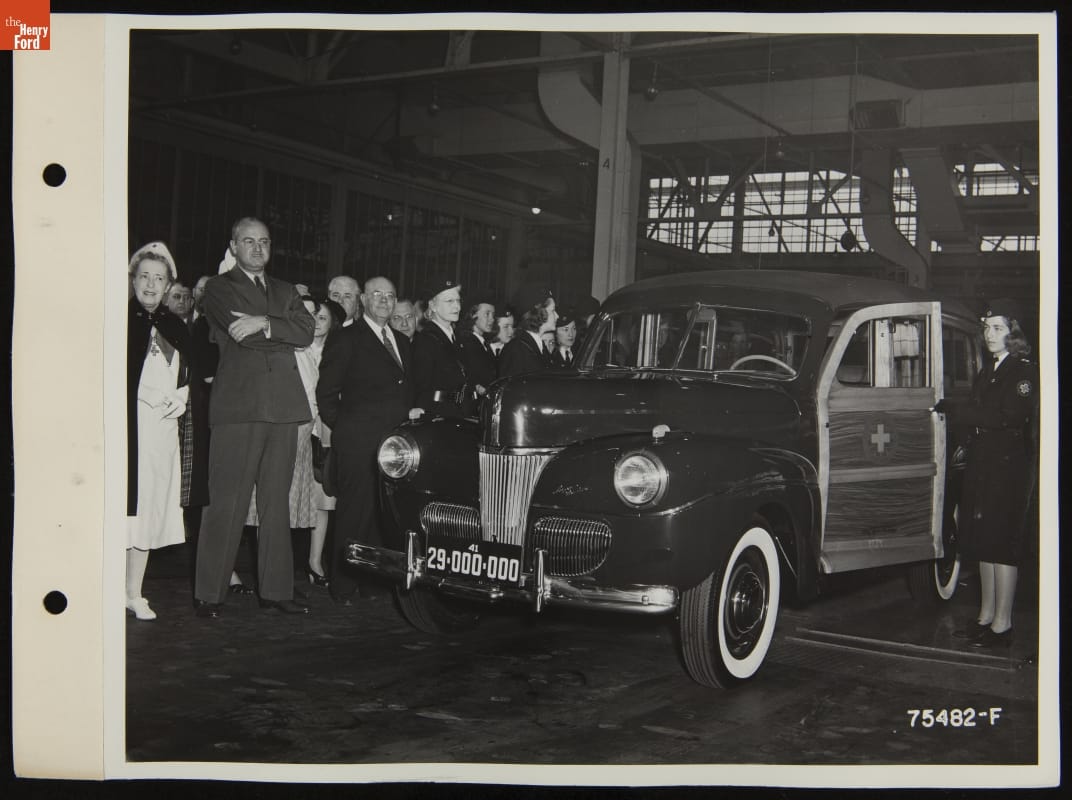
- Presenting the 29-Millionth Ford to the Red Cross Women's Motor Corps, April 29, 1941 - The 29 millionth Ford automobile rolled off the Rouge Plant assembly line in April 1941. Edsel Ford presented the Super DeLuxe station wagon to the Detroit chapter of the Red Cross. This production milestone vehicle became one of the vehicles used by the Red Cross Volunteer Motor Corps. Ford Motor Company had worked with this group previously, providing automobile maintenance training for its members.
- April 29, 1941
- Collections - Artifact
Presenting the 29-Millionth Ford to the Red Cross Women's Motor Corps, April 29, 1941
The 29 millionth Ford automobile rolled off the Rouge Plant assembly line in April 1941. Edsel Ford presented the Super DeLuxe station wagon to the Detroit chapter of the Red Cross. This production milestone vehicle became one of the vehicles used by the Red Cross Volunteer Motor Corps. Ford Motor Company had worked with this group previously, providing automobile maintenance training for its members.
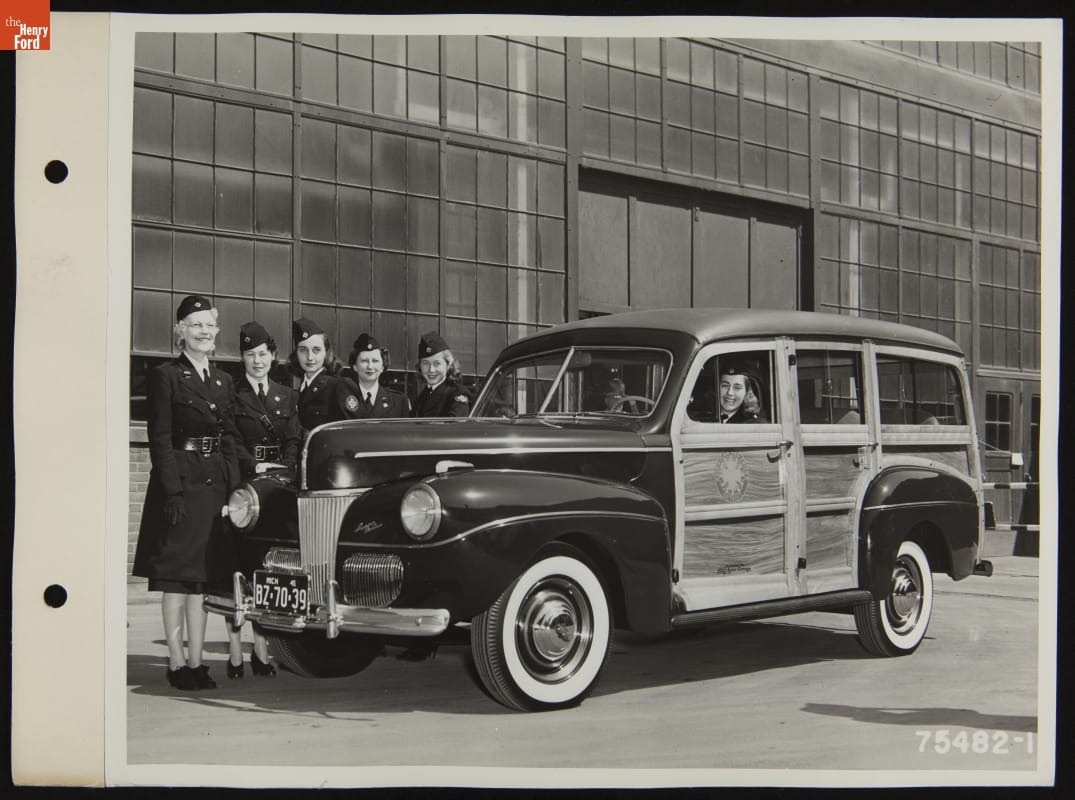
- The 29-Millionth Ford is Presented to the Red Cross Women's Motor Corps, April 29, 1941 - The 29 millionth Ford automobile rolled off the Rouge Plant assembly line in April 1941. Edsel Ford presented the Super DeLuxe station wagon to the Detroit chapter of the Red Cross. This production milestone vehicle became one of the vehicles used by the Red Cross Volunteer Motor Corps. Ford Motor Company had worked with this group previously, providing automobile maintenance training for its members.
- April 29, 1941
- Collections - Artifact
The 29-Millionth Ford is Presented to the Red Cross Women's Motor Corps, April 29, 1941
The 29 millionth Ford automobile rolled off the Rouge Plant assembly line in April 1941. Edsel Ford presented the Super DeLuxe station wagon to the Detroit chapter of the Red Cross. This production milestone vehicle became one of the vehicles used by the Red Cross Volunteer Motor Corps. Ford Motor Company had worked with this group previously, providing automobile maintenance training for its members.
- The 29-Millionth Ford, Presented to the Red Cross Women's Motor Corps, April 29, 1941 - The 29 millionth Ford automobile rolled off the Rouge Plant assembly line in April 1941. Edsel Ford presented the Super DeLuxe station wagon to the Detroit chapter of the Red Cross. This production milestone vehicle became one of the vehicles used by the Red Cross Volunteer Motor Corps. Ford Motor Company had worked with this group previously, providing automobile maintenance training for its members.

- April 29, 1941
- Collections - Artifact
The 29-Millionth Ford, Presented to the Red Cross Women's Motor Corps, April 29, 1941
The 29 millionth Ford automobile rolled off the Rouge Plant assembly line in April 1941. Edsel Ford presented the Super DeLuxe station wagon to the Detroit chapter of the Red Cross. This production milestone vehicle became one of the vehicles used by the Red Cross Volunteer Motor Corps. Ford Motor Company had worked with this group previously, providing automobile maintenance training for its members.
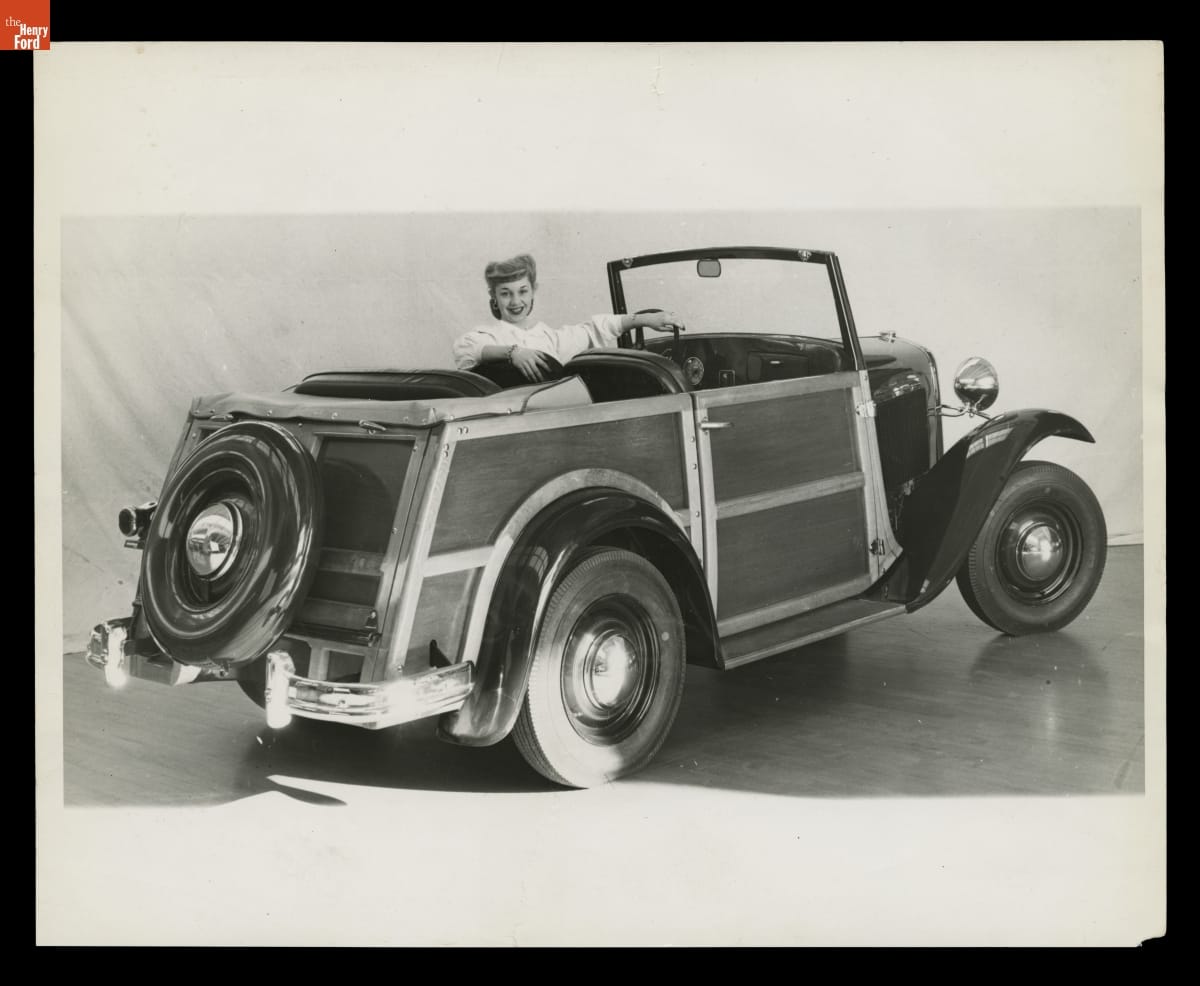
- Designer Leota Carroll Modeling the Ford "Estate Wagon" Custom-Built for Henry Ford II, January 1945 - Leota Carroll was the first woman hired into Ford Motor Company's Design Department. Carroll, a talented illustrator, joined the company during World War II -- a time when most men were off fighting. Her success prompted Ford to hire other women onto its design staff. In addition to her regular duties, Carroll also occasionally posed in Ford promotional photographs.
- January 31, 1945
- Collections - Artifact
Designer Leota Carroll Modeling the Ford "Estate Wagon" Custom-Built for Henry Ford II, January 1945
Leota Carroll was the first woman hired into Ford Motor Company's Design Department. Carroll, a talented illustrator, joined the company during World War II -- a time when most men were off fighting. Her success prompted Ford to hire other women onto its design staff. In addition to her regular duties, Carroll also occasionally posed in Ford promotional photographs.