
Search
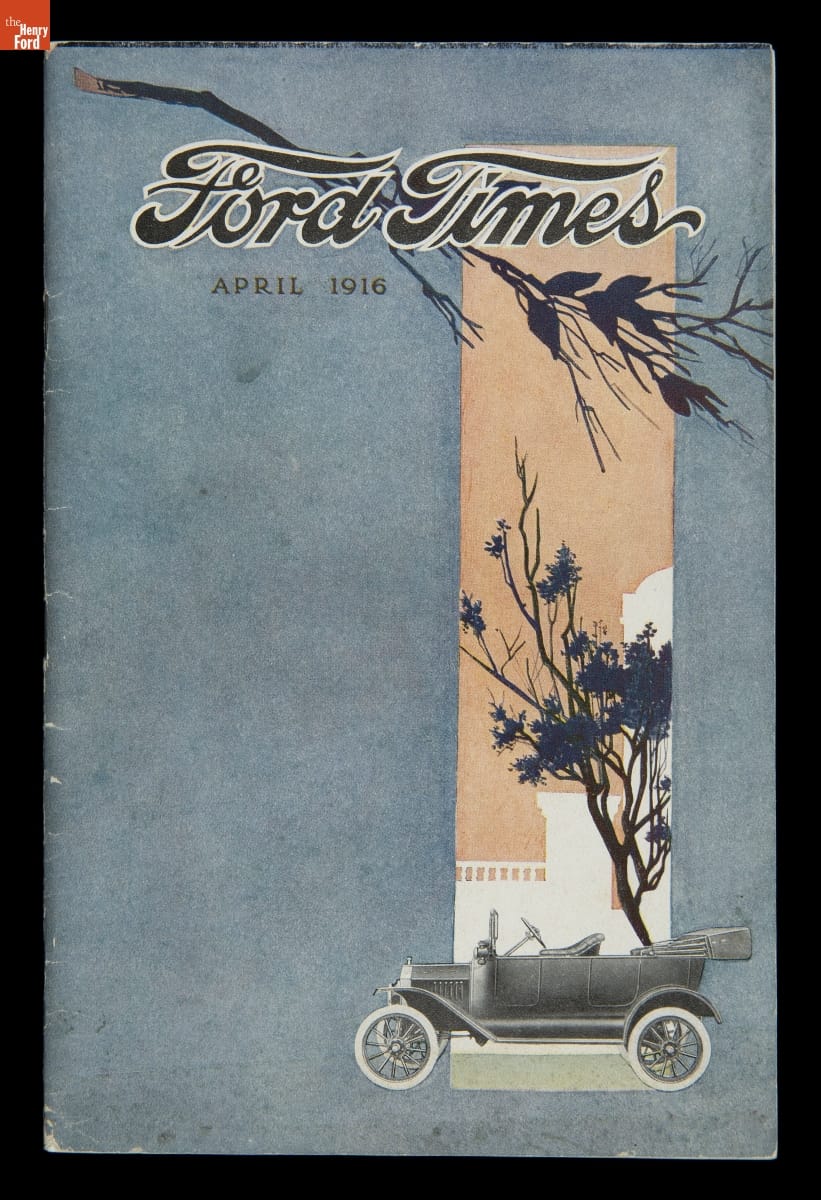
- Ford Times, April 1916 - First printed in 1908, <em>Ford Times</em> was published by Ford Motor Company and distributed to readers free of charge. Early issues targeted Ford dealers, but editors later broadened the magazine's content to appeal to Ford owners and potential buyers. This April 1916 issue included an article on Ford's English School, which provided English-language instruction to the company's immigrant employees.
- April 01, 1916
- Collections - Artifact
Ford Times, April 1916
First printed in 1908, Ford Times was published by Ford Motor Company and distributed to readers free of charge. Early issues targeted Ford dealers, but editors later broadened the magazine's content to appeal to Ford owners and potential buyers. This April 1916 issue included an article on Ford's English School, which provided English-language instruction to the company's immigrant employees.
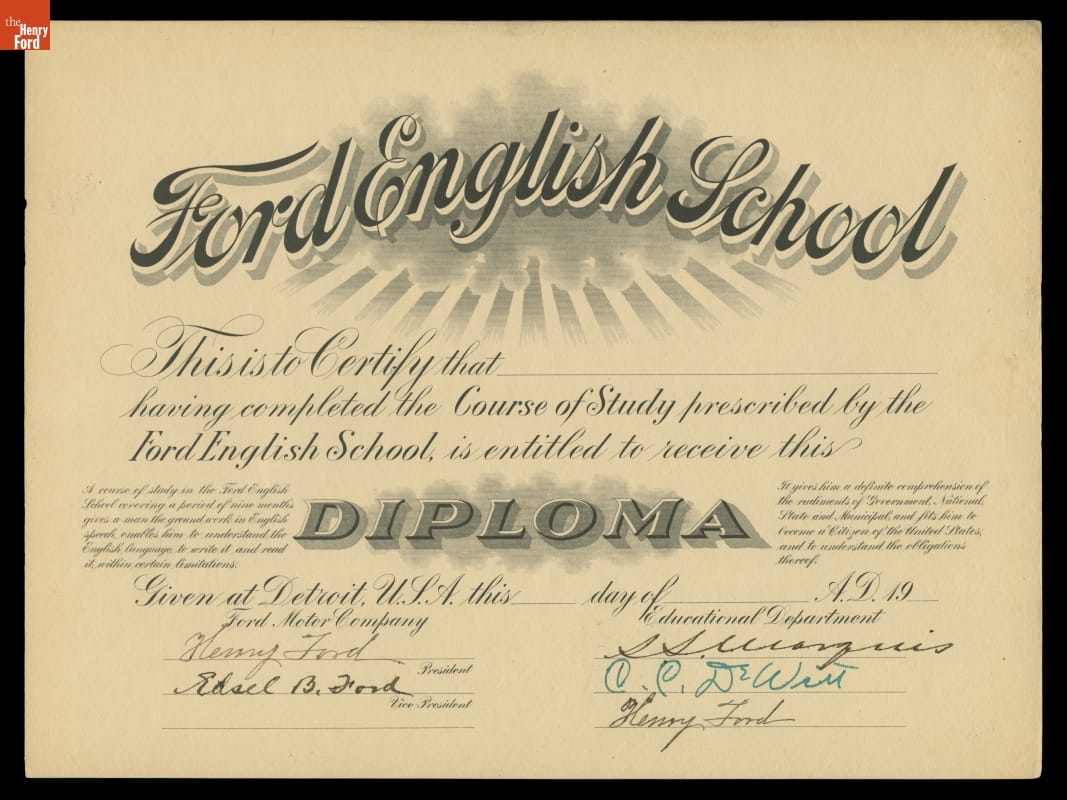
- Ford English School Diploma, 1914-1915 - In 1914, Ford Motor was hiring workers in droves. Many were immigrants who could not read or write English and were unable to carry out instructions. Henry Ford organized classes in English. These lessons also included instruction in United States naturalization requirements which led over 6,000 Ford employees to obtain diplomas accepted by U.S. emigration officials resulting in eventual citizenship.
- 1914-1915
- Collections - Artifact
Ford English School Diploma, 1914-1915
In 1914, Ford Motor was hiring workers in droves. Many were immigrants who could not read or write English and were unable to carry out instructions. Henry Ford organized classes in English. These lessons also included instruction in United States naturalization requirements which led over 6,000 Ford employees to obtain diplomas accepted by U.S. emigration officials resulting in eventual citizenship.
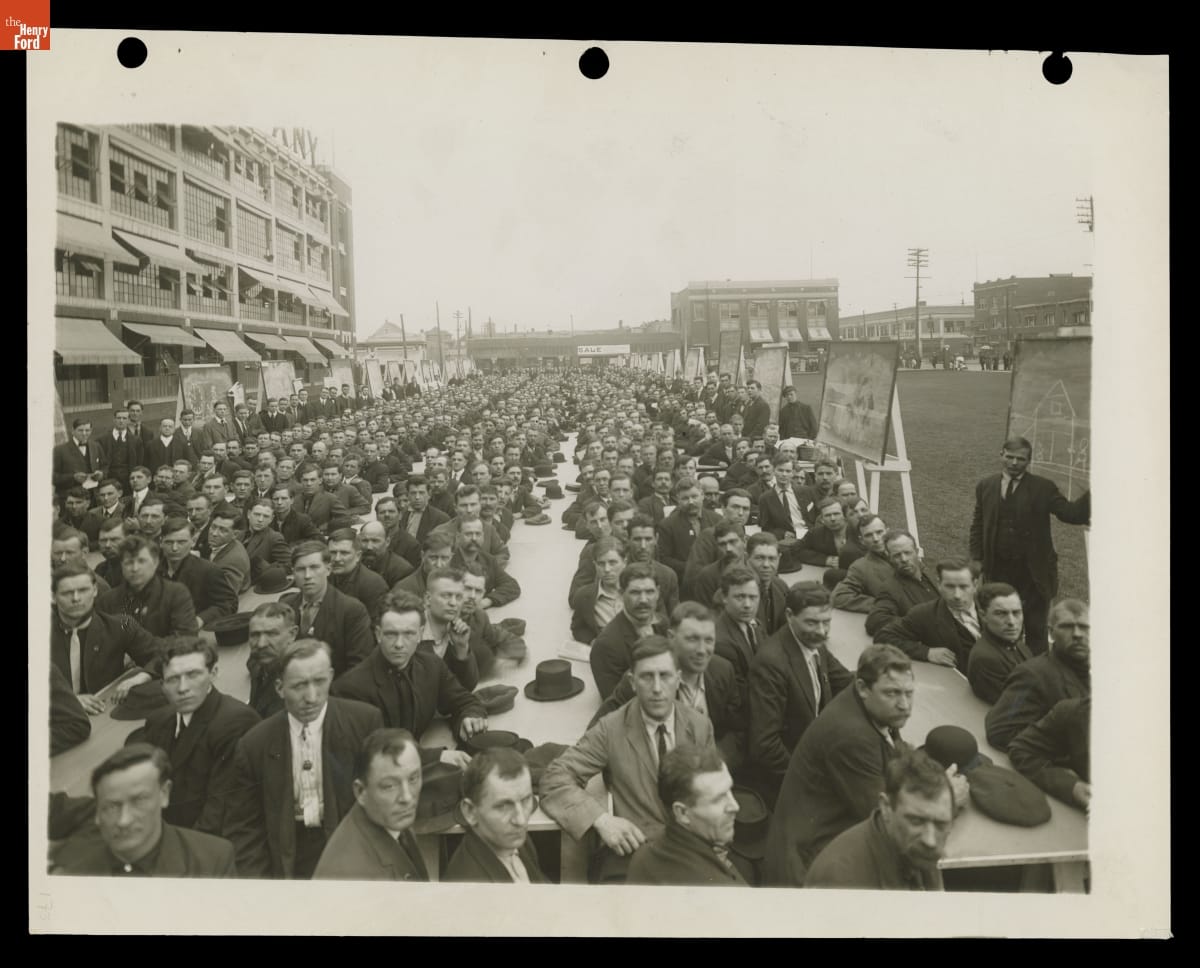
- Ford Motor Company Employees in an English Language Class, Highland Park Plant, 1915 - Founded in 1914, the Ford English School taught foreign-born Ford Motor Company employees to read, write and speak English. The instructors were foremen, clerks and workmen from the Highland Park plant who volunteered their time to teach their co-workers. The school began with 20 students and one instructor, and it grew to more than 2,200 students and nearly 150 instructors by 1916.
- 1915
- Collections - Artifact
Ford Motor Company Employees in an English Language Class, Highland Park Plant, 1915
Founded in 1914, the Ford English School taught foreign-born Ford Motor Company employees to read, write and speak English. The instructors were foremen, clerks and workmen from the Highland Park plant who volunteered their time to teach their co-workers. The school began with 20 students and one instructor, and it grew to more than 2,200 students and nearly 150 instructors by 1916.
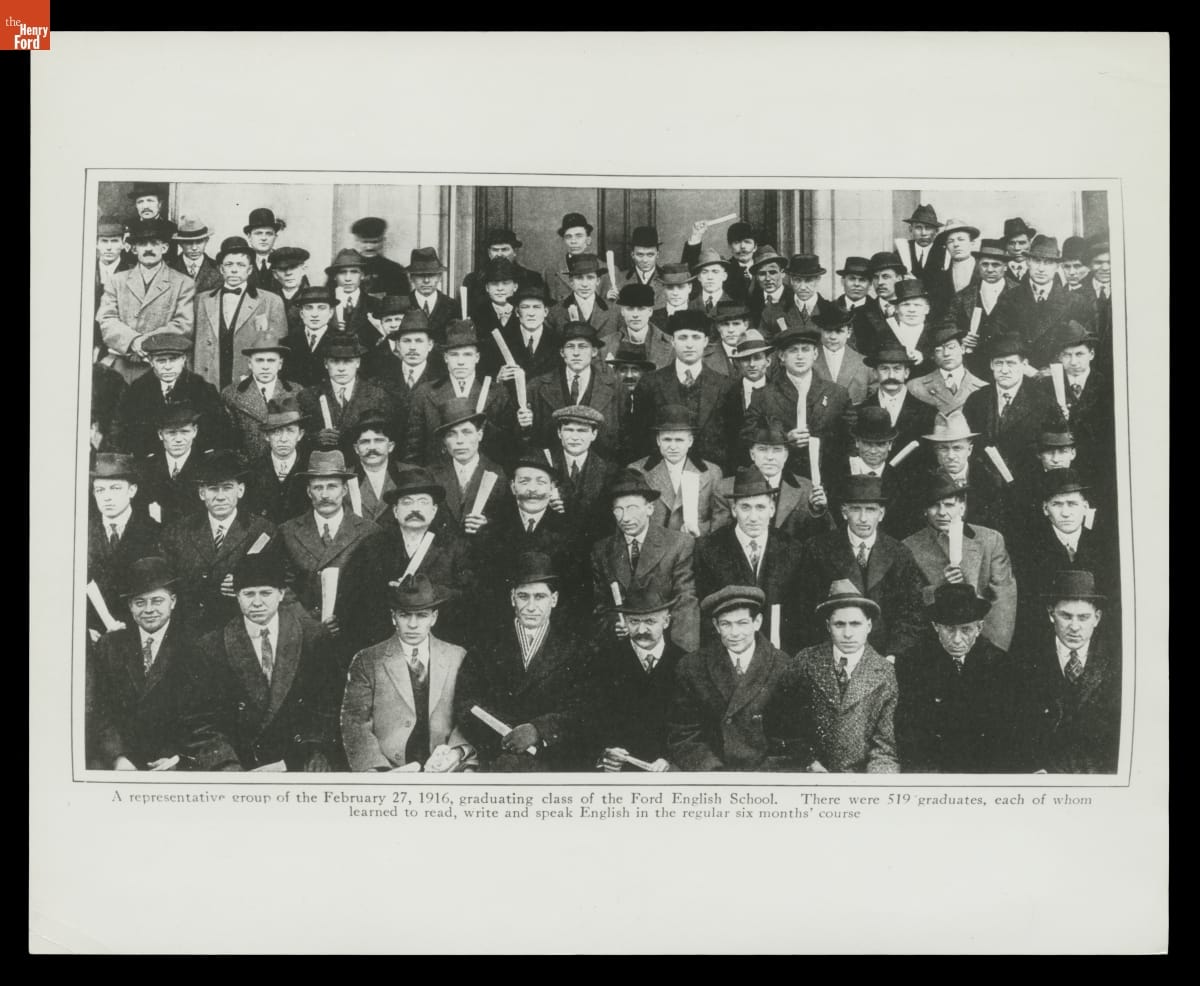
- Graduating Class of the Ford English School, February 1916 - Founded in 1914, the Ford English School taught foreign-born Ford Motor Company employees to read, write and speak English. The instructors were foremen, clerks and workmen from the Highland Park plant who volunteered their time to teach their co-workers. The school began with 20 students and one instructor, and it grew to more than 2,200 students and nearly 150 instructors by 1916.
- February 27, 1916
- Collections - Artifact
Graduating Class of the Ford English School, February 1916
Founded in 1914, the Ford English School taught foreign-born Ford Motor Company employees to read, write and speak English. The instructors were foremen, clerks and workmen from the Highland Park plant who volunteered their time to teach their co-workers. The school began with 20 students and one instructor, and it grew to more than 2,200 students and nearly 150 instructors by 1916.
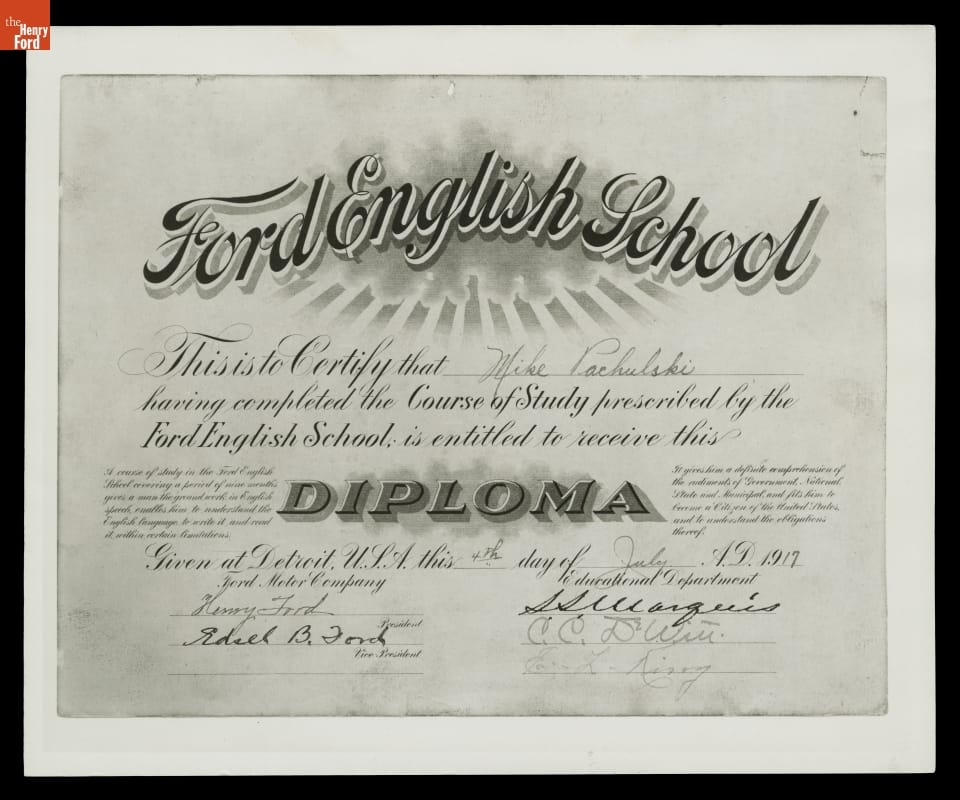
- Ford English School Diploma for Mike Pachulski, July 4, 1917 - This is a photograph of a diploma awarded by the Ford English School. The school was established by the company in 1914 in order to address the problem of non-English speaking workers and the safety hazards they posed. Immigrants could use a Ford English School diploma to meet many of the requirements prior to the final citizenship exam.
- July 04, 1917
- Collections - Artifact
Ford English School Diploma for Mike Pachulski, July 4, 1917
This is a photograph of a diploma awarded by the Ford English School. The school was established by the company in 1914 in order to address the problem of non-English speaking workers and the safety hazards they posed. Immigrants could use a Ford English School diploma to meet many of the requirements prior to the final citizenship exam.
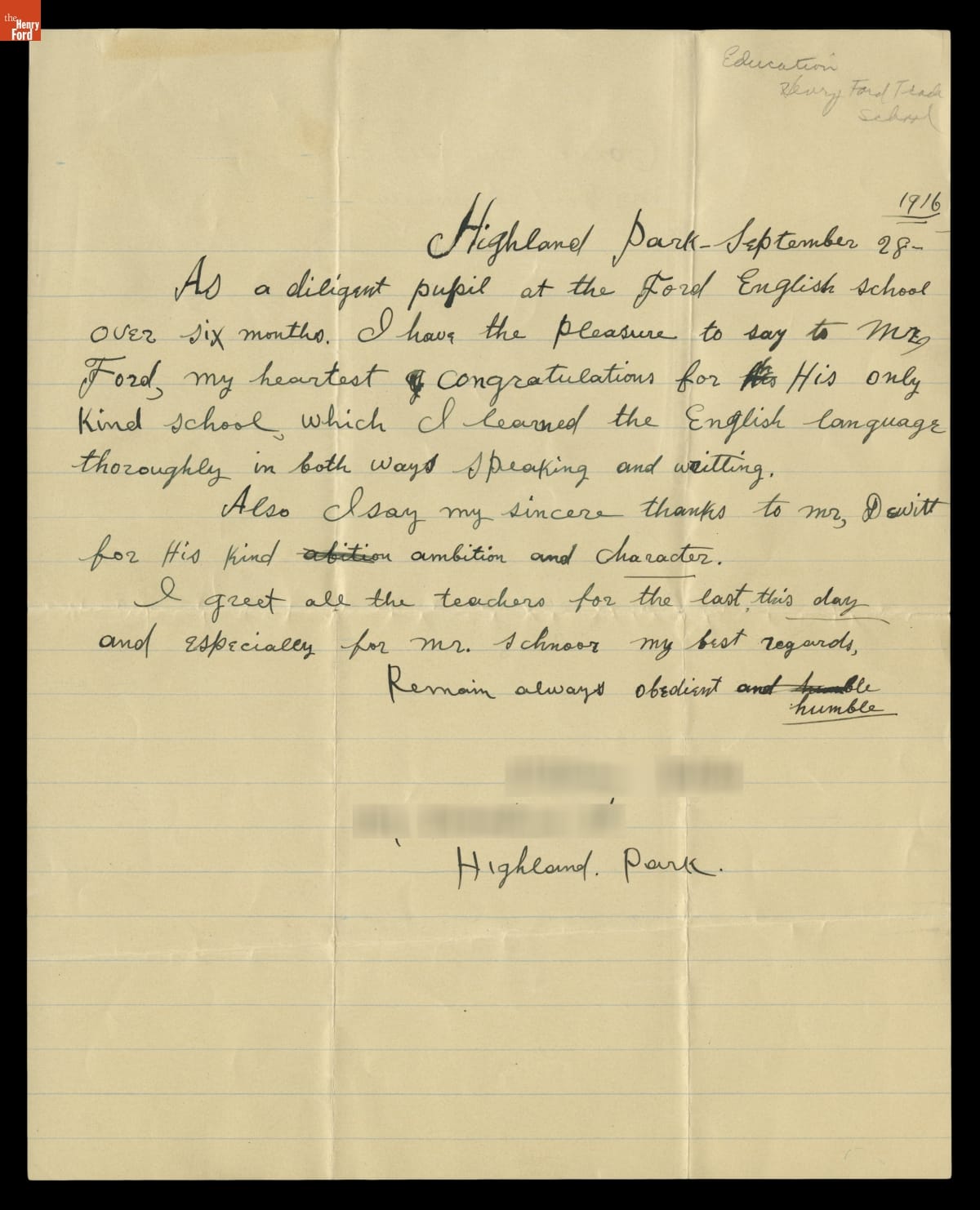
- Letter from a Ford English School Student to Henry Ford, September 28, 1916 -
- September 28, 1916
- Collections - Artifact
Letter from a Ford English School Student to Henry Ford, September 28, 1916
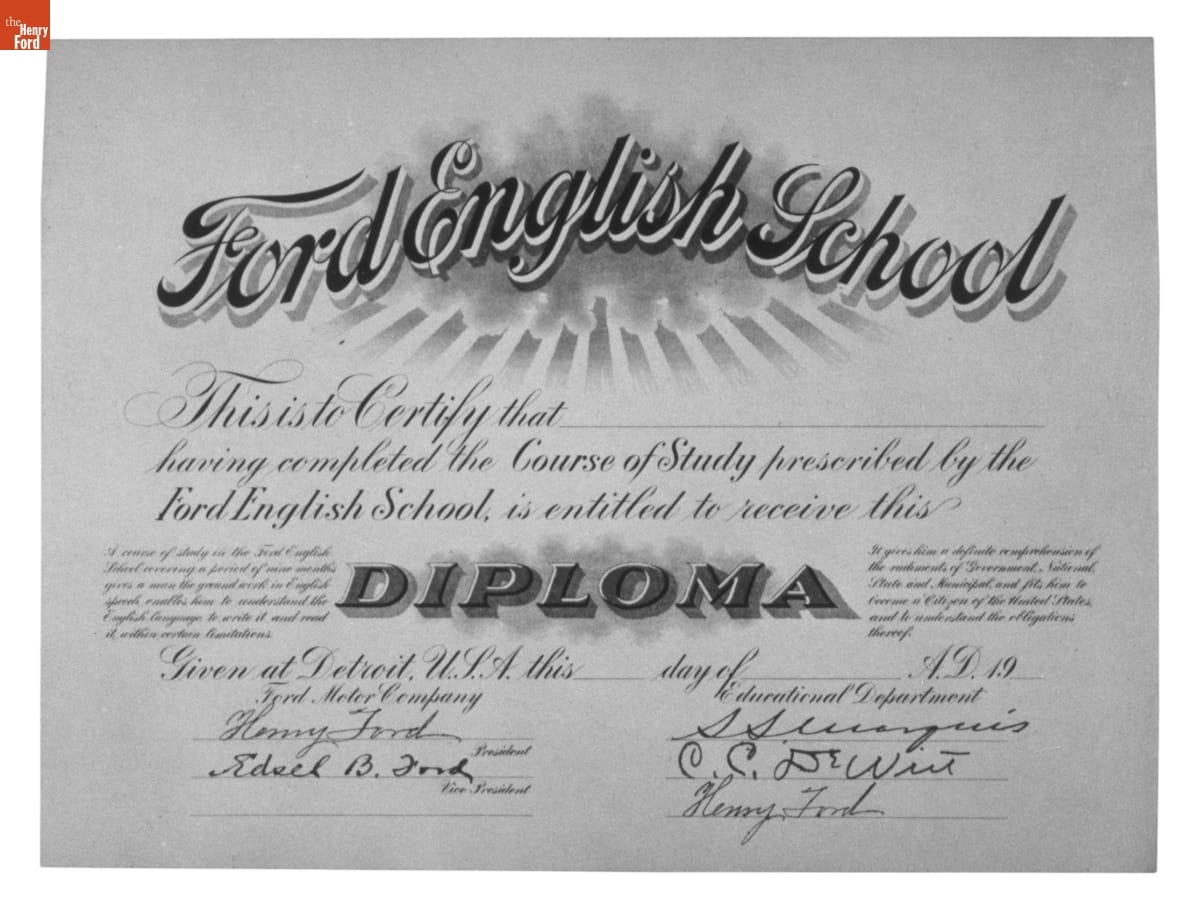
- Ford English School Diploma, circa 1920 - Ford Motor Company established its Ford English School in 1914. The school taught the English language to newly arrived immigrant employees. It also included instruction in United States naturalization requirements, helping students on the path to U.S. citizenship. Ford's mass production techniques depended on clear communication between workers and supervisors on the assembly line.
- circa 1920
- Collections - Artifact
Ford English School Diploma, circa 1920
Ford Motor Company established its Ford English School in 1914. The school taught the English language to newly arrived immigrant employees. It also included instruction in United States naturalization requirements, helping students on the path to U.S. citizenship. Ford's mass production techniques depended on clear communication between workers and supervisors on the assembly line.
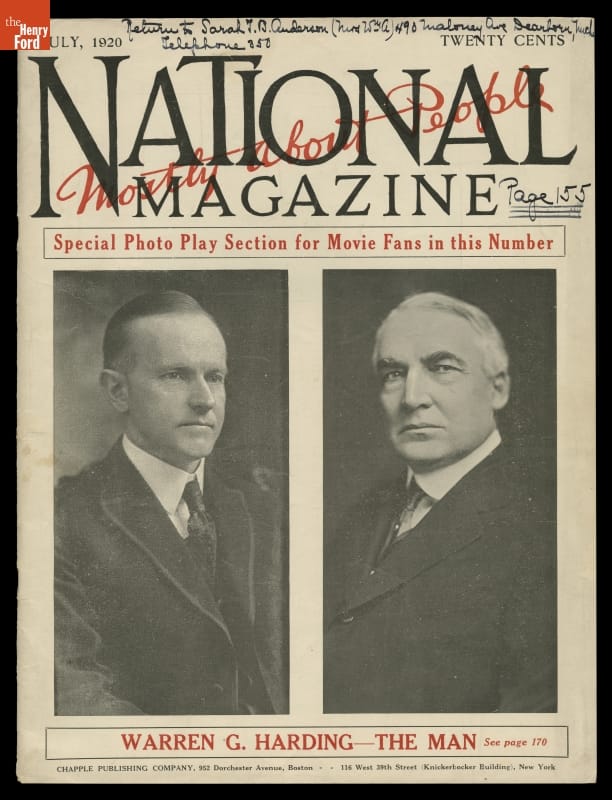
- National Magazine for July 1920, with Article on the Ford English School -
- July 01, 1920
- Collections - Artifact
National Magazine for July 1920, with Article on the Ford English School
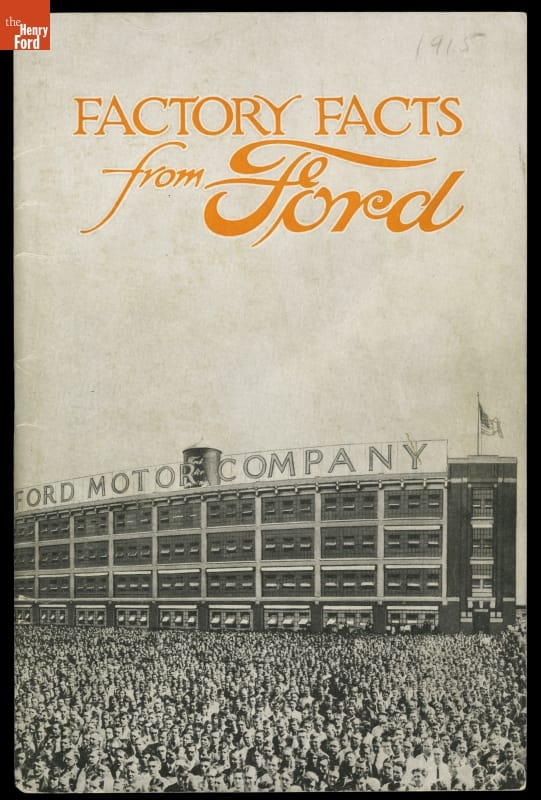
- "Factory Facts from Ford," 1915 - This pamphlet covers topics about Ford Motor Company and highlights the Ford Sociological Department. The department was created to ensure that employees, many of whom were non-English-speaking immigrants, did not squander their $5 per day wages. Investigators monitored the personal and work lives of employees. In addition, the department provided hygiene instruction, financial and legal advice, and an English-language school.
- 1915
- Collections - Artifact
"Factory Facts from Ford," 1915
This pamphlet covers topics about Ford Motor Company and highlights the Ford Sociological Department. The department was created to ensure that employees, many of whom were non-English-speaking immigrants, did not squander their $5 per day wages. Investigators monitored the personal and work lives of employees. In addition, the department provided hygiene instruction, financial and legal advice, and an English-language school.
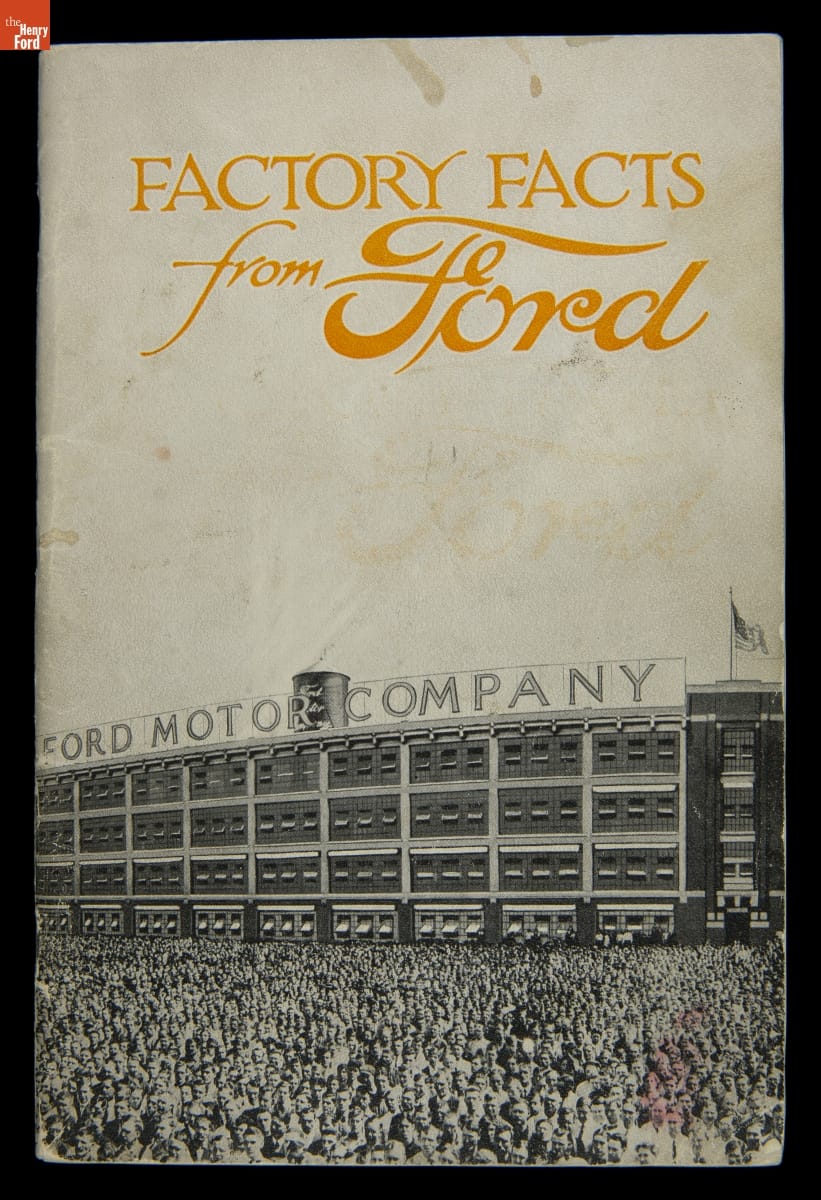
- "Factory Facts from Ford," 1917 - Beyond revolutionizing America's industrial production, Henry Ford and other managers at Ford Motor Company instituted a wide-reaching corporate welfare program that opened up the most intimate and personal details of employee's personal, family, and financial life to investigators from the Sociological Department. After the announcement of the $5 per day profit sharing plan in January 1914, Henry Ford wanted to ensure that employees, many of whom were non-English speaking immigrants, did not squander the funds. To this end, the Ford Sociological Department was created to investigate and monitor the personal and work lives of employees to the extent that investigators (later called Advisors) conducted home visits, checked bank deposits, and monitored children's school attendance as well as divorce filings. In addition, the Sociological Department advisors provided hygiene instruction, financial and legal advice, and worked with the English School to teach Ford's immigrant workers English.
- July 15, 1917
- Collections - Artifact
"Factory Facts from Ford," 1917
Beyond revolutionizing America's industrial production, Henry Ford and other managers at Ford Motor Company instituted a wide-reaching corporate welfare program that opened up the most intimate and personal details of employee's personal, family, and financial life to investigators from the Sociological Department. After the announcement of the $5 per day profit sharing plan in January 1914, Henry Ford wanted to ensure that employees, many of whom were non-English speaking immigrants, did not squander the funds. To this end, the Ford Sociological Department was created to investigate and monitor the personal and work lives of employees to the extent that investigators (later called Advisors) conducted home visits, checked bank deposits, and monitored children's school attendance as well as divorce filings. In addition, the Sociological Department advisors provided hygiene instruction, financial and legal advice, and worked with the English School to teach Ford's immigrant workers English.