
Search
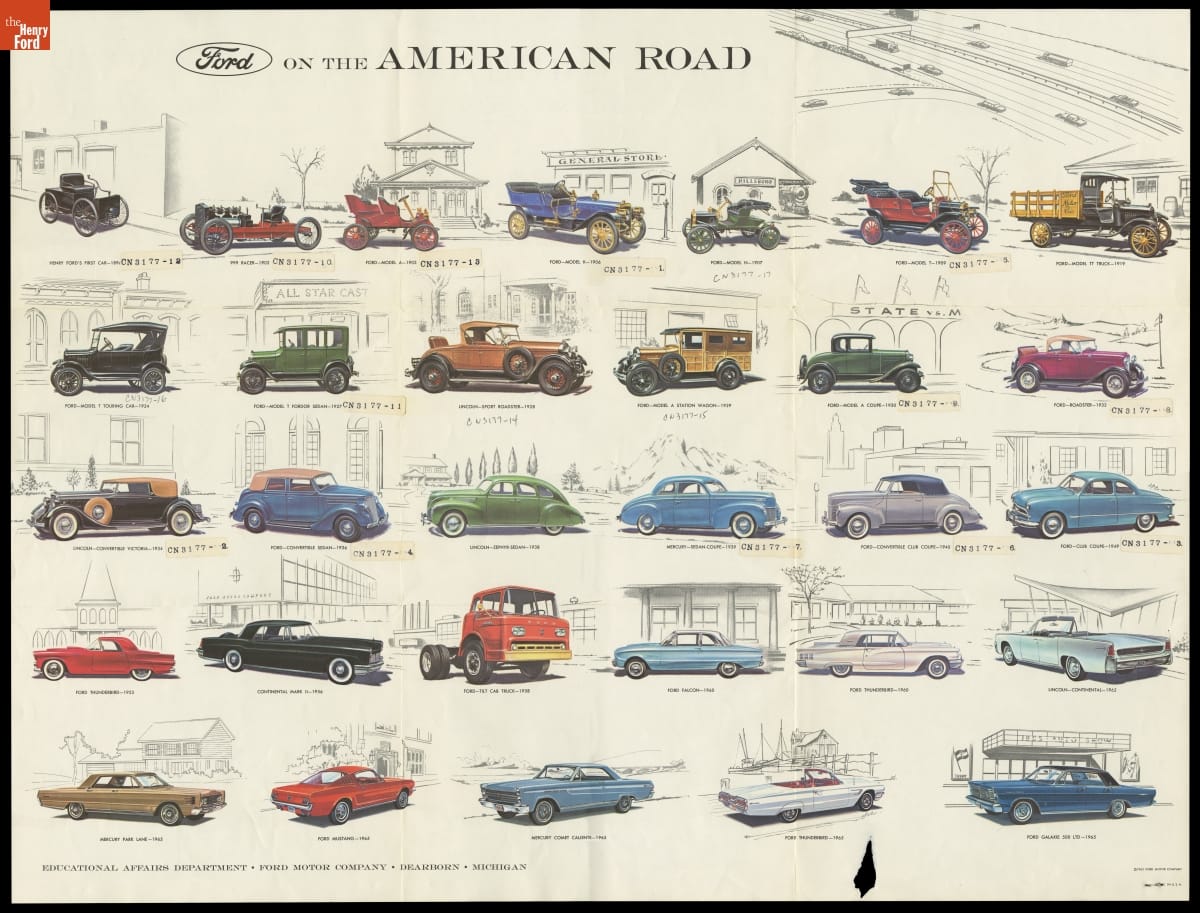
- Advertising Poster, "Ford on the American Road," 1962-1965 - The evolution of Ford Motor Company vehicles through 1965 is illustrated in this colorful advertisement. The line starts with the 1896 Quadricycle and the 1902 "999" race car, and it includes four variants of the pivotal Model T. The Lincoln and Mercury marques are each represented with multiple cars. Later important Ford models, like Thunderbird and Mustang, finish the progression.
- 1962 - 1965
- Collections - Artifact
Advertising Poster, "Ford on the American Road," 1962-1965
The evolution of Ford Motor Company vehicles through 1965 is illustrated in this colorful advertisement. The line starts with the 1896 Quadricycle and the 1902 "999" race car, and it includes four variants of the pivotal Model T. The Lincoln and Mercury marques are each represented with multiple cars. Later important Ford models, like Thunderbird and Mustang, finish the progression.
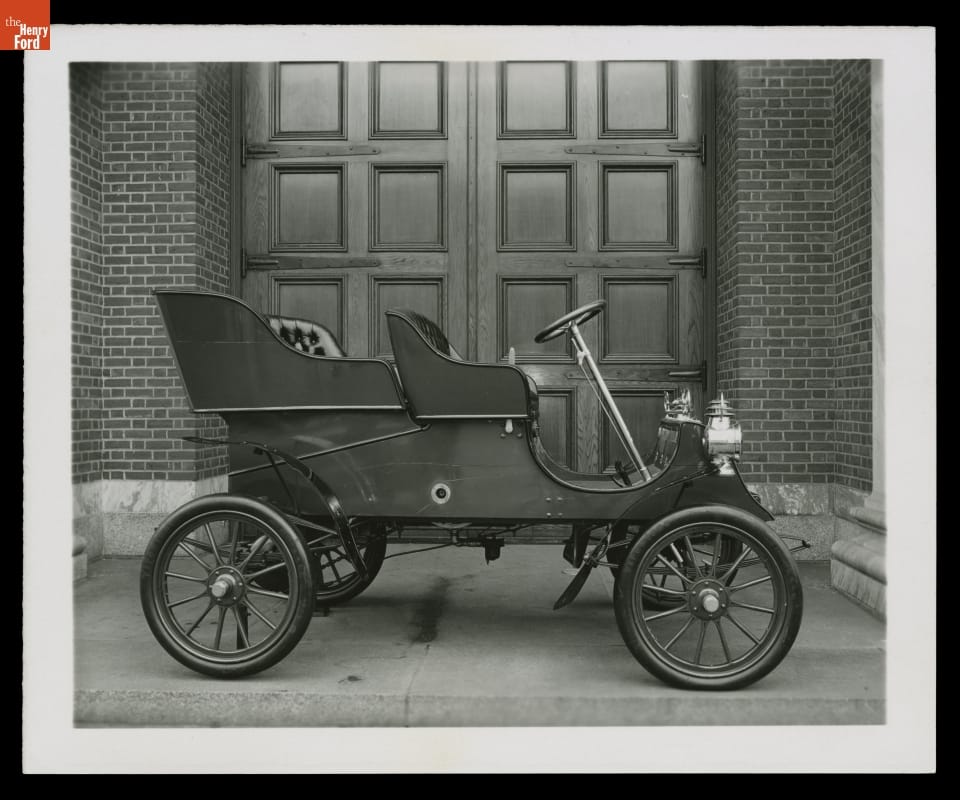
- 1903 Ford Model A Touring Car outside Henry Ford Museum, 1949 - In naming its first product, Ford Motor Company logically settled on "Model A." The two-cylinder automobile could be fitted with an optional tonneau -- a rear seat compartment -- entered through a door in the back. The Model A was one of the first large-production cars with a steering wheel instead of a tiller. Total production was somewhere above 670 units.
- April 26, 1949
- Collections - Artifact
1903 Ford Model A Touring Car outside Henry Ford Museum, 1949
In naming its first product, Ford Motor Company logically settled on "Model A." The two-cylinder automobile could be fitted with an optional tonneau -- a rear seat compartment -- entered through a door in the back. The Model A was one of the first large-production cars with a steering wheel instead of a tiller. Total production was somewhere above 670 units.
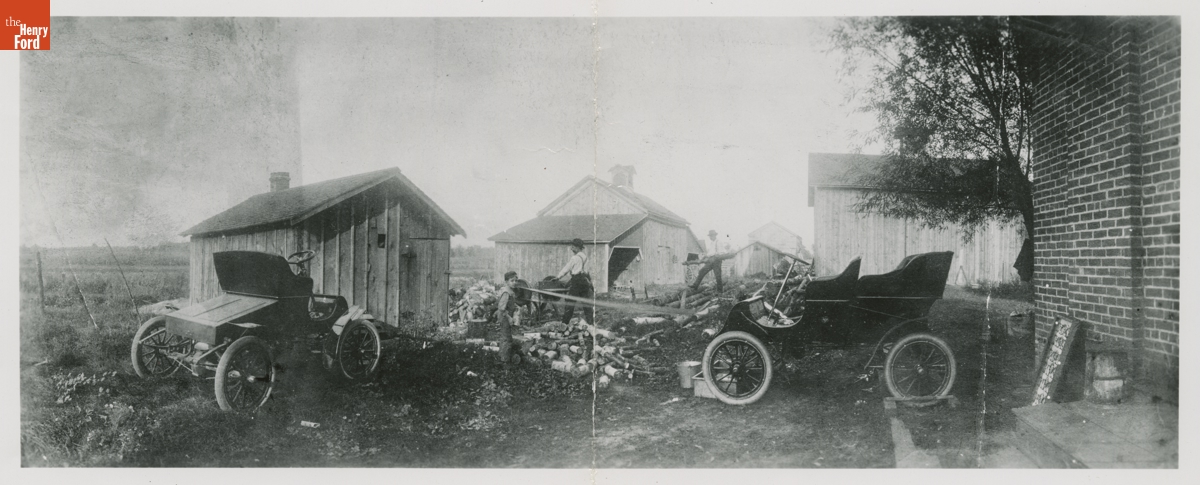
- 1903 Ford Model A Providing Power to Operate a Saw, Bryant Family Homestead - One of the appeals of early automobiles, particularly to rural customers, was their versatility as portable power sources. With the aid of a leather belt, the eight-horsepower engine in the original Ford Model A, for example, could run small machines like saws, water pumps, and electrical generators. Uses beyond transportation made cars seem more practical to budget-minded consumers.
- 1903
- Collections - Artifact
1903 Ford Model A Providing Power to Operate a Saw, Bryant Family Homestead
One of the appeals of early automobiles, particularly to rural customers, was their versatility as portable power sources. With the aid of a leather belt, the eight-horsepower engine in the original Ford Model A, for example, could run small machines like saws, water pumps, and electrical generators. Uses beyond transportation made cars seem more practical to budget-minded consumers.
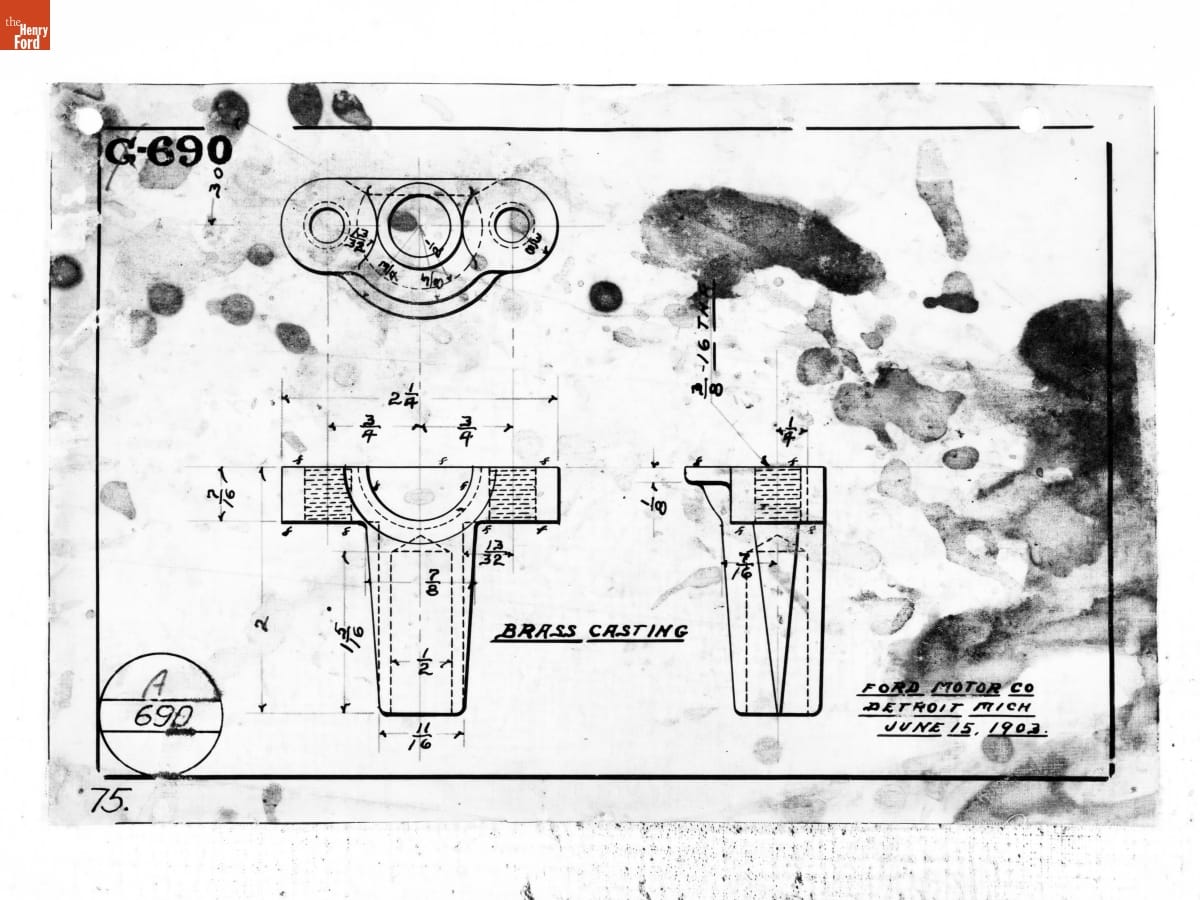
- Drawing, Steering Ball Socket, 1903 Ford Model A, June 15, 1903 - The Ford Motor Company created over a million parts drawings from 1903 to 1957. Many of these drawings specify engineering requirements for the components of Ford-made vehicles--including automobiles, trucks, tractors, military vehicles and Tri-motor airplanes. Others document assembly components, stages of casting and forging, or experimental designs. Beginning in the 1940s, Ford transferred the drawings to microfilm.
- June 15, 1903
- Collections - Artifact
Drawing, Steering Ball Socket, 1903 Ford Model A, June 15, 1903
The Ford Motor Company created over a million parts drawings from 1903 to 1957. Many of these drawings specify engineering requirements for the components of Ford-made vehicles--including automobiles, trucks, tractors, military vehicles and Tri-motor airplanes. Others document assembly components, stages of casting and forging, or experimental designs. Beginning in the 1940s, Ford transferred the drawings to microfilm.
- Drawing, "Transmission Slow Speed Plate & Gear Bushing," 1903 Ford Model A, November 10, 1910 - The Ford Motor Company created over a million parts drawings from 1903 to 1957. Many of these drawings specify engineering requirements for the components of Ford-made vehicles--including automobiles, trucks, tractors, military vehicles and Tri-motor airplanes. Others document assembly components, stages of casting and forging, or experimental designs. Beginning in the 1940s, Ford transferred the drawings to microfilm.
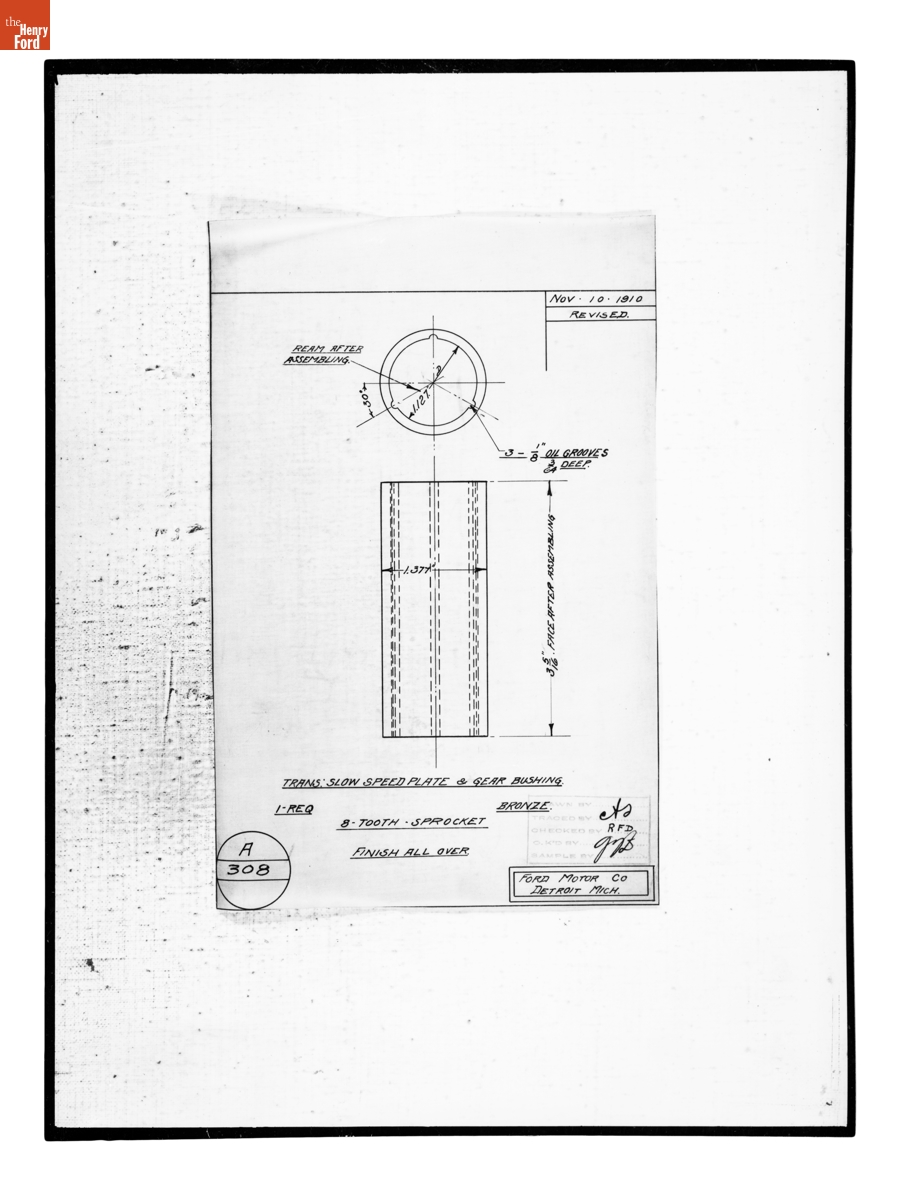
- November 10, 1910
- Collections - Artifact
Drawing, "Transmission Slow Speed Plate & Gear Bushing," 1903 Ford Model A, November 10, 1910
The Ford Motor Company created over a million parts drawings from 1903 to 1957. Many of these drawings specify engineering requirements for the components of Ford-made vehicles--including automobiles, trucks, tractors, military vehicles and Tri-motor airplanes. Others document assembly components, stages of casting and forging, or experimental designs. Beginning in the 1940s, Ford transferred the drawings to microfilm.
- Drawing, "Differential Gear Case Bushing," 1903 Ford Model A, November 5, 1910 - The Ford Motor Company created over a million parts drawings from 1903 to 1957. Many of these drawings specify engineering requirements for the components of Ford-made vehicles--including automobiles, trucks, tractors, military vehicles and Tri-motor airplanes. Others document assembly components, stages of casting and forging, or experimental designs. Beginning in the 1940s, Ford transferred the drawings to microfilm.
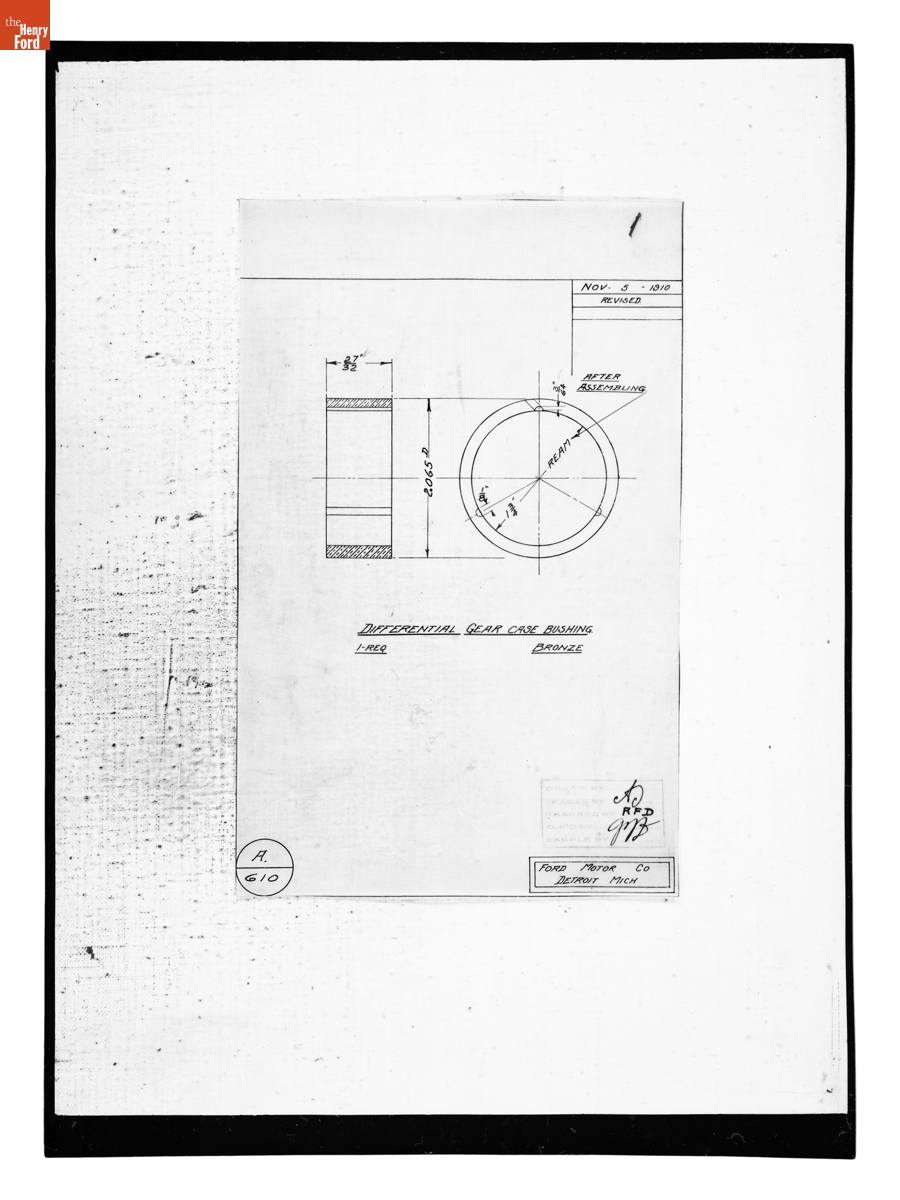
- November 05, 1910
- Collections - Artifact
Drawing, "Differential Gear Case Bushing," 1903 Ford Model A, November 5, 1910
The Ford Motor Company created over a million parts drawings from 1903 to 1957. Many of these drawings specify engineering requirements for the components of Ford-made vehicles--including automobiles, trucks, tractors, military vehicles and Tri-motor airplanes. Others document assembly components, stages of casting and forging, or experimental designs. Beginning in the 1940s, Ford transferred the drawings to microfilm.
- Drawing, "Connecting Rod Cap," 1903 Ford Model A, February 9, 1903 - The Ford Motor Company created over a million parts drawings from 1903 to 1957. Many of these drawings specify engineering requirements for the components of Ford-made vehicles--including automobiles, trucks, tractors, military vehicles and Tri-motor airplanes. Others document assembly components, stages of casting and forging, or experimental designs. Beginning in the 1940s, Ford transferred the drawings to microfilm.
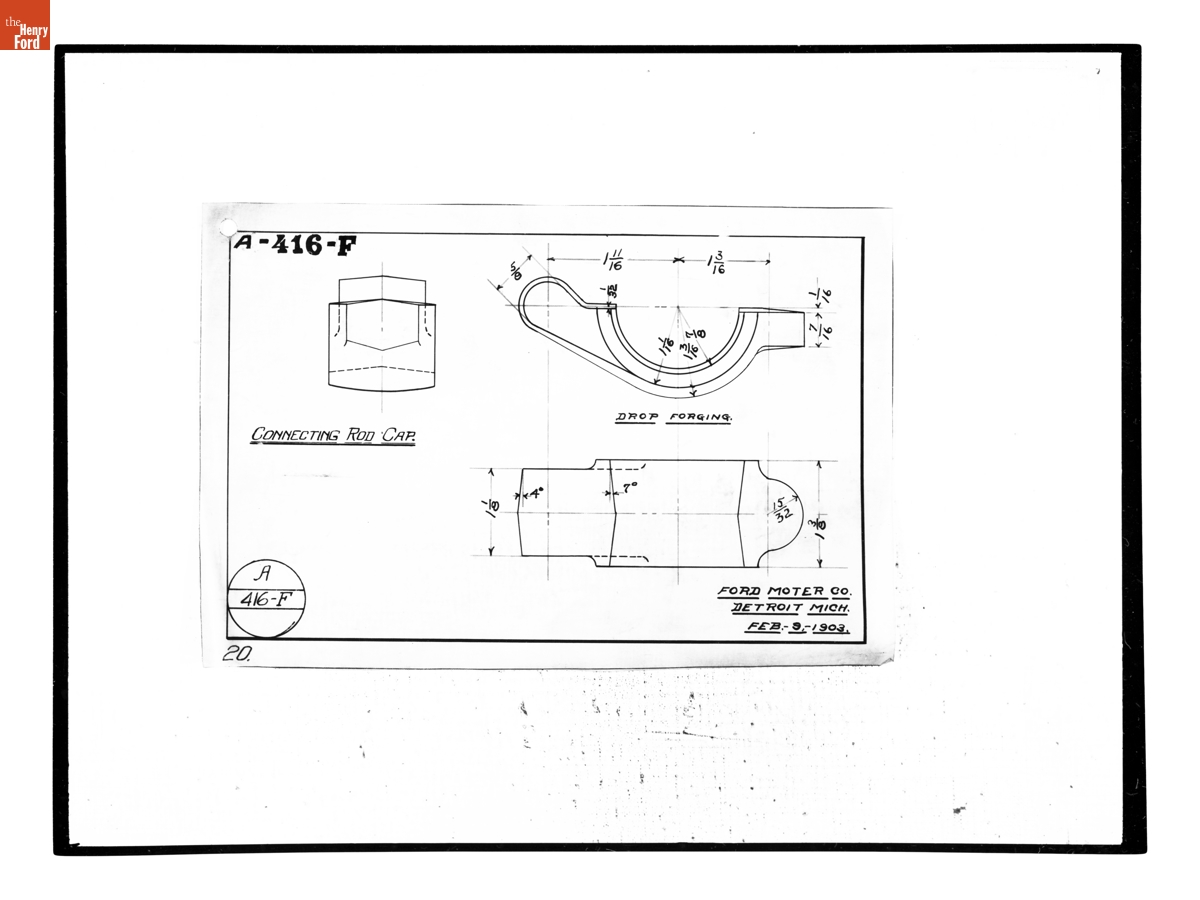
- February 09, 1903
- Collections - Artifact
Drawing, "Connecting Rod Cap," 1903 Ford Model A, February 9, 1903
The Ford Motor Company created over a million parts drawings from 1903 to 1957. Many of these drawings specify engineering requirements for the components of Ford-made vehicles--including automobiles, trucks, tractors, military vehicles and Tri-motor airplanes. Others document assembly components, stages of casting and forging, or experimental designs. Beginning in the 1940s, Ford transferred the drawings to microfilm.
- Drawing, "Carburetor Feed Pipe Elbow," 1903 Ford Model A, May 14, 1903 - The Ford Motor Company created over a million parts drawings from 1903 to 1957. Many of these drawings specify engineering requirements for the components of Ford-made vehicles--including automobiles, trucks, tractors, military vehicles and Tri-motor airplanes. Others document assembly components, stages of casting and forging, or experimental designs. Beginning in the 1940s, Ford transferred the drawings to microfilm.
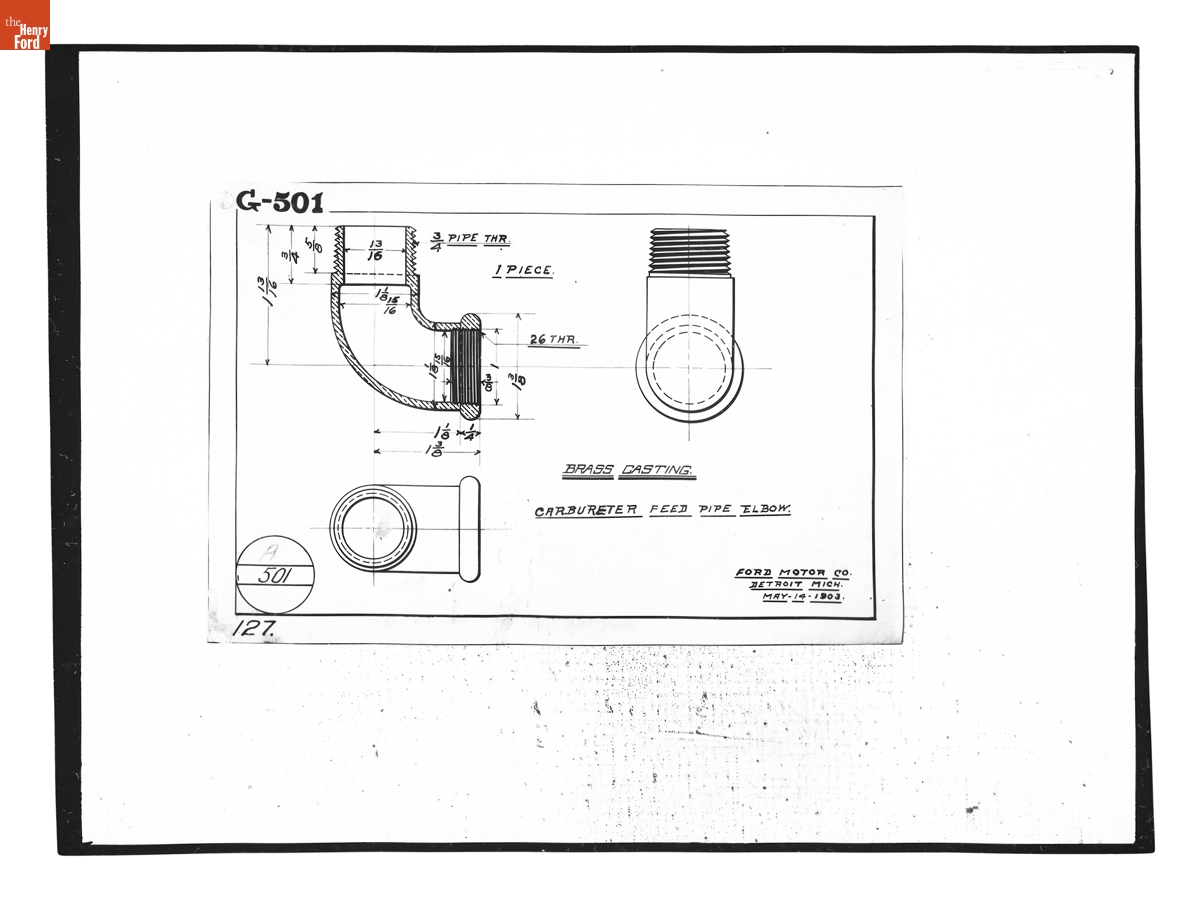
- May 14, 1903
- Collections - Artifact
Drawing, "Carburetor Feed Pipe Elbow," 1903 Ford Model A, May 14, 1903
The Ford Motor Company created over a million parts drawings from 1903 to 1957. Many of these drawings specify engineering requirements for the components of Ford-made vehicles--including automobiles, trucks, tractors, military vehicles and Tri-motor airplanes. Others document assembly components, stages of casting and forging, or experimental designs. Beginning in the 1940s, Ford transferred the drawings to microfilm.
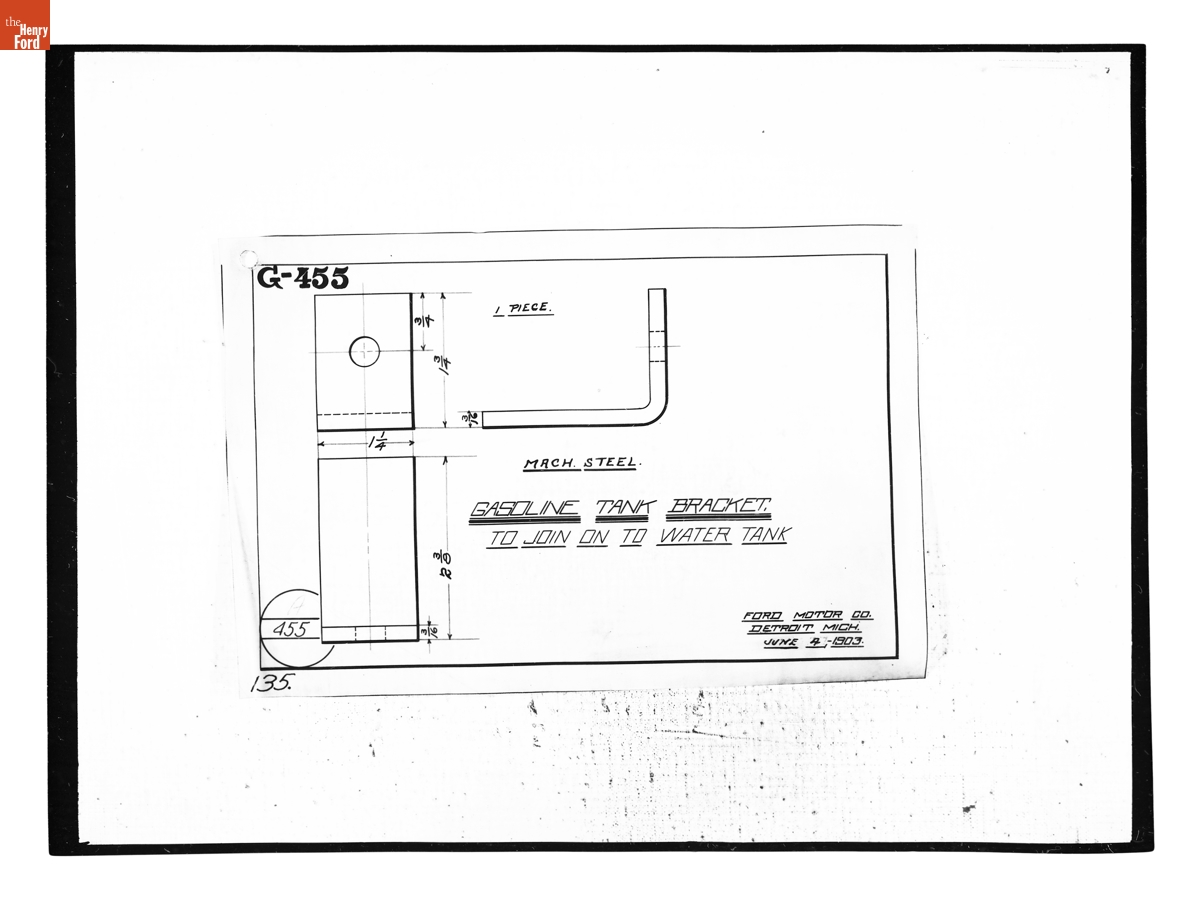
- Drawing, "Gasoline Tank Bracket," 1903 Ford Model A, June 4, 1903 - The Ford Motor Company created over a million parts drawings from 1903 to 1957. Many of these drawings specify engineering requirements for the components of Ford-made vehicles--including automobiles, trucks, tractors, military vehicles and Tri-motor airplanes. Others document assembly components, stages of casting and forging, or experimental designs. Beginning in the 1940s, Ford transferred the drawings to microfilm.
- June 04, 1903
- Collections - Artifact
Drawing, "Gasoline Tank Bracket," 1903 Ford Model A, June 4, 1903
The Ford Motor Company created over a million parts drawings from 1903 to 1957. Many of these drawings specify engineering requirements for the components of Ford-made vehicles--including automobiles, trucks, tractors, military vehicles and Tri-motor airplanes. Others document assembly components, stages of casting and forging, or experimental designs. Beginning in the 1940s, Ford transferred the drawings to microfilm.
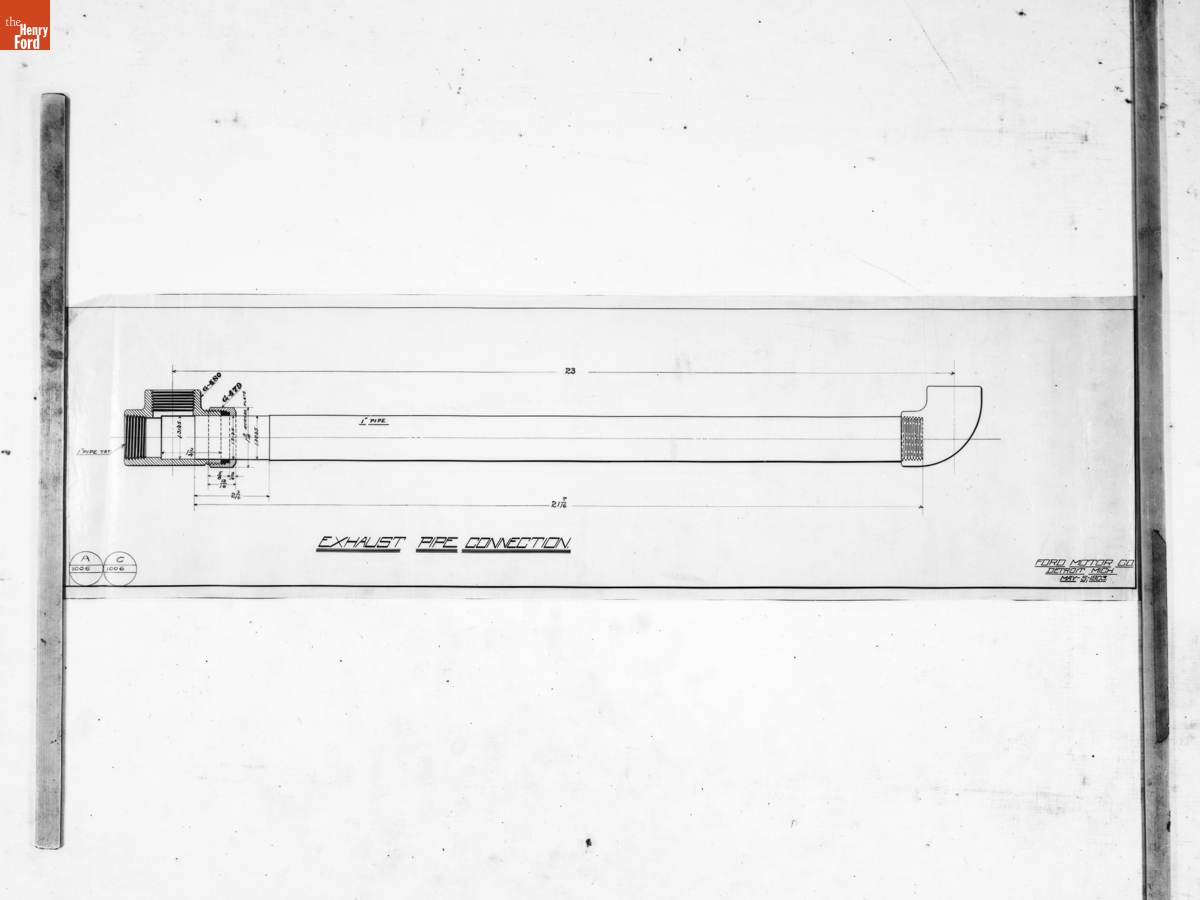
- Drawing, "Exhaust Pipe Connection," 1903 Ford Model A and 1904 Model C, May 5, 1903 - The Ford Motor Company created over a million parts drawings from 1903 to 1957. Many of these drawings specify engineering requirements for the components of Ford-made vehicles--including automobiles, trucks, tractors, military vehicles and Tri-motor airplanes. Others document assembly components, stages of casting and forging, or experimental designs. Beginning in the 1940s, Ford transferred the drawings to microfilm.
- May 05, 1903
- Collections - Artifact
Drawing, "Exhaust Pipe Connection," 1903 Ford Model A and 1904 Model C, May 5, 1903
The Ford Motor Company created over a million parts drawings from 1903 to 1957. Many of these drawings specify engineering requirements for the components of Ford-made vehicles--including automobiles, trucks, tractors, military vehicles and Tri-motor airplanes. Others document assembly components, stages of casting and forging, or experimental designs. Beginning in the 1940s, Ford transferred the drawings to microfilm.