
Search
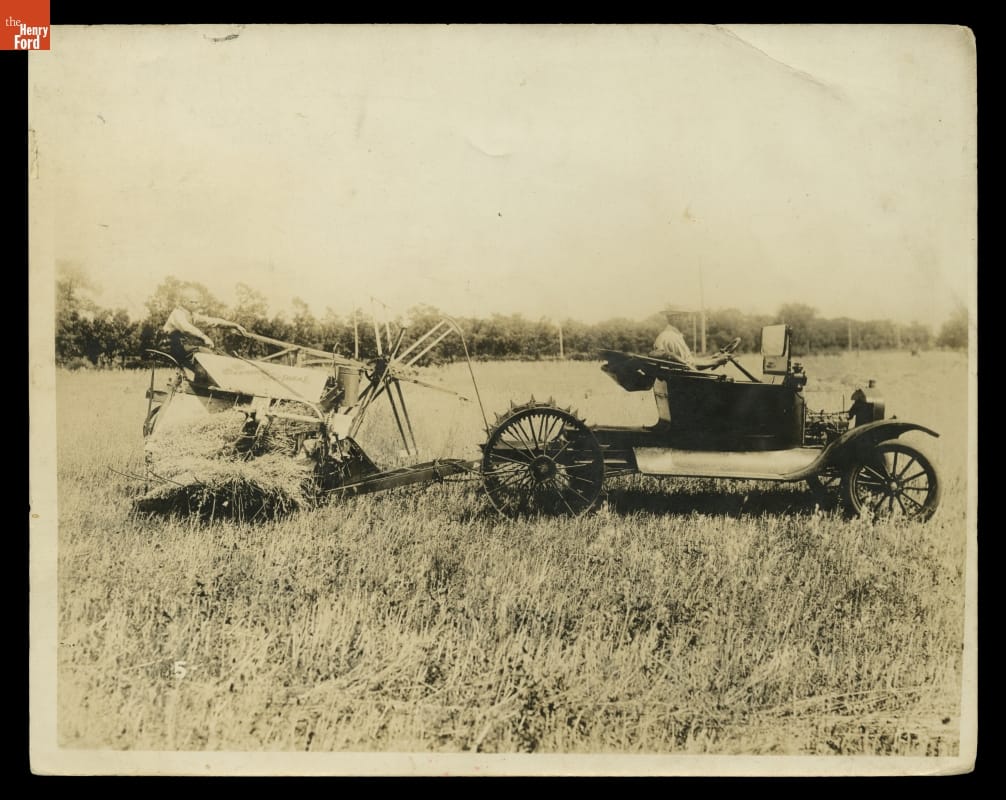
- Ford Model T Runabout Converted to a Tractor, Reaping Grain, circa 1919 - Around 1919 a farmer driving his converted Model T Runabout is pulling a McCormick-Deering reaper to harvest grain in Minnesota. Large-diameter steel-drive wheels and a rear power takeoff were all that was needed to achieve the conversion. For only $195, E.G. Staude Company of St. Paul, Minnesota, had started selling the Mak-a-Tractor conversion kit for the Model T in 1917, capitalizing on the popularity of the Ford car among farmers. Staude produced an estimated 20,000 to 30,000 of these in its lifetime.
- circa 1919
- Collections - Artifact
Ford Model T Runabout Converted to a Tractor, Reaping Grain, circa 1919
Around 1919 a farmer driving his converted Model T Runabout is pulling a McCormick-Deering reaper to harvest grain in Minnesota. Large-diameter steel-drive wheels and a rear power takeoff were all that was needed to achieve the conversion. For only $195, E.G. Staude Company of St. Paul, Minnesota, had started selling the Mak-a-Tractor conversion kit for the Model T in 1917, capitalizing on the popularity of the Ford car among farmers. Staude produced an estimated 20,000 to 30,000 of these in its lifetime.