
Search
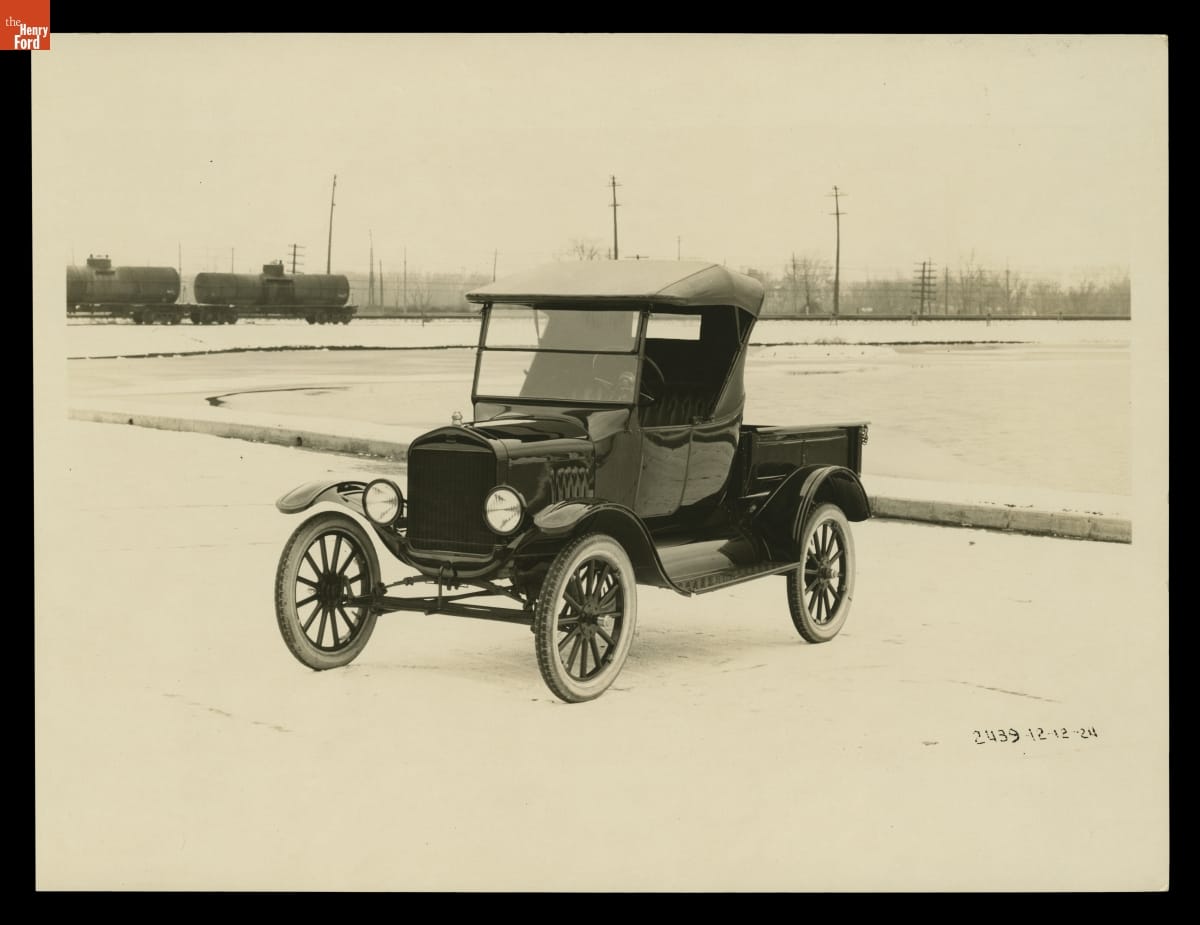
- 1925 Ford Model T Pickup Truck, December 1924 - Ford Motor Company introduced its light-duty Model T runabout pickup in April 1925. It came with a factory-installed steel pickup bed measuring 56 inches long by 40-3/4 inches wide. The bed also included an adjustable tailgate and four pockets for stakes. Ford's pickup was priced at $281, and the company sold nearly 33,800 units in that first year.
- December 12, 1924
- Collections - Artifact
1925 Ford Model T Pickup Truck, December 1924
Ford Motor Company introduced its light-duty Model T runabout pickup in April 1925. It came with a factory-installed steel pickup bed measuring 56 inches long by 40-3/4 inches wide. The bed also included an adjustable tailgate and four pockets for stakes. Ford's pickup was priced at $281, and the company sold nearly 33,800 units in that first year.
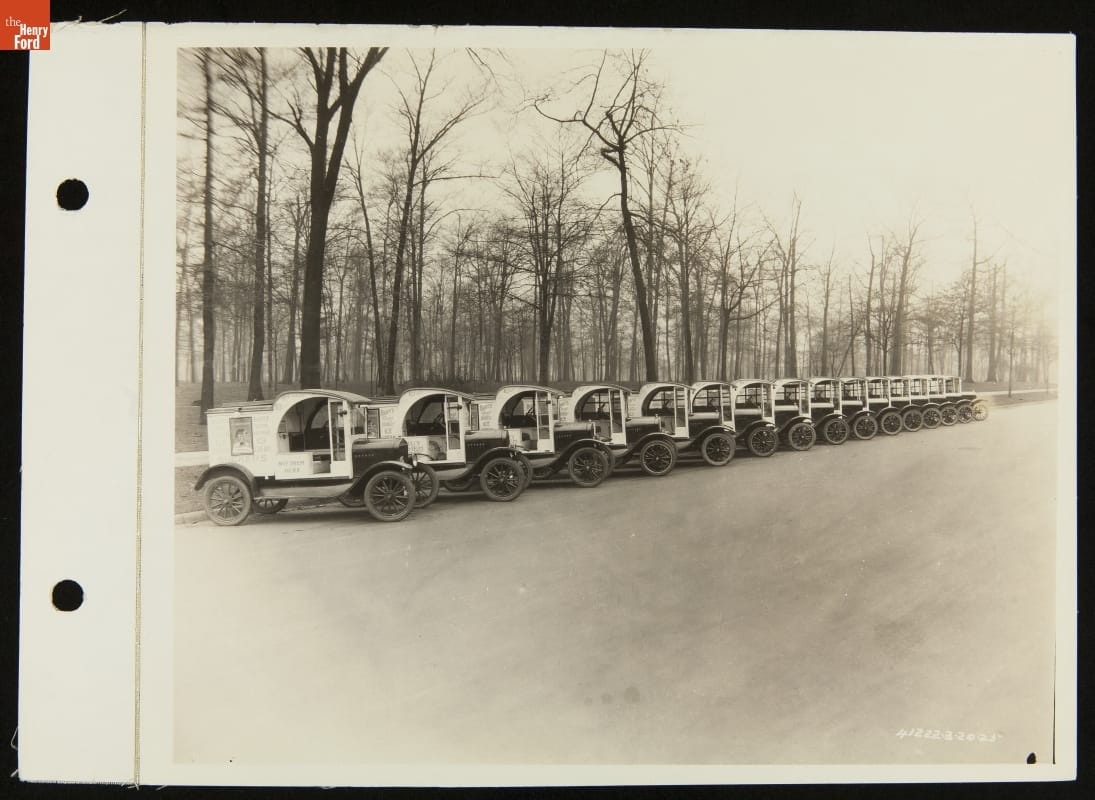
- Ford Ice Cream Vendor Trucks, 1925 - Harry Burt, the owner of a candy and ice cream store in Youngstown, Ohio, perfected his chocolate-coated ice cream bar on a stick in 1920. He then hired a crew of salesmen to sell these bars in specially outfitted trucks. In this 1925 photograph, motorized vehicles are lined up ready to sell Harry Burt's Good Humor Ice Cream Suckers.
- March 20, 1925
- Collections - Artifact
Ford Ice Cream Vendor Trucks, 1925
Harry Burt, the owner of a candy and ice cream store in Youngstown, Ohio, perfected his chocolate-coated ice cream bar on a stick in 1920. He then hired a crew of salesmen to sell these bars in specially outfitted trucks. In this 1925 photograph, motorized vehicles are lined up ready to sell Harry Burt's Good Humor Ice Cream Suckers.
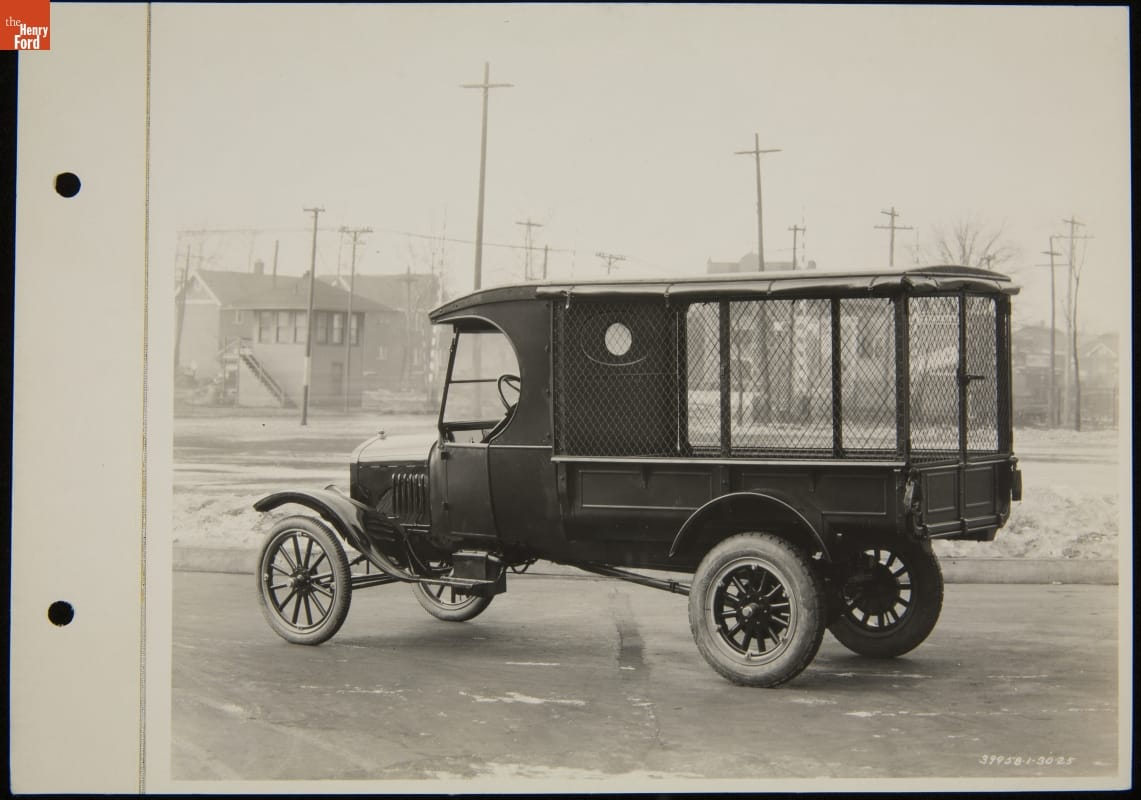
- Ford Model T Truck, January 1925 - Ford Motor Company's screen-sided canopy express truck was priced at $540 in 1925, when mounted to a basic open-cab chassis. The versatile express truck design was popular with grocers and fruit vendors, but it accommodated other cargos as well. When equipped with benches, the express truck could even serve as a makeshift school bus.
- January 30, 1925
- Collections - Artifact
Ford Model T Truck, January 1925
Ford Motor Company's screen-sided canopy express truck was priced at $540 in 1925, when mounted to a basic open-cab chassis. The versatile express truck design was popular with grocers and fruit vendors, but it accommodated other cargos as well. When equipped with benches, the express truck could even serve as a makeshift school bus.
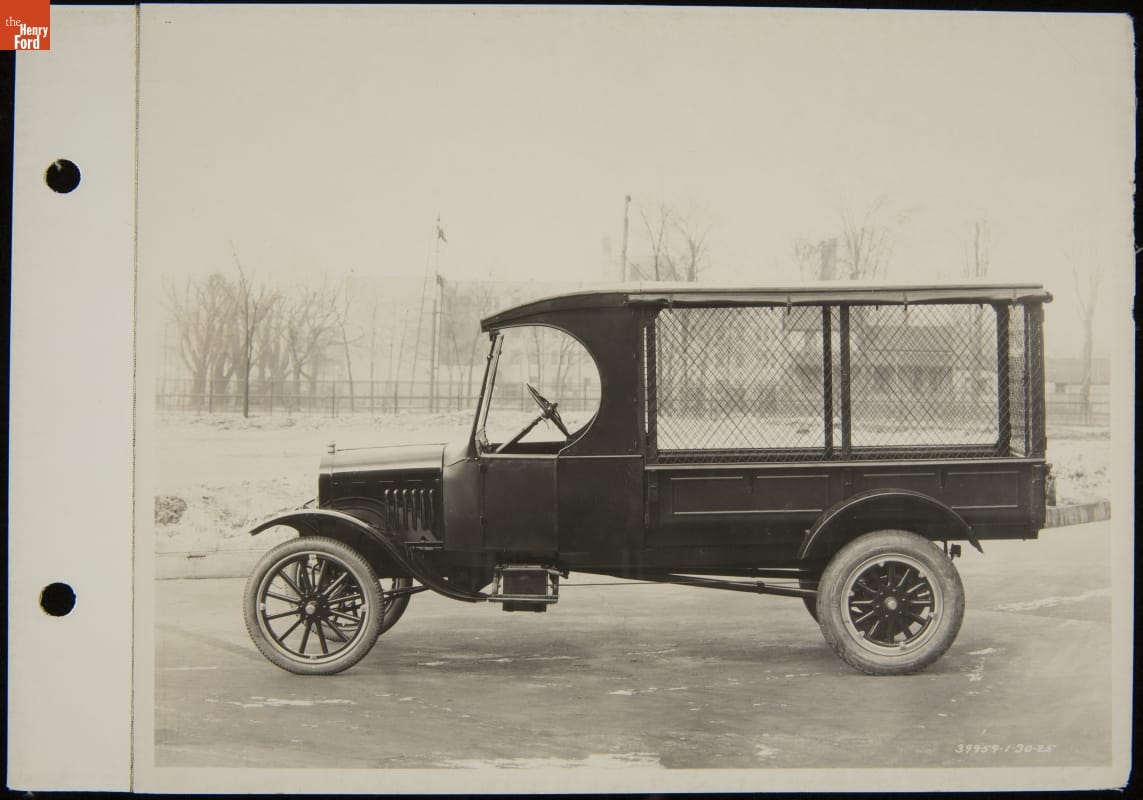
- Ford Model T Truck, January 1925 - Ford Motor Company's screen-sided canopy express truck was priced at $540 in 1925, when mounted to a basic open-cab chassis. The versatile express truck design was popular with grocers and fruit vendors, but it accommodated other cargos as well. When equipped with benches, the express truck could even serve as a makeshift school bus.
- January 30, 1925
- Collections - Artifact
Ford Model T Truck, January 1925
Ford Motor Company's screen-sided canopy express truck was priced at $540 in 1925, when mounted to a basic open-cab chassis. The versatile express truck design was popular with grocers and fruit vendors, but it accommodated other cargos as well. When equipped with benches, the express truck could even serve as a makeshift school bus.
- Ford Model T Pickup Used by James Cargo, Wholesale Fruit and Vegetable Dealer, Eastern Market, Detroit, Michigan, March 1925 - For years, buyers needing a light-duty truck had modified Ford's two-seat Model T roadster by removing the rear deck and replacing it with a truck bed. Ford noticed the trend and introduced a factory-built Model T pickup in 1925. It featured a steel bed 56 inches long by 40-3/4 inches wide. Ford sold nearly 33,800 units that first year.
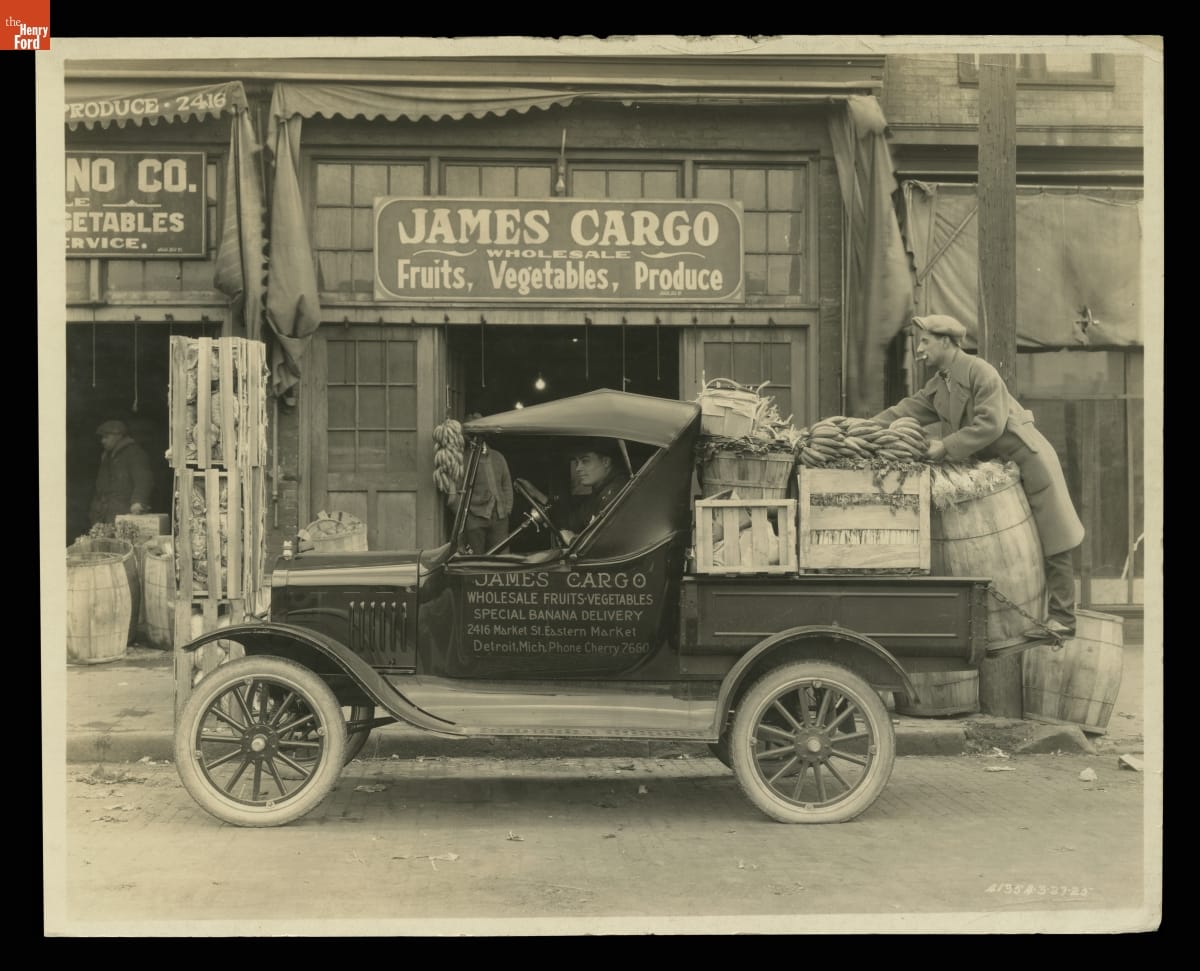
- March 27, 1925
- Collections - Artifact
Ford Model T Pickup Used by James Cargo, Wholesale Fruit and Vegetable Dealer, Eastern Market, Detroit, Michigan, March 1925
For years, buyers needing a light-duty truck had modified Ford's two-seat Model T roadster by removing the rear deck and replacing it with a truck bed. Ford noticed the trend and introduced a factory-built Model T pickup in 1925. It featured a steel bed 56 inches long by 40-3/4 inches wide. Ford sold nearly 33,800 units that first year.
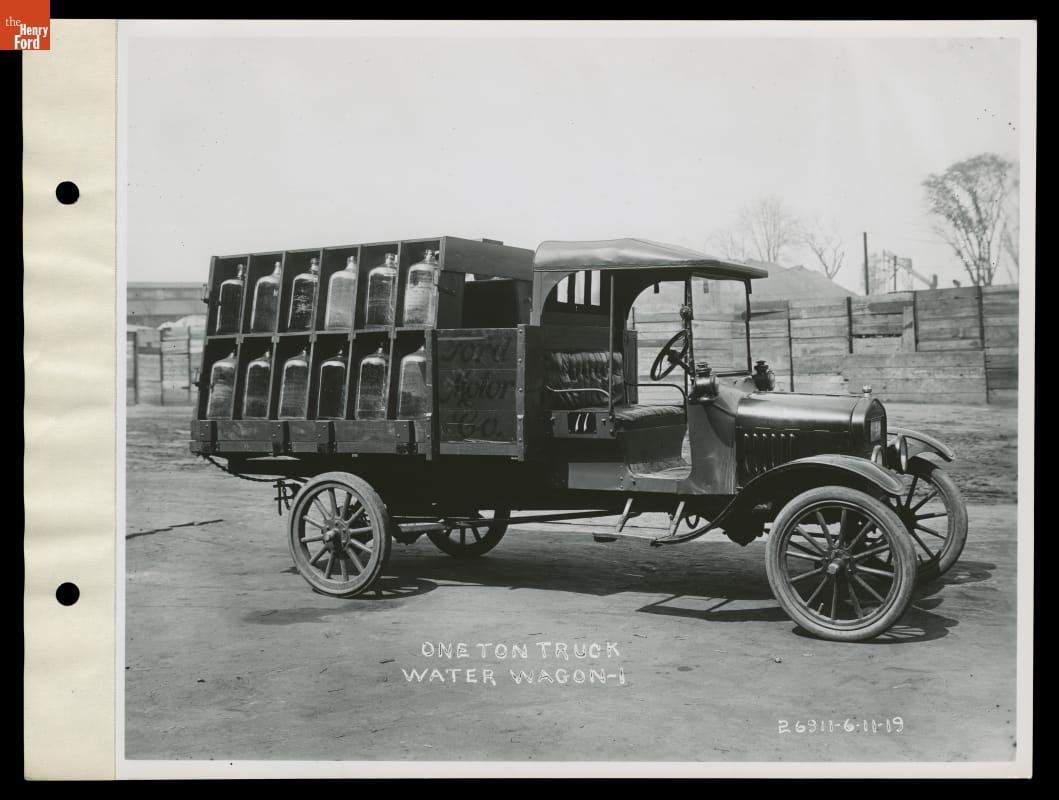
- Ford Model T One Ton Truck Hauling Water Bottles, 1919 - Ford Motor Company built its first one-ton Model TT trucks in July 1917. These trucks were based on the Model T automobile, but with reinforced chassis, worm-gear drives, dual brake systems, and solid rubber tires. Ford's trucks used the same four-cylinder, 20-horsepower engine as its cars. The factory price for a 1919 Ford TT chassis was $600.
- June 11, 1919
- Collections - Artifact
Ford Model T One Ton Truck Hauling Water Bottles, 1919
Ford Motor Company built its first one-ton Model TT trucks in July 1917. These trucks were based on the Model T automobile, but with reinforced chassis, worm-gear drives, dual brake systems, and solid rubber tires. Ford's trucks used the same four-cylinder, 20-horsepower engine as its cars. The factory price for a 1919 Ford TT chassis was $600.
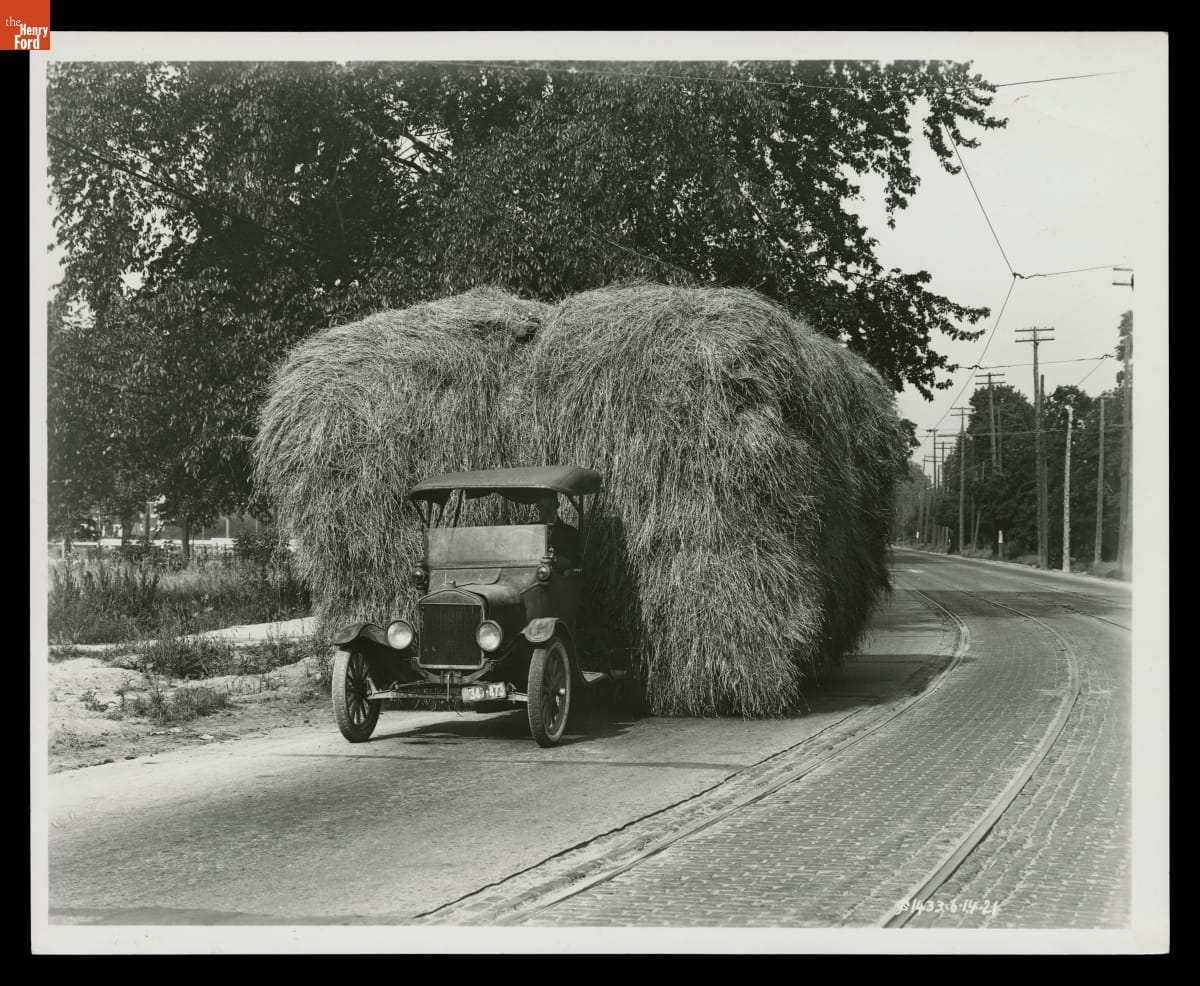
- Ford Model T Truck Hauling 8,000 Pounds of Hay, 1921 - This photograph shows a Ford Model T truck hauling a large load of hay down a paved country road. The dried fodder seems to overwhelm the small truck, yet the driver gamely travels along. Model Ts were popular for transporting harvest crops. They had earned a tough reputation among farmers who knew the vehicles could handle hard work.
- June 14, 1921
- Collections - Artifact
Ford Model T Truck Hauling 8,000 Pounds of Hay, 1921
This photograph shows a Ford Model T truck hauling a large load of hay down a paved country road. The dried fodder seems to overwhelm the small truck, yet the driver gamely travels along. Model Ts were popular for transporting harvest crops. They had earned a tough reputation among farmers who knew the vehicles could handle hard work.
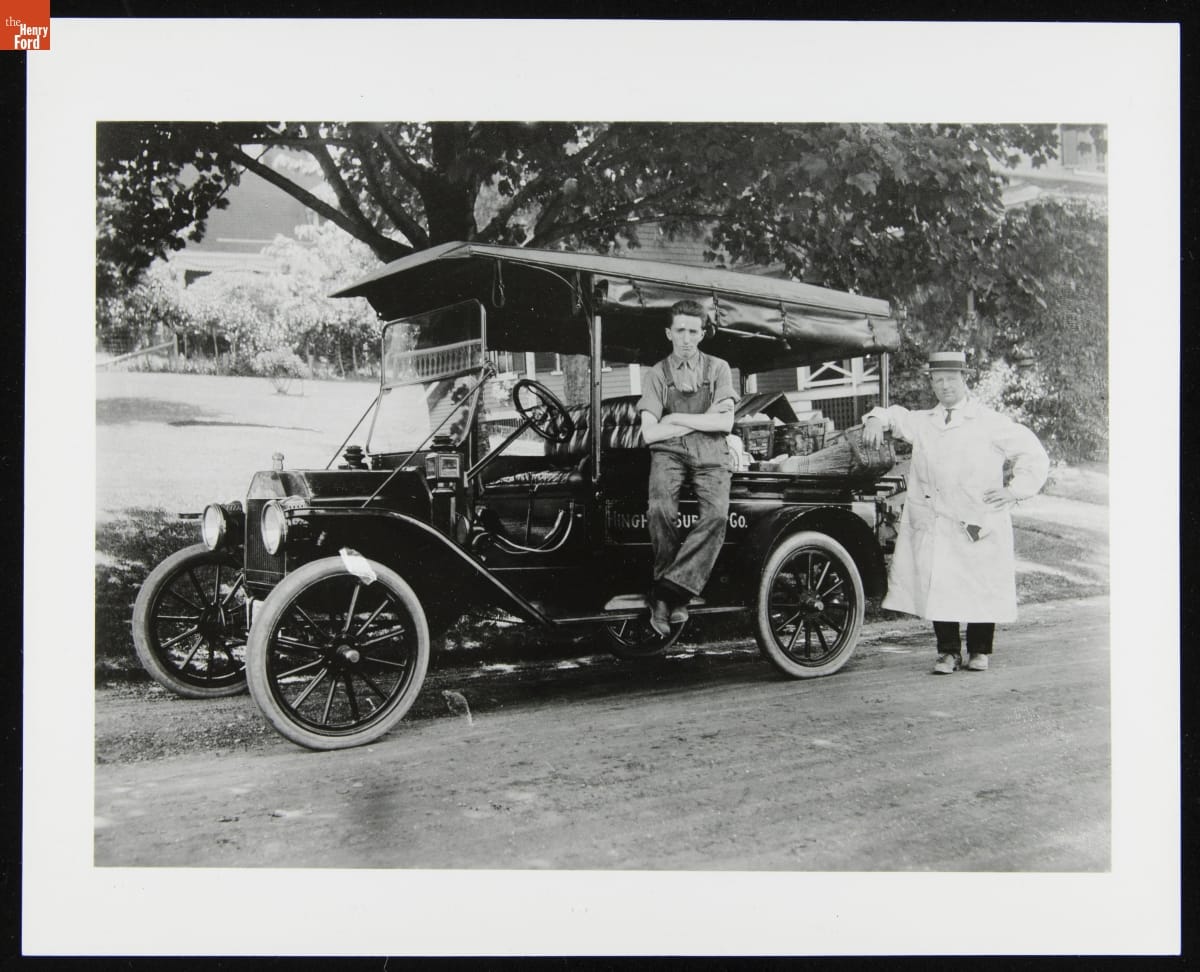
- Ford Model T Delivery Car Used by Hingham Supply Co., Hingham, Massachusetts, 1914 -
- 1914
- Collections - Artifact
Ford Model T Delivery Car Used by Hingham Supply Co., Hingham, Massachusetts, 1914
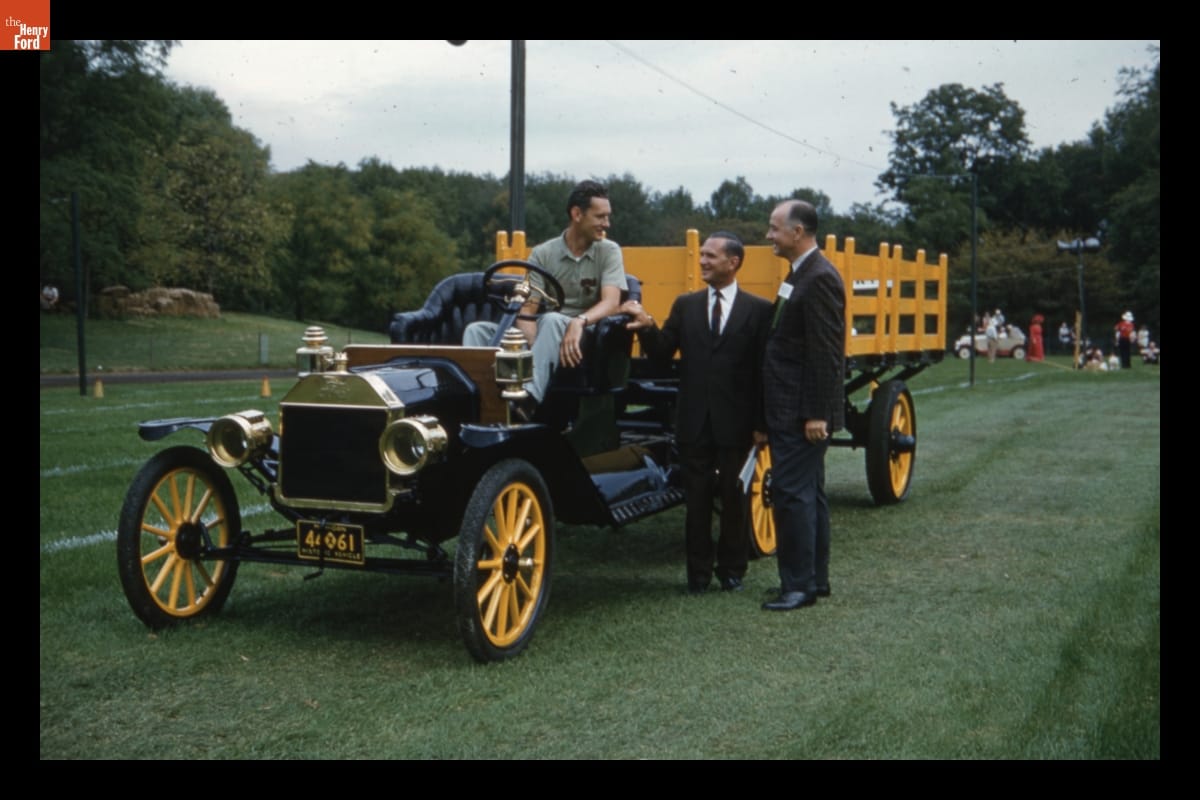
- Presentation of 1914 Fruehauf Truck Trailer at Old Car Festival in Greenfield Village, September 1962 - Held annually since 1951, The Henry Ford's Old Car Festival brings together hundreds of vintage motor vehicles and thousands of spectators each year. At times, it provided an opportunity for ceremonial presentations of new items to the museum's collection. Executive director Donald A. Shelley accepted a 1914 Fruehauf truck trailer on the institution's behalf in 1962.
- September 15, 1962
- Collections - Artifact
Presentation of 1914 Fruehauf Truck Trailer at Old Car Festival in Greenfield Village, September 1962
Held annually since 1951, The Henry Ford's Old Car Festival brings together hundreds of vintage motor vehicles and thousands of spectators each year. At times, it provided an opportunity for ceremonial presentations of new items to the museum's collection. Executive director Donald A. Shelley accepted a 1914 Fruehauf truck trailer on the institution's behalf in 1962.
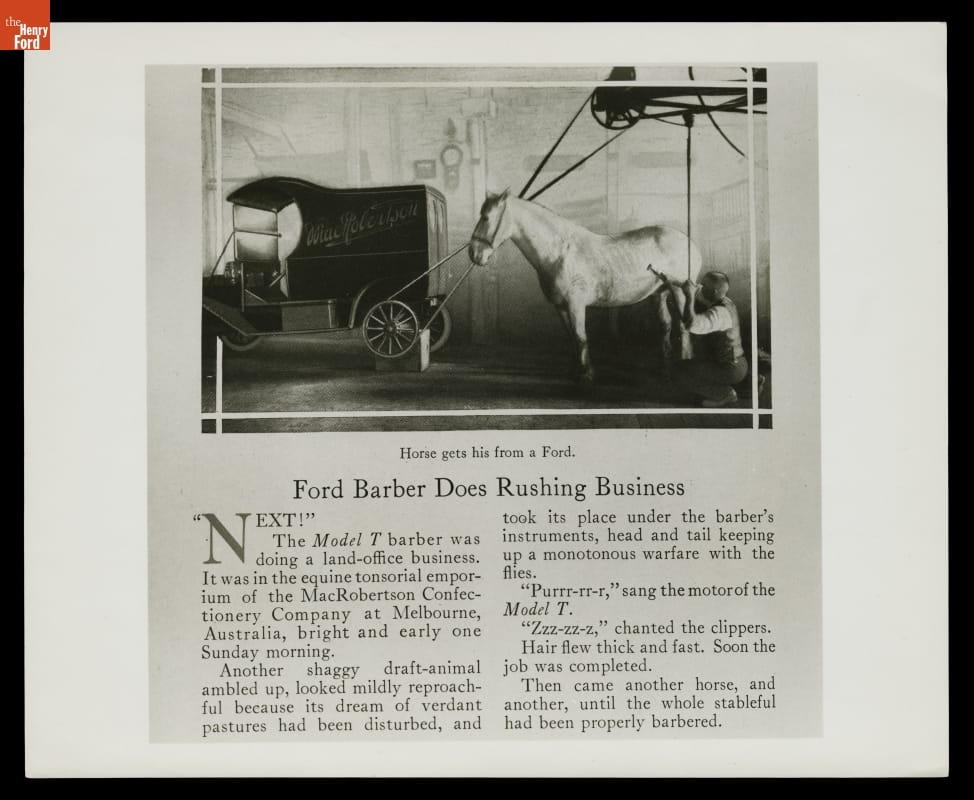
- Article from September 1913 Ford Times, "Ford Barber Does Rushing Business" - With a few modifications, Model T owners could turn an automobile into a stationary power plant. A drive belt attached to the Ford's rear axle could run machinery for any number of tasks, from milling grain to sawing lumber. In this unusual example, an Australian horse groomer rigged a Model T to power mechanized clippers.
- September 01, 1913
- Collections - Artifact
Article from September 1913 Ford Times, "Ford Barber Does Rushing Business"
With a few modifications, Model T owners could turn an automobile into a stationary power plant. A drive belt attached to the Ford's rear axle could run machinery for any number of tasks, from milling grain to sawing lumber. In this unusual example, an Australian horse groomer rigged a Model T to power mechanized clippers.