
Search
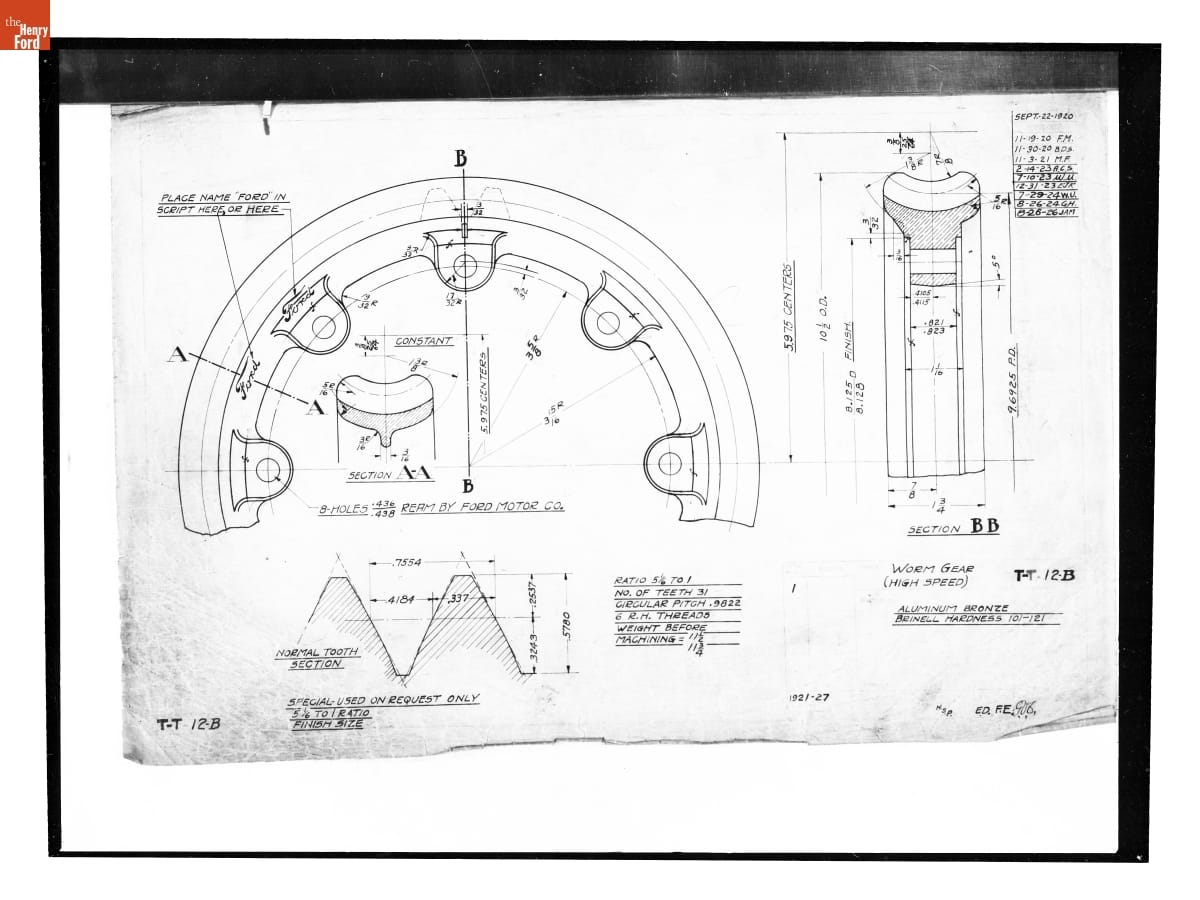
- Drawing, "Worm Gear (High Speed), Ford Model TT Truck, August 26, 1926 - The Ford Motor Company created over a million parts drawings from 1903 to 1957. Many of these drawings specify engineering requirements for the components of Ford-made vehicles--including automobiles, trucks, tractors, military vehicles and Tri-motor airplanes. Others document assembly components, stages of casting and forging, or experimental designs. Beginning in the 1940s, Ford transferred the drawings to microfilm.
- August 26, 1926
- Collections - Artifact
Drawing, "Worm Gear (High Speed), Ford Model TT Truck, August 26, 1926
The Ford Motor Company created over a million parts drawings from 1903 to 1957. Many of these drawings specify engineering requirements for the components of Ford-made vehicles--including automobiles, trucks, tractors, military vehicles and Tri-motor airplanes. Others document assembly components, stages of casting and forging, or experimental designs. Beginning in the 1940s, Ford transferred the drawings to microfilm.
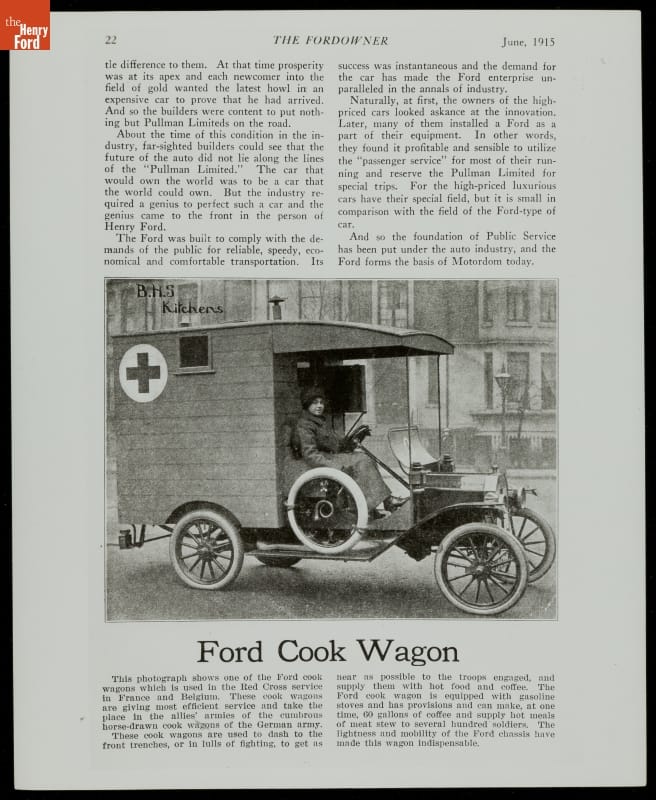
- "Ford Cook Wagon," June 1915 - Even before America's involvement in World War I, the Red Cross used Ford Motor Company vehicles in its wartime efforts. Cook wagons like this one, built on a Model T chassis, moved quickly toward the front lines to provide hot food and drink. Each wagon could prepare stew for several hundred people or make 60 gallons of coffee.
- June 01, 1915
- Collections - Artifact
"Ford Cook Wagon," June 1915
Even before America's involvement in World War I, the Red Cross used Ford Motor Company vehicles in its wartime efforts. Cook wagons like this one, built on a Model T chassis, moved quickly toward the front lines to provide hot food and drink. Each wagon could prepare stew for several hundred people or make 60 gallons of coffee.
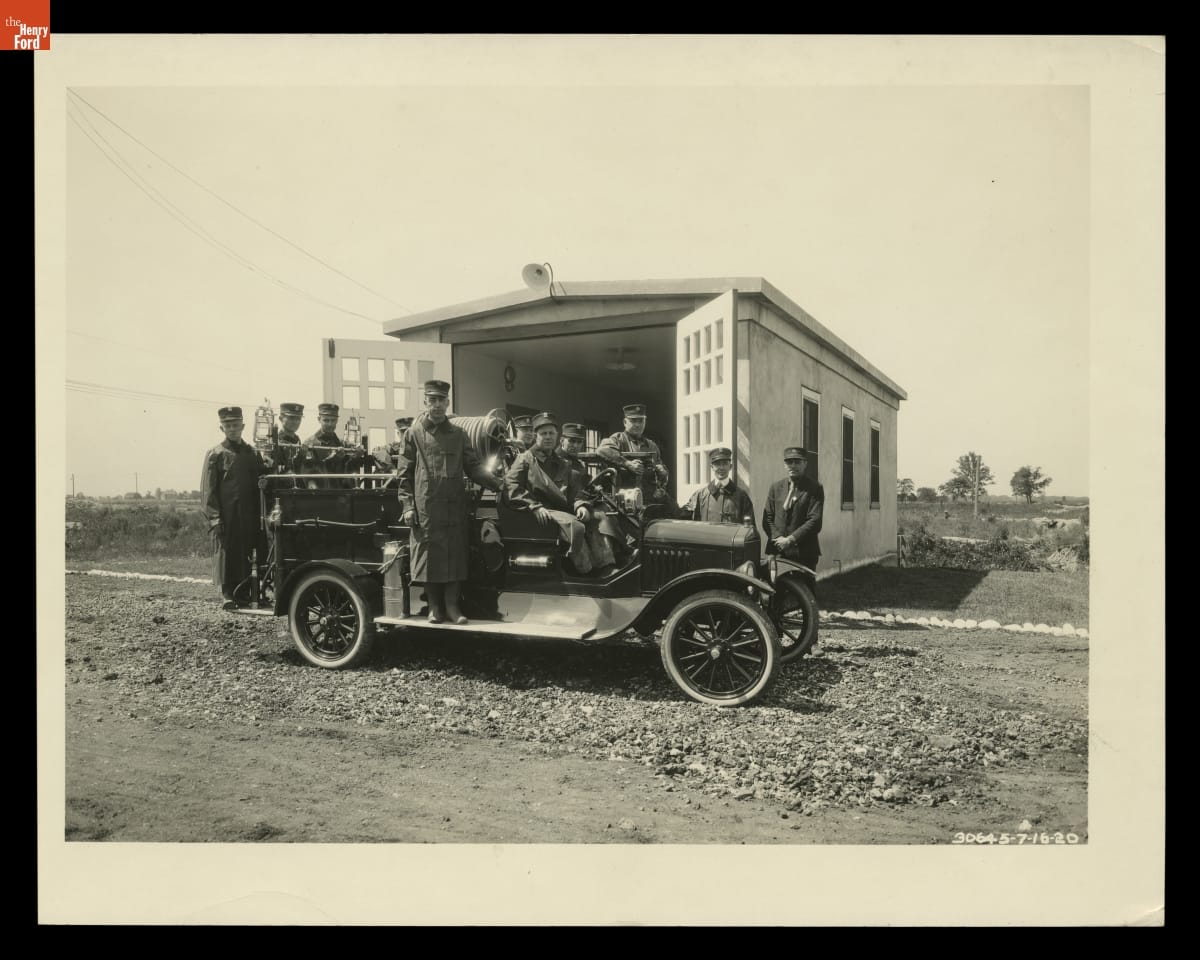
- Firemen with a Ford Model TT Fire Truck at the Rouge Plant, July 16, 1920 - Fire was a constant threat to factories and industrial facilities. Large plants often operated their own fire departments to protect from the danger. Ford Motor Company maintained a fire department at its Rouge plant that, by the mid-1930s, employed nearly 100 firefighters. Naturally, the Rouge's fire department used Ford fire trucks.
- July 16, 1920
- Collections - Artifact
Firemen with a Ford Model TT Fire Truck at the Rouge Plant, July 16, 1920
Fire was a constant threat to factories and industrial facilities. Large plants often operated their own fire departments to protect from the danger. Ford Motor Company maintained a fire department at its Rouge plant that, by the mid-1930s, employed nearly 100 firefighters. Naturally, the Rouge's fire department used Ford fire trucks.
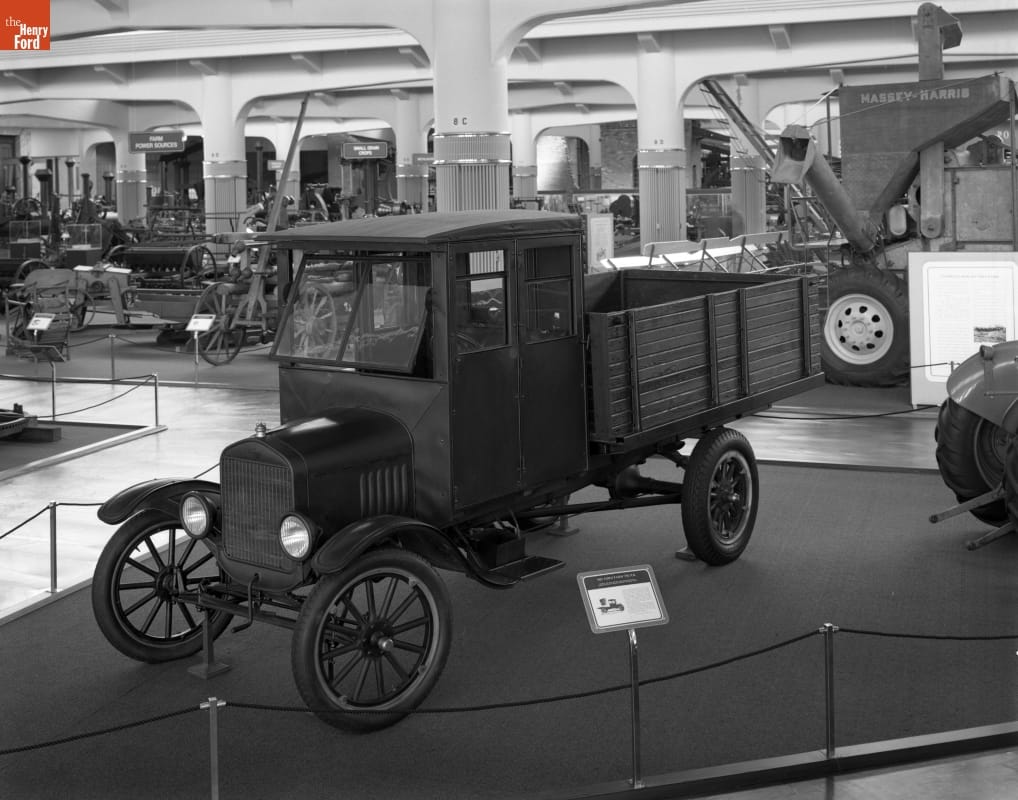
- 1925 Ford Model TT Stake Truck - As paved roads spread into rural areas, trucks became common sights on American farms. Farmers used the vehicles to haul agricultural products directly to market, or to the nearest railroad depot for shipment to farther points. One-ton Ford trucks like this, based on the Model T but with a lower gear ratio, were the most popular choice during the 1920s.
- 1925
- Collections - Artifact
1925 Ford Model TT Stake Truck
As paved roads spread into rural areas, trucks became common sights on American farms. Farmers used the vehicles to haul agricultural products directly to market, or to the nearest railroad depot for shipment to farther points. One-ton Ford trucks like this, based on the Model T but with a lower gear ratio, were the most popular choice during the 1920s.
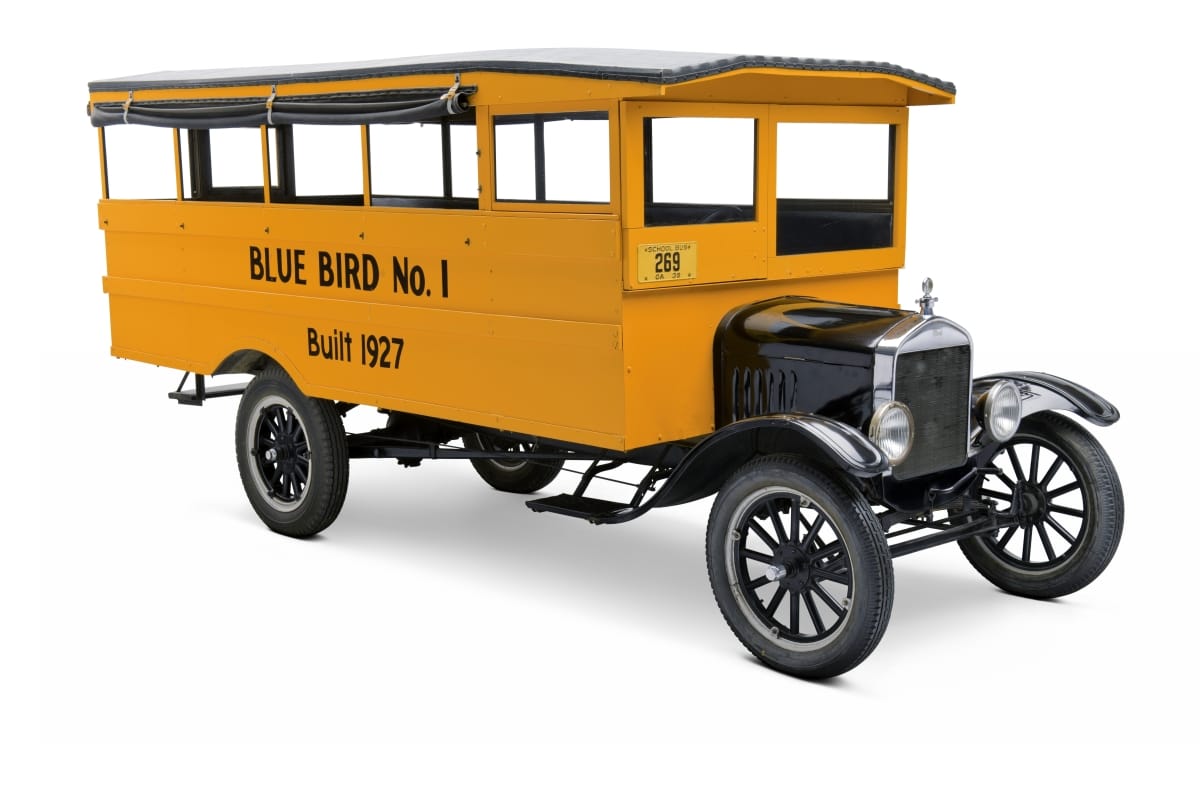
- 1927 Blue Bird School Bus - This 1927 Blue Bird is the oldest surviving school bus in America. Albert Luce, Sr., built his first bus in 1925 by mounting a purchased wood body to a Ford truck frame. The body could not withstand the Georgia roads. Luce, convinced he could make a better bus, applied a steel framework under the wood body. His success led him to make school buses full time.
- 1927
- Collections - Artifact
1927 Blue Bird School Bus
This 1927 Blue Bird is the oldest surviving school bus in America. Albert Luce, Sr., built his first bus in 1925 by mounting a purchased wood body to a Ford truck frame. The body could not withstand the Georgia roads. Luce, convinced he could make a better bus, applied a steel framework under the wood body. His success led him to make school buses full time.