
Search
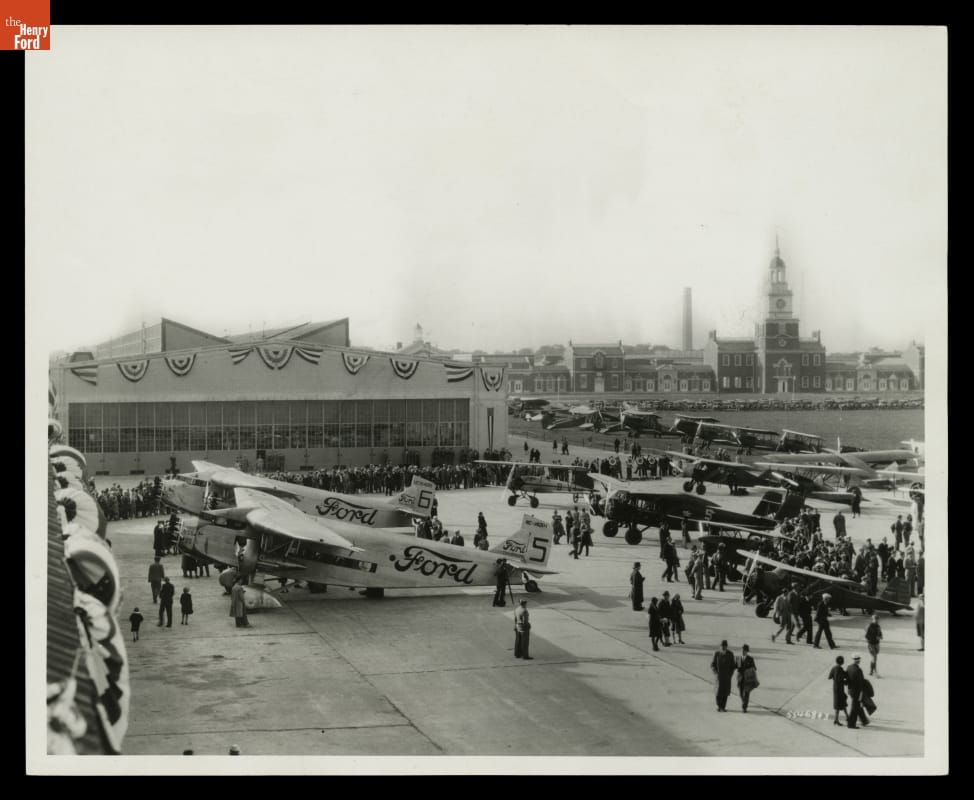
- Ford Reliability Tour at Ford Airport, Dearborn, Michigan, 1930 - From 1925-1931, Ford Motor Company sponsored annual air tours to promote reliability and safety in commercial aircraft. Pilots flew to pre-determined cities, and their airplanes were rated on the ability to take off and land quickly and maintain consistent speeds. The 1930 tour included 18 entries and visited 29 cities in the United States and Canada.
- September 27, 1930
- Collections - Artifact
Ford Reliability Tour at Ford Airport, Dearborn, Michigan, 1930
From 1925-1931, Ford Motor Company sponsored annual air tours to promote reliability and safety in commercial aircraft. Pilots flew to pre-determined cities, and their airplanes were rated on the ability to take off and land quickly and maintain consistent speeds. The 1930 tour included 18 entries and visited 29 cities in the United States and Canada.
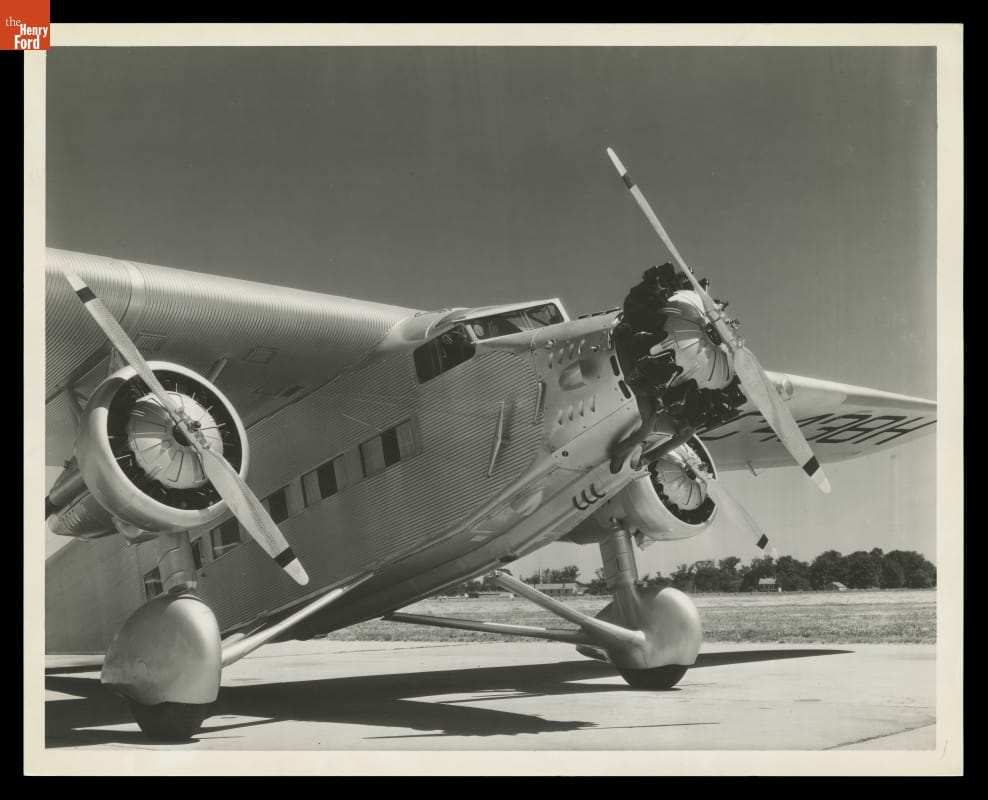
- Ford Tri-Motor 5-AT-112 Airplane at Ford Airport, 1932 - In 1928, the Stout Metal Airplane Company, a division of Ford Motor Company, introduced a new airliner. The 5-AT was faster and more powerful than its popular predecessor, the 4-AT. It had a longer wingspan and higher passenger capacity, and became the most successful all-metal, multi-engine passenger plane in the country. Virtually all existing airlines flew Ford 5-ATs.
- June 24, 1932
- Collections - Artifact
Ford Tri-Motor 5-AT-112 Airplane at Ford Airport, 1932
In 1928, the Stout Metal Airplane Company, a division of Ford Motor Company, introduced a new airliner. The 5-AT was faster and more powerful than its popular predecessor, the 4-AT. It had a longer wingspan and higher passenger capacity, and became the most successful all-metal, multi-engine passenger plane in the country. Virtually all existing airlines flew Ford 5-ATs.
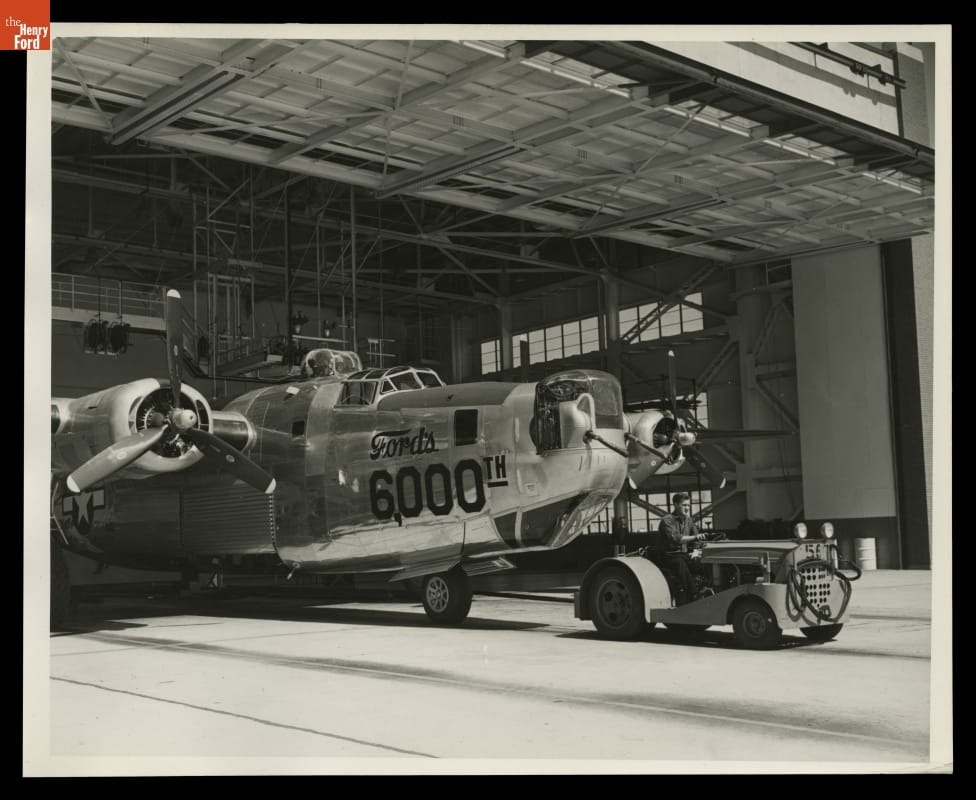
- 6,000th B-24 Bomber at Ford Motor Company Willow Run Plant, September 9, 1944 - Mass producing B-24 bombers during World War II was no easy feat -- not even for the company that invented modern mass production. But Ford Motor Company was building one airplane every 63 minutes at its Willow Run plant by March 1944. Ford produced its 6,000th B-24 that September. Another 2,685 were built before production ended in May 1945.
- September 09, 1944
- Collections - Artifact
6,000th B-24 Bomber at Ford Motor Company Willow Run Plant, September 9, 1944
Mass producing B-24 bombers during World War II was no easy feat -- not even for the company that invented modern mass production. But Ford Motor Company was building one airplane every 63 minutes at its Willow Run plant by March 1944. Ford produced its 6,000th B-24 that September. Another 2,685 were built before production ended in May 1945.
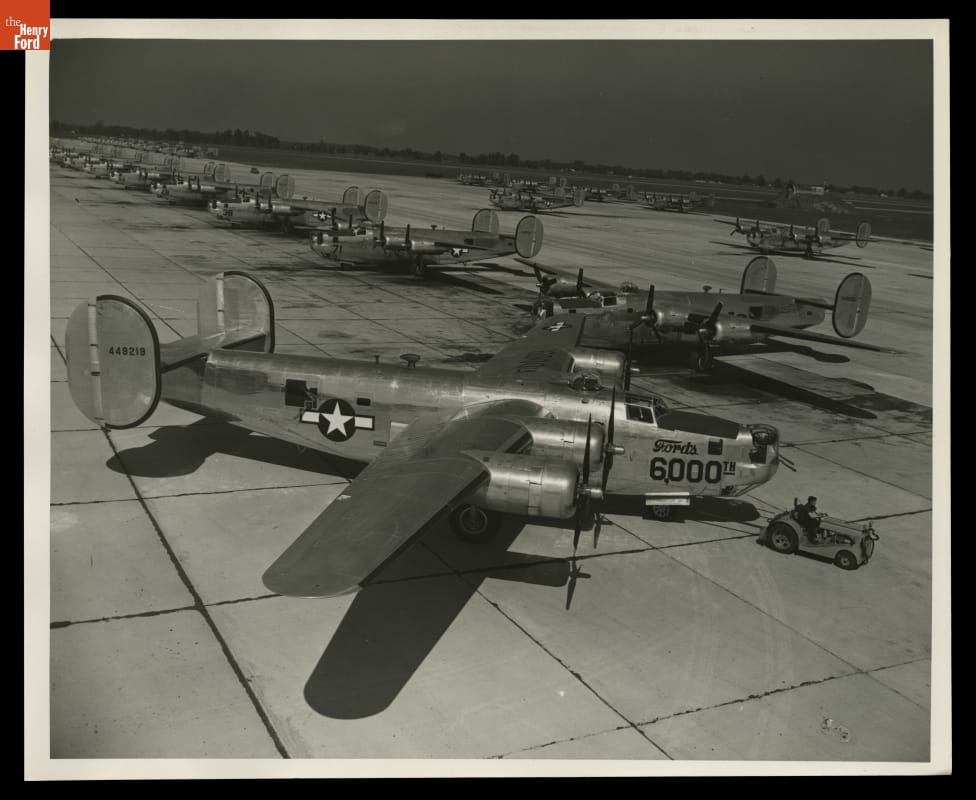
- 6,000th B-24 Bomber at Ford Motor Company Willow Run Plant, September 9, 1944 - Mass producing B-24 bombers during World War II was no easy feat -- not even for the company that invented modern mass production. But Ford Motor Company was building one airplane every 63 minutes at its Willow Run plant by March 1944. Ford produced its 6,000th B-24 that September. Another 2,685 were built before production ended in May 1945.
- September 09, 1944
- Collections - Artifact
6,000th B-24 Bomber at Ford Motor Company Willow Run Plant, September 9, 1944
Mass producing B-24 bombers during World War II was no easy feat -- not even for the company that invented modern mass production. But Ford Motor Company was building one airplane every 63 minutes at its Willow Run plant by March 1944. Ford produced its 6,000th B-24 that September. Another 2,685 were built before production ended in May 1945.
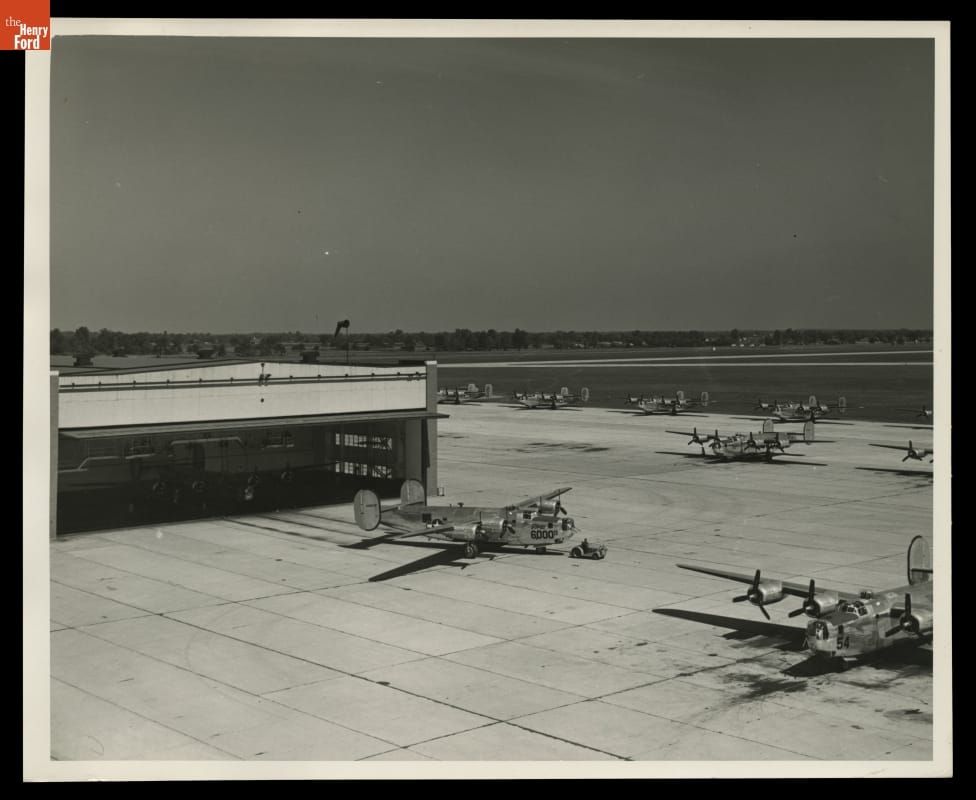
- 6,000th B-24 Bomber at Ford Motor Company Willow Run Plant, September 9, 1944 - Mass producing B-24 bombers during World War II was no easy feat -- not even for the company that invented modern mass production. But Ford Motor Company was building one airplane every 63 minutes at its Willow Run plant by March 1944. Ford produced its 6,000th B-24 that September. Another 2,685 were built before production ended in May 1945.
- September 09, 1944
- Collections - Artifact
6,000th B-24 Bomber at Ford Motor Company Willow Run Plant, September 9, 1944
Mass producing B-24 bombers during World War II was no easy feat -- not even for the company that invented modern mass production. But Ford Motor Company was building one airplane every 63 minutes at its Willow Run plant by March 1944. Ford produced its 6,000th B-24 that September. Another 2,685 were built before production ended in May 1945.
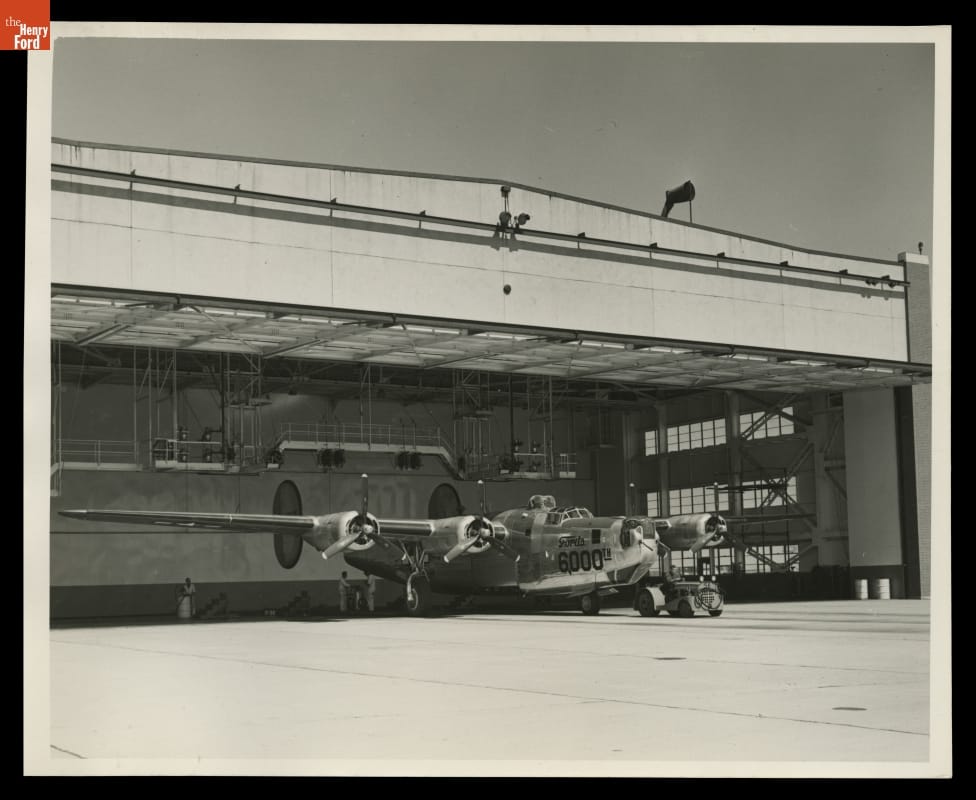
- 6,000th B-24 Bomber at Ford Motor Company Willow Run Plant, September 9, 1944 - Mass producing B-24 bombers during World War II was no easy feat -- not even for the company that invented modern mass production. But Ford Motor Company was building one airplane every 63 minutes at its Willow Run plant by March 1944. Ford produced its 6,000th B-24 that September. Another 2,685 were built before production ended in May 1945.
- September 09, 1944
- Collections - Artifact
6,000th B-24 Bomber at Ford Motor Company Willow Run Plant, September 9, 1944
Mass producing B-24 bombers during World War II was no easy feat -- not even for the company that invented modern mass production. But Ford Motor Company was building one airplane every 63 minutes at its Willow Run plant by March 1944. Ford produced its 6,000th B-24 that September. Another 2,685 were built before production ended in May 1945.
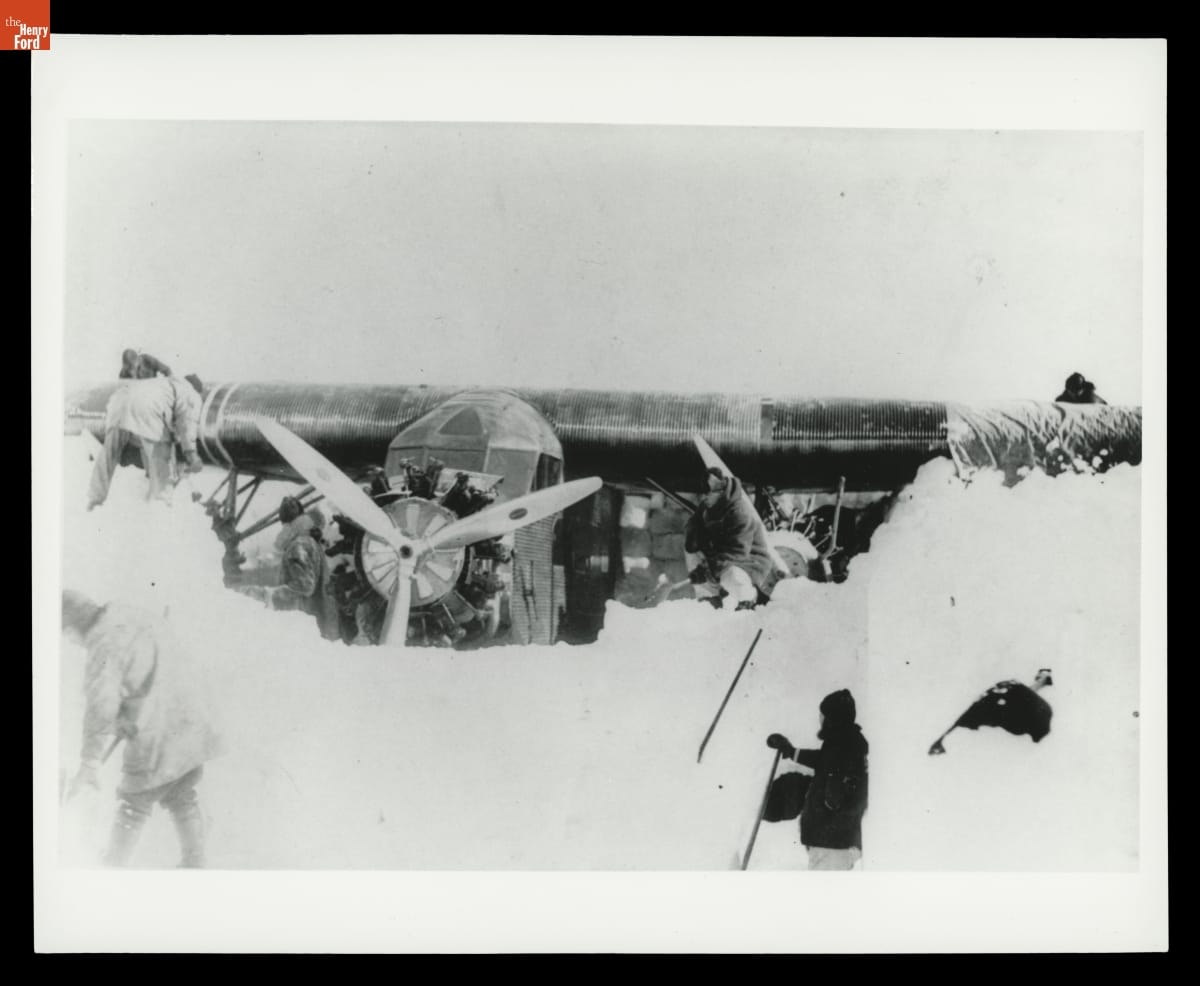
- Ford Tri-Motor Airplane "Floyd Bennett," Flown by Richard E. Byrd in Antarctica, 1928-1930 - From August 1928 to June 1930, Richard Byrd led an expedition to the Antarctic with 83 men, four ships, and three airplanes. The team operated from a base camp they called Little America. On November 28-29, 1929, Byrd and three crewmates took their Ford Tri-Motor <em>Floyd Bennett</em> on the first flight over the South Pole.
- 1928-1930
- Collections - Artifact
Ford Tri-Motor Airplane "Floyd Bennett," Flown by Richard E. Byrd in Antarctica, 1928-1930
From August 1928 to June 1930, Richard Byrd led an expedition to the Antarctic with 83 men, four ships, and three airplanes. The team operated from a base camp they called Little America. On November 28-29, 1929, Byrd and three crewmates took their Ford Tri-Motor Floyd Bennett on the first flight over the South Pole.
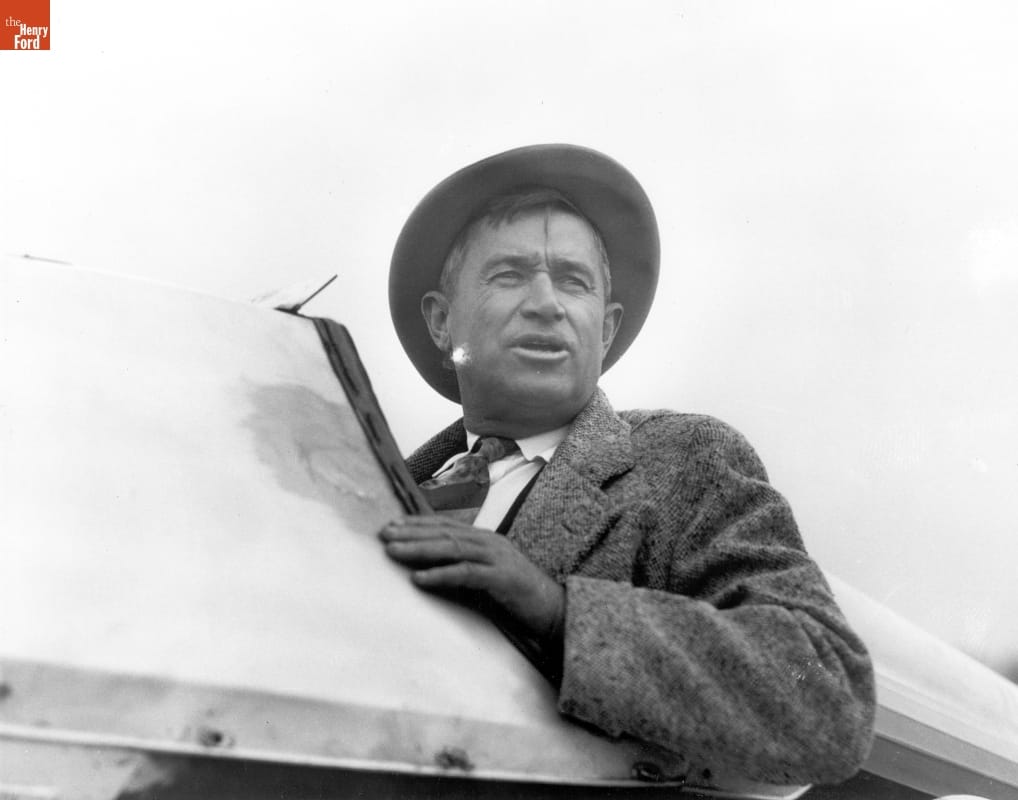
- Will Rogers in Ford Flivver #1 Airplane, 1927 - Popular humorist Will Rogers posed in a Ford Flivver airplane in 1927. The Flivver was Henry Ford's unsuccessful attempt to build a "Model T for the sky," a simple and affordable aircraft that anyone could fly. Rogers, along with aviator Wiley Post, died in an unrelated airplane crash in Alaska in 1935.
- 1927
- Collections - Artifact
Will Rogers in Ford Flivver #1 Airplane, 1927
Popular humorist Will Rogers posed in a Ford Flivver airplane in 1927. The Flivver was Henry Ford's unsuccessful attempt to build a "Model T for the sky," a simple and affordable aircraft that anyone could fly. Rogers, along with aviator Wiley Post, died in an unrelated airplane crash in Alaska in 1935.
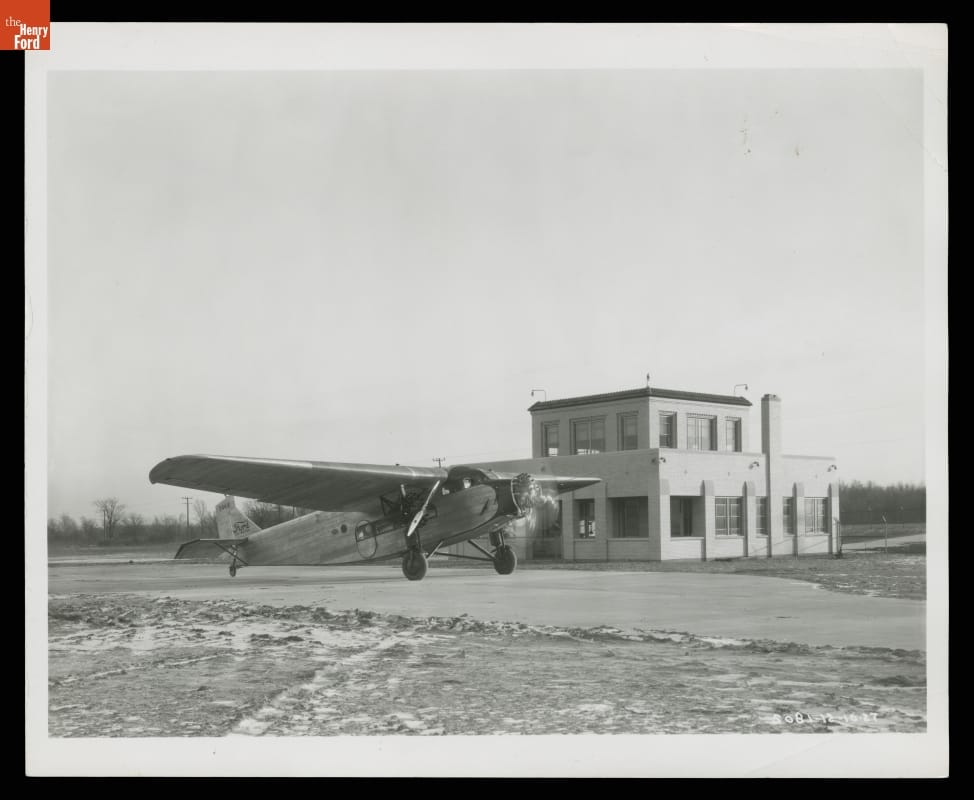
- Ford Tri-Motor 4-AT-13 Airplane by Passenger Terminal at Ford Airport, December 1927 - Model 4-AT airliners were designed and built by the Stout Metal Airplane Company, a division of Ford Motor Company. The all-metal, multi-engine planes earned a reputation for being rugged and dependable. From the late 1920s into the 1930s, they were the backbone of the scheduled airline industry. The 4-ATs eased public concerns about the safety of air travel and revolutionized commercial aviation.
- December 10, 1927
- Collections - Artifact
Ford Tri-Motor 4-AT-13 Airplane by Passenger Terminal at Ford Airport, December 1927
Model 4-AT airliners were designed and built by the Stout Metal Airplane Company, a division of Ford Motor Company. The all-metal, multi-engine planes earned a reputation for being rugged and dependable. From the late 1920s into the 1930s, they were the backbone of the scheduled airline industry. The 4-ATs eased public concerns about the safety of air travel and revolutionized commercial aviation.
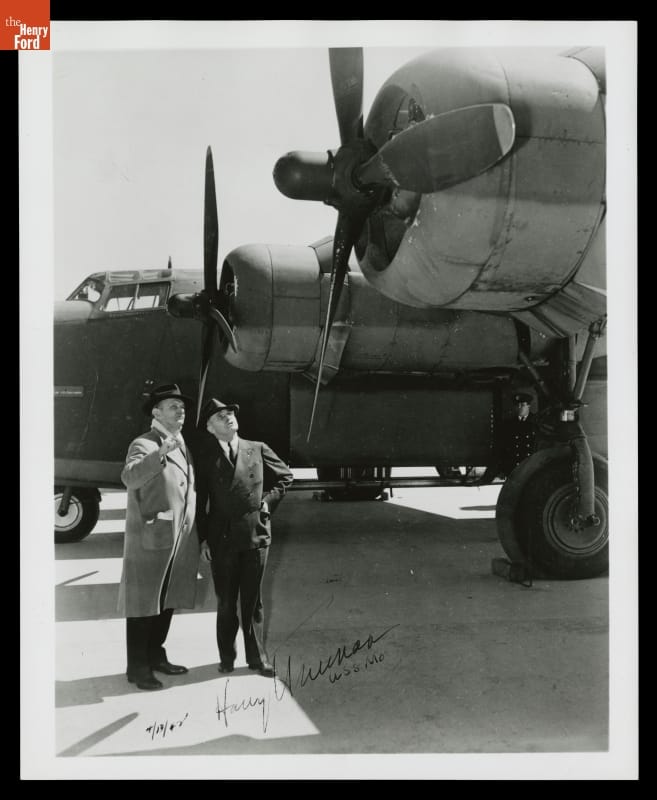
- Senator Harry S. Truman and Ford Executive Charles Sorensen with B-24 Liberator at Willow Run Bomber Plant, 1942 - Missouri Senator Harry S. Truman visited Ford Motor Company's Willow Run bomber plant in April 1942. Truman headed the Senate Special Committee to Investigate the National Defense Program, which probed waste and profiteering in United States war production work. Ford production head Charles Sorensen was largely responsible for Willow Run's success. At its peak, the plant built one bomber every 63 minutes.
- April 30, 1942
- Collections - Artifact
Senator Harry S. Truman and Ford Executive Charles Sorensen with B-24 Liberator at Willow Run Bomber Plant, 1942
Missouri Senator Harry S. Truman visited Ford Motor Company's Willow Run bomber plant in April 1942. Truman headed the Senate Special Committee to Investigate the National Defense Program, which probed waste and profiteering in United States war production work. Ford production head Charles Sorensen was largely responsible for Willow Run's success. At its peak, the plant built one bomber every 63 minutes.